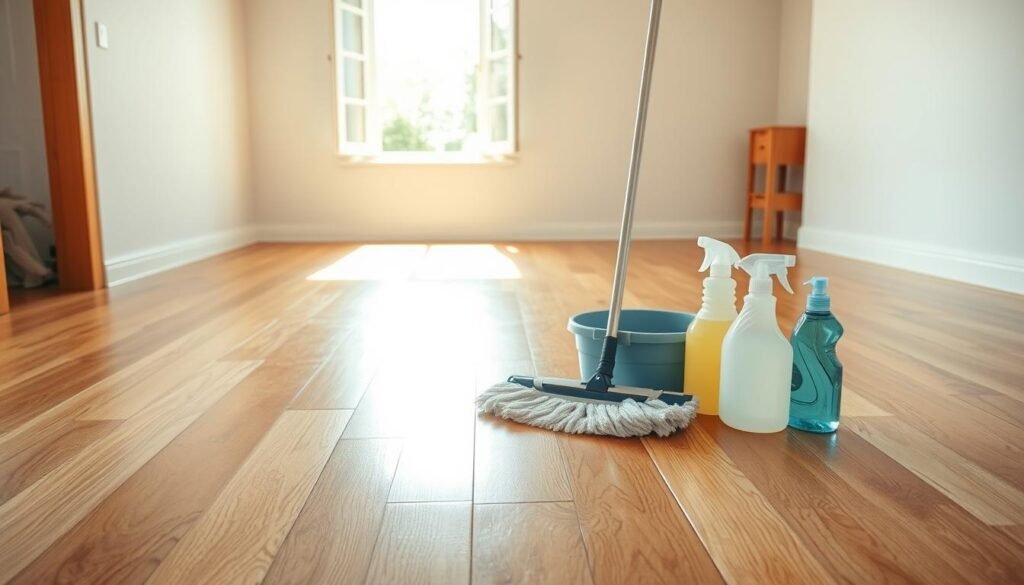
Keeping beautiful wood floors in top shape is a big job. But, it’s key to making your home shine. With the right cleaning methods and products, you can get a sparkling finish. This will make your living space look even better.
Did you know the wrong cleaning can harm your wood floors? This could lead to expensive fixes. In this article, we’ll share wood floor cleaning tips. These will help you keep your floors looking new.
Key Takeaways
- Effective methods for cleaning wood floors
- Tips for maintaining a sparkling finish
- Common mistakes to avoid when cleaning wood floors
- Recommended cleaning products for different types of wood floors
- Best practices for regular maintenance
Understanding Different Wood Floor Finishes
Keeping my wood floors looking great means knowing about finishes. Each finish changes how the floors look and how to clean them.
The finish on my floors affects how long they last and how easy they are to care for. There are three main types: polyurethane, wax, and oil-based finishes. Each has its own special qualities.
Types of Wood Floor Finishes
There are many wood floor finishes, each with its own benefits:
- Polyurethane Finish: It’s tough and protects against scratches and spills.
- Wax Finish: It gives a classic look but needs more upkeep.
- Oil-Based Finish: It brings out the wood’s natural color and texture, making it look warm.
Knowing these differences helps me pick the right cleaning products and methods.
How Finish Affects Cleaning Methods
The finish on my floors tells me how to clean them. For example:
| Finish Type | Recommended Cleaning Method | Avoid Using |
|---|---|---|
| Polyurethane | Damp mop with a pH-neutral cleaner | Excess water, harsh chemicals |
| Wax | Soft cloth with wax-specific cleaner | Water-based cleaners, abrasive materials |
| Oil-Based | Soft mop with oil-based cleaner | Water, harsh chemicals |
Choosing the right cleaning method for my floor’s finish keeps it looking good and lasts longer.
Preparing to Clean My Wood Floors
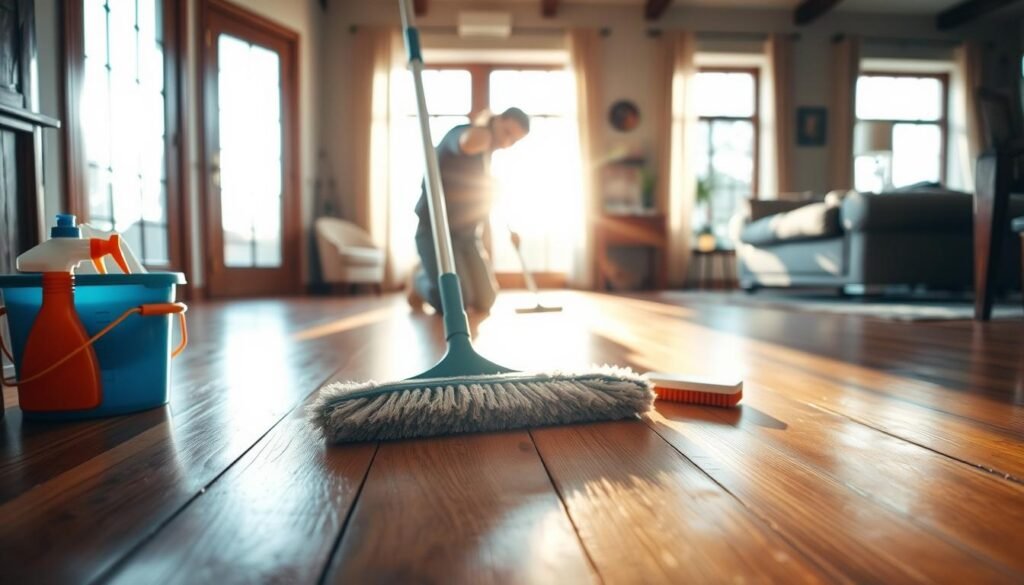
Before I start cleaning, I need to get my wood floors ready. This means collecting the right cleaning supplies and clearing the floor of any debris or dust.
Gather Necessary Cleaning Supplies
To clean my wood floors well, I need the correct tools. These include:
- A soft-bristled broom or a vacuum cleaner with a soft floor attachment
- A cleaning solution made for wood floors
- A microfiber mop or a soft, clean cloth
Having the right supplies helps me clean my floors gently yet effectively.
Sweep or Vacuum First
Before I use any cleaning solution, I sweep or vacuum my floors. This step is key to avoid scratching the floor. I use a soft-bristled broom or a vacuum with a soft floor attachment. This way, I can remove dirt without harming the wood.
Choosing the Right Cleaner for Wood Floors
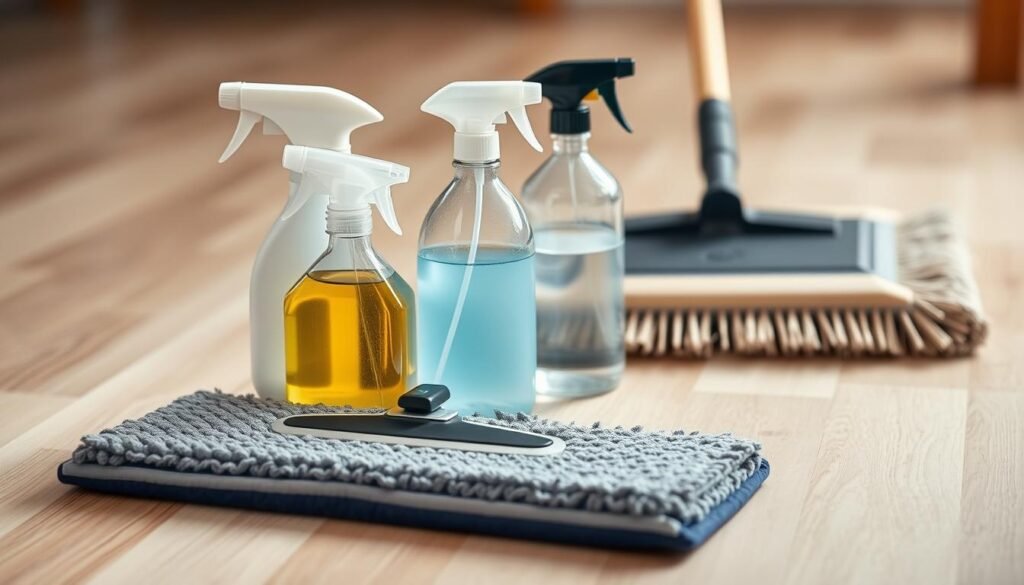
Finding the right cleaner is key to keeping my wood floors healthy and looking great. There are many options out there, each with its own pros and cons.
Commercial Cleaners vs. DIY Solutions
Choosing between commercial cleaners and DIY solutions depends on several factors. These include how well they work, their cost, and their impact on the environment. Commercial cleaners are made for wood floors and can be very effective. But, they might have harsh chemicals.
DIY solutions, on the other hand, are natural and can save money. They let me pick the ingredients I like and are better for the planet.
Commercial cleaners have some benefits:
- They are easy to use
- They are made just for wood floors
- They are pH-balanced to avoid damage
But, DIY solutions have their own perks:
- I can choose the ingredients
- They are good for the environment
- They are cheaper
For more info on commercial cleaners, I can check out The Kitchn’s comparison of different hardwood floor cleaners.
Ingredients for Homemade Cleaners
Making my own cleaner lets me pick the ingredients based on what my wood floors need. Some common ingredients include:
- Vinegar: It’s a natural disinfectant and degreaser
- Olive oil: It nourishes and protects the wood
- Castile soap: It’s a gentle, non-toxic cleaner
- Essential oils: They add a nice scent and extra benefits
A simple homemade cleaner recipe is 1 cup of vinegar mixed with 1 cup of olive oil. It’s effective and gentle on my floors.
The Importance of Regular Maintenance
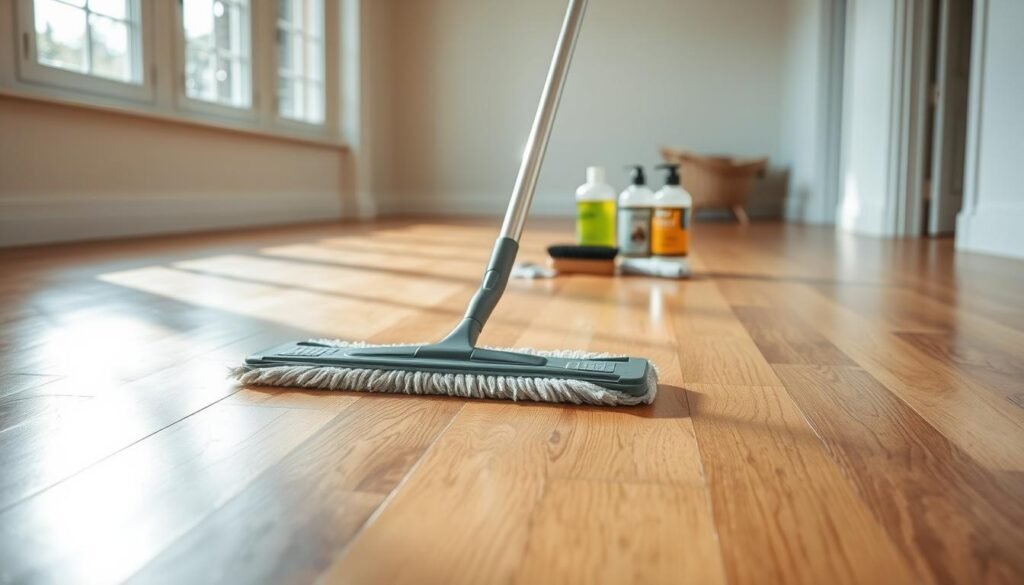
Keeping my wood floors in good shape is key to their lasting beauty and health. Regular care not only keeps them looking great but also prevents damage. This saves me from expensive repairs later on.
How Often Should I Clean My Floors?
Cleaning my wood floors depends on how much they get used. For busy areas, I clean them weekly. Less busy spots get a clean every two weeks.
I also think about pets, allergies, and respiratory issues when deciding how often to clean. This helps keep my home healthy and clean.
| Traffic Level | Recommended Cleaning Frequency |
|---|---|
| High | At least once a week |
| Moderate | Every 10 days |
| Low | Every two weeks |
Identifying Signs of Build-Up
Dirt and grime can dull my floors over time. I watch for dull looks, scratches, or a sticky feel. These signs mean my floors need a deeper clean.
Using the right products and methods helps get rid of dirt and grime. This brings back my floors’ shine.
Regular maintenance and watching for build-up signs help my floors stay beautiful. This way, they last longer.
Detailed Cleaning Process for Wood Floors

Cleaning wood floors well needs the right solutions and methods. To get a shiny look, follow a detailed cleaning process. This process meets the special needs of your wood floors.
Step-by-Step Cleaning Instructions
To clean your wood floors right, start by getting ready the cleaning supplies. You’ll need a quality wood floor cleaner, a microfiber mop, and a bucket. For a homemade cleaner, mix 1 cup of white vinegar with 1 gallon of warm water. Always test a small, inconspicuous area first to make sure it won’t harm the finish.
Then, sweep or vacuum the floor to get rid of debris or dust. This step is key to avoid scratches during cleaning. For more on getting your floors ready, check Martha Stewart’s guide on cleaning hardwood.
After clearing the floor, dip your mop into the cleaning solution, wring it out well, and mop gently. Be careful not to use too much water, as it can harm the wood. Clean the floor in sections, moving with the wood grain for the best results.
Tips for Hard-to-Reach Areas
Cleaning hard-to-reach spots, like baseboards and corners, needs extra care. Use a soft-bristled brush or a dusting wand to softly remove dust and dirt. For tough dirt, a damp cloth works, but dry the area well to avoid water damage.
As
“The way you clean your wood floors can significantly impact their longevity and appearance.”
, being careful in your cleaning, and in areas that get dirty easily, is crucial.
By following these steps and tips, you can keep your wood floors looking great. They’ll stay a beautiful part of your home for many years.
Dealing with Stains and Scuffs

Removing stains and scuffs from wood floors needs the right methods and cleaners. Spills, pet accidents, or scuffs can harm the floor’s beauty and strength. It’s important to act fast to keep my floors looking great.
How to Remove Common Stains
Wood floors can get stains from water, ink, or pets. For water spots, I use a damp cloth to blot and then a dry cloth to dry it. For ink, I apply white vinegar or a stain remover, rubbing gently with a soft cloth.
Before using any cleaner, I test it on a small area. This makes sure it won’t harm the finish. For pet stains, I clean with mild detergent and warm water, scrubbing gently. Then, I dry it well with a towel. Sometimes, I need to clean the stain a few times to remove it completely.
Using an Eraser for Scuff Marks
Scuff marks can be a problem, but a simple eraser works well. I use a clean eraser to rub away scuffs on my floors. This method works best on floors with a polyurethane finish. For tougher scuffs, I might need to use more effort or a special product for hardwood floors. You can find more tips on removing scuff marks from hardwood floors online.
Preventing stains and scuffs is also key. Using felt pads on furniture legs and mats at entryways helps a lot. Regular cleaning and care keep my wood floors in top shape.
Protecting My Wood Floors from Damage
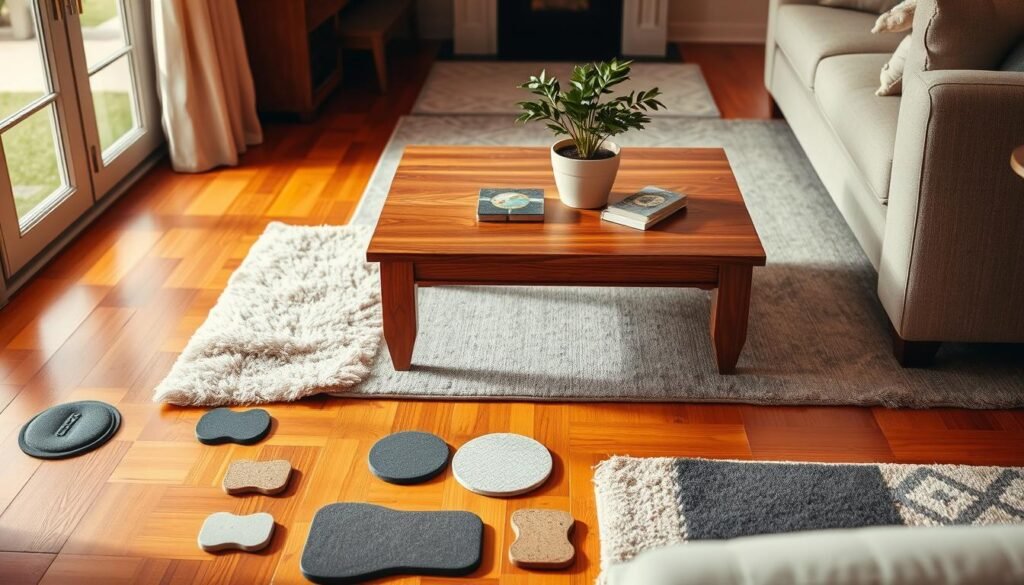
Keeping my wood floors safe is easy with a few simple steps. These steps help me enjoy my floors for many years.
Furniture Pads and Area Rugs
Using furniture pads and area rugs is a great way to protect my floors. Furniture pads stop heavy furniture from scratching. Area rugs help protect against foot traffic and spills.
- Use felt pads under furniture legs to prevent scratching.
- Place area rugs in high-traffic areas to reduce wear and tear.
- Choose area rugs with non-slip underlays to prevent them from slipping.
Avoiding Excessive Water Usage
It’s also important to avoid too much water on my floors. Excess water can harm the finish and warp the wood. So, I clean spills quickly and use the right cleaning products.
| Cleaning Method | Water Usage | Effectiveness |
|---|---|---|
| Damp Mopping | Low | High |
| Steam Cleaning | High | Moderate |
| Dry Sweeping | None | High |
By being careful with water and choosing the right cleaning methods, I can avoid water damage. This keeps my wood floors looking great.
Key Takeaways: Using furniture pads and area rugs, and avoiding too much water, are simple ways to protect my wood floors.
Dealing with Pet Hair and Dander
As a pet owner, I know how hard it is to keep wood floors clean. Pet hair and dander can scratch the floor and make allergies worse. Regular cleaning is key to prevent this.
Best Tools for Pet Hair Removal
To remove pet hair from wood floors, the right tools are essential. A rubber broom is great for picking up hair without scratching. A damp mop works well too, as moisture clumps hair for easier cleaning.
For deeper cleaning, a vacuum with a soft floor attachment is best. It avoids damaging the wood. A microfiber cloth also attracts and holds pet hair well.
Cleaning Strategies for Pet Owners
Pet owners should clean regularly to keep floors clean. Vacuum or sweep daily, where pets spend most time. Use a pet-friendly cleaning solution for thorough cleaning.
Having a ‘no shoes’ policy helps keep floors clean. Area rugs or mats in busy spots also protect your floors.
“The key to maintaining clean wood floors with pets is consistency and the right cleaning tools. Regular sweeping and mopping can make a big difference.” – Cleaning Expert
| Tool | Usefulness for Pet Hair Removal | Ease of Use |
|---|---|---|
| Rubber Broom | High | Easy |
| Damp Mop | High | Easy |
| Vacuum with Soft Floor Attachment | Medium | Moderate |
| Microfiber Cloth | High | Easy |
By using these strategies and tools, you can keep your wood floors clean. This makes your home healthier and more pleasant for you and your pets.
Restoring Shine to Dull Floors
To make your wood floors shine again, you need to know the best ways and products. Wood floors can get dull over time. But, with the right methods, you can make them shine like new.
Products for Revitalizing Wood
There are many products out there to make wood floors look new. These include:
- Wood floor polishes: These products make floors shine and protect the wood.
- Finishing oils: Oils like tung oil or linseed oil feed the wood and make it glow.
- Commercial wood floor restorers: These are special products that bring back the shine and health of the wood.
For more tips on keeping your laminate floors shiny, check out effective techniques.
Natural Solutions for Extra Shine
If you like natural solutions, there are a few you can try. These can add extra shine to your wood floors. Some options include:
- Mixing olive oil with lemon juice to make a natural polish.
- Using a white vinegar and water mix to clean and shine the floors.
These natural methods are good and eco-friendly. But, always test a small area first. This makes sure the solution won’t harm the finish or the wood.
Seasonal Cleaning Tips for Wood Floors
To keep my wood floors looking their best, I adjust my cleaning routine by season. Each season brings its own challenges that need specific cleaning strategies. This helps maintain the beauty and durability of my wood floors.
Adjusting My Cleaning Routine by Season
In spring and summer, my wood floors face more dirt and moisture. This is due to increased foot traffic and higher humidity. To tackle this, I:
- Increase the frequency of sweeping or vacuuming to remove dirt and debris.
- Use a damp mop with a cleaner suitable for wood floors to remove dirt and grime.
- Ensure the floors are dry after mopping to prevent water damage.
In fall and winter, the dry air can cause wood floors to shrink and become more prone to scratches. To address this, I:
- Use a humidifier to maintain a stable humidity level, typically between 35-55%.
- Reduce the frequency of mopping, as dry conditions require less moisture.
- Focus on spot cleaning spills and stains promptly to prevent damage.
Special Considerations for Winter
Winter poses specific challenges for wood floors, including dry air and potential salt or ice melt damage. To protect my floors, I:
- Place mats at entryways to catch salt and moisture from boots and shoes.
- Use felt pads on furniture legs to prevent scratching when moving furniture.
- Regularly inspect the floors for signs of damage or wear and address issues promptly.
By adjusting my cleaning routine according to the season and taking special precautions during the winter, I can keep my wood floors looking their best throughout the year.
What Not to Use When Cleaning Wood Floors
When cleaning wood floors, it’s crucial to know what not to use. The wrong products or methods can harm the finish, wood, or leave residues. This can damage your floors.
Common Mistakes to Avoid
One big mistake is using too much water. Wood and water don’t get along, leading to warping or discoloration. Avoid using wet mops or soaking the floor with water. Instead, use a damp mop or cloth.
Another error is using harsh chemicals or abrasive cleaners. These can strip the finish or damage the wood. Always read the label and choose cleaners made for wood floors.
Products That Can Damage Wood
Some products are bad for wood floors. Here are a few to steer clear of:
- Bleach: It can discolor the wood and damage the finish.
- Ammonia: It can dull the finish and harm the wood.
- Wax-based products: They can leave a residue that attracts dirt and dust.
- Harsh detergents: They can strip the finish and damage the wood.
To show the harm of wrong products, look at this table:
| Product | Potential Damage |
|---|---|
| Bleach | Discoloration, finish damage |
| Ammonia | Dulling of finish, wood damage |
| Wax-based products | Residue buildup, attracts dirt |
Knowing these common mistakes and products to avoid helps protect your wood floors. In the next section, we’ll talk about maintaining indoor humidity for wood floors.
Maintaining Indoor Humidity for Wood Floors
Keeping my wood floors in top shape means controlling the indoor humidity. Wood floors can shrink, expand, or even crack due to humidity changes. Dr. William Simpson, a renowned wood flooring expert, said, “Wood flooring is a dynamic material that responds to its environment, mainly humidity.”
“Wood flooring is a dynamic material that responds to its environment, mainly humidity.” – Dr. William Simpson
Ideal Humidity Levels for Wood
The best humidity for wood floors is between 35% and 55%. This range helps the wood keep its natural moisture balance. I use a hygrometer to check the humidity in my home, making sure it stays in this range.
Tips for Monitoring and Adjusting Humidity
To keep the right humidity, I follow a few easy steps:
- Use a hygrometer to monitor indoor humidity levels.
- Invest in a humidifier or dehumidifier as needed to adjust humidity levels.
- Keep my home well-ventilated, specially during seasonal changes.
- Avoid placing wood floors near direct sunlight or heating vents.
By following these tips and keeping humidity levels right, my wood floors stay beautiful and last long. As “The National Wood Flooring Association” advises, keeping humidity stable is key for wood floor longevity.
Conclusion: Keeping My Wood Floors Beautiful
Maintaining wood floors needs careful attention and regular upkeep. I’ve learned to keep mine looking great by understanding their finish and using the right cleaners.
Key Takeaways
Some important tips for wood floor care include sweeping or vacuuming often. It’s also key to use the right cleaning products and avoid too much water. I’ve found that using furniture pads and area rugs helps protect my floors from damage.
A Long-Term Strategy
To keep my wood floors in top shape, I’ll stick to regular maintenance. I’ll adjust my cleaning schedule with the seasons. Keeping an eye on humidity levels and maintaining a stable environment will help prevent damage. Taking care of wood floors is a long-term commitment that requires patience and dedication.