Did you know clogged fuel injectors can cut your vehicle’s fuel efficiency by up to 20%? This big drop can raise your fuel costs and hurt your vehicle’s performance. As a car owner, keeping your engine in top shape is key, and cleaning fuel injectors is a crucial part of that.
I’ll show you how to clean your fuel injectors at home easily. This will save you money on expensive repairs. By following this guide, you’ll boost your vehicle’s engine performance and fuel efficiency. You’ll be back on the road with confidence.
Key Takeaways
- Learn a simple, step-by-step process to clean fuel injectors at home.
- Improve your vehicle’s engine performance and fuel efficiency.
- Save money on costly repairs by doing it yourself.
- Understand the importance of maintaining clean fuel injectors.
- Get back on the road with confidence and a well-maintained vehicle.
Understanding Fuel Injectors and Their Function
Knowing how fuel injectors work is essential for your car’s performance and fuel efficiency. These small valves are key to your engine, delivering fuel to the combustion chamber.
What are Fuel Injectors?
Fuel injectors are small, electronic valves that spray fuel into the engine’s intake manifold. They ensure the right amount of fuel for the best engine performance. Most cars have one fuel injector for each cylinder.
How Fuel Injectors Work
Fuel injectors get signals from the engine control unit (ECU). The ECU decides how much fuel to inject based on engine speed, load, and temperature. This ensures the fuel-to-air mix is perfect for efficient burning.
The process involves several key steps:
- The ECU calculates the needed fuel amount based on engine conditions.
- The fuel injector gets the signal and opens to let fuel flow.
- Fuel is sprayed into the intake manifold in a fine mist.
- The fuel-air mix then goes into the combustion chamber.
Importance of Clean Fuel Injectors
Clean fuel injectors are crucial for your engine’s health. Dirty or clogged injectors can cause problems like lower fuel efficiency, less engine power, and more emissions.
| Benefits of Clean Fuel Injectors | Consequences of Clogged Fuel Injectors |
|---|---|
| Improved Fuel Efficiency | Reduced Engine Performance |
| Enhanced Engine Power | Increased Fuel Consumption |
| Lower Emissions | Higher Emissions |
By keeping your fuel injectors clean, your engine will run better and more efficiently. This means better performance and less chance of engine issues.
Signs That Your Fuel Injectors Need Cleaning
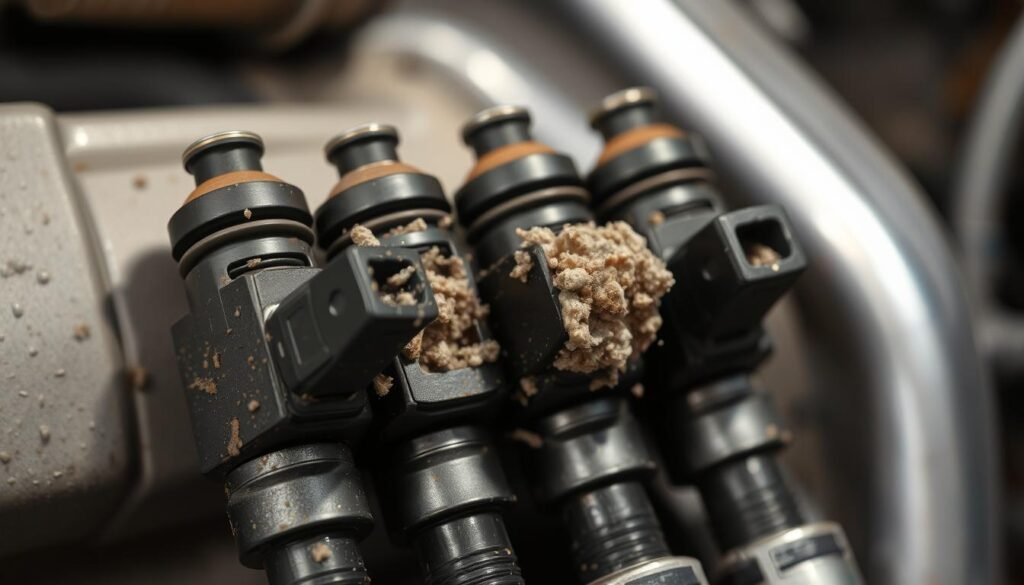
Clogged fuel injectors can lead to many issues, like a drop in engine performance and less fuel efficiency. It’s key to spot the signs that your fuel injectors need cleaning. This helps avoid damage to your vehicle’s engine.
Symptoms of Clogged Fuel Injectors
Several symptoms show when fuel injectors get clogged. These include:
- Decreased engine performance, such as rough idling or hesitation during acceleration
- Reduced fuel efficiency, leading to increased fuel consumption
- Engine misfires or stalling
- Difficulty starting the engine
- A noticeable decrease in power when accelerating
For more detailed information on the symptoms of clogged fuel injectors, you can visit Firestone Complete Auto Care for additional insights.
Consequences of Neglecting Fuel Injectors
Ignoring clogged fuel injectors can cause serious problems. These include:
| Consequence | Description |
|---|---|
| Engine Damage | Clogged fuel injectors can cause engine misfires, leading to damage to the engine’s cylinders, pistons, and valves. |
| Increased Emissions | A dirty engine can lead to increased emissions, contributing to air pollution and potentially causing your vehicle to fail emissions tests. |
| Costly Repairs | Ignoring clogged fuel injectors can result in costly repairs down the line, including replacing damaged engine components. |
By recognizing the signs of clogged fuel injectors and taking prompt action, you can prevent these consequences. This keeps your vehicle’s engine running smoothly.
Tools and Supplies Needed for Cleaning
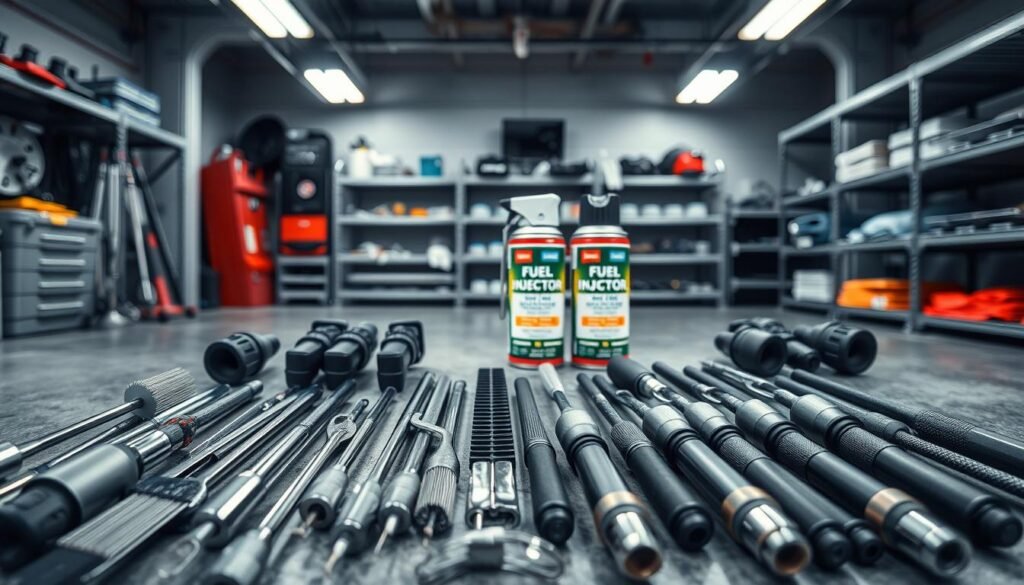
To clean your fuel injectors well, you’ll need some key tools and supplies. The right equipment makes the job easier and ensures your fuel injectors are clean.
Essential Tools for the Job
Here are the tools you’ll need to clean your fuel injectors:
- Fuel injector cleaning kit
- Socket set
- Ratchet and extension
- Torque wrench
- New fuel injector O-rings
A fuel injector cleaning kit is the most important tool. It has the cleaning solution and tools to get it through your fuel injectors. You can find these kits at auto parts stores or online.
Recommended Cleaning Solutions
There are many cleaning solutions to choose from. You can buy a commercial cleaner or make your own. Some popular ones include:
- CRC Fuel Injector Cleaner
- Gumout ReganeX Fuel System Cleaner
- Lucas Fuel Injector Cleaner
It’s important to pick a solution that works with your car’s fuel system.
Safety Gear and Precautions
Working with fuel injectors and cleaners needs safety steps to avoid harm. Always wear:
- Safety glasses
- Gloves
- A face mask
Also, make sure your area is well-ventilated. Stay away from open flames or sparks.
Preparing Your Vehicle for the Cleaning Process
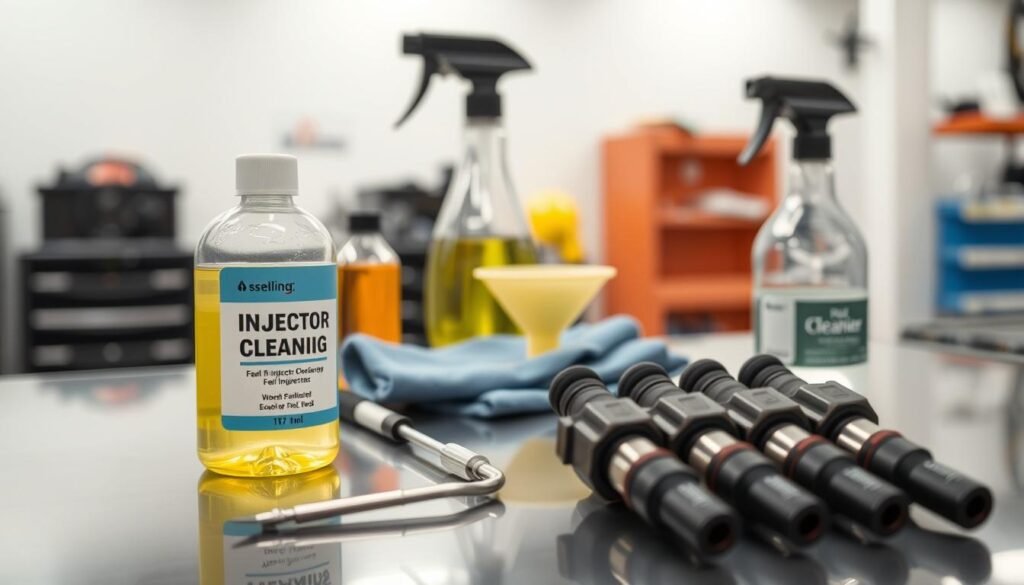
Getting your vehicle ready is a key step for safe and effective fuel injector cleaning. “A well-prepared workspace is a safe workspace,” so take your time to get everything ready. This will make the task easier and less likely to go wrong.
Gathering Necessary Supplies
The first thing to do is gather all the needed supplies. You’ll need the fuel injector cleaning kit, safety gear like gloves and goggles, and any tools mentioned in the kit’s instructions. Having everything ready will make the process smoother and safer.
Disconnecting the Battery
Before you start cleaning, disconnect the battery to avoid engine starts or electrical shocks. Find your vehicle’s battery and disconnect the negative terminal. Make sure it’s away from the battery post to prevent contact during cleaning.
“Safety is not just a precaution, it’s a necessity when working with potentially hazardous materials and electrical systems.”
Relieving Fuel Pressure
Relieving fuel pressure is a crucial step before cleaning the fuel injectors. You can do this by finding the fuel pressure relief valve or by running the engine until it stalls with the fuel pump fuse removed. Always check your vehicle’s repair manual for safe ways to relieve fuel pressure.
- Check your vehicle’s manual for the location of the fuel pressure relief valve.
- Use the appropriate tool to relieve the pressure.
- Be cautious of any fuel that may spray out during this process.
By following these steps, you’ll be ready to clean your fuel injectors safely and effectively. Remember, preparation is key to a successful DIY project.
Cleaning Fuel Injectors with a Professional Kit
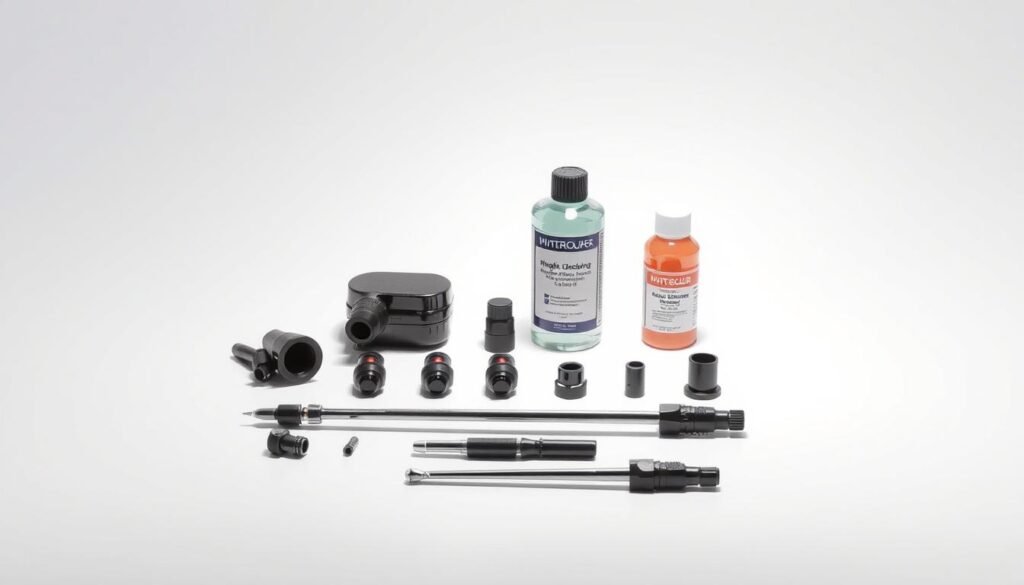
A professional fuel injector cleaning kit makes cleaning your fuel injectors easy and safe. These kits are made for this job and come with everything you need.
Choosing the Right Cleaning Kit
It’s important to pick a fuel injector cleaning kit that fits your car. Here are some things to think about:
- Compatibility: Make sure the kit works with your car’s fuel system.
- Included Components: Look for kits with all the tools and cleaners you need.
- Brand Reputation: Choose kits from well-known brands for quality.
| Kit Component | Description | Importance Level |
|---|---|---|
| Cleaning Solution | Specifically formulated to dissolve deposits and clean fuel injectors. | High |
| Adapter Kit | Adapters for connecting the cleaning kit to different types of fuel injectors. | High |
| Pressure Regulator | Regulates the pressure during the cleaning process to prevent damage. | Medium |
Step-by-Step Instructions for Using the Kit
Using a professional fuel injector cleaning kit involves several steps. Here’s a general guide:
- Prepare the Kit: Follow the manufacturer’s instructions to assemble and prepare the cleaning kit.
- Connect the Kit: Attach the kit to your vehicle’s fuel system according to the provided instructions.
- Run the Cleaning Cycle: Operate the cleaning kit as directed, ensuring the cleaning solution circulates through the fuel injectors.
- Monitor the Process: Keep an eye on the cleaning process to ensure it’s working effectively and safely.
By following these steps and using a professional fuel injector cleaning kit, you can effectively clean your fuel injectors and improve your vehicle’s performance.
DIY Methods to Clean Fuel Injectors
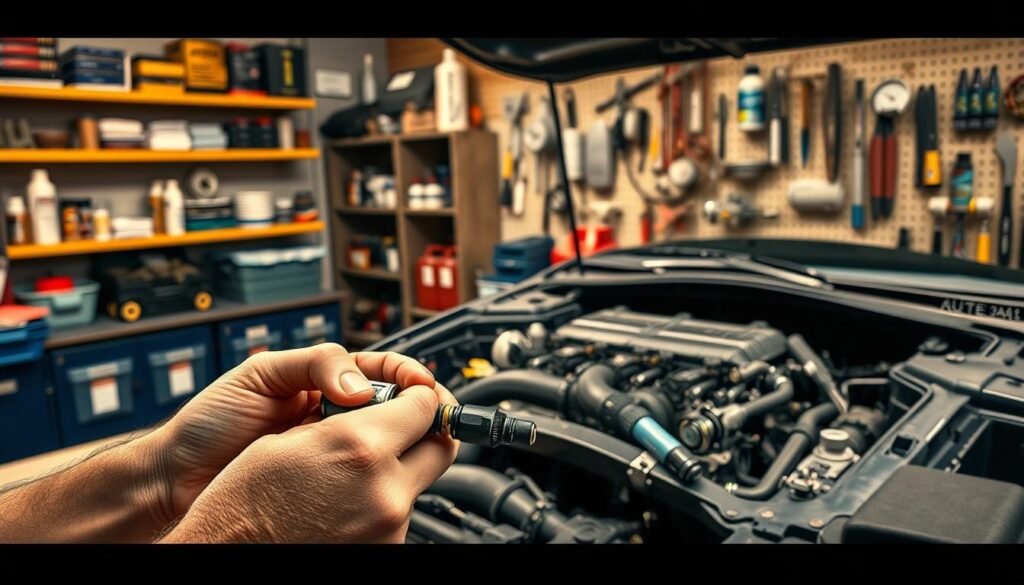
You don’t need a professional mechanic to clean your fuel injectors. There are several DIY methods you can try. These methods can keep your fuel injectors clean and your engine running smoothly.
Using Fuel Additives
One simple DIY method is using fuel additives. These additives help break down deposits and clean the fuel system. When picking a fuel additive, make sure it’s labeled as a “fuel injector cleaner.” Always follow the product label for the right dosage and usage.
Using fuel additives is easy because it doesn’t require any mechanical work. But, how well it works can depend on the product and how dirty the injectors are. For really bad clogs, you might need to try something else.
Manual Cleaning Techniques
For a more hands-on approach, you can try manual cleaning techniques. This involves taking out the fuel injectors and soaking them in a cleaning solution. You can buy cleaning solutions at auto parts stores or make your own with chemicals like acetone and Marvel Mystery Oil.
To manually clean fuel injectors, you’ll need to check your vehicle’s repair manual for safe removal instructions. Once removed, soak the injectors in the cleaning solution. Then, use a soft brush to gently scrub away any deposits.
Using Compressed Air
Another DIY method is using compressed air to clean fuel injectors. This method is less invasive but can still be effective for removing loose debris. To use compressed air, find the fuel injector ports and spray the air into them.
Be careful when using compressed air, as it can damage the injectors if not done right. Also, make sure the compressed air is dry to avoid further contamination.
| Method | Effectiveness | Ease of Use |
|---|---|---|
| Fuel Additives | Moderate | Easy |
| Manual Cleaning | High | Moderate |
| Compressed Air | Low to Moderate | Easy |
Each DIY method has its pros and cons. The best one for you depends on how dirty the injectors are and how comfortable you are with DIY projects. By considering these options, you can find the best way to keep your fuel injectors clean.
Cleaning Fuel Injectors: Step-by-Step Guide
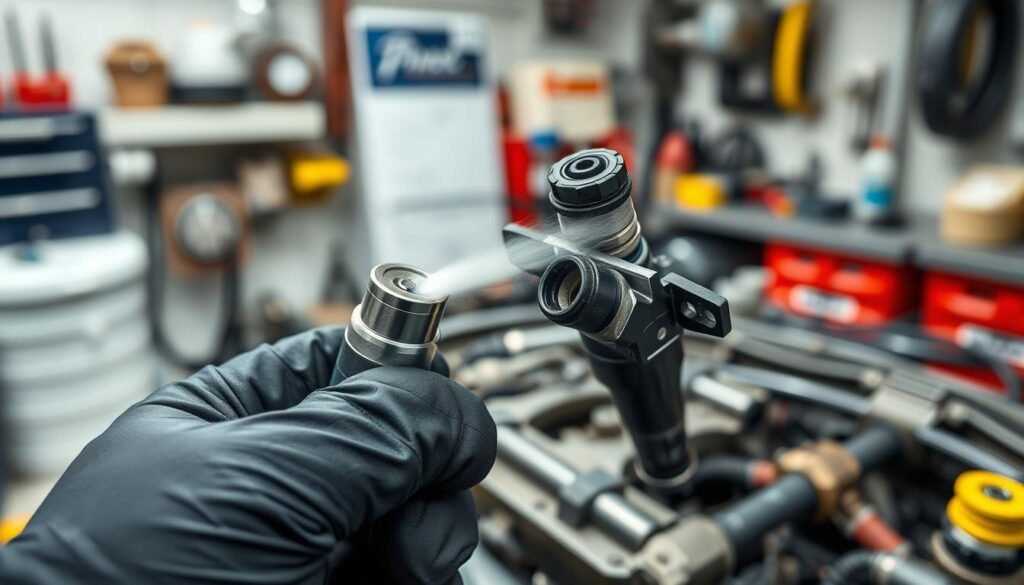
Cleaning fuel injectors is easy and important for better fuel efficiency and performance. You need to follow a few steps to clean and maintain your fuel injectors well.
Step 1: Accessing the Fuel Injectors
To start, find the fuel injector rail. It’s usually on top of the engine or the intake manifold. Check your repair manual to find it in your car.
Key considerations: Make sure the engine is cool. Also, disconnect the battery to avoid any accidental starts.
Step 2: Removing the Injectors
After finding the fuel injectors, remove them. Disconnect the electrical connectors and fuel lines. Then, pull the injectors out carefully. Be gentle to avoid damage.
Tip: Take a photo or note the injectors’ positions. This helps you put them back right.
Step 3: Cleaning the Injectors
Now, clean the injectors. Use a fuel injector cleaning kit as directed. Attach the injector to the kit and run a cleaning solution through it.
| Cleaning Method | Description | Effectiveness |
|---|---|---|
| Fuel Injector Cleaning Kit | Uses a specialized cleaning solution to remove deposits | High |
| Ultrasonic Cleaning | Employs sound waves to dislodge debris | Very High |
| Manual Cleaning | Involves physically scrubbing the injectors | Moderate |
After cleaning, check the injectors for any leftover debris. Then, put them back in their original spots.
Reinstalling Cleaned Fuel Injectors
Putting clean fuel injectors back in your car is key for better engine performance and fuel use. After cleaning, it’s important to install them right to get your car running smoothly again.
Tips for Proper Reinstallation
When putting in your fuel injectors, always follow the maker’s guide. This means using new O-rings and seals to stop leaks. Also, make sure the injectors fit well and are locked in place to avoid engine problems.
- Use new O-rings and seals to prevent leaks.
- Ensure the injectors are properly seated and secured.
- Refer to your vehicle’s manual for specific instructions.
For more on cleaning and putting in fuel injectors, check out this resource. It has extra tips and expert advice.
Testing for Leaks and Issues
After putting in your fuel injectors, test for leaks or problems. Start the engine and listen for odd sounds. Look for fuel leaks around the injectors. If you find any issues, turn off the engine right away and check the installation again.
Key steps to test for leaks include:
- Start the engine and listen for unusual sounds.
- Check for signs of fuel leakage around the injectors.
- Monitor the engine’s performance for any irregularities.
By doing these steps, you can make sure your fuel injectors are installed right. This keeps your car running well and efficiently.
Maintenance Tips for Fuel Injectors
Keeping your fuel injectors in good shape can really boost your car’s performance and life. To do this, follow some important tips. These will help keep your fuel injectors working well.
Regular Cleaning Schedule
It’s crucial to have a regular cleaning schedule for your fuel injectors. I suggest cleaning them every 15,000 to 30,000 miles. This depends on your car’s type and how you drive it. Cleaning them often stops dirt and debris from clogging them up.
Using a fuel injector cleaning kit is a smart move. These kits are made to clean out dirt without harming the injectors. Make sure the kit fits your car’s make and model.
Choosing Quality Fuel
The fuel you use is also key to keeping your fuel injectors in top shape. I recommend using fuel from trusted gas stations. This fuel has fewer harmful additives and contaminants.
Tips for Choosing Quality Fuel:
- Choose fuel that your car’s maker recommends.
- Stay away from fuel with too much ethanol, as it can damage engine parts.
- Think about using fuel additives that clean and protect your fuel injectors.
By sticking to these maintenance tips, you can make your fuel injectors last longer. This keeps your car running smoothly and efficiently. A well-kept engine means a better driving experience.
After-Cleaning Inspection: What to Look For
After cleaning your fuel injectors, it’s important to check if they’re working right. This ensures your car runs better. It’s key to know the cleaning was successful and your engine is smooth.
Checking Injector Functionality
First, listen for odd sounds from the injectors. They should be quiet. Use a fuel injector tester to see if each one sprays fuel right. For more tips, check this article on cleaning fuel injectors.
Look at the injectors for leaks or damage. Make sure all connections are tight and there’s no fuel around them. A leak can hurt your car’s performance and gas use.
Signs of Improvement in Engine Performance
After cleaning, your engine should feel better. You might notice:
- Smoother engine operation
- Improved fuel efficiency
- Increased power and responsiveness
- Reduced engine misfires
Here’s a comparison to show the benefits of cleaning fuel injectors:
| Performance Metric | Before Cleaning | After Cleaning |
|---|---|---|
| Fuel Efficiency (mpg) | 25 | 30 |
| Engine Power (hp) | 150 | 160 |
| Engine Misfires (per minute) | 5 | 0 |
By following these steps and checking your fuel injectors, you keep your car running well. Regular care and checks will also make your fuel injectors last longer and keep your engine healthy.
Frequently Asked Questions About Fuel Injector Cleaning
As a car owner, you might wonder about fuel injector cleaning. It’s key for your car’s performance and fuel use. Here are answers to some common questions about cleaning fuel injectors.
How Often Should I Clean My Fuel Injectors?
How often to clean fuel injectors varies. It depends on your car’s make, model, and how you drive. Usually, clean them every 15,000 to 30,000 miles. But, check your car’s manual or talk to a mechanic for the best advice. For more info, see this article on cleaning fuel injectors for better performance.
Can I Clean Fuel Injectors Without Removing Them?
Yes, you can clean fuel injectors without taking them out. There are methods and products for in-situ cleaning. These include fuel additives and cleaning kits that go through the fuel system. But, removing the injectors is better for a deep clean.
What Happens if I Don’t Clean My Fuel Injectors?
If you don’t clean your fuel injectors, problems can arise. You might see less fuel efficiency, worse engine performance, and even engine damage. Clogged injectors can make your engine run poorly, hurting your car’s performance and possibly leading to expensive fixes.
Knowing why fuel injector cleaning is important helps keep your car running well. It answers common questions and ensures your vehicle stays in top shape.
Conclusion: Enjoy Better Engine Performance
By following this guide on how to clean fuel injectors, you’ve made a big step. You’re helping keep your vehicle healthy and improving its performance.
Cleaning Process Recap
The process starts with understanding fuel injectors and knowing when they need cleaning. You’ll use the right tools and techniques, whether you go for a professional kit or DIY. The goal is to be thorough and careful.
Benefits of Clean Fuel Injectors
Clean fuel injectors bring many benefits. They improve engine performance, fuel efficiency, and extend your engine’s life. Regular cleaning keeps your vehicle running smoothly and saves on repair costs.
With clean fuel injectors, your engine will be more responsive, and you’ll see better fuel economy. You’ll also reduce emissions. By following this guide, you’ll enjoy these benefits and keep your vehicle in top shape.