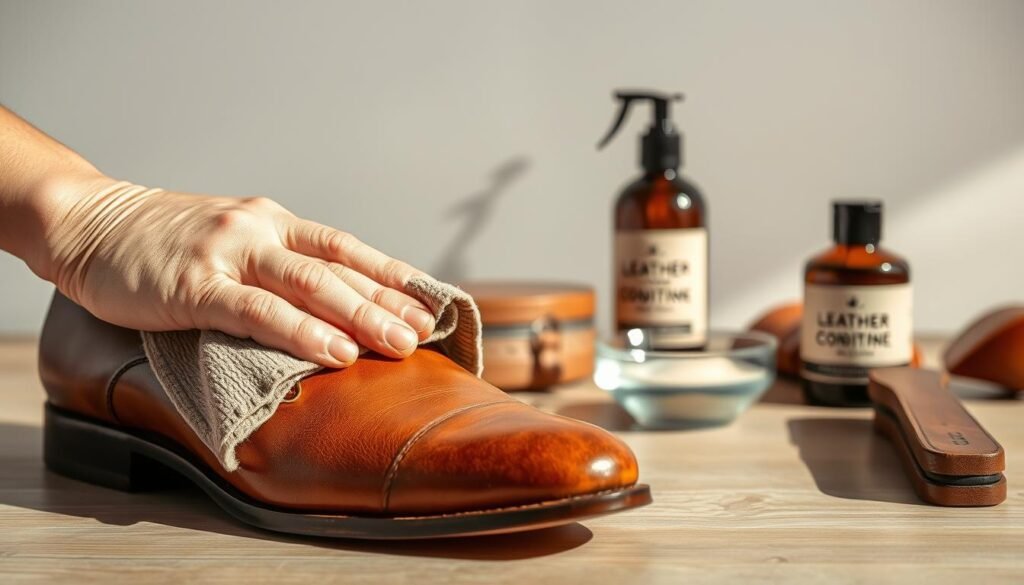
Leather goods, like fancy handbags and cozy furniture, are big investments. Did you know that wrong cleaning can cut their life by up to 50%? So, knowing how to clean leather is key to keeping your items looking great.
Cleaning leather is more than just getting rid of dirt. It’s about keeping the material in top shape. For a detailed guide on how to clean leather right, including what tools to use and what to avoid, keep reading.
Key Takeaways
- Deep clean leather every six to 12 months, depending on use.
- Use distilled water, natural soap, and microfiber cloths for cleaning.
- Avoid ammonia, bleach, and alcohol-based cleaners.
- For stain removal, use specific techniques like applying lemon juice for ink stains.
- Condition leather with natural conditioners or oils like olive or coconut oil.
Understanding the Importance of Leather Care
Proper leather care is key to keeping your leather items looking great and lasting long. As someone who loves leather, I know how important it is to take good care of it. The way you care for your leather goods can greatly affect how long they last and how they look.
Benefits of Regular Cleaning
Cleaning your leather regularly is a must. It keeps your leather looking its best and stops dirt and grime from damaging it over time.
Regular cleaning offers many benefits, including:
- Stopping dirt and oils from breaking down the leather.
- Keeping the leather soft and preventing it from drying out and cracking.
- Lowering the chance of stains and color changes.
The Longevity Factor
Good care can make your leather goods last longer. By cleaning and conditioning them regularly, you can avoid wear and tear. This keeps them in great shape for many years.
Several factors help leather last longer, including:
- Regular upkeep to stop dirt from building up.
- Choosing the right cleaning products to avoid harming the leather.
- Keeping them away from harsh conditions like direct sunlight and moisture.
Preserving Aesthetic Appeal
Leather care is not just about keeping your items durable. It’s also about keeping them looking good. Regular cleaning and conditioning help keep the leather’s natural color and texture. This keeps it looking vibrant and fresh.
To keep your leather items looking their best, try these tips:
- Use a leather conditioner to keep the leather soft and supple.
- Avoid harsh chemicals that can harm the leather’s finish.
- Store your leather goods properly when not in use to prevent creasing and cracking.
Identifying Different Types of Leather
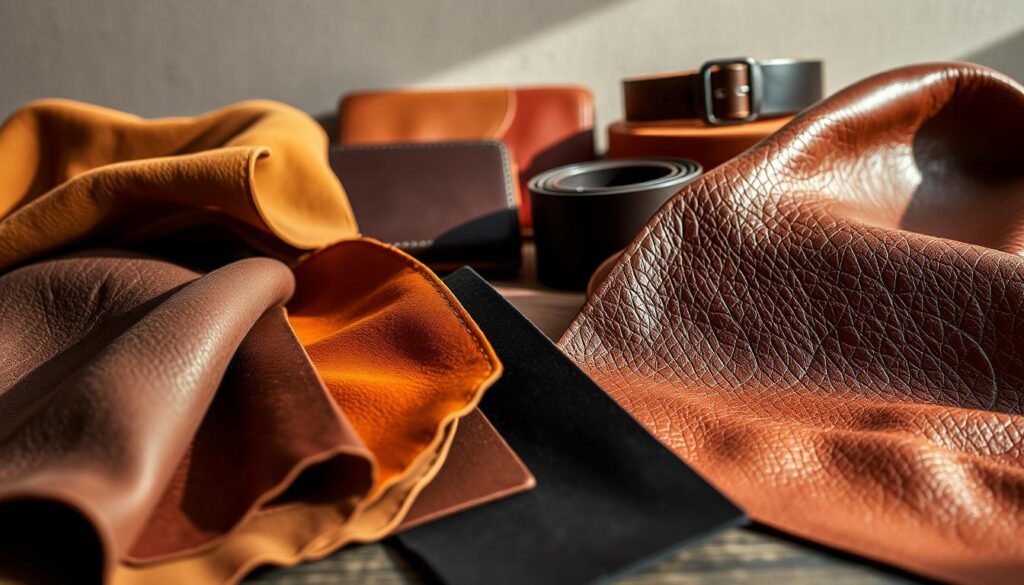
The world of leather is full of variety, each type needing its own care. Knowing what kind of leather you have is key to keeping it in top shape.
Full-Grain Leather
Full-grain leather is the top choice because it’s made from the strongest part of the hide. It’s not sanded or buffed, so it keeps its natural look and breathes well. This makes it more comfortable as it ages.
Top-Grain Leather
Top-grain leather is also high quality but has been sanded and buffed. This makes it thinner and softer than full-grain. It’s good at resisting stains but might not get the same patina as full-grain.
Suede and Nubuck
Suede and nubuck are leathers that have been buffed to feel soft and velvety. Suede is buffed on the flesh side, while nubuck is buffed on the grain side. Both need special care to keep their texture and look.
Correcting Misunderstandings
Many think all leather is the same and can be treated the same way. But, different leathers have different needs. For example, suede and nubuck need special cleaners to avoid damaging their soft surfaces. Full-grain and top-grain leathers can usually be cleaned with traditional leather cleaners.
| Leather Type | Characteristics | Care Requirements |
|---|---|---|
| Full-Grain | Natural texture, durable, breathes well | Use gentle leather cleaners, condition regularly |
| Top-Grain | Thinner, more supple, resistant to stains | Clean with appropriate leather cleaners, condition to maintain suppleness |
| Suede/Nubuck | Soft, velvety surface, sensitive to water and stains | Use suede/nubuck specific cleaners, protect with waterproofing sprays |
Gathering Your Leather Cleaning Supplies
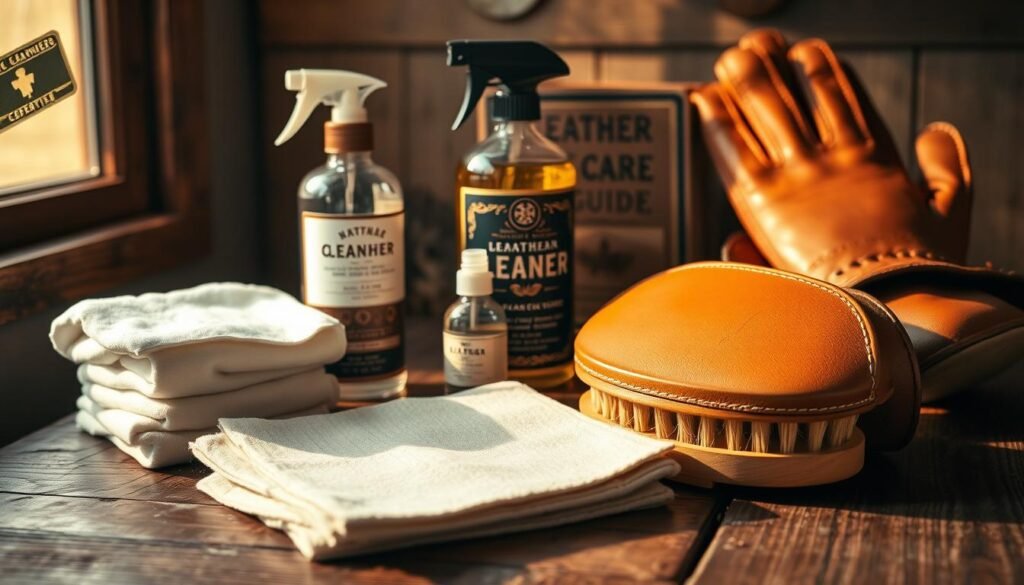
Having the right tools for cleaning leather is key to a good job. Before you start, make sure you have everything you need.
Essential Tools I Use
You’ll need a few basic tools to clean leather well. A soft, dry cloth is great for dusting. A soft-bristled brush helps get dirt out of tight spots. And, you’ll need a cleaning applicator or a soft cloth for applying cleaners.
I suggest using a microfiber cloth. It’s gentle and good at picking up dirt.
Recommended Cleaners
Not all cleaners are the same. For most leathers, a mild soap solution or a leather cleaner works best. Look for a pH-balanced cleaner to avoid harming the leather.
Popular cleaners include those from Sadolin and Lexol. Always check the label and follow the instructions.
Optional Care Products
There are extra products to keep your leather looking good. Leather conditioners keep it soft. Leather protectants help prevent spills and stains.
Using these products regularly can make your leather last longer.
Performing a Pre-Clean Inspection
I start by doing a pre-clean inspection to see how the leather is doing. This helps me figure out the best way to clean it. It’s important to avoid damaging the leather during the cleaning process.
Checking for Damage
The first thing I do is look for damage on the leather. I check for scratches, tears, or worn-out areas that need extra care. Finding these problems early helps me decide if I should clean it myself or get professional help.
Assessing Stains
Then, I check the leather for stains or color changes. Different stains need different cleaning methods. For example, ink stains might need a special cleaner, while oil-based stains might need another. Knowing the stain type is crucial for cleaning it right.
Determining the Leather Type
It’s also important to know the leather type during the inspection. Whether it’s full-grain, top-grain, suede, or nubuck, each needs its own cleaning method. For example, suede and nubuck leathers are very delicate and need special cleaners.
By doing a detailed pre-clean inspection, you can make sure your leather cleaning is both effective and safe. This careful method helps keep your leather items looking good for a long time.
The Basic Cleaning Process
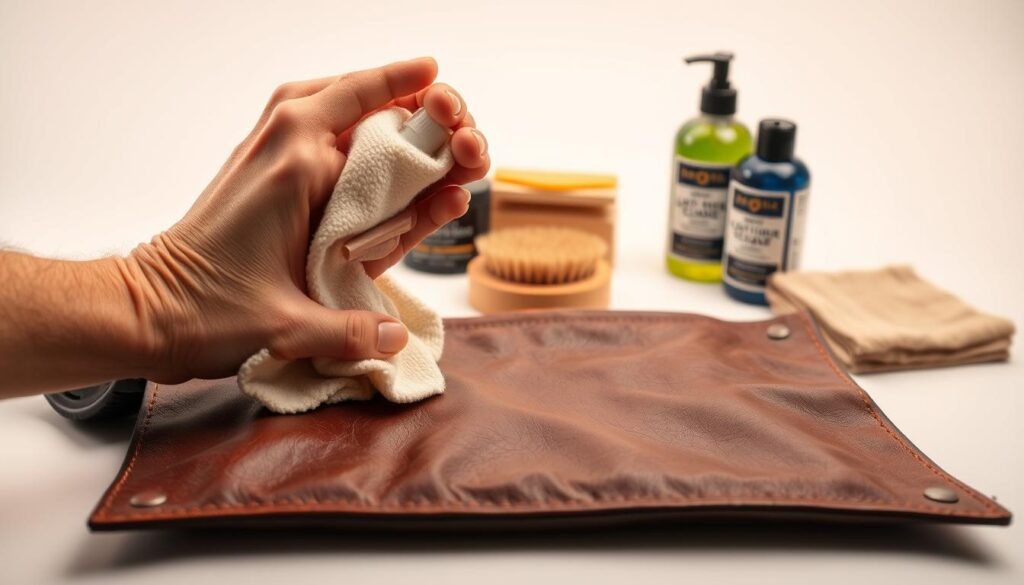
Before you start cleaning your leather, it’s crucial to know the basics to avoid damaging it. Cleaning leather is not just about removing dirt; it’s about preserving the material’s integrity and appearance.
Dusting and Removing Dirt
The first step in the basic cleaning process is to gently remove any loose dirt or dust from the leather surface. I use a soft, dry cloth to wipe down the leather, ensuring that I remove any debris that could scratch the surface during the cleaning process.
Using the Right Cleaner
Once the surface is free of loose dirt, the next step is to apply a suitable leather cleaner. It’s essential to choose a cleaner that is appropriate for the type of leather you are cleaning. For more information on different types of leather and their care, you can refer to this comprehensive guide.
Testing on a Small Area
Before applying any cleaner to the entire surface, it’s vital to test it on a small, inconspicuous area. This step ensures that the cleaner does not damage the leather or cause discoloration. Wait for a few minutes after applying the cleaner to the test area to check for any adverse reactions.
| Cleaning Step | Purpose | Recommended Tool/Cleaner |
|---|---|---|
| Dusting | Remove loose dirt and dust | Soft, dry cloth |
| Applying Cleaner | Deep clean the leather | Leather cleaner suitable for the leather type |
| Testing | Ensure cleaner safety | Small amount of cleaner on a hidden area |
Cleaning Leather Furniture
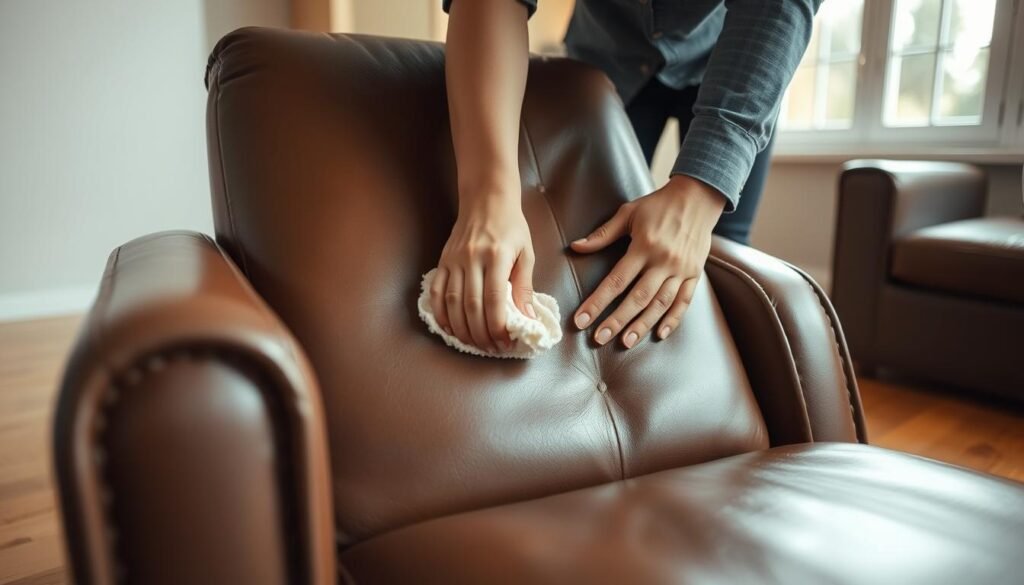
Cleaning leather furniture is more than just wiping it down. It’s about keeping it looking great and lasting long. I’ve learned that the right cleaning methods are key to keeping leather furniture in top shape.
For Sofas and Chairs
Start by dusting leather sofas and chairs gently to get rid of dirt. Use a soft, dry cloth for this. For deeper cleaning, a damp cloth with mild soap works well. But, test it first on a small area to avoid damage.
Preventing Damage to Upholstery
To keep leather upholstery safe, clean it regularly and choose the right products. Stay away from harsh chemicals and rough cleaners. They can dry out and crack the leather. Instead, use a good leather cleaner made for your furniture’s type.
Dealing with Stains Effectively
Stains on leather can be tough, but they’re not permanent. For ink or food spills, quickly blot the stain with a clean cloth. For harder stains, you might need a leather stain remover. Always check the product on a hidden spot first.
| Stain Type | Recommended Action | Product to Use |
|---|---|---|
| Ink Stains | Blot with a damp cloth, then apply a stain remover | Leather stain remover |
| Food Spills | Blot immediately, clean with mild soap solution | Mild soap and water |
| Grease Stains | Absorb excess grease, then clean with a leather cleaner | Leather cleaner |
By following these tips and staying on top of cleaning, your leather furniture will last for many years. Remember, keeping it beautiful and durable requires regular care and attention.
Caring for Leather Clothing
To keep your leather clothes looking new, you need to know the basics of leather care. Leather items like jackets, pants, and skirts are big investments. They need careful care to stay in top shape.
Cleaning Leather Jackets
Leather jackets are a must-have for many, but cleaning them can be tricky. Start by wiping off dirt and dust with a soft, dry cloth. For stubborn stains, use a leather cleaner on a cloth first, then rub the stain gently.
Always check the care label for specific cleaning instructions. Different leathers need different care.
Maintaining Leather Pants and Skirts
Leather pants and skirts need similar care to jackets but might need extra attention. Look for wear spots, like where they rub against your legs. Use a leather conditioner to keep them soft and prevent cracks.
For stains, clean them quickly. Use a method that fits the leather type you have.
Experts say, “The key to keeping leather clothes in great shape is regular, gentle care.” This not only keeps them looking good but also makes them last longer.
“Leather is a natural product, and like all natural products, it requires care and attention to maintain its beauty and durability.”
| Leather Type | Cleaning Method | Conditioning Frequency |
|---|---|---|
| Full-Grain Leather | Mild soap solution | Every 2-3 months |
| Suede Leather | Suede-specific cleaner | Every 6 months |
| Nubuck Leather | Nubuck-specific cleaner | Every 3-4 months |
By following these tips, you can enjoy your leather clothes for many years. They’ll stay looking great and feel comfortable.
Methods for Cleaning Leather Accessories
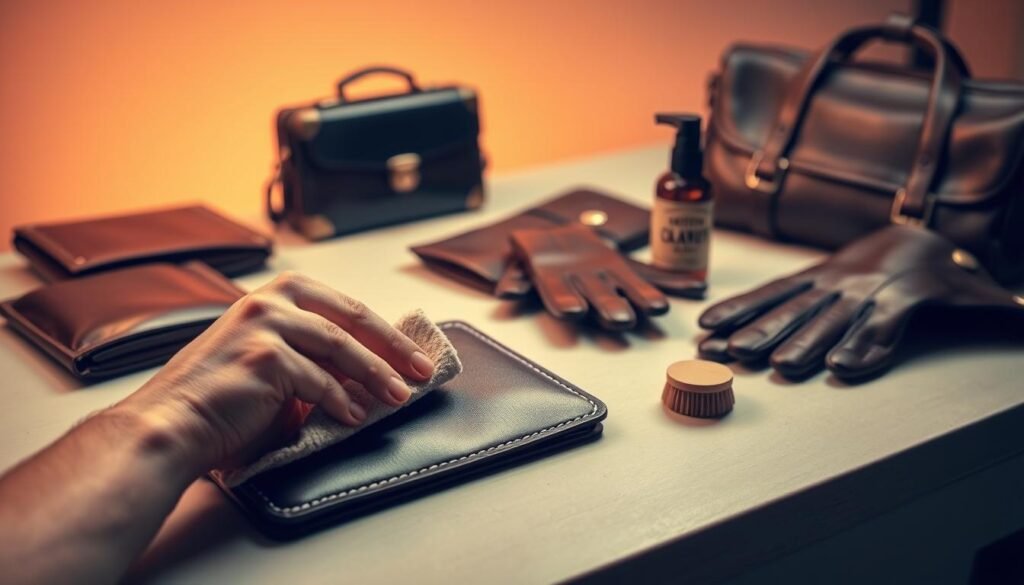
To keep your leather accessories looking great, it’s key to know the best cleaning methods. Items like handbags, shoes, belts, and wallets add elegance to our daily lives. But, they need regular care to avoid damage.
Handbag and Purse Care
Cleaning a leather handbag or purse needs gentle care to avoid damage. Start by dusting with a soft, dry cloth to remove loose particles. For tough stains, use a leather cleaner on a clean cloth, rubbing gently on the stain. Always test the cleaner on a small, hidden area first to check for color changes.
As “A good leather handbag is an investment piece that can last for years with proper care.” Regular cleaning and conditioning can make your handbag last longer.
Cleaning Leather Shoes
Leather shoes need special care to keep them looking and lasting good. Start by brushing off dirt with a soft-bristled brush or a damp cloth. For scuffs and stains, use a leather cleaner or a mix of water and white vinegar on a soft cloth, rubbing gently. Conditioning your leather shoes after cleaning is key to keep them soft and supple.
“The way you care for your leather shoes can make all the difference in how long they last and how good they look.” – Footwear Expert
Maintaining Belts and Wallets
Belts and wallets face daily wear and tear, so regular cleaning is a must. For belts, use a leather cleaner on a soft cloth to remove dirt and stains. For wallets, a soft, dry cloth can dust the surface, and a slightly damp cloth for deeper cleaning. Avoid harsh chemicals or too much water, as they can harm the leather.
- Regularly check your leather accessories for wear signs.
- Use the right cleaning products for your leather type.
- Condition leather after cleaning to keep it soft.
Dealing with Stains on Leather
Removing stains from leather needs a gentle touch to keep it in good shape. Leather, being natural, can get stains like water spots, ink, and oil. Knowing the stain type and how to remove it is key.
Common Stains and Solutions
Each stain needs a different fix. Water-based stains might just need a damp cloth. But oil-based stains might need a special cleaner. Here are some common stains and how to tackle them:
- Ink Stains: Use a cotton swab with nail polish remover or a special ink remover.
- Oil-Based Stains: Sprinkle talcum powder or cornstarch on it, then brush off the excess.
- Water Spots: Wet the whole area with water, then condition the leather to balance the moisture.
For tough stains, you might need a leather cleaner. Always test a small area first to avoid harming the leather.
When to Seek Professional Help
Some stains are too hard to remove at home. If a stain is big or you’re not sure how to get rid of it, get a pro. They have the skills and tools to fix it without hurting the leather.
| Stain Type | Removal Method | Professional Help Needed |
|---|---|---|
| Ink | Nail polish remover or ink remover | No |
| Oil-Based | Talcum powder or cornstarch | No |
| Water Spots | Dampen and condition | No |
| Unknown/Stubborn | Specialized cleaner | Yes |
In conclusion, fixing stains on leather takes time and the right steps. By knowing the stain type and using the right method, you can remove stains and keep your leather looking great.
Conditioning Leather After Cleaning
After cleaning your leather, it’s key to condition it. This keeps it soft and supple. Conditioning locks in moisture and prevents drying or cracking. It’s vital to keep your leather in great shape.
The Importance of Conditioning
Conditioning replaces natural oils lost during cleaning. This is crucial for high-quality leathers to last long. It keeps the leather looking good and extends its life.
Leather conditioners make the leather soft and strong. They prevent it from drying out and cracking. Regular use keeps the leather in top condition.
Recommended Conditioners
Choosing the right conditioner is important. For most leathers, a high-quality leather conditioner or cream works well. Make sure it matches your leather type, like full-grain or suede. Check out Galen Leather’s conditioning products for options.
How to Apply Conditioner
Applying conditioner is easy. Use a small amount on a clean cloth. Rub it into the leather in circular motions. Make sure to cover the whole surface.
Let the conditioner soak in for a few minutes. Then, buff it off with a clean cloth. Follow the conditioner’s instructions for best results. Condition every 2-3 months to keep your leather looking great.
Preventative Measures for Leather Care
Preventative care is key to keeping your leather items in top shape. It’s simpler than you might think. By adding a few easy steps to your daily routine, you can make your leather last longer and look better.
Tips for Daily Maintenance
Keeping your leather items clean is essential. Regularly dusting them with a soft cloth stops dirt from causing harm. For items like handbags and shoes, a leather protector adds extra protection against spills and stains.
Avoid extreme temperatures and direct sunlight to prevent fading or drying. Store your leather in a cool, dry spot when not in use. This helps keep it in great condition.
Storage Techniques to Consider
Storing leather right is just as important as cleaning it. Store leather in a breathable spot, like a cloth bag or well-ventilated area. This stops moisture buildup, which can cause mold or mildew. For clothes, use padded hangers and store in a garment bag to keep dust out.
For accessories like wallets and belts, keep them in a cool, dry spot away from sunlight. It’s also wise to condition your leather goods now and then. This keeps the leather soft and prevents it from cracking.
Troubleshooting Common Leather Issues
Leather problems like scratches, odors, and fading can be fixed easily. I’ll show you how in this section. Whether it’s a scratched handbag or a faded jacket, knowing how to fix these issues can make your leather last longer.
Handling Scratches
Scratches on leather can look bad, but they’re not permanent. For small scratches, a leather conditioner can help. For bigger ones, a leather scratch repair kit works well. These kits have a filler that you apply and then buff out.
To avoid scratches, be careful with your leather. Don’t put it where it can get scratched or rubbed. Also, conditioning it regularly keeps it soft and less likely to scratch.
Removing Odors
Leather can pick up smells from its surroundings, which can be hard to get rid of. A good way is to use a mix of water and white vinegar on a soft cloth to clean it. Baking soda can also soak up smells; just put it near the leather or inside a bag, then vacuum it up after a few hours.
“The key to removing odors from leather is to be gentle and patient, as harsh chemicals can damage the leather.”
Addressing Color Fading
Leather can fade, which is common, but it’s fixable. Use a leather dye or color restorer that matches the original color. Before dyeing, clean the leather well and test the dye on a small area first.
| Issue | Solution | Prevention |
|---|---|---|
| Scratches | Leather conditioner or scratch repair kit | Handle with care, regular conditioning |
| Odors | Vinegar and water mixture, baking soda | Avoid exposure to strong odors, regular cleaning |
| Color Fading | Leather dye or color restorer | Avoid direct sunlight, use leather protector |
For more tips on leather problems and solutions, check out Style Meets Comfort. They offer great advice on keeping your leather furniture in top shape.
Final Thoughts on Leather Care
Learning how to clean and maintain leather can make a big difference. A little effort can help your leather items last longer. By using the leather care tips from this article, your leather will stay in great shape.
Personal Routine
I condition my leather every three months to keep it soft and prevent cracks. For stubborn stains, I get professional help to protect the leather.
Maintaining Your Leather
Keeping leather in good condition is more than just cleaning. It’s also about preventing damage. Stay away from direct sunlight, don’t soak the leather, and use the right cleaners. Following these tips will help your leather last for many years.