Did you know a dirty fish tank can be a breeding ground for harmful bacteria and diseases? These can seriously harm your fish. Keeping your tank clean and healthy is key to your fish’s well-being.
As a fish tank owner, you aim to create a thriving home for your fish. Regular cleaning is vital to stop toxins from building up. This keeps your fish healthy and happy.
I’ll show you how to clean your fish tank effectively. You’ll get tips and tricks to keep your tank clean and your fish thriving.
Key Takeaways
- Understand the importance of regular fish tank cleaning
- Learn the step-by-step process for cleaning your tank
- Discover tips for maintaining a healthy environment for your fish
- Find out how to prevent common issues in fish tank maintenance
- Get insights into keeping your fish tank clean and your fish healthy
Why Cleaning Your Fish Tank is Important
Cleaning your fish tank regularly is key to a healthy home for your fish. A clean tank is more than just pretty; it’s essential for your fish’s health. We’ll look at why keeping your tank clean is important, how it affects your fish, and how it makes your tank look better.
Benefits of a Clean Fish Tank
Keeping your tank clean has many advantages. It stops toxins and bacteria from harming your fish. It also keeps the water quality right, which is vital for your fish’s health. Plus, a clean tank looks great, making it a nice addition to any space.
Impact on Fish Health
The health of your fish depends on a clean tank. A dirty tank can cause stress and disease in fish, which can be deadly. Cleaning regularly removes waste and old food that can harm your fish. This way, your fish stay healthy and happy.
Enhancing Aesthetics
A clean fish tank is good for your fish and looks great in your home or office. Clear water and clean decorations make the tank more beautiful and fun to watch. Keeping up with maintenance makes your tank a stunning display.
In summary, cleaning your fish tank is crucial for fish tank maintenance. It affects your fish’s health and the look of your tank. By understanding its importance and cleaning regularly, you create a great home for your fish.
When to Clean Your Fish Tank
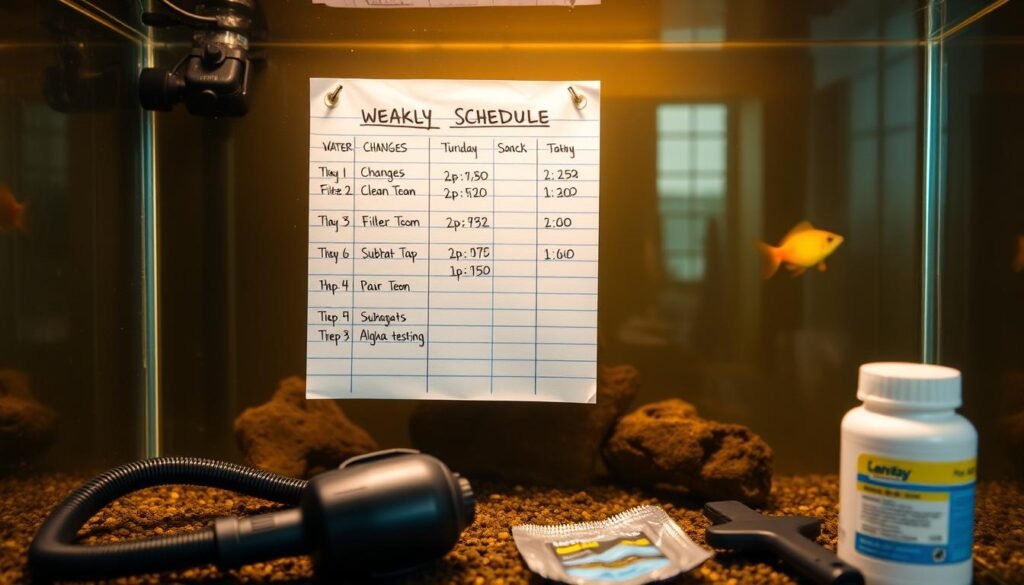
Knowing when to clean your fish tank is key for your fish’s health. Regular cleaning keeps the ecosystem balanced, helping your fish stay healthy.
Signs That Your Tank Needs Cleaning
Several signs show it’s time to clean your tank. If you see cloudy water or a lot of algae growth, it’s a clear sign. Also, look for debris on gravel or decorations and a strong, bad smell in the water.
Watch for signs of stress in your fish, like being very tired or not wanting to eat. This can mean the water quality is bad. Keeping an eye on your tank’s state helps you know when it’s time for a clean.
Recommended Cleaning Schedule
While signs like cloudy water or algae are clear indicators, a regular cleaning schedule is also important. It’s best to clean your tank every 1-2 weeks, depending on its size and how many fish you have.
Changing about 25% of the tank water each time you clean is a good rule. This keeps the water quality good and stops toxins from building up. If you have a big tank or lots of fish, you might need to clean more often.
- Check water quality weekly.
- Clean the gravel and decorations every 2 weeks.
- Replace filter media as recommended by the manufacturer.
By sticking to this schedule and watching your tank, you can keep it clean and your fish healthy.
Tools and Supplies I Need
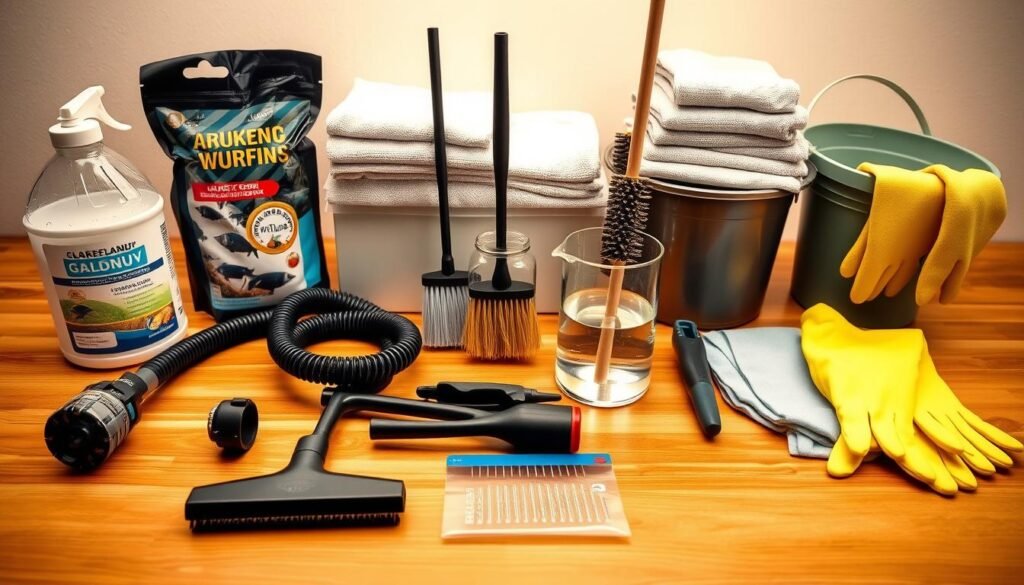
Before I start cleaning my fish tank, I need to get the right fish tank cleaning supplies. The right tools make the job easier and safer for me and my fish.
Essential Cleaning Equipment
I first need to find the essential cleaning tools. This includes a gravel vacuum for substrate debris, a magnetic algae scraper for the glass, and a bucket for water changes. I also use a soft-bristled brush for decorations and plants.
Using the right tools helps me clean my tank well without harming my fish.
Recommended Cleaning Products
I choose gentle, fish-safe cleaners for cleaning. There are many products like algae removers and tank cleaners made for aquariums. It’s important to avoid household cleaners, as they can harm fish.
I always check the labels to make sure the products are safe for my tank.
Safety Gear for Cleaning
When cleaning, safety gear is key. I wear gloves to protect my hands from chemicals and prevent bacteria spread. Sometimes, goggles are also useful, mainly with strong cleaners.
Wearing the right safety gear keeps me safe while cleaning my tank effectively.
Preparing for the Cleaning Process
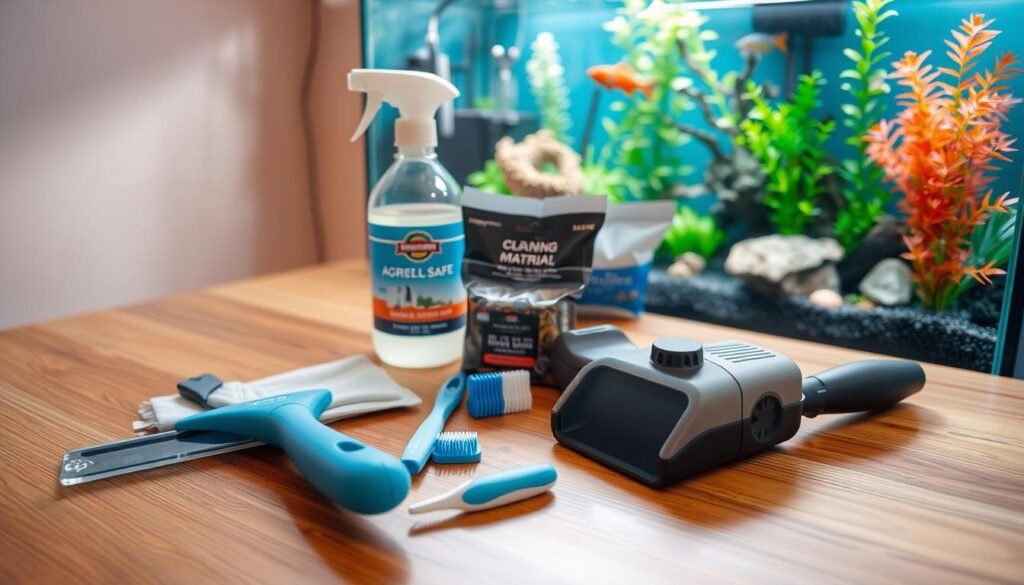
Getting ready to clean your fish tank is a big step. It’s important to prepare your space and gather the right tools. This ensures a safe and smooth cleaning process.
Gathering Your Supplies
Before you start, make sure you have all the necessary supplies. You’ll need a gravel vacuum, algae scrubber, water test kit, and a bucket for water changes. Having everything ready makes the cleaning easier and less stressful for you and your fish.
You’ll also need a clean cloth or sponge for the glass, a soft-bristled brush for decorations, and a water conditioner. For more information on the best cleaning products, visit aquariumcoop.com for expert advice.
Setting Up a Cleaning Area
Choose a specific area for cleaning your fish tank. This keeps the mess contained and your fish safe. Make sure this area is away from sunlight and drafts, which can stress your fish.
Having a dedicated cleaning station makes things easier. Use a large bucket or container to hold the water and fish during cleaning. Make sure it’s clean and free of any harmful residues.
Removing Fish Safely
When removing your fish, do it gently and carefully. Use a soft-mesh net to catch them, and transfer them to a separate container filled with tank water. This helps maintain the water parameters they’re used to, reducing shock.
It’s crucial to handle your fish carefully and avoid overcrowding them in the temporary container. Keep an eye on the water temperature and quality to ensure it’s safe for them until you return them to the cleaned tank.
| Supply | Purpose |
|---|---|
| Gravel Vacuum | Removes debris from the substrate |
| Algae Scrubber | Cleans algae from the tank walls |
| Water Test Kit | Monitors water quality and parameters |
| Water Conditioner | Treats new water to make it safe for fish |
How to Remove Decorations and Substrate
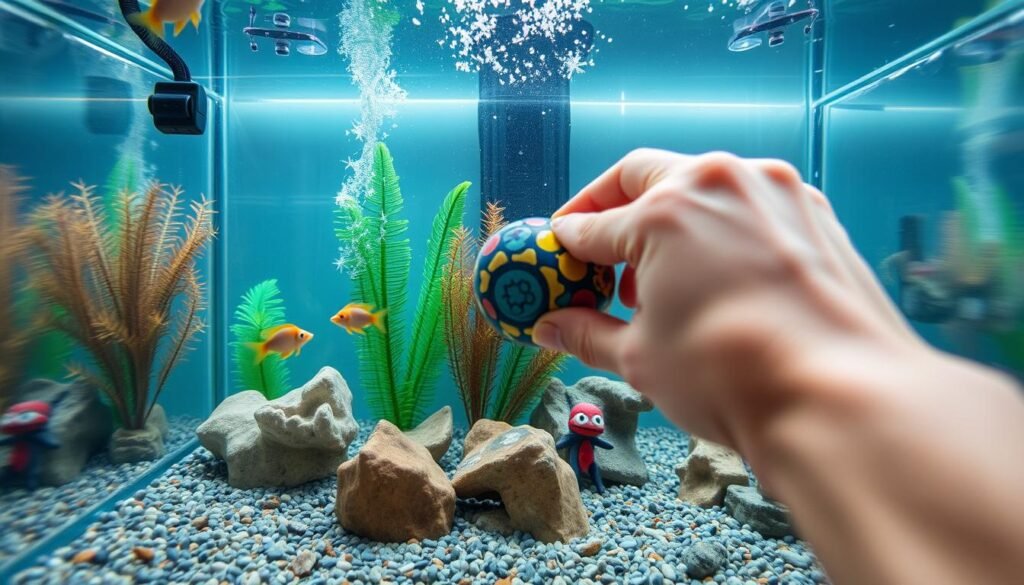
To keep your fish tank clean and healthy, it’s important to know how to remove decorations and substrate. This is key for a clean home for your fish.
Removing Plants and Ornaments
When taking out plants and ornaments, be gentle to avoid damage or stressing your fish. First, turn off any equipment like filters or heaters. Then, lift the decorations out carefully, making sure not to disturb the substrate or fish.
Tips for Removing Plants:
- For rooted plants, gently dig around the roots with your fingers or a soft tool to avoid damaging the roots.
- For floating plants, simply lift them out of the water.
As one expert notes, “Handling plants with care is vital to prevent damage and ensure they continue to thrive in your tank.”
“Aquatic plants are not just decorative; they play a crucial role in maintaining water quality.”
Cleaning Substrate Properly
Cleaning the substrate is a key part of tank cleaning. The substrate can hold debris and waste that can harm your fish if not removed regularly.
Steps to Clean Substrate:
- Use a gravel vacuum to siphon out debris from the substrate.
- Start from one corner of the tank and work your way around to ensure thorough cleaning.
- Be cautious not to disturb the beneficial bacteria in the substrate.
| Substrate Type | Cleaning Frequency | Special Considerations |
|---|---|---|
| Gravel | Weekly | Use a gravel vacuum to remove debris. |
| Sand | Bi-Weekly | Be gentle to avoid stirring up fine particles. |
By following these steps and tips, you can effectively remove decorations and clean the substrate. This helps create a healthier environment for your fish.
Cleaning the Tank Walls
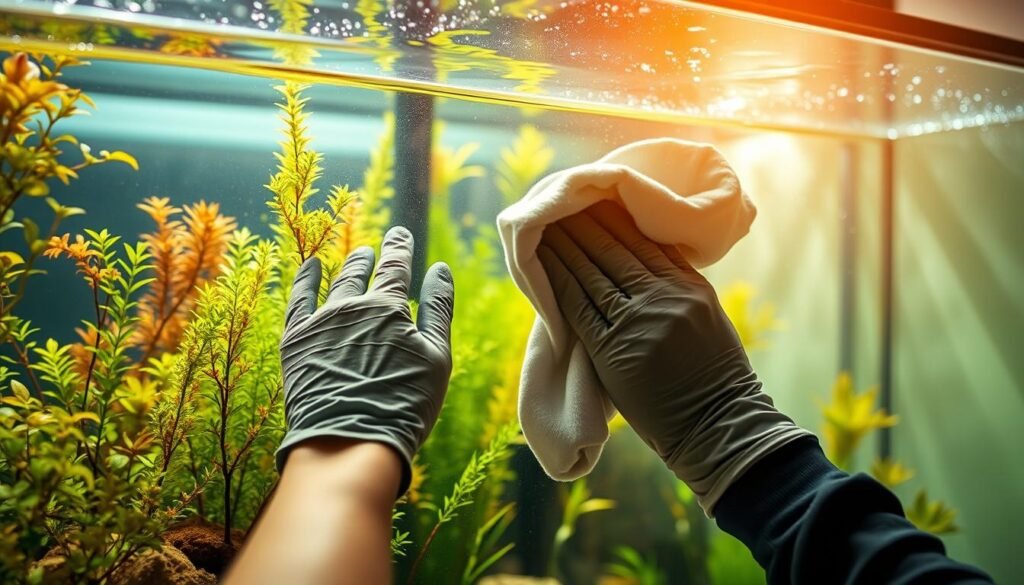
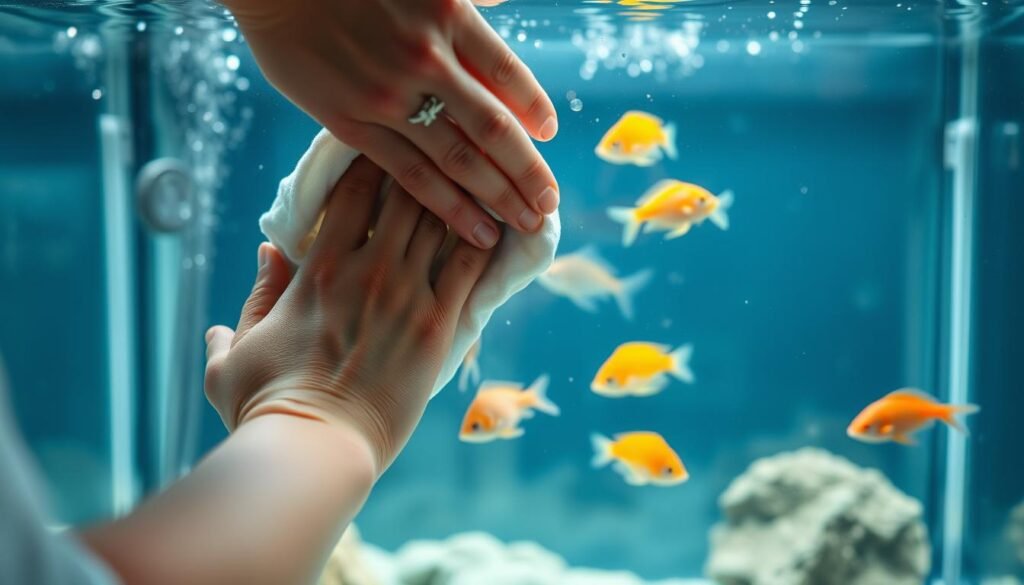
To keep your fish tank looking its best, cleaning the tank walls regularly is key. Algae buildup can block your view and harm your fish’s health. Regular cleaning keeps your tank clear and healthy for your fish.
Choosing the Right Cleaning Tools
Choosing the right tools for cleaning tank walls is crucial. I suggest using a magnetic algae scraper for effective cleaning. These scrapers have a gentle side for everyday cleaning and a tough side for stubborn algae.
Here are some key features to look for in a cleaning tool:
- Effective algae removal
- Easy to use and maneuver
- Gentle on the tank walls
Techniques for Streak-Free Glass
To get streak-free glass, the right tools and techniques are needed. First, I scrape off algae with the magnetic scraper. Then, I use a soft, lint-free cloth to wipe down the glass, removing any remaining residue.
| Technique | Effectiveness | Ease of Use |
|---|---|---|
| Magnetic Scraping | High | Easy |
| Soft Cloth Wiping | Medium | Very Easy |
| Algae-Pad Cleaning | High | Easy |
By following these steps and using the right tools, you can keep your tank walls clean and your aquarium thriving.
Changing the Water in My Tank
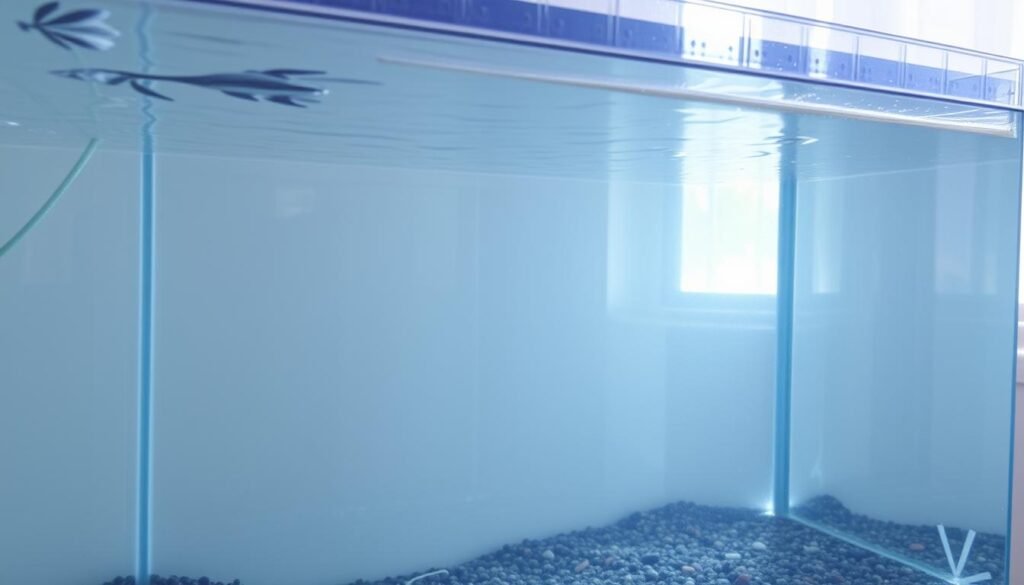
Changing the water in your fish tank is crucial for your fish’s health. It removes waste and excess nutrients that can harm them. I’ll show you how to change the water, including how much, best practices, and preparing new water.
How Much Water Should I Change?
The amount of water to change depends on your tank’s size, fish number, and filtration system. Usually, change about 25% of the tank water every two weeks. But, your aquarium’s specific needs might vary this.
If your tank is crowded, you might need to change more water more often. On the other hand, a lightly stocked tank with a strong filter might need less frequent changes.
| Tank Size | Recommended Water Change | Frequency |
|---|---|---|
| Small (less than 20 gallons) | 20-25% | Every 1-2 weeks |
| Medium (20-50 gallons) | 25% | Every 2 weeks |
| Large (more than 50 gallons) | 20-25% | Every 2-3 weeks |
Best Practices for Water Replacement
When changing the water, match the new water’s parameters to the tank’s as closely as possible. This includes temperature, pH, and hardness. Sudden changes can stress your fish, so make the transition smooth.
Use a water conditioner to remove chlorine and chloramines from the new water. Make sure it’s at the same temperature as the tank water before adding it.
Preparing New Water
Preparing new water is more than just filling a bucket from your tap. You need to treat the water to make it safe for your fish. Start by using a water conditioner to remove harmful chemicals like chlorine and chloramines.
Next, check the temperature of the new water and adjust it to match the tank water. Use a thermometer for accuracy. Consider using a product to stabilize the water parameters, making it easier for your fish to adjust.
By following these steps, you can ensure a healthy and thriving aquarium. Regular water changes are a simple yet effective way to maintain optimal water quality and keep your fish happy and healthy.
Cleaning the Filtration System
A well-functioning filter is key to a healthy fish tank. Regular cleaning is a must. It keeps the water clean by removing waste and excess food.
Ignoring filter maintenance can harm water quality. This stress can lead to disease in your fish.
Types of Filters and How to Clean Them
Aquariums use different filters like mechanical, biological, and chemical ones. Each needs its own care. Mechanical filters need regular cleaning to remove debris.
Biological filters, though, should be cleaned less often. They house good bacteria that break down waste.
For more on cleaning filters, check out this guide on aquarium filter maintenance. Knowing how to clean your filter right is important.
Importance of Maintaining the Filter
Keeping the filter clean is more than just tank maintenance. It’s about your fish’s health. A clean filter ensures the water is perfect for your fish, keeping them stress-free and healthy.
Regular filter care also makes it last longer. This saves you money over time.
By focusing on filter maintenance, you can have a thriving aquarium. Clean and well-maintained filters are essential for a happy fish tank.
Maintaining the Tank Equipment
To keep your aquarium thriving, regular maintenance of the tank equipment is key. This ensures the equipment lasts longer and keeps your fish healthy.
Regular Maintenance Routines
Regular maintenance means checking and cleaning the equipment often. Look for any wear or malfunction in the pumps, heaters, and filters. Experts say, “Regular maintenance is crucial for preventing equipment failure and maintaining optimal water quality.”
“Regular maintenance is crucial for preventing equipment failure and maintaining optimal water quality.” – Aquarium Expert
I suggest setting a routine to check the equipment weekly. This should include cleaning the filter media, checking the heater’s temperature, and making sure pumps work right.
Troubleshooting Common Issues
Even with regular maintenance, issues can pop up. Common problems include clogged filters, faulty heaters, and malfunctioning pumps. It’s important to find the root cause of the problem.
To troubleshoot well, keep a maintenance log. Track when tasks were last done and any issues found. This helps spot patterns and prevent future problems.
By sticking to these maintenance routines and being proactive in troubleshooting, your tank equipment will keep working right. This ensures a healthy and thriving environment for your fish.
How to Clean the Heater and Other Devices
Keeping the heater and other aquarium devices clean is key. It stops harmful bacteria from growing. This helps keep your fish healthy and your equipment working well.
Steps to Safely Clean Equipment
To clean your fish tank’s heater and other devices safely, follow these steps:
- Turn off the power to your aquarium and unplug the devices.
- Remove the devices from the tank and gently scrub away any debris or algae using a soft-bristled brush.
- For more thorough cleaning, mix a solution of 1 part white vinegar to 3 parts water and soak the devices for a few minutes.
- Rinse the devices thoroughly with dechlorinated water before returning them to the tank.
For more detailed information on aquarium cleaning, you can visit aquarium cleaning page.
Importance of Equipment Hygiene
Keeping your aquarium equipment clean is very important. Dirty equipment can spread harmful bacteria and algae. This can make your fish sick and stressed. Regular cleaning helps your equipment work right and keeps your fish happy and healthy.
| Equipment | Cleaning Frequency | Method |
|---|---|---|
| Heater | Monthly | Vinegar soak and soft brush |
| Pumps | Every 2 weeks | Rinse with dechlorinated water |
| Filters | Weekly | Rinse mechanical parts, replace media as needed |
By following these steps and keeping up with regular cleaning, you can make sure your equipment lasts long. And your fish will stay healthy. Remember, a clean aquarium is a happy aquarium!
Final Touches After Cleaning
Now that your fish tank is clean, it’s time to add the final touches. This will help create a great home for your fish. You’ll need to make sure the water is safe and healthy for them.
Adding New Water Additives
After cleaning and refilling your tank, adding the right water additives is key. These additives remove chlorine and chloramines, stabilize pH, and offer other benefits for fish health. For the best choices, use a reputable aquarium cleaning guide.
Here’s a quick guide to common water additives and their uses:
| Additive | Purpose |
|---|---|
| Dechlorinator | Removes chlorine and chloramines |
| pH Stabilizer | Maintains stable pH levels |
| Nitrite Remover | Eliminates nitrites harmful to fish |
Reintroducing Fish Safely
When putting your fish back in the tank, do it carefully to avoid shock. Make sure the new water’s temperature is close to the tank’s. Then, slowly introduce your fish to the tank through a quarantine or acclimation bag.
Keep an eye on your fish for any signs of stress or disease after they’re back in the tank. If you see anything unusual, get advice from a pet care expert or a detailed aquarium guide.
By taking these final steps, you’ll keep your fish tank healthy and thriving. This will help your fish live longer and make your aquarium more enjoyable.
Eco-Friendly Cleaning Alternatives
Cleaning your fish tank doesn’t have to harm the environment. There are many eco-friendly options available. As I keep my aquarium clean, I focus on methods that are both effective and sustainable.
Natural Cleaning Solutions
Using natural cleaning solutions is a great way to keep your tank clean. For example, I mix water and white vinegar to clean the glass walls. This method is eco-friendly and safe for my fish. I also use a magnetic algae scraper to remove algae without damaging the glass.
Other natural solutions I use include:
- Baking soda for neutralizing odors and cleaning decorations
- Hydrogen peroxide for controlling algae growth
Benefits of Eco-Friendly Products
Choosing eco-friendly cleaning products has many advantages. They are gentle on the environment and lower the risk of chemical contamination. A study shows that eco-friendly products can greatly reduce the carbon footprint of aquarium care. Aquarium experts say, “Using eco-friendly products is a step towards sustainable aquarium keeping.”
This approach not only ensures the health of my fish but also contributes to a healthier planet.
For more tips on eco-friendly aquarium care, check out the user guide on aquarium care.
Tips to Prevent Future Build-Up
Keeping your fish tank clean is key to a healthy environment. Regular care and attention are essential. By sticking to a routine, you can stop debris from building up and keep your tank looking great.
Effective Maintenance Routines
Regular water changes and checking water quality are crucial. Make sure to monitor pH, ammonia, and nitrite levels. Cleaning the gravel, decorations, and glass walls often helps too. This prevents algae and debris from taking over.
Best Practices for Long-Term Care
For long-term care, add fish tank maintenance tips to your routine. Avoid overfeeding to prevent waste. Also, ensure your filter is working well. These steps will help your aquarium thrive and your fish stay healthy.
Staying on top of maintenance prevents common problems. It keeps your tank running smoothly. This is good for your fish and makes your aquarium look better.