

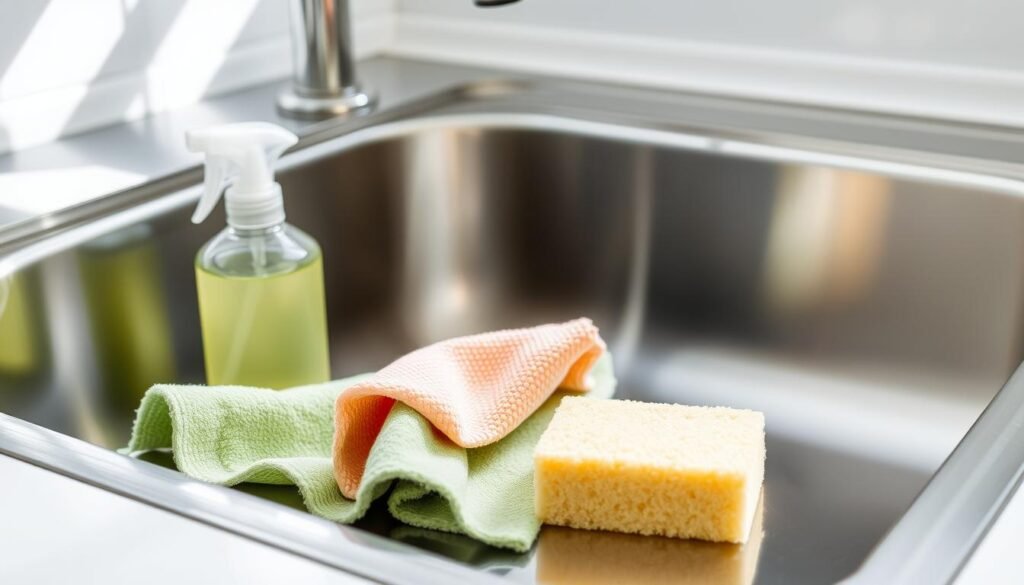
We keep kitchen care simple and reliable. Our routine starts with a fresh microfiber cloth, warm water, and a few drops of dish soap like Seventh Generation, Mrs. Meyer’s, or Dawn Powerwash. Wipe the surface, follow with a second cloth dampened with warm water, and finish dry for a streak-free look.
When fingerprints or smudges persist, we reach for targeted products. Weiman Stainless Steel Cleaner and Polish or Zep spray work well on appliances, and Therapy’s plant-based polish helps resist marks while adding a light scent.
Avoid harsh abrasives, bleach, steel wool, and paper towels. These items can scratch or dull the finish and undo our careful effort.
Key Takeaways
- Start with soap, warm water, and a microfiber cloth for quick maintenance.
- Dry thoroughly to prevent streaks and keep the finish bright.
- Use a polish or spray for fingerprints and added protection.
- Skip abrasive tools and paper towels to avoid scratches.
- Keep the routine weekly for best results and easy touch-ups before guests arrive.
Why stainless steel looks great—and gets dirty fast
“The very gleam that sells stainless-steel appliances also highlights every touch and drip.”
Stainless steel owes its shine to a thin chrome oxide layer. That barrier resists corrosion and gives appliances their signature look.
But that same finish makes oils and water marks more visible. Everyday contact transfers fingerprints and smudges quickly, especially on high-touch panels like fridge doors and dishwasher fronts.
Not all marks are alike. Some are greasy prints. Others are dried water spots or light dust. The right solution depends on the types we see.
- High-traffic points: refrigerator handles, microwave doors, and range hoods attract the most prints.
- Protective care: cleaners with chlorides or chlorine can strip that chrome oxide and dull the finish over time.
- Everyday soils: dust, greasy fingerprints, and cooked-on splatters require different approaches.
“Technique and timing are as important as product choice for appliances in busy homes.”
How to Clean Stainless Steel: Our step-by-step method
We keep this routine quick and reliable. Fold a fresh microfiber cloth, mix a few drops of dish soap into a bowl of warm water, and scout the surface for the grain direction before you begin.
What we’ll use: dish soap, warm water, and a fresh microfiber cloth
We gather essentials up front so the job flows. A clean microfiber cloth and mild dish soap protect finishes on any appliance.
Prep the surface and identify the grain direction
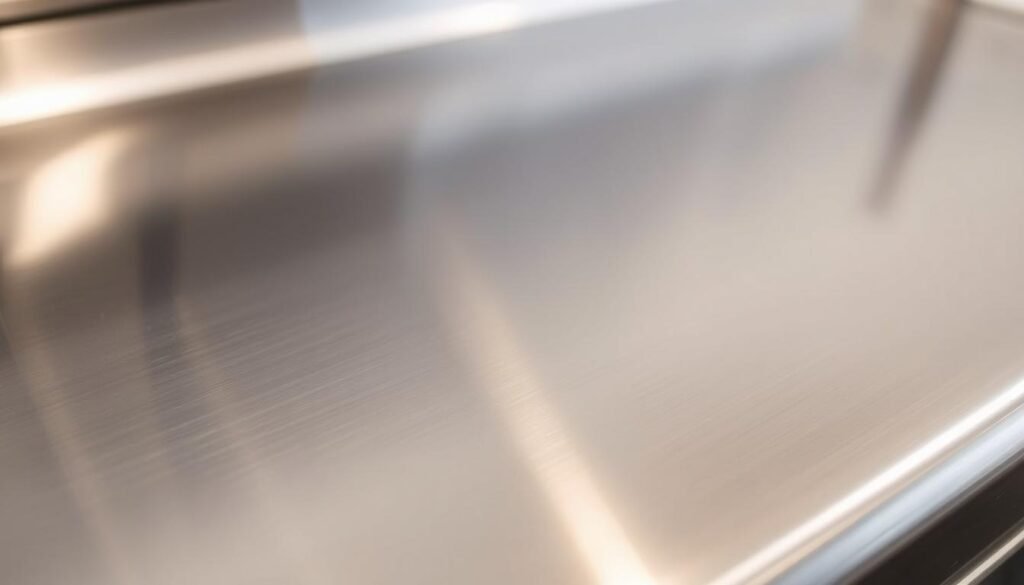
Spot the finish lines and set your cloth direction to match the direction grain. Moving with the grain avoids tiny swirls and keeps the look crisp.
Wash with soapy water, then wipe with clean warm water
Dip the folded cloth in warm water, wring well, and wipe gently along the grain. Use a second damp microfiber cloth to remove soap film and residue.
Dry thoroughly and add a light polish for a streak-free look
Dry completely with a dedicated cloth so water spots don’t form around handles. For extra fingerprint resistance, a light pass of Weiman wipes or spray can add a subtle protective layer and a soft shine.
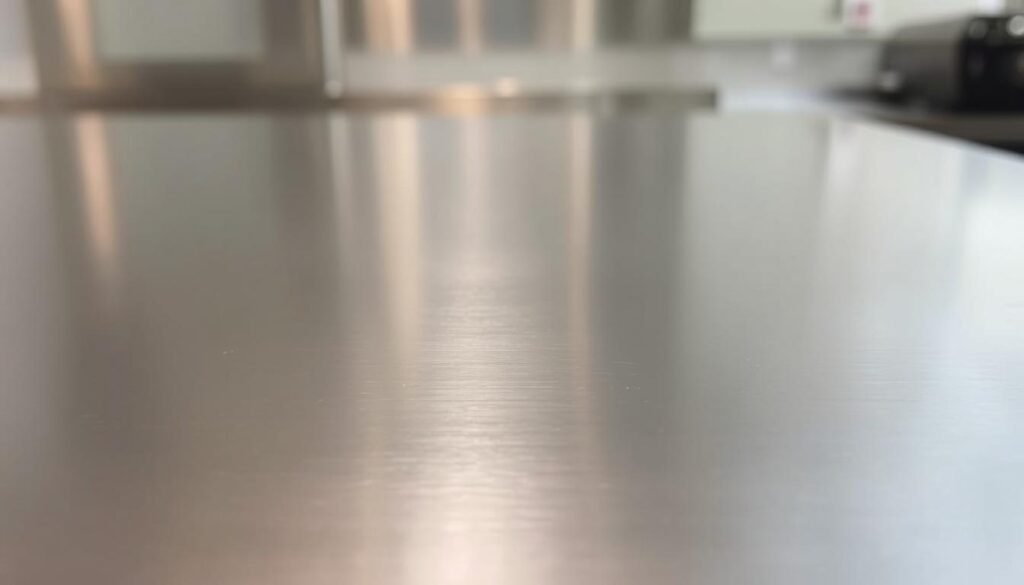
- Weekly for heavy-use zones keeps appliance fronts ready.
- Reserve wipes for quick touch-ups along the grain.
- Keep products minimal to preserve the natural finish.
DIY cleaners that work: pantry staples for shine
We rely on simple pantry mixes for fast refreshes between deep cleans. These options use mild ingredients and a microfiber cloth so we keep the finish uniform and avoid harsh ingredients that harm the chrome oxide layer.
Vinegar then olive oil: clean, then polish with the grain
Spray distilled white vinegar lightly, wipe along the direction grain with a damp microfiber cloth, then add a few drops of olive oil on a second cloth. Polish in the grain for a natural, fingerprint-resistant shine.
Simple dish soap plus baby oil for daily refreshes
Wash with simple dish soap and warm water, rinse, and dry. Apply a small amount of baby oil and buff with the grain for a soft, even finish that hides light smudges.
Rubbing alcohol solution that evaporates residue-free
Mix a 1:1 solution of 70% isopropyl alcohol and water, spray, and wipe with the grain. The quick evaporation disinfects without leaving a film.
Club soda spray for quick fingerprint fixes
Keep club soda in a spray bottle. Spritz, then buff with a microfiber cloth along the grain for fast touch-ups before guests arrive.
- Keep amounts small: a mist of vinegar, a few drops of olive oil or a dab of baby oil.
- Use the right tools: microfiber cloths and attention to the direction grain avoid hairline marks.
- Match the type: these DIY mixes work best on light soils; use soap-and-water first for cooked-on spots.
Best products for cleaning stainless steel appliances
A quick product round-up helps us pick the right spray or wipe for every appliance front.
Weiman stainless wipes and the matching spray earn our top pick for fast fingerprint removal. Experts like Kadi Dulude and Robin Murphy praise these options for lifting marks and leaving a light protective layer that resists smudges.
Zep stainless cleaner and polish is our go-to when one bottle must handle both kitchen fronts and an outdoor grill. Spray, wipe with a microfiber cloth, and buff dry for a uniform finish.
For a plant-forward choice, Therapy cleaner polish uses a coconut-based formula and ships with a quality microfiber cloth. It helps hide streaks and adds a subtle scent without heavy residues.
- Wipes are perfect for quick spots; spray covers larger panels.
- Pair every product with a soft microfiber cloth to lift residue without scratching.
- Keep one daily product and one heavier-duty item on hand for stress-free upkeep.
What to avoid on stainless steel
We protect finishes by skipping harsh fixes and choosing gentle tools. Avoiding a few common items keeps appliance fronts bright and lasting.
Ingredients that harm finishes
Skip cleaners with chlorides or chlorine bleach. These ingredients can strip the chrome oxide layer and dull the surface.
We also avoid ammonia-based sprays on appliance glass; pick an ammonia-free option when needed.
Tools and techniques that scratch
Never use steel wool, scouring pads, or abrasive pastes. Even a few passes leave lines that trap smudges and grime.
Paper towels can add micro-scratches. We trade them for a soft cloth or a microfiber cloth for safer results.
- We avoid: chlorides, chlorine bleach, and harsh abrasives that degrade finishes.
- We skip: ammonia-based sprays on fronts; use ammonia-free cleaners instead.
- We always: wipe with the direction grain and test new products in a hidden spot.
- We rinse and dry: thoroughly so residue doesn’t attract dust or make fresh smudges show sooner.
Keep the look: a simple routine for lasting shine
A simple weekly habit keeps appliance fronts bright and stress-free. We run a quick soap-and-water wash, rinse with warm water, and dry with a dedicated microfiber cloth for an even shine.
Midweek spot-care takes minutes. We mist an ammonia-free glass cleaner or a targeted spray on handles and edges, then wipe with a fresh cloth so fingerprints and smudges never build up.
We keep two or three microfiber cloths on hand—one for washing, one for rinsing, and one for drying. Working with the grain and storing a small caddy of products makes maintenance a five-minute habit, not a chore.
Monthly, we do a deeper pass and buff under good light. Consistent, gentle cleaning preserves the look of our stainless steel appliances and keeps every appliance ready for daily life.


















2 Responses