Surprising fact: in week-long ghosting trials, WD-40 beat Teflon spray and untreated boards after many write/erase cycles, leaving noticeably less residue.
I write from my office experience with one goal: keep markers readable and the surface ready for work. I share a practical process that fits short daily habits and a periodic deep-clean when the board starts holding ink.
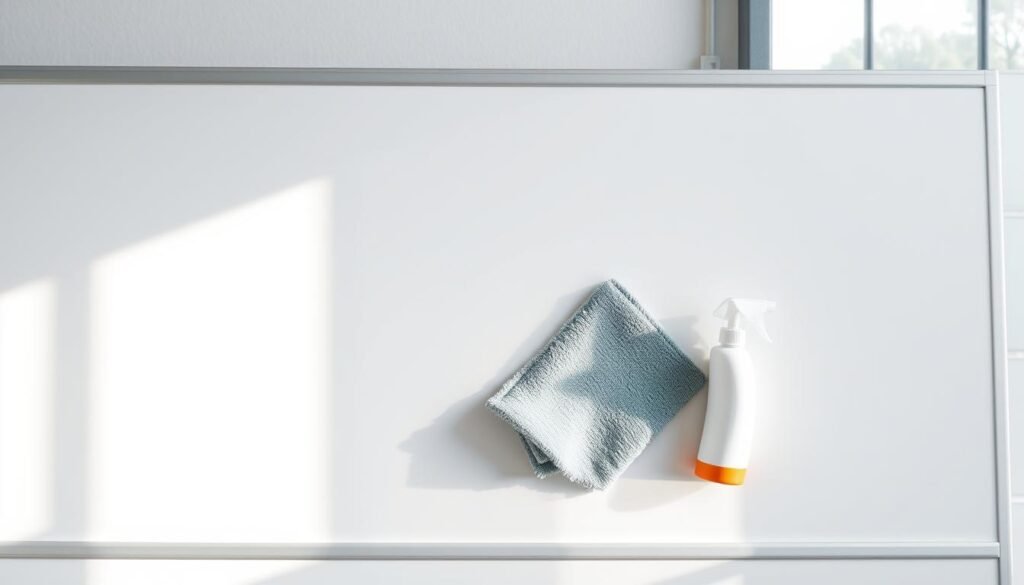
My routine favors microfiber towels and a refillable spray bottle of isopropyl alcohol. This combo cleaned faster and cost less than tiny disposable cleaners. Microfiber erased ghosting better than felt erasers, and some waxes actually made writing worse.
I preview quick daily steps, a weekly refresh, and an optional restorative move for older boards. I also note ventilation, dry time, and pitfalls that age a board prematurely.
Key Takeaways
- Use microfiber and a refillable alcohol spray for fast, cheap maintenance.
- WD-40 can reduce ghosting after heavy use, but avoid waxy products.
- Short daily wipes plus scheduled deep-cleans keep the surface consistent.
- Avoid wrong erasers and letting ink sit; that causes stubborn marks.
- My process focuses on reusable, desk-ready supplies that save time and paper.
- For more detailed methods and product notes, see this guide: whiteboard cleaning guide.
What I’ve learned about whiteboards and why proper cleaning matters
I kept a simple log of weekly ghosting tests and the results changed how I cared for boards.
Untreated sections developed heavy shadows after marker ink sat for one or two days. In contrast, WD-40–treated areas stayed clearer in my tests.
Microfiber towels consistently beat felt erasers. They lift ink without smearing and reduce stubborn residue. I stopped using abrasive scrubs because they roughen the surface and speed up wear.
“Neglect adds stains that make every future wipe harder. Gentle, regular upkeep saves time and keeps marks readable.”
- Daily care prevents stains and heavy ghosting in an office setting.
- Right tools (microfiber over felt) remove ink instead of pushing it into pores.
- Avoid toothpaste, Scotch-Brite, and some waxes—they can damage coatings and make markers write poorly.
| Problem | Cause | Best fix |
|---|---|---|
| Heavy ghosting | Ink left for days | Immediate wipe; weekly alcohol spray |
| Rough surface | Abrasive scrubs | Restorative treatment; avoid further abrasion |
| Smeary residue | Non-evaporating cleaners | Use fast-evaporating solutions and microfiber |
How to clean a whiteboard: my quick daily and weekly routine
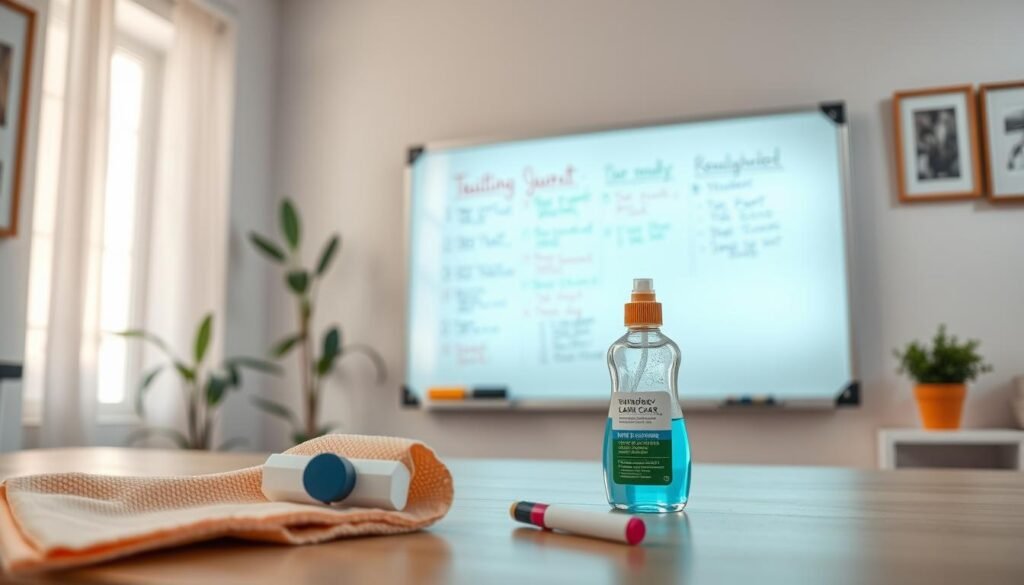
My daily beat is simple: a light mist, a quick wipe, and a dry pass. This short rhythm keeps the board usable between meetings and reduces stubborn ghosting.how-to-clean-ice-maker
Daily wipe-down with microfiber and alcohol-based spray
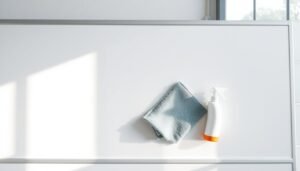
I mist the surface lightly with a refillable isopropyl alcohol spray and wipe with a clean microfiber cloth. Microfiber outperformed the standard felt eraser, lifting more ink and smearing less.
I keep two cloths: one for the initial lift and a second towel for a dry finish so the surface stays streak-free. If a meeting just ended, I try to erase within hours so ink won’t sink into the finish.
Weekly refresh to prevent ghosting and residue build-up
Once a week I follow the daily step with a water-damp cloth and a dry towel to remove any film left by alcohol. For faint shadows, I spot-spray, let it sit 20–30 seconds, then buff dry.how-to-clean-maf-sensor
- I avoid the felt eraser for routine upkeep; microfiber grabs pigment instead of pushing it around.
- Paper folded into corners cleans frame lines where cloths miss.
- I rotate cloths and towels so I don’t re-deposit yesterday’s ink.
| Task | Tool | Goal |
|---|---|---|
| Daily wipe | isopropyl alcohol spray + microfiber cloth | Lift fresh ink, prevent ghosting |
| Quick dry | clean towel | Remove streaks and residue |
| Weekly refresh | water rinse + dry towel | Reset surface and reduce buildup |
Result: This short routine takes minutes and keeps my whiteboard reliable between deeper cleaning sessions.
Deep-clean process for stubborn stains and ghosting
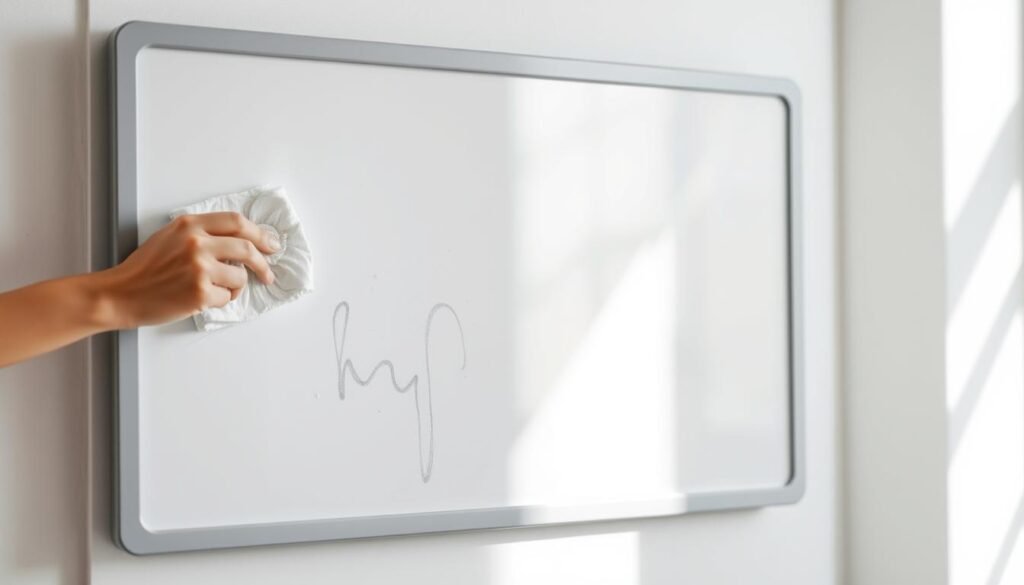
After testing several fixes, I settled on a step-by-step method that removes long-set ink and residue. The routine is simple, repeatable, and uses common household supplies when needed.how-to-clean-the-brass
Standard cleaning sequence: damp cloth, cleaner, rinse, dry
I start with a soft cloth moistened with warm water and wipe the full surface. Next I apply an approved cleaner across the board, then wipe again with water only.
Finish with a dry towel so no streaks or residue remain. This process removes most stains and resets the surface for regular use.
Isopropyl alcohol method for marker ink and residue
For embedded marker marks, I use isopropyl alcohol and let it sit briefly before wiping with a fresh paper towel. That dissolves stubborn pigment without roughing the finish.
Hand sanitizer and vinegar solutions when you’re out of cleaner
If supplies run low, an alcohol-based hand sanitizer or a warm vinegar-and-water solution works as a practical substitute.
Restoring old boards: alcohol prep, optional toothpaste buff, and WD-40 resurfacing
On tired surfaces I prep with alcohol, then, if needed, gently buff small spots with plain white toothpaste. After a full clean, I mist WD-40, spread it with a paper towel, and let it sit for a couple of hours.how-to-clean-a-washer
Buff aggressively until no oily smudge remains. Ventilate the room during this phase and test markers in a corner once dry.
- Tip: Protect nearby wood or walls with painter’s tape during resurfacing.
- Note: Some marker colors can smudge more on worn finishes; test after treatment.
For a deeper dive and product notes, see this restoration guide.
What to use vs. what to avoid on whiteboards
After trying odd tricks, I now stick with proven sprays and avoid abrasive shortcuts. Choosing the right agent keeps markers bright and the finish intact.
Approved cleaners: I get the best everyday results with isopropyl alcohol, peroxide, or a legit whiteboard cleaner paired with microfiber. In a pinch, alcohol-based hand sanitizer, diluted white vinegar, or even hairspray will lift marks.how-to-clean-invisalign
High-performing treatment
WD-40 has been my top refinishing step after a thorough deep clean. It restores shine and noticeably reduces ghosting on tired boards when used sparingly and buffed off.
What I avoid
“Abrasives and kitchen hacks can strip coatings and make future wiping harder.”
- I skip toothpaste, Bengay/Deep Heat, and Comet since they abrade the surface.
- Coffee grounds are messy and abrasive; they belong in the bin, not on a board.
- On glass boards I use alcohol-based cleaners and soft cloths only—no waxes or grease.
| Use | When | Why |
|---|---|---|
| Isopropyl alcohol / whiteboard cleaner | Daily or weekly | Lifts ink, fast-evaporating, leaves minimal film |
| WD-40 (after deep clean) | Restoration step | Reduces ghosting, restores shine when removed fully |
| Toothpaste / Comet / coffee grounds | Avoid | Can abrade and damage the surface long-term |
I keep a labeled kit for boards and always finish with a water rinse and a dry cloth. For an official set of best practices, see this short guide from Clarus: best practices for dry-erase care.
How I remove permanent marker from a dry-erase surface
Once permanent ink hits my board, I rely on a simple trick that rarely fails. It saves the finish and avoids harsh scraping. The method uses fresh solvent in whiteboard markers to lift stubborn pigment quickly.
Trace-over trick with whiteboard markers that lifts permanent ink
Quick, low-risk, and office-friendly: I cover the wrong lines with a bold layer of whiteboard marker and let the solvents work for a few seconds. Then I wipe in smooth strokes.
- Trace every line using whiteboard markers so the dry-erase ink overlaps the permanent marker.
- Wait briefly so the new layer softens the marker ink without spreading it.
- Wipe with a clean microfiber corner or a piece of paper and the mark comes away.
- If a faint shadow remains, repeat the trace-over and finish with a quick alcohol wipe.
- For broad strokes I use a chisel-tip marker to blanket the area on the first pass.
“The trace-over trick saved my board more than once and kept me from using abrasives.”
Note: I test the spot afterward with a small line from a regular marker and erase it to confirm the surface is back to normal. For an extra reference on removing permanent marker, see this guide on how to remove permanent marker.
Pro tips to make whiteboards last longer
Small, regular choices made the biggest difference in keeping my board reliable over years. I focus on habits that stop stains before they start and protect the finish while I work.
Use microfiber towels instead of standard erasers
Microfiber towels lift ink instead of pushing pigment around. I reach for them first during routine wipes and keep a fresh corner for the final pass.
Clean erasers and cloths regularly
I wash or replace erasers and cloths on a schedule. Dirty tools simply re-deposit ink and cause streaks across the board.how-to-clean-corroded-battery-terminals
Erase within hours, not days
I aim to erase within hours after writing. Letting ink sit longer raises the chance of ghosting and stains that need deep treatment later.
Protect edges, avoid tape and rough contact
I skip tape on the surface since adhesives can scar the finish. Near glass or wood edges, I use folded paper or a soft cloth corner to avoid scratches.
- I work large boards in quadrants so towels stay clean and coverage is even.
- I keep a minimal kit: microfiber, spare towels, alcohol spray, and a small water bottle for spot rinses.
- I set a weekly reminder for a quick reset and deeper clean every few months based on use.
| Tip | Why it matters | My routine |
|---|---|---|
| Microfiber vs eraser | Lift ink, reduce ghosting | Use microfiber daily; dry finish with clean towel |
| Tool maintenance | Prevents re-depositing pigment | Wash cloths weekly; replace worn erasers monthly |
| Timing | Limits staining | Erase within hours after use |
| Edge care | Avoid scratches and adhesive damage | Use folded paper and avoid tape on surface |
Quick reference: for a fuller maintenance checklist I keep bookmarked, see my guide at ultimate maintenance guide.
Conclusion
After months of testing, I settled on a simple kit that keeps boards working like new. My daily habit—light spray, quick wipe, dry pass—stops most stains and cuts ghosting dramatically.
For stubborn residue I use isopropyl alcohol or a dedicated whiteboard cleaner, and in a pinch hand sanitizer or vinegar will help. WD-40 outperformed controls in long ghosting tests and can revive tired surfaces when used as a finishing step after an alcohol prep and a thorough buff dry.
I avoid abrasives like toothpaste, Bengay, Comet, and coffee grounds because they roughen the surface. Keep microfiber cloths, a paper towel backup, and a simple spray bottle handy so markers stay clear and the dry erase surface stays ready for work.