Did you know that leather breathes like skin and needs regular moisture to stay supple? I treat each handbag as an investment, and that fact alone changed my routine.
I use a simple one-two approach: gentle wipe-downs followed by conditioning. This way I remove everyday dirt and also replenish oils that keep the hide flexible.
My process favors mild products, no harsh scrubbing, and careful spot work for things like coffee drips or denim transfer. That lets me freshen the exterior without risking the finish.
I’ll outline how I prep, what product choices I trust, and the routine habits that protect a bag long term. For a full, step-by-step guide, see this handy care and cleaning resource.
Key Takeaways
- Treat a handbag as an investment and care for it regularly.
- Pair gentle cleaning with conditioning to preserve flexibility.
- Avoid harsh chemicals and aggressive scrubbing.
- Use simple, trusted products for spot fixes and routine upkeep.
- Small, consistent steps extend a bag’s lifespan and sheen.
What I Use To Clean My Leather Bag Safely
Before I start, I lay out a neat kit so every step feels effortless. This keeps me from hunting for items mid-task and reduces the time moisture sits on the bag.
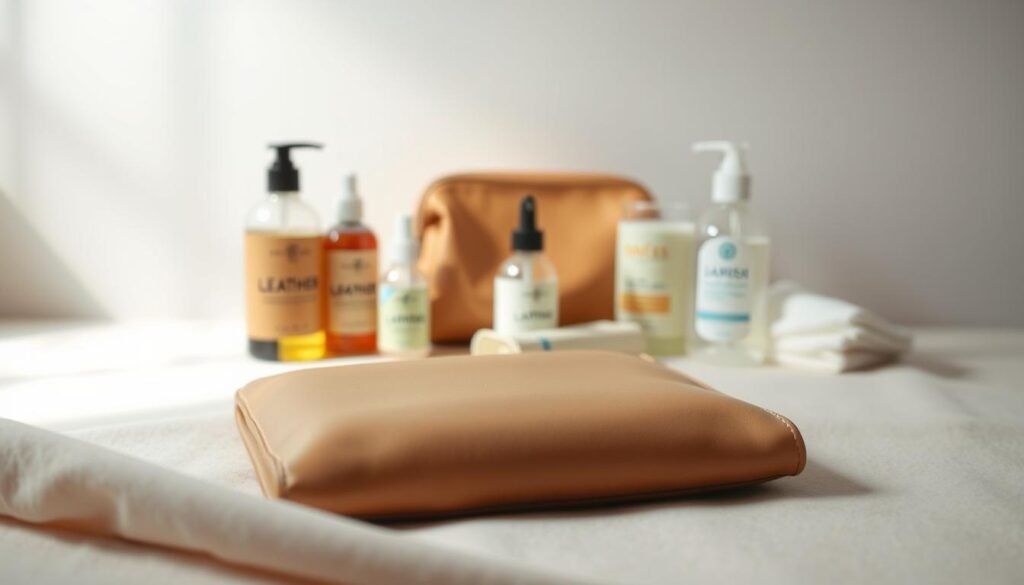
My simple kit includes two soft cloths, a small bowl of warm water mixed with a few drops of mild dish soap, a clean towel, and a dedicated leather conditioner.how-to-clean-a-baseball-cap
Essential items I always have ready
- Two cloths: one for soapy wiping, one for rinsing. I prefer cotton or microfiber that is lint-free.
- A towel for drying and a bowl of warm water with minimal soap suds.
- A leather conditioner such as Chamberlain’s Leather Milk for light-coloured finishes.
- Dye-free materials for interiors and trims to avoid color transfer.
I keep everything within reach — cloths, products, and the towel — so I can move from wipe to rinse to dry without delay.
| Item | Use | Preferred material | Notes |
|---|---|---|---|
| Soft cloth (x2) | Wipe and rinse | Microfiber or cotton | Lint-free, dye-free for light interiors |
| Warm water + mild soap | Gentle cleaning solution | Warm water | Only a few drops of soap to avoid over-sudsing |
| Leather conditioner | Restore oils and sheen | Dedicated product | Use a thin, even layer after full drying |
For a compact, reliable reference I keep my kit in one pouch. If you want a full step-by-step guide, see this care and cleaning resource.
How to Clean Leather Purse: My Step‑By‑Step Method
I always remove every item before I touch the exterior. This keeps cards and electronics safe and helps me spot crumbs in pockets.
Next, I turn the bag upside down and shake out loose dirt. Then I use a lint roller or the fabric brush on a vacuum to lift particles from the lining.how-to-clean-a-carburetor
I mix a gentle solution of warm water and a few drops of dish soap. I dampen a soft cloth, wring it until barely wet, and wipe small areas with light, circular motions.
After that pass, I use a second cloth dampened with clean water to remove any soap residue. I never soak a panel; leather fares best with minimal moisture.
Finally, I dry the surface with a towel and allow the bag time to air dry. Once fully dry, I apply a thin layer of conditioner to handles and high-touch area panels.
Simple routine, big results: protect items, lift lining dirt, work in passes, dry completely, and condition for lasting suppleness.
| Step | Tool | Purpose | Quick tip |
|---|---|---|---|
| Empty and inspect | Hands | Protect items | Check pockets and zips |
| Remove lining dirt | Lint roller / vacuum brush | Lift crumbs and dust | Work seams and corners |
| Surface wipe | Soft cloth + solution | Remove grime | Wring cloth well, work in passes |
| Rinse and dry | Second cloth + towel | Remove soap, dry fully | Air dry before conditioning |
Stain Removal That Works Without Ruining Your Bag
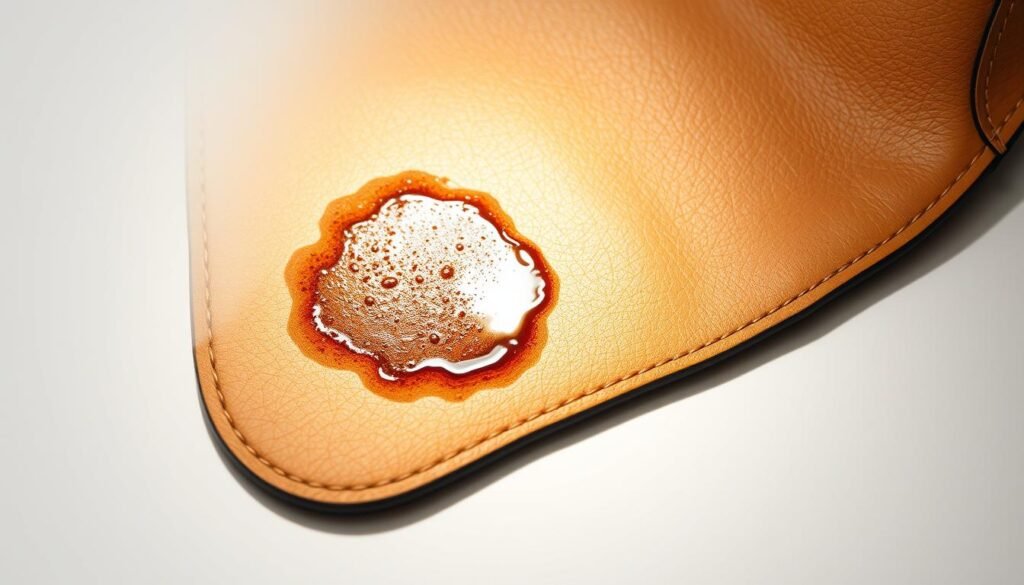
Not every stain needs heavy action; I start with the mildest option that might work. I test any method on an unseen area first so I don’t risk visible damage.how-to-clear-cache-on-facebook
Grease and oil respond well to powder. For fresh or set grease, I cover the spot generously with baking soda and leave it overnight. The powder soaks up oil while I sleep, and the next day I gently brush off residue without rubbing the area hard.
Ink and dark scuffs need a steady hand. I dampen a cotton swab with nail polish remover or rubbing alcohol — not dripping — and blot from the edge inward. After the mark lifts, I wipe the spot with a damp cloth and pat the bag dry.
On white or very light material only, I mix equal parts cream of tartar and lemon juice into a paste. I apply the paste for about 30 minutes, then remove it with a damp cloth and dry the area fully.
- I avoid acetone and harsh scrubbing because both can strip finishes and cause lasting damage.
- If a mark persists, I repeat the gentlest method rather than escalate pressure.
- Once a stain is gone, I apply a thin layer of conditioner to restore moisture and blend the treated area with the rest of the bag.
Special Care for White and Light Leather Purses
White and pale hides ask for a softer touch than darker finishes. I always start with a tiny spot test because finishes vary — some are painted, others are dyed or sealed.kn-how-to-clean-air-filter
Always spot test:
Painted vs. dyed finishes react differently
I test an unseen area first. That tells me if water, soap, or a product will lift color or dull the surface.
Gentle cleaning wins
Minimal soap and quick blotting are my rules. I use a soft cotton or microfiber cloth and avoid letting water dwell on the surface.
What not to use
I skip baby wipes, bleach, magic erasers, and hair dryers. These often cause yellowing, abrasion, or lasting damage on light tones.
If a fresh stain appears, I act the same day. After any spot treatment I apply a light conditioner so the treated area matches the rest of my bags. For detailed white care, I follow this white leather care guide.
| Action | Do | Don’t |
|---|---|---|
| Spot test | Try hidden seam | Assume finish type |
| Surface work | Soft cotton, light soap, blot | Over-wetting, scrubbing hard |
| Aftercare | Light conditioner | Heat drying or bleach |
Protect, Store, and Maintain Your Leather Handbag
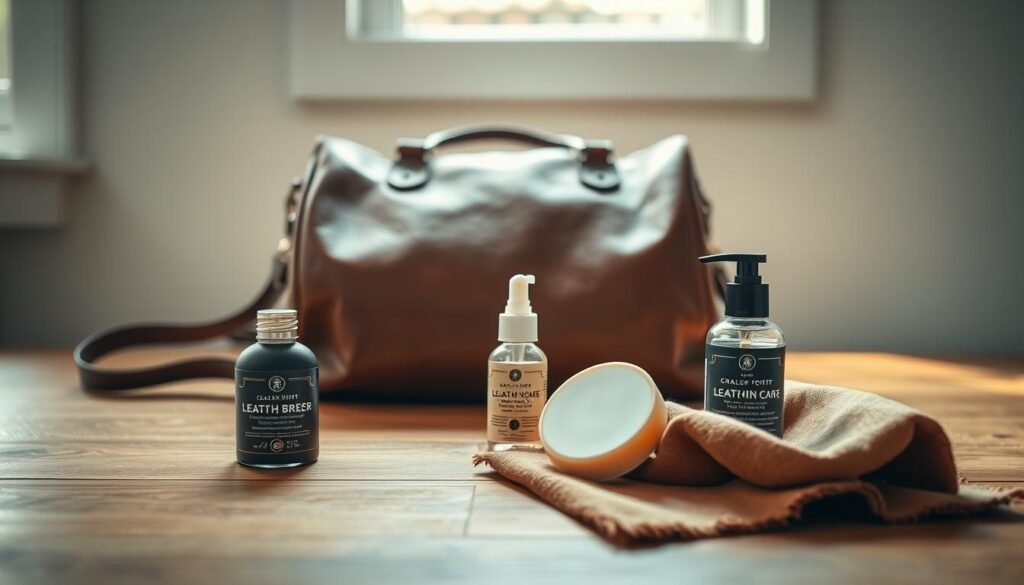
A small ritual of protection and storage saves me time and keeps my handbags lasting longer.
Prevention is key: apply a premium leather protectant spray
I treat prevention as my first line of care. I spray a protectant meant for soft hides on new pieces and again after each cleaning. This barrier helps repel rain, sweat, and daily grime, especially on high-touch handles and corners.how-to-clean-your-tongue
Daily habits: keep it dry and dust-free
I avoid overwatering when I wipe the exterior and remove visible dust quickly with a soft cloth or a gentle brush. A brief weekly once-over catches crumbs and debris before they grind into the finish.
Smart storage: dust bags and avoid color transfer
When not in use, I store handbags in breathable dust bags out of direct sunlight. I keep bags away from dark denim and fabrics that could transfer color and stuff slouchy styles lightly to retain shape.
- Reapply protectant after each session for ongoing defense.
- Rotate pieces so one bag does not take all the wear.
- Condition on a sensible schedule: thin layer, let absorb, then buff.
| Action | Why | Tool |
|---|---|---|
| Protect | Repels moisture and grime | Protectant product |
| Dust weekly | Prevents abrasion | Soft cloth / brush |
| Store in dust bag | Shields from UV and transfer | Breathable dust bag |
Conclusion
A repeatable routine protects my bags and saves me time in the long run. I follow a , strong, practical routine that is easy to keep: empty items, wipe gently with warm water and mild soap using a soft cotton cloth, dry fully with a towel, and finish with a light conditioner.
When stains appear I act fast. I use baking soda for grease and oil and gentle blotting for ink. I always spot test on seams and mind suede or painted finishes.
Protecting and storing are part of the process. I rotate handbags, keep them in dust bags, and avoid UV and color transfer. For a short care guide, see this clean leather purse resource.