

We want a safer, more efficient laundry routine that saves energy and cuts run time.
Dirty vents raise the risk of a house fire and slow drying cycles. The U.S. Fire Administration links lint buildup to many dryer-related fires, so we start with safety.
First, unplug the appliance and, if it’s gas, shut the supply valve. We will swap plastic or foil hoses for rigid metal ducting that meets code and secure joins with UL-listed metal foil tape.
Our plan covers unplugging, prep, vacuuming, using a brush, an outside outlet check, and a final air cycle of 15–20 minutes to clear debris and confirm strong exterior airflow.
We keep this approachable for most households and note when calling a pro is the smarter choice. Follow each step and spend the time needed for a thorough result.
Key Takeaways
- Unplug and secure gas before any work.
- Replace flexible hoses with rigid metal ducting.
- Use a brush and vacuum to remove lint from the duct.
- Run an air/fluff cycle 15–20 minutes and check exterior airflow.
- Regular care reduces energy use and fire risk at home.
Why we clean dryer vents and how we stay safe
We start by planning safety steps that protect our home and cut risk before any work begins. A blocked dryer vent is a serious fire hazard and it also wastes energy by lengthening cycles and pushing humid air back into the laundry room.
Fire risk, efficiency, and indoor air: why this matters today
Lint build-up reduces airflow, heats the duct, and raises the chance of a home fire. Better airflow shortens run times and keeps clothes fresher.
Safety checklist before we start
- Unplug the appliance; for gas units we turn gas off at the gas valve.
- Open doors and windows for ventilation and wear gloves and a mask for lint protection.
- Inspect hose and connections for tears, kinks, or crushed spots that choke vents and create a hazard.
- Avoid sharp tools that could pierce or spark; replace any plastic, vinyl, or foil hose with rigid metal duct meeting local code.
- If the route is complex or components look damaged, we call a professional for a safer result.
Quick prep reminder
We confirm a clear workspace, lay out tools, and double-check steps before we begin work on the dryer vent.
Signs your dryer vent needs cleaning now
We watch for performance changes that tell us the exhaust path is restricted. If loads take much longer than normal or clothes feel very hot at the end of a cycle, the appliance is struggling to move warm air away.
Performance clues
- Long dry times and weaker airflow from the outlet while running.
- Clothes come out hotter than usual and the dryer body feels warm.
- Increased humidity in the laundry room or lint left on clothing after a run.
- A burning smell during a cycle or visible lint around the lint trap and exterior vent — these raise the risk of a home fire and deserve immediate attention.
- Pests, nests, or debris at the exterior vent or a flapper that barely opens when running.
- We log when symptoms start and check the lint screen, back panel, and outside outlet to confirm the problem’s location.
We use these signs to decide whether to act now or call a pro. Persistent red flags move us straight into the next step: inspecting and servicing the dryer vents for safer, faster drying at home.
How to clean dryer vent: step-by-step preparation and disconnect
We begin with safety. We disconnect power and keep the gas valve closed when a gas unit is present. Next, we open windows for airflow and put on gloves before handling metal parts.

Cut power, turn gas supply valve off, and clear the laundry room space
We cut electric power and turn gas off at the valve. We clear the laundry room so tools and panels have room. Make sure floors and trim are protected while we move the machine.
Pull the dryer from the wall and disconnect the vent hose/duct clamp
We pull the dryer roughly a foot from the wall, watching the cord and hose for strain. At the back dryer outlet we loosen the clamp with a screwdriver and remove the duct.
Inspect the vent hose and fittings for damage before moving on
We check the hose, elbows, and duct for crushed areas, torn foil, or loose joints. Look in the hole at the wall and at seams for lint that signals leaks. If any section is plastic, we plan a replacement with rigid metal duct and route with fewer bends.
Vacuuming lint from the dryer, duct, and exterior vent
We begin with a basic vacuum pass around the rear opening. Wear gloves and clear the area so dust does not drift back into the laundry room.
Clean the hole at the back and the lint trap housing. Use a shop vac around the hole and inside the lint trap box. Remove loose fibers in small passes so the machine air path stays clear.
Detach and vacuum the duct
If the duct at the wall comes off, we remove it and run hose extensions as far as possible. This pulls packed debris toward the collection port and improves airflow through the duct.
Vacuum from the exterior
Outside, we take off the exterior vent cover and vacuum inward toward the home. That catches lint near the termination and prevents blowback into the wall cavity.
- Work in short strokes to avoid clogging the vacuum.
- Prefer a wet/dry vac over a leaf blower for most home runs.
- Follow up with a brush kit if bends or long runs still trap fibers.
Pro tip: check the lint trap area again after vacuuming. Loosened lint can settle back there, so one final pass keeps the dryer exhaust path ready for reconnection.
Brushing the dryer duct with a kit and drill for a deep clean
We assemble rods and a brush head, then check each joint before any power tool touches the run. This prep keeps tools from detaching and saves time when we reach elbows or long sections.
Setup and drill rotation
We tape rod connections so pieces don’t separate inside the duct. Then we attach the drill and set it clockwise to keep sections tightened while the brush turns.
Technique for safe lint removal
- We feed the rotating brush with a steady push-pull motion to break up lint without gouging metal walls.
- Pause every few passes and vacuum out loosened debris so fibers don’t settle farther down the run.
- Start from the higher opening when possible—gravity helps carry lint out as we work.
- Take slow, even passes at elbows and long straight runs; multiple light sweeps beat one fast, risky pass.
Vent cleaning with a proper kit and careful technique gives us a safer, more efficient dryer. After brushing, we inspect the interior with a flashlight to confirm the duct looks clear and smooth.
Cleaning the dryer vent from the outside
We step outside and locate the exterior outlet before removing buildup at the termination. This gives us clear access for a focused sweep and lets us see any obvious damage.

Remove debris, inspect the flapper, and wipe the cover
We take off the cover and remove lint, leaves, or nests by hand. Next, we vacuum or use a small brush inward toward the run to pull out packed fibers.
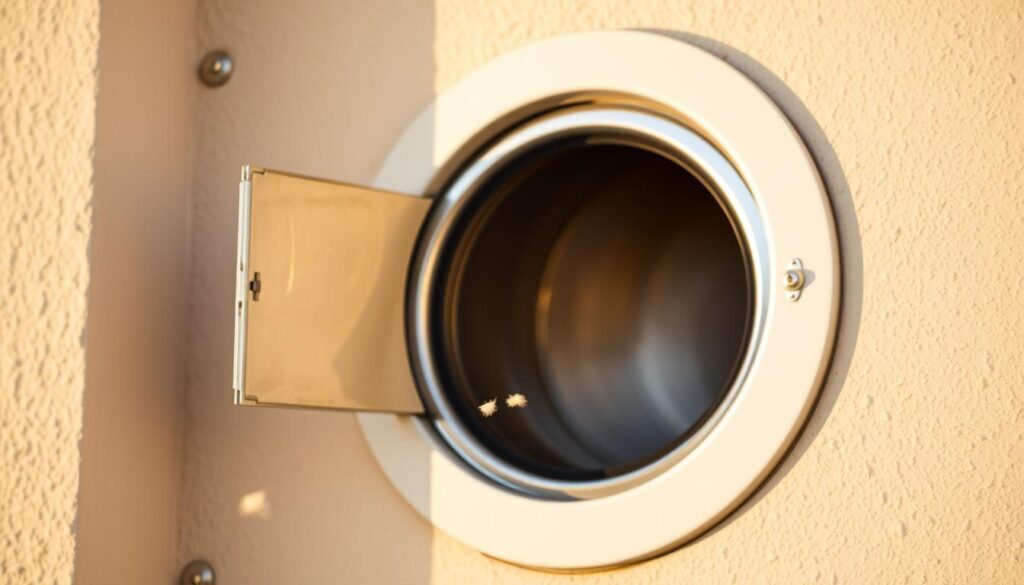
We inspect the flapper so it swings freely and seals when the appliance is off. If the flap sticks or is damaged, exhaust won’t clear well and pests can enter.
Roof vs. ground-level outlets: access and safety
Ground-level outlets are easier and safer for most of us. Roof outlets need ladder safety and sometimes a pro for secure access.
- Check for screens or nests that trap lint and remove obstructions.
- Wipe the exterior cover so dirt or paint chips don’t block air flow.
- Look for lint streaks on siding — they signal long-term discharge at that spot.
Finally, we refit the cover tightly and note any damage to screws or siding. Later, we run a test cycle and feel the outside outlet for strong air movement that confirms the job is done.
Reconnect the dryer and test the exhaust airflow
With the run inspected, we move on to reattaching the duct and securing every joint. We first check for any tears or crushed sections and replace damaged runs before reconnecting.
Reattach ductwork and seal joints
We align the duct at the back dryer outlet and the wall collar, then tighten clamps so joints won’t leak lint. For a lasting, code-friendly seal, we wrap seams with UL-listed metal foil duct tape rather than cloth tape.
Restore power and run a test cycle
After the connections are secure, we plug the appliance in and, for gas units, carefully turn gas at the valve. Then we run an air/fluff cycle for about 15–20 minutes to clear residual debris without adding heat.
Outside verification
- Step outside and confirm the flapper opens fully and the exhaust flow sounds strong.
- Watch for new lint streaks at joints; any signs of leakage should be resealed with proper tape.
- Finally, push the unit back level and check for rattles or crushed duct before finishing the job.
Keep lint at bay: simple maintenance and safety habits
Small, steady habits keep lint from building up and keep our laundry room safer. We make a few quick checks part of our routine and avoid big problems later.
Clean the lint trap before every load and vacuum around the housing so fibers do not migrate into the run. When residue from sheets or softener builds up, wash the lint screen in warm, soapy water and let it dry before reuse.
Frequency and cooling time
We schedule dryer vents for service at least once a year. Households with pets or many loads should arrange checks more often.
Allow about twenty minutes between loads so ducts cool and moist lint settles less. Short breaks improve airflow and reduce the chance of a fire hazard.
Routing, hose length, and duct type
- Shorten long hoses and reduce sharp bends for smoother airflow.
- Replace foil, plastic, or vinyl runs with rigid metal duct for lower clog risk.
- Keep the area clear around the appliance; no storage pressed against the machine.
“Small tasks done often protect the home, save energy, and keep clothes fresher.”
We keep simple tools—vacuum, brush, flashlight—handy and log the last service date so vent cleaning stays on our schedule. These habits cut energy use, extend equipment life, and lower fire risk.
Ready for safer, faster drying—what we’ll do next
We finish by listing simple steps that keep our laundry safe and efficient long after the job is done.
Quick checklist: verify all joints are tight, run an air-only cycle and watch outdoor exhaust. Take before-and-after photos so we can track progress and spot any return of lint.
Make a short shopping list at the store: a brush and kit, a replacement hose, clamps, and UL-rated duct tape. Set a calendar reminder for seasonal checks and one full service each year.
If our run is long or roof access is required, we hire a dryer vent cleaning service that uses compressors and pro tools. At the end, we keep the area clear and listen for smooth airflow as proof of a job done well.


















2 Responses