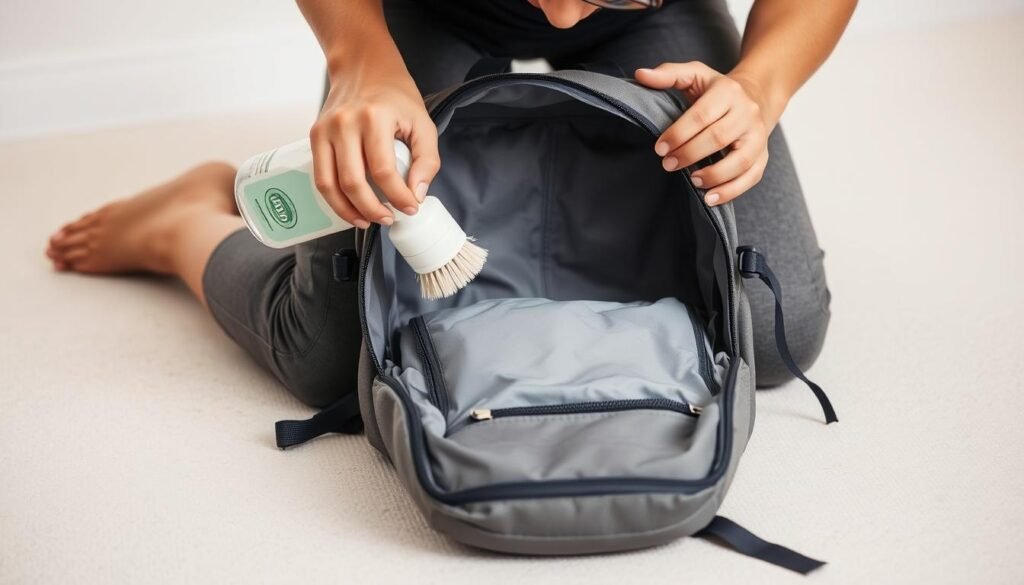
A well-maintained backpack can last for years. But dirt and grime can quickly damage its look and durability. Did you know a dirty backpack can harbor bacteria and odors? This makes it uncomfortable to carry. Regular cleaning is key to keeping it in good shape.
For a detailed cleaning guide, check out Deuter’s guide. By following simple steps, you can keep your backpack looking new and fresh for years.
Key Takeaways
- Regular cleaning extends the lifespan of your backpack.
- Use lukewarm water and pH-neutral soap for effective cleaning.
- Avoid washing your backpack in a washing machine.
- Detach the rain cover before washing and spot clean it if necessary.
- Store your backpack in a dry, well-ventilated area.
Why Regular Backpack Cleaning is Important
Cleaning your backpack regularly is key to keeping it in top shape. A clean backpack is not only more enjoyable to carry but also lasts longer. We’ll look at why cleaning your backpack is good for its durability and your health.how-to-clean-stainless-steel
Benefits of Keeping Your Backpack Clean
There are many reasons to keep your backpack clean. It prevents dirt and grime buildup that can harm the material. Also, a clean backpack is less likely to have bacteria and smells, making it more comfortable to carry. Here are some main benefits:
- Enhanced durability
- Improved hygiene
- Better appearance
- Reduced risk of bacterial growth
Preventing Odors and Bacteria
Cleaning your backpack often is key to stopping odors and bacteria. Dirt and sweat are perfect for bacteria to grow. Regular cleaning helps to:
- Eliminate odor-causing bacteria
- Reduce the risk of skin irritation
- Keep your backpack smelling fresh
By keeping your backpack clean, you ensure a healthier and more enjoyable carrying experience.
Prolonging the Life of Your Backpack
Regular cleaning is also vital for your backpack’s longevity. Dirt and grime can weaken the fabric and shorten its life. By cleaning your backpack often, you can:
- Prevent material degradation
- Maintain the backpack’s structural integrity
- Extend its overall lifespan
This not only saves you money but also keeps your backpack in good condition for longer.
Materials You Need for Cleaning
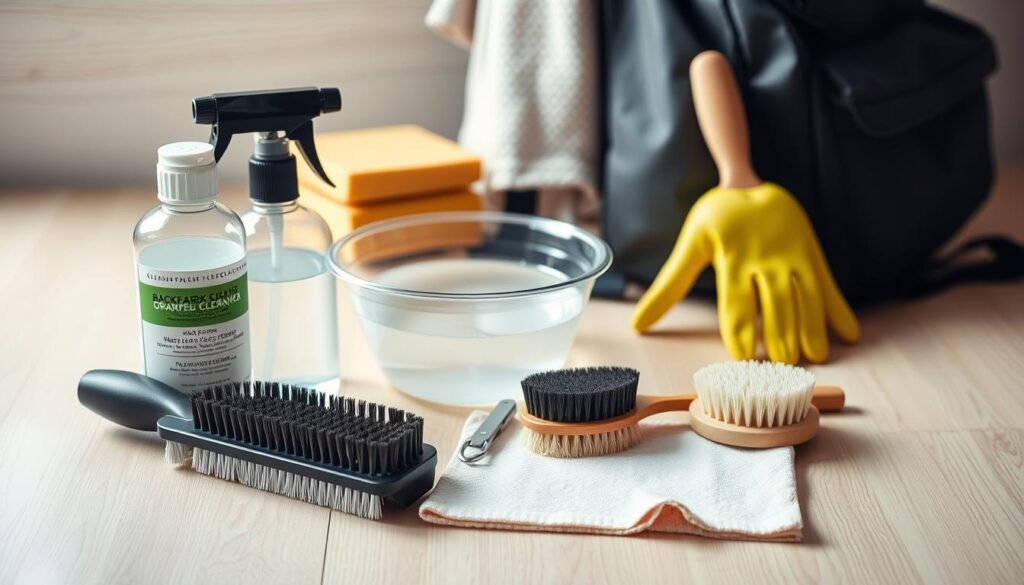
To clean your backpack well, you’ll need some key supplies. Having the right stuff makes cleaning easier and ensures your backpack is spotless.how-to-clean-suede-shoes
Recommended Cleaning Supplies
Most backpacks need a mild detergent that won’t harm the fabric. A soft-bristled brush is great for gently scrubbing dirt and stains. Also, a clean cloth or sponge is good for wiping down surfaces.
Mild Detergent: Pick a detergent made for delicate items. Stay away from harsh or abrasive cleaners that can ruin the fabric.
Soft-Bristled Brush: A soft-bristled brush is perfect for gently removing dirt and debris from the backpack’s fabric and seams.how-to-clean-window-screens
Tools for Spot Cleaning
For stubborn stains, you’ll need special tools. A stain remover or a mix of baking soda and water works well for spot cleaning. Use a clean cloth or cotton swab to apply the cleaning solution to the stain.
- Stain remover or baking soda mixture
- Clean cloth or cotton swab
Eco-Friendly Cleaning Options
For those who like eco-friendly cleaning, consider natural detergent or a homemade solution of vinegar and water. These options are kind to the environment and work well.
| Cleaning Supply | Eco-Friendly Alternative |
|---|---|
| Mild Detergent | Natural Detergent |
| Chemical Stain Remover | Vinegar and Water Mixture |
Preparing Your Backpack for Cleaning

Getting your backpack ready for cleaning is key to a good clean. It helps remove dirt, grime, and bacteria inside and out. This step is often missed, but it’s vital.how-to-clean-headlights
Emptying Your Backpack
Start by emptying your backpack completely. Take out all items like pens, books, and more. This lets you see inside and check for damage or stains.
- Make sure to check all pockets, compartments, and zippers for items.
- Shake out the backpack to get rid of loose debris.
- If you find forgotten items, set them aside to put back later.
Organizing Your Items
While emptying, organize your items. Sort them into keep, throw away, and clean categories. This keeps your backpack tidy and ensures only clean items go back in.
Tips for Organizing:
- Use storage boxes or bags for small items like pens and pencils.
- Consider dividers or pouches to keep things separate in your backpack.
- Get rid of trash or unnecessary items to keep your backpack clean.
Checking for Damage or Repairs
Now, inspect your backpack for damage or wear. Look for torn seams, broken zippers, or other issues. These can affect your backpack’s function and durability.
Common Issues to Look For:
- Torn or frayed straps
- Broken or stuck zippers
- Holes or tears in the fabric
Finding these problems early lets you fix or replace parts. This can make your backpack last longer.
Cleaning Different Types of Backpacks
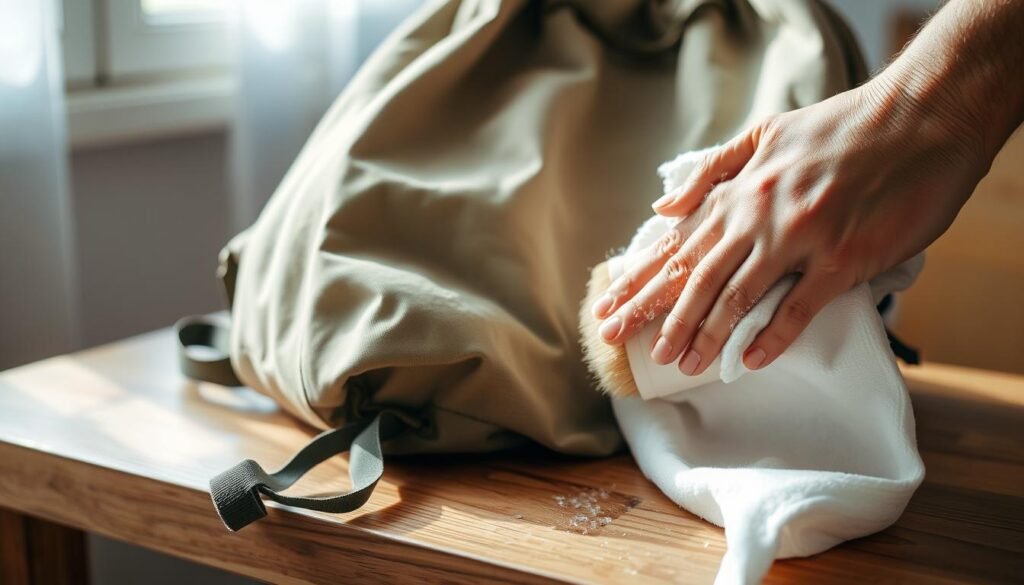
Backpacks are made from various materials, each needing its own cleaning method. Knowing what your backpack is made of is key to keeping it clean and in good shape.how-to-clean-dryer-vent
Canvas Backpack Cleaning Tips
Canvas backpacks are loved for their toughness and look. Begin by brushing off any loose dirt with a soft brush. For stains, mix mild detergent with warm water, then gently scrub with a soft cloth.
Rinse with cold water and let it dry in the air. For more detailed steps, check out a step-by-step guide on washing a backpack.
Nylon and Polyester Backpacks
Nylon and polyester backpacks are great because they’re water-resistant and tough. Clean them with a mild soap and a soft sponge. Don’t use harsh chemicals or rough materials that could harm the fabric.
Rinse with cold water and let it air dry.
Leather Backpack Care
Leather backpacks need special care to keep them looking good. Use a leather cleaner and conditioner to gently clean the surface. Also, avoid direct sunlight and moisture.
Regular conditioning will keep the leather soft and in great condition.
| Backpack Material | Cleaning Method | Drying Method |
|---|---|---|
| Canvas | Mild detergent and water | Air dry |
| Nylon/Polyester | Mild soap solution | Air dry |
| Leather | Leather cleaner and conditioner | Avoid direct sunlight and moisture |
How to Machine Wash Your Backpack

Before washing your backpack in a machine, it’s important to know the right steps. Machine washing can clean your backpack well, but you must be careful. Paying close attention to detail is key.
Checking Care Labels Before Washing
First, check the care label on your backpack. This label tells you how to clean it from the maker. Not following these instructions can damage your backpack or void its warranty. If it says not to machine wash, look for other ways to clean it.how-to-clean-a-washing-machine
Proper Settings and Detergents
If you can machine wash it, choose a gentle cycle with cold water. Hot water can make colors fade or materials break down. Pick a mild detergent without harsh chemicals or bleach. Don’t use fabric softeners, as they can make the backpack less water-resistant.
Tips to Prevent Damage During Wash
To avoid damage, put your backpack in a mesh laundry bag. This protects it from rubbing and tangling. Make sure all pockets are empty and zippers are shut. It’s smart to take out any removable parts or accessories. Washing it alone keeps it safe from other clothes’ colors or damage.
As
“A clean backpack is not just about appearance; it’s also about hygiene and longevity.”
, cleaning it right can make it last longer.
- Check the care label before washing.
- Use a gentle wash cycle with cold water.
- Choose a mild detergent.
- Protect your backpack in a mesh laundry bag.
By following these tips, you can safely wash your backpack in a machine. This keeps it looking great.
Spot Cleaning Techniques
Spot cleaning is a great way to deal with stains and dirty spots on your backpack. It’s perfect for keeping your backpack looking good between full washes.how-to-clean-a-cast-iron-skillet
When to Use Spot Cleaning
Spot clean your backpack when you see small stains or dirty spots. These should be easy to reach and not too deep. It’s best for stains that haven’t had time to set in yet.
Effective Spot Cleaning Solutions
A mild soap or a fabric cleaner works well for most backpacks. For tough stains, try a baking soda and water paste. It helps lift the stain.
Always test any cleaning solution on a small, hidden area first. This makes sure it won’t harm the fabric.
Step-by-Step Spot Cleaning Guide
To spot clean your backpack, follow these steps:
- Find the stain and pick the right cleaning solution.
- Put the solution on the stain with a soft brush or cloth.
- Lightly scrub the area, starting from the outside.
- Wash off the soap with cold water, or use a damp cloth if it can’t get wet.
- Let the area dry completely before using your backpack again.
By following these steps, you can keep your backpack looking great, even between full washes.
Drying Your Backpack Safely
Drying your backpack safely after cleaning is key for its life and cleanliness. The right drying methods prevent damage and keep the backpack’s shape.
Air Drying vs. Machine Drying
There are two main ways to dry your backpack: air drying and machine drying. Air drying is gentler and recommended. Hang your backpack upside down in a well-ventilated area to dry.
Machine drying is risky because high heat can harm the fabric or fade colors. If you must use a dryer, set it to low heat and check it often to avoid overheating.
| Drying Method | Pros | Cons |
|---|---|---|
| Air Drying | Gentle on materials, preserves color and fabric integrity | Slower process, requires patience |
| Machine Drying | Quick and convenient | Risk of damage from high heat, potential for color fading |
Tips for Proper Drying Techniques
To dry your backpack well, follow these tips:
- Remove excess water gently without wringing or twisting the backpack.
- Use a clean towel to blot out moisture, focusing on straps and pockets.
- Hang the backpack in a well-ventilated area, away from direct sunlight.
- For more info on cleaning and drying backpacks, visit Deuter’s guide on how to clean a.
How to Reshape Your Backpack While Drying
To keep your backpack’s shape while drying, stuff it with paper towels or a dry cloth. This absorbs moisture from inside out and keeps the shape. Make sure not to overstuff, as it can stretch the backpack.how-to-clean-an-oven
By following these steps, your backpack will dry safely and stay in good condition. Proper care extends its life, keeping it functional and looking new for longer.
Maintaining Your Backpack Post-Cleaning
Now that your backpack is clean, here’s how to keep it looking fresh. Keeping your backpack in good shape is key to making it last longer and stay useful.
Regular Care and Maintenance Tips
To keep your backpack in great shape, regular care is a must. Here are some tips:
- Regularly wipe down the exterior with a damp cloth to remove dirt and stains.
- Check and clean the zippers and buckles to ensure they’re functioning properly.
- Use a fabric protector to repel water and stains, if your backpack is made of canvas or nylon.
Tip: Don’t overload your backpack, as it can damage the seams and zippers.how-to-clean-garbage-disposal
Storing Your Backpack Correctly
Proper storage is key when your backpack is not in use. Here are some tips:
- Empty your backpack completely before storing it.
- Store it in a cool, dry place away from direct sunlight.
- Avoid folding or creasing the backpack; instead, hang it or store it flat.
Proper storage can significantly extend the life of your backpack.
Reinforcing Areas That Wear Out
Some parts of your backpack are more likely to wear out. Reinforcing these areas can help make it last longer.
- Check the seams and stitching regularly and reinforce them if necessary.
- Use a fabric glue or patch kit to repair small tears or holes.
By following these maintenance tips, you can keep your backpack looking new and functional for a long time. Regular care and proper storage are essential to maintaining your backpack after cleaning.
Conclusion: Keep Your Backpack Fresh and Functional
Now you know how to clean your backpack well. It’s key to keep it fresh and working right. Cleaning it often helps it last longer and look great.
Cleaning Recap
Cleaning your backpack means getting it ready, using the right stuff, and drying it right. These steps help get rid of dirt, stop smells, and keep your backpack in top shape.
Schedule Regular Cleanings
To keep your backpack smelling good, clean it often. If you use it a lot, clean it every few weeks. If not, clean it every few months. Think about using CO2 dry cleaning services for a green and good clean.
Maintain Your Backpack
Regular cleaning makes your backpack last longer and stay fresh. Keep up with cleaning, and your backpack will be ready for all your trips.