A wood cutting board is a key part of many kitchens. But, it can become a place where bacteria and other harmful organisms grow if not cleaned right. A dirty cutting board can carry bacteria like Salmonella and E. coli, which can cause food poisoning.
It’s important to sanitize your cutting board often to stop these harmful bacteria from growing. In this article, I’ll show you how to clean and care for your wood cutting board. This way, it stays clean and lasts longer.
Key Takeaways
- Understand the importance of cleaning your cutting board regularly.
- Learn the best methods for sanitizing a wood cutting board.
- Discover how to maintain the durability of your cutting board.
- Find out the best practices for preventing bacterial growth.
- Get tips on how to keep your kitchen safe and hygienic.
Understanding the Importance of Cleaning Your Cutting Board
Cleaning your cutting board is key to keeping your kitchen clean. It’s a place where bacteria can grow, thanks to raw meats, poultry, and fish.
When you cut food on your board, it can pick up harmful germs. These germs can then spread to your food and make you sick. So, keeping your cutting board clean is very important.
Why Hygiene Matters for Cutting Boards
Wooden cutting boards can hold onto harmful bacteria like Salmonella and E. coli. These can cause serious food poisoning. Cleaning and sanitizing your board is essential to stop these germs.
Here’s a table showing common bacteria on cutting boards and their health risks:
| Bacteria | Source | Health Impact |
|---|---|---|
| Salmonella | Raw poultry, eggs | Food poisoning, diarrhea, fever |
| E. coli | Raw meat, contaminated produce | Food poisoning, severe diarrhea, kidney failure |
| Campylobacter | Raw poultry, unpasteurized dairy | Food poisoning, diarrhea, abdominal pain |
How Bacteria Can Affect Your Health
Bacteria on your cutting board can spread to other foods and surfaces. This can cause foodborne illnesses. These illnesses are serious for the elderly, young kids, and those with weak immune systems.
Regular cleaning and sanitizing of your cutting board can greatly lower the risk of getting sick. It’s not just about keeping your board clean. It’s about keeping your family and yourself healthy.
Basic Cleaning Techniques for Wood Cutting Boards
Keeping your wood cutting board clean is key to its hygiene and durability. A clean board looks better, is safer to use, and lasts longer.
Warm Water and Mild Soap Method
Washing your cutting board with warm water and mild soap is easy. After each use, clean it with warm soapy water on both sides. This keeps it clean and prevents bacteria buildup.
Rinsing and Drying Properly
After washing, rinse your cutting board well to remove soap. Then, dry it with a clean towel, focusing on edges and crevices. Drying properly stops water spots and bacteria growth.
Tip: To stop bacteria, dry your cutting board on its edge. This lets air dry it out.
Deep Cleaning Solutions for Tough Stains
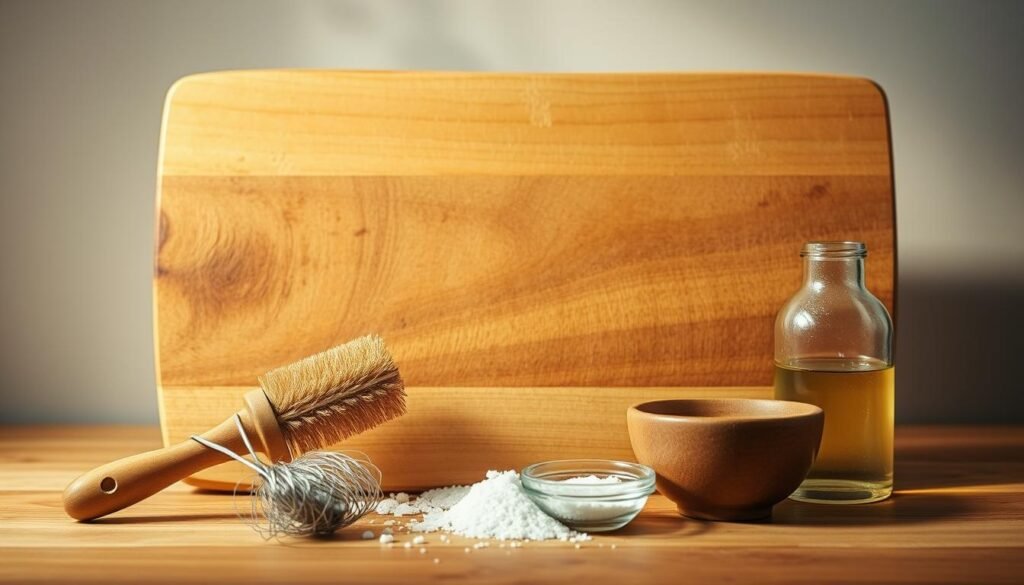
For tough stains on your wood cutting board, a deep clean is essential. Over time, cutting boards can get stains that regular cleaning can’t handle. These stains not only look bad but can also be a health risk.
Baking Soda Paste for Stubborn Stains
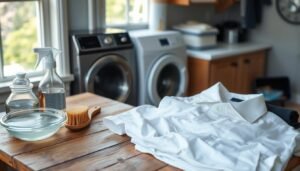
Using a baking soda paste is a great way to tackle stubborn stains. Mix baking soda with water until it’s thick. Apply it to the stain and let it sit for 15-30 minutes.
The baking soda gently removes the stain without harming the wood. After sitting, scrub the area with a soft brush. Rinse well with warm water and dry with a towel. This method is safe and effective.
Vinegar Solution for Disinfecting
It’s also important to disinfect your cutting board to kill bacteria. A vinegar solution is simple and effective. Mix equal parts water and white vinegar in a spray bottle.
Spray the solution over the cutting board, covering it all. Let it sit for a few minutes to kill bacteria. Then, rinse with warm water and dry it well. Vinegar is safe for wood and doesn’t leave harsh chemicals behind.
Preventing Damage During Cleaning

Cleaning your wood cutting board needs care to avoid damage. It’s important to keep it clean, but the cleaning process can harm it if not done right.
Avoiding Soaking in Water
Soaking your wood cutting board in water is a big mistake. Soaking can make the wood warp or crack, shortening its life. Instead, use a damp cloth to clean it and dry it right away.
Steer Clear of Harsh Chemicals
It’s also important to avoid harsh chemicals. Many cleaning products can damage the wood or leave harmful residues. Use mild soap and water or natural cleaners that are safe for your cutting board and health.
To show the best ways to clean your wood cutting board, here’s a comparison:
| Cleaning Method | Safety | Effectiveness |
|---|---|---|
| Soaking in Water | Unsafe | May cause warping or cracking |
| Mild Soap and Water | Safe | Effective for daily cleaning |
| Harsh Chemicals | Unsafe | May damage wood or leave residues |
| Baking Soda Paste | Safe | Effective for removing tough stains |
By following these tips, you can keep your wood cutting board clean and in good shape. This way, it will stay a safe and useful tool in your kitchen for many years.
Regular Maintenance Tips for Longevity
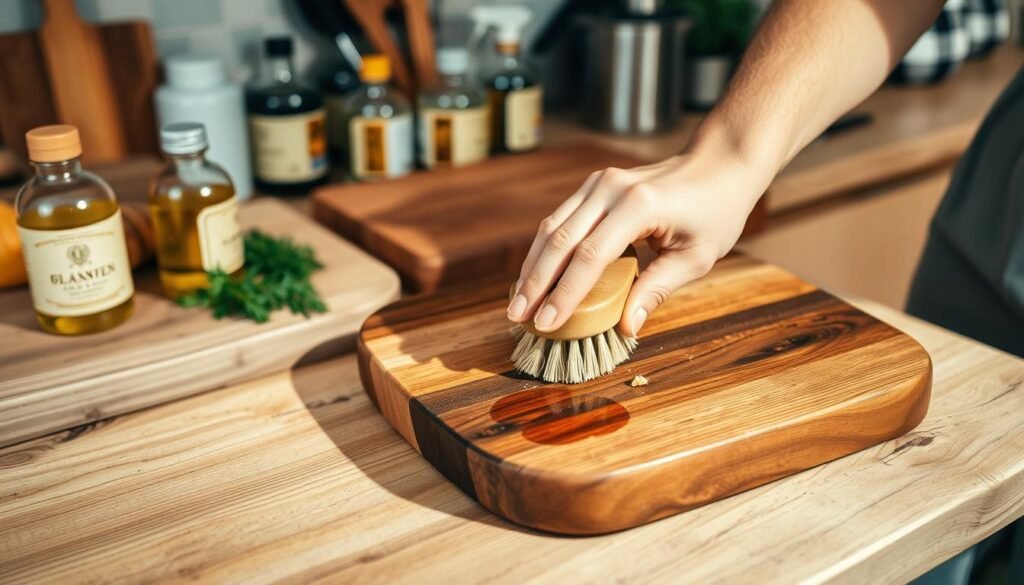
Keeping your wood cutting board in top shape is key. A few simple steps can make it last longer and stay safe to use. Here’s how to keep your cutting board in great condition.
Applying Mineral Oil to Prevent Cracking
Mineral oil is a great way to care for your cutting board. It prevents cracking by keeping the wood moist. Just pour some oil on the board and rub it in with a cloth.
- Use a clean, soft cloth to apply the oil.
- Rub the oil into the wood, ensuring even coverage.
- Let the oil soak in for a few hours or overnight before wiping off any excess.
For more detailed guidance on caring for your wood cutting board, you can refer to this complete guide to caring for your wood cutting.
When to Refinish Your Cutting Board
As your cutting board ages, it may get scratches or lose its shine. If it does, it’s time to refinish your cutting board. This means sanding it down and applying a new finish.
- Inspect your cutting board regularly for signs of wear.
- Sand the surface to smooth out any rough spots.
- Apply a food-safe finish to protect the wood.
By following these tips, your cutting board will stay in top shape. It will remain a valuable and safe tool in your kitchen for many years.
How Often Should You Clean Your Cutting Board?
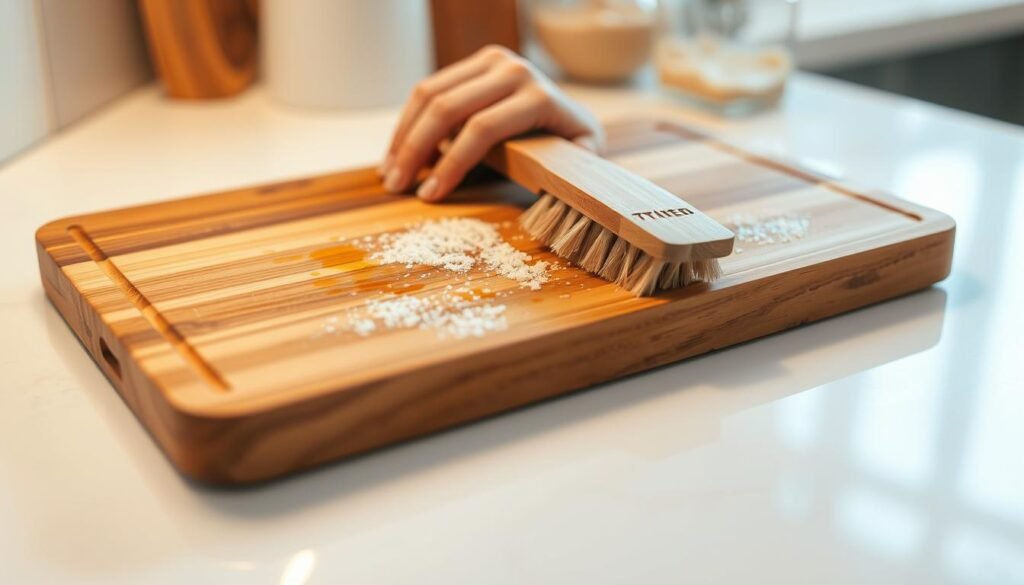
Knowing when to clean your cutting board is crucial for a clean kitchen. Regular cleaning keeps your board hygienic and extends its life.
To ensure your cutting board stays clean, follow a daily and weekly cleaning plan.
Daily Cleaning Routine
Every day, clean your cutting board to remove food and bacteria. Wash it with warm water and mild soap after each use.
Steps for Daily Cleaning:
- Wipe off any large debris.
- Wash with warm soapy water.
- Rinse thoroughly.
- Dry with a clean towel.
By cleaning daily, you lower the risk of bacterial contamination.
Weekly Deep Cleansing
Weekly deep cleans are needed to remove tough stains and bacteria. Use baking soda and water or vinegar for this.
| Method | Ingredients | Instructions |
|---|---|---|
| Baking Soda Paste | 2 tablespoons baking soda, 1 tablespoon water | Apply paste to the cutting board, scrub, and rinse. |
| Vinegar Solution | 1 part white vinegar, 2 parts water | Spray solution onto the cutting board, let sit for 5 minutes, then rinse. |
Combining daily and weekly cleaning keeps your cutting board in top shape. It ensures it remains safe for use.
Regular care not only keeps your cutting board clean but also makes it last longer. It’s a smart choice for your kitchen.
Recognizing Signs Your Cutting Board Needs Replacement
Knowing when to replace your cutting board is key for kitchen hygiene. Your cutting board can be a breeding ground for bacteria. If not maintained or replaced when needed, it can be a health risk.
Checking for Deep Grooves and Cracks
Deep grooves and cracks are a clear sign your cutting board needs to be replaced. These can trap bacteria, making it hard to clean. Look for these visually and feel the surface for any imperfections. If you find deep or wide cracks, it’s time for a new cutting board.
For tips on keeping your cutting board in good shape, check out Ruvati’s guide on cleaning and caring for wood cutting.
Odors that Won’t Disappear
Persistent odors that won’t go away are another sign it’s time for a new cutting board. These smells can mean bacteria or old food particles are stuck in the wood. Even after trying vinegar and baking soda, if the smell stays, it’s time for a new board.
| Signs of Wear | Description | Action Required |
|---|---|---|
| Deep Grooves and Cracks | Difficulty in cleaning due to bacteria accumulation | Replace the cutting board |
| Persistent Odors | Unpleasant smells that remain after cleaning | Consider replacement if odors persist after thorough cleaning |
By spotting these signs and acting on them, you keep your kitchen clean and safe for food prep.
Tips for Proper Storage of Cutting Boards
How you store your cutting board affects its life and cleanliness. It’s not just about keeping your kitchen tidy. It’s also about keeping your cutting board clean and in good shape.
Drying and Cleaning After Use
After cleaning, dry your cutting board well. Stand it upright or on an incline to let air flow. This stops moisture from causing bacteria to grow. Always dry your cutting board with a clean towel and let it air dry before storing.
Optimal Storage Locations
Choosing the right spot to store your cutting board is key. Keep it in a dry, well-ventilated area, away from sunlight. Don’t store it in humid places or near heat, as it can warp or crack. Consider a special spot or hang it on a wall with a holder.
Here’s a comparison of different storage methods:
| Storage Method | Pros | Cons |
|---|---|---|
| Standing Upright | Allows for good airflow, easy to access | May take up more space |
| Hanging on Wall | Saves counter space, easy to access | Requires a holder or hook |
| Storing in Drawer | Keeps it out of the way, protects from dust | May be harder to access, risk of moisture |
Choosing the right storage method and location can make your cutting board last longer and stay in great shape.
Choosing the Right Wood for Cutting Boards
The wood you pick for your cutting board is key to its quality and life span. There are many types of wood, each with its own traits. Knowing these traits helps you make a smart choice.
Popular Wood Types and Their Durability
Different woods have special qualities that impact their durability and upkeep. Hardwoods like maple and walnut are dense. This makes them less likely to get scratched, perfect for heavy use.
Common Hardwoods Used for Cutting Boards:
- Maple: Known for its light color and fine grain, maple is resistant to wear and tear.
- Walnut: A dense hardwood with a rich, dark color, walnut is both durable and aesthetically pleasing.
- Cherry: Cherry wood offers a warm, reddish-brown color and is moderately hard, making it a popular choice for cutting boards.
| Wood Type | Durability | Maintenance |
|---|---|---|
| Maple | High | Low |
| Walnut | High | Moderate |
| Cherry | Moderate | Low |
Benefits of Bamboo vs. Traditional Woods
Bamboo is gaining popularity for cutting boards because it’s sustainable and durable. Unlike traditional hardwoods, bamboo grows fast and needs less water and pesticides.
Bamboo vs. Traditional Woods:
- Bamboo is generally more resistant to moisture and less prone to warping.
- Traditional woods like maple and walnut offer a natural, warm aesthetic that many prefer.
- Bamboo is often considered more eco-friendly due to its rapid growth rate and low environmental impact.
Choosing between bamboo and traditional woods depends on your taste, cooking habits, and eco-values.
Eco-Friendly Alternatives for Cleaning Supplies
Keeping your wood cutting board clean is important. But, it’s also key to think about the environment when choosing cleaning products. Eco-friendly cleaning is a step towards a greener life.
Natural Ingredients for a Safer Clean
Using natural ingredients is a smart choice for cleaning your cutting board. A mix of vinegar and olive oil can be very nourishing. You can also add essential oils like Melaleuca (Tea Tree) for their germ-fighting powers.
Sustainable Practices for Cleaning
If you prefer easy options, look for eco-friendly cleaning products. Choose items with natural ingredients and less packaging. Using coconut oil for upkeep, as mentioned before, is also good for the planet.
For sanitizing, try a mix of vinegar or hydrogen peroxide. This method is both effective and kind to the environment, as suggested on Savory Lotus.