

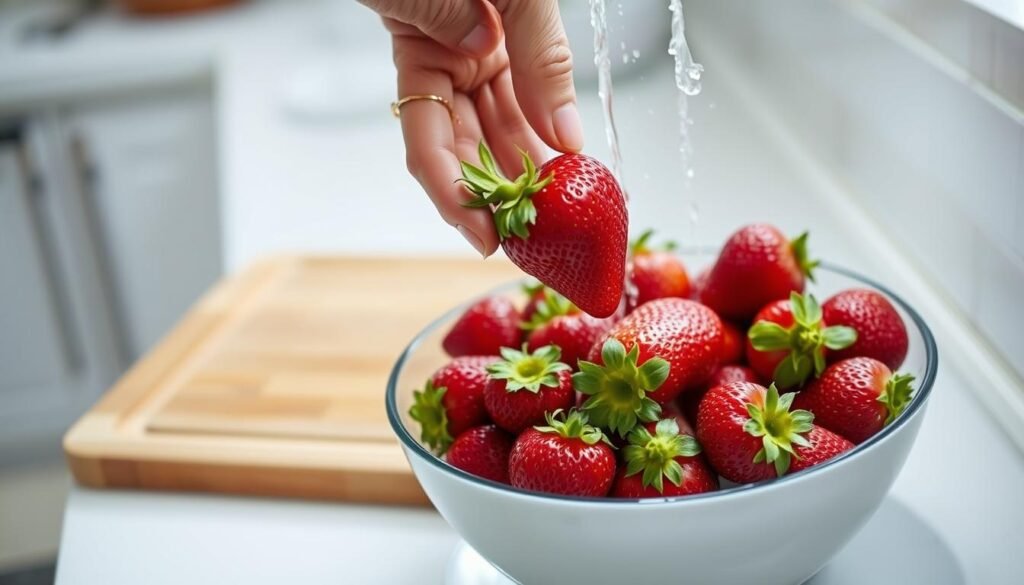
Did you know strawberries are among the most contaminated fruits with pesticides? Cleaning them properly is key to enjoying their sweetness and health benefits.
I’ll show you how to make your strawberries safe to eat. Fresh strawberries are a treat, but they can carry dirt, pesticides, and other harmful stuff.
With a few simple steps, you can remove these contaminants and enjoy your strawberries to the fullest.
Key Takeaways
- Importance of cleaning strawberries before consumption
- Simple steps to remove dirt and pesticide residue
- Tips for maintaining the freshness of strawberries
- Benefits of properly cleaned strawberries
- Easy methods for cleaning strawberries at home
Understanding the Importance of Cleaning Strawberries
Before you enjoy strawberries, it’s key to know why cleaning them is important. It’s not just about getting rid of dirt. It’s also about making sure the fruit is safe to eat and keeps its nutrients.
Why Clean Strawberries?
Strawberries are a delicate fruit that can pick up many things, like pesticide residue, dirt, and mold. Cleaning strawberries properly gets rid of these unwanted things. This makes them safer for you to eat. For more tips on cleaning and storing strawberries, check out Epicurious.
Potential Contaminants on Strawberries
Strawberries can carry a lot of things that aren’t good for you, such as:
- Pesticide residue
- Dirt and soil
- Mold and mildew
- Bacteria like Salmonella and E. coli
These can cause sickness and lower the fruit’s nutritional value.You can laso leaen about how-to-clean-your-ears.
Health Benefits of Proper Cleaning
Cleaning strawberries right has many health perks. It cuts down the chance of getting sick from food by getting rid of bad bacteria and other harmful stuff. It also keeps the fruit’s nutrients, so you get the most health benefits from it.
| Benefit | Description |
|---|---|
| Reduced Risk of Foodborne Illnesses | Cleaning strawberries removes harmful bacteria and contaminants. |
| Preservation of Nutritional Value | Proper cleaning helps retain the vitamins and antioxidants in strawberries. |
| Enhanced Flavor and Texture | Clean strawberries taste better and have a more appealing texture. |
Gathering Your Supplies

To clean your strawberries well, you’ll need some basic tools and solutions. Having the right stuff makes cleaning easier and ensures your strawberries are clean.You can laso leaen about how-to-clean-a-washing-machine.
Essential Cleaning Tools
You’ll first need a colander or strainer. It helps rinse your strawberries under water, getting rid of dirt. A big bowl is also handy for soaking the strawberries if needed.
- A colander or strainer for rinsing
- A large bowl for soaking (optional)
Ideal Cleaning Solutions
For cleaning, you’ll need some basic solutions. Cold water is key for rinsing off dirt. For a deeper clean, a vinegar solution works great. Mix 1 part white vinegar with 3 parts water in a bowl, and soak your strawberries for about 5 minutes. This helps remove pesticide residues and keeps them fresh longer.
- Cold water for rinsing
- Vinegar solution (1 part white vinegar to 3 parts water) for a deeper clean
Optional Equipment for Drying
Drying your strawberries is important to prevent them from spoiling fast. While not necessary, a salad spinner is great for drying them gently. Or, you can use clean towels or paper towels to dry them.
- A salad spinner for gentle drying
- Clean towels or paper towels for patting dry
Step-by-Step Guide to Cleaning Strawberries

To enjoy strawberries at their best, follow this easy guide. Cleaning strawberries is key to removing dirt, pesticides, and other contaminants.
Rinse Under Cold Water
The first step in cleaning strawberries is to rinse them under cold water. This removes loose dirt or debris from the surface. Place the strawberries in a colander or strainer to let water flow around each berry.
Consider Using a Vinegar Solution
For a deeper clean, use a vinegar solution. Mix 1 part white vinegar with 3 parts water in a large bowl. Soak the strawberries in this solution for about 5 minutes. The vinegar’s acid removes pesticide residue and kills mold or bacteria.
- Mix 1 part white vinegar with 3 parts water.
- Soak strawberries for 5 minutes.
- Rinse thoroughly with cold water afterward.
Gently Scrub When Necessary
If strawberries are dirty or have visible mold, gently scrub them. Use a soft-bristled brush under cold running water. Be gentle to avoid damaging the berries.You can laso leaen about how-to-clean-shower-head.
| Cleaning Method | Effectiveness | Remarks |
|---|---|---|
| Cold Water Rinse | High | Removes loose dirt and debris. |
| Vinegar Solution | Very High | Removes pesticide residue and kills bacteria. |
| Gentle Scrubbing | High | Removes stubborn dirt and mold. |
By following these steps, you can ensure your strawberries are clean, fresh, and ready to enjoy. Whether you’re snacking on them, adding them to salads, or using them in desserts, cleaning strawberries is a crucial step that enhances their flavor and safety.
Drying Your Strawberries
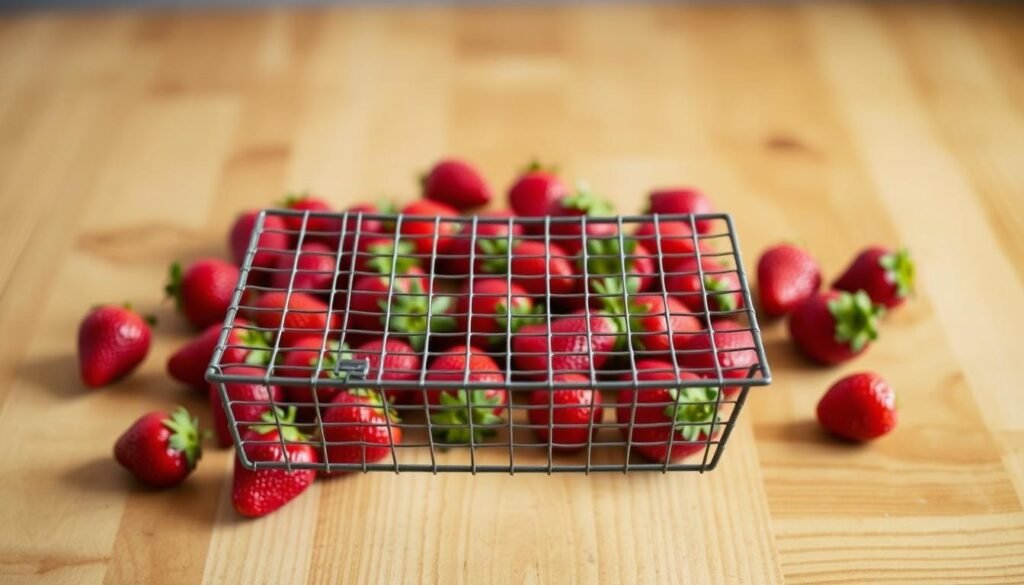
After cleaning your strawberries, it’s key to dry them to stop them from spoiling. Drying strawberries is vital to keep them fresh and extend their life. As “the key to keeping strawberries fresh lies in handling them gently and drying them thoroughly”, I’ll share the best ways to dry strawberries.
Best Practices for Drying
There are a few methods to dry strawberries well. The aim is to get rid of extra moisture without harming the fruit. Experts at Serious Eats say it’s important to gently remove water to keep them fresh.
Using a Salad Spinner
Using a salad spinner is a great way to dry strawberries. It removes extra water without damaging the fruit. Just put the cleaned strawberries in the spinner and let it work its magic.
Air-Drying Techniques
If you don’t have a salad spinner, air-drying works too. Gently pat the strawberries dry with a clean towel to remove extra moisture. Or, let them air dry on a clean surface, making sure they don’t touch each other to stop moisture transfer.
As “drying strawberries thoroughly is crucial for their longevity”, taking the time to dry them right will keep your strawberries fresh longer.
Storing Clean Strawberries Properly
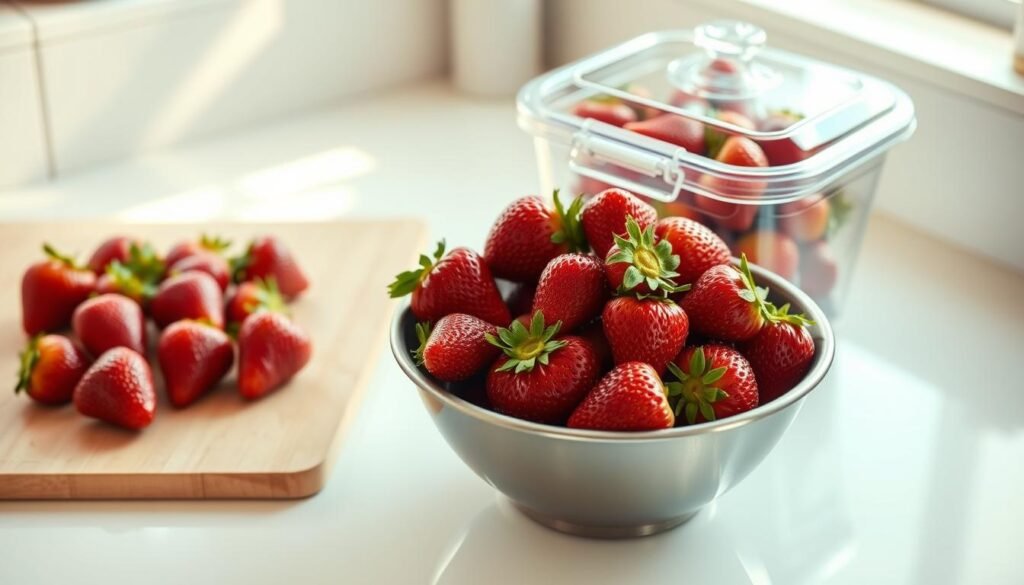
After cleaning your strawberries, it’s important to store them right to keep them fresh. The right storage helps you enjoy your strawberries longer.You can laso leaen about how-to-clean a cast iron skillet.
Ideal Storage Methods
Choosing the right storage method is key to keeping strawberries fresh. Store them in a cool, dry place, like the fridge, to slow down spoilage.
It’s also important to use the right containers. Use breathable containers or ziplock bags that let air in. This prevents moisture buildup and keeps strawberries fresh.
Using Containers to Keep Freshness
Choose a container that lets air in, like a mesh bag or a ventilated plastic container. This keeps strawberries from getting moldy or spoiled.
- Make sure containers are clean and dry before adding strawberries.
- Avoid overcrowding the container to prevent strawberries from getting crushed or bruised.
- Keep the container away from strong-smelling foods, as strawberries can easily absorb odors.
How to Maintain Crispness
To keep strawberries crisp, follow these storage tips:
- Store strawberries in the fridge at a temperature below 40°F (4°C).
- Keep them away from moisture by ensuring the container is dry and not washed until you’re ready to use them.
- Don’t wash strawberries before storing; instead, wash them just before use.
When to Clean Strawberries
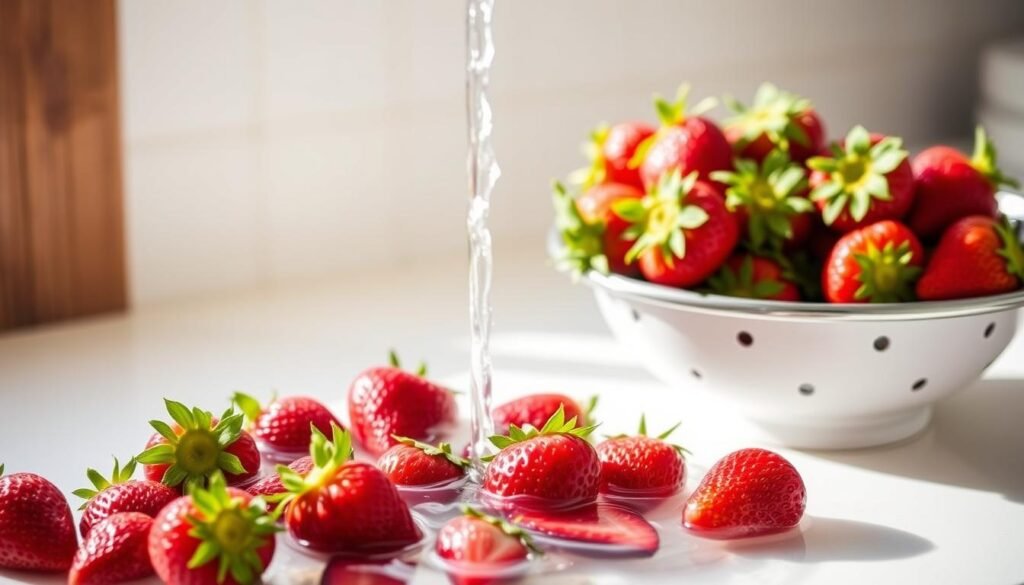
Cleaning strawberries at the right time is key to keeping their taste and nutrients. Whether you’re using them now or saving them for later, when you clean them matters a lot.
Prepping for Immediate Use
For strawberries you plan to use right away, clean them just before eating. This removes dirt and keeps them safe to eat or use in recipes. Rinse them gently under cold water to get rid of surface dirt.
Tips for Immediate Use:
- Rinse strawberries under cold water.
- Gently pat them dry with a clean towel or salad spinner.
- Use them immediately in salads, desserts, or as a fresh snack.
Cleaning Before Longer Storage
If you won’t use strawberries right away, clean them before storing. This removes dirt or mold that can make them spoil faster. Dry them well before putting them in a container that lets air in.
Best Practices for Storage:
- Clean strawberries gently but thoroughly.
- Dry them completely to prevent moisture buildup.
- Store them in a breathable container in the refrigerator.
Tips for Buying Fresh Strawberries
Choosing fresh strawberries is the first step. Look for berries that are bright red, firm, and have no mold or bruises. Stay away from strawberries with white or green spots, as they’re not ripe yet.
| Characteristic | Fresh Strawberries | Not-so-Fresh Strawberries |
|---|---|---|
| Color | Bright red | Dull, white, or green |
| Texture | Firm | Soft, mushy |
| Mold Presence | No visible mold | Visible mold or bruising |
By following these tips, you can enjoy your strawberries at their best. Whether you’re using them now or saving them for later, the key is to clean them at the right time and store them properly.
Common Mistakes to Avoid
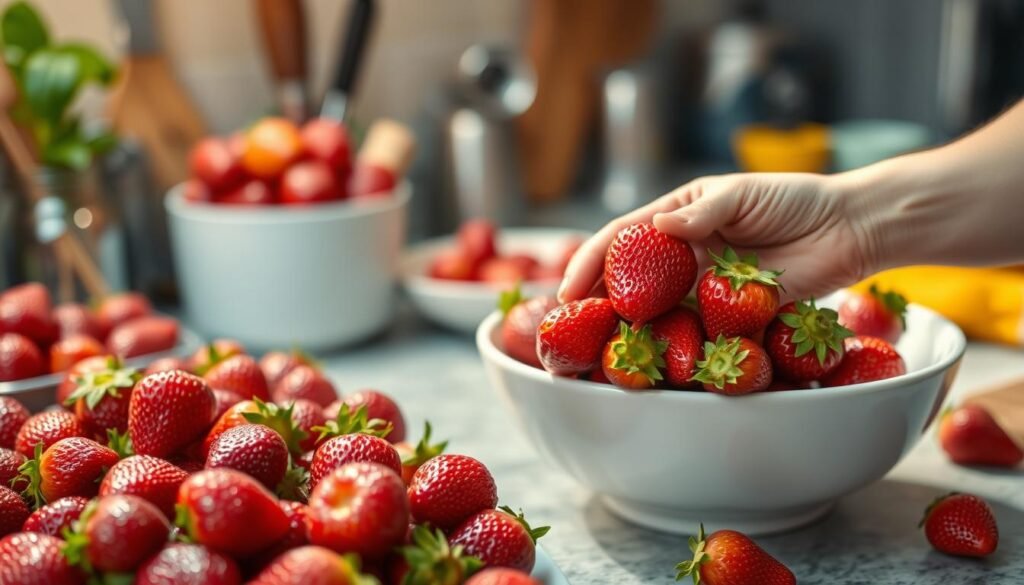
Cleaning strawberries might seem easy, but there are common mistakes that can ruin their freshness and safety. Knowing these mistakes helps you enjoy your strawberries longer. You’ll also keep their taste and nutritional value.
Skipping the Cleaning Process
One big mistake is not cleaning strawberries at all. They can have dirt, pesticides, and harmful stuff that’s bad for you. Always clean your strawberries well before eating them. For more tips, check out this resource on strawberry cleaning.
Using Hot Water
Using hot water is another mistake. Hot water can make strawberries mushy and lose their flavor. Use cold water to gently rinse them, keeping their texture and taste.
Not Drying Thoroughly
Not drying strawberries well after cleaning is a mistake too. Too much moisture lets bacteria and mold grow, making strawberries go bad faster. Dry them well with a salad spinner or a clean towel.
Avoiding these mistakes lets you enjoy fresh, clean strawberries. Their quality depends on how well you clean and dry them.
Creative Ways to Use Cleaned Strawberries
Now that your strawberries are clean, it’s time to get creative in the kitchen. They can add flavor to many dishes, from breakfast to desserts. For more cleaning tips, check out The Kitchn’s guide on cleaning strawberries.
Delicious Strawberry Recipes
Strawberries are great for more than just desserts. They can also flavor salads, yogurt, and even savory dishes. Here are a few ideas to get you started:
- Add sliced strawberries to your morning oatmeal or yogurt for a sweet and healthy breakfast.
- Mix strawberries with feta cheese and mint for a refreshing summer salad.
- Blend strawberries with your favorite fruits and milk for a delicious smoothie.
Incorporating Strawberries in Various Dishes
Strawberries can be used in many dishes, making them taste better and healthier. Here are some ideas:
| Dish | Strawberry Addition |
|---|---|
| Pancakes or Waffles | Top with fresh strawberries and whipped cream. |
| Savory Salads | Add sliced strawberries for a sweet contrast. |
| Smoothies | Blend strawberries with your favorite fruits and milk. |
Making Strawberry Desserts
Strawberries are a classic in many desserts, like shortcakes and tarts. Here are some ideas for delicious strawberry desserts:
- Make a classic strawberry shortcake with fresh strawberries, whipped cream, and sweet biscuits.
- Create a strawberry tart with a flaky crust and a sweet strawberry filling.
- Blend strawberries with cream and sugar to make a simple yet delicious strawberry ice cream.
With these ideas, you can enjoy your cleaned strawberries in many delicious ways. Whether in a dessert or a savory dish, strawberries are sure to please.
The Role of Organic vs. Conventional Strawberries
Knowing the difference between organic and conventional strawberries is key. It helps you pick the right fruit and clean it well.
Understanding Pesticide Residue
Pesticide residue on strawberries worries many. Organic strawberries usually have less pesticide residue than conventional ones. A report found strawberries have high pesticide levels, sparking debate on farming methods.
Experts say eating produce with high pesticide residue might harm health. But how much harm varies.
Best Practices for Cleaning Different Types
Proper cleaning is vital for both organic and conventional strawberries. Here’s how to do it:
- Rinse under cold water: Start by rinsing your strawberries under cold running water to remove any loose dirt or debris.
- Use a vinegar solution: Soaking strawberries in a vinegar solution can help remove pesticide residue. Mix 1 part vinegar with 3 parts water and soak for about 5 minutes.
- Gently scrub: For strawberries with visible dirt, gently scrub them with a soft brush to remove any stubborn residue.
The Debate: Organic or Conventional?
The debate on organic vs. conventional strawberries involves many factors. Organic strawberries are grown without synthetic pesticides but are pricier and have a shorter shelf life.
Conventional strawberries are cheaper and last longer due to preservatives. But, the health and environmental risks of these treatments worry many.
Choosing between organic and conventional strawberries depends on your priorities and budget. By understanding the differences and cleaning properly, you can enjoy strawberries while reducing pesticide exposure.
Conclusion and Happy Eating!
Now you know how to clean strawberries. It’s time to enjoy them at their best. Cleaning strawberries properly is key to enjoying their sweetness and health benefits.
Cleaning Made Simple
To recap, the main steps are simple. Start by gently rinsing your strawberries under cold water. You can also use a vinegar solution for extra cleanliness. Then, dry them well to prevent spoilage.
Savoring the Flavor
Enjoying strawberries is more than just eating them plain. You can add them to salads, smoothies, baked goods, and desserts. With your strawberries cleaned, you can try these ideas with confidence.
Tips for the Perfect Snack
To keep strawberries fresh, store them in a cool, dry place. Whether you’re eating them alone or in recipes, the joy of strawberries is greater when they’re clean and prepared well.



















2 Responses