I still remember the day I found out my makeup brushes were full of bacteria. It was a real eye-opener. Using dirty makeup brushes can lead to skin problems and affect how well your makeup looks.
Dirty makeup brushes can cause breakouts and other skin issues. A study showed that many makeup brushes have bacteria that can cause acne and other skin problems. It’s crucial to regularly clean your makeup brushes to keep your skin healthy and your makeup looking flawless.
Key Takeaways
- Dirty makeup brushes can harbor bacteria, leading to skin issues.
- Regularly cleaning your makeup brushes is essential for healthy skin.
- Clean makeup brushes ensure a smoother makeup application.
- Neglecting to clean your makeup brushes can cause breakouts.
- Maintaining clean makeup brushes is a simple yet effective skincare routine.
Why Cleaning Your Makeup Brushes is Important
Keeping your makeup brushes clean is key for perfect makeup and healthy skin. I’ve seen a big change in my skin’s look and feel when I clean my brushes often.
Benefits for Your Skin
Dirty makeup brushes can harbor bacteria, causing breakouts and irritation. Cleaning them removes old makeup and bacteria, protecting your face. For example, dirty brushes can carry Staphylococcus aureus, which can lead to infections. Learn more about the importance of cleaning your makeup.
Enhancing Makeup Application
Clean brushes mean smoother, more even makeup. They pick up and spread makeup better, giving you a flawless look. I clean mine before big events to get that perfect base.
Prolonging Brush Lifespan
Cleaning your brushes regularly makes them last longer. Makeup buildup can stiffen and break bristles, but cleaning keeps them soft. This saves money and ensures your makeup looks great every time.
| Benefits | Description | Impact |
|---|---|---|
| Healthier Skin | Reduces bacteria transfer | Fewer breakouts |
| Better Makeup Application | Even makeup distribution | Flawless finish |
| Longer Brush Lifespan | Prevents bristle damage | Cost-effective |
When to Clean Your Makeup Brushes

Knowing when to clean your makeup brushes is key for hygiene and flawless makeup. Regular cleaning boosts makeup quality and skin health.You can learn about how-to-clean-hair-brushes.
Daily vs. Weekly Cleaning
Should you clean your makeup brushes daily or weekly? It depends on how often you use them. If you use them daily, clean them weekly. For less use, clean every two weeks. But, if you use them with liquids or creams, clean them more often to avoid bacteria.
- Daily cleaning is best for brushes with liquids or creams.
- Weekly cleaning works for powder products.
- Every two weeks is okay for occasional use.
Signs It’s Time for a Thorough Clean
There are clear signs it’s time for a deep clean. Look out for:
- Visible buildup on the bristles.
- A change in brush texture or feel.
- Streaks or uneven makeup application.
- An odd smell from the brushes.
For detailed cleaning tips, check out this resource. It offers great advice and methods.
Seasonal Deep Cleaning Tips
Seasonal changes are a perfect time for a deep clean. At each season’s start, remember to:
- Check your brushes for damage or wear.
- Use a gentle shampoo or brush cleaner for a deep clean.
- Reshape and lay them flat to dry to keep their shape.
- Replace any damaged brushes.
By following these tips, your makeup brushes will stay in top shape. You’ll get flawless makeup every time.
Essential Cleaning Tools You’ll Need

Before you start cleaning your makeup brushes, make sure you have the right tools. Cleaning your brushes keeps them in top shape and your skin healthy. It’s a must for anyone who loves makeup.
Choosing the Right Brush Cleanser
Finding the right brush cleanser is key. There are many options, from gentle to deep-cleaning formulas. Think about your brush type and makeup use when choosing a cleanser.
If you use oil-based products, pick a cleanser that cuts through grease well. For powder products, a gentle cleanser is better.You can learn about how-to-clean-strawberries.
Other Handy Cleaning Supplies
You’ll also need other supplies for cleaning. A gentle soap or shampoo is great for tough stains. Warm water helps loosen makeup.
Having a clean towel or paper towels for drying is important. You might also want a brush cleaning mat or silicone pad for extra help.
Optional Tools for Efficiency
While not essential, some tools can make cleaning easier. A brush cleaning tool with different textures can be very helpful. Some people use a microwave brush cleaner for a deep clean, but be careful not to damage the brushes.
Using these tools can make cleaning less of a chore. It helps keep your brushes in great shape for longer.
Step-by-Step Guide to Basic Brush Cleaning
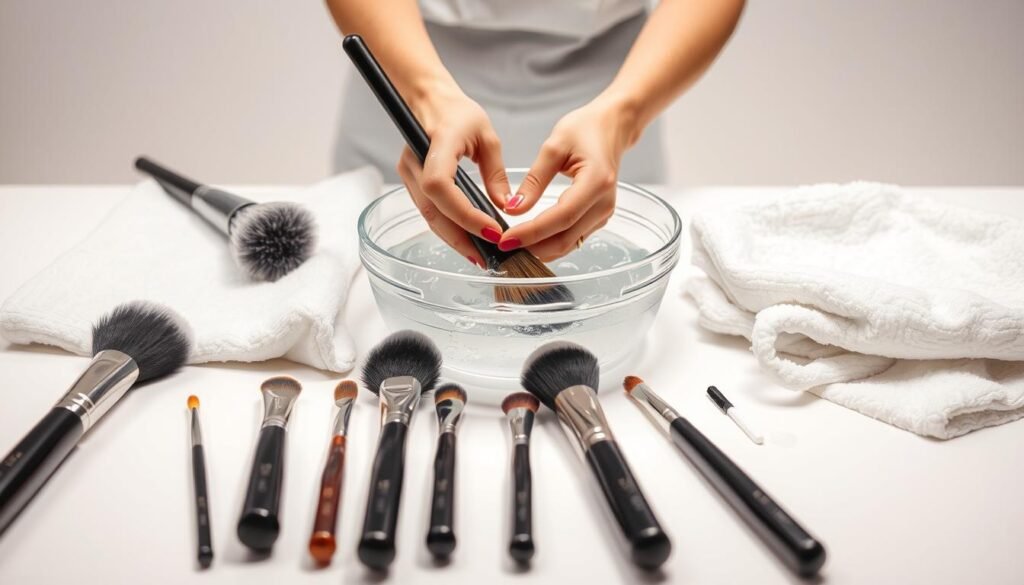
Cleaning your makeup brushes is key to perfect makeup. It keeps your skin healthy and your makeup smooth. Let’s look at how to clean your brushes the right way.
Swirling Technique for Bristle Care
To clean your brushes, start with a gentle swirling motion. Wet your brush with warm water and add a bit of cleanser. Swirl the brush in your hand or on a cleaning mat.
Rinsing and Drying Instructions
Rinse the brush well with warm water to get rid of soap. If makeup is hard to remove, clean it again. Be careful not to pull on the bristles when squeezing out water.
To dry, lay the brush flat on a towel and reshape it. Let it air dry completely. This might take a few hours or overnight, depending on the brush size.
| Brush Type | Cleaning Frequency | Drying Time |
|---|---|---|
| Foundation Brush | Weekly | 4-6 hours |
| Eyeshadow Brush | Every 2 weeks | 2-4 hours |
| Concealer Brush | Weekly | 3-5 hours |
By following these steps, your makeup brushes will stay clean and in great shape. This ensures your makeup looks flawless every time.
How to Clean Different Types of Brushes
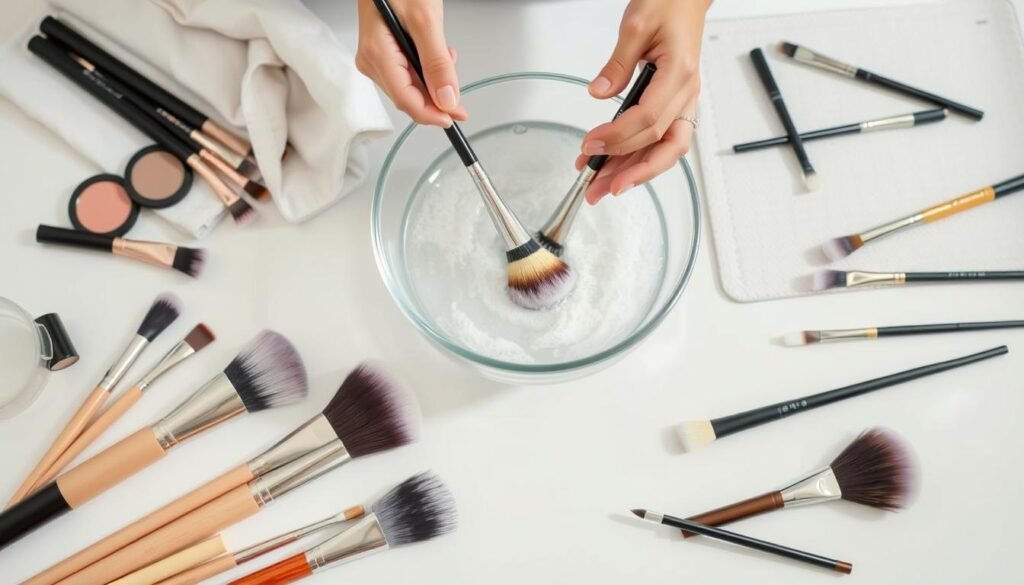
To keep your makeup brushes in good shape, it’s important to clean them right. This depends on their material, like synthetic, natural, or specialty. Each type needs special care, and the right cleaning method can make your brushes last longer.
Synthetic Brushes
Synthetic brushes are easy to clean and maintain. They can handle many cleaning products and methods. To clean them, use a gentle cleanser or a brush cleaner made for this purpose. Massage the cleanser into the bristles, then rinse with warm water until it’s clear.
Tip: For tough stains, soak synthetic brushes in a water and cleanser mix for 15 minutes before rinsing.You can learn about how-to-clean-a-dishwasher.
Natural Hair Brushes
Natural hair brushes need a bit more care when cleaning. Use a mild shampoo or a cleaner made for natural hair brushes. Gently work the cleaner into the bristles without damaging the fibers. Rinse with lukewarm water and shape the brush back to its original form to avoid damage.
For more tips on cleaning makeup brushes, check out this guide on cleaning makeup brushes.
Specialty Brushes (e.g., Sponges)
Specialty brushes, like makeup sponges, need special cleaning. For sponges, use a gentle soap or a sponge cleanser. Massage the soap into the sponge, then rinse until all soap is gone. Sanitize sponges often by microwaving them damp for 2 minutes or using a UV sanitizer.
| Brush Type | Recommended Cleaner | Special Care |
|---|---|---|
| Synthetic | Gentle cleanser or brush cleaner | Can be soaked for stubborn stains |
| Natural Hair | Mild shampoo or natural hair brush cleaner | Reshape after cleaning to maintain form |
| Specialty (Sponges) | Gentle soap or sponge cleanser | Sanitize regularly by microwaving damp or using UV sanitizer |
Alternative Cleaning Methods
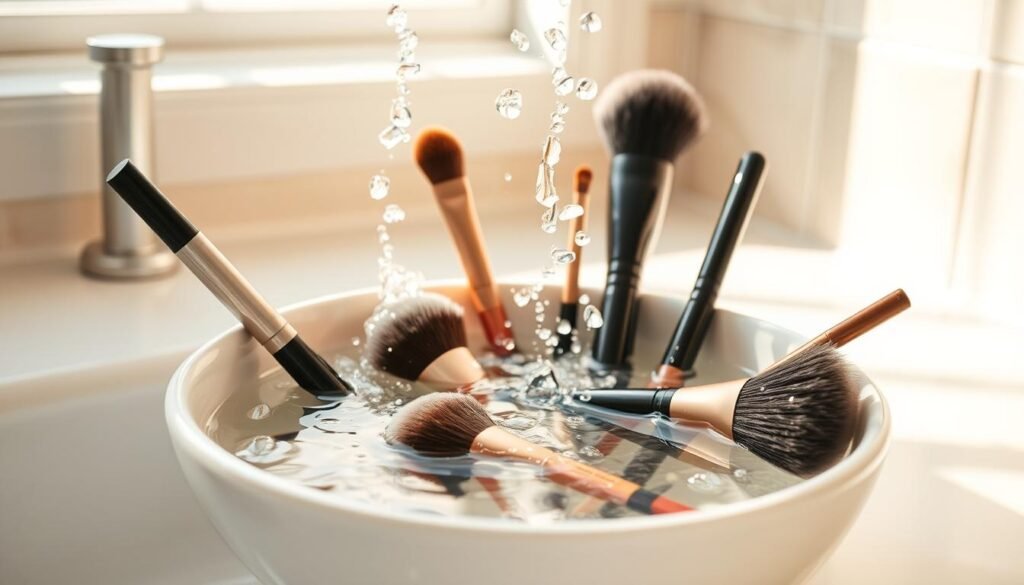
Looking into different ways to clean your makeup brushes can improve hygiene and extend their life. While traditional methods work well, trying new approaches can be beneficial.
DIY Cleaning Solutions
Making your own cleaning solution can save money and let you tailor it to your needs. A mix of mild dish soap and warm water is great for removing makeup. Adding a few drops of antimicrobial essential oils, like tea tree oil, can boost cleaning power and make your brushes smell nice.
Another DIY method uses olive oil and soap. Combine equal parts olive oil and mild soap, then massage it into the bristles. This not only cleans but also conditions your brushes, keeping them soft.
Using Baby Shampoo or Mild Soap
Baby shampoo or mild soap is a gentle option for cleaning makeup brushes. These products are free from harsh chemicals and fragrances, making them safe for sensitive skin. Just mix a small amount with warm water, swirl the brushes, and then rinse well.
The main advantage of baby shampoo or mild soap is their gentle cleaning. This is good for natural hair brushes, which can dry out easily.
Microwave Method for Deep Cleansing
The microwave method is a deep clean technique. You use a special brush cleaning tool or a microwave-safe bowl. Mix water and a cleaning agent, add the brushes, and microwave for a short time. This helps remove tough makeup.
But, be careful with this method. Too much heat can harm some brush materials. Always check the manufacturer’s advice before using the microwave, and make sure to rinse the brushes well after.
Best Practices for Brush Maintenance
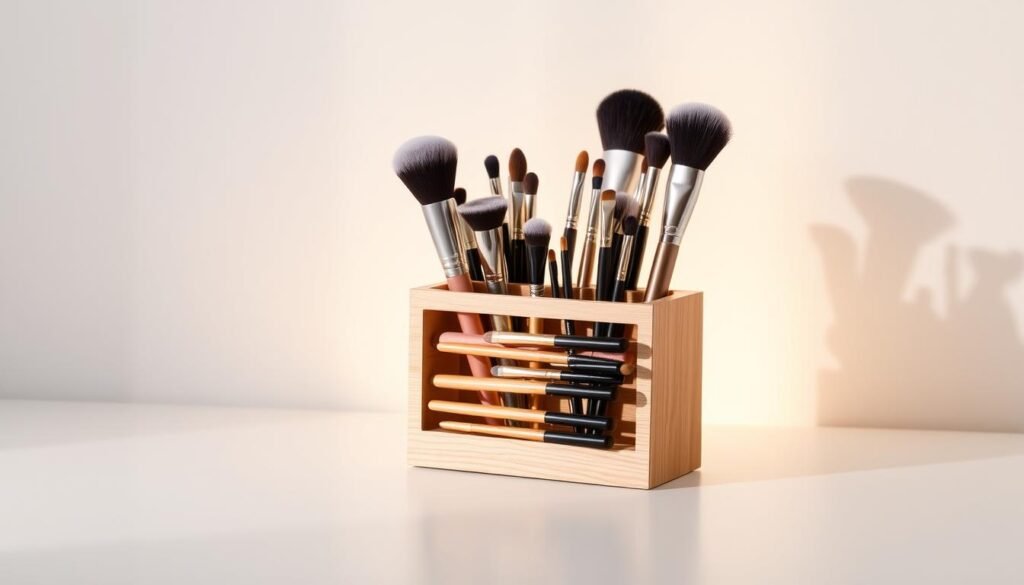
Proper care for your makeup brushes can greatly improve their performance and lifespan. By following simple maintenance practices, you can keep your brushes in top shape. This ensures they apply makeup flawlessly.
Proper Storage Techniques
Storing your makeup brushes correctly is key to maintaining their shape and preventing damage. Keep them in a cool, dry place, away from sunlight. Use a brush holder or protective case to keep bristles clean and prevent damage.
For detailed guidance on cleaning your makeup brushes, visit this helpful resource on quick and easy cleaning.
Avoiding Common Mistakes
There are several common mistakes to avoid when maintaining your makeup brushes. Not cleaning your brushes regularly can lead to product buildup and poor performance. Also, using harsh chemicals or hot water can damage the bristles and shorten their lifespan.
| Common Mistake | Consequence | Prevention |
|---|---|---|
| Not cleaning brushes regularly | Product buildup and poor performance | Clean brushes weekly |
| Using harsh chemicals | Damage to bristles and handle | Use mild soap or brush cleanser |
| Storing brushes improperly | Bent or damaged bristles | Store in a protective case or holder |
Regular Inspection Tips
Regularly inspecting your makeup brushes can help you catch issues early. Look for signs of wear and tear, such as frayed bristles or loose ferrules. Regular checks allow you to address problems before they worsen.
By following these best practices for brush maintenance, you can extend your makeup brushes’ life. They will continue to perform well. For more tips on how to clean makeup brushes and keep them in good condition, check out other resources and guides.
Troubleshooting Common Issues
Dealing with common makeup brush problems can make them work better and last longer. Even with regular cleaning, some issues might pop up that need extra care.
Dealing with Stubborn Product Build-up
Build-up can mess up your makeup look. Use a soft brush cleaner or soap and warm water to tackle it. Massage the bristles from base to tip to get rid of the build-up.
For tough cases, try a special makeup brush cleaner. It breaks down the product without harming the bristles.
| Method | Description | Effectiveness |
|---|---|---|
| Gentle Soap and Water | Mix mild soap with warm water, massage bristles gently. | High |
| Specialized Cleaning Solution | Use a solution designed for makeup brushes. | Very High |
Preventing Shedding and Damage
Shedding and damage can shorten your brush’s life. Be gentle with your brushes to avoid damage. Don’t pull on the bristles too hard.
“The way you clean and store your makeup brushes can greatly impact their durability.”
Check your brushes often for wear. Catching problems early can prevent bigger issues later.
Fixing Shape and Form After Washing
It’s key to reshape your brushes after washing. Squeeze out water and lay them flat on a towel to dry.
- Reshape the bristles to their original form.
- Lay the brushes flat to air dry.
- Avoid standing brushes upright on their handles, as this can cause water to seep into the ferrule.
By using these tips, you can keep your makeup brushes in top shape. This ensures a perfect makeup look every time.
Eco-Friendly Cleaning Options
As we become more aware of our environmental impact, it’s key to choose eco-friendly cleaning for makeup brushes. The beauty world is moving towards greener practices. Cleaning our makeup brushes is a great first step.
Biodegradable Brush Cleaners
Switching to biodegradable brush cleaners is a simple way to green your makeup routine. These cleaners are made from natural stuff that easily breaks down. This helps protect our waterways and wildlife. Look for products with the EPA’s Safer Choice label for the best eco-friendly options.
For more tips on cleaning makeup brushes the green way, check out this guide.
Reusable Cleaning Tools
Using reusable cleaning tools can also cut down on waste. For example, a silicone cleaning pad or a microfiber cloth can replace disposable wipes. These tools are good for the planet and work well to clean your brushes.
Tips for Reducing Waste
Reducing waste in beauty routines is more than just the products. It’s also about how we care for our tools. Here are some tips for a greener makeup brush cleaning routine:
- Clean your brushes often to avoid bacteria and product buildup. This means you won’t need to replace them as often.
- Choose a cleaning method that uses little water. For example, a small amount of cleaner with a silicone pad works great.
- Think about the packaging of your cleaning products. Pick brands with minimal or recyclable packaging.
By choosing eco-friendly cleaning options, you help make your beauty routine more sustainable. You’ll reduce your environmental impact and take better care of your brushes and skin.
Budget-Friendly Cleaning Tips
Cleaning your makeup brushes doesn’t have to cost a lot. Here are some tips to save money. Keeping your brushes clean is key for great makeup and healthy skin. With a few simple steps, you can keep your brushes in top shape without spending too much.
Making Your Own Cleanser at Home
Creating your own makeup brush cleanser at home saves money. You can choose ingredients that fit your skin type. Mix equal parts olive oil and gentle dish soap.
The olive oil breaks down makeup and conditions the bristles. The dish soap cleans away dirt and grime. This homemade cleanser is gentle, effective, and free from harsh chemicals found in some commercial products.
Tools You Already Have on Hand
Think about what you already have at home before buying cleaning products. Mild soap, baby shampoo, or even a mixture of vinegar and water can clean your brushes well. These options are affordable and easy to find, making it simple to keep your brushes clean.
Thrifty Shopping for Brush Care
There are ways to save money on brush cleaning supplies without sacrificing quality. Look for multi-purpose cleansers for your brushes and other makeup tools. Buying in bulk or choosing store-brand products can also cut costs. Keep an eye out for sales or use coupons to stretch your budget.
By following these budget-friendly tips, you can keep your makeup brushes clean and in good shape without spending a lot. Regular cleaning improves your makeup and helps your skin stay healthy.
Keeping Your Brushes Sanitary
Keeping your makeup brushes clean is very important. They pick up bacteria, dirt, and old makeup every day. This can cause skin problems and mess up your makeup.
Importance of Disinfecting
Disinfecting your makeup brushes is key to getting rid of harmful germs. Cleaning them with a gentle cleanser removes dirt. But disinfecting kills the germs that can harm your skin.
Use a disinfectant made for makeup brushes to keep them clean and safe. This is very important for brushes near your eyes and sensitive areas.
How Often to Sanitize
How often you should sanitize your makeup brushes depends on how much you use them. It’s a good idea to sanitize them once a week. But if you have acne or eye infections, you might need to do it more often.
- Sanitize daily-used brushes every 3-4 days.
- For less frequently used brushes, sanitizing once a week is sufficient.
- Always sanitize your brushes after being ill to prevent the spread of infection.
Best Products for Disinfection
There are many products out there to disinfect makeup brushes. Look for one that kills many kinds of bacteria but is also gentle on your brushes.
- Brush cleaning sprays that are formulated with antimicrobial ingredients.
- Antibacterial soaps that are mild and won’t damage the brush fibers.
- UV brush sanitizers that use ultraviolet light to kill bacteria and germs.
By making sanitizing a part of your makeup brush care, you can have healthier skin and better makeup.
Conclusion: Maintaining Clean Brushes for Beautiful Skin
Keeping makeup brushes clean is key for perfect makeup and healthy skin. Learning how to clean them well stops bacteria and product buildup. This helps avoid skin problems.
Key Steps for Cleaning
To keep your brushes in great shape, clean them regularly. Use the right cleanser and gently swirl the bristles. Rinse well to remove dirt and product buildup. This keeps your brushes soft and effective.
Establishing a Cleaning Routine
Set aside time each week to clean your brushes. This habit keeps them clean and prevents deep cleaning needs. Adding this to your beauty routine makes makeup application smoother.
Final Tips for Brush Care
Brush care goes beyond cleaning. Store them in a dry, cool place and reshape after cleaning. These steps help your brushes last longer. By following these tips, you’ll enjoy beautiful, healthy skin.