Did you know a well-maintained cast iron skillet can last for decades? It can even last for generations. But, if you don’t clean it correctly, it can rust and lose its non-stick surface.
I’ll show you how to keep your cast iron skillet in top shape. By following these easy steps, you’ll enjoy cooking with it for many years.
Key Takeaways
- Understand the importance of cleaning your cast iron skillet
- Learn the simple steps to maintain your skillet’s durability
- Discover the best practices for keeping your cast iron skillet in great condition
- Find out how to prevent rust and maintain the non-stick surface
- Enjoy cooking with your well-maintained cast iron skillet
Why Cleaning Your Cast Iron Skillet Matters
Not cleaning your cast iron skillet can cause rust and make it less effective. It’s key to keep it clean to ensure it works well for a long time.
The Benefits of Proper Care
Proper care and cleaning of your cast iron skillet make it last longer and cook better. Regular cleaning stops residue buildup, which can make it sticky. It also keeps bacteria away, making it safer to cook with.
Key benefits of regular cleaning include:
- Prevents rust and corrosion
- Maintains non-stick seasoning
- Reduces the risk of bacterial growth
- Enhances cooking performance
Avoiding Rust and Damage
Rust is a big problem with cast iron skillets if they’re not cared for. To stop rust, dry your skillet well after cleaning and put a thin layer of oil on it. Regular seasoning also keeps rust away.
| Action | Benefit |
|---|---|
| Dry skillet after cleaning | Prevents water spots and rust |
| Apply a thin layer of oil | Protects against rust and corrosion |
| Regular seasoning | Maintains non-stick surface and protects against rust |
By doing these simple things, you can keep your cast iron skillet in top shape for years. It’s not just about cleaning. It’s about making a routine that keeps your skillet working great.
Essential Tools for Cleaning

Having the right tools is key for cleaning your cast iron skillet. You need them to keep its seasoning and remove food residue well. Here are the essential cleaning tools you’ll need.You can learn more about how-to-clean-airpods.
Scrapers and Brushes
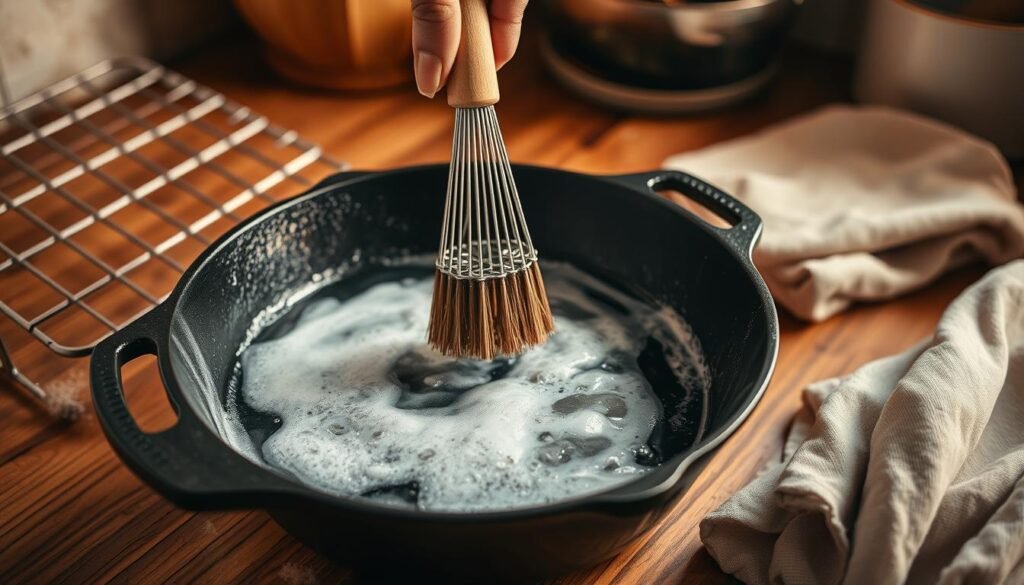
A good scraper or brush is a must for removing stuck-on food. I suggest using a soft-bristled brush or a gentle scraper made for cast iron cookware.
- A soft-bristled brush gently sweeps away food residue.
- A gentle scraper is great for removing tough food particles.
Soaps and Oils
The type of soap and oil you use matters when cleaning your cast iron skillet. Mild soap is best for cleaning, as harsh detergents can harm the seasoning. After cleaning, apply a thin layer of cooking oil to keep the seasoning.You can learn more about how-to-clean-an-oven.
- Use mild soap and warm water to clean the skillet.
- Dry the skillet well and apply a thin layer of cooking oil.
With these essential tools, you can keep your cast iron skillet in top shape. It will remain a trusted cooking partner for many years.
How to Clean Fresh Stains
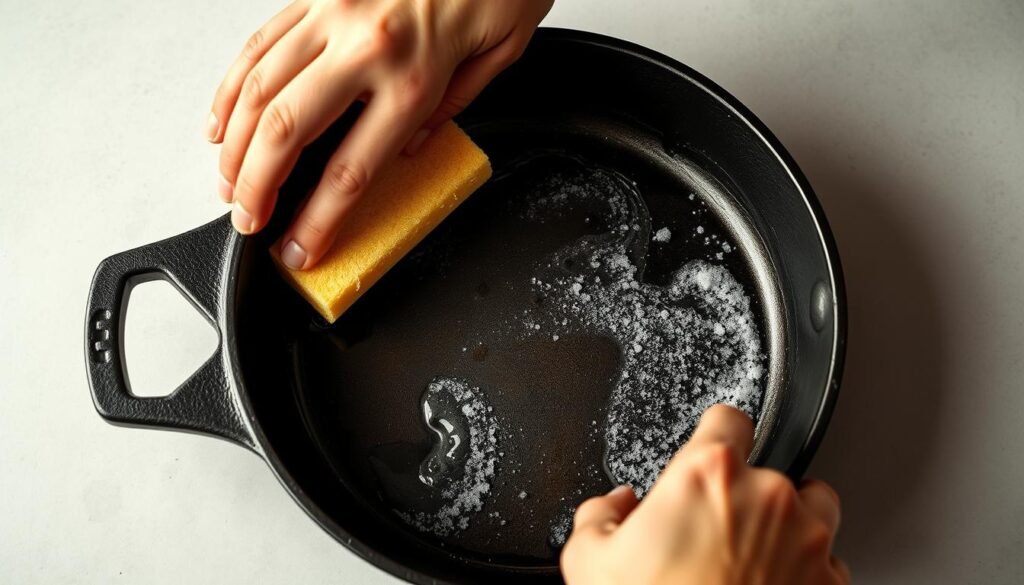
Cleaning fresh stains on your cast iron skillet is easy with the right knowledge and solutions. Stains come from many cooking activities. It’s important to clean them quickly to keep your skillet in good shape.
Step-by-Step Process
Begin by removing any extra food with a paper towel. Next, use a soft sponge or cloth to gently scrub the stain. For harder stains, a non-abrasive scraper might be needed.
- Rinse the skillet with warm water.
- Dry it well with a towel.
- Apply a thin layer of oil to prevent rust.
Recommended Cleaning Solutions
Mild soap and water usually work for most stains. But for tougher ones, try a mix of equal parts water and white vinegar.
Here are some good cast iron cleaning solutions:
- Mild dish soap.
- White vinegar.
- Cooking oil for drying and keeping the skillet in shape.
By following these steps and using the right solutions, you can keep your cast iron skillet in top condition.
Dealing with Stuck-On Food
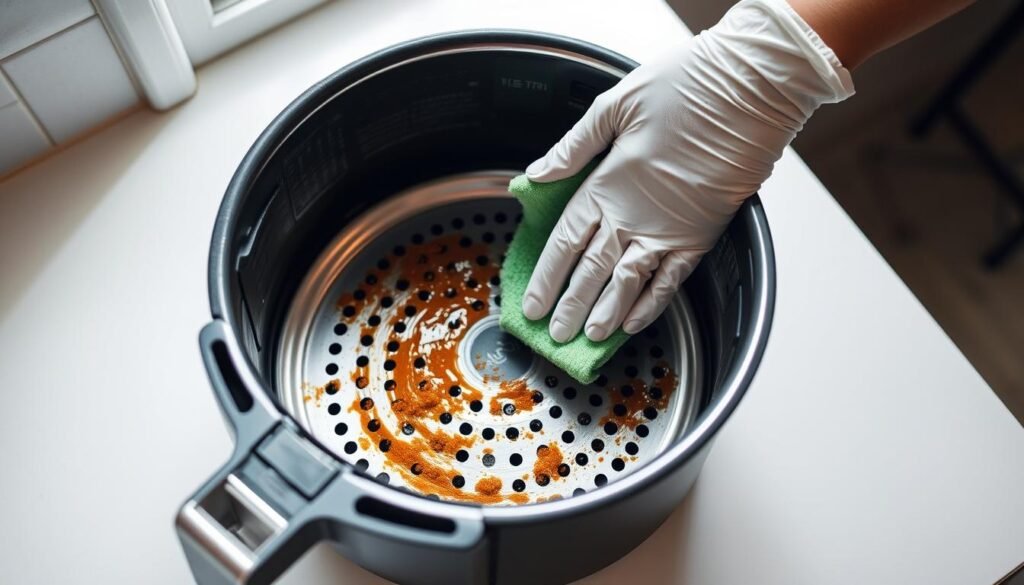
Getting stuck-on food out of your cast iron skillet can be tough. But, with the right methods, it’s doable. These methods help remove food without harming your skillet.You can learn more about how-to-clean-hair-brushes.
Soaking Techniques
Soaking is a common first step. Fill your skillet with hot water and let it soak. This makes the food easier to remove.
For really stuck food, add a bit of mild dish soap. But, make sure to rinse well to get rid of soap.
Using Salt as an Abrasive
Salt is a gentle scrubber for stuck food. Sprinkle salt in the skillet and scrub with a soft sponge. It removes food without scratching the skillet.
This method works well for tough food without harsh chemicals.
| Method | Effectiveness | Remarks |
|---|---|---|
| Soaking | High | Effective for loosening food particles |
| Salt Abrasive | High | Gentle on the skillet, effective for stuck-on food |
Using these methods, you can get rid of stuck food from your cast iron skillet. This keeps it ready for future use.
The Importance of Seasoning Your Skillet

Seasoning is crucial for your cast iron skillet. It makes the skillet non-stick, perfect for many dishes. This prevents food from sticking, making cooking easier.
What is Seasoning?
Seasoning is a layer of oil baked onto the skillet. It creates a hard, non-stick surface. This layer also prevents rust, making cooking and cleaning simpler. A well-seasoned skillet is a joy to cook with, as it’s durable and can handle high heat.
How to Re-Season After Cleaning
After cleaning, re-seasoning your skillet is key. Here’s how to do it:
- Apply a thin, even layer of cooking oil to the skillet’s surface.
- Place the skillet upside down in the oven at 350°F (175°C).
- Bake for an hour to allow the oil to polymerize and form a hard layer.
- Let the skillet cool before wiping off any excess oil with a paper towel.
Re-seasoning keeps your skillet non-stick and rust-free. Regularly re-seasoning keeps your skillet in great shape.
| Re-Seasoning Frequency | Skillet Condition |
|---|---|
| After every cleaning | Maintains non-stick surface |
| Every 1-3 months | Prevents rust, ensures durability |
By following these steps, you can enjoy cooking with your cast iron skillet for years.
Regular Maintenance Tips
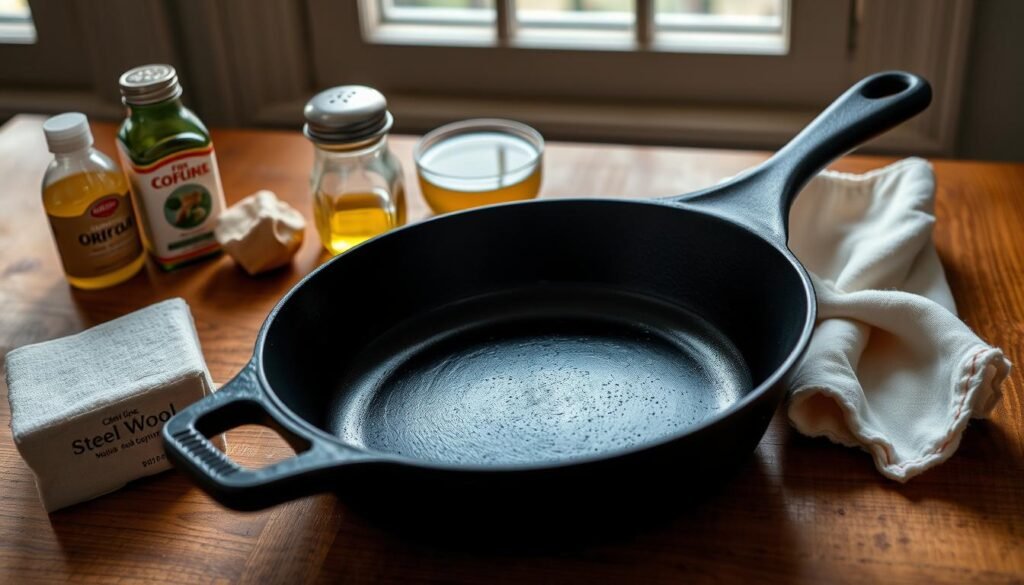
Keeping your cast iron skillet in top shape is all about daily care. A few simple steps can make your skillet last longer.
Daily Care Routine
After cooking, clean your cast iron skillet gently with a soft sponge and mild soap. Stay away from harsh chemicals and scouring pads that can harm the seasoning.
After cleaning, dry the skillet thoroughly with a towel. Then, apply a thin layer of oil to keep the seasoning in place. This daily care prevents rust and keeps your skillet ready for the next time you use it.
Avoiding Common Mistakes
One big mistake is putting your skillet in the dishwasher. The dishwasher’s high heat and harsh detergents can damage the seasoning and cause rust.
Another mistake is storing the skillet without proper drying. Always dry your skillet before storing it in a dry place or wrapping it in a paper towel to absorb any moisture.
“A well-seasoned cast iron skillet is a joy to cook with, but it requires regular care to maintain its condition.”
- Regularly inspect your skillet for signs of rust.
- Re-season your skillet periodically to maintain its non-stick surface.
- Avoid cooking acidic foods frequently, as they can strip away the seasoning.
When to Avoid Soaking
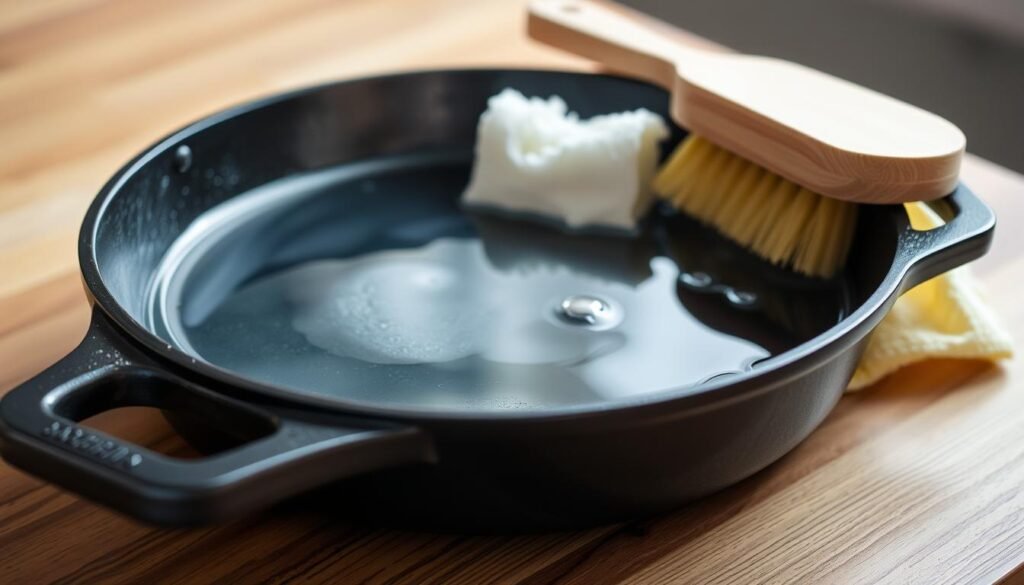
Soaking your cast iron skillet can be both good and bad. It helps remove stuck food but can damage the seasoning if not done right. Knowing when not to soak is key to keeping your skillet in top shape.
Understanding When Water Can Harm
Water can harm your cast iron skillet if it’s left on for too long. Prolonged soaking can lead to rust, and too much water can strip away the seasoning. This means you’ll have to re-season your skillet.
As “A well-maintained cast iron skillet is a cook’s best friend”, many chefs agree. To avoid damage, limit water exposure. If you must soak, do it for a short time and dry it well afterward.
Alternative Cleaning Methods
Many cast iron fans prefer not to soak at all. Alternative cleaning methods are safe and effective. A gentle scraper or brush can remove stuck food without water.
- For tough residue, a small amount of kosher salt works as an abrasive.
- Wipe the skillet clean with a paper towel after use to prevent sticking.
- For stubborn stains, mix water and white vinegar, but dry the skillet right away.
As
“The best way to clean your cast iron skillet is to avoid getting it dirty in the first place”
, regular maintenance is key. Using these cleaning methods helps keep your skillet in great condition for longer.
Cleaning After Cooking Specific Foods
To keep your cast iron skillet in top shape, adjust your cleaning method based on what you cooked. Different foods leave different residues. Knowing how to handle these is crucial for your skillet’s health.You can learn more about how-to-clean-headlights.
Eggs and Dairy
When cooking eggs or dairy in your cast iron skillet, clean it right away. These foods can stick and harm the seasoning if not removed. Use a soft scrubber and mild soap to clean.
After cleaning, dry the skillet well. Then, apply a thin layer of oil to keep the seasoning.
For tough egg or dairy residue, try a water and baking soda paste. Put it on the stuck area, wait a few minutes, scrub, and rinse. This method safely removes residue without harming the seasoning.
Acidic Ingredients
Cooking acidic foods like tomatoes or citrus in your cast iron skillet needs extra care. Acidic foods can remove seasoning if left too long. Clean the skillet right after with mild soap and water.
Don’t use harsh cleaners or scouring pads, as they can damage the seasoning. To neutralize acidity, wipe the skillet with a vinegar-soaked paper towel. Then, rinse well and dry. Finish by re-seasoning with a thin layer of oil.
By following these tips, your cast iron skillet will stay in great condition, no matter what you cook. Proper cleaning and care will make your skillet last longer and perform better.
Troubleshooting Common Issues
Cast iron skillets can rust or get sticky, even with regular care. These problems are easy to solve with the right steps.
How to Handle Rust
Rust on a cast iron skillet looks bad and weakens the metal. If you see rust, remove it fast. Use steel wool or a stiff brush to scrub the rusted spot.
For tough rust, mix water and baking soda to make a paste. Apply it to the rust, let it sit, then scrub it off.
After removing rust, re-season the skillet to stop more rust. Coat it with cooking oil and bake at 350°F (175°C) for an hour. Cool it down, then wipe off extra oil.
Fixing Sticky Surfaces
A sticky skillet is annoying. It usually happens from bad cleaning or not enough seasoning. To fix it, clean the skillet well. Use hot water and mild soap, but no harsh chemicals or abrasive cleaners.
After cleaning and drying, re-season the skillet to make it non-stick again. Put a thin layer of cooking oil on it and bake at 350°F (175°C) for an hour. Cool it, then use a paper towel to remove extra oil. Do this a few times to build up seasoning.
Storing Your Cast Iron Skillet
To keep your cast iron skillet in top shape, proper storage is key. It prevents rust and keeps the seasoning intact.
Best Practices for Storage
Make sure your skillet is dry before you store it. Moisture can cause rust. Store it in a dry spot, like a hook or hanging rack, for air to flow.
You can also put it in a cabinet. Just avoid humid places.
To protect it more, put a paper towel between the skillet and its lid. This absorbs moisture. Some people also use a thin layer of oil to prevent rust.
Keeping it in Optimal Condition
Check your skillet often to keep it in good shape. If you see rust, clean and re-season it right away. Following these best storage practices will help your skillet last for years.
Storing your cast iron skillet is more than just putting it away. It’s about keeping its quality and longevity. This way, you can keep cooking with it and pass it down to others.
Frequently Asked Questions
As you keep using and caring for your cast iron skillet, you might have questions. Here, I’ll answer some common ones to clear up any confusion.
Can Soap Be Used on Cast Iron?
There’s a debate about using soap on cast iron. Some say no, while others say a little mild soap is okay for tough food bits. But, stay away from harsh or abrasive cleaners. They can damage the seasoning.
Removing Odors from Cast Iron
To get rid of odors in your cast iron skillet, try scrubbing it with salt. Then, rinse it with warm water. You can also heat water and vinegar in the skillet to kill any smells. Keeping it clean and well-maintained helps stop odors from coming back.