

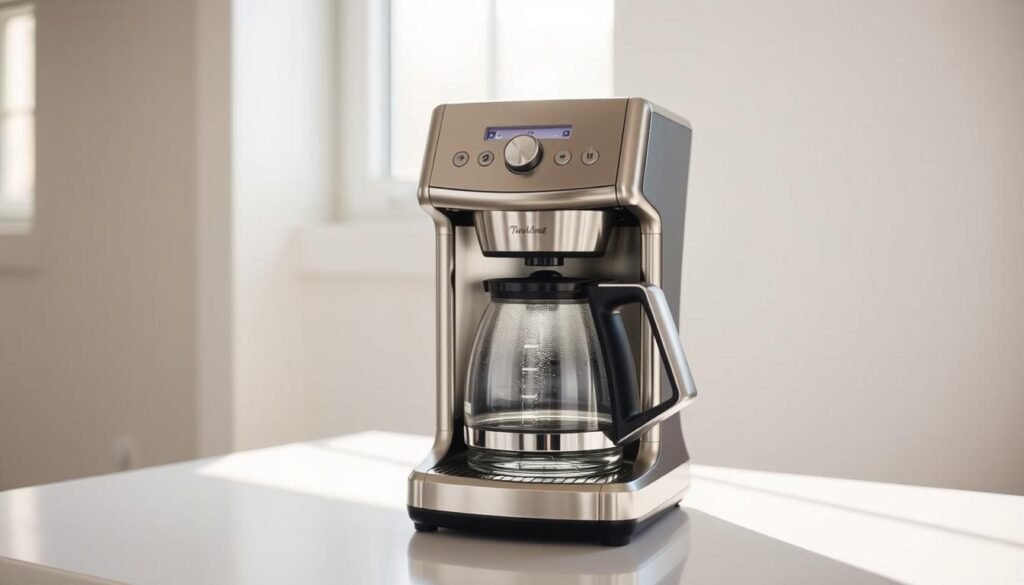
We want every cup to taste fresh and our morning routine to stay simple. Daily-use machines collect oils, grounds, and mineral scale that dull flavor and slow performance.
Regular care keeps the brew consistent and prevents yeast, mold, or bacteria from growing inside reservoirs and tubes. If we use the machine every day, a monthly deep cycle helps. For light use, quarterly checks usually work unless buildup is visible.
Our plan lays out easy steps: power down, remove parts, add a recommended cleaner or a water and white vinegar mix, run a cleaning or brew cycle, then rinse. Many modern brands like Keurig and Cuisinart include a dedicated cleaning mode that speeds the job.
This short guide saves time and keeps our kitchen safe. We’ll cover tools, timing, and model notes so we can protect taste, prevent odors, and extend the life of the machine.
Key Takeaways
- Routine maintenance protects taste and performance.
- Monthly deep cycles for daily users; quarterly for occasional use.
- Use a cleaner or water and white vinegar for most models.
- Run rinse cycles after any cleaning step.
- Many modern machines have a quick cleaning mode.
- Simple tools and small steps prevent bigger problems.
Why a clean coffee maker matters right now
Tiny oils and mineral deposits build up inside our machine and steal flavor over time. Left unchecked, these residues change aroma and make our cup taste flat or bitter.
Warm, dark water paths invite yeast, mold, and bacteria. That risk is real in reservoirs and tubes when we skip routine care. Monthly cleaning for daily users keeps brew notes bright. For light use, a deep cycle every three to six months usually suffices.
Scale from hard water can choke flow. That slows the cycle and shortens the device’s life. Small deposits also force longer run times and lead to clog troubleshooting that costs more time than simple upkeep.
- Flavor protection: regular wiping and monthly maintenance preserve nuanced notes.
- Health safety: remove mold and bacteria that may grow in damp areas.
- Performance: descale to avoid slowed cycles and worn parts.
We save time by adopting quick habits after each brew and scheduling deeper cleaning. Check the manual for model-specific cycles so we make each cleaning session faster and more precise.
What you’ll need to clean and descale your machine
Before we start, let’s gather the right supplies and tools so the job is quick and safe.
Supplies: Keep mild dish soap, an Affresh or commercial coffee maker cleaner, distilled white vinegar as a natural descaling option, and baking soda for stain lifting and fizz testing.
Tools: Use a soft cloth or sponge, a small soft brush or toothbrush, and a carafe or coffee mug to catch rinse water. Choose non-abrasive scrubbers to protect glass parts and plastic.

- Use a bottle brush and rubber spatula when we clean a French press; they ease grounds removal.
- Set aside lint-free towels for drying and spare water for several rinse passes.
- Avoid steel wool; gentle tools protect parts and keep the carafe clear.
- Baking soda doubles as a quick test: fizz shows the vinegar solution is flushed from the system.
With these items on hand, our kitchen routine stays simple and the machine keeps brewing fresh cups.
How to clean a coffee maker: step-by-step
We’ll walk through a simple routine that gets every brewing path clear and ready.
Safety first: turn the power off and let the machine cool. Empty the filter basket and compost coffee grounds or discard paper filters and single-use pods.
Next, disassemble removable parts — the carafe, basket, and any reusable filters. Soak these pieces in warm, soapy water. Use a soft cloth or sponge and a small brush for mesh and crevices. Rinse and set the glass carafe aside to air-dry.
Wipe the exterior, control panel, and warming plate with a damp cloth. For single-serve coffee makers, brush around the reservoir and pod receptacle so no residue remains.
Fill the reservoir with water and add either a coffee maker cleaner tablet or a half water/half white vinegar solution. Let the vinegar solution steep 30–60 minutes when scale is present. Then select the cleaning mode or run brew cycle to flush oils and scale.
“A short cleaning cycle today saves time and keeps every cup tasting bright.”
Place the carafe or a cup under the spout to collect wash water. Discard the first pass, refill with fresh water, and run one or two rinse cycles until the scent of vinegar is gone and the water runs clear. Let all parts air-dry before reassembling.
- Turn off and cool unit, remove grounds and filters.
- Soak and scrub removable parts; rinse and dry.
- Descale with maker cleaner or vinegar solution, run a cleaning or brew cycle.
- Run rinse cycles, air-dry, then reassemble.
Methods for different coffee makers: drip, single-serve, espresso, and French press
Each style of brewer needs its own care steps, and this section lays out simple, targeted routines. We give short, practical instructions for single-serve units, drip and espresso machines, and French presses so maintenance is fast and effective.

Single-serve units
Remove the pod holder and wipe the pod chamber. Clean around the water reservoir and pod receptacle with white vinegar and a toothbrush for any sticky residue.
Run two large-cup cycles: one with the vinegar solution and one with plain water to rinse. Place a cup under the spout when we run brew cycle to catch discharge.
Drip and espresso machines
Many coffee makers include a dedicated cleaning cycle. Add a coffee maker cleaner tablet or a water/white vinegar mix to the reservoir and select the cleaning mode or run brew.
Position a carafe or mug under the spout. Cleaner tablets dissolve scale in tubes, pumps, and nozzles. For espresso, backflush where the manual suggests to protect valves and the brew path.
French press care
Use a rubber spatula to lift grounds from the beaker, or swirl with water and pour through a fine sieve. Disassemble the plunger and screens for deep washing.
Wash all parts in warm, soapy water, air-dry, then reassemble. Occasional full disassembly removes stuck grounds and oils so we keep every cup tasting bright.
“Routine, small steps by model keep performance steady and flavor clean.”
- Single-serve: brush pod area and run two large-cup passes.
- Drip/espresso: use cleaner or vinegar mix and run the cleaning or brew cycle.
- French press: disassemble screens, wash, and air-dry before reassembly.
How often we should clean and descale for better-tasting coffee
A simple schedule keeps deposits from dulling flavor and slowing flow. If we brew daily, deep cleaning every month prevents scale buildup and saves work later.
For lighter use, a three-month cadence often does the job. Some models recommend every three to six months; check the manual for exact guidance. Deep cleaning uses a coffee maker cleaner or a half water/half vinegar solution and a full cleaning or brew cycle.
After any cleaning pass, run two rinse cycles. That removes leftover solution or cleaner and keeps taste pure.
- Daily habit: empty the basket and wipe surfaces so monthly work is faster.
- Watch signs: slower cycle, odd noises, or off flavors mean move the date up.
- Hard water at home: more frequent descaling prevents scale and avoids clogs.
We also keep a quick log of cleaning dates. A short note saves time and helps every cup taste its best.
Pro tips to prevent mineral buildup, odors, and bacteria
Choose filtered water
We switch to filtered water to cut down on mineral scale and deposits. Less scale means fewer deep descaling sessions and longer part life.
Air-dry lids and reservoirs
After each brew cycle, leave the reservoir lid and carafe open so moisture escapes. That simple step helps stop mold and bacteria growth in our home unit.
Handle grounds and the basket
Empty the basket after every run and rinse it promptly. We compost coffee grounds rather than sending them down the drain, which protects plumbing and keeps parts clear.
Baking soda fizz test and weekly care
After a vinegar rinse, stir a teaspoon of baking soda in a cup of fresh water. If it fizzes, we run another rinse until bubbling stops. This confirms no vinegar remains and preserves clean coffee taste.
“A quick rinse keeps taste true.”
- Wipe exterior parts and hot plates weekly for simple upkeep.
- Keep a small brush near single-serve units for tight areas and fines.
- Use a coffee maker cleaner periodically in hard-water homes for deeper internal reach.
Brew with confidence: keep your coffee maker clean and your coffee tasting great
Small, steady habits keep our morning cup bright and our machine working well. We empty grounds, wash removable parts in warm soapy water, and wipe the exterior after each run.
Schedule a quick monthly check for descale using a cleaner tablet or a half water/half white vinegar mix. Run rinse cycles until no cleaner or vinegar scent remains; this preserves taste and prevents residue.
Use filtered water to cut mineral deposits and extend the time between deep descales. Watch flow, brew time, and heat — if anything shifts, we perform fresh maintenance right away.
Keep a small kit near the unit — brush, cloth, and cleaner — and we’ll make upkeep as simple as a cup.


















One Response