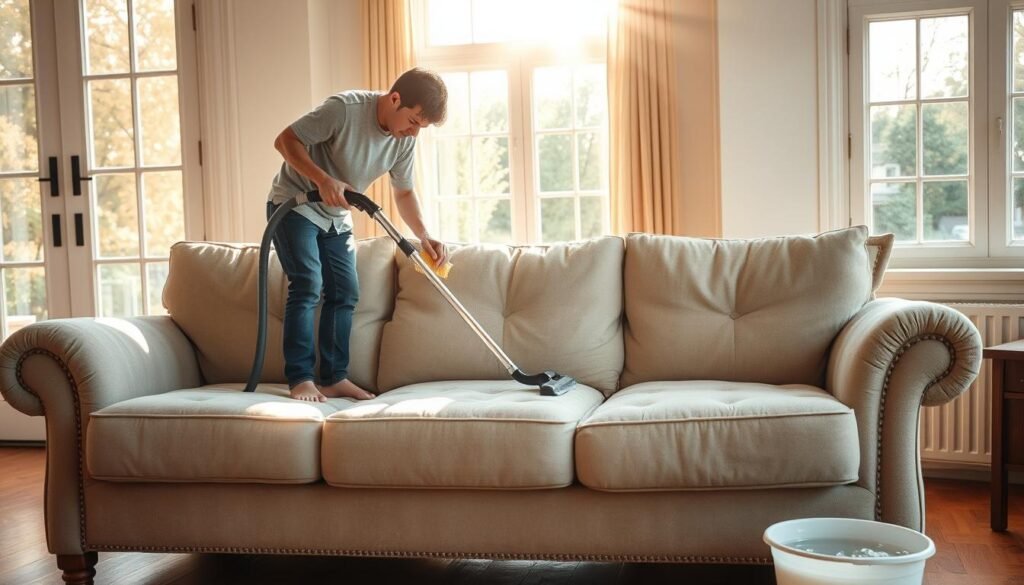
Did you know a typical couch can have over 100,000 dust mites? This makes it a hotspot for allergens and bacteria. Regular cleaning is crucial to keep your couch clean and hygienic.
A clean couch not only makes your living room look better. It also helps your furniture last longer. In this article, I’ll show you how to clean your couch effectively.
I’ll teach you how to remove stains and sanitize the fabric. By following these steps, you’ll have a cleaner, healthier, and more comfortable home.
Key Takeaways
- Understand the importance of regular couch cleaning
- Learn the steps to effectively clean your couch
- Discover techniques for removing stains and sanitizing fabric
- Prolong the lifespan of your couch with proper maintenance
- Enjoy a cleaner, healthier, and more comfortable living space
Understanding Your Couch Material
Before you start cleaning, know what your couch is made of. Different materials need different cleaning methods. The wrong method can harm your couch.
Common Couch Fabrics and Their Care
Couches come in many fabrics, each needing special care. Natural fibers like cotton and linen can be cleaned with mild soap. Synthetic blends might need special cleaners.
For delicate fabrics like silk or wool, use gentle cleaning. This prevents damage. For more detailed cleaning tips, check out Martha Stewart’s guide on how to clean a couch. It offers advice for various fabrics.
Identifying Your Couch’s Material
To find out what your couch is made of, check the care label. It’s usually under the couch or on a cushion’s bottom. The label tells you how to clean and care for it.
If the label is gone or hard to read, look at the fabric. Check its texture, weave, and any tags. These can tell you the fabric type.
| Fabric Type | Common Cleaning Methods | Special Care |
|---|---|---|
| Cotton | Mild detergent, water | Avoid bleach |
| Linen | Mild detergent, water | Iron while still damp |
| Synthetic Blends | Specific cleaning products | Check manufacturer’s instructions |
| Leather | Leather cleaner, conditioner | Avoid water, use conditioner regularly |
Knowing your couch’s material is key to keeping it clean. By identifying the fabric and using the right cleaning method, you can make your couch last longer and look great.
Gathering the Right Cleaning Supplies
Before you start cleaning your couch, make sure you have the right supplies. The right tools and products make cleaning easier and protect your couch. This way, you can clean it well without harming its material.how-to-clean-a-couch
Essential Tools and Products
You’ll need some basic cleaning tools to begin. A vacuum cleaner with an upholstery attachment is key for getting rid of dirt. For most couches, a gentle cleaning product made for upholstery is best. You can find these at home goods or hardware stores.
For a detailed guide on cleaning your couch, check out this helpful resource.
Here’s a list of essential tools and products you might need:
| Tool/Product | Purpose |
|---|---|
| Vacuum Cleaner with Upholstery Attachment | Removing loose dirt and debris |
| Gentle Upholstery Cleaner | Cleaning the couch fabric |
| Soft Brush or Cloth | Gently scrubbing stains or dirty areas |
| Microfiber Cloth | Drying and polishing the couch |
Eco-Friendly Options I Love
If you prefer eco-friendly cleaning, there are many options. Brands like Seventh Generation and Method offer natural, biodegradable products. These are safe for your couch and the planet.
Using homemade cleaning solutions is another eco-friendly choice. A mix of vinegar and water or baking soda for odors is gentle and eco-friendly. These methods are good for your couch and the environment.how-to-clean-a-pizza-stone
Removing Loose Dirt and Debris
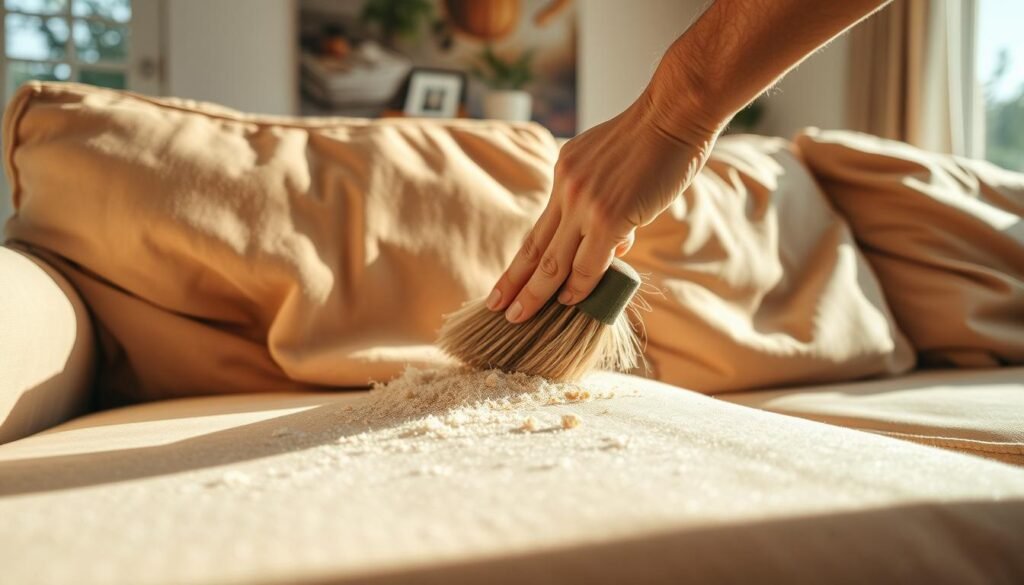
Getting rid of loose dirt and debris is key before you start cleaning your couch. It makes sure your cleaning works well and doesn’t push dirt deeper into the fabric.how-to-clean-wood-floors
Using a Vacuum Cleaner
A vacuum cleaner is great for taking out loose dirt and debris from your couch. Make sure to pick the right attachment for your couch’s fabric. For soft fabrics, use a gentle suction setting to avoid damage.
Tips for Vacuuming Your Couch:
- Use the upholstery attachment to gently clean the couch surface.
- Pay special attention to crevices and seams where dirt tends to accumulate.
- For couches with removable cushions, vacuum both sides of the cushions.
Benefits of a Soft Brush
Using a soft-bristled brush can also help remove dirt and debris from your couch’s upholstery. It’s great for fabrics with a nap or texture, as it can loosen dirt that’s stuck.
Benefits of Using a Soft Brush:
| Benefit | Description |
|---|---|
| Gentle on Fabric | A soft brush is less likely to damage or pilling the fabric. |
| Effective Dirt Removal | The brush helps loosen and remove dirt that’s deeply embedded in the fabric. |
| Restores Fabric Appearance | By removing dirt and debris, the brush helps restore the couch’s original appearance. |
Spot Cleaning Stains on My Couch

Spot cleaning is key to keeping my couch in top shape. It’s vital to act fast when a spill or stain appears. This quick action can make a big difference.how-to-clean-brass-2
General Spot Cleaning Techniques
When I see a stain, I move quickly. First, I blot the stain with a clean cloth or paper towel. This helps soak up as much of the spill as possible. I’m careful not to rub the stain, as it can damage the fabric or push it deeper.
For cleaning, I mix a mild detergent with water. I apply this solution to the stain and gently blot it with a clean cloth. Always test any cleaning solution on a hidden area first to avoid damaging the fabric.
Homemade Stain Removers I Use
I find homemade stain removers very effective. A favorite of mine is a mix of equal parts water and white vinegar. This solution is gentle and can tackle tough stains. For really stubborn stains, I use a baking soda and water paste. I apply it, let it sit for 30 minutes, and then blot it clean.
- Water and White Vinegar: Works well for most stains and is gentle on fabrics.
- Baking Soda Paste: Ideal for tough stains; let it sit before cleaning.
Store-Bought Options to Consider
While homemade solutions are great, sometimes store-bought removers are needed for tough stains. I choose products made for my couch’s fabric type. For example, I use fabric-specific removers for fabric couches. For more info on removing stains like water stains, I check out this guide.
Some popular store-bought options include:
- OxiClean
- Shout Advanced Stain Remover
- Resolve Stain Remover
Deep Cleaning Your Couch
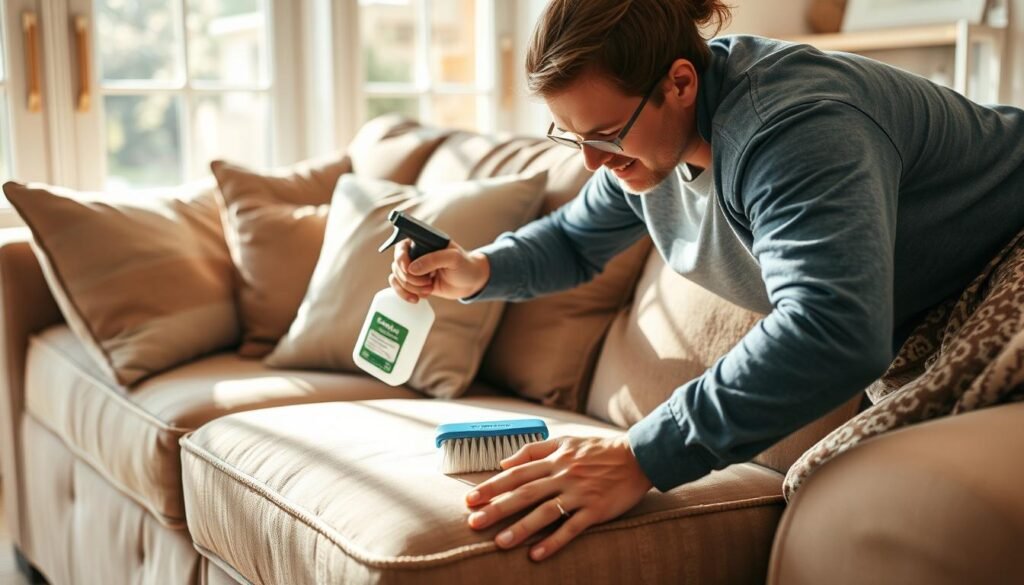
Deep cleaning your couch is more than just getting rid of stains. It’s about making your couch look and feel new again. Dirt, dust, and allergens can build up over time, affecting your couch’s look and health. Regular deep cleaning keeps your couch in top shape.how-to-clear-instagram-cache
When and Why to Deep Clean
Deep cleaning is needed when your couch starts to lose its color or when stains are hard to remove. I suggest deep cleaning every 6 to 12 months, based on how much you use it. If you have pets or allergies, you might need to do it more often to get rid of allergens and bad smells.
Signs that your couch needs deep cleaning include:
- Visible dirt or stains that remain after spot cleaning
- A lingering odor that’s hard to eliminate
- A noticeable decrease in the couch’s color or texture
Best Practices for Deep Cleaning
Always check your couch’s care label before deep cleaning. For most fabric couches, a mix of mild detergent and warm water works well. Use a soft-bristled brush to gently scrub the fabric, following the nap’s direction.how-to-clean-fuel-injectors
Here are some additional tips for deep cleaning your couch:
- Remove and wash any removable cushion covers according to their care labels.
- Use a vacuum cleaner with an upholstery attachment to remove loose dirt and debris.
- For tough stains, consider using a steam cleaner or a fabric-specific cleaning product.
Cleaning Leather Couches
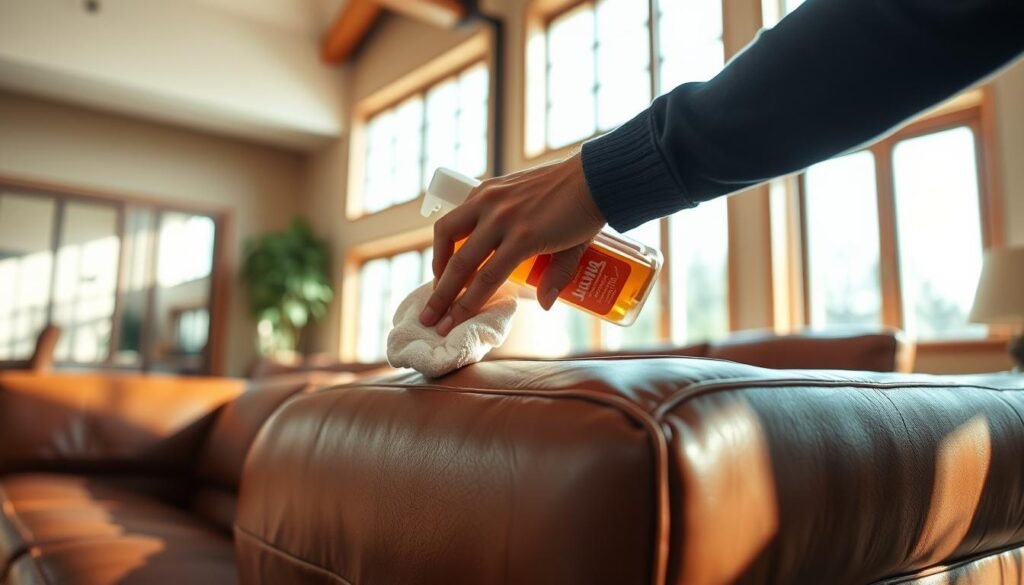
Cleaning leather couches needs the right techniques and products to avoid damage. Leather needs special care to stay soft and look good.
Specific Products for Leather
To clean your leather couch well, you need specific products. First, find a leather cleaner that’s pH-balanced and chemical-free. Choose a cleaner made for your couch’s leather type, like aniline, semi-aniline, or pigmented.
Also, use a soft, microfiber cloth for gentle cleaning. Don’t use regular cleaners or rough materials that can harm the leather.how-to-clean-sterling-silver
Step-by-Step Leather Cleaning Guide
Here’s a simple guide to clean your leather couch:
- Pre-clean preparation: Start by removing loose dirt or debris with a soft-bristled brush or dry microfiber cloth.
- Apply the cleaner: Dampen a microfiber cloth with leather cleaner, but don’t soak it. Rub the cleaner on the leather in circular motions, one section at a time.
- Wipe clean: Clean the area with a fresh, damp microfiber cloth in circular motions. Keep doing this until the cloth is clean.
- Condition the leather: After cleaning, apply leather conditioner to keep it soft. This is key for your couch’s health and look.
- Buff the leather: Finish with a dry microfiber cloth to buff the leather. This boosts its shine and removes streaks or residue.
By following these steps and using the right products, your leather couch will stay clean, conditioned, and look great for years.
Refreshing Fabric Couches

Fabric couches can get dirty and smell over time. But, there’s a simple way to make them fresh again. Keeping up with regular care is key to maintaining your couch’s look and feel. I’ll share tips on refreshing your couch, focusing on steam cleaning and how often to do it.
Steam Cleaning Tips
Steam cleaning is a great way to refresh fabric couches. It gets rid of dirt, stains, odors, and allergens. You’ll need a steam cleaner made for upholstery. Always check the care label first to make sure steam cleaning is okay for your couch’s fabric.how-to-clear-cache-on-instagram
Here’s how to steam clean your couch:
- Vacuum the couch well to get rid of loose dirt and debris.
- Test a small, hidden area first to make sure the steam cleaner won’t harm the fabric.
- Steam clean the couch in sections to cover evenly.
- Let the couch dry completely before using it again.
For more tips on cleaning couch stains, check out this helpful resource.
How Often Should I Freshen Up Fabric?
How often to refresh your fabric couch depends on its use. Steam clean it every 6 to 12 months if it’s used a lot. For couches used less, refresh them every 1 to 2 years. But, clean them right away if you see stains or smells.
Regular refreshing keeps your couch looking great and lasts longer. Adding steam cleaning to your routine makes your living space cleaner and healthier.
Dealing with Pet Hair
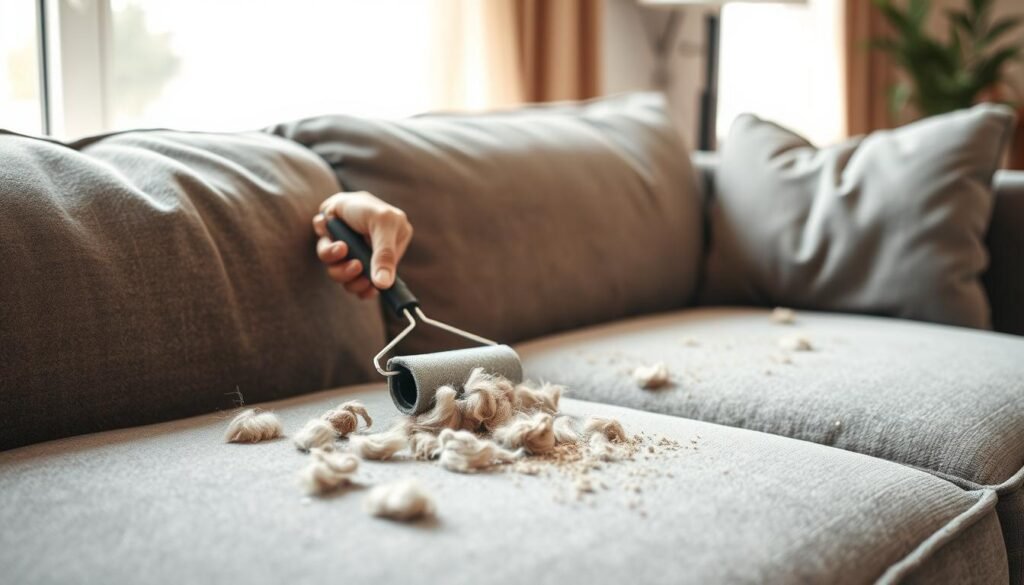
If you have pets, you know how hard it is to get pet hair off your couch. But, with the right tools and methods, you can keep your couch looking great. It’s all about finding the right way to tackle pet hair.
Best Tools for Pet Hair Removal
Not all tools are good for getting rid of pet hair. Here are some top picks:
- Rubber Gloves: Damp gloves are perfect for picking up pet hair from your couch.
- Lint Rollers: These are great for quick cleanups, perfect for cushions and throws.
- Pet Hair Removal Brushes: Special brushes are made just for pet hair and work really well.
- Vacuum Cleaners with Pet Hair Attachments: For deep cleaning, a vacuum with the right attachment is a game-changer.
Tips for Managing Pet Messes
It’s not just about removing hair. Here are some extra tips:
- Act Quickly: Clean up pet accidents fast to make them easier to remove.
- Use the Right Cleaning Products: For pet stains, choose products that are safe for your couch and work well.
- Consider Couch Covers: Using removable covers makes cleaning up after pets much easier.
By following these tips, you can enjoy your pets without worrying about your couch. Remember, regular care is essential to keep your couch clean and extend its life.
Eliminating Odors from My Couch
Getting rid of odors from your couch is key to a fresh home. Odors from pets, smoke, or daily use can be tackled. There are ways to make your couch smell great again.how-to-clean-dogs-ears
Natural Deodorizing Techniques
Try natural methods before using store-bought products. Sprinkle baking soda on the smelly spot. Let it sit for 30 minutes, then vacuum it up.
Essential oils are another natural option. Mix a few drops of your favorite oil with water in a spray bottle. Spray it lightly on your couch. This will help get rid of bad smells.
Commercial Odor Eliminators
For tougher smells, commercial products can work well. Look for sprays or powders made to tackle fabric odors. Enzyme-based products are great at breaking down organic smells.
| Product | Type | Effectiveness |
|---|---|---|
| Febreze | Spray | High |
| Biokleen Bac-Out Stain & Odor Remover | Enzyme-based | Very High |
| Earth Friendly Products Odor Killer | Natural Spray | High |
Always read the label and test a small area first. This ensures the product won’t harm your couch’s fabric.
Using these methods, you can keep your couch smelling fresh. This will make your living room more comfortable and welcoming.
Protecting My Couch After Cleaning
After cleaning my couch, I take steps to keep it stain-free. It’s important to protect my couch to keep it clean and lasting longer. Here, I’ll share how to use fabric protectors and give tips for regular care.
Using Fabric Protectors
Using a fabric protector is a great way to protect my couch from spills and stains. I choose a protector that fits my couch’s fabric. For example, if it’s fabric, I pick one that repels water and stains.
Following the product’s instructions is key for the best results. A friend told me about Scotchgard for fabric protection. It creates a barrier that stops liquids from getting through the fabric, making cleaning easier. “It’s been a game-changer for my upholstery,” they said.
Regular Maintenance Tips
Regular care is crucial for a clean and protected couch. I vacuum my couch weekly to get rid of dust and dirt. I also clean up stains right away to stop them from getting worse.
For tough stains, I go back to the cleaning methods I learned earlier. Rotating and fluffing the cushions regularly helps them wear evenly. As “A well-maintained couch is not just clean, it’s also comfortable and inviting.” By following these tips, my couch stays clean, comfy, and lasts longer.
Choosing the Right Couch Covers
Finding the perfect couch cover can make a big difference in keeping your couch clean and lasting longer. As I mentioned before, cleaning your couch is more than just vacuuming and spot cleaning. It’s about protecting it from things that can wear it down.
Couch covers are like a shield against spills, stains, and dust. They are a must-have for any home. They help keep your couch clean, look great, and last longer.
Benefits of Couch Covers
Using a couch cover has many advantages, including:
- Protection against spills and stains: Couch covers stop liquids and dirt from getting into your couch’s fabric.
- Ease of cleaning: Most couch covers are easy to take off and wash, making cleaning simple.
- Preservation of fabric: Couch covers protect your couch from sunlight, dust, and other things that can harm the fabric.
- Aesthetic versatility: Couch covers come in many styles, patterns, and colors. This lets you easily change up your living room’s look.
As someone who loves a clean and stylish home, I know how important the right couch cover is. It’s a simple way to keep your couch looking its best.
How to Find the Perfect Fit
Finding the right couch cover takes some planning and measuring. Here are some tips to help:
- Measure your couch: Get exact measurements of your couch, including length, width, and depth. Think about its shape and any special features, like armrests.
- Choose the right material: Pick a material that’s comfy, durable, and easy to clean. Think about the texture, thickness, and how well it resists stains.
- Consider the style: Think about the look you want. Do you like something sleek and modern or something cozy and traditional?
By following these steps, you can find a couch cover that protects your couch and matches your home’s style.
In conclusion, couch covers are a smart and stylish way to protect your couch and make cleaning easier. By understanding their benefits and choosing the right one, you can have a cleaner, more beautiful living space.
Tips for Cleaning Couch Cushions
To keep your couch looking its best, it’s crucial to know how to clean the cushions properly. Cleaning couch cushions can be a bit tricky, but with the right techniques, you can keep them looking fresh and clean.
Cleaning Removable Cushion Covers
If your couch cushions have removable covers, you’re in luck because cleaning them is relatively straightforward. Start by checking the care label for specific washing instructions. Most removable covers can be machine washed, but it’s essential to use the right cycle to prevent damage. For instance, I always use a gentle cycle with cold water to preserve the fabric. For more detailed instructions, you can visit Martha Stewart’s guide on cleaning couch.
For delicate or special-care fabrics, hand washing might be the better option. Fill a sink or a large basin with cold water, add a mild detergent, and gently scrub the covers. Rinse thoroughly to remove all soap residue.
DIY Cleaning Solutions for Cushions
For non-removable cushions or those that require a bit more TLC, DIY cleaning solutions can be very effective. One of my favorite methods is using a mixture of baking soda and water to create a paste. Apply this paste to the stained area, let it sit for about 15 minutes, and then gently scrub with a soft-bristled brush. Wipe clean with a damp cloth.
Another effective solution is a mixture of equal parts water and white vinegar in a spray bottle. Spray this solution onto the cushion, let it sit for a few minutes, and then blot with a clean cloth. This method is great for removing odors and light stains.
| Cleaning Method | Best For | Precautions |
|---|---|---|
| Machine Washing | Removable cushion covers | Check care label; use gentle cycle |
| Hand Washing | Delicate or special-care fabrics | Use cold water; mild detergent |
| Baking Soda Paste | Stains on non-removable cushions | Test on a small area first |
| Vinegar Solution | Odors and light stains | Avoid using on leather or very wet surfaces |
By following these tips, you can keep your couch cushions clean and fresh. This will enhance the overall look and feel of your living room.
Seasonal Couch Cleaning Routine
Keeping my couch clean all year is key. I adjust my cleaning based on the season. This way, my couch stays fresh and clean, no matter the weather or how much I use it.
Setting Up a Cleaning Schedule
I make a cleaning plan that fits the seasons. I clean more often in winter when I use the couch a lot. Having a routine stops dirt and stains from building up.
In winter, I vacuum my couch weekly. In spring, when it’s less busy, I vacuum every two weeks. This keeps my couch looking good.
Spring and summer mean more dust and pollen. So, I dust more and use fabric refreshers to keep it smelling nice. Using a fabric protector helps protect against spills and stains.
Seasonal Tips for Couch Care
Each season has its own couch care challenges. In winter, the air is dry, which can dry out leather. So, I use a leather conditioner to keep it soft.
“Regular conditioning is key to maintaining the suppleness of leather.” – Cleaning Experts
In summer, I focus on getting rid of dirt and sweat stains fast. I use mild detergent and cold water to gently remove stains. Acting quickly is important to keep my couch looking great.
By following these tips and sticking to a cleaning schedule, my couch stays clean and comfy all year.
Repairing Couch Damage
Fixing couch damage yourself can save money and make your furniture last longer. Whether it’s a tear, stain, or worn-out cushions, acting fast is crucial.
Minor Repairs I Can Handle
Small damages like tears or loose threads can be fixed at home. Use a needle and thread that matches your couch’s fabric to stitch up tears or fix loose threads. Tightening bolts or replacing springs can also help with squeaks or loose joints.
DIY Repair Tips:
- Use a fabric repair kit for small tears.
- Tighten loose screws or bolts to stabilize the frame.
- Reupholster or replace cushions if they’re beyond repair.
Bob Vila once said, “A well-maintained piece of furniture can last for decades.” This shows how important regular care and quick fixes are.
When to Call a Professional
While you can fix small issues yourself, some problems need a pro. If there are big tears, broken frames, or a lot of sagging, get help from a professional. They have the skills and tools to fix complex problems and make your couch look new again.
“The art of furniture restoration is not just about fixing what’s broken; it’s about preserving the story and character of a piece.” –
Knowing when to DIY and when to get a pro can save you time, money, and stress. By fixing small issues and knowing your limits, you can keep your couch in great shape for many years.
Final Thoughts on Couch Care
Now you know how to clean a couch well. It’s key to keep up with regular cleaning to make your couch look great. By using the tips from this article, you can make your couch last longer and stay clean and comfy.
Key Takeaways for a Cleaner Couch
Make sure to vacuum your couch often and clean up spills right away to avoid stains. For hard stains, a homemade or store-bought stain remover works well. Also, it’s important to use the right cleaning products based on your couch’s material.
Maintaining Your Couch’s Freshness
To keep your couch smelling fresh, try steam cleaning or a fabric refresher. For leather couches, a leather conditioner is a good choice. Adding these steps to your cleaning routine will make your living space cleaner, healthier, and more comfy.