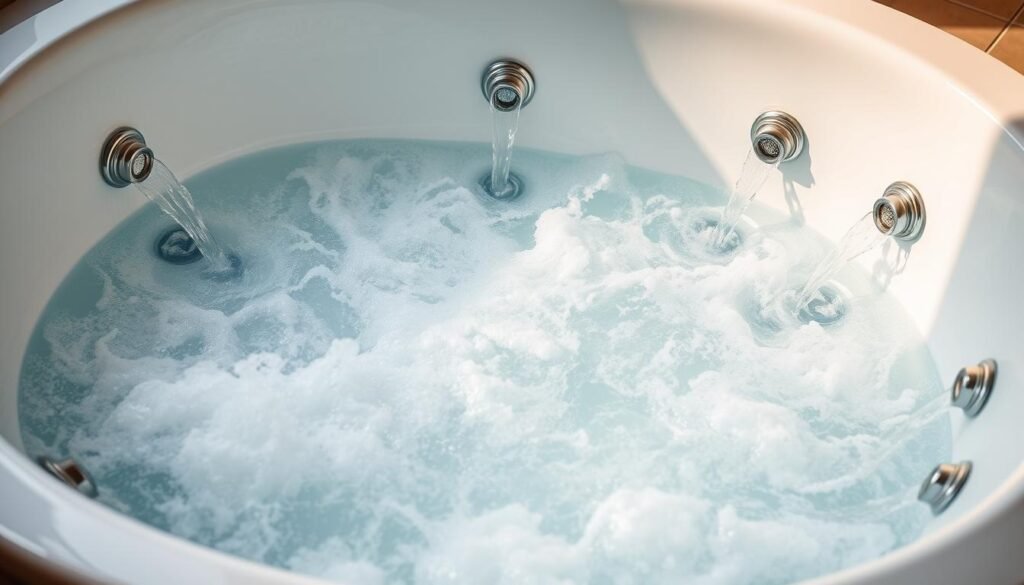
Surprising fact: studies show stagnant plumbing can harbor bacteria and mold in surprising amounts, even in baths used weekly.
I want to relax without worrying about what hides in the pipes. I’ll share an expert-backed, step-by-step plan I use at my own home. It takes just a bit of time and common products.
Quick preview: I cover a simple flush, a deeper cycle with vinegar and detergent, a scrub with baking soda, and a final rinse. I also note valve choices and when to follow the manual.
Tools are basic: microfiber towel, mild dish detergent, white distilled vinegar, baking soda, water, and a toothbrush. Following these steps keeps the jets and bathtub fresh and improves my soak experience.
For more background on recommended cycles and timing, I reference trusted guidance from cleaning pros and practical tips at Martha Stewart.
Key Takeaways
- Routine rinse: every two weeks helps prevent buildup.
- Deep clean monthly if the bath is used often.
- Use simple household products for best results.
- Keep valves per the manual so water targets the internal jets.
- This process is doable in under an hour for most people.
Why I Clean My Jetted Whirlpool Tub Regularly
Regular upkeep means my jet system works well and my water stays clear.
I clean my jetted tub because oils and dirt from my skin travel through the system and cling to surfaces. That buildup invites mold and mildew, and I don’t want black gunk pushed out of the jets during a soak.how-to-clean-a-toaster
Experts agree: if I use tubs several times a week, a rinse every two weeks and a monthly deep cleaning keeps problems from forming (Jennifer Parnell). Those simple intervals stop residues before they harden.
Keeping a schedule saves me time later. When I often clean, the tub looks brighter, the jets feel stronger, and my bath experience improves. It also prevents odors and hard-to-remove residue that can affect my home.
- I remove oils and dirt early so I can use gentler methods.
- I avoid harsher products by maintaining the system regularly.
- Predictable maintenance keeps water quality high and reduces large repairs.
| Issue | Cause | Simple Fix |
|---|---|---|
| Black gunk | Mold, mildew, soap residue | Rinse and monthly deep cycle |
| Weak jets | Clogged lines from oils and dirt | Regular flush and gentle scrub |
| Bad odors | Stagnant water in plumbing | Biweekly rinse and dry after use |
Prep First: Tools, Safety, and Tub Settings
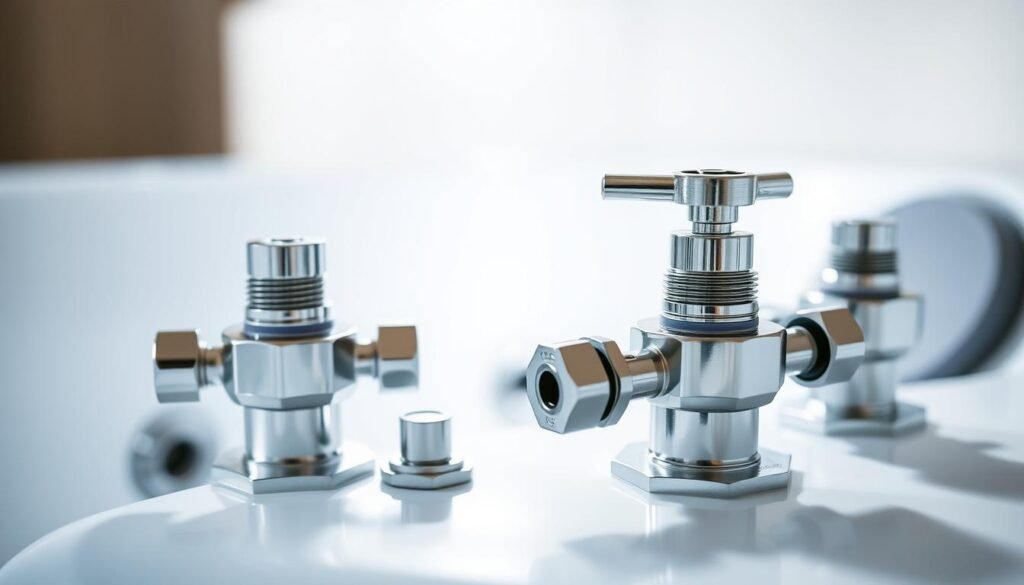
I organize tools and review valve positions before any water or cleaners go in.
What I gather: a soft microfiber towel, hot water, mild dish detergent, white vinegar, baking soda, and an old toothbrush. I also have a small bowl for paste and plenty of water for filling.
I typically keep the air induction valves closed so the flow targets the internal jets, but I always check my manual first.
“Close air valves while running a vinegar cycle so the solution reaches the system,”
Safety notes: vinegar is gentle on finishes, while bleach is a stronger choice if you need it. Do not mix vinegar and baking soda inside the lines since they neutralize each other. If I use bleach, I ventilate the space and measure carefully (about ½ cup).how-to-clean-a-pipe
- I make sure valve settings match the manual before I start.
- I plan a first flush with cold water at least 2 inches above the jets and run about 10 minutes, then drain.
- I protect the bathtub surface with non‑abrasive cleaner and save the toothbrush for crevices.
- When ready, I follow a simple routine so the products work without risking seals or finishes.
For extra guidance on product choices and timing, I reference trusted tips like this clean jetted guidance.
How to clean a jetted whirlpool tub (Step-by-Step)
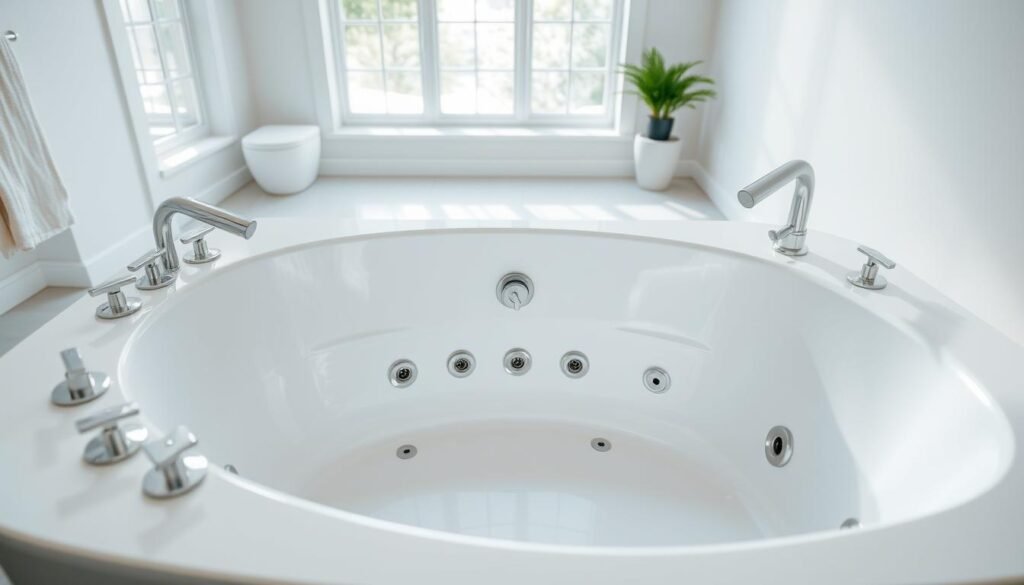
A short sequence of flushing, circulation, scrubbing, and drying keeps my system healthy.
Flush the lines
Step 1: I fill tub until the water sits at least 2 inches above the jets. I then run jets for about 10 minutes with no additives to move loose grime, then I drain tub.
Deep circulation
Step 2: I refill with hot water and add 2 tablespoons to 1/4 cup mild detergent plus 2 cups white vinegar. I close air valves per the manual and run jets for 15–20 minutes, then drain tub.
Scrub buildup
Step 3: I make a baking soda paste with a little water and a squirt of dish soap. I apply it to soap scum, fixtures, and each jet face, scrubbing with an old toothbrush in circular motions. Then I rinse with warm water.
Final rinse and dry
Step 4: I refill a few inches above the jets with warm water, open the air controls, and run jets for another 15 minutes. I drain tub and wipe every surface dry with a microfiber towel to prevent water spots.how-to-clean-air-mass-meter
“Avoid mixing vinegar and baking soda inside the plumbing—the fizz neutralizes cleaning power.”
Filters, Jets, and Stubborn Gunk
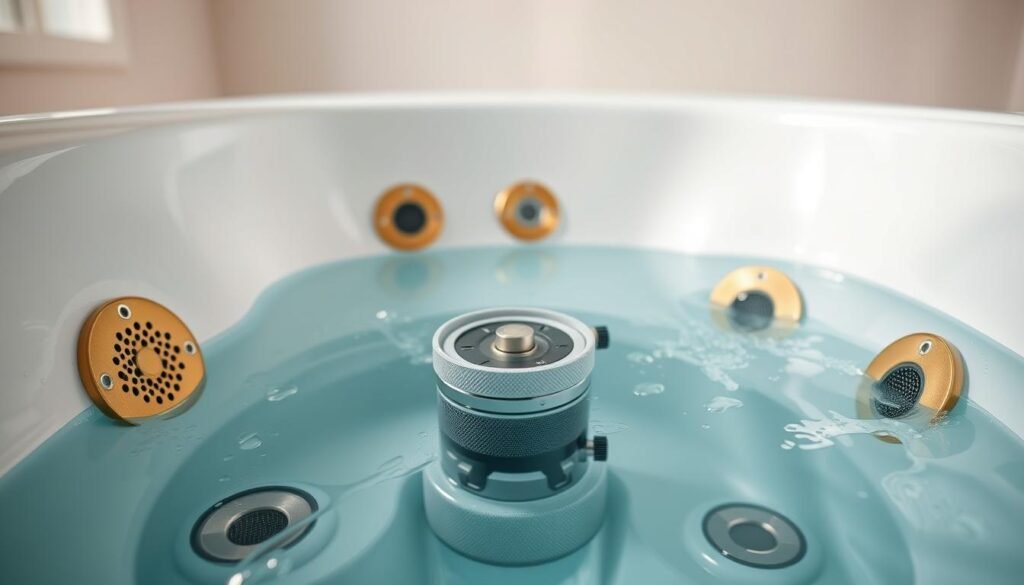
A quick filter rinse saves me time and prevents recurring buildup in the lines.
I start at the filter. I remove it, then rinse under running water. When I have a sprayer, the flow lifts trapped oils and dirt much faster.
If residue persists, I soak the filter in hot, soapy water for 30 minutes or up to overnight. After soaking, I rinse well and reinstall for proper system circulation.
Targeting jet trims and small stubborn spots
I scrub each jet face and trim with an old toothbrush and a gentle cleaner. I focus on oils and dirt that cling after a deep cycle. For stubborn buildup I dab a mild solution, wait briefly, then scrub.
“A clean filter keeps everything else running smoothly.”
- I avoid harsh pads and use non‑abrasive soap or a small amount of detergent.
- If I choose specialty products, I follow label directions and keep doses conservative.
- Finally, I rinse with water so no residue remains before the next run.
| Part | Common Problem | My Action |
|---|---|---|
| Filter | Clogs from oils and hair | Rinse, soak hot soapy water, dry and reinstall |
| Jet trims | Soap scum and grime | Spot solution, brush gently, rinse |
| System | Recirculating residue | Run an extra flush after rinsing |
For tips on product choices and timing, I consult reputable guidance like this clean jetted guide.
Maintenance I Do After Baths and How Often I Deep Clean
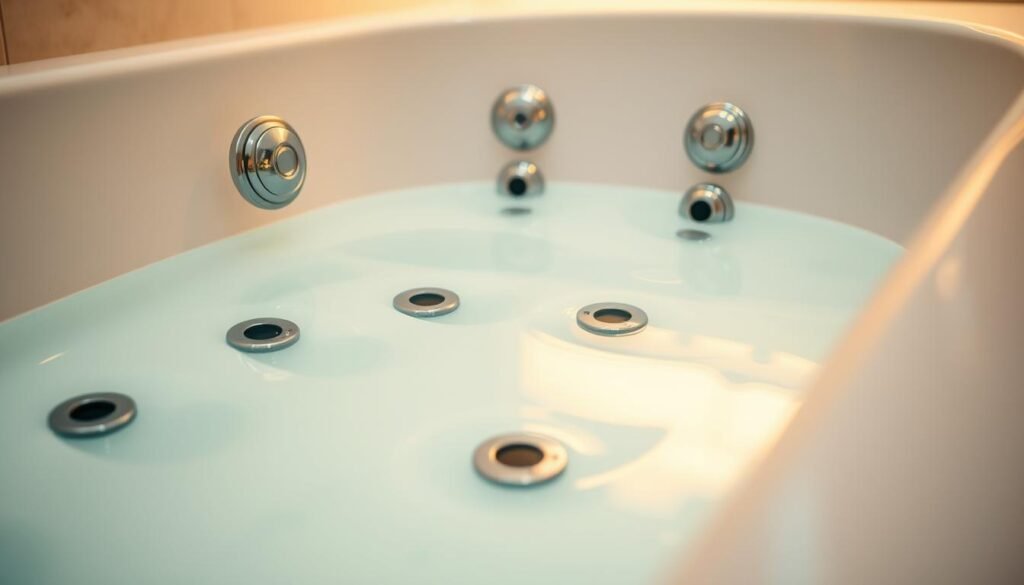
I keep a tiny post‑bath routine that prevents major work later.
After each bath, I fill with tub hot water and let it sit about 10 minutes to loosen soap and oils. Then I drain and wipe surfaces with a microfiber cloth dampened in a 1:1 alcohol and vinegar solution.
I make sure the jets look clear and give any visible residue a quick pass so buildup never hardens. If I used epsom salts or a bath bomb, I run a short warm water cycle and rinse again.
My cleaning cadence
I rinse every two weeks when I use the bath often, and do a full deep cleaning once a month. If I bathe multiple times each week, I add an extra rinse session mid‑month.
- I keep add‑in products minimal and pick those that rinse clean.
- I watch the air controls and return them after maintenance so the next run behaves as expected.
- For quick guidance on routine steps I trust, I follow practical maintenance steps at maintenance steps.
“A short routine after each use saves time and keeps parts working longer.”
Conclusion
A short, steady plan makes maintenance easy and the water clear.
My routine is simple: I fill tub so water sits 2 inches above the jets, run jets for about 10 minutes, drain, then run a deep cycle with hot water, mild detergent and vinegar for 15–20 minutes. I follow with targeted scrubbing and one last warm rinse for 15 minutes, then dry every surface with a microfiber cloth.how-to-clean-a-air-fryer
I use vinegar as my go‑to and keep bleach as a measured backup (about ½ cup) when needed. I never mix vinegar and baking soda in the lines. When I set the air controls and run jets the right minutes, the system needs less elbow grease.
Consistency matters: brief care after each use makes monthly routines faster and keeps the bathtub and jetted tub ready for a relaxing experience. For a complete routine guide, see this cleaning solution resource.