Did you know we spend about one-third of our lives sleeping? This means our mattress needs to be clean for good sleep. Every hour, we shed millions of skin cells, which can pile up on our mattress. This creates a perfect spot for dust mites and allergens.
Keeping your mattress clean is simple. WebMD says vacuuming it a couple of times a year helps. Steam-cleaning it once every six months also makes a big difference. I’ll show you how to clean your mattress well, so you can sleep better.
Key Takeaways
- Vacuum your mattress at least twice a year.
- Consider steam-cleaning your mattress every six months.
- Use a mattress cover to protect it from spills and stains.
- Wash your sheets at least once a week.
- Regular maintenance can extend the life of your mattress.
Why Regular Mattress Cleaning is Essential
Keeping your mattress clean is key for a good night’s sleep. A clean mattress improves your sleep quality and boosts your health. We’ll look at the benefits of a clean mattress and the dangers of a dirty one.
Benefits of a Clean Mattress
A clean mattress offers many advantages. It can improve sleep quality and reduce allergy symptoms. Without dust mites, mold, and allergens, you’re less likely to have allergies or breathing problems. It also stops sweat and oils from damaging the mattress.
To learn more about why cleaning your mattress is important, check out this resource.
Health Risks of a Dirty Mattress
A dirty mattress can harm your health. Dust mites, mold, and mildew can cause allergies and asthma. It can also be a place for bacteria and germs, leading to infections. Cleaning your mattress regularly is crucial to avoid these risks and keep your sleep area healthy.
Preparing Your Mattress for Cleaning
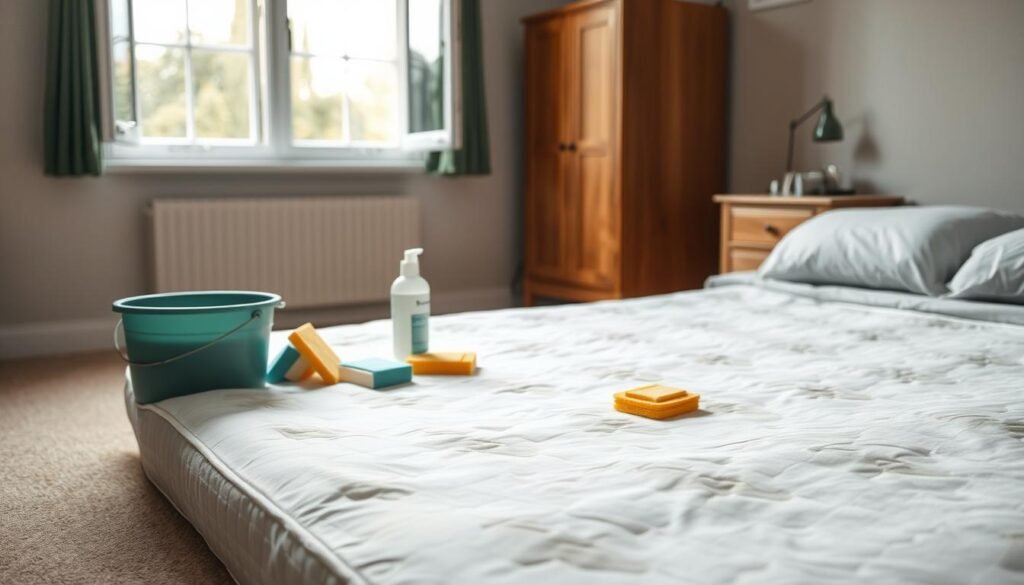
Getting your mattress ready for cleaning is key to a good clean. It’s important to prepare well to keep your mattress clean and healthy.
Gather Necessary Supplies
You’ll need some cleaning supplies to start. These include a vacuum, mild detergent, warm water, a soft-bristled brush, and a clean cloth or sponge. For more info on the right supplies, check out Home Depot’s guide on how to clean a mattress.
| Supply | Purpose |
|---|---|
| Vacuum Cleaner | Remove dust and debris |
| Mild Detergent | Clean stains and odors |
| Soft-Bristled Brush | Gently scrub stubborn stains |
Remove Bedding and Linens
Then, take off all bedding and linens from your mattress. This means sheets, blankets, and mattress protectors. It’s important to wash these before putting them back on your mattress.
By doing these steps, you’ll get your mattress ready for a deep clean. This ensures it stays in great shape and keeps providing comfort and support.
Different Mattress Types and Their Care
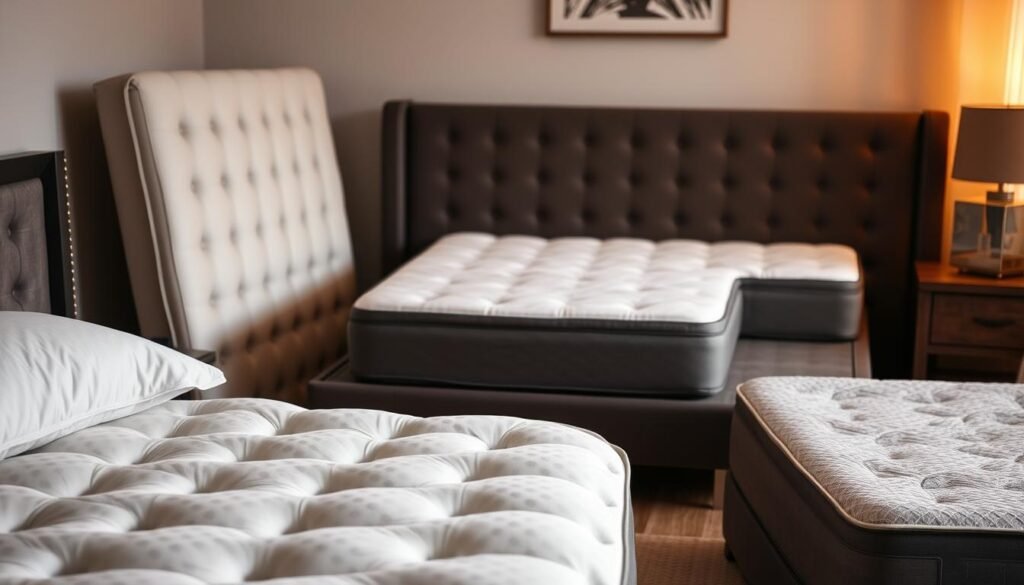
Knowing your mattress type is key to adopting the right cleaning and maintenance routine. Different mattresses are made from various materials, each with its unique characteristics and cleaning requirements.
Cleaning Memory Foam Mattresses
Memory foam mattresses are known for their comfort and pressure relief. They need special care. To clean a memory foam mattress, avoid using too much water, as it can damage the foam. Instead, mix a mild detergent with water and gently apply it to the stained area with a soft cloth.
It’s also important to dry the area thoroughly to prevent moisture buildup.
Tips for Memory Foam Mattress Care:
- Avoid using harsh chemicals or abrasive cleaners.
- Use a mattress protector to prevent spills and stains.
- Rotate the mattress regularly to ensure even wear.
Maintaining Innerspring Mattresses
Innerspring mattresses have a coil support system and are often more breathable than memory foam mattresses. To clean an innerspring mattress, start by removing any bedding and vacuuming the surface to remove dust and debris. For stains, use a mild cleaning solution and apply it gently to the affected area.
Ensure the mattress is completely dry before replacing the bedding.
Key Considerations for Innerspring Mattress Maintenance:
- Check the manufacturer’s instructions for specific cleaning recommendations.
- Use a breathable mattress protector to enhance airflow.
- Regularly inspect the mattress for signs of wear or damage.
Caring for Latex Mattresses
Latex mattresses are durable and resistant to dust mites, making them a good choice for those with allergies. To clean a latex mattress, use a mild soap solution and a soft cloth to gently wipe down the surface. Avoid soaking the mattress, as latex can be damaged by excessive moisture.
Regular rotation and using a breathable mattress protector can also help maintain the mattress’s quality.You can learn about how-to-clean-iphone-charging-port
Best Practices for Latex Mattress Care:
- Use a natural, non-toxic cleaner to avoid damaging the latex.
- Keep the mattress dry and well-ventilated.
- Consider using a latex-specific mattress cleaner for tough stains.
Vacuuming Your Mattress

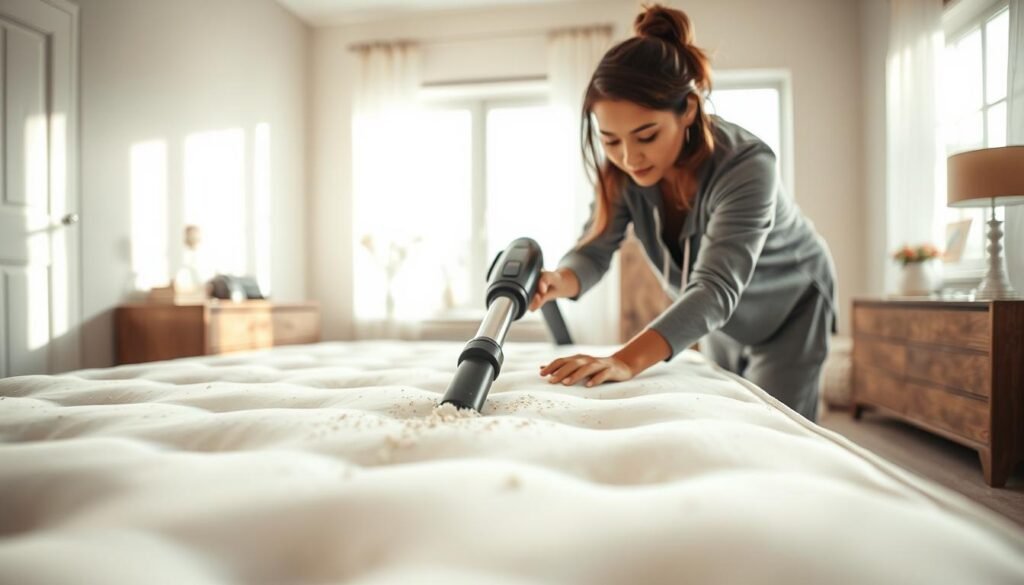
Vacuuming your mattress is key to keeping your sleep area clean and healthy. Dust, dirt, and allergens can build up, making breathing harder and sleep less comfortable.
Choosing the Right Vacuum Attachment
To vacuum your mattress right, pick the right attachment. The upholstery attachment works best because it’s gentle on delicate surfaces.
Think about your mattress type when picking an attachment. Memory foam needs softer suction than innerspring mattresses.
Techniques for Effective Vacuuming
Good vacuuming is more than just moving the vacuum. First, take off all bedding and linens. Then, vacuum the mattress top with slow, overlapping strokes for full coverage.
Focus on the mattress sides and bottom too. These areas trap dust and dirt.
| Vacuuming Technique | Benefits |
|---|---|
| Slow, overlapping strokes | Ensures thorough removal of dust and dirt |
| Vacuuming sides and bottom | Prevents accumulation of allergens and dust |
| Using the right attachment | Gently cleans the mattress surface without damage |
By using the right vacuuming techniques and attachment, you can make your mattress cleaner and healthier. This improves your sleep environment.
Spot Cleaning Stains on Your Mattress
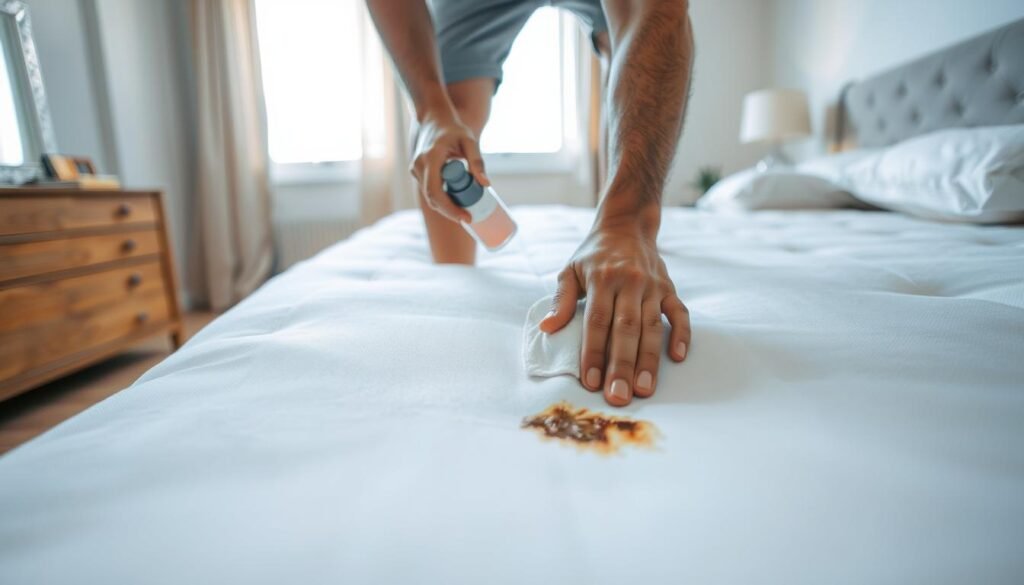
Removing stains from your mattress is easier with the right tools and techniques. Accidents can happen, and quick action is key to avoid stains setting in.
Common Stains and How to Treat Them
Different stains need different treatments. Blood stains are tough to remove. Start by blotting with cold water. Don’t rub, as it can push the stain deeper.
If the stain remains, try a mix of hydrogen peroxide and dish soap. For sweat stains, baking soda and water can help with odor and stain removal.
Pet accidents or spills also need attention. Use a solution of water and white vinegar. Always test any cleaning solution on a small, hidden area first.You can learn about how-to-clean-makeup-brushes
Popular Cleaning Solutions
The right cleaning solution is crucial for your mattress. For most stains, a mild detergent and water work well. For tougher stains, use a stain removal product.
For organic stains like blood or sweat, enzyme-based cleaners are effective. Check out a guide on how to get stains out of a mattress for more tips.
| Stain Type | Recommended Cleaning Solution |
|---|---|
| Blood | Hydrogen peroxide and dish soap |
| Sweat | Baking soda and water paste |
| General Spills | Mild detergent and water |
“The key to successful stain removal is acting quickly and using the right cleaning solution for the type of stain you’re dealing with.”
Knowing how to spot clean stains can keep your mattress in great shape. Regular vacuuming and rotating your mattress also help prevent stains.
Deep Cleaning Your Mattress
Deep cleaning your mattress is more than just removing stains. It’s about making your sleep space cleaner and healthier. Mattresses collect dust, dirt, and allergens over time. These can harm your sleep and health. I’ll show you how to deep clean your mattress, keeping it fresh and clean.
When to Deep Clean
Deep clean your mattress every 6 to 12 months. This depends on how often you use it and your personal needs. If you have allergies or see stains, clean it more often. Also, after guests or if you’ve been sick, a deep clean can get rid of germs and smells.You can learn about how-to-clean-a-coffee-maker
Step-by-Step Deep Cleaning Process
To clean your mattress well, follow these steps:
- Strip the bed: Take off all bedding, like sheets and protectors.
- Vacuum the mattress: Use a vacuum with an upholstery attachment. This removes dust and dirt from the mattress’s surface and crevices. For more on vacuuming, see our section on vacuuming techniques.
- Spot clean stains: Use a gentle cleaning solution on stains. Gently blot the stain to avoid damaging the mattress.
- Apply a cleaning solution: Mix mild detergent with water for a deeper clean. Apply it to the mattress, cleaning in sections. Always follow the product’s instructions.
- Dry the mattress: Let the mattress air dry completely. You can speed up drying with a fan or open a window.
By following these steps, you can keep your mattress clean and healthy. Regular deep cleaning improves your mattress’s hygiene and lifespan. This ensures you sleep well for many years.
Deodorizing Your Mattress

Deodorizing your mattress is easy and keeps your sleep area fresh. Mattresses can pick up sweat, oils, and smells over time. Regular cleaning can get rid of these odors and keep your mattress smelling good.
Natural Deodorizers to Consider
Natural deodorizers are a great choice for your mattress. They work well and are safe for you and the planet. Here are some natural options:
- Essential Oils: Oils like lavender and tea tree have deodorizing properties. Mix a few drops with water and spray on your mattress.
- Baking Soda: Baking soda is known for absorbing smells. For more info, check out this guide on deodorizing mattresses.
- Activated Charcoal: Activated charcoal absorbs moisture and smells, making it a great deodorizer for your mattress.
Applying Baking Soda for Freshness
Baking soda is a cheap and effective way to deodorize your mattress. Here’s how to do it:
- Sprinkle Baking Soda: Sprinkle a lot of baking soda over your mattress.
- Let it Sit: Let the baking soda sit for 30 minutes to an hour. For strong smells, let it sit overnight.
- Vacuum: Vacuum the baking soda off with a gentle setting. Make sure to get into all the nooks.
For an extra scent, add a few drops of your favorite essential oil to the baking soda before sprinkling it on your mattress.
Using natural deodorizers and techniques can keep your mattress smelling fresh. Regular cleaning not only makes your mattress smell better but also helps create a healthier sleep space.
Protecting Your Mattress After Cleaning
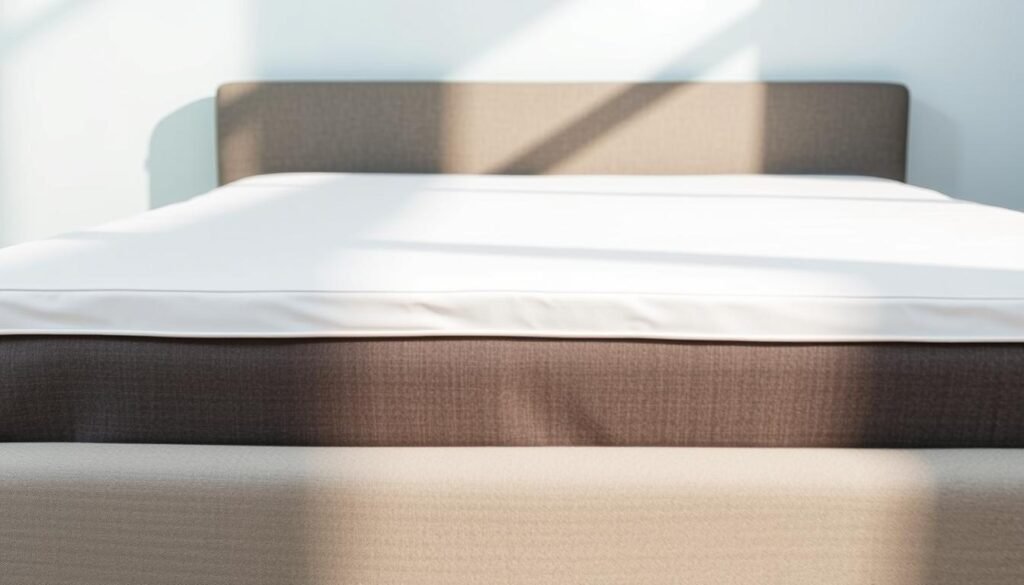
Keeping your mattress clean after washing is key to its quality and hygiene. After you’ve cleaned your mattress, it’s important to keep it fresh. This ensures it stays in good condition for a long time.
Importance of Mattress Protectors
Mattress protectors are vital for keeping your mattress safe from spills, stains, and allergens. They act as a shield, stopping liquids and dust mites from getting through. Using a protector can make your mattress last longer and stay clean.
They also help reduce allergy symptoms by blocking dust mites, mold, and mildew. This is great for people with allergies or asthma.
Choosing the Right Protector
When picking a mattress protector, think about the material, size, and how well it breathes. Waterproof protectors are best for stopping spills and stains. Breathable protectors keep you cool while you sleep.
Make sure the protector fits your mattress well. Measure it before you buy to get the right size. Some protectors have elastic corners or straps for a secure fit.
- Consider the material: cotton, polyester, or a blend
- Check for breathability: look for protectors with ventilation features
- Ensure a snug fit: measure your mattress before buying
When to Replace Your Mattress
Knowing when to replace your mattress is key. A worn-out mattress can cause discomfort and affect your sleep quality. It may even harm your health.You can learn about how-to-clean-your-ears
Signs It’s Time for a New Mattress
There are clear signs that your mattress needs a change. These include:
- Sagging or dips in the mattress surface
- Lack of support or comfort
- Allergies or sensitivities that could be exacerbated by an old mattress
- Visible signs of wear, such as stains or tears
- Aging – most mattresses have a lifespan of 7-10 years
If you notice any of these signs, it’s time to look for a new mattress.
Factors to Consider for Replacement
When choosing a new mattress, several factors are important. These include:
| Factor | Description |
|---|---|
| Comfort | Think about the comfort you need. Do you prefer a soft, medium, or firm mattress? |
| Support | Consider the support your body needs. Different mattresses offer varying levels of support. |
| Allergy Sufferers | If you or a partner suffer from allergies, look for mattresses with hypoallergenic materials. |
As Consumer Reports advises, “A good mattress is one that provides the right level of comfort and support for your body.”
“The quality of your sleep is directly related to the quality of your mattress.”
By considering these factors and the signs of wear, you can choose the right mattress. This ensures a better night’s sleep.You can learn about how-to-clean-grout
Tips for Maintaining a Clean Mattress
A clean mattress is key for a good night’s sleep. I’m here to share my tips on keeping it clean. Regular cleaning and good bed hygiene are essential. By following simple steps, you can keep your mattress clean and hygienic.
Regular Cleaning Schedule
Having a regular cleaning schedule is vital for a clean mattress. Vacuum your mattress every 3-6 months to get rid of dust, dirt, and allergens. Also, clean stains right away to avoid them becoming hard to remove.
To make cleaning simpler, keep track of when you last cleaned your mattress. Set reminders on your calendar to stay on schedule.
Best Practices for Bed Hygiene
Good bed hygiene is as important as regular cleaning. Wash your bedding and linens once a week. Rotating your mattress every 3-6 months helps it wear evenly.
Don’t eat in bed to avoid spills and stains. Using a mattress protector adds extra protection against dust, dirt, and allergens.
By following these tips, you can keep your mattress clean. This will help you sleep better in a healthier environment.
Frequently Asked Questions about Mattress Cleaning
Keeping your mattress clean is important. You might wonder how often to clean it and the best methods. Here, I answer some common questions to help you maintain your mattress.You can learn about how-to-clean-humidifier
Cleaning Frequency
Clean your mattress every 3-6 months. This depends on how often you use it and your personal hygiene needs. Regular cleaning stops dust mites, dead skin, and allergens from building up. This improves your sleep quality.
Using a Steam Cleaner
Steam cleaning your mattress is okay, but be careful not to soak it. It’s a good way to sanitize your mattress. Just make sure to follow the instructions and let it dry completely before putting on new bedding.
By following these tips, you can keep your mattress clean and fresh. This ensures a healthy and comfortable sleep space for you.