A dirty pizza stone can really change your homemade pizzas. Did you know it can soak up flavors and smells from before? This can mess up the taste of your pizzas. A clean pizza stone is key for a perfect crust.
In this guide, I’ll show you how to make your pizza stone shine again. By the end, you’ll know how to keep your stone clean. This way, your pizzas will always taste great.
Key Takeaways
- Understand the importance of cleaning your pizza stone
- Learn effective methods for removing grime and food residue
- Discover how to maintain your pizza stone for future use
- Improve the taste and quality of your homemade pizzas
- Extend the lifespan of your pizza stone with proper care
Understanding Your Pizza Stone
Getting to know your pizza stone is key to making the most of it. A pizza stone is a cooking surface for ovens or grills. It absorbs moisture and spreads heat evenly, leading to a crispy crust.
What is a Pizza Stone?
A pizza stone can be made from natural or synthetic materials. Its main job is to cook pizzas quickly and evenly. For more info, check out Martha Stewart’s guide.
Benefits of Using a Pizza Stone
Using a pizza stone has many advantages. It helps make the crust crispy by soaking up dough moisture. It also cooks pizzas evenly and adds a smoky flavor.
The main benefits are:
- Crispy crust: Absorbs moisture for a crunchier base.
- Even cooking: Distributes heat evenly for consistent cooking.
- Smoky flavor: Adds a unique taste to your pizzas.
Common Materials Used in Pizza Stones
Pizza stones come in different materials like cordierite, ceramic, and natural stone. Each has its own strengths. For example, cordierite stones are durable and heat-resistant. Ceramic stones are great at spreading heat evenly.
Knowing your pizza stone’s material is important for cleaning. Each material needs special care to stay effective and last long.
Importance of Regular Cleaning
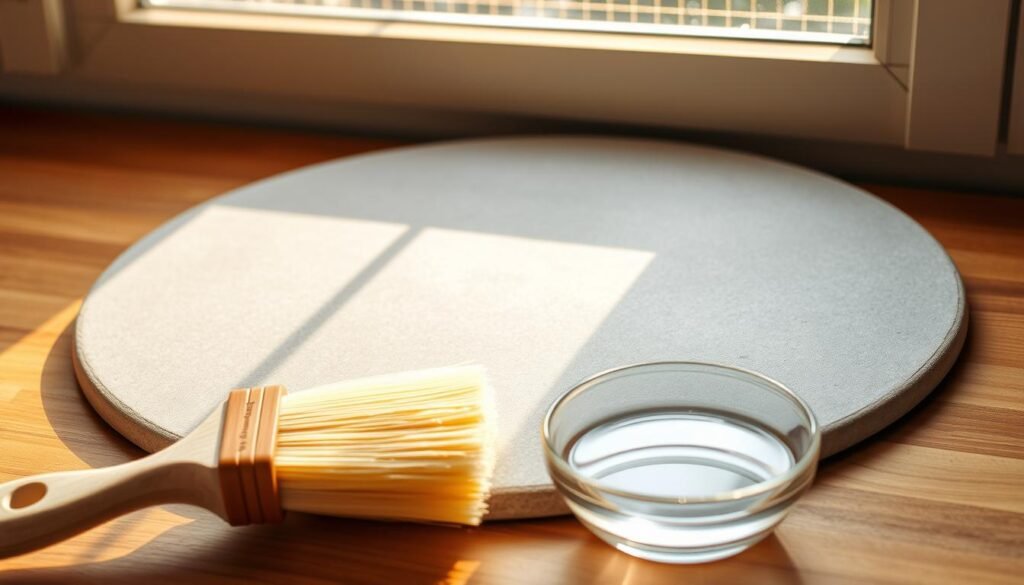
Regular cleaning of your pizza stone keeps it free from harmful bacteria. This makes your pizzas safe and delicious. A dirty stone can ruin the taste of your pizzas and even cause food poisoning.
Why Clean Your Pizza Stone?
Cleaning your pizza stone keeps it working well and lasts longer. It gets dirty from pizza residue like sauce, cheese, and dough. If not cleaned, this can breed bacteria and change your pizza’s taste.
Food safety is a big reason to clean your pizza stone often. It stops harmful bacteria from growing. A clean stone also helps your pizzas cook evenly and get the right crust.
How Often Should I Clean It?
How often you clean your pizza stone depends on how much you use it. Daily users should clean it after each use. Those who use it less often should clean it every 3-4 times. But, if you see tough stains or bad smells, clean it right away.
- Daily users: Clean after every use
- Frequent users: Clean every 3-4 uses
- Occasional users: Clean after every use or when you notice stains/odors
Signs That Your Pizza Stone Needs Cleaning
Look for stubborn stains, a strong, unpleasant odor, or visible residue buildup. If you see these, it’s time to clean your pizza stone well.
Keeping your pizza stone clean ensures your pizzas are top-notch. It also makes your stone last longer. Regular care is essential for the best results.
Tools and Supplies Needed
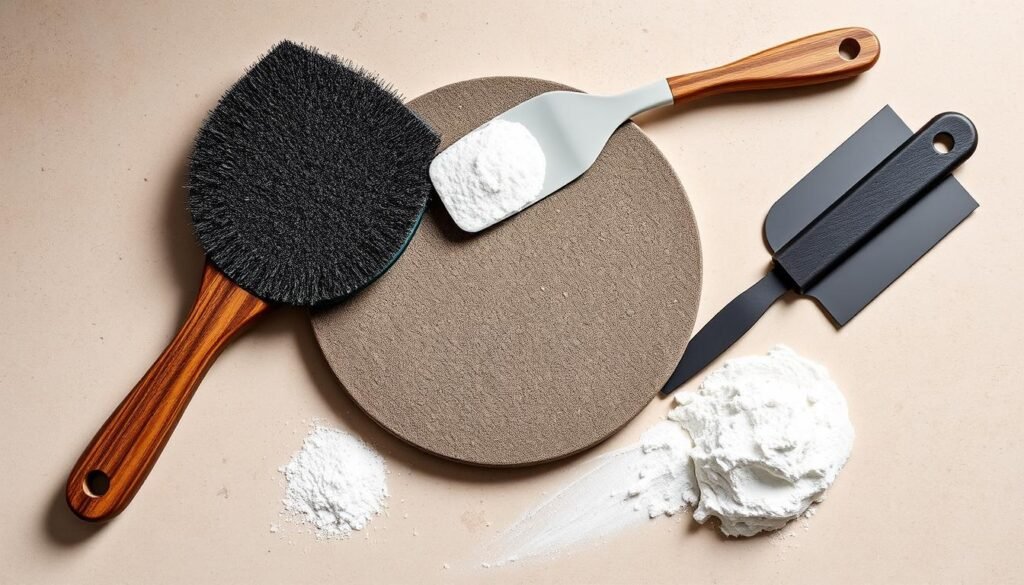
Before you start cleaning your pizza stone, make sure you have the right tools and supplies. The right equipment helps keep your stone in top shape. It also prevents damage.
Essential Cleaning Tools
To clean your pizza stone, you’ll need a few key tools. A scraper or a soft-bristled brush is vital for removing food without harming the stone. These tools gently remove stuck-on food, making cleaning easier.
Choosing the right scraper is key. Look for one that’s gentle but still effective. A soft-bristled brush can also help sweep away any leftover particles. This ensures your stone is clean and ready for the next use.
Recommended Cleaning Products
For cleaning products, go for gentle, non-abrasive options. Baking soda is great for pizza stones because it’s mild and can get rid of odors. You can also mix a mild detergent with water for a cleaning solution.
- Baking soda
- Mild detergent
Optional Cleaning Aids
If you have tough stains or odors, consider extra cleaning aids. Vinegar and lemon juice are natural cleaners. They can tackle stubborn stains and leave your stone smelling great.
With these tools and supplies, you’re ready to keep your pizza stone in top condition. This ensures it continues to cook well and improve your cooking experience.
Pre-Cleaning Preparation

Getting your pizza stone clean starts with the right prep. Good preparation ensures a deep clean and keeps your stone lasting longer.
Cool Down Your Pizza Stone
Let your pizza stone cool down completely before cleaning. Cleaning a hot stone can cause damage like cracking. Always wait until it’s completely cool to the touch. This patience will keep your stone in great shape for a long time.
Scraps and Residue Removal
After cooling, remove big scraps or residue from the stone’s surface. Use a soft brush or gentle scraper for this. Be gentle to avoid scratching the stone. This makes cleaning easier and stops debris from spreading.
How to Avoid Damage
To avoid damaging your pizza stone, handle it carefully. Don’t use metal scrapers or harsh materials that can scratch or chip it. Use soft, non-abrasive tools instead. This way, you can avoid damage and keep your stone in good condition.
By following these steps, you’ll clean your pizza stone better and keep it in top shape over time.
How to Clean a Pizza Stone
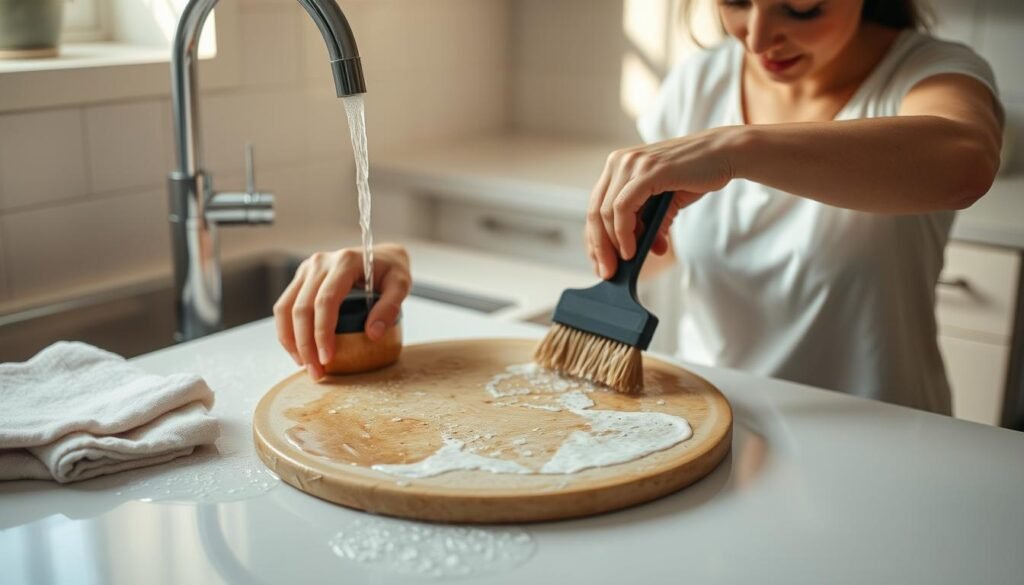
To keep your pizza stone in top shape, cleaning it regularly is key. A clean stone makes your pizzas taste better and lasts longer. Here, I’ll show you three ways to clean your pizza stone.
Method 1: Using a Scraper
Start by using a scraper to remove debris from the stone. This is great for quick clean-ups. Make sure the stone is cool before scraping to avoid damage.
Method 2: Baking Soda Paste
For tough stains, try a baking soda paste. Mix baking soda with water to make a paste. Apply it to stains and let it sit before rinsing. This method is gentle yet effective and doesn’t leave harsh chemicals.
As “Cleaning your pizza stone regularly is key to a perfect pizza”, picking the right method is important. The baking soda paste method is a favorite for its simplicity and results.
Method 3: Water Wash Technique
The water wash technique involves dampening the stone and cleaning it with a soft brush or cloth. It’s good for a deep clean after using baking soda paste. Be careful not to soak the stone, as too much water can harm it.
As pizza experts say,
“A clean pizza stone is the foundation of a great pizza. Regular cleaning and maintenance are essential to achieving that perfect crust.”
By using these methods, you can keep your pizza stone in great shape.
Dealing with Stubborn Stains
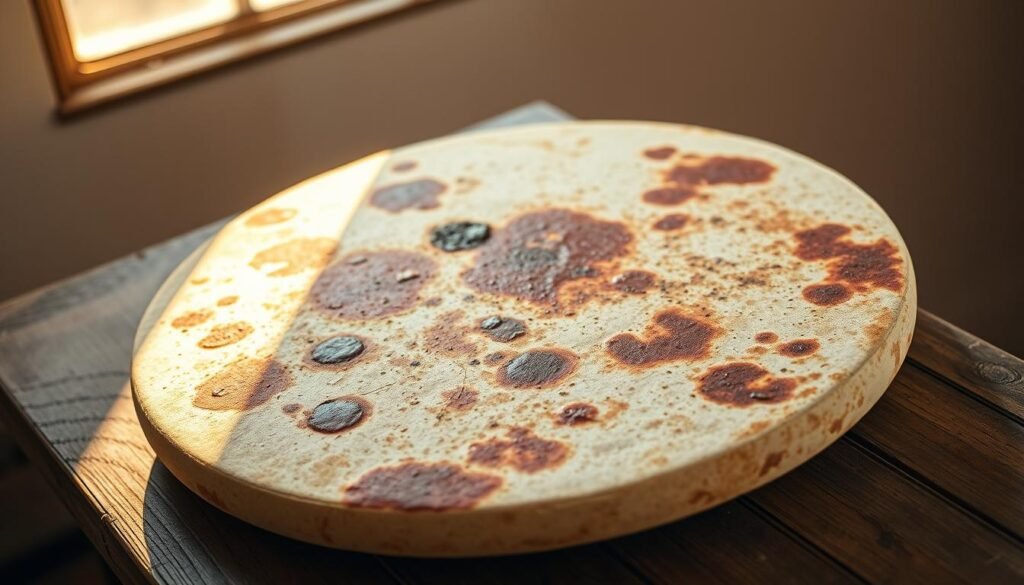
Removing stubborn stains from your pizza stone can be tough. But, with the right techniques, it’s doable. A bit of patience and the right cleaning methods can get rid of even the toughest stains.
Using Vinegar and Baking Soda
Using vinegar and baking soda is a top method for stubborn stains. This combo is not only effective but also eco-friendly. To start, mix baking soda with water to make a paste. Apply it to the stain and then spray with vinegar.
The mixture will fizz and help break down the stains. As “a clean pizza stone is essential for a perfect pizza”, this method keeps your stone in great shape. For more cleaning tips, check out Giordano’s guide on cleaning pizza stones.
The Power of Lemon Juice
Lemon juice is also a strong cleaner for pizza stone stains. Its acidity breaks down tough residue, making it easy to scrub away. Just squeeze lemon juice on the stain, let it sit for a few minutes, and then scrub.
“The acidity in lemon juice makes it a great natural cleaning agent.”
Scrubbing Techniques for Tough Residue
For really tough residue, the right scrubbing can help. Use a soft-bristled brush or a non-abrasive scrubber to avoid damage. Gently scrub in a circular motion, applying moderate pressure. Then, rinse well with water to remove any leftover residue.
By using these methods, you can remove stubborn stains from your pizza stone. This ensures it’s ready for your next pizza night.
Drying and Storing Your Pizza Stone

After cleaning your pizza stone, it’s important to dry and store it right. This keeps it from getting stained again. Taking good care of it will make it last longer and work better.
Proper Drying Techniques
Use a towel to gently pat the stone dry after cleaning. This removes extra moisture. Then, let it air dry completely. You can put it in a dry, well-ventilated area or stand it on its edge for better airflow. Avoid using heat to dry the stone, as this can cause it to crack.
Air drying is a simple yet effective method to stop moisture buildup. This prevents mold or stains. Make sure the stone is dry before you store it.
Safe Storage Tips
To safely store your pizza stone, wrap it in something breathable like paper or a cloth. This keeps it from dust and allows air to get through. Do not store the stone in a plastic bag or airtight container, as this can trap moisture.
- Keep the stone away from direct sunlight, which can cause it to dry out excessively.
- Store it in a dry place, away from humid environments like basements or near sinks.
Preventing Future Stains
To avoid stains in the future, clean your pizza stone often and dry it right after each use. Seasoning it now and then also helps.
By following these steps, you can keep your pizza stone in top shape. This way, you’ll enjoy perfectly cooked pizzas every time.
Restoring an Old Pizza Stone
Restoring an old pizza stone is easy and can make your pizza-baking better. Over time, stones can get worn, stained, or cracked. But, you can try a few methods to fix it before getting a new one.
Signs of Wear and Tear
First, check if your stone shows signs of wear. Look for stains, cracks, or a rough surface. If it’s just a bit stained or has small cracks, you might be able to fix it.
Techniques for Restoration
There are ways to make your stone look new again. One method is using a baking soda paste for stains. Mix baking soda with water, apply it, and let it sit overnight. Then, scrub and rinse it.
For tougher stains or cracks, try vinegar and baking soda. The vinegar’s acid breaks down stains, and baking soda is a gentle scrubber.
| Restoration Method | Description | Effectiveness |
|---|---|---|
| Baking Soda Paste | Mix baking soda with water, apply to stains, and scrub after letting it sit. | High |
| Vinegar and Baking Soda | Combine vinegar and baking soda to create a paste for tougher stains. | Very High |
| Scrubbing | Use a gentle scrubber to remove surface stains and grime. | Moderate |
When to Replace Your Pizza Stone
Restoring your stone can make it last longer. But, there are times when you need a new one. If it’s cracked deep, has burns, or is very worn, it’s time for a new stone.
Key Indicators for Replacement:
- Deep cracks that cannot be restored
- Significant wear that affects performance
- Burns or charring that cannot be cleaned
Knowing when to fix or replace your stone helps keep your pizza-baking top-notch.
Maintaining Your Pizza Stone
A well-maintained pizza stone is key to making delicious homemade pizzas. Regular care not only makes your stone last longer but also helps your pizzas cook perfectly every time.
Tips for Regular Maintenance
To keep your pizza stone in top shape, follow these easy tips:
- Clean your pizza stone after each use to stop residue buildup.
- Use a soft brush or dry cloth to wipe away debris.
- Stay away from harsh chemicals or abrasive cleaners that can harm the stone.
By sticking to these tips, you can keep your pizza stone in great condition and ensure it continues to perform well.
Avoiding Common Mistakes
There are several common mistakes to avoid when maintaining your pizza stone:
| Mistake | Consequence | Solution |
|---|---|---|
| Using soap or detergent | Can leave residue affecting pizza taste | Use water and a soft brush instead |
| Soaking the stone in water | Can cause cracking or damage | Dry the stone thoroughly after cleaning |
| Not drying the stone properly | Can lead to mold or mildew growth | Ensure the stone is completely dry before storing |
Avoiding these mistakes will help extend the life of your pizza stone.
Using Your Stone Efficiently
To get the most out of your pizza stone, use it efficiently. Preheat your stone in the oven for at least 30 minutes before baking. This makes sure it’s hot and ready for your pizza. Also, using a pizza peel or parchment paper helps you slide your pizza onto the stone without damage.
By following these guidelines, you can enjoy perfectly cooked pizzas while extending the life of your pizza stone.
Cleaning Alternatives
Cleaning your pizza stone doesn’t have to be the same for everyone. You can pick the best method based on your stone’s type and your own needs.
Dishwasher vs. Handwashing
Deciding between a dishwasher and handwashing is key. Handwashing is common, but some wonder if the dishwasher works too. Always check if your stone is safe for the dishwasher first. Not all stones can handle the dishwasher’s heat and cycles.
| Method | Pros | Cons |
|---|---|---|
| Dishwasher | Convenient, thorough cleaning | Potential damage to the stone, not all stones are dishwasher safe |
| Handwashing | Gentle on the stone, controlled cleaning | Requires elbow grease, risk of using inappropriate cleaning agents |
Natural Cleaning Options
For a natural clean, you can try a few things. Baking soda and water make a paste that cleans well. Lemon juice cleans and freshens the stone too.
For more natural cleaning tips, check out Allrecipes.
Professional Cleaning Services
For very old or dirty stones, professional cleaning might be best. These services have the tools and know-how to make your stone look new again.
The best way to clean your pizza stone depends on its material, your preference, and how dirty it is. By choosing wisely, you can keep your stone in great shape for a long time.
Frequent Questions About Pizza Stone Care
Many pizza lovers wonder about the best way to care for their pizza stones. It’s key to keep your stone in top shape for great pizzas.
Can I Soak My Pizza Stone?
Soaking your pizza stone is not a good idea. These stones can crack or break because they soak up water. Clean your stone gently with a scraper or brush. If needed, use a damp cloth to wipe it down. For more cleaning tips, check out guides on how to clean a pizza stone.
What’s the Best Way to Remove Odors?
To get rid of odors, try a few simple methods. Make a paste with baking soda and water, apply it to the stone, and let it sit before rinsing. You can also use lemon juice. Its acidity helps remove odors.
How to Tell If It’s Clean Enough?
To check if your stone is clean, look at it and do a water test. It should look clean and have no food left. For the water test, drop a few drops of water on the stone. If they sizzle and disappear fast, it’s ready for use.
| Cleaning Method | Effectiveness | Recommendation |
|---|---|---|
| Scraping | High | Best for removing large debris |
| Baking Soda Paste | Medium to High | Ideal for tackling stubborn stains and odors |
| Lemon Juice | Medium | Effective for odor removal and mild stains |
Troubleshooting Cleaning Issues
Even with the best care, problems with your pizza stone can still happen. Issues like bad smells, hard stains, or cracks need quick fixes. Knowing how to solve these problems is key to keeping your stone in top shape.
If Your Stone Smells
Bad smells often come from leftover food or not drying it well. To get rid of the smell, sprinkle baking soda on the stone. Let it sit overnight, then brush it off.
Or, mix equal parts water and white vinegar in a spray bottle. Spray the solution on the stone and let it dry. This method not only removes smells but also cleans the stone.
If Stains Remain After Cleaning
Hard stains can be tough to get rid of. But there are ways to tackle them. For stubborn stains, make a paste with baking soda and water. Apply it to the stain, wait 30 minutes, then scrub and rinse.
If the stain won’t budge, try a non-abrasive scrubber or a mix of water and lemon juice. Put the lemon juice on the stain, wait a bit, then scrub gently.
If It Cracks or Chips
Cracks or chips mean your stone is worn out or handled wrong. If your stone has minor damage, you can try to season it to stop it from getting worse.
But if the damage is big, it might be time to get a new stone. Check the table below to see what to do based on the damage.
| Damage Extent | Recommended Action |
|---|---|
| Minor cracks or chips | Season the stone to prevent further damage |
| Moderate damage | Monitor the stone’s condition and consider replacement if it worsens |
| Extensive damage | Replace the pizza stone |
By using these tips, you can fix common problems with your pizza stone. Regular care and maintenance will make your stone last longer and work better.
Fun Facts About Pizza Stones
I love cooking and have always been fascinated by pizza stones. They’re not just for making pizza. They have a rich history and are very versatile.
A Brief History
People have been using stones to cook for thousands of years. The Egyptians, Greeks, and Romans all used them. They liked how stones distribute heat evenly.
The modern pizza stone came along in the 1970s and 1980s. This was when home pizza making became popular. People started making Neapolitan-style pizzas at home.
Cultural Uses
Pizza stones aren’t just for pizza. They’re used in many cultures for different foods. In Mexico, they cook tortillas on comals. In India, they make flatbreads on tawas.
- In Italy, pizza stones are key for Neapolitan-style pizza, cooked in wood-fired ovens.
- In the Middle East, stones are used for cooking flatbreads like lavash and barbari.
- In Asia, stones are adapted for various cooking techniques, from baking to grilling.
Notable Brands and Innovations
Many brands have improved pizza stones over the years. Baking Steel and PizzaStone are well-known for their products. They use different materials for better cooking.
New features have been added to stones. Now, you can find stones with handles and advanced materials. Some even come with apps for temperature control.
Conclusion
Now you know how to clean a pizza stone. Follow the tips from this article to keep your stone in top shape. This way, you’ll always get perfect pizzas.
Key Takeaways
Some key tips for cleaning your pizza stone include letting it cool down completely after use. Use a dry brush or scraper to remove food bits. Also, avoid sudden temperature changes. For more detailed care, check out Only Fire’s guide on taking care of your pizza.
Experimenting with Different Methods
Try out different cleaning methods to see what works best for you. With the right care, your pizza stone will be a reliable friend in the kitchen. Enjoy your cooking!