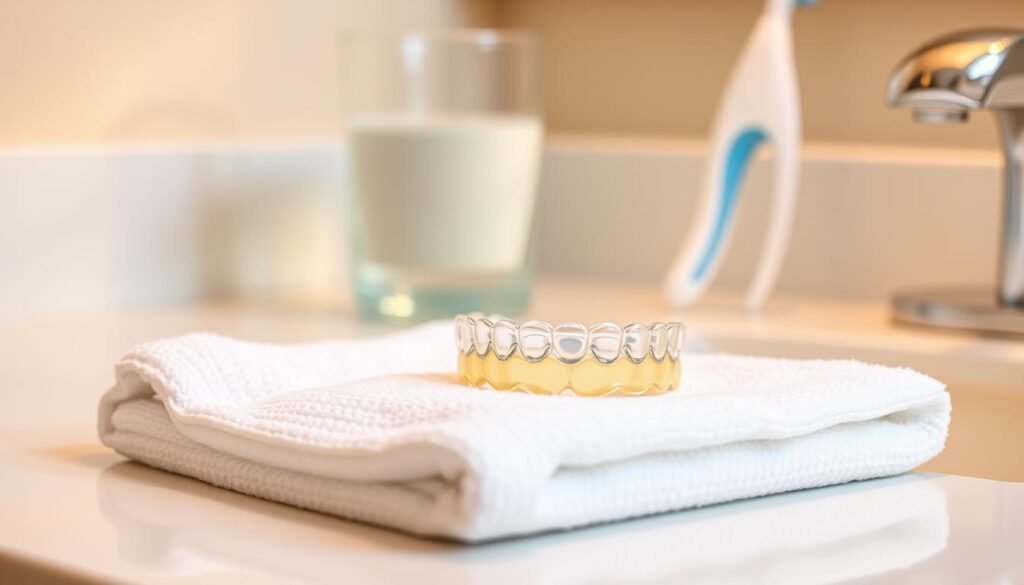
Keeping your mouth clean is very important, even more so if you wear a retainer. Many people forget to properly clean their retainers. This can lead to bad breath, gum disease, and make the retainer less effective.
If you wear a retainer, it’s key to keep it clean. Simple steps can help your retainer last longer and keep your mouth healthy. For more tips, check out orthodontic care blogs for helpful advice.
Key Takeaways
- Brush your retainer gently with a soft-bristled toothbrush.
- Soak your retainer daily in a recommended cleaning solution.
- Rinse your retainer thoroughly after cleaning.
- Avoid consuming colored beverages while wearing your retainer.
- Store your retainer in a protective case when not in use.
Why Cleaning Your Retainer is Important
Cleaning your retainer is crucial for your oral health. A retainer keeps your teeth in place after orthodontic treatment. But, if not cleaned, it can collect bacteria, causing health problems.
Health Risks of Dirty Retainers
Dirty retainers can lead to serious health issues. Bacteria and plaque buildup can cause bad breath, gum disease, and infections. Also, a dirty retainer can move your teeth back, undoing orthodontic work.how-to-clean-sterling-silver
Some health risks of dirty retainers include:
- Gingivitis and gum disease
- Oral thrush and fungal infections
- Bad breath (halitosis)
- Tooth decay and cavities
Benefits of Regular Cleaning
Regular cleaning of your retainer offers many benefits. It keeps your mouth fresh, healthy, and reduces infection risk. By making cleaning a part of your daily routine, your retainer stays clean and free from bacteria.
Some key benefits of regular retainer cleaning include:
- A healthier, fresher mouth
- Reduced risk of oral infections and diseases
- A longer lifespan for your retainer
- Improved overall oral hygiene
The Best Cleaning Solutions for Retainers
To keep your retainer in top shape, you need a good cleaning solution. There are many products on the market, each with its own benefits.
Denture Cleaner Options
Denture cleaners are a top pick for retainer cleaning. They’re made to remove plaque, bacteria, and other dirt that can build up.
Some top denture cleaner options include:
- Efferdent: Known for its strong cleaning, Efferdent is a favorite among orthodontic patients.
- Polident: Polident offers a range of cleaners that are gentle yet effective.
It’s key to follow the instructions when using denture cleaners to avoid harming your retainer.
Natural Cleaning Alternatives
If you prefer a natural approach, there are alternatives to commercial cleaners. Vinegar and baking soda are two popular choices.how-to-clean-fuel-injectors
To use vinegar and baking soda:
- Mix 1 tablespoon of baking soda with 1 cup of vinegar for a soaking solution.
- Soak your retainer in it for 15-30 minutes.
- Rinse well with water before wearing it again.
This method is affordable and gentle on your retainer.
| Cleaning Method | Effectiveness | Ease of Use |
|---|---|---|
| Denture Cleaners | High | Easy |
| Vinegar & Baking Soda | Medium | Moderate |
Choosing the right cleaning solution depends on your preference and retainer type. Always check with your orthodontist if you’re unsure about the best method for your retainer.
Daily Cleaning Routine for Your Retainer
Keeping your retainer clean is key to good oral health. A simple daily routine can keep your retainer fresh and working well.
Step-by-Step Daily Cleaning
Begin by rinsing your retainer with warm water to get rid of loose bits. Next, use a soft-bristled toothbrush and mild soap or a retainer cleaner to scrub it. Make sure to clean both sides well.
Key steps in daily cleaning include:
- Rinsing with warm water
- Brushing with a soft-bristled toothbrush and mild soap or cleaning solution
- Rinsing again to remove any soap residue
After cleaning, check your retainer for any leftover dirt or stains. If there are tough stains, try soaking it in a retainer cleaner.how-to-clear-instagram-cache
Timing Your Cleaning Sessions
Cleaning your retainer in the morning and before bed is best. This removes bacteria and plaque that build up during the day and night. Also, cleaning after meals stops food from sticking to your retainer.
Tips for timing your cleaning sessions:
- Clean your retainer as soon as you take it out in the morning
- Clean it again before putting it back in at night
- Consider cleaning it after meals if you have a tendency to accumulate debris
By sticking to this cleaning routine and timing, you’ll keep your retainer clean and your mouth healthy.
How to Deep Clean Your Retainer
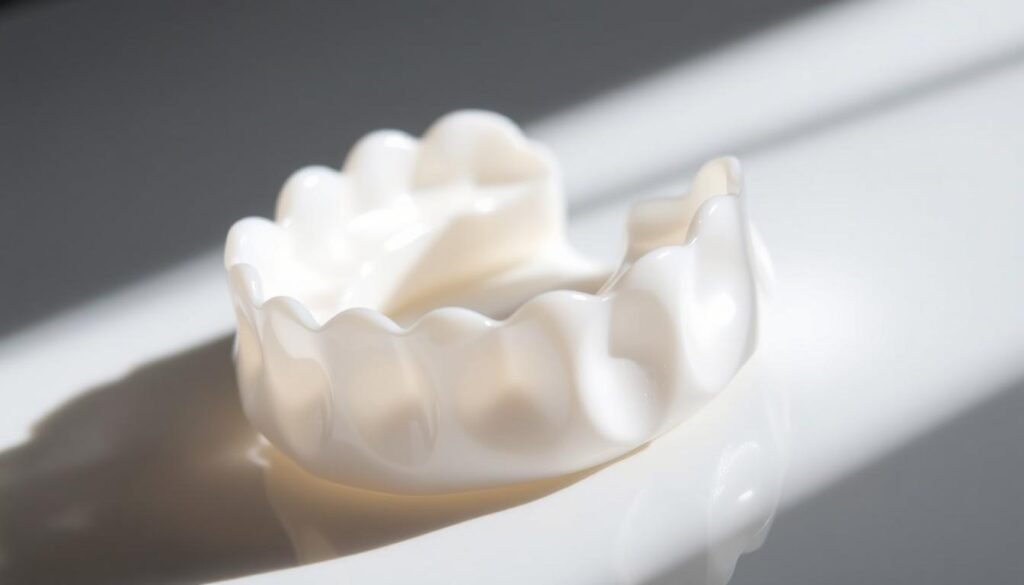
Deep cleaning your retainer is key to keeping your mouth healthy. Daily cleaning is important, but deep cleaning gets rid of more bacteria and plaque. It also removes tartar that builds up on your retainer.how-to-clean-wood-floors
When to Deep Clean
Deep clean your retainer at least once a week. Do it more often if it gets dirty or smells bad. Look for stains, bad tastes, or a rough feel to know it’s time.
Deep Cleaning Techniques
To deep clean, use a retainer cleaning solution or mix water and white vinegar. Soak your retainer for 15-30 minutes. For tough stains, use a soft-bristled toothbrush to gently scrub.
After scrubbing, rinse your retainer well with warm water. This removes any leftover cleaning solution.
Talking to your orthodontist about deep cleaning is a good idea. They can give you tips for your specific retainer. Deep cleaning keeps your retainer clean and helps your teeth stay straight.
Common Mistakes to Avoid When Cleaning Retainers
When it comes to retainer care, knowing what not to do is as important as knowing how to clean them. Many people accidentally harm their retainers and their teeth by using the wrong cleaning methods. Let’s look at some common mistakes and how to steer clear of them.
Harsh Chemicals to Stay Away From
Using harsh chemicals is a big mistake. Avoid using bleach or other abrasive cleaners because they can damage your retainer. Instead, use gentle cleaners made for retainers. For more tips, check out this resource.
Another mistake is using household cleaners or mouthwash with alcohol. These can be too harsh and might damage your retainer or leave bad residues. Stick to recommended cleaners or simple methods like soap and water.
Incorrect Storage Practices
How you store your retainer is just as important as how you clean it. Incorrect storage can lead to bacterial growth and contamination. Don’t wrap your retainer in a napkin or tissue, as this can expose it to bacteria. Instead, use a dedicated retainer case that is clean and dry. For more on cleaning and storing your retainer, see this guide.
Leaving your retainer exposed or storing it in a humid place can also cause bacterial growth. Always dry your retainer before storing it, and keep the case clean by washing it with soap and water regularly.
| Common Mistake | Consequence | Better Alternative |
|---|---|---|
| Using bleach or harsh chemicals | Damages retainer material | Gentle cleaning solutions |
| Wrapping retainer in napkin or tissue | Exposure to bacteria and contaminants | Dedicated retainer case |
| Storing retainer in humid environment | Fosters bacterial growth | Dry storage case |
By avoiding these common mistakes, you can make your retainer last longer and keep your mouth healthy. Remember, taking good care of your retainer is key to keeping your teeth straight.
How to Store Your Retainer When Not in Use
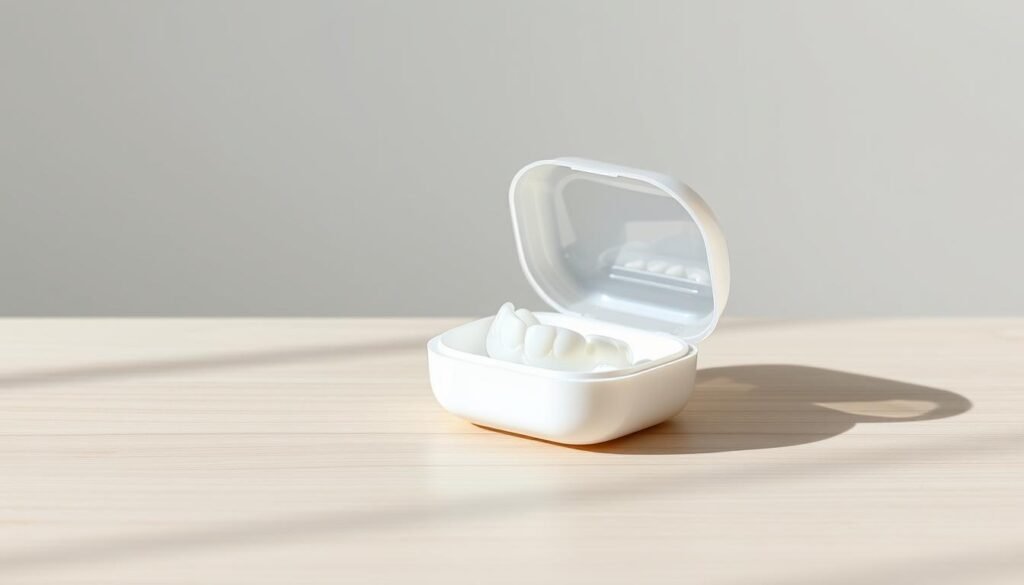
Storing your retainer right is key to avoid damage and bacterial growth. It needs a clean, dry spot when not in use.
Best Practices for Retainer Storage
To keep your retainer clean, store it in a clean, dry place. Before putting it away, rinse your retainer with water to get rid of dirt. Also, clean your retainer often as part of your care routine.how-to-clean-a-pizza-stone
For more tips on keeping your retainer in top shape, check out Hallgren Orthodontics.
Choosing the Right Case
Picking the right case for your retainer is important. Look for one that has adequate ventilation to stop bacteria from growing. A hard case is best to protect your retainer from harm.
Choose a case made for retainers. It should offer the right mix of protection and air flow. This keeps your retainer clean and in good shape.
Additional Tips for Retainer Hygiene
Keeping your retainer clean is just the start. There are many other practices to keep your mouth healthy and fresh. To make sure your retainer works well, you need to add a few habits to your routine.
Keeping Your Mouth Fresh
Maintaining mouth freshness is key for retainer care. Here are some tips to keep your mouth fresh and clean:
- Brush your teeth at least twice a day with a fluoride toothpaste.
- Floss daily to remove food particles and plaque from between your teeth.
- Use a mouthwash to kill bacteria and freshen your breath.
- Clean your tongue regularly, as it can harbor bacteria that cause bad breath.
By adding these habits to your daily routine, you can greatly improve your oral hygiene. This will keep your mouth feeling fresh.
Visiting Your Orthodontist Regularly
Regular visits to your orthodontist are crucial. They ensure your retainer fits right and your teeth stay aligned. It’s best to see your orthodontist every 6 to 12 months for a check-up. During these visits, your orthodontist can:
- Check the fit of your retainer and make any necessary adjustments.
- Inspect your teeth for any signs of shifting or other issues.
- Provide guidance on how to improve your retainer care and oral hygiene.
For more detailed information on retainer care, you can visit this resource. It offers comprehensive tips on maintaining your retainer’s longevity and hygiene.
By following these additional tips and visiting your orthodontist regularly, you can keep your retainer in good shape. This will also help maintain your oral health.
Cleaning Retainers with Braces Attached
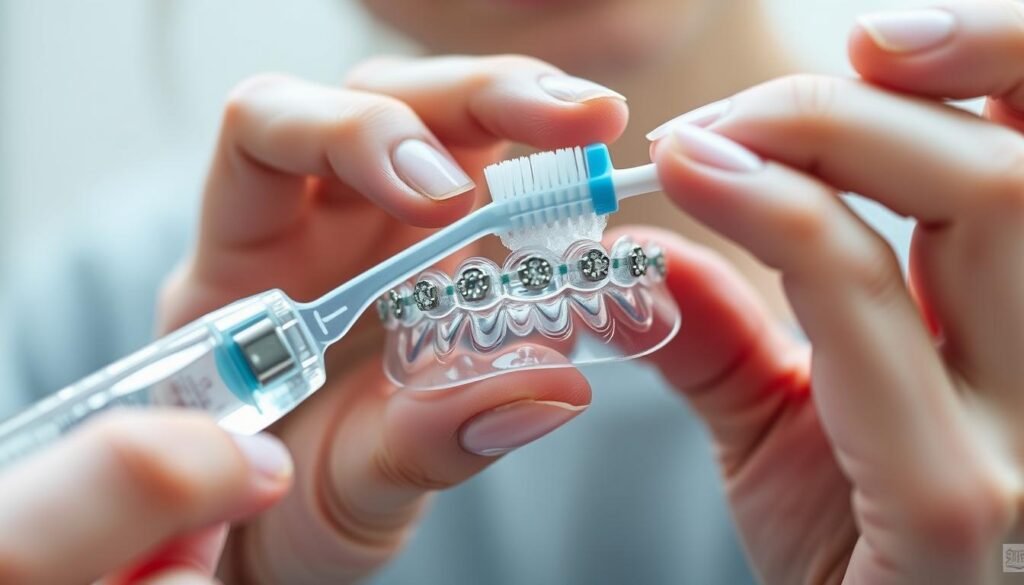
Having braces on your retainer makes cleaning a bit more complicated. But don’t worry, we’ve got you covered. Cleaning your retainer with braces requires careful attention. This ensures both the retainer and braces stay clean and work well.how-to-clean-a-couch
Methods for Braces Wearers
When cleaning a retainer with braces, using the right tools is key. Here are some methods:
- Use a soft-bristled toothbrush to gently clean around the braces and the retainer.
- Employ an interdental brush to reach between the wires and brackets.
- Try using a water flosser to remove any food particles trapped between the braces and retainer.
Considerations for Complex Cases
Some retainers with braces attached can be more complex. For example, those with multiple components or specific orthodontic appliances. For these cases:
- Consult your orthodontist for personalized cleaning advice tailored to your specific needs.
- Be gentle when cleaning to avoid damaging the retainer or dislodging the braces.
- Regularly inspect your retainer and braces for any signs of wear or damage.
By following these guidelines, you can keep your retainer and braces clean. This ensures the best outcome for your orthodontic treatment.
Troubleshooting Bad Odors in Retainers
Dealing with a smelly retainer can be frustrating. But knowing the causes can help you fix it. Bad odors often mean there’s an issue that needs fixing.
Causes of Odor
There are several reasons why your retainer might smell bad. The main reason is usually bacteria buildup. This happens because your mouth and retainer are moist.
- Inadequate cleaning: Not cleaning your retainer often lets bacteria grow.
- Poor storage: Storing your retainer in a dirty case can make it smell.
- Diet: Eating strong-smelling foods or drinks can leave smells on your retainer.
Quick Fixes and Preventive Measures
Getting rid of bad odors from your retainer is easy. Here are some quick fixes and ways to prevent it:
- Soak your retainer in denture cleaner or a water and vinegar mix.how-to-clean-mattress
- Brush your retainer with a soft toothbrush and mild soap.
- Keep your retainer case clean and let it dry.
To keep your retainer fresh, clean it every day. Here’s how different cleaning methods compare:
| Cleaning Method | Effectiveness | Ease of Use |
|---|---|---|
| Denture Cleaner | High | Easy |
| Vinegar Soak | Medium | Easy |
| Mild Soap and Water | Low | Easy |
By knowing why your retainer smells and using these fixes, you can keep it fresh. Regular care is important for a healthy, nice-smelling retainer.
Transitioning to Permanent Retainers
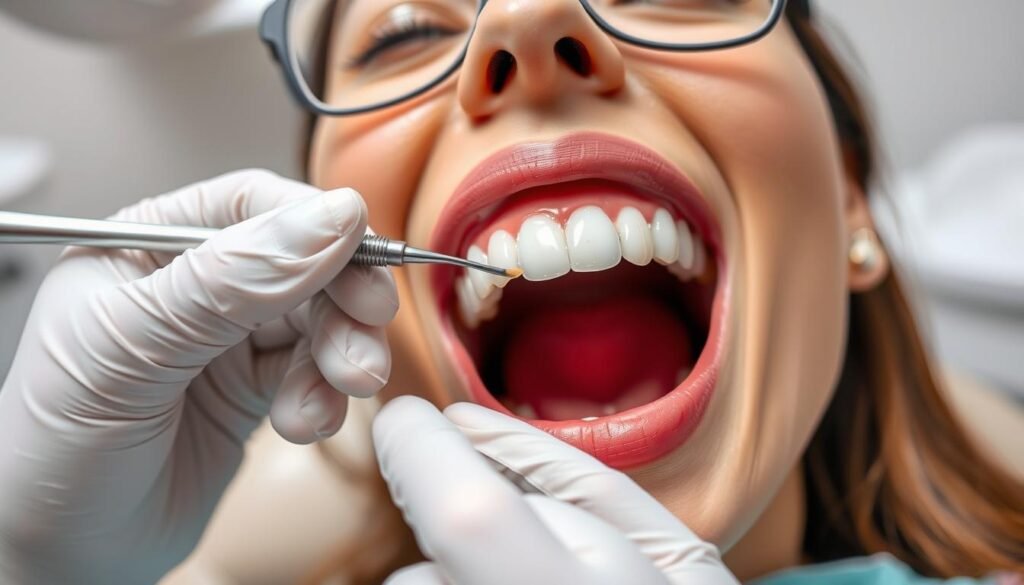
Switching to permanent retainers is a big step in your orthodontic journey. It offers a lasting way to keep your teeth in place. It’s important to know how to care for your new retainers to keep them clean and your mouth healthy.
Cleaning Permanent Retainers
Cleaning permanent retainers is a bit different because they’re fixed to your teeth. You’ll need special tools to keep them clean. Flossing is key because food and plaque can get stuck between the retainer and your teeth. Use a floss threader or interdental brushes to clean these tight spots.
Don’t forget to brush your teeth regularly, focusing on the areas around the retainer. Use a fluoride toothpaste and a soft-bristled toothbrush. For extra protection, use an antibacterial mouthwash to fight plaque and gingivitis.
Maintenance Tips for Longevity
To make your permanent retainers last, regular care is essential. This means cleaning them well and watching what you eat. Stay away from hard or sticky foods to avoid damaging the retainer. Also, make sure to see your orthodontist regularly for checks and adjustments.
Keep an eye on your retainers and tell your orthodontist if you notice any problems. If the retainer is loose or shows signs of wear, get it checked right away. By following these tips, you can enjoy your permanent retainers for many years.
- Use floss threaders or interdental brushes daily.
- Brush your teeth at least twice a day.
- Consider using an antibacterial mouthwash.
- Avoid hard or sticky foods.
- Regularly visit your orthodontist for check-ups.
Understanding Different Retainer Types
Knowing your retainer type is key to keeping it clean and in good shape. Retainers vary, each with its own needs and cleaning methods.
Clear vs. Fixed Retainers
Clear retainers are made of clear plastic and can be taken out. They’re liked for looking good and being easy to clean. Fixed retainers, on the other hand, are stuck to your teeth and can’t be removed. They need special cleaning because they’re fixed in place.
Clear Retainers: Cleaning them is simple with a soft toothbrush and mild soap. You can clean them well outside your mouth because they can be removed.
Fixed Retainers: Cleaning around fixed retainers is harder because they’re stuck to your teeth. Tools like interdental brushes help get rid of plaque and food bits.
Choosing the Best Cleaning Method
The right cleaning method depends on your retainer’s type and material. Clear retainers do well with a soft-bristled toothbrush and a mild cleaner. Fixed retainers need an interdental brush and floss threader for cleaning.
- For clear retainers, don’t use hot water, as it can warp the plastic.
- For fixed retainers, regular flossing is key to stop plaque from building up.
By knowing your retainer type and using the right cleaning method, you can keep it lasting longer. This also helps keep your mouth healthy.
When to Replace Your Retainer
Keeping your retainer in good shape is key, but sometimes you need a new one. Knowing when to get a new retainer is important for your teeth’s health.
Visible Wear and Changes in Fit
If your retainer has cracks or breaks, it’s time for a new one. Also, if it doesn’t fit right anymore, it’s not doing its job. A bad fit can cause your teeth to move back, undoing all the work of orthodontic treatment.
Replacement Frequency
How often you need a new retainer depends on the type and how well you care for it. A good retainer can last for years. But, always listen to your orthodontist. They can tell you when it’s time for a new one based on your needs.