Surprising fact: I learned that a neglected washing machine can harbor bacteria and mold that actually transfer odors to my clothes within weeks.
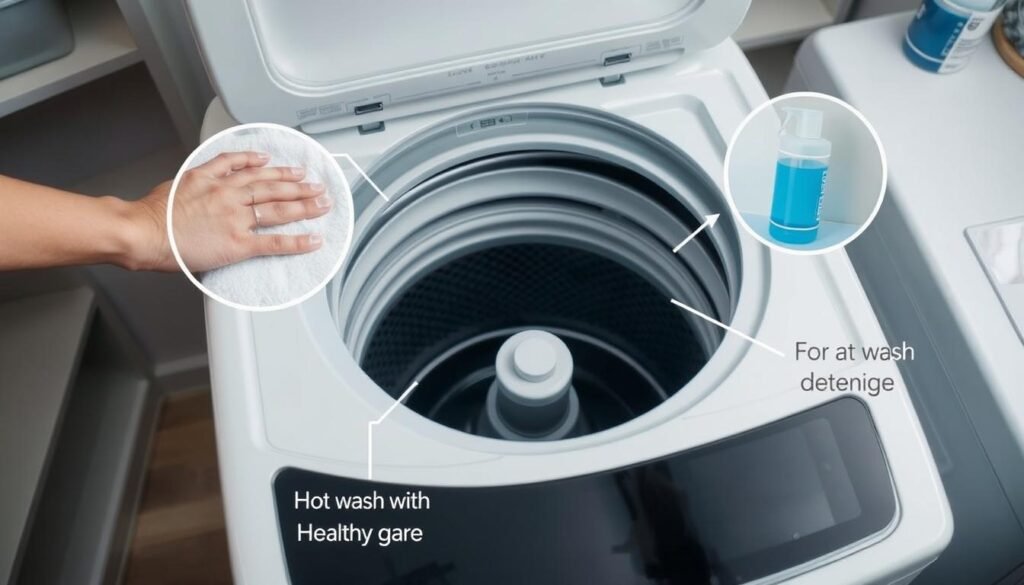
I keep my routine simple so my clothes come out truly clean and not just masked with fragrance. I use plain ingredients—baking soda in the drum and vinegar in the detergent path—then run a hot cycle and pause to soak for about 30 minutes.
I touch the drum, detergent passages, and door seal because ignoring these spots lets residue and buildup return quickly. For heavier mineral buildup, I sometimes use trusted commercial cleaners like Affresh or OxiClean during an empty hot cycle.
Safety first: I wear gloves, ventilate the laundry room, and never mix bleach with vinegar. I also leave the door open after a cycle so moisture can dry and odors stay away.
For step-by-step maintenance and brand tips, I follow trusted guidance such as this washer care page from Tide: washer care tips.
Key Takeaways
- Monthly upkeep keeps odors and bacteria from transferring to clothes.
- Natural method: baking soda in the drum, vinegar in the detergent drawer, hot cycle and a 30-minute soak.
- Use commercial cleaners for heavy mineral buildup and soap scum.
- Wipe seals and detergent paths; leave the door open to dry.
- Follow basic safety: gloves, ventilation, and no mixing of strong chemicals.
Why I Regularly Clean My Washing Machine
I inspect my machine each month because hidden grime changes how it washes and how my clothes smell.
Dirt, oils from laundry and leftover detergent cling to the drum and dispenser. These films trap more grime with every cycle and cut rinsing power.
Hard water minerals build up in pipes and on internal parts. Over time those deposits narrow pathways and reduce agitation, which lowers performance and raises cycle time.
Why mold and odors start
Damp spots near the door and dispensers invite mold, mildew, and bacteria. That growth causes faint musty smells that transfer to clothes even after a fresh wash.
- Monthly care breaks down soap scum and mineral buildup.
- Regular upkeep improves rinsing, spin speed, and drying time.
- Front-load washers demand extra attention because tight seals hold moisture.
| Issue | Effect | Monthly fix |
|---|---|---|
| Residue and grime | Sticky film on drum and seal | Wipe and run hot maintenance cycle |
| Hard water | Mineral buildup, reduced flow | Vinegar or commercial remover |
| Mold and odors | Musty smell on clothes | Dry gasket and clean dispenser |
Tip: For more stepwise care, see this washing machine care guidance.
How to Clean a Washer
I always gather my supplies before I touch the machine so the job goes fast and stays safe.
What I gather first
I lay out distilled white vinegar, baking soda, and a trusted commercial cleaner for heavy buildup. I include rubber gloves, a soft microfiber cloth, an old toothbrush, and measuring cups.
I clear the drum of clothes and remove trays I want to soak. That makes the session efficient and keeps dispensers reachable.how-to-clean-makeup-brushes
Safety first
Ventilation matters. I crack a window or run a fan and keep gloves on. I never mix bleach with vinegar or ammonia; dangerous fumes form.
“I always let bleach sit for ten minutes, then run an extra rinse so no residue remains.”
- I add a small brush for crevices where grime hides.
- I measure products so detergent, soda, and vinegar are used correctly.
- I plan enough time for a hot maintenance cycle and a pause-and-soak if needed.
| Item | Purpose | Tip |
|---|---|---|
| Vinegar | Breaks down mineral deposits | Use measured amounts in dispensers |
| Baking soda | Neutralizes odors in drum | Place in drum before cycle |
| Bleach | Sanitizes mold and bacteria | Allow 10 minutes contact; follow with extra rinse |
For extra guidance, see these washer care tips that I consult when deciding between natural or commercial methods.
Deep Clean Method: Vinegar and Baking Soda Hot Cycle
For a reliable deep refresh, I start with the hottest setting and an empty drum before adding solutions.
Prep the empty machine and run a hot water cycle
I pick the highest heat and the longest cycle so hot water helps dissolve residue. I leave the drum empty and remove any loose lint or items.
Vinegar through dispensers, baking soda in the drum
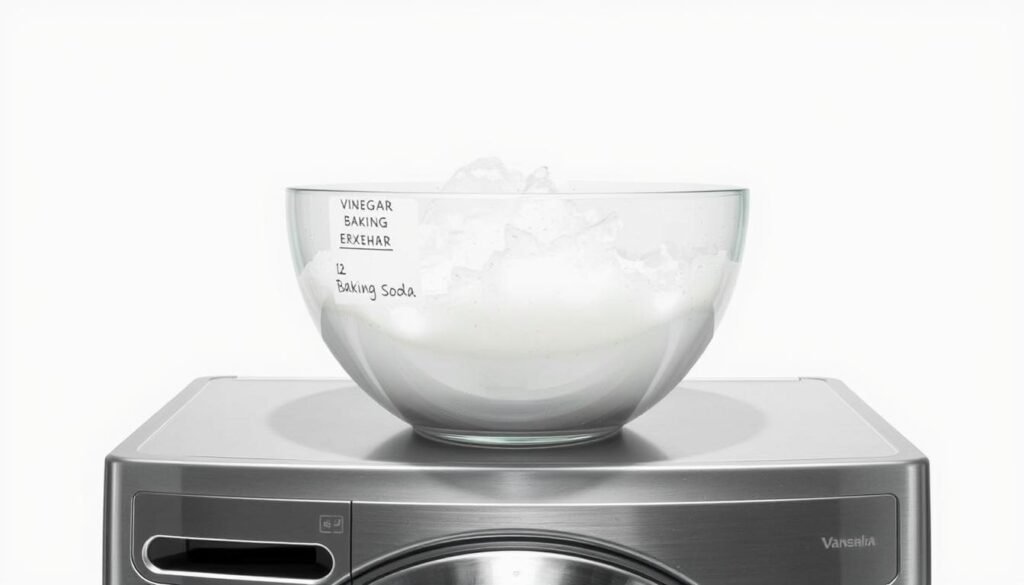
I pour 2 cups white vinegar into the detergent path and add 1/2 cup baking soda directly into the drum. The vinegar flushes detergent lines while the soda scours the drum.
Pause-and-soak tip to break down buildup and odors
Once the hot run starts, I pause the cycle halfway and let the mixture soak for about 30 minutes. That soak time loosens stubborn grime and neutralizes odors in hidden areas.
Final rinse and air dry for a fresh-smelling washer
I resume the cycle and check for suds or residue. If any remains, I run a second hot rinse. Then I wipe the door seal with a microfiber cloth and leave the door open to air dry.
- Empty drum: start with no clothes.
- Measure: 2 cups vinegar in dispenser, 1/2 cup soda in drum.
- Soak: pause mid-cycle for about 30 minutes.
- Rinse & dry: run extra rinse if needed and air dry the interior.
“This natural duo is safe for routine use and reaches hidden areas as the machine agitates.”
Alternative Method: Commercial Washing Machine Cleaners

For stubborn mineral deposits and lingering odors, I prefer a purpose-made store cleaner. These products are formulated for soap scum, detergent residue, and scale that resist simple wiping.
When I choose a store-bought product, I pick one made specifically for the washing machine and follow package directions for dosage and timing. Brands like Affresh and OxiClean Washing Machine Cleaner are common choices for both front-load and top-load models.how-to-clean-a-mattress
Running a hot maintenance cycle with an empty drum
I always start with an empty drum and clear the dispensers so the cleaner can circulate. I set the longest, hottest cycle available; hot water helps dissolve deposits in hoses and inside parts.
- I reach for a commercial cleaner when heavy scum, scale, or persistent odors remain after basic upkeep.
- Follow package directions for dosage and whether an extra rinse is needed.
- Alternate this method with my vinegar and baking soda routine to prevent overuse of any single product.
- I log each treatment and wipe the door and seals dry after the cycle so the interior stays neutral.
“Use a hot, empty cycle per the instructions and run an extra rinse if any suds persist.”
For real-user reviews and product notes, I consult trusted articles like this commercial washing machine cleaner guide.
Front-Load vs. Top-Load: What I Clean Differently

My approach changes with the model: front-load doors get seal care, while top-loads demand attention under the lid.
Front-load focus
I gently pull back the rubber gasket folds and wipe moisture and residue that feed mold and mildew. I wipe the glass and tight seals so film does not hide leaks or buildup.
I use measured detergent because HE designs use less water. Too much product sticks to seals and causes odors.
Top-load focus
For top-load models I scrub the agitator, the center post, and the underside of the lid where grime builds. Hard water spots form more often here, so I wipe interior surfaces and run hot cycles with vinegar or a store cleaner when needed.
Dispensers and filters
I remove dispenser trays and soak them in warm water with a mild cleaner. I brush every groove, dry with a soft cloth, and reinstall. I check model filters monthly and clear any lint or debris so the washing machine runs well.
- I target the front-load door area first and keep the gasket dry.
- I measure detergent carefully for HE machines.
- I finish by drying reachable parts and leaving areas open so moisture does not linger.
Detail Work: The Drum, Gasket, Dispensers, Filters, and Hoses

A few minutes spent on detail work prevents grime from turning into stubborn problems later.
Inside drum care: I give the inside drum a quick wipe after cycles to remove film and moisture. This stops residue from building up and keeps the washing machine fresh.how-to-clean-baseball-caps
Door gasket and mold risk
I gently lift the rubber gasket folds and scrub hidden mold or mildew with a soft cloth and mild cleaner. Then I dry those areas thoroughly so damp pockets cannot return.
Dispensers, agitator, and filters
I pull out dispensers and soak them in warm water with a splash of vinegar, brushing corners to clear clogs and grime. I also brush lint and dirt from the agitator and any accessible filter each month.
Hoses and drain checks
I inspect hoses and the drain for kinks, mineral deposits, or blockages. Any suspect part gets a soak in warm vinegar solution, a rinse, and secure reinstallation.
- I rinse all parts and let them dry before reassembly.
- I keep a small cloth handy for tight spots.
- I repeat these detail steps monthly so the washer runs smoothly and avoids odors.
My Maintenance Routine to Keep Clothes Smelling Fresh

A steady, small routine prevents musty smells and keeps each load performing well. I follow simple steps each month so the machine stays efficient and my clothes stay smelling fresh.
Monthly hot maintenance cycle and extra rinse
I run an empty hot cycle at least once every month. I use white vinegar or a store cleaner and add an extra rinse when I spot suds or after bleach use.
Air-dry the drum and gasket
After laundry days I leave the door cracked so the drum and gasket can air dry. That step stops moisture pockets that lead to mold and lingering odors.
Use the right amount of HE detergent
I measure HE detergent carefully. Too much product creates leftover film that reduces clean washing and invites buildup.
Avoid overloading for better wash action
I never overload a load. Proper water movement and agitation give better rinsing and help keep clothes smelling fresh.how-to-clean-blackstone
- Monthly cycle: vinegar or a dedicated cleaner, plus an extra rinse if needed.
- I wipe visible moisture from seals and spot-clean problem areas between deeper treatments.
- I watch dispensers so they don’t clog and dosing stays consistent for cleaner cycles.
- I note any change in odor or drain behavior and run maintenance sooner when I see issues.
- I stick with regular cleaning; small, consistent steps save time and keep the machine reliable.
“Small monthly steps keep my laundry routine simple and my clothes smelling fresh.”
Conclusion
A few focused minutes each month stop mildew, scale, and musty smells before they start. A steady routine keeps my clean washing machine working like new and saves me time.
I run an empty hot cycle, wipe seals and dispensers, and leave the door open so the interior dries. Both the vinegar and baking soda method and trusted commercial products work well when I follow directions.
Small habits matter: I measure detergent, avoid overloading, and check hoses. I wear gloves, ventilate the room, and never mix bleach with vinegar or ammonia. An extra rinse after bleach finishes the job.
With this plan, my washing machine stays efficient and my clothes come out smelling fresh. It cuts time spent fixing problems later and makes each wash reliable.