Did you know a dirty air conditioning filter can raise your energy bills by up to 15%? Keeping your AC filter clean is key to saving energy and improving your home’s air quality.
As a homeowner, it’s important to keep your AC system in top shape. A clean AC filter is a big part of that. In this guide, I’ll show you how to clean your AC filter. You’ll learn why it’s important and how it helps your home.
Key Takeaways
- Cleaning your AC filter can significantly reduce your energy bills.
- A clean filter improves indoor air quality, contributing to a healthier home environment.
- Regular maintenance of your AC system prolongs its lifespan.
- The process of cleaning an AC filter is straightforward and easy to follow.
- Improved air quality enhances overall comfort and well-being.
Why Cleaning Your AC Filter is Important
A clean AC filter is key to a working air conditioning system. It affects both your health and energy use. Regular cleaning boosts your air conditioner’s performance.
Improve Indoor Air Quality
Cleaning your AC filter helps improve indoor air quality. A dirty filter spreads dust, pollen, and allergens in your home. This can worsen breathing problems and allergies. A clean filter cuts down on these pollutants, making your home healthier for everyone.
Dr. Jane Smith, an indoor air quality expert, says, “A clean AC filter is vital for removing harmful particles. It greatly improves the health and comfort of those living in your home.”
Enhance Energy Efficiency
A clean AC filter also boosts energy efficiency. A clogged filter makes your AC work harder, using more energy and raising your bills. Cleaning it ensures your AC runs smoothly, saving energy and money.
“A well-maintained AC filter can cut energy use by up to 15%,” the
says.
Extend the Lifespan of Your AC Unit
Regularly cleaning your AC filter also extends the lifespan of your AC unit. A dirty filter strains your AC, causing it to wear out faster. Keeping your filter clean reduces the need for expensive repairs and extends your AC’s life.
- Reduces strain on the AC unit
- Prevents premature wear and tear
- Lowers the risk of costly repairs
When to Clean Your AC Filter
Knowing when to clean your AC filter is key for good air quality and system efficiency. How often you clean it depends on how much you use it, the filter type, and your environment.
Recommended Cleaning Schedule
The recommended cleaning schedule for your AC filter changes based on several things. For example, if you use your AC a lot, you’ll need to clean the filter more. A reusable filter should be cleaned every 1-3 months. A disposable filter should be replaced every 1-2 months.how-to-clean-brass
| Filter Type | Usage Pattern | Recommended Cleaning Frequency |
|---|---|---|
| Reusable | Frequent | Every 1 month |
| Reusable | Moderate | Every 2 months |
| Reusable | Infrequent | Every 3 months |
| Disposable | Frequent | Replace every 1 month |
| Disposable | Moderate | Replace every 2 months |
Signs Your Filter Needs Cleaning
It’s also important to know the signs that your AC filter needs cleaning. Look for signs like less air coming out of the vents, higher energy bills, and dust on the filter.
- Reduced airflow from the vents
- Increased energy consumption
- Visible dust or debris on the filter
- Unusual odors or allergies triggered by poor air quality
By watching for these signs and following a cleaning schedule, you can keep your AC filter in top shape. This helps improve your indoor air and makes your AC system more efficient.
Types of AC Filters
AC filters vary in type, each with its own benefits and care needs. Knowing these differences helps pick the best filter for your AC system. This ensures it works well.
Disposable vs. Reusable Filters
AC filters can be disposable or reusable. Disposable filters need to be replaced every 1-3 months, based on use and the maker’s advice. Reusable filters can be cleaned and used again, saving money and being good for the planet.how-to-clean-a-cast-iron-skillet
- Disposable filters are easy to use and need little upkeep.
- Reusable filters can save money over time and cut down on waste.
HEPA Filters
High Efficiency Particulate Air (HEPA) filters catch tiny particles like dust and pollen. They greatly improve indoor air but might need to be replaced or cleaned often.
HEPA filters have big advantages:
- They purify the air very well.
- They help lessen allergy and asthma problems.
Electrostatic Filters
Electrostatic filters draw in and hold onto airborne particles with an electrostatic charge. They’re good at catching small particles and can be washed, making them reusable. But, their effectiveness depends on their design and how well they’re cared for.
Choosing the right AC filter is key. Think about your air quality needs, your AC system, and the filter’s upkeep. The right filter boosts air quality, AC efficiency, and unit lifespan.
Tools and Materials You Will Need
Cleaning your AC filter needs some preparation. You’ll need the right tools and materials. Make sure you have everything you need before starting.
Basic Cleaning Supplies
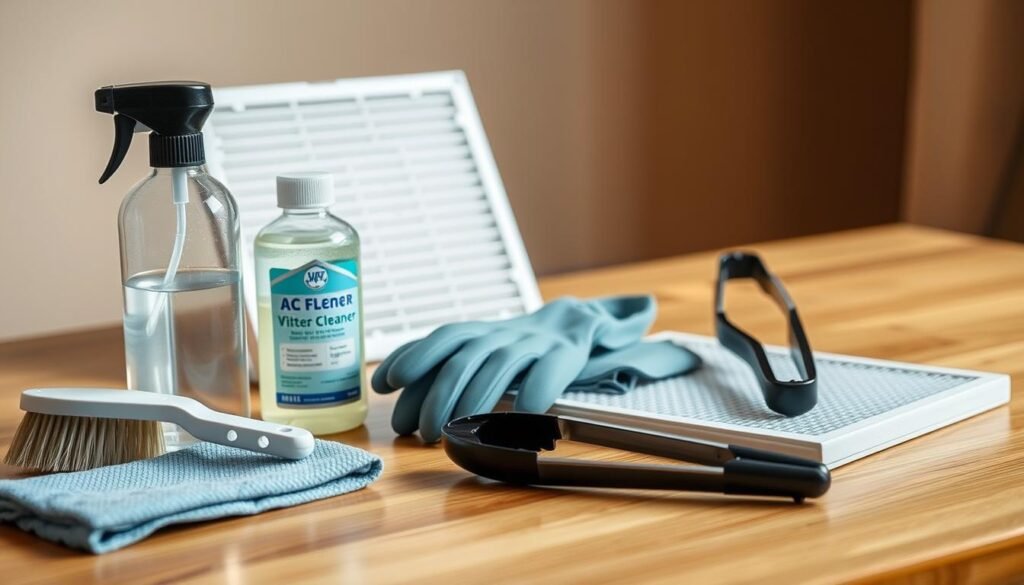
To clean your AC filter well, you’ll need some basic supplies. You’ll need a vacuum cleaner with a gentle setting to remove debris. Also, a soft-bristled brush to sweep away dust and dirt.
Don’t forget a mild detergent or a cleaning solution for a deeper clean. And, have a bucket or container to mix your solution. Use warm water to help loosen dirt.how-to-clean-washing-machine
Safety Equipment
When cleaning your AC filter, safety comes first. Wear gloves to prevent skin irritation from dust and dirt. And, use a mask to avoid inhaling particles.
Wearing protective eyewear can also help. It keeps dust and debris out of your eyes. As “Safety is not just a precaution, it’s a necessity.”
- Gloves
- Mask
- Protective eyewear
With the right tools and materials, you’re ready to clean your AC filter safely and effectively.
Step-by-Step Guide to Cleaning Your AC Filter
Cleaning your AC filter is easy and makes a big difference. It keeps your home comfortable and the air clean. Just follow a few simple steps to keep your air conditioner working well.
Turn Off Your AC Unit
First, turn off your AC unit. This is a safety step to avoid accidents or shocks. Make sure to switch it off at the thermostat and the circuit breaker or fuse box.
Remove the Filter
After turning off your AC, remove the filter. The steps to do this vary by AC type. For most, you’ll open a panel at the front or side. Some may need a latch or screw. Check your manual if you’re not sure.
Cleaning Techniques
The cleaning method depends on your filter type. Disposable filters usually need to be replaced. But, reusable filters can be cleaned. Use a vacuum or soft brush for most. Some may need water or mild detergent. Always follow the manufacturer’s cleaning guide.
For more info on HVAC maintenance, see Trane’s HVAC Air Filter Maintenance Guide. It offers detailed tips for a smooth-running system.
Here are the main steps for cleaning your AC filter:
- Check the filter for dirt or debris.
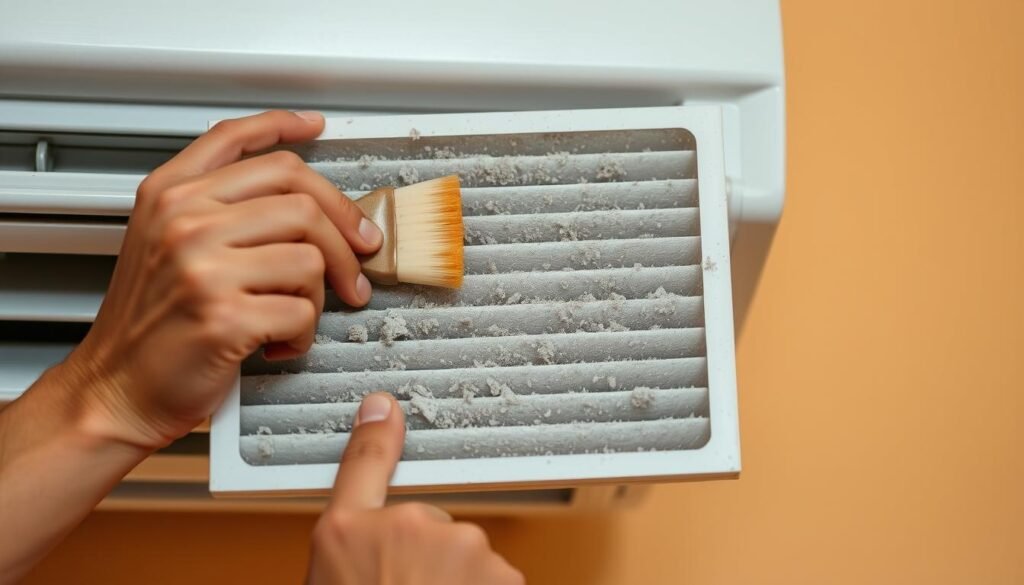
- Use a soft-bristled brush or vacuum to remove particles.
- Wash washable filters with mild soap and lukewarm water.
- Rinse well and let dry before putting it back.
By following these steps and using the right techniques, you can keep your AC filter clean. This ensures your air conditioner works efficiently.how-to-clean-suede-shoes
Cleaning Disposable AC Filters
It’s important to know how to handle disposable AC filters to keep your air clean. These filters catch dust, pollen, and other particles. This makes your air conditioning system work better.
How to Replace Instead of Clean
Disposable AC filters are not meant to be cleaned and used again. Cleaning them can harm the filter material and make it less effective. It’s best to replace them every 1-3 months, depending on how often you use them and what the maker says.
Replacing disposable AC filters is easy. Just buy a new one that fits your AC unit and follow the maker’s instructions to install it.
Proper Disposal Methods
When getting rid of used disposable AC filters, it’s key to do it in an eco-friendly way. Used AC filters can hold a lot of dust and allergens. Here’s how to dispose of them right:
- Take the filter out of the AC unit carefully to avoid spreading the dust and debris.
- Put the used filter in a plastic bag or wrap it in newspaper tightly to keep the dust inside.
- Throw the wrapped filter away in your regular trash, making sure it’s all in one piece to avoid spills.
Some places have special rules for throwing away hazardous waste, like used AC filters. It’s a good idea to check with your local waste management to see what’s best in your area.
Maintaining Reusable AC Filters
Keeping reusable AC filters clean is key for good air and energy savings. A regular care routine helps your AC work well and keeps your home air healthy.
Best Practices for Regular Maintenance
First, check your filters often for dust and dirt. Cleaning should be done gently to protect the filter. You can use a soft brush or vacuum, and some filters can be washed with water. Always check the manufacturer’s guide for the best cleaning method.
After cleaning, dry the filter fully before putting it back. This stops moisture problems in your AC. Also, watch for signs of wear on the filter, as it can impact how well it works.
When to Replace Reusable Filters
Reusable AC filters don’t last forever. Signs it’s time for a new one include poor air quality, higher energy bills, or damage. You should replace them every 6 to 12 months, depending on how much you use them and your environment.
To make your filters last longer, think about your surroundings. If your area is very dusty or you have pets, you might need to clean and replace them more often.
By following these tips, you can improve your air quality, cut down on energy costs, and extend your AC’s life.
Tips for Optimal Airflow Post-Cleaning
To get the best airflow after cleaning your AC filter, follow a few easy steps. Making sure your air conditioning works well is key. It keeps the air inside clean and cuts down on energy use.
Checking for Blockages
Blockages in the ductwork can really hurt airflow. Inspecting your ducts for dust, debris, or small animals is a must. Here’s how to do it:
- Turn off your AC unit before checking the ducts.
- Look for blockages in the ductwork you can see.
- Use a duct cleaning brush to get rid of dust and debris.
Also, finding and fixing duct leaks is important. Leaks can cut down airflow a lot. Use mastic sealant or metal-backed tape to seal any leaks.
Adjusting Air Vents
Adjusting your air vents right can also boost airflow. Make sure all vents are open and not blocked by furniture or curtains. Here are some tips for adjusting your air vents:
- Make sure all vents are fully open for the best airflow.
- Use vent deflectors to change airflow direction if needed.
- Adjust vents in different rooms based on their use and heating/cooling needs.
By following these tips, you can make sure your AC system has the best airflow. This will make your home more comfortable and the air cleaner. Regular checks and tweaks will keep your system running well and last longer.
Common Mistakes to Avoid
To keep your air clean and your energy bills low, it’s key to know the mistakes people make with AC filters. These errors are often simple to avoid with the right knowledge and methods.
Two big mistakes are about maintenance and cleaning. Knowing these can help you take better care of your AC.
Overlooking the Importance of Regular Maintenance
Regular upkeep is vital for your AC’s life and efficiency. Skipping filter cleaning or replacement can cause reduced airflow, higher energy costs, and system damage.
“A well-maintained AC system is not just about comfort; it’s also about health. Dirty filters can harbor allergens and bacteria, compromising indoor air quality.”
To avoid this, check your AC filter monthly, more often in busy seasons. For more tips, see this article on AC cleaning mistakes.
| Maintenance Task | Frequency | Benefits |
|---|---|---|
| Check AC Filter | Monthly | Ensures optimal airflow and efficiency |
| Clean/Replacement | Every 1-3 months | Prevents dust buildup and reduces energy bills |
Using Incorrect Cleaning Supplies
Wrong cleaning tools can harm your AC filter or make it less effective. Harsh chemicals or abrasive cleaners can damage the filter. Water can cause mold if not dried right.
Always follow the maker’s cleaning and maintenance guide. If your filter can’t be cleaned, replace it. For filters you can clean, use gentle methods and the right cleaners.
By steering clear of these common errors, you can make sure your AC works well. This means better air, comfort, and lower energy bills.
Troubleshooting Issues After Cleaning
If you’re having trouble with your AC after cleaning the filter, don’t worry. There are a few things you can do to fix it. Sometimes, problems come from small mistakes that are easy to fix.how-to-clean-strawberries
Reduced Airflow Problems
Reduced airflow can be a big problem, more so in the summer. To solve this, first check if the filter is in right. Also, look for any blockages in the air vents.
- Make sure the filter fits right and follows the AC unit’s instructions.
- Look for any furniture or curtains that might be blocking the air vents.
- Check the ductwork for any kinks or blockages that could be stopping air flow.
Unusual Noises from the AC Unit
Strange noises from your AC unit can be scary. First, turn off your AC to stay safe while you check it.
| Noise Type | Possible Cause | Action |
|---|---|---|
| Rattling | Loose parts or debris inside the unit | Inspect and clean the unit, tighten any loose parts |
| Grinding | Faulty motor or fan | Contact a professional for inspection and repair |
| Hissing | Leak in the refrigerant | Call a professional to check and fix refrigerant leaks |
By following these steps, you can find and possibly fix common problems after cleaning your AC filter. Regular upkeep and quick troubleshooting can keep your AC running well.
Benefits of Professional AC Maintenance
Professional AC maintenance is key to keeping your air conditioning working well. While you can do some maintenance yourself, sometimes you need a pro. They ensure your AC is serviced right.
A pro can spot problems early, saving you money on big repairs. For tips on AC care, check out Energy.gov.
When to Call in the Experts
Know when to get help for your AC. Look out for signs like less airflow, strange noises, or poor cooling. These mean your AC needs more than a quick clean.
What to Expect from a Professional Service
Expect a detailed check from a pro, including refrigerant checks and coil cleaning. They’ll also check mechanical parts. Plus, they’ll give tips to boost your AC’s performance.
Getting professional AC maintenance brings many benefits. You’ll see better energy use, a longer AC life, and cleaner air inside. Don’t wait for a breakdown. Book a pro service now to keep your AC running well.
Conclusion
Cleaning your AC filter is easy and makes your home healthier and more energy-efficient. Knowing how to clean it is key for a better living space.
Key Takeaways
A clean AC filter means less dust and allergens, making your home healthier. It also makes your AC work better, saving you money on energy. Keeping your AC filter clean is very important.
Regular Maintenance
Adding AC filter cleaning to your routine makes your home more sustainable and comfy. This simple action brings many benefits, like cleaner air and lower energy bills.