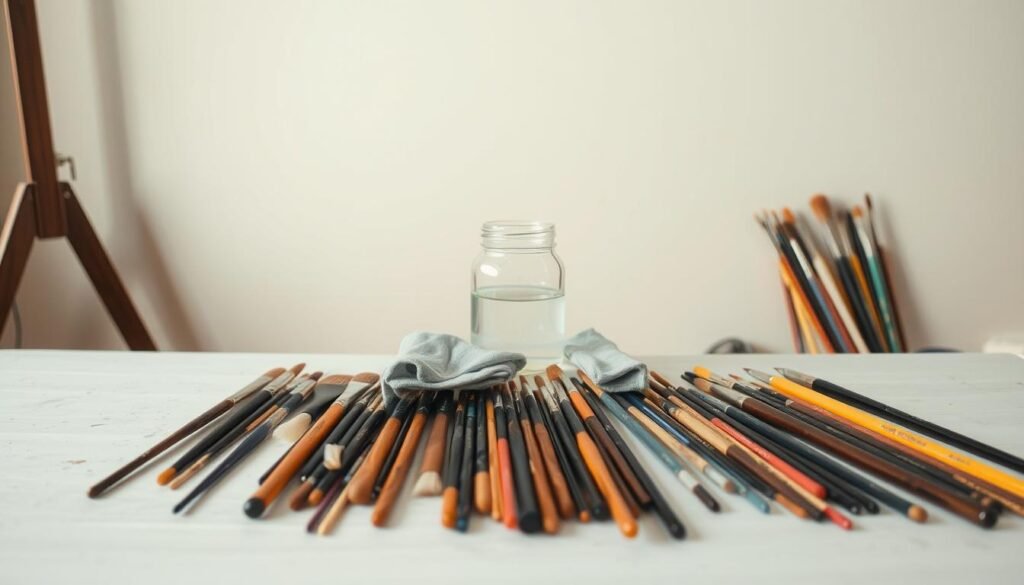
As an artist, I know maintaining your tools is crucial for the best results. A well-cared-for acrylic paint brush lasts longer and works better than a neglected one. Cleaning your brushes often is key to stop paint from drying on the bristles, which can damage them.
By keeping your brushes clean, you extend their life and keep your artwork looking great. In this article, I’ll share pro tips on effective brush maintenance. I’ll also guide you on how to clean your acrylic paint brushes.
Key Takeaways
- Understand the importance of cleaning your acrylic paint brushes.
- Learn the best methods for cleaning and maintaining your brushes.
- Discover tips to extend the lifespan of your brushes.
- Find out how to keep your artwork vibrant and precise.
- Explore the best practices for storing your cleaned brushes.
Why Cleaning Your Acrylic Brushes is Essential
Regular cleaning is key to keeping your acrylic brushes in great shape. This simple habit greatly improves your art. Remember, a clean brush is a happy brush.
Cleaning your brushes is not just about looks; it’s about their performance. Proper cleaning extends their life, keeps them painting well, and stops color mixing.how-to-clean-retainers
Prolongs Lifespan of Your Brushes
Acrylic paint can damage brushes if not cleaned right. Cleaning after each use removes paint and keeps bristles from drying out. As Bob Ross said, “You can do anything you want to do. This is your world.” Taking care of your brushes is part of creating your world.
Maintains Paint Performance
Clean brushes paint better. Paint on bristles makes them stiff and clumpy. Regular cleaning keeps your brushes in top shape, helping you achieve smooth strokes.
Prevents Color Mixing
Color mixing on brushes can be frustrating. Cleaning after each use stops this. It keeps your colors pure and vibrant, just as you want.
In conclusion, cleaning your acrylic brushes is essential. It keeps them lasting longer, painting better, and lets you control colors more precisely.
What You’ll Need for Cleaning
Having the right cleaning solutions and tools is key to keeping your acrylic paint brushes in top shape. Cleaning them well not only makes them last longer but also keeps them working great.
To start, you’ll need a few important items. The cleaning solution you choose is very important. It must be able to remove acrylic paint without harming your brushes.how-to-clean-microwave
Types of Cleaning Solutions
There are many cleaning solutions for your acrylic paint brushes. Here are a few:
- Mild soap and water: A gentle and effective option for cleaning acrylic paint brushes.
- Specialized brush cleaners: These are made just for cleaning paint brushes and work very well.
- Household items: Items like olive oil or baby oil can also clean and condition your brushes.
| Cleaning Solution | Effectiveness | Gentleness |
|---|---|---|
| Mild Soap and Water | High | Very Gentle |
| Specialized Brush Cleaners | Very High | Gentle |
| Olive Oil/Baby Oil | Medium | Very Gentle |
Essential Cleaning Tools
You’ll also need some important tools to clean your brushes well. These include:
- A palette or container for soaking your brushes.
- A soft cloth or paper towels for gently wiping your brushes clean.
- A brush cleaning mat or an old plate for working on.
Workspace Preparation
Preparing your workspace is also crucial. Make sure you have a well-ventilated area. Cover your work surface with newspaper or a plastic tablecloth to avoid mess.
With the right cleaning solutions, tools, and workspace, you’ll be ready to clean your acrylic paint brushes effectively. This will help keep them in great condition.how-to-clean-an-oven
Step-by-Step Guide to Cleaning Acrylic Brushes
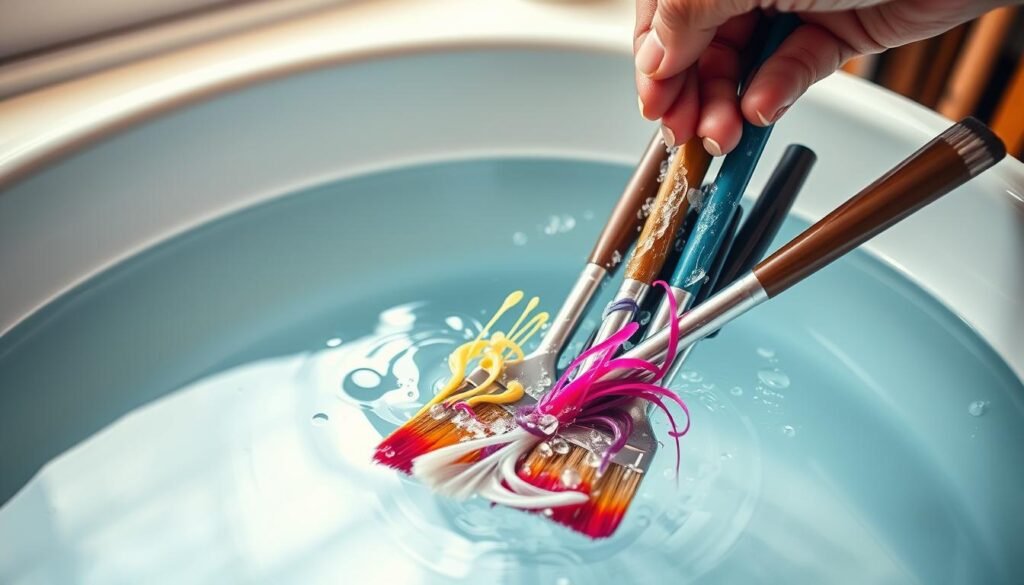
Cleaning your acrylic brushes right can make them last longer and work better. It’s easy to keep them in top shape for your next art project.
Rinsing Off Excess Paint
Start by rinsing off as much paint as you can. Hold the brush under warm water and gently rub the bristles. Keep rinsing until the water looks clear. This stops paint from drying on the brush.
Using a Cleaning Solution
Next, use a cleaning solution to get rid of the paint left behind. You can use a special brush cleaner or soap and water. Rub the solution into the bristles, then rinse well. If there’s still paint, repeat until clean.
“The key to maintaining your brushes is regular cleaning and proper care. A well-maintained brush is a joy to use and will provide you with years of service.”
Final Rinse and Drying
After cleaning, rinse the brushes one last time. Use a towel to shape the bristles back to normal. Lay the brushes flat to dry, away from anything that could harm them.
| Cleaning Step | Purpose | Tips |
|---|---|---|
| Rinsing Off Excess Paint | Remove as much paint as possible | Use warm water and gently massage bristles |
| Using a Cleaning Solution | Break down remaining paint | Use commercial cleaner or soap and water mixture |
| Final Rinse and Drying | Remove soap residue and dry brushes | Shape bristles and lay flat to air dry |
By following these steps, you can keep your acrylic brushes in excellent condition. They’ll stay a valuable tool for your art.
Tips for Different Brush Types

The type of bristles and the shape of your brush are key factors in determining the best cleaning method. Understanding these differences is essential for maintaining the quality of your brushes and ensuring they continue to perform well.
Synthetic vs. Natural Bristles
Acrylic paint brushes can have either synthetic or natural bristles. Synthetic bristles are generally more durable and easier to clean than natural bristles. They can withstand harsher cleaning solutions and are less prone to damage from paint residue. On the other hand, natural bristles are more delicate and may require gentler cleaning products to prevent damage. When cleaning brushes with natural bristles, it’s essential to be gentle to avoid causing them to become brittle or break.how-to-clean-airpods
Flat, Round, and Fan Brushes
Different brush shapes also require specific cleaning techniques. Flat brushes, with their broad surface area, can trap more paint, making them slightly more challenging to clean. Round brushes, being more precise, tend to hold less paint but require careful cleaning around the tip to prevent damage. Fan brushes, used for special effects, have spread-out bristles that can be tricky to clean between. For all these shapes, a gentle cleaning solution and a soft-bristled brush cleaner can be effective. For more information on cleaning techniques, you can refer to guides on cleaning makeup brushes, which share similar principles.
Regardless of the brush type, the key to effective cleaning is to be gentle and thorough. Regular cleaning not only prolongs the life of your brushes but also ensures that they continue to perform optimally.
How to Clean Dried Acrylic Paint from Brushes
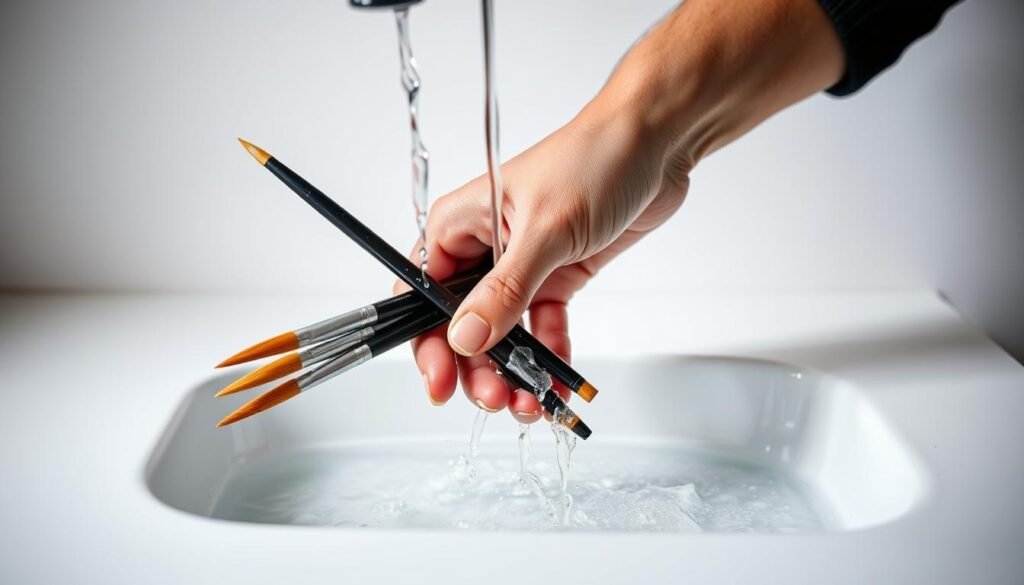
Cleaning dried acrylic paint from brushes can seem hard, but it’s doable with the right steps. With patience and the right methods, you can make your brushes good as new.
Softening Dried Paint
To start, you need to soften the dried paint. Soak the brushes in a solvent or a mix that can break down the paint. A common mix is water and fabric softener or a special brush cleaner.
For tough paint, you might need a stronger solvent like paint thinner or mineral spirits. Always use safety when working with these solvents. Wear gloves and work in a place with good air flow.
Removing Paint with Tools
After softening, start removing the paint. Use a soft-bristled brush or a lint-free cloth to gently scrub. Don’t scrub too hard to avoid damaging the bristles.
For hard spots, use an old toothbrush or a small, soft-bristled brush. This helps loosen the paint.
Use a palette knife or a similar tool to gently scrape paint from the ferrule and the base of the bristles. Be patient and gentle to avoid damage.
Final Cleaning Steps
After removing most of the paint, it’s time for the final cleaning. Rinse the brushes well with warm water to get rid of any paint and solvent left. You might need to rinse several times until the water is clear.
Once clean, reshape the brushes and lay them flat to dry. It’s important to dry them properly to avoid water damage to the ferrule and the glue holding the bristles.
By following these steps, you can clean dried acrylic paint from your brushes. This will help them last longer and stay in good shape for future use.how-to-clean-your-phone-from-virus-for-free
Preventive Measures for Brush Care
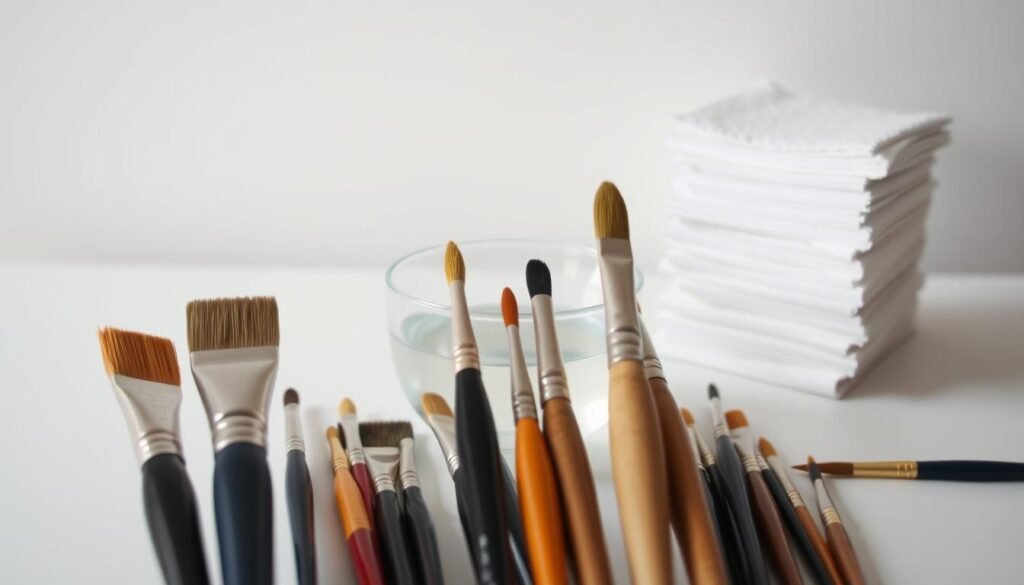
To keep your acrylic paint brushes in top shape, a few simple steps are key. These steps help extend your brushes’ life and keep them working well.
Regular Cleaning Routine
Cleaning your brushes regularly is a must. Clean them right after use to stop paint from drying on the bristles. For more tips on cleaning, check out Purdy’s painting resources.
| Cleaning Frequency | Benefits |
|---|---|
| After each use | Prevents paint from drying on bristles |
| Weekly | Maintains brush flexibility and performance |
Proper Storage Techniques
Storing your brushes right is crucial to avoid damage. Keep them in a dry, cool spot, away from sunlight. Use a brush holder or container to keep them organized and safe.
Avoiding Impurities
Keeping your brushes away from dirt is important. Clean them in a dust-free area. This protects the bristles and keeps your brushes in good shape.
“The way you care for your brushes can make all the difference in their longevity and performance.”
Troubleshooting Common Cleaning Issues
Artists often face problems when cleaning their acrylic brushes. Knowing how to fix these issues can make a big difference. Problems like stubborn paint residue, brush shedding, and frayed bristles can happen. It’s important to know how to solve these problems to keep your brushes in good shape.
Stubborn Paint Residue
Stubborn paint residue is a common problem when cleaning acrylic brushes. To solve this, try using a gentle solvent or a specialized cleaning solution for acrylic paint. Here’s a simple method:
- Soak the brush in the solution for a few minutes to loosen the paint.
- Gently massage the bristles with your fingers or a soft-bristled brush to remove the paint.
- Rinse the brush thoroughly with warm water to remove any remaining paint and solution.
Brush Shedding
Brush shedding can be frustrating. But it’s often a simple issue to fix. To reduce shedding:
- Make sure you’re using the right cleaning technique and solution.
- Avoid using too much force when cleaning or shaping your brushes.
- Store your brushes properly to prevent damage to the bristles.
Frayed Bristles
Frayed bristles can affect how well your brushes work. To fix this:
- Trim the frayed ends carefully with scissors to maintain the brush’s shape.
- Use a brush conditioner or a small amount of oil to help restore the bristles’ flexibility.
- Consider reshaping the brush to its original form if the fraying is severe.
By troubleshooting these common issues, you can keep your acrylic brushes in good condition. Regular maintenance and the right techniques are key to extending the life of your brushes.
Eco-friendly Cleaning Methods
As an artist, I’ve learned how key eco-friendly cleaning is for my acrylic paint brushes. The art world is moving towards sustainable practices. Cleaning our brushes is a big part of this.
Using eco-friendly cleaning methods helps us reduce our impact on the environment. It also makes our brushes last longer. We can use simple items from home as cleaning agents.how-to-clean-garbage-disposal
Using Household Items
Household items like mild soap, vinegar, and olive oil are great for cleaning brushes. They’re gentle on both the brushes and the planet.
- Mild soap: It removes paint without harming the bristles.
- Vinegar: It’s a natural solvent that breaks down dried paint.
- Olive oil: It keeps the bristles soft and supple.
Environmentally Safe Cleaners
If you prefer specific products, there are environmentally safe cleaners for acrylic brushes. These are biodegradable and safe for use.
When picking a cleaner, check for EcoLogo or Green Seal. These show the product meets environmental standards.
Benefits of Green Cleaning
Green cleaning has many benefits. It’s not just good for the planet. It also makes our workspace healthier by avoiding harsh chemicals.
By choosing eco-friendly cleaning, artists can keep their brushes in top shape. They also support sustainability in their work.
When to Replace Your Acrylic Brushes
Knowing when to replace your acrylic brushes is key to better art. Good tools mean good art. As an artist, you know this well.
Signs of Wear and Tear
Acrylic brushes have a limited life. Look out for these signs to know when to replace them:
- Frayed or split bristles that can’t hold a sharp point or edge.
- Bristles that are matted or stuck, making it hard to get smooth paint.
- Bristles that have lost their spring, making strokes hard to control.
- Wear on the ferrule (the metal band) like rust or bending, which weakens the brush.
Artist and instructor,
“The condition of your brushes can make or break the quality of your artwork. Knowing when to replace them is crucial.”
Evaluating Brush Performance
Check your brushes often to see if they need replacing. Look at these factors:
| Performance Aspect | Indicators for Replacement |
|---|---|
| Paint Application | If the brush leaves streaks, applies paint unevenly, or fails to cover the surface adequately. |
| Bristle Condition | When bristles are excessively worn, frayed, or lose their shape. |
| Brush Shape Retention | If the brush no longer returns to its original shape after use. |
By checking your brushes often and knowing these signs, you’ll always have the best tools for your art.
Creative Ways to Upcycle Old Brushes
Don’t throw away your old brushes. Instead, find creative ways to give them a new life. Upcycling old brushes is good for the planet and sparks your creativity.
Art Projects
Old brushes are perfect for art projects. They’re great for mixed media art, combining paint, paper, and more. They also work well for texture art, adding a touchable feel to your art.
- Create collages using old brushes to apply glue or other adhesives.
- Use them in printmaking to apply ink or paint to surfaces.
- Experiment with brush pen techniques for calligraphy and lettering art.
Home Décor Ideas
Upcycled brushes can also brighten up your home. You can turn them into rustic candle holders or unique plant markers. They bring a creative touch to your space while being eco-friendly.
- Glue old brushes around a vase or jar to create a decorative container.
- Use them as part of a wind chime or mobile.
- Incorporate them into a shadow box or other wall art.
Upcycling your old brushes gives them a second chance. It also helps the environment. So, before you toss that old brush, think about all the creative things you can make with it.
Conclusion: Keep Your Brushes in Top Shape
Keeping your acrylic paint brushes in good shape is key to great art. Follow the tips in this article to make your brushes last longer and work better.
Key Takeaways
It’s important to take care of your brushes every day. Rinse them right after use, choose the right cleaning solutions, and store them correctly. These steps help keep paint off your brushes and prevent damage.
Make Brush Care a Habit
Make caring for your brushes a part of your art routine. This way, your brushes will last longer and work better. With regular care, you can focus on your art without worrying about your tools.