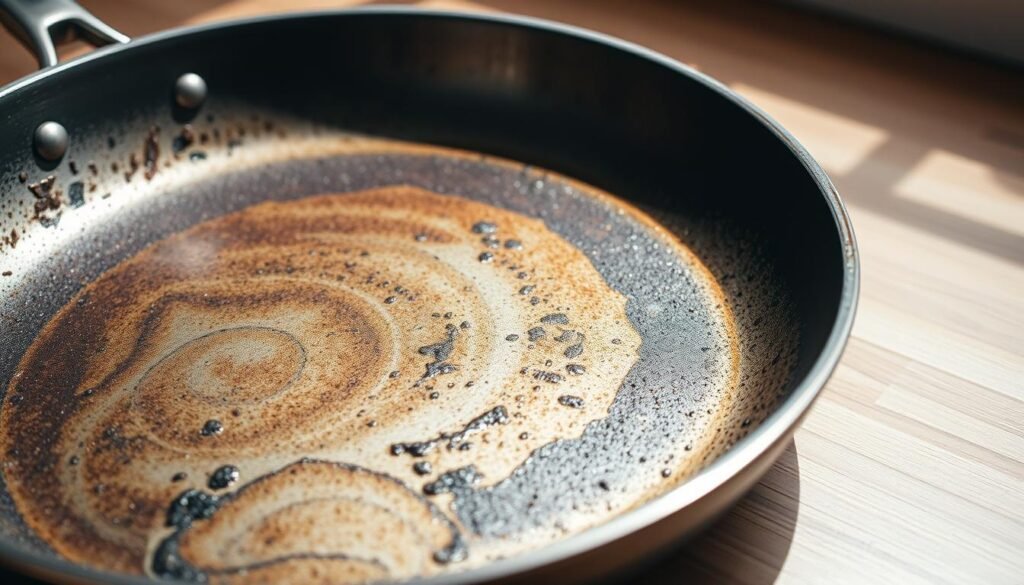
Surprising fact: I found that many home cooks toss or hide cookware after one bad scorch, yet a single routine can restore a workhorse in under an hour.
I get it — the worst scorch looks hopeless. I’ve learned a simple sequence that loosens stuck food, lifts dark stains, and brings back a bright finish without fancy tools.
My approach blends familiar methods: deglazing, gentle boiling with baking soda, an overnight paste, safe vinegar reactions off heat, and, when needed, Bar Keepers Friend for a like-new shine. I pick each step to protect the metal surface and avoid damage.
Expect some elbow grease sometimes, but also fewer ruined pieces and a smarter routine for the kitchen. My goal is one: remove the worst of the mess, then refine, so your cookware looks and cooks well again.
Key Takeaways
- I explain a clear, repeatable way you can use at home.
- Baking soda plus acid helps loosen tough food safely.
- Deglazing and boiling are my first steps for stuck debris.
- Bar Keepers Friend restores shine but needs careful use.
- Patience pays off: results are a clean, safe pan and less waste.
Before I start: quick safety and surface check
Before any liquids hit the pan, I always pause and check the surface and safety setup. This saves time and keeps my kitchen safe.
Cooling the cookware and protecting my hands
I let the cookware reach a safe handling temperature. Then I use a thick towel or oven mitts to avoid accidental burns from lingering heat.
I scrape loose food gently with a wooden spatula before introducing water. That step reduces the mess and stops debris from grinding into the metal surface.
Identifying stainless steel versus other metals
I confirm I’m working with stainless steel and not non-stick, ceramic, or cast iron. Non-stick surfaces need non-scratch tools and gentler methods.
- I avoid vinegar or soap on cast iron and plan a baking soda paste plus re-seasoning instead.
- I check for warping, big scratches, or loose rivets and adjust pressure and tools accordingly.
- I clear the surrounding kitchen area and set out non-scratch pads and a nylon brush for stainless jobs.
| Issue | Check | Action |
|---|---|---|
| Lingering heat | Touch handle carefully | Cool, then use mitts |
| Loose food | Visible debris | Scrape with wooden spatula |
| Surface type | Magnet test or coating look | Choose non-scratch tools or baking soda paste |
| Damage risk | Warping or deep scratches | Lower pressure, avoid metal scrubbing |
What I gather first: supplies, tools, and what to avoid
Before I start, I lay out every supply so I won’t hunt for items mid-job. That quick prep keeps the process calm and efficient. I group essentials, optional boosters, and one small pile of things I never use so the surface stays safe.how-to-clean-hair-brushes
Essentials I always set out
I place baking soda, warm water, and white vinegar within reach. These three handle most stuck-on messes without harsh products.
I also keep a non-scratch scouring pad and a soft nylon brush near the sink for gentle scrubbing. A towel for quick drying sits beside them.
Optional boosters I bring when needed
When the residue resists, I add hydrogen peroxide for a stronger paste and Bar Keepers Friend for a fast shine. I also have a lemon and crumpled aluminum foil for stubborn spots on the pan.
What I skip to protect the surface
I avoid aggressive metal pads and prolonged abrasive contact. That prevents scratches on stainless steel and keeps cookware usable longer.
- Tip: Set a timer for a minute when using Bar Keepers Friend so you wipe it off promptly.
- Measure water for pastes so I swap from soaking to scrubbing after a few minutes.
- I accept a bit of elbow grease, but I rely on baking soda chemistry more than brute force.
| Supply | Purpose | Notes |
|---|---|---|
| baking soda | Lift stains, make paste | Use with warm water or peroxide |
| pad / brush | Gentle scrubbing | Choose non-scratch options |
| Bar Keepers Friend | Restore shine | Wipe within minutes; do not heat |
How to clean burnt stainless steel pan
Start by loosening large bits with a wooden spatula; that small move saves time later.
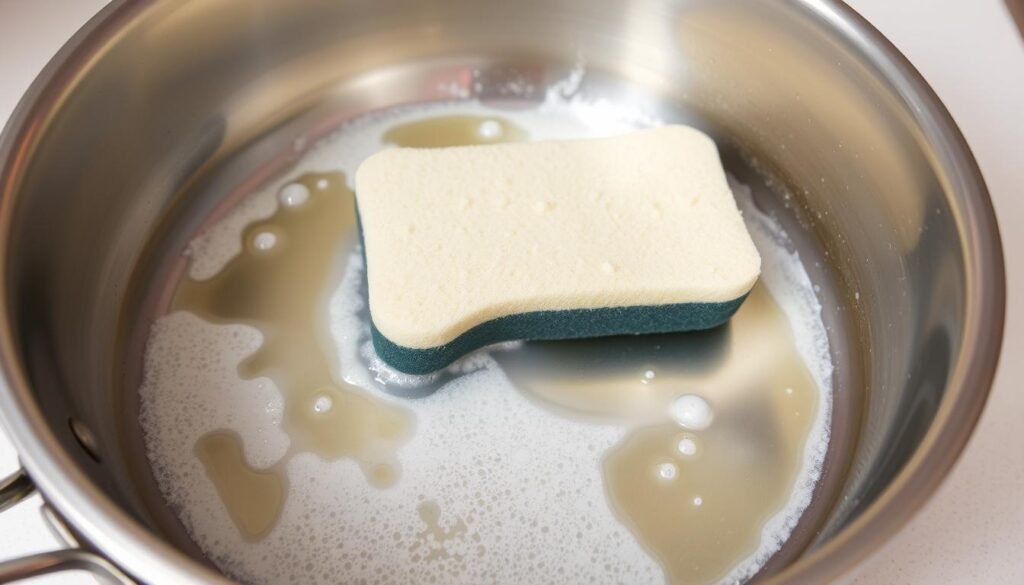
I place the pan back on low heat and deglaze with a splash of water or a 50/50 water and white vinegar mixture. Let it simmer for a couple minutes so stuck food softens, then pour off the liquid and leave the bottom damp.how-to-clean-retainers
Next I sprinkle baking soda across the surface to form a light paste. With a wet scouring pad or nylon brush I scrub in small circles, adding a touch of warm water as needed to lift stains without scratching the metal.
For heavy grease or very stubborn residue I boil water with a few tablespoons of baking soda for about 10–15 minutes. After a short cool-down I scrub again; the boiling lifts debris up the sides and makes scrubbing faster.
When rivets and corners hold grime, I refresh the paste and work gently with the brush. I rinse thoroughly, then dry and buff. That final step prevents water spots and keeps the finish bright.
Tip: For more on long-term care, see my trusted cleaning and caring guide.
My proven cleaning methods for burnt-on residue
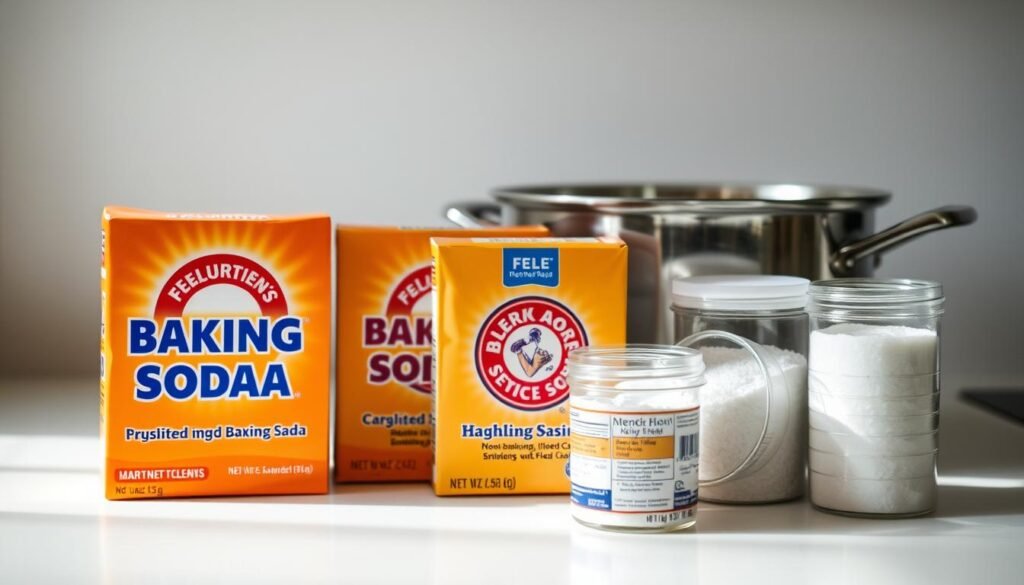
When residue refuses to budge, I rely on a sequence of heat and gentle chemistry that wins most fights.
I begin with deglazing: heat the pan until a drop of water sizzles, then add 1 cup water or a 50/50 water‑vinegar mixture and simmer briefly. I scrape as it softens, pour off the liquid, then sprinkle baking soda and scrub with a wet nylon brush or pad.how-to-clean-microwave
For stains that climb the sides, I boil several tablespoons of baking soda in water for 10–15 minutes. I cool slightly, then scrub while the surface is warm; the boil lifts film higher on the walls for easier removal.
When spots stay stubborn, I make a thick paste (3 parts baking soda to 1 part water), spread it on, and let it rest a few hours or overnight before scrubbing again.
For heavy-duty messes I heat a shallow layer of vinegar off the flame, add about 1 cup baking soda so it fizzes, discard the fizzed liquid, and scrub. For extra power, I use a hydrogen peroxide plus baking soda paste for a few minutes, then rinse.
On tough patches I crumple aluminum foil and lightly scour after a boil step. When I want a faster bright finish, I reach for Bar Keepers Friend on a cool surface, scrub briefly, and wipe it off within about a minute for safety. I let heat and chemistry do most of the work and save elbow grease for final polishing.
Fixing heat tint and discoloration on stainless steel

Minor yellowing or rainbow rings often come from high heat or mineral buildup. I treat these marks gently so the finish stays intact.how-to-clean-an-oven
Start with a soak: I use a 50/50 mixture of white vinegar and water and let the pan sit for a short soak. That breaks down mineral-related stains and makes any stubborn film easier to lift.
Vinegar soaks and a gentle baking soda paste
After the soak I rinse and make a light paste with baking soda and a little water. With a soft pad I work in light, even strokes.
Patience wins: I repeat a brief paste application if faint casts remain instead of scrubbing harder.
Buffing, drying, and restoring shine
I rinse thoroughly so no residue dries into new marks. Then I dry and buff immediately to prevent water spots and restore shine.
If I want extra brilliance, I use Bar Keepers Friend briefly on a cool surface and wipe it off within a minute. I avoid harsh pads here; my goal is refinement, not material loss.
| Issue | Action | Why it works |
|---|---|---|
| Rainbow or yellow tint | Soak 50/50 vinegar and water | Breaks down mineral films and light heat tint |
| Stubborn discoloration | Apply baking soda paste; scrub gently | Neutral abrasive lifts marks without etching |
| Dried residue or spots | Rinse thoroughly; dry and buff | Prevents water spots and restores shine |
Tactics for different messes: burnt food vs. cooked-on oil and grease

Different stains ask for different tactics, and I match my steps to the mess. In my kitchen I separate stuck food from oxidized oil, then follow a focused routine for each case.how-to-clean-pizza-stone
Scraping and soaking strategy for heavy burnt food
I start with a spatula and remove thick debris. That limits the work before any liquid hits the surface.
Next I simmer water or a 50/50 water and vinegar mix for a few minutes to loosen remaining bits. Pour off the liquid and leave the bottom damp.
Then I sprinkle baking soda and use a nylon brush or a non-scratch scour sponge for gentle scrubbing. I focus on corners and rivets and keep pressure steady. If a patch needs more time, I apply a quick paste and let it sit briefly before resuming.
Breaking down oxidized oil with vinegar first, then a baking soda scrub
For cooked-on oil and grease, I run a short vinegar pass first. The acid cuts the film and makes lift easier.
- I switch to a baking soda scrub after the vinegar step. This neutralizes residues and lifts stains without over‑relying on soap.
- On larger pans or a skillet, I work in sections so the paste stays active and the surface stays wet.
- If a pan is cast iron, I skip vinegar and soap: I use a baking soda paste only, then re‑season the skillet.
- When spots resist, I repeat short simmers and scrubs rather than escalating pressure that could harm stainless steel or steel edges.
Care and maintenance to keep my stainless steel pans shining
A little routine every few weeks keeps my cookware bright and worry-free. I follow a few short habits that cut down on tough marks and save time later.how-to-clean-rust-off-stainless-steel
Heat management and preheating
I keep burners at low to medium and give the pan proper preheating time. That simple step helps food release and reduces discoloration from excessive heat.
Light seasoning with oil
When sticking appears, I heat a thin film of oil on low for a minute after cleaning. This light seasoning helps future cooking and limits long scrubbing sessions.
Right utensils and avoiding abrasives
I reach for wooden or silicone tools and avoid metal edges on delicate surfaces. That cuts down scratches and preserves the metal finish for longer.
Rinse, dry, and smart storage
I wash pots and pans soon after use, rinse with clean water, and dry immediately. Quick drying prevents water spots and mineral stains.
Between pieces I add soft separators or towels when stacking. This prevents rub marks on the surface and on steel rims.how-to-clean-sex-toys
Small touch-ups: I keep baking soda handy for light maintenance. A quick rub removes odors and minor spots so I avoid big cleaning sessions later.
| Task | Why it helps | Frequency |
|---|---|---|
| Low–medium heat & preheat | Prevents heat tint and aids release | Every cook session |
| Light oil seasoning | Reduces sticking and scrubbing time | Weekly or as needed |
| Wood/silicone utensils | Protects surface from metal marks | Always |
| Rinse and dry immediately | Prevents water stains and spots | After each use |
When not to use these methods: non-stick and cast iron notes
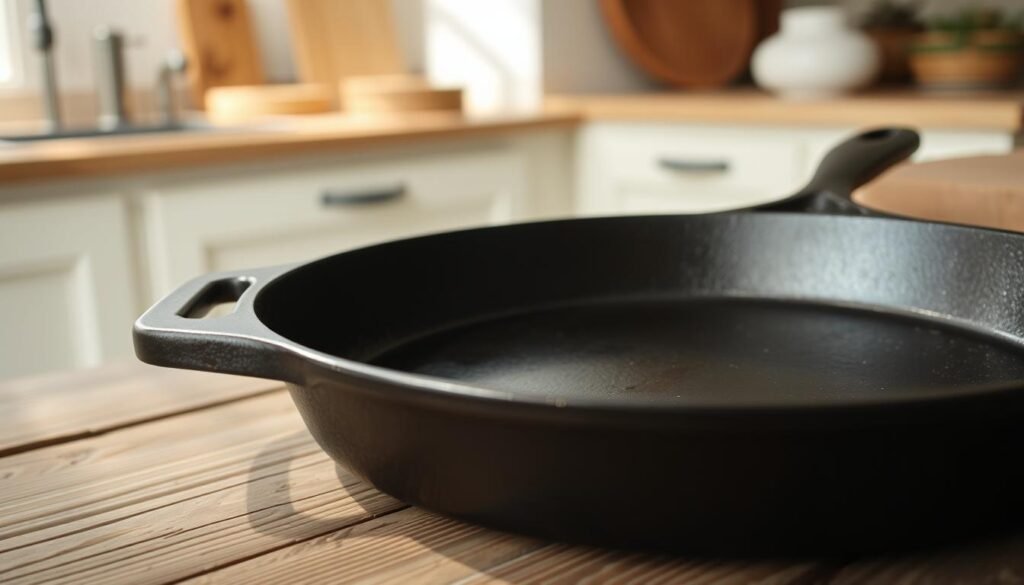
Some cookware needs a gentler touch. I switch my steps when a skillet has a coating or when I’m working with bare iron. That protects finishes and seasoning while still lifting residue.
Non-stick and ceramic care
I make a mild paste with baking soda and warm water and spread it on the surface. I let it rest for several hours or overnight so the paste softens baked-on film.how-to-clean-shower-drain
After resting, I use a non-scratch pad or a nylon brush and scrub lightly. If I need a quicker option, I bring 1/2 cup water and 4 tablespoons baking soda to a brief boil, cool, then scrub for minutes.
Cast iron and seasoning notes
I never use vinegar or soap on iron. Instead I apply a moist baking soda paste and scrub with a stiff brush, rinse briefly, and dry thoroughly.
Then I re-season: wipe a thin coat of oil inside, heat on the stovetop or in the oven until it smokes lightly, and let it cool. That restores protection and keeps my skillet ready for the next cook.
- I limit contact time and pressure and test an inconspicuous spot if unsure.
- For more general tips, see my cleaning and caring guide.
Conclusion
,
You don’t need fancy gear; a reliable routine and common products will restore many pieces in my home kitchen. I use heat and water first, then baking soda paste (roughly 3:1) and short rests for lift.
When a mark resists, I boil water with baking soda for 10–15 minutes, try a cooled vinegar fizz off the flame, or use a peroxide paste for stubborn spots. For quick shine I reach for BKF briefly on a cool surface and follow brand tips from ARM & HAMMER, Dalstrong, and Wirecutter.
Finish: rinse well, dry thoroughly, and buff. A light seasoning can cut future sticking and save time.