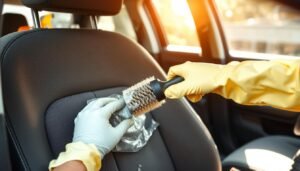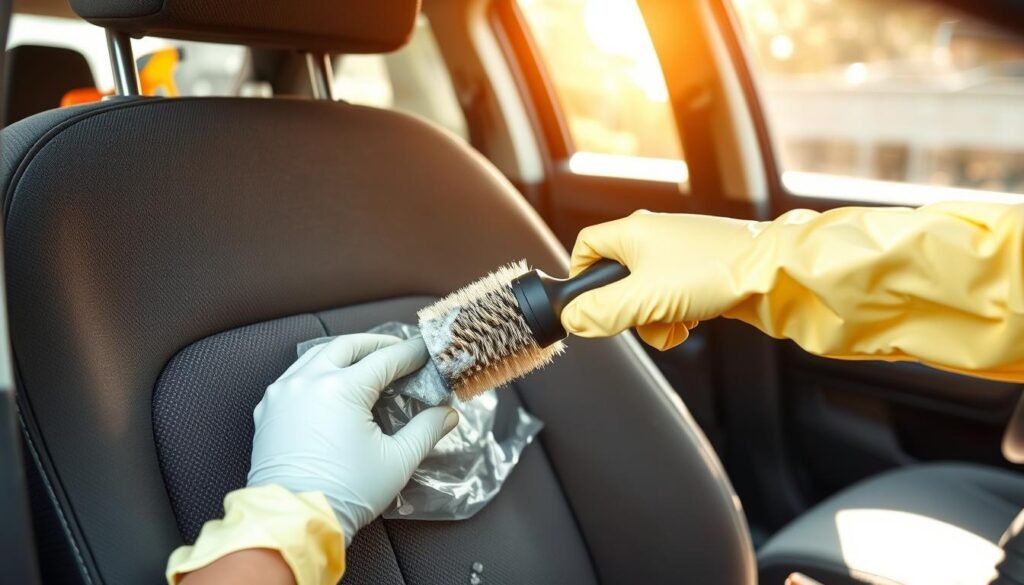
Keeping your car’s interior clean is key, and cleaning your car seats is a big part of it. Over time, car seats can get dirty, dusty, and stained. This makes them look old. If you’re wondering how to clean fabric car seats well, you need to know the right methods.
In this article, I’ll show you how to clean and keep your car seats looking new. Whether you have fabric or leather seats, I’ve got tips and advice for you.
Key Takeaways
- Regular vacuuming is essential to prevent dirt buildup.
- Different cleaning solutions are required for fabric and leather seats.
- Testing a cleaning solution in an inconspicuous area is crucial.
- Using a fabric protector spray can help prevent future stains.
- Drying your car seats properly after cleaning is vital to prevent damage.
Understanding Different Car Seat Materials
Car seats are made from various materials, each needing its own cleaning method. Knowing what your car seats are made of is key to keeping them in top shape.
Types of Car Seat Fabrics
Car seat fabrics range from tough synthetic materials to softer cloth. Synthetic fabrics are durable and easy to clean. On the other hand, cloth seats need more gentle care. Here are some common fabrics:
- Polyester blends
- Nylon
- Vinyl
- Alcantara
Each material has its own cleaning rules. For example, vinyl seats can be cleaned with mild soap and water. But Alcantara needs a gentler touch.
Care Requirements for Leather Seats
Leather seats offer luxury and durability but need special care. Regular conditioning helps prevent cracking and drying. Here are some tips for leather seats:
- Use a leather cleaner that is pH-balanced.
- Avoid harsh chemicals or abrasive materials.
- Condition the leather often to keep it soft.
By following these steps, you can make your leather seats last longer and look great.
Tips for Cleaning Cloth Seats
Cloth seats need a different cleaning method than leather or vinyl. Gentle cleaning products and soft brushes are best to avoid damage. Here are some cleaning tips for cloth seats:
- Vacuum the seats well before cleaning.
- Use a mild detergent mixed with water for stains.
- Don’t rub too hard, as it can harm the fabric.
Knowing your car seats’ material helps you pick the right cleaning products and methods. This way, they stay in good condition for a long time.
Essential Tools for Cleaning Car Seats
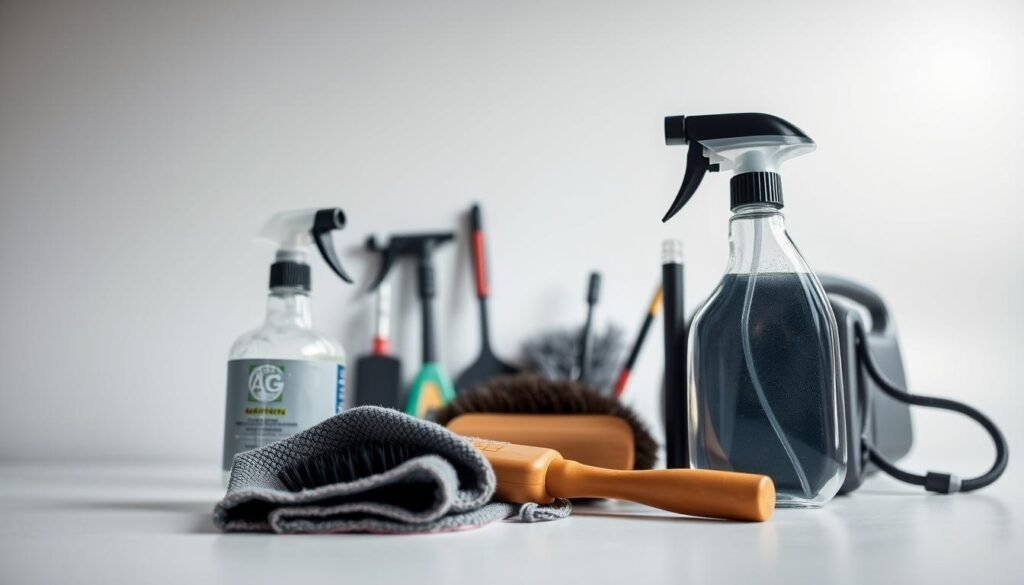
To clean your car seats right, you need the right tools. The right tools make the job easier and keep your seats in top shape. Here’s what you need to keep your car seats clean and looking great.
Vacuum Cleaners and Brushes
A vacuum is essential for getting rid of dirt, dust, and debris from your car seats. Use a handheld vacuum with a brush tool to gently clean the crevices and upholstery. The brush tool is great for sweeping away dirt and dust from fabric or leather surfaces.how-to-clean-a-wool-rug
Choose a vacuum with a gentle suction setting to avoid damaging your seats. Also, look for one with a HEPA filter to trap allergens and dust particles. This ensures a cleaner, healthier environment in your car.
Cleaning Solutions and Upholstery Cleaners
Choosing the right cleaning solution is key for cleaning your car’s upholstery safely. For fabric seats, use a mild detergent or upholstery cleaner. For leather seats, a leather cleaner or mild soap solution is better. Always test a small area first to make sure the solution won’t damage the material.
Look for cleaning solutions made for automotive interiors. These are safe for various materials like fabric, leather, and vinyl. Avoid harsh chemicals or household cleaners, as they can harm the upholstery or cause discoloration.
| Seat Material | Recommended Cleaner |
|---|---|
| Fabric | Mild detergent or upholstery cleaner |
| Leather | Leather cleaner or mild soap solution |
Microfiber Cloths and Sponges
Microfiber cloths are great for cleaning car seats because they’re soft and absorb spills and dirt without scratching. For tough stains, use a damp microfiber cloth with a cleaning solution. For leather seats, a soft, dry microfiber cloth is best for wiping down surfaces and removing dust.
Sponges can also be useful, but be careful not to scrub too hard. This can damage the upholstery. Always use a clean, damp sponge and avoid using too much water to prevent soaking the seats.
“Using the right tools and techniques is key to maintaining the quality and longevity of your car seats.”
With the right tools, including vacuum cleaners, cleaning solutions, and microfiber cloths, you’ll be ready to keep your car seats clean and in excellent condition.how-to-clean-couch
Preparing Your Car for Cleaning

Before you start cleaning, make sure your car is ready. This step helps you clean your car seats well and safely.
Remove Items from the Seats
Start by taking everything off the seats. This includes your stuff, trash, and any seat accessories.
- Take out any personal items such as phones, wallets, and bags.
- Remove trash and recyclables from the car.
- Take off any seat covers or accessories that might interfere with the cleaning process.
Vacuuming and Initial Dusting
After clearing the seats, vacuum and dust the car’s interior. This step removes loose dirt and debris that could harm the seats.
Use a vacuum cleaner with a gentle suction setting to avoid damaging the seats.
Protecting Sensitive Areas
After vacuuming, protect your car’s sensitive areas from damage during cleaning.
- Cover the dashboard and other electronic components with a cloth or plastic sheet to prevent water damage.
- Use tape to secure any loose wires or cables.
- Remove or cover any sensitive surfaces that could be affected by cleaning products.
By following these steps, you can get your car ready for cleaning. This makes the cleaning process more efficient and effective.how-to-clean-cloth-seats-in-the-car
Spot Cleaning Stains
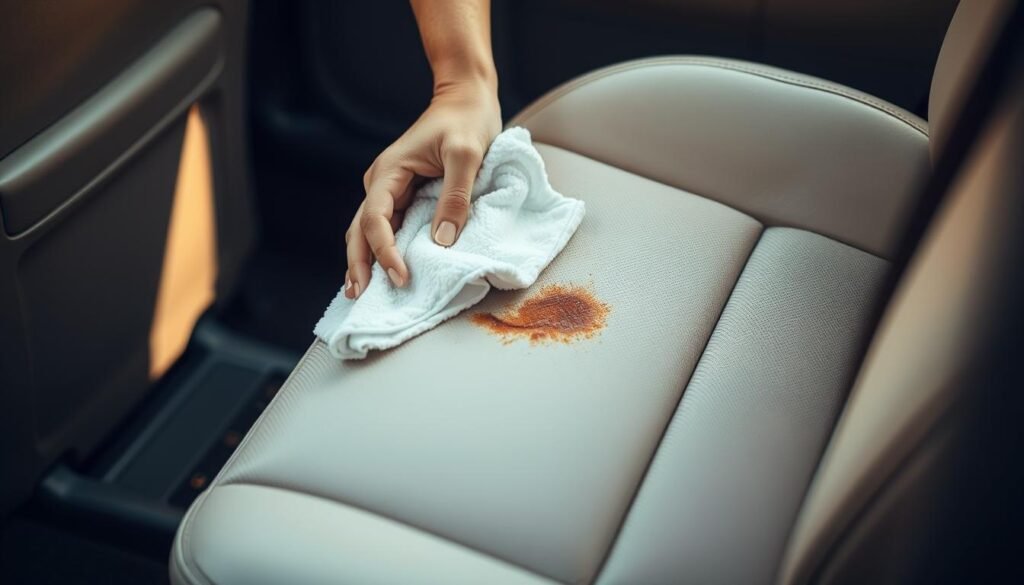
Removing stains from your car’s upholstery needs the right methods and products. Whether it’s a tough food stain or an unexpected spill, knowing how to clean it well is key. This helps keep your car’s interior looking great.
Common Stains and Their Solutions
Each stain type needs a specific cleaning method. For example, coffee and ink stains need a gentle cleaner to avoid fabric damage. On the other hand, grease and oil-based stains might need a stronger cleaner. Knowing the stain type is essential for choosing the right cleaner.
Household items can also help with stain removal. A mix of baking soda and water can remove tough stains. Experts say, “a simple paste made from baking soda and water can lift many types of stains”.
Techniques for Effective Spot Cleaning
Spot cleaning is more than just using a cleaner. It’s about gentle application and proper blotting. Begin by applying the cleaner to the stain, starting from the outside. Don’t rub, as it can harm the fabric or push the stain deeper. Instead, blot the stain with a clean cloth or paper towel.
- Always test a small, hidden area first to check if the cleaner won’t harm the seat material.
- Use a clean cloth or sponge to apply the cleaning solution.
- Blot the stain gently; avoid rubbing.
When to Seek Professional Help
While many stains can be tackled at home, some need a pro’s touch. If a stain is hard to remove or you’re unsure about how to clean it, get professional help. Experts have the tools and knowledge to safely remove tough stains without harming your car’s upholstery.
“For the most stubborn stains, or for those who are unsure about the best cleaning methods, seeking professional help is the best course of action to avoid damaging your car’s interior.”
Deep Cleaning Your Car Seats
Regular deep cleaning of car seats makes your car look and feel better. Dirt, dust, and stains build up over time. This cleaning restores the seats’ original look and feel, making your car more comfortable.
Step-by-Step Deep Cleaning Process
To deep clean your car seats effectively, follow these steps:
- Pre-treat Stains: Before cleaning, treat any stains with a stain remover.
- Apply Cleaning Solution: Use a cleaning solution for your seat material. For fabric, a mild detergent works well.
- Gently Scrub: Use a soft-bristled brush or cloth to scrub the seats gently.
- Rinse and Wipe: Rinse your cloth often if using water. For dry methods, just wipe with a clean cloth.
Drying Techniques for Car Seats
After cleaning, drying your car seats is key to avoid mold and mildew. Here are some drying techniques:
- Air Drying: Open doors or windows for air drying. It’s best for fabric seats.
- Microfiber Towels: Use towels to pat the seats dry and remove excess moisture.
How Often Should You Deep Clean?
How often you deep clean depends on usage and dirt exposure. Here’s a general guideline:
| Usage | Recommended Deep Cleaning Frequency |
|---|---|
| Daily Use | Every 3-6 months |
| Occasional Use | Every 6-12 months |
| Heavy Stains or Odors | As needed, potentially more frequently |
By following these guidelines and techniques, you can keep your car seats clean, hygienic, and in great condition.how-to-clear-system-data-on-iphone
Maintaining Fabric Car Seats
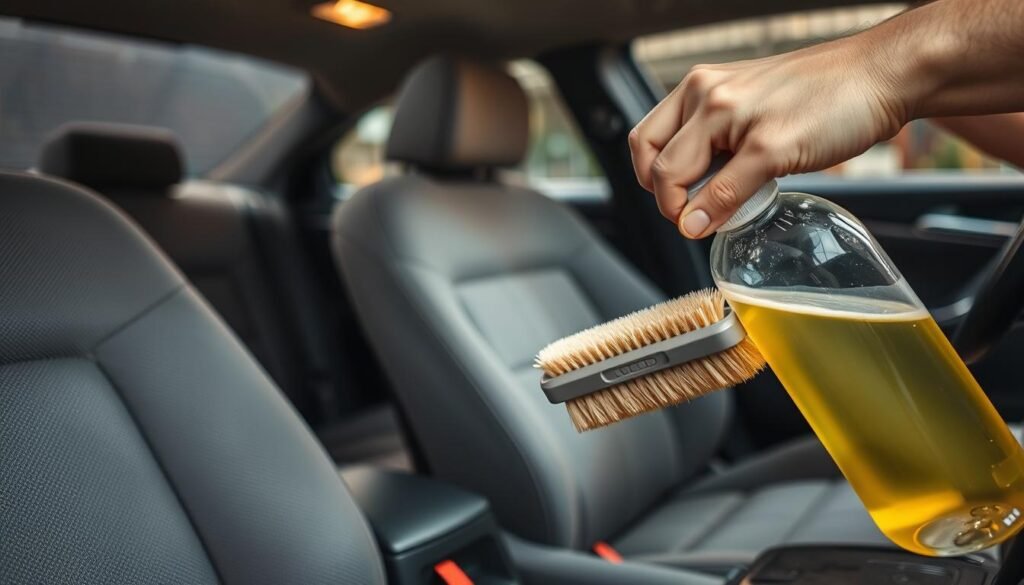
To keep your fabric car seats looking great, regular care is key. Dirt, dust, and stains can build up over time. If not cleaned, they can damage the seats.
Daily Maintenance Tips
Keeping your car seats clean is the best way to fight off dirt and stains. Here are some easy tips:
- Vacuum your car seats often to get rid of loose dirt and debris.
- Use a soft-bristled brush to gently clean dirt from the fabric’s crevices.
- For spills, quickly blot the area with a clean, dry cloth. Don’t rub, as it can push the stain deeper.
For more detailed cleaning tips, check out Audijacksonville’s guide on cleaning car seats.
Long-term Preservation Strategies
Keeping your fabric car seats in top shape takes more than daily cleaning. Here are some strategies for long-term care:
- Use a fabric protector to repel stains and make cleaning easier.
- Avoid eating or drinking in your car to prevent spills and stains.
- Deep clean your car seats regularly to remove embedded dirt and stains.
Tom Smith, a car care expert, said, “Regular maintenance is key to extending the life of your car’s interior.” This is very true for fabric car seats, which can wear out if not cared for.
Dealing with Odors
Odors in your car can be a problem. Here are some tips to handle them:
- Use a fabric refresher or odor eliminator made for cars.
- Leave your car windows open to let in fresh air and help get rid of odors.
- Consider using a car air purifier to keep the air inside your car fresh.
By following these tips for daily care, long-term preservation, and odor control, you can keep your fabric car seats looking and feeling great for years.
Caring for Leather Car Seats
To keep your leather car seats looking great, you need to know how to clean and maintain them. Leather needs special care to stay in good shape. Regular upkeep not only makes your car look better but also saves you money in the long run.how-to-clean-frigidaire-ice-maker
Cleaning Solutions for Leather
Choosing the right cleaner for leather car seats is crucial. Harsh chemicals can harm the leather, making it dry or crack. Use a mild leather cleaner made for car seats instead. For more tips on cleaning and protecting leather, check out this guide.
- Always read the label to ensure the product is suitable for your car’s leather type.
- Test the cleaner on a small, inconspicuous area first to check for any adverse reactions.
- Apply the cleaner to a microfiber cloth and gently rub it into the leather in a circular motion.
Conditioning and Protecting Leather
After cleaning, conditioning your leather car seats is a must. It keeps the leather soft and prevents it from drying out. Condition your seats every few months, or as needed, for the best results.
To protect your leather seats from damage, use a leather protectant. It acts as a shield against spills and stains. Regular conditioning and protection will make your leather last longer.
Avoiding Common Leather Damage
To keep your leather car seats in top shape, avoid common mistakes. Direct sunlight can cause fading and cracking, so use sunshades or window visors. Also, don’t use household cleaners, as they can be too harsh.
By following these care tips, you can enjoy your leather car seats for many years. Proper care and maintenance are essential to keep your car’s interior looking luxurious.
Protecting Your Car Seats
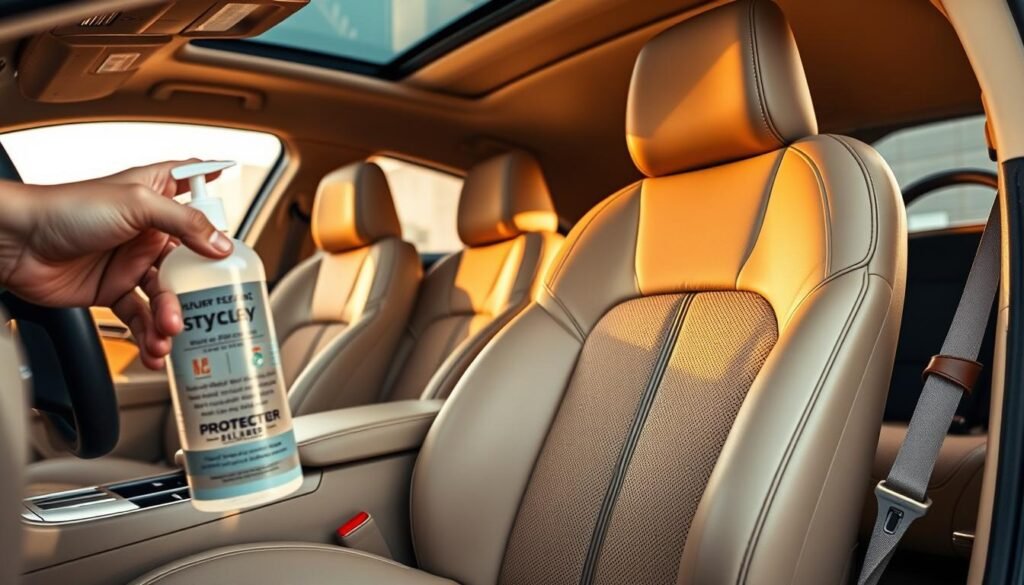
Keeping your car seats in good shape is key. Whether they’re leather, fabric, or a mix, the right protection makes a big difference. It helps them last longer and look better.
Seat Covers vs. No Covers
Choosing between seat covers and no covers is a big debate. Seat covers add a layer of protection against spills and stains. They also help prevent fading from sunlight. But, some worry they might change your car’s look or feel uncomfortable.
Yet, there are many seat covers out there. You can find ones that match your car’s style and your taste. This makes them a good choice, even for those with kids or pets.
Car care experts say seat covers are a smart move. They help keep your car’s interior looking great. Learn more about protecting your leather car.
Benefits of Using Full-Size Covers
Full-size seat covers give your seats full protection. They cover the whole seat, keeping it clean from dirt and dust. They help keep your seats looking new for longer.
These covers are also easy to put on and take off. They come in many materials, like waterproof ones. This is great for families or people who are always on the go.
How to Properly Install Seat Covers
Putting on seat covers right is important. It ensures they protect and comfort you. Here’s how to do it:
- First, remove any old covers or accessories from your seats.
- Then, read the instructions for your new covers carefully.
- Place the cover on the seat, making sure it fits right.
- Use the straps, hooks, or other fasteners to secure it.
- Adjust the cover to fit snugly and comfortably.
By following these steps, you’ll enjoy the benefits of your new covers. They’ll protect your seats and make your car’s interior look fresh.
Eco-Friendly Cleaning Options
Cleaning your car’s interior doesn’t harm the environment. Eco-friendly cleaning options are now available. This is good for the planet and your health.
Natural Cleaning Solutions
Natural cleaning solutions are better than harsh chemicals. They use plant-based surfactants and essential oils. Look for Safer Choice or Biodegradable Products Institute (BPI) to find green products.
DIY Recipes for Car Seat Cleaners
DIY recipes are a fun way to clean car seats. A mix of baking soda and water can remove stains. Use white vinegar and water in a spray bottle for sanitizing.
Always test a small area first. This ensures the solution won’t damage the seat.
Benefits of Going Green
Choosing eco-friendly cleaning for your car seats has many benefits. It reduces your environmental impact and makes your car healthier. Eco-friendly products are gentler and may last longer.
By using eco-friendly cleaning, you help the planet. And you keep your car clean and healthy.
Frequently Asked Questions About Car Seats
As we’ve looked into car seat care, you might have questions. Here, I’ll answer some common ones about cleaning and maintaining car seats.
Cleaning Frequency
Clean your car seats often, every 1-3 months, based on how much you use them. For Evenflo car seats, you can wash the covers, inserts, and harness covers in cold water. Use mild detergent on a delicate cycle.
Best Cleaning Products
Choosing the right cleaning products is key for car seats. For cloth seats, mild detergent and cold water work well. For more tips on cleaning Evenflo car seats, check out the Evenflo blog.
Using Household Cleaners
Don’t use strong household cleaners on your car seats. They can harm the materials. Go for gentle cleaners made for car seats instead.