Cast iron cookware has been a staple in many kitchens for centuries. Over 70% of professional chefs prefer it for its durability and heat retention. I’ve learned that properly cleaning cast iron is key for its longevity and performance.
Cleaning cast iron isn’t just about removing food residue. It’s also about keeping the seasoning that prevents rust and ensures non-stick performance. For more detailed guidance, you can refer to resources like Allrecipes, which provides comprehensive tips on maintaining your cast iron pans.
Key Takeaways
- Avoid using a dishwasher to clean cast iron pans.
- Use mild dish soap and a scouring pad or cast iron pan cleaning brush.
- Dry the pan on the stove to ensure all water is gone before seasoning.
- For tough residue, try scraping with boiling water.
- Never soak cast iron pans in water to soften crusted-on food.
Understanding the Importance of Cleaning Cast Iron
Cleaning cast iron is crucial for its performance and longevity. Regular cleaning stops residue buildup, which can cause rust and reduce non-stick properties.
Keeping cast iron cookware in good shape is not just about looks. It’s about keeping it working well. Cleaning it means I’m also protecting my investment.
Benefits of Properly Maintaining Cast Iron
There are many benefits to maintaining cast iron. It stops rust, which can weaken the metal and cause holes. Regular cleaning also keeps the non-stick surface in top shape, making cooking and cleaning easier. As Julia Child said, “The only time to eat diet food is while you’re waiting for the steak to cook.” Proper care is essential for a perfectly cooked steak.
“The only time to eat diet food is while you’re waiting for the steak to cook.”
Well-maintained cast iron can last for generations, becoming a family treasure. By cleaning and seasoning it regularly, I keep it in excellent condition for years.
Common Misconceptions About Cleaning
Many think cleaning cast iron is hard, needing harsh chemicals or tough scrubbing. But it’s actually quite simple.
- It’s a myth that soap can’t be used on cast iron. A little mild soap is okay without harming the seasoning.
- Another myth is that cast iron can’t be soaked. While long soaks are bad, a short one can help remove stuck food.
Knowing these myths helps me take better care of my cast iron. This ensures it stays in great shape.
Essential Tools for Cleaning Cast Iron
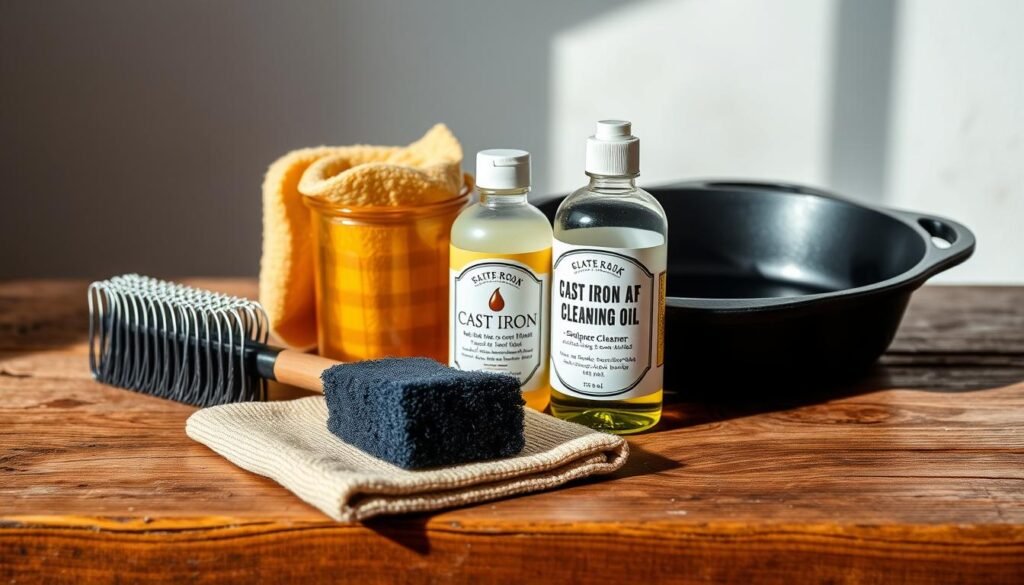
Cleaning cast iron cookware needs the right tools. I’ll show you the essentials. The right tools make cleaning easier and keep your cast iron lasting longer.You can learn more about how-to-clean-airpods
Scrub Brushes and Sponges
For everyday cleaning, a soft-bristled scrub brush or a gentle sponge is best. They remove food without harming the seasoning. Choose a brush or sponge made for cast iron to avoid scratches.
Scraping Tools
A scraping tool is great for tough food. Use a plastic scraper or a chain mail scrubber. Avoid metal scrapers to protect the seasoning. For more tips, visit the Lodge Cast Iron blog.
Cleaning Agents
For cleaning agents, keep it simple. Hot water often does the trick. For tough grime, a mild soap works well. But, avoid harsh chemicals or abrasive cleaners that can harm the seasoning. Some prefer using coarse salt as a natural cleaner.
In summary, the right cleaning tools and cast iron cleaning agents are key. With the right scrub brushes, scraping tools, and cleaning agents, your cast iron will stay in top shape.
The Basic Cleaning Process for Cast Iron
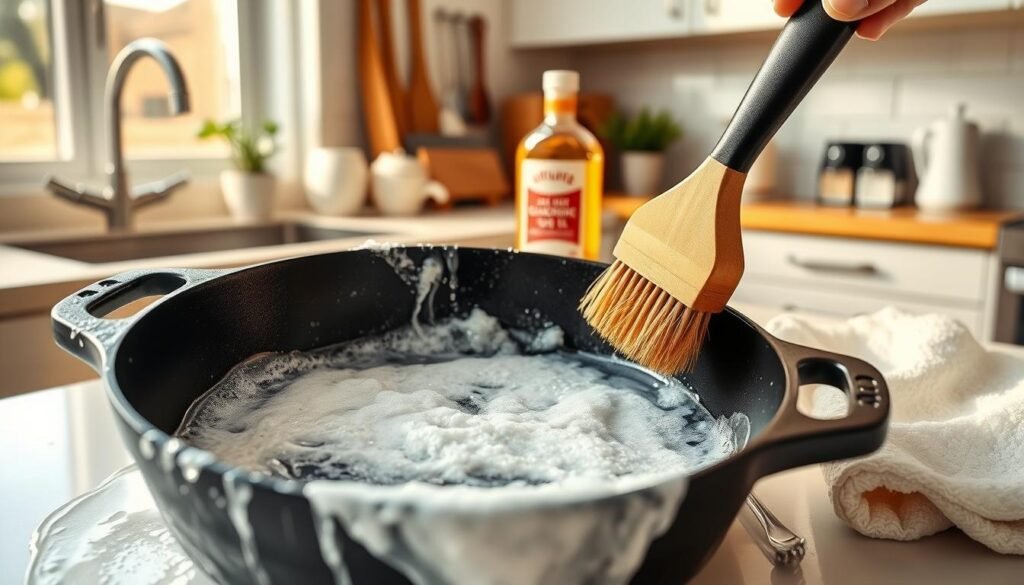
To keep your cast iron in good shape, it’s key to know how to clean it. Cleaning it right after use is important. It helps get rid of food bits and stops stains from setting in.
Cleaning After Cooking
Let your cast iron cool a bit before cleaning. This makes it easier to handle. Use a soft sponge or cloth to remove extra food. For tough spots, a gentle scrubber works well. But, stay away from harsh chemicals and rough scrubbers that can harm the seasoning.You can learn more about how-to-clean-a-cast-iron-skillet
Tip: Often, a quick wipe with a paper towel can get rid of extra food. This makes cleaning easier.
Rinsing and Scrubbing Techniques
Wash your cast iron under warm water to loosen food bits. Use a soft sponge or a gentle scrubber to clean off any left-over food. For stubborn spots, a bit of mild soap is okay, but make sure to rinse well to get rid of soap.
It’s crucial to dry your cast iron right after rinsing to avoid rust.
| Cleaning Method | Effectiveness | Recommendation |
|---|---|---|
| Soft Sponge | High | Best for daily cleaning |
| Mild Soap and Scrubber | Medium | Use for stuck-on food |
| Harsh Chemicals | Low | Avoid using |
By sticking to these easy steps, you can keep your cast iron cookware in top shape. Regular cleaning not only keeps your cookware in great condition but also makes sure your food tastes amazing every time.
Deep Cleaning Techniques for Stubborn Residue

Deep cleaning is key to keeping your cast iron cookware in top shape. It’s needed when regular cleaning can’t get rid of stubborn grime. Cast iron can build up residue over time, making these advanced techniques essential.
Two standout methods for tackling tough grime are using salt as an abrasive and the vinegar and baking soda method. Both are gentle on the cast iron but tough on grime.You can learn more about how-to-clean-washing-machine
Using Salt as an Abrasive
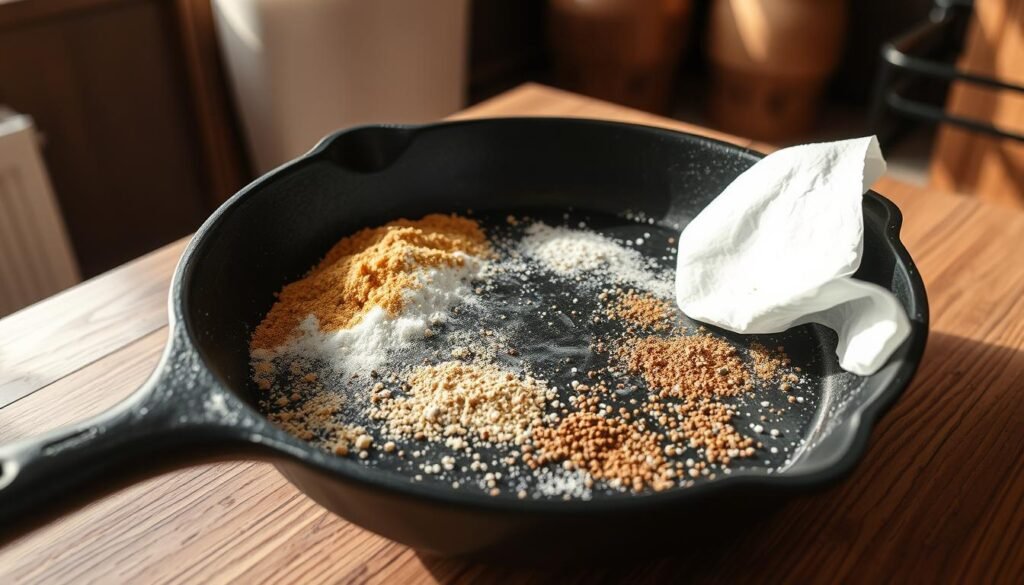
Using salt is a simple yet effective way to deep clean cast iron. Salt acts as a gentle scrubber, removing stubborn food particles without harming the seasoning. To do this, sprinkle coarse salt into the pan, mix with a bit of water to make a paste, and scrub with a sponge or cloth. Rinse with warm water and dry well.
Vinegar and Baking Soda Method
The vinegar and baking soda method is also powerful for deep cleaning cast iron. It’s great for getting rid of grime and rust. Begin by mixing equal parts water and white vinegar in the pan and boil it. Then, remove from heat and sprinkle baking soda over the surface. Let it sit for a few hours or overnight before scrubbing and rinsing. For more tips on cleaning cast iron skillets, check out this guide.
These deep cleaning methods offer several benefits:
- Effective removal of stubborn residue
- Gentle on cast iron seasoning
- Restores the cookware’s original shine
- Helps prevent rust and grime buildup
By adding these deep cleaning techniques to your cast iron care routine, you can keep your cookware in great shape. This ensures it continues to perform well over time.You can learn more about how-to-clean-suede-shoes
Seasoning Your Cast Iron After Cleaning
After cleaning your cast iron, it’s time to season it. This step keeps it non-stick and prevents rust. Seasoning creates a protective layer on the cookware, making it last longer and work better.
What is Seasoning?
Seasoning is a layer of oil baked onto the cast iron. It makes the surface non-stick. Warren Snyder, a famous chef, said, “A well-seasoned cast iron pan is a cook’s best friend.”
“The secret to a great dish lies not just in the ingredients, but in the cookware itself. A seasoned cast iron pan can elevate your cooking to new heights.”
To season, apply a thin oil layer and heat it high. This turns the oil into a hard, non-stick surface. The quality of seasoning depends on the oil and heating.
Steps to Re-Season Your Cookware
Re-seasoning your cast iron is easy to do at home. Here’s how:
- Preheat your oven to 350°F (175°C).
- Apply a thin, even layer of cooking oil to the entire surface of the cast iron, including the handle and underside.
- Place the cast iron upside down on the middle rack of the oven.
- Bake for an hour to allow the oil to polymerize.
- Let the cast iron cool before wiping off any excess oil with a paper towel.
For a better understanding, here’s a comparison of different oils for seasoning:
| Oil Type | Smoke Point | Flavor Impact |
|---|---|---|
| Vegetable Oil | 400°F+ | Neutral |
| Coconut Oil | 350°F | Mild Coconut Flavor |
| Avocado Oil | 520°F | Mild, Buttery Flavor |
By following these steps and choosing the right oil, you can keep your cast iron in great shape. It will remain a valuable tool in your kitchen for many years.You can learn more about how-to-clean-strawberries
Do’s and Don’ts of Cast Iron Care

Knowing the do’s and don’ts of cast iron care can make it last longer. It’s all about cleaning, maintaining, and storing it right. This keeps your cast iron cookware in top shape.
Do: Use High Smoke Point Oils
Choosing the right oil for seasoning is key. I suggest using oils like avocado oil or peanut oil. They can handle high heat without burning, keeping your cast iron seasoned and ready to go. For more tips, check out our beginner’s guide to cast iron cleaning and care.
Don’t: Soak Your Pan
Don’t soak your cast iron in water for too long. It can rust, damaging your cookware. Clean it right after use and dry it well to avoid moisture. For tough spots, try gentle scrubbing or the vinegar and baking soda method.
By sticking to these simple rules, you’ll get the most out of your cast iron. Remember, consistent care is the secret to keeping it in great shape.
Tips for Preventing Rust on Cast Iron
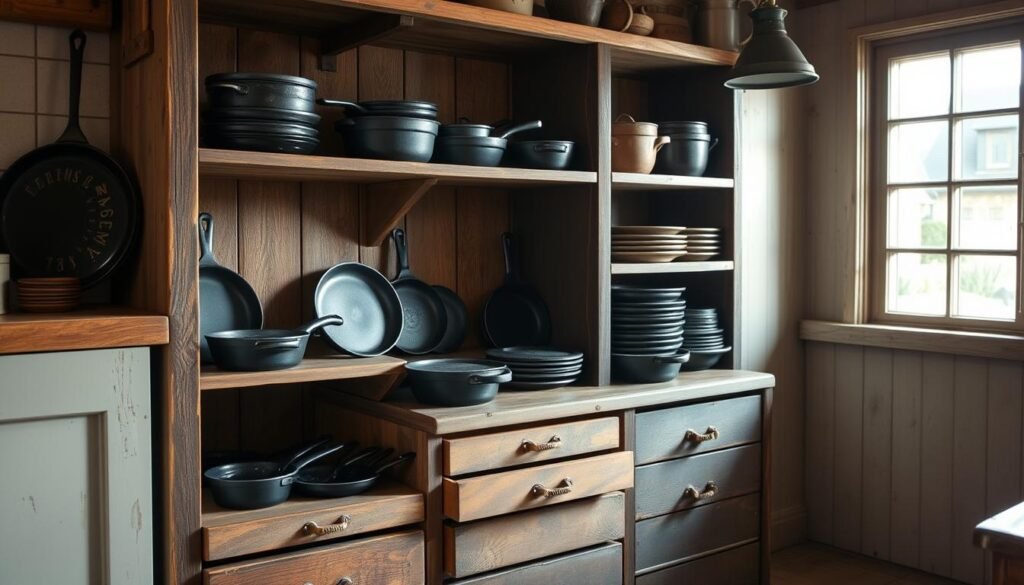
Keeping your cast iron in good shape is key. Rust can make your cookware less effective and shorter-lived. So, it’s important to take good care of it.
Storing Cast Iron Properly
Storing cast iron right is crucial to stop rust. Clean and dry it well, then put a thin layer of oil on it. This oil keeps moisture away, which causes rust.
Keep your cast iron in a dry spot, like a hook or hanging rack. Don’t store it where it’s humid or cover it with a lid. This can trap moisture and lead to rust.
Regular Maintenance Practices
Regular care is essential to avoid rust. Clean your cast iron with mild soap and water after each use. Dry it well. Re-season it often to keep the protective layer strong.
Lodgecastiron.com says, “Regular seasoning keeps it non-stick and rust-free.” By doing this, your cast iron will last for many years.
“A well-maintained cast iron pan is a lifetime friend in the kitchen,” a chef notes. This shows how important it is to care for it consistently.
Common Mistakes When Cleaning Cast Iron
Proper care of cast iron starts with knowing common cleaning mistakes. These mistakes can damage your cookware. Many home cooks unknowingly harm their pans due to simple cleaning errors.
To keep your cast iron in great shape, avoid certain mistakes. The way you clean it right after cooking is key. Let’s look at some common mistakes and how to steer clear of them.
Overusing Soap
One big mistake is using too much soap. Soap can remove the seasoning, which is vital for non-stick and rust prevention. Instead, scrape off big food bits and rinse with hot water. For tough spots, a bit of salt works well as an abrasive.
If you must use a cleaner, choose a mild soap and rinse well. Always re-season your cast iron after cleaning to keep its protective layer.
Neglecting to Dry Properly
Not drying your cast iron well is another big mistake. Moisture can cause rust, damaging your cookware. Dry it well with a towel and then heat it over low on your stovetop to dry out any remaining moisture.
By avoiding these mistakes, you can make your cast iron last longer. Remember, gentle cleaning, proper drying, and regular seasoning are the keys to maintaining your cast iron.
Expert Recommendations for Long-lasting Cast Iron
To keep your cast iron cookware in top shape, follow expert advice. Choosing a quality cast iron brand is key for durability and performance. Brands like Le Creuset and Lodge are top choices for their high-quality products.
Quality Matters
When picking cast iron cookware, look for brands with thick, evenly distributed metal and a smooth finish. This ensures even heating and longevity. For more cleaning tips, check out Bon Appétit for expert maintenance advice.
Learning from the Experts
Experienced chefs love their cast iron cookware, and for good reasons. Learning from their techniques can help you keep your cast iron in great shape. Whether it’s seasoning, storing, or cooking, expert tips can greatly improve your results.