I still remember my grandmother’s cast iron skillet, passed down through generations. It showed the durability of these cooking vessels when cared for right. Did you know a well-kept cast iron skillet can last decades, even centuries?
Cleaning a cast iron skillet is more than just getting rid of food. It’s about keeping its seasoning and ensuring it cooks well. A clean skillet is also healthier, as it stops bacteria and contaminants from building up. In this article, I’ll show you how to clean your cast iron skillet easily.
Key Takeaways
- Understand the importance of maintaining your cast iron skillet’s seasoning.
- Learn the simple steps to clean your cast iron skillet effectively.
- Discover how to prevent rust and keep your skillet in good condition.
- Find out how to dry and store your cast iron skillet properly.
- Explore tips on maintaining your cast iron skillet for long-term use.
Why Proper Cleaning is Essential for Cast Iron Skillets
Cleaning your cast iron skillet right is key to keeping it in top shape. A well-cared-for skillet cooks better and lasts longer. It’s a great asset in your kitchen.
The Benefits of Maintaining Your Skillet
Keeping your cast iron skillet clean has many perks. It prevents rust, which can harm the skillet. Also, it keeps the skillet non-stick, making food easier to cook and remove.
For more tips on cleaning and caring for your skillet, check out this beginner’s guide.
Risks of Improper Cleaning
Wrong cleaning methods can hurt your cast iron skillet. Harsh chemicals or rough cleaners can damage the seasoning, needing re-seasoning and risking rust. Not cleaning it well after use can also lead to residue buildup, posing health hazards.
How Cleaning Affects Longevity
The life of your cast iron skillet depends on how well you clean and care for it. Regular, proper cleaning extends its life by avoiding damage and keeping it non-stick. By adding a simple cleaning routine to your cooking, your skillet will last for years.
Daily Cleaning Routine for Your Skillet
Keeping your cast iron skillet clean every day is key. It helps it work better and last longer. Just a few minutes each day can stop residue buildup and keep the seasoning in top shape.You can learn more about how-to-clean-hair-brushes
What to Do Immediately After Cooking
Right after cooking, act fast to stop food from sticking. I use a soft spatula to remove big chunks. For more tips, check out this guide on cleaning cast iron skillets.
How to Rinse and Wipe Your Skillet
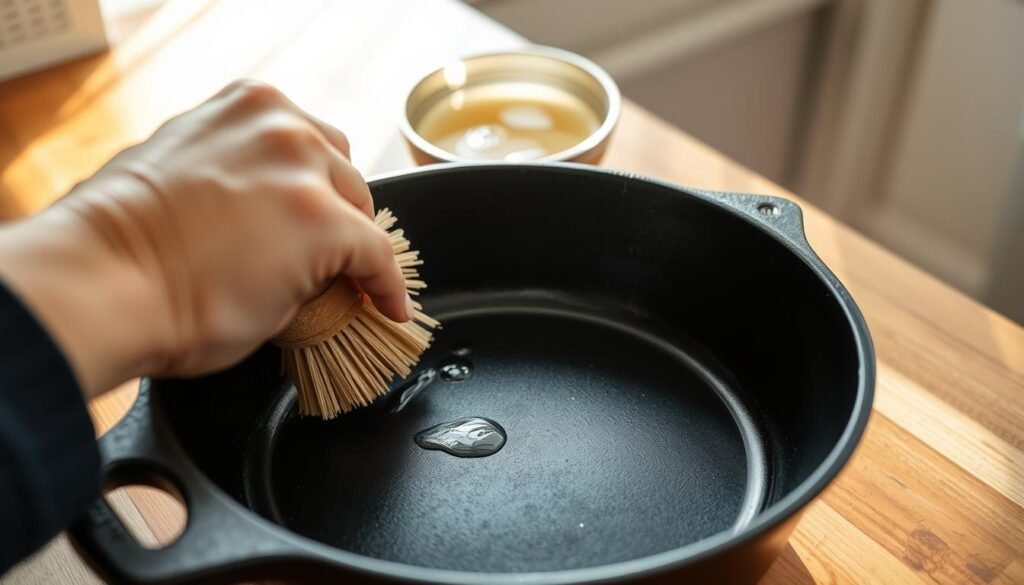
Wash your skillet with hot water to get rid of food bits. Don’t use soap, as it can remove the seasoning. I clean it with a soft sponge or cloth to keep it clean and free of dirt.
Choosing the Right Tools
Choosing the right tools is important to avoid damaging your skillet. I use a soft-bristled brush or a non-abrasive scrubber. For tough spots, a bit of coarse salt works well. This method keeps the skillet’s surface safe while getting rid of stuck-on food.
How to Remove Stubborn Food Residue
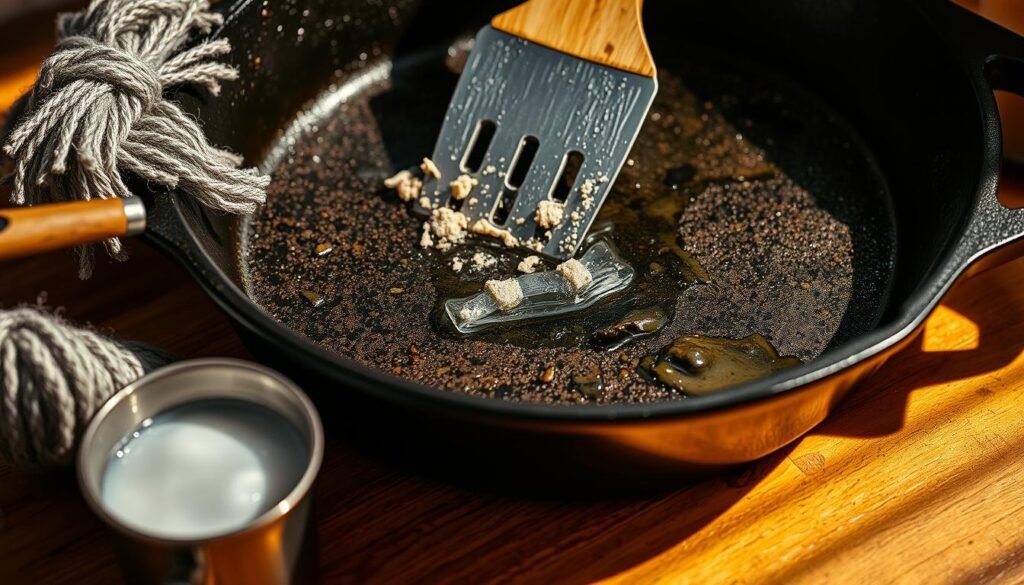
Getting rid of tough food bits from your cast iron skillet can be hard. But, with the right methods, it’s doable. The key is to clean it well without harming the seasoning or the surface.
Scrubbing Techniques That Won’t Damage the Surface
Choosing the right tools for scrubbing is crucial. Use a soft sponge or a non-abrasive scrubber to avoid scratches. For really stuck-on food, a chain mail scrubber works well. It’s gentle but effective.
Using Coarse Salt for Tough Scrubs
Coarse salt is great for tackling tough food bits. Just sprinkle it on the stuck area and scrub with a soft sponge. This method is effective and won’t harm the seasoning. For more tips on cleaning cast iron pans, check out this guide.
When to Use Water and Heat
Water and heat can help with stubborn food residue. If it’s really stuck, try simmering water in the skillet for a few minutes. Then, use a soft sponge or non-abrasive scrubber to remove it. But, be careful not to use too much heat or water, as it can ruin the seasoning.You can learn more about how-to-clean-retainers
Deep Cleaning Your Cast Iron Skillet
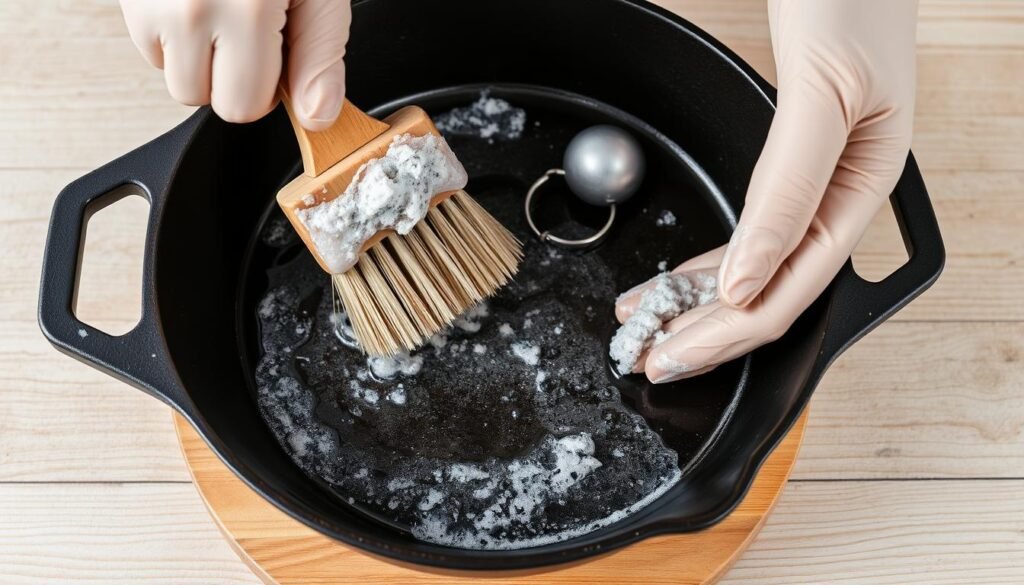
To keep your cast iron skillet in top shape, knowing when and how to deep clean it is crucial. Deep cleaning removes food residue and keeps the seasoning intact. This ensures your skillet continues to perform well.
Signs Your Skillet Needs a Deep Clean
If your skillet heats unevenly or has a lot of residue, it’s time for a deep clean. Cooking acidic foods like tomatoes also requires a deep clean to remove residue that can affect taste.
Begin by scrubbing the skillet with coarse salt and a stiff brush to remove food particles. For more detailed cleaning methods, check out Bon Appétit for guides on cast iron care.
The Importance of Seasoning After Cleaning
After deep cleaning, re-seasoning your skillet is key to maintaining a non-stick surface. Seasoning involves applying oil and heating it to create a durable, non-stick layer. This process improves performance and prevents rust.
To season your skillet: Apply a thin layer of cooking oil to the skillet’s surface. Heat it in the oven at 350°F (175°C) for an hour. Let it cool, then wipe off excess oil with a paper towel.
Repairing Rust: What You Need to Know
If you see rust spots, don’t worry. Rust can be removed with effort and the right methods. Start by scrubbing the rusty area with steel wool or a stiff brush. Clean the skillet well and re-season it to prevent more rust.
Prevention is key: To avoid rust, dry your skillet well after washing and apply oil to the surface. Proper care will keep your skillet in great condition for longer.
Storing Your Cast Iron Skillet

Proper storage of your cast iron skillet is crucial for its longevity. After cleaning and maintaining it, you want to keep it in top shape when not in use.You can learn more about how-to-clean-microwave
Best Practices for Storage
First, make sure your skillet is completely dry before storing. Any moisture can cause rust.
Dry the Skillet: Use a towel to dry it well after cleaning. You can also dry it over low heat on your stovetop to get rid of any moisture.
Apply a Thin Layer of Oil: After drying, put a thin, even layer of oil on the skillet. This keeps the seasoning and prevents rust. Use a neutral oil like vegetable or canola oil.
How to Prevent Rust
Preventing rust is key to caring for your cast iron skillet. Rust forms when the skillet meets moisture.
To stop rust, dry your skillet well after washing and oil it. Store it in a dry spot, like a hook or hanging rack, for good airflow.
“The key to maintaining your cast iron skillet is to keep it dry and oiled. This simple practice will extend its lifespan and keep it ready for your next cooking adventure.”
The Role of Oil in Skillet Maintenance
Oil is essential for your cast iron skillet. It seasons the skillet and protects it from rust when stored.
The right oil choice is important. Choose oils with a high smoke point to avoid bad flavors and residues.
| Oil Type | Smoke Point | Usefulness for Cast Iron |
|---|---|---|
| Vegetable Oil | 400°F – 450°F | Excellent |
| Canola Oil | 468°F | Excellent |
| Olive Oil | 320°F – 420°F | Fair |
What to Avoid When Cleaning
Knowing what not to do when cleaning your cast iron skillet is key. This way, your skillet stays in top shape for the next meal.
Common Mistakes That Ruin Cast Iron Skillets
Using harsh chemicals or abrasive cleaners is a big mistake. These can remove the seasoning. “A well-seasoned skillet is a cook’s best friend,” many chefs say. Stay away from bleach and other harsh cleaners.
Another mistake is putting your cast iron skillet in the dishwasher. The heat and detergents can harm the seasoning and cause rust.You can learn more about how-to-clean-an-oven
Why Not to Use Soap Frequently
While mild soap is okay sometimes, using it too often can remove the seasoning. It’s better to just wipe out food and clean with hot water. As
“The best way to clean a cast iron skillet is with hot water and a soft sponge.”
This keeps the seasoning and makes the skillet non-stick.
Disposing of Non-Safe Cleaners
Get rid of any cleaners that aren’t safe for your cast iron skillet. Using non-safe cleaners can ruin the seasoning and contaminate food. Always check the labels and pick cleaners made for cast iron.
By avoiding these mistakes, you can make your cast iron skillet last longer. It will stay a trusted cooking partner.
The Best Cleaning Products for Cast Iron Skillets
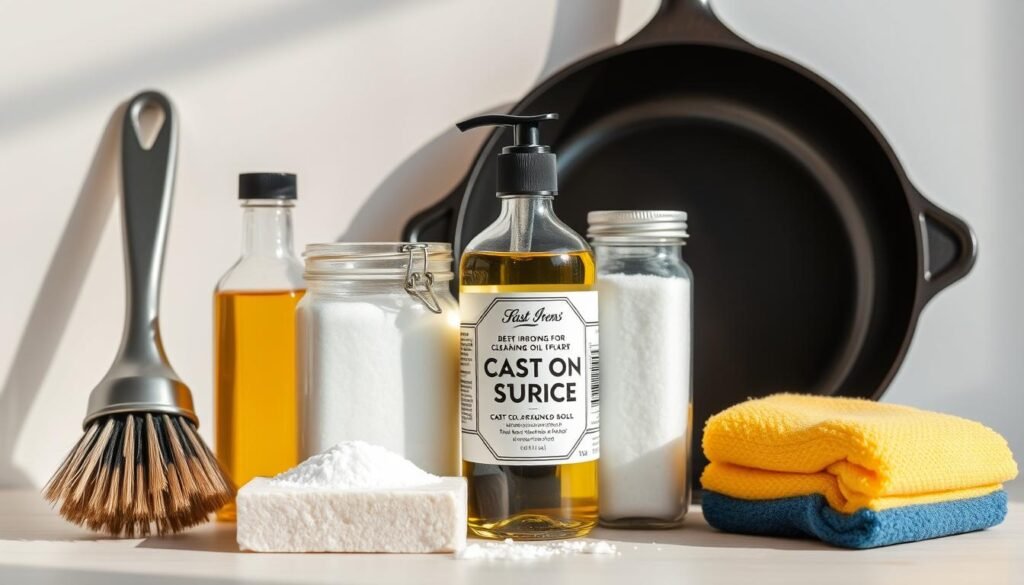
Keeping your cast iron skillet in top shape requires the right cleaning products. The best cleaning products help keep the seasoning intact and ensure the skillet works well. Here, we’ll explore the top tools and products for cast iron skillet maintenance.
Recommended Brushes and Scrapers
For everyday cleaning, a soft-bristled brush or a non-abrasive scraper is best. These tools gently remove food without harming the seasoning. Opt for brushes with nylon or polyester bristles for their gentleness and effectiveness.
For stubborn food, a scraper with a soft edge is perfect. The Kitchn suggests that the right brush or scraper is key to keeping your skillet in great condition.
Oils for Seasoning and Maintenance
Re-seasoning your cast iron skillet after cleaning is crucial for a non-stick surface. You can use vegetable oil, canola oil, or flaxseed oil for seasoning. Flaxseed oil, in particular, creates a hard, non-stick layer.
For upkeep, applying a thin layer of oil regularly can prevent rust. This simple step keeps your skillet in excellent condition.
Specialty Cleaners: Are They Necessary?
Specialty cleaners for cast iron skillets are not always needed. Hot water and a soft scrubber often do the trick. But, for heavy buildup, a specialty cleaner might be helpful.
It’s vital to pick a cleaner safe for cast iron and follow the instructions carefully. This ensures your skillet stays in top shape.
How to Season Your Cast Iron Skillet Post-Clean
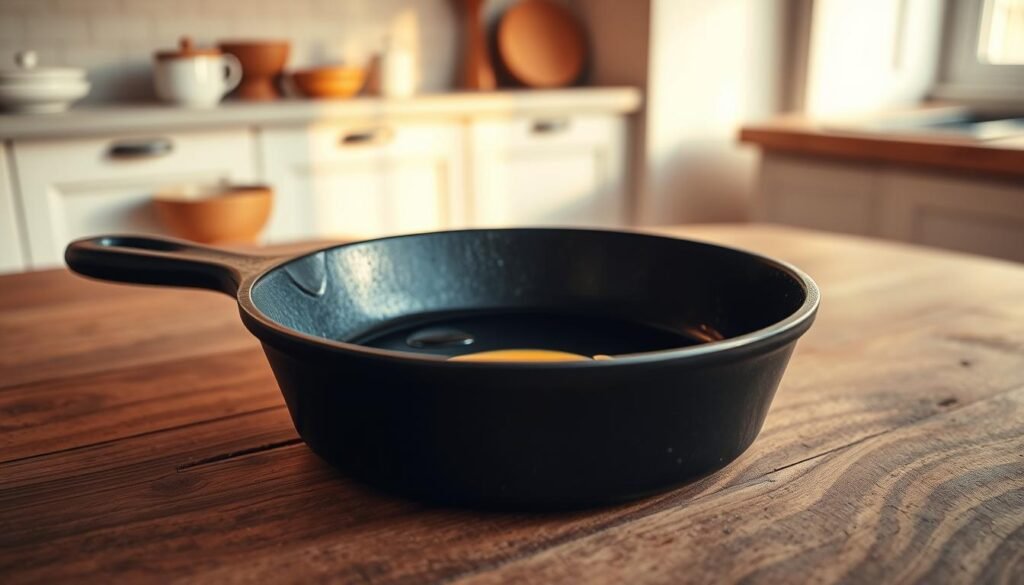
To keep your cast iron skillet in top shape, seasoning after cleaning is key. It makes the skillet non-stick and prevents rust.
Step-by-Step Seasoning Process
Seasoning your cast iron skillet is easy with the right supplies and care. Here’s how to do it:
- Preheat your oven to 350°F (175°C).
- Clean the skillet to remove any debris or old food particles.
- Dry the skillet thoroughly with a towel.
- Apply a thin, even layer of cooking oil to the skillet’s surface, including the handle and underside.
- Place the skillet upside down on the middle rack of the oven.
- Bake for 30 minutes to allow the oil to polymerize and form a hard, non-stick surface.
- Turn off the oven and let the skillet cool before removing it.
Importance of Heat and Oil Types
The type of oil and heat used are key for a durable, non-stick surface. Flaxseed oil and canola oil are good choices because they have high smoke points and polymerize well.
Heat is important in seasoning as it helps the oil penetrate the metal and harden. The temperature should be high enough to do this without burning the oil.
Maintaining a Well-Seasoned Surface
To keep your skillet seasoned, avoid harsh cleaners or scouring pads. They can remove the seasoning. Clean the skillet gently and reapply oil after each use.
- Clean the skillet with mild soap and water if necessary, but avoid harsh chemicals.
- Dry the skillet thoroughly and apply a thin layer of oil.
- Store the skillet in a dry place, such as a hook or hanging rack.
By following these steps and tips, you can keep your cast iron skillet well-seasoned and in excellent condition for years to come.
Troubleshooting Common Issues
Knowing how to fix common problems is key for cast iron skillet owners. Even with good care, skillets can still face issues that affect how they cook.
Tackling Sticky Surfaces
A sticky skillet can be annoying, but fixing it is simple. Make sure your skillet is well-seasoned. A good seasoning layer helps prevent stickiness.
If it’s still sticky, heat the skillet with a bit of oil. This will re-season it while it’s hot.
Fixing a Skillet That Smells
Bad smells from your skillet can be a problem. To get rid of them, wash the skillet with hot water and mild soap. Dry it well afterward.
For smells that won’t go away, boil water with a tablespoon of white vinegar. This helps neutralize the smell.
What to Do If Food Is Sticking
Food sticking to your skillet can be tough to deal with. First, make sure your skillet is hot before adding food. Use enough oil to cover the surface.
If food still sticks, try cooking at a different temperature. Or use oil with a higher smoke point.
| Issue | Solution |
|---|---|
| Sticky Surface | Re-season the skillet, heat with oil |
| Unpleasant Odor | Wash with soap and water, boil vinegar |
| Food Sticking | Preheat skillet, use enough oil, adjust cooking temperature |
Alternative Methods for Cleaning Cast Iron
Looking for ways to clean cast iron skillets without harsh chemicals? There are many eco-friendly and cost-effective options. These methods help keep your skillet’s seasoning in top shape.
Using Baking Soda and Vinegar
Baking soda and vinegar make a great cleaning combo. They’re gentle yet powerful. Just sprinkle baking soda on the skillet, mix in a bit of vinegar to make a paste, and scrub. Then, rinse with warm water and dry well.
Benefits of Baking Soda and Vinegar:
- Environmentally friendly
- Non-toxic and safe for cooking surfaces
- Effective at removing stubborn food residue
The Use of Self-Cleaning Ovens
Using a self-cleaning oven is another way to clean your cast iron skillet. Place the skillet in the oven during the self-cleaning cycle. The heat will burn off food residue. But, be careful as it can damage the seasoning.
Caution: Always check your oven’s manual to ensure this method is safe for your specific appliance. Also, consider re-seasoning the skillet after this process.
Natural Cleaners You Can Try
There are many natural cleaners for cast iron skillets. You can use kosher salt, water, or even specialized cleaners made from natural ingredients. These cleaners are gentle and effective at removing grime.
Some natural cleaners to consider:
- Kosher salt and water paste
- White vinegar diluted with water
- Specialized natural cleaning products
Exploring these alternative cleaning methods can help you find the best one for your cast iron skillet. This way, your skillet will stay in great condition for years.
Conclusion: Mastering the Care of Your Cast Iron Skillet
Learning to care for your cast iron skillet is easy and makes cooking better. Just follow the steps in this article. This way, your skillet will stay in top shape and be a trusted cooking partner.
Essential Steps Recap
Keeping your skillet clean every day, storing it right, and deep cleaning it now and then are key. Wipe it down often and put a thin layer of oil on it. This stops rust and keeps the seasoning good.
Cooking with Cast Iron
Cooking with cast iron has many perks. It cooks food evenly and can be non-stick if you take care of it. Using cast iron lets you try out lots of recipes and cooking methods.
Simplifying Skillet Care
Cast iron skillet care is easier than you might think. Spend a few minutes on upkeep after each use. Soon, taking care of your skillet will be second nature. This lets you focus on cooking with it.