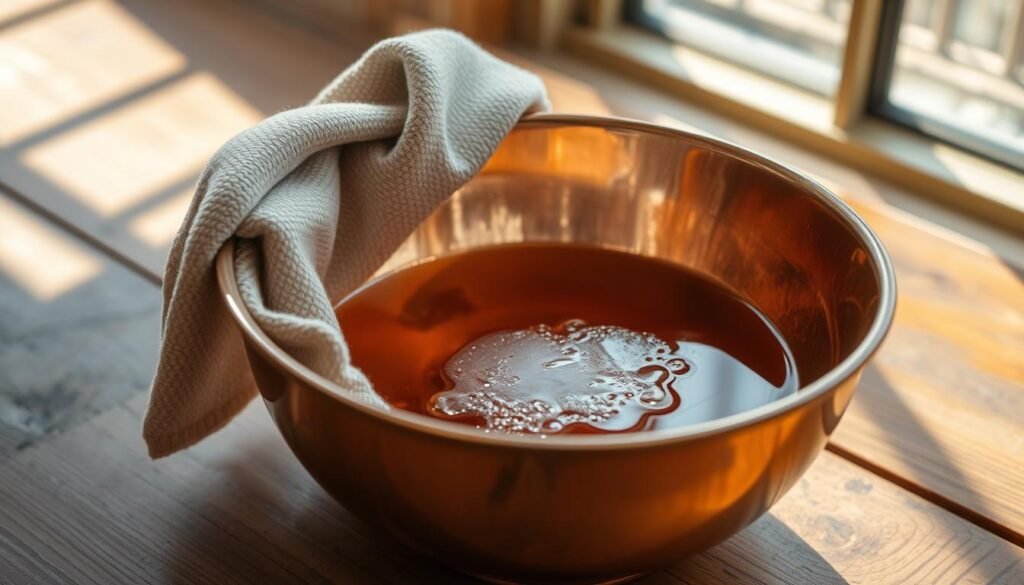
Copper is a beautiful, versatile metal used in many household items. It can be found in decorative accents and functional cookware. Restoring its shine is easier than you think.
Learning about cleaning copper is key to keeping it looking good and lasting long. In this guide, we’ll show you how to bring back copper’s original shine.
Key Takeaways
- Understanding the importance of cleaning copper
- Exploring different methods for cleaning copper
- Learning tips for maintaining copper’s shine
- Discovering the best cleaning solutions for copper
- Avoiding common mistakes when cleaning copper
Understanding Copper and Its Uses
I’ve always been fascinated by copper’s ability to add warmth to any space. Copper is a versatile metal used in many ways. It’s found in decorative items and functional cookware.
Why People Love Copper Items
Copper items are loved for their beauty and durability. Their warm, rich tones make them a favorite for home decor. Plus, copper’s patina over time adds to its charm.
Common Copper Items in Homes
Many homes have copper items like pots, pans, vases, and lighting fixtures. These items bring elegance and serve as useful pieces.
The Benefits of Clean Copper
Keeping copper items clean makes them look better and last longer. Clean copper reflects light well, making it shine. Regular cleaning also stops tarnish and corrosion, keeping your copper in top shape.
The benefits of clean copper go beyond looks. It also makes the material last longer. By keeping copper clean, you can enjoy its beauty and function for years.
Signs That Your Copper Needs Cleaning
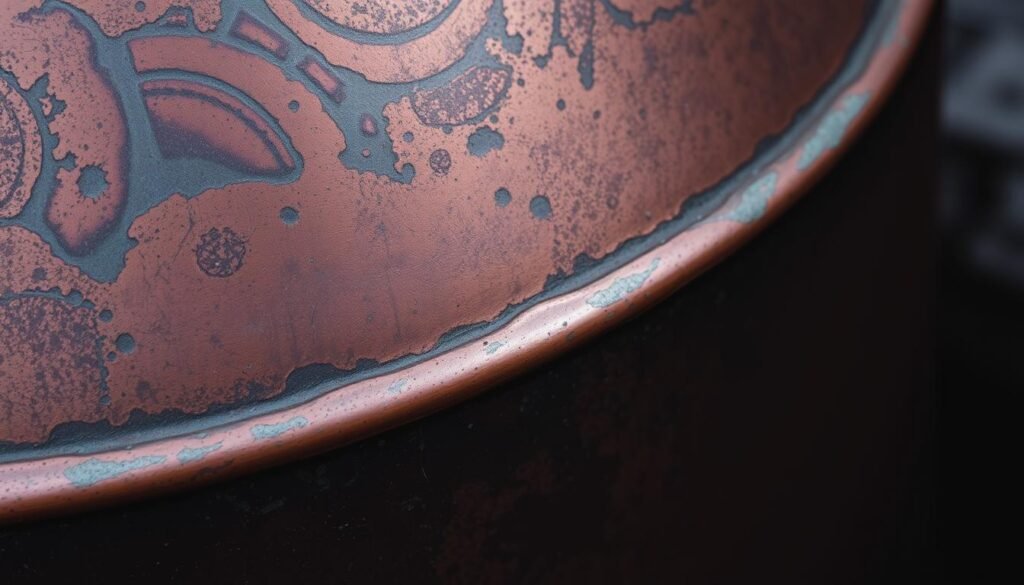
Copper items can get dirty and tarnish over time. This makes them lose their shine. I’ve learned to spot when it’s time to clean them.
Copper reacts to its surroundings, leading to tarnish or discoloration. Knowing these signs helps keep copper items looking great and lasting longer.
Discoloration and Tarnish
Discoloration or tarnish is a clear sign your copper needs cleaning. Copper oxide, or patina, forms on its surface. While some like the patina, too much tarnish can make copper look dull.
For example, a copper vase might lose its shine and turn greenish.
To show the impact of tarnish, here’s a comparison:
| Condition | Description |
|---|---|
| New Copper | Bright, shiny surface |
| Tarnished Copper | Dull, greenish tint |
Dull Appearance
A dull look means your copper needs cleaning. Without regular care, copper can lose its shine. This can happen due to grime or unmanaged patina.
“Copper, with its warm, lustrous tones, adds a touch of elegance to any room. Its beauty shines when it’s well-maintained.”
Stains and Spots
Stains and spots on copper are not just ugly. They can also signal corrosion or harmful substances. For instance, stubborn stains on copper cookware might mean it’s reacting to food or cleaners.
For tips on cleaning and polishing copper, check out Architectural Digest. They have expert advice on keeping copper in top shape.
Essential Tools for Copper Cleaning
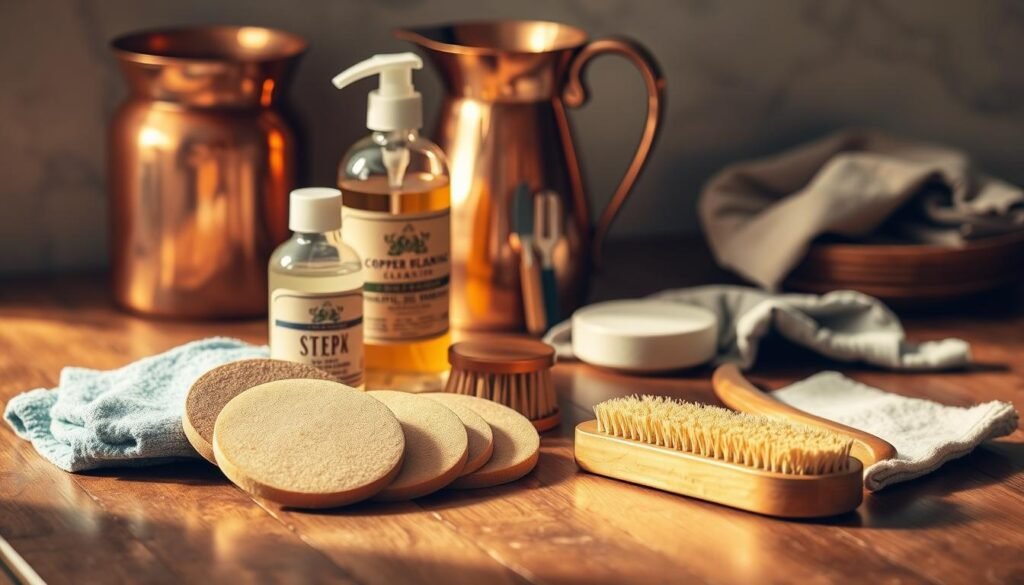
Cleaning copper needs the right tools to keep it shiny and safe. I always have the right materials ready to clean my copper items well.
Soft Cloths and Sponges
First, I use soft cloths or sponges to clean copper. These tools gently remove dirt and grime without scratching. Microfiber cloths are my go-to because they work well and are safe for copper.
Brushes for Difficult Areas
For hard-to-reach spots or detailed designs, I use soft-bristled brushes. These brushes clean out dirt and tarnish in tight spaces. It’s important to pick a brush with soft bristles to avoid damaging the copper.
Natural Cleaning Solutions
I prefer natural cleaning solutions for copper. A mix of lemon juice and baking soda or vinegar and salt works well. These natural solutions are effective and gentle on copper.
| Tool | Purpose | Benefits |
|---|---|---|
| Soft Cloths | Gentle cleaning | Prevents scratching, effective for daily cleaning |
| Soft-Bristled Brushes | Cleaning intricate areas | Reaches tight spaces, gentle on copper |
| Natural Cleaning Solutions | Effective tarnish removal | Eco-friendly, non-toxic, cost-effective |
Using the right tools and solutions keeps my copper items in top shape. Whether it’s a quick dusting or a thorough clean, having the right tools makes a big difference.
Natural Methods for Cleaning Copper
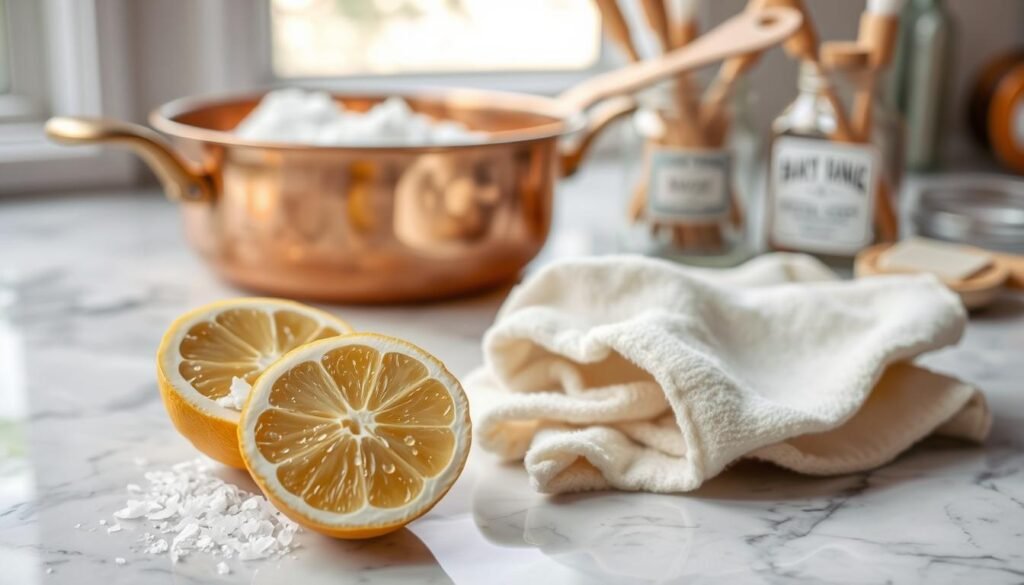
Using natural methods to clean copper is rewarding. These methods are effective, eco-friendly, and gentle on the copper.
Using Lemon and Baking Soda
One popular method uses lemon and baking soda. The lemon’s acidity mixes with baking soda to create a cleaning paste.
- Cut a lemon in half and squeeze the juice into a bowl.
- Mix the lemon juice with baking soda to form a paste.
- Apply the paste to the copper surface using a soft cloth.
- Rinse with warm water and dry thoroughly.
Vinegar and Salt Solution
A vinegar and salt solution is also effective. Vinegar’s acid breaks down tarnish, and salt is a mild abrasive.
- Mix equal parts of vinegar and salt in a bowl.
- Soak the copper item in the solution for a few minutes.
- Scrub gently with a soft cloth and rinse with warm water.
Ketchup as a Copper Cleaner
Ketchup can surprisingly clean copper. Its acidity dissolves tarnish.
- Apply a layer of ketchup to the copper surface.
- Let it sit for about 30 minutes.
- Wipe off with a soft cloth and rinse with warm water.
Comparison of Natural Cleaning Methods
| Method | Effectiveness | Ease of Use |
|---|---|---|
| Lemon and Baking Soda | High | Easy |
| Vinegar and Salt | High | Moderate |
| Ketchup | Moderate | Easy |
In conclusion, natural methods are effective and gentle for cleaning copper. Choosing the right method keeps your copper looking great without harsh chemicals.
Chemical Cleaners for Copper
The market has many chemical cleaners for copper. Each comes with its own set of instructions and safety tips. I use these products when I need to clean my copper items quickly and effectively.
Commercial Copper Cleaners
Many commercial copper cleaners are made to remove tarnish and grime. For example, cleaners with ammonia or citric acid work well. It’s important to read the label and follow the instructions for the best results.
Some brands offer copper cleaning solutions that are both gentle and effective. You can learn more about these products by visiting a guide to copper cleaner.
Abrasive Cleaners to Avoid
Not all cleaners are good for copper. I stay away from abrasive cleaners that can scratch or damage the surface. Cleaners with harsh chemicals or rough particles can make my copper items look worn out.
It’s important to avoid cleaners not made for copper. They can do more harm than good.
Tips for Safe Use
When using chemical cleaners for copper, safety is key. I always wear gloves and work in a well-ventilated area to avoid harsh fumes.
Following the manufacturer’s instructions is crucial. I apply the cleaner as directed and rinse the item well. This prevents any residue from affecting the copper’s look.
- Always read the label carefully.
- Wear protective gear, including gloves and eyewear.
- Test a small, inconspicuous area first.
Step-by-Step Guide: Cleaning Your Copper
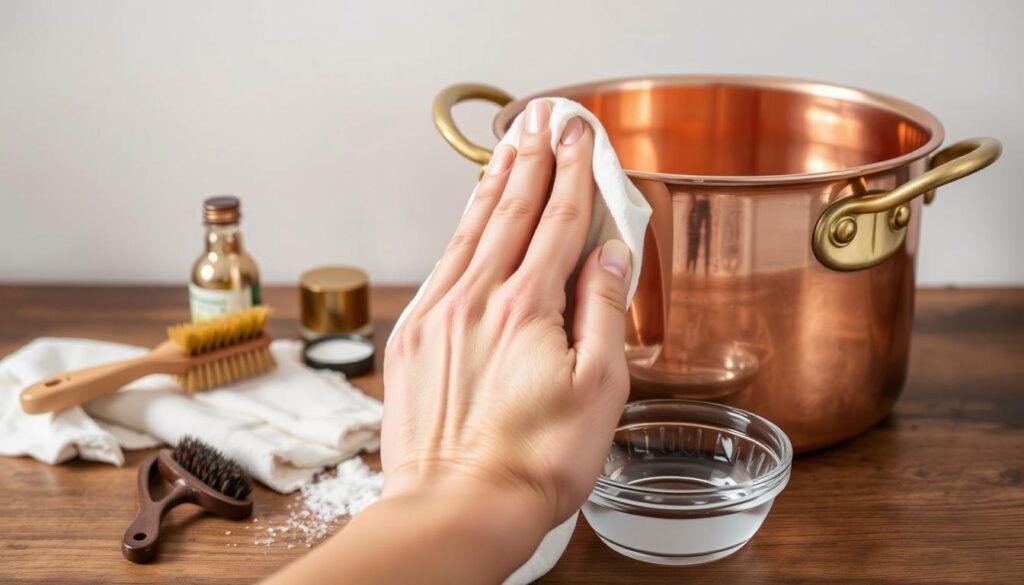
To keep your copper shiny, follow a careful cleaning process. The right steps can make your copper items sparkle. Here’s how to clean your copper effectively.
Preparation Before Cleaning
First, gather your cleaning tools. You’ll need a soft cloth, a gentle cleaner, and warm water. A lemon juice and baking soda mix or a copper cleaner works well.
- Soft cloths or sponges to avoid scratching the copper
- Gentle cleaning solutions, such as lemon juice and baking soda
- Warm water for rinsing
- A dry cloth for drying
Check your copper for tough stains or tarnish before cleaning. This helps choose the best cleaning method. For valuable or antique pieces, get professional help.
“The art of cleaning copper is not just about removing tarnish; it’s about preserving the beauty and integrity of the metal.”
Cleaning Techniques Explained
Now, let’s clean your copper. For most items, a soft cloth and gentle cleaner are enough. Apply the cleaner to the cloth, not the copper, to avoid damage.
Use circular motions to clean the copper surface. Make sure to cover all areas evenly but avoid too much pressure to prevent scratches.
| Cleaning Method | Effectiveness | Recommended For |
|---|---|---|
| Lemon Juice and Baking Soda | High | General Copper Cleaning |
| Commercial Copper Cleaner | Very High | Tarnished or Stubborn Stains |
| Vinegar and Salt | Medium | Mild Tarnish |
Rinsing and Drying Your Copper
After cleaning, rinse your copper with warm water. Then, dry it with a soft cloth, focusing on crevices and designs.
Drying well prevents water spots and mineral buildup. Gently buff the copper with a dry cloth to restore its shine.
By following these steps, you can keep your copper looking great. Regular cleaning and care prevent tarnish and keep your copper beautiful for years.
Preventing Future Tarnish on Copper
Copper can stay shiny for a long time with the right care. Keeping copper items looking good also makes them last longer. By using a few easy steps, you can keep your copper items clean and shiny.
Protective Coatings and Polishes
Using a protective coating or polish is a great way to stop tarnish. These products act as a shield, keeping copper safe from the environment. Choose a polish made for copper and follow the instructions carefully.
Key benefits of using protective coatings include:
- Less cleaning needed
- Shinier and more beautiful appearance
- Protection from things that cause tarnish
Storing Copper Items Properly
How you store copper is very important. Keep it in a cool, dry spot, away from sunlight and moisture. Use anti-tarnish bags or acid-free tissue to wrap it.
For big or valuable items, a display case or cabinet is best. This keeps the environment stable and reduces tarnish risk.
Regular Maintenance Tips
Keeping copper clean is key to preventing tarnish. Gently dust with a soft cloth and avoid harsh chemicals. For often-used items like cookware, clean them right after use.
Here are some additional tips for maintaining your copper:
- Clean copper items quickly after use or exposure to tarnish-causing conditions.
- Don’t stack copper items to avoid scratching and tarnish.
- For detailed pieces, use a soft-bristled brush to remove dust.
How to Polish Copper for a Shine
To get copper to shine, you need more than just cleaning. You must use a special polishing method. This not only makes it look better but also keeps it from tarnishing. First, you need to know how to polish copper well.
Choosing the Right Polish
Choosing the right polish is the first step. There are many polishes out there, from store-bought to homemade. Think about the copper item you’re polishing and how tarnished it is.
Commercial Polishes: These are easy to find and come with instructions for different copper surfaces.
Homemade Solutions: You can also use lemon juice and baking soda or vinegar and salt. These are good for the environment and work well too.
Buffing Techniques
After picking your polish, apply it with the right buffing method. Buffing spreads the polish and removes tarnish.
- Put a little polish on a soft cloth and rub it in circles on the copper.
- For detailed or hard-to-reach spots, use a soft-bristled brush to get the polish everywhere.
- Keep buffing until the copper shines, then check if it’s done.
Final Touches for Extra Shine
After buffing, your copper should look shiny. But for even more shine, add a copper wax or sealant.
| Product | Purpose | Benefits |
|---|---|---|
| Copper Wax | Protects and enhances shine | Long-lasting protection, easy to apply |
| Copper Sealant | Seals the copper surface | Prevents future tarnish, durable |
By following these steps and using the right materials, you can make your copper items shine. They will be a stunning part of your home decor.
Caring for Antique Copper Pieces
Keeping antique copper in good shape is more than just cleaning. It’s about keeping history alive. These pieces are valuable for their beauty and historical importance.
Understanding Their Value
Antique copper items can be decorative or useful, like cookware. Their worth comes from their material, history, and sometimes, sentimental value. To keep their value, knowing their age, condition, and rarity is key.
| Factor | Description | Impact on Value |
|---|---|---|
| Age | The older the piece, the more historical significance it may have. | High |
| Condition | The better the condition, the more valuable the piece. | High |
| Rarity | Limited production or unique items are more valuable. | High |
Gentle Cleaning Techniques
Cleaning antique copper needs care to avoid damage. Use a soft cloth and mild cleaners. For detailed cleaning, a gentle method is best to keep the copper intact.
Professional Restoration Options
At times, antique copper needs professional help. This is true for pieces that are badly damaged or need complex repairs. Experts can fix these items without losing their value.
In summary, caring for antique copper is complex. It involves understanding their worth, gentle cleaning, and knowing when to get professional help. By doing so, your antique copper will stay in great shape for many years.
Using Copper in Cooking: Safety Tips
Copper cookware is great because it heats up fast. But, you need to know how to take care of it. It’s not just a pot; it’s an investment in your cooking.
Cleaning Cookware without Damage
When cleaning copper cookware, be gentle. Use a soft sponge and mild soap after each use. For hard stains, try lemon juice and baking soda. Never use harsh cleaners or scouring pads, as they can scratch the copper.
For more cleaning tips, check out Food52’s guide on caring for copper. It has lots of advice on keeping your copper cookware in top shape.
Maintaining the Patina on Cookware
The patina on copper cookware is a natural layer. Some like it for looks, while others want a shiny surface. To keep the patina, avoid harsh chemicals and abrasive cleaners. Regular polishing helps keep your copper looking good.
| Maintenance Task | Frequency | Method |
|---|---|---|
| Cleaning | After each use | Mild soap and soft sponge |
| Polishing | Monthly | Copper polish and soft cloth |
| Deep Cleaning | Quarterly | Lemon juice and baking soda |
When to Replace Old Copper Cookware
It’s important to know when to replace your copper cookware. Look for signs like thinning, warping, or damage. If the lining is damaged, it might be cheaper to get new cookware.
Regular checks and care can make your copper cookware last longer. But, knowing its condition is crucial for safety.
Creative Uses for Clean Copper
Clean copper opens up a world of creative possibilities. It adds a warm, inviting glow to any room or project. This makes it perfect for DIY enthusiasts and homeowners.
DIY Projects with Copper
I love how versatile copper is in DIY projects. You can use it for copper piping or decorative accents. Making copper wind chimes is one of my favorite projects. They add music to your garden and show off copper’s beauty.
For simpler projects, try making copper-coated ornaments or decorative boxes. There are many tutorials online, including on Martha Stewart’s website. They offer great tips on polishing and working with copper.
Home Decor Ideas
Copper can add warmth and sophistication to your home decor. Use copper accents in your kitchen, like copper pots and pans. A copper-leaf backsplash is also a stunning idea.
For a more subtle look, try copper picture frames or vases. They add elegance to any room.
| Copper Decor Idea | Room | Effect |
|---|---|---|
| Copper Pots and Pans | Kitchen | Warmth and Sophistication |
| Copper Picture Frames | Living Room/Bedroom | Elegance and Character |
| Copper Vases | Living Room/Dining Room | Centerpiece and Conversation Starter |
Gift Ideas Featuring Clean Copper
Clean copper makes for unique and thoughtful gifts. Copper cookware is both beautiful and functional. Copper photo frames or ornaments add a personal touch.
For a luxurious gift, consider a copper bathtub or sink. These are more expensive but sure to impress. They add luxury to any bathroom.
Troubleshooting Common Copper Cleaning Problems
Cleaning copper can sometimes lead to a few common problems. But don’t worry, I’ve got you covered. Whether it’s recurring stains or stubborn tarnish, knowing the cause is the first step to solving it.
What If My Copper Stains Return?
If your copper stains keep coming back, it might be because of air, moisture, or chemicals. To stop this, make sure your copper items are dry after cleaning. Also, think about using a protective coating.
- Use a soft cloth to dry copper items thoroughly.
- Apply a copper wax or polish to protect the surface.
- Store copper items in a dry, cool place.
Handling Stubborn Tarnish
Dealing with stubborn tarnish can be tough, but there are ways to tackle it. A good method is to mix vinegar and salt. The vinegar’s acid breaks down the tarnish, and the salt is a gentle scrubber.
- Mix equal parts vinegar and salt to form a paste.
- Apply the paste to the tarnished area and let it sit for a few minutes.
- Gently rub the area with a soft cloth and rinse with warm water.
Identifying the Source of Damage
If your copper item is damaged, finding out why is key to fixing it. Common reasons include harsh chemicals, wrong cleaning methods, or environmental factors.
To identify the source:
- Inspect the item for any signs of chemical exposure or residue.
- Review your cleaning methods to ensure you’re using gentle, appropriate techniques.
- Consider the environment where the copper item is stored or used.
By tackling these common problems, you can keep your copper items in top shape. This will also help them last longer.
Eco-Friendly Cleaning Alternatives
Cleaning copper doesn’t have to harm the planet. Here are some eco-friendly options. As we become more aware of our environmental impact, it’s key to find cleaning methods that are both effective and sustainable.
Green Cleaners for Copper
There are many green cleaners for copper. These are made from natural ingredients that are gentle on the environment. They’re not only good for the planet but also safe for your home and family.
- Look for cleaners that are labeled as non-toxic and biodegradable.
- Opt for products with minimal packaging to reduce waste.
- Consider cleaners that are certified by reputable environmental organizations.
Brands like Seventh Generation and Ecover are known for their commitment to sustainability. They offer eco-friendly cleaning options.
“The greatest threat to our planet is the belief that someone else will save it.” – Robert Swan
DIY Eco-Friendly Solutions
Making your own cleaning solutions is fun and effective. It keeps your copper items clean while being kind to the environment. Simple ingredients like lemon juice, baking soda, and vinegar can make great cleaning solutions.
| Ingredient | Method | Result |
|---|---|---|
| Lemon Juice & Baking Soda | Mix to form a paste, apply to copper, and rub gently. | Effective tarnish removal. |
| Vinegar & Salt | Mix equal parts, apply to copper, and buff with a soft cloth. | Leaves copper shiny and clean. |
Keeping Your Cleaning Sustainable
To keep your cleaning sustainable, consider these tips:
- Reuse cloths and rags instead of paper towels.
- Choose multi-purpose cleaning products to reduce the number of items you need.
- Make your own cleaning solutions whenever possible.
By using these eco-friendly cleaning alternatives and practices, you can enjoy clean copper items. You’ll also contribute to a more sustainable future.
The History of Copper Cleaning
The history of copper cleaning is a long and interesting story. Copper has been important for many cultures. It’s used for both useful things and decoration.
Traditional Methods Over the Years
People used natural things like lemon juice, vinegar, and baking soda to clean copper. These methods worked well and were easy to find. For example, lemon juice’s acid helps remove tarnish from copper.
Some common traditional methods include:
- Using lemon and salt to scrub away tarnish
- Applying a paste made from vinegar and baking soda
- Boiling copper items in a solution of water and vinegar
Evolution of Cleaning Products
As time went on, new cleaning products came out. These products are better and easier to use than old ways.
The evolution of cleaning products has been influenced by advances in chemistry and technology. Now, there are many products made just for cleaning copper. They range from soft polishes to strong cleaners.
Cultural Significance of Copper
Copper has been important in many cultures for a long time. It’s used for things like pots and pipes, and also for decoration and symbols.
In many cultures, copper is seen as good luck, prosperity, and beauty. For example, in some Asian cultures, copper is used in traditional medicine and is believed to have healing properties.
Copper’s cultural importance is also seen in art and crafts. It’s used in jewelry and in big architectural features. Artisans all over the world choose copper for its beauty.
Conclusion: Embracing Clean Copper in My Home
Reflecting on my journey with clean copper, I see many benefits. It makes my home look better and feels good to take care of my things. I’ve learned how to make my copper items shine again, and I’m eager to teach others.
My Copper Cleaning Experience
I’ve tried different ways to clean copper, from simple household items to special products. I’ve used lemon juice and baking soda, and even de Buyer Copper Cleaning paste. The de Buyer Copper Cleaning guide has been a big help for my copper cookware.
Sharing the Benefits
I want to encourage others to try clean copper for themselves. Keeping copper clean not only keeps it looking good but also makes it last longer. As we take care of our copper, we’ll see its true value in our homes and lives.