Keeping your vehicle in top shape is important. One key task is to make sure the battery terminals are clean. Corrosion on battery terminals can cause problems like hard starts and dim headlights.
I’ll show you how to fix this issue. I’ll explain how to restore your battery’s performance. By doing this, you can avoid electrical issues and keep your car running well.
Key Takeaways
- Corrosion on battery terminals can cause significant vehicle issues.
- Cleaning corroded terminals is a simple and crucial maintenance task.
- Regular checks can help prevent corrosion buildup.
- Restoring battery performance enhances overall vehicle health.
- Following the correct steps ensures safety and effectiveness.
Understanding Battery Terminal Corrosion
It’s important to know why battery terminal corrosion happens. Corrosion is a chemical reaction. It occurs when battery acid meets metal terminals, creating harmful substances.
What Causes Battery Terminal Corrosion?
Battery terminal corrosion is mainly due to the acid reacting with metal. High temperatures, humidity, and exposure to salt or contaminants speed up this reaction. As corrosion grows, it can harm your vehicle’s electrical system.
“Corrosion is a major contributor to battery terminal failure,” experts say. It can cause starting issues and electrical system failures. To prevent or reduce corrosion, understanding its causes and taking action is key.
Signs of Corroded Battery Terminals
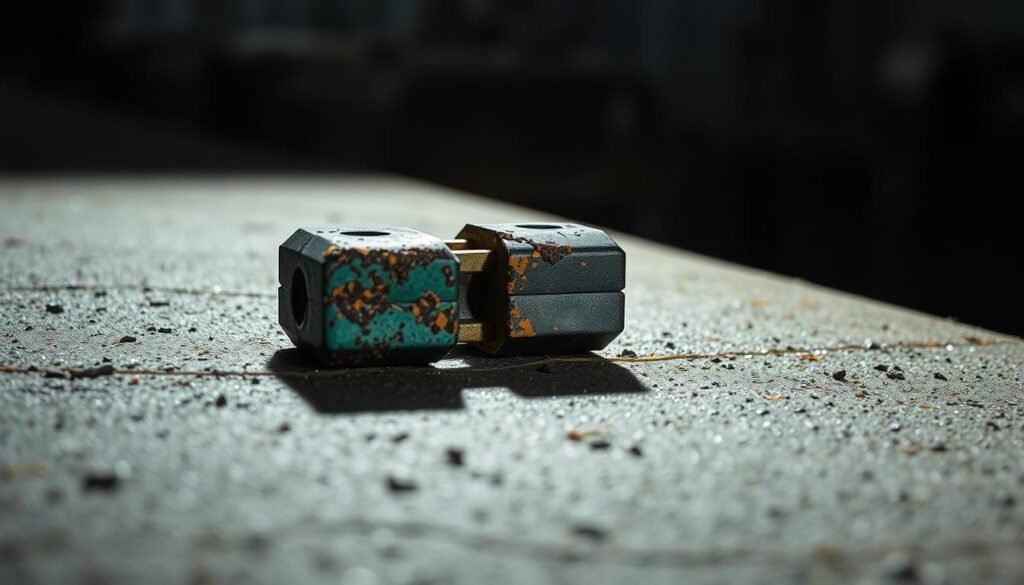
Spotting corroded battery terminals is crucial to avoid major damage. Look for a white or greenish powdery substance on the terminals. Also, check for a corroded or rusty appearance or a loose or flaking connection. If you see these signs, clean and maintain your battery terminals right away.
Regularly checking your battery terminals can help catch corrosion early. Look for any visible signs of corrosion and check for loose connections. Early detection can prevent bigger problems.
Safety Precautions Before You Start
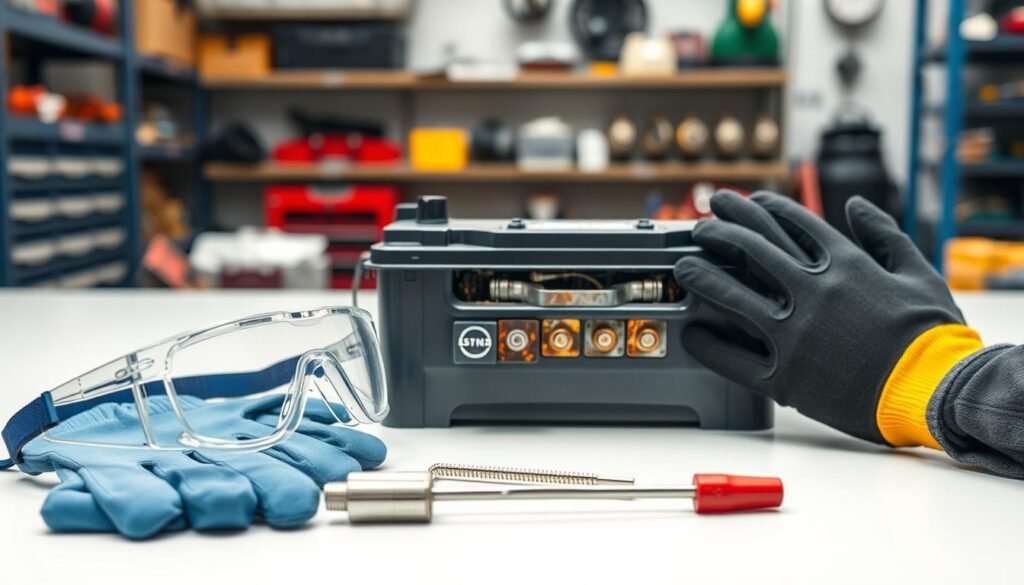
Before you start cleaning corroded battery terminals, it’s important to take safety precautions. Corrosion can have harmful substances that might irritate your skin and eyes. So, it’s crucial to protect yourself properly.how-to-clean-humidifier
Essential Safety Gear
When dealing with corroded battery terminals, wearing the right safety gear is key. I suggest wearing protective gloves to avoid skin contact with corrosive materials. Also, safety glasses or goggles will protect your eyes from splashes or debris. According to WebMD, wearing protective gear can greatly reduce injury risks when handling car batteries.
- Protective gloves
- Safety glasses or goggles
- A face mask (optional)
Preparing Your Workspace
Creating a safe workspace is as important as wearing protective gear. Make sure the area is well-ventilated to avoid inhaling fumes or particles. Keep the workspace away from children and pets to prevent accidents. It’s also wise to lay down a protective cover or old cloth to catch spills or debris.
As safety experts say, “A safe workspace is a controlled environment where potential hazards are minimized.” Having a safe and organized workspace will make cleaning more efficient and safer.
| Safety Precaution | Importance |
|---|---|
| Wearing protective gloves | High |
| Using safety glasses | High |
| Ensuring good ventilation | Medium |
| Keeping the area away from children and pets | High |
Tools Required for Cleaning

Before you start cleaning corroded battery terminals, it’s important to have the right tools. This makes the job easier and safer. You probably have most of these tools at home.how-to-clean-your-ears
Common Household Items
Many common household items are key for cleaning corroded battery terminals. These include:
- Baking Soda: Acts as a mild abrasive and helps neutralize acid.
- Water: Used to mix with baking soda to create a paste.
- Wire Brush: Helps remove corrosion from the terminals.
- Gloves and Safety Goggles: Protect your hands and eyes from chemical splashes.
These items are not only effective but also easy to find. This makes the first step of cleaning corroded battery terminals simple.
Specialized Cleaning Products
For more severe corrosion or if you prefer a specialized solution, there are several products available:
- Battery Terminal Cleaner: A chemical solution designed to remove corrosion.
- Terminal Protectant Spray: Helps prevent future corrosion.
When choosing specialized cleaning products, it’s crucial to read the labels and follow the instructions. This ensures safety and effectiveness.
In conclusion, having the right tools is key to successfully cleaning corroded battery terminals. Whether you choose common household items or specialized products, make sure you’re prepared. This way, you can do the job safely and effectively.how-to-clean-a-coffee-maker
Step-by-Step Guide to Clean Corroded Battery Terminals
To make your vehicle’s battery work better, follow this guide to clean corroded battery terminals. Cleaning these terminals is easy and helps your car’s electrical system work right.
Disconnecting the Battery
First, disconnect the battery to avoid any accidental starts or shocks. Start by loosening the nut on the negative (black) cable with a wrench. Once it’s loose, take off the clamp from the terminal. Do the same for the positive (red) cable. This order helps avoid short circuits.
After you’ve disconnected both cables, check the terminals for corrosion. If the corrosion is bad, you might need to use a bit more force. But be careful not to hurt the terminals.
Cleaning with Baking Soda and Water
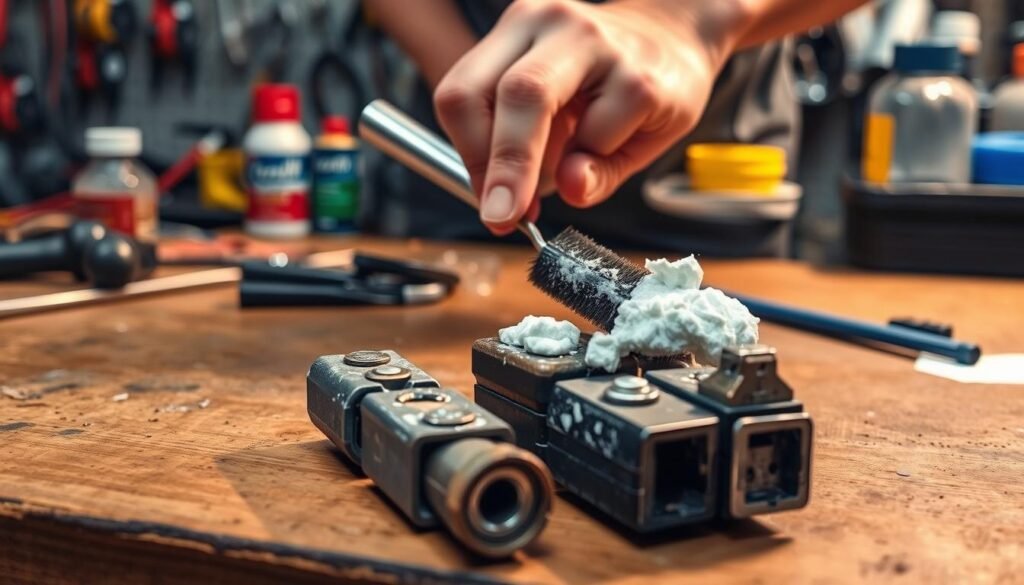
To clean the terminals, mix baking soda and water into a paste. Use about 1 tablespoon of each. Apply this paste to the corroded areas with a small brush or cloth, making sure to cover everything.
The baking soda is a mild abrasive that helps get rid of the corrosion. Let it sit for a few minutes. Then, use a wire brush or a battery terminal brush to remove the corrosion. Be gentle to avoid damaging the terminals.how-to-clean-uggs
Rinsing and Drying the Terminals
After scrubbing, rinse the terminals with clean water to get rid of any leftover baking soda and corrosion. You can use a damp cloth or a spray bottle filled with water for this.
Once rinsed, dry the terminals with a clean, dry cloth. It’s important to get rid of any moisture to stop further corrosion. You can also put a small amount of petroleum jelly or a commercial terminal protector on the terminals to prevent future corrosion.
| Step | Action | Notes |
|---|---|---|
| 1 | Disconnect the negative cable | Loosen the nut with a wrench |
| 2 | Disconnect the positive cable | Follow the same process as the negative cable |
| 3 | Mix baking soda and water | 1 tablespoon of baking soda to 1 tablespoon of water |
| 4 | Apply the paste and scrub | Use a wire brush or battery terminal brush |
| 5 | Rinse and dry the terminals | Use clean water and a dry cloth |
By following these steps, you can clean corroded battery terminals effectively. Regular maintenance helps prevent future corrosion and keeps your vehicle running smoothly.
Reconnecting the Battery
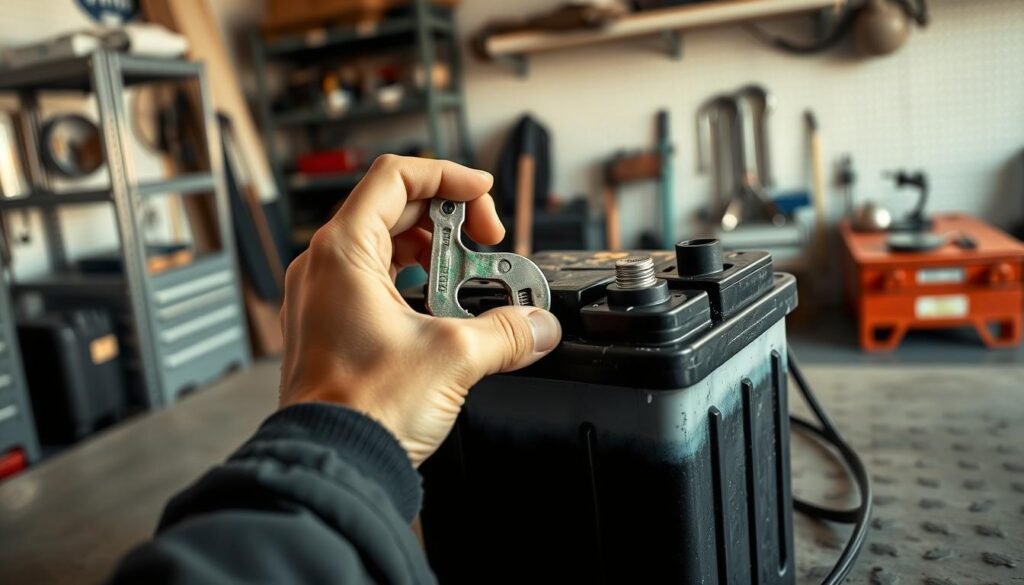
After cleaning the terminals, reconnecting the battery is the next step. It’s important to do it right to ensure safety and a good connection. You need to know the right order for connecting the terminals and check if the connection is secure.
Proper Terminal Connection Order
When reconnecting the battery, follow the correct order for terminal connections. Start with the positive terminal, then the negative. This order avoids short circuits. Make sure the cables are snug on the terminals for a secure connection. For more tips on battery care, check out Interstate Batteries’ blog.
Testing for Secure Connection
After reconnecting, test the connection. First, check that the cables are well attached to the terminals. Then, turn on your car’s lights or other electrical parts to test the battery. If it works, you’ve done it right. A secure connection is key for your car’s electrical system.
By following these steps, your battery will be connected correctly, and your car will be ready to go. Regular checks on the battery terminals can also help your battery last longer and avoid problems.
Preventing Future Corrosion
Preventing corrosion on your battery terminals is easy with a few simple steps. Keeping your terminals clean and free from corrosion is key. This ensures your vehicle’s battery works well.how-to-clean-grout
Regular Maintenance Tips
Checking and cleaning your battery terminals regularly is crucial. I suggest inspecting them every three months for signs of wear or corrosion. Use a mix of baking soda and water to clean them, as mentioned in Section 5.
Also, make sure the terminals are securely connected. Loose connections can cause corrosion. A terminal cleaning brush can help remove corrosion from the terminal threads.
Using Protective Coatings
Using a protective coating on your battery terminals is a great way to prevent corrosion. You can choose from petroleum jelly, silicone-based sprays, or terminal protectants. These coatings act as a barrier, keeping moisture and corrosive elements away from the terminal.
Before applying a protective coating, make sure the terminals are clean and dry. Apply a small amount of the coating to the terminal and the surrounding area. Always follow the product’s instructions.
By following these maintenance tips and using protective coatings, you can greatly reduce corrosion risk. This proactive approach will extend your battery’s life and keep your vehicle running smoothly.
When to Seek Professional Help

Cleaning corroded battery terminals is something you can do yourself. But, there are times when you should get help from a professional mechanic. If you’re not sure how bad the corrosion is or feel uneasy about cleaning it, it’s best to ask for help.
Identifying Severe Corrosion
Severe corrosion shows up in different ways. It can be a thick buildup around the terminals, leaking battery acid, or damage to the battery casing. If you see any of these, it means you need more than just a cleaning.
For more info on spotting corrosion, check out this resource. It can help you understand the signs of a corroded battery.
In severe cases, a pro can check the damage and tell you what repairs or replacements you need. Don’t ignore severe corrosion. It can cause bigger problems like electrical failures or a dead battery.
Signs of Battery Replacement Needs
There are other signs that your battery might need to be replaced. These include:
- Age: If your battery is over three years old, it might not hold a charge as well.
- Swelling: A swollen battery case means it’s overheating, which shortens its life.
- Frequent Corrosion: If your battery terminals keep corroding, even after cleaning, it’s a sign the battery is almost dead.
Replacing your battery when needed can stop unexpected breakdowns and keep your car running well. If you’re seeing these signs, it’s smart to talk to a mechanic to figure out what to do next.how-to-clean-suede
Eco-Friendly Disposal of Old Batteries
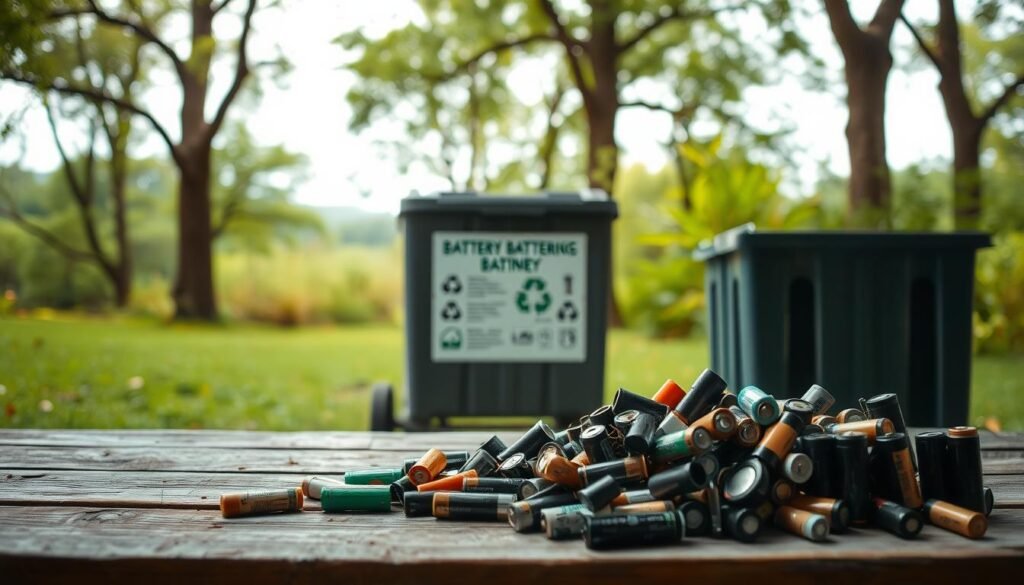
Properly disposing of old batteries is key for our planet’s health. When you replace a battery, think about the old one’s environmental impact. Make sure it’s disposed of in an eco-friendly way.
Local Recycling Programs
Many places have recycling programs for batteries. Check with your local waste management to see if they have one. You can also search online for “battery recycling near me” to find local spots.
Some stores also recycle batteries. For example, many hardware and electronics stores have drop-off spots. Using these services ensures your old batteries are recycled right.
Best Practices for Safe Disposal
Before recycling your old battery, prepare it. Tape the terminals to avoid fires. Also, check if the recycling program has any special preparation steps.
Don’t throw batteries in regular trash or recycling bins. They can start fires or leak harmful stuff. Instead, take them to a recycling center or a store that accepts old batteries.
By following these tips and using local recycling programs, you help the environment. It’s a small step towards a greener future.
Conclusion and Final Tips
Keeping your vehicle’s battery in good shape is key for its performance and life. By following the steps in this guide, you can clean corroded battery terminals well. This helps prevent future corrosion.
Recap of Key Steps
To sum up, the main steps are disconnecting the battery, cleaning the terminals with baking soda and water, rinsing, and drying. It’s also important to reconnect the battery correctly. Regular checks and maintenance, like looking for corrosion signs and using protective coatings, keep your battery healthy.
Encouragement to Maintain Battery Health
I urge you to use these tips to keep your vehicle’s battery in top condition. Always check your battery terminals for corrosion. Using protective coatings can also help prevent problems. This way, you’ll keep your battery healthy and enjoy a better driving experience.
## FAQ
### Q: What causes battery terminal corrosion?
Corrosion happens when battery acid meets metal terminals. This creates harmful substances.
### Q: How do I know if my battery terminals are corroded?
Look for a white or greenish powder on the terminals. Also, dim or flickering headlights and hard engine starts are signs.
### Q: Can I clean corroded battery terminals myself?
Yes, you can clean them with baking soda, water, and a wire brush. Just remember to be safe.
### Q: What safety gear should I wear when cleaning battery terminals?
Wear gloves and safety glasses to protect your skin and eyes.
### Q: How do I prevent future corrosion on my battery terminals?
Regularly check and clean the terminals. Use a protective coating and keep the area well-ventilated.
### Q: Can I use any cleaning product to clean my battery terminals?
No, use baking soda and water or special battery cleaners. Avoid harsh chemicals.
### Q: How often should I check my battery terminals for corrosion?
Check every 3-6 months or during routine car maintenance.
### Q: What are the signs that my battery needs to be replaced?
Look for age, swelling, frequent corrosion, and hard engine starts. These are signs it’s time for a new battery.
### Q: How do I dispose of old batteries in an environmentally friendly way?
Recycle them through local programs or take them to a recycling center. Always dispose safely.
### Q: Can I clean corroded battery terminals on any type of vehicle?
Yes, cleaning is similar for most vehicles. But, always check your owner’s manual for specific advice.