Surprising fact: dust mites affect up to 30% of people and hide in as many as 80% of homes, making regular upholstery care essential for a healthier living space.
I’ll walk through my plan for restoring a tired sofa, from quick surface refreshes to deeper methods that don’t take all day. I explain why routine cleaning matters: fabric traps dust, allergens, pet hair, and odors, and a steady schedule keeps my living room inviting.
I’ll show how I read care codes (W, S, WS, X), mix safe DIY solutions, and decide when machines are worth using. I’ll also cover gentle stain lifting, avoiding oversaturation, and safety basics like ventilation with solvent cleaners and keeping steam away from my face.
Big wins I aim for: faster pet-hair removal, safer stain lifting without scrubbing, smarter drying to stop musty smells, and a clear choice between a quick pass and a true deep clean.
For a detailed deep-clean checklist and step-by-step guidance, I also reference a trusted guide that complements these tips: deep-clean checklist.
Key Takeaways
- Routine surface care every 2–4 weeks and deeper cleans once or twice a year keep allergens low.
- Check the fabric care label (W, S, WS, X) before applying any product.
- Spot test before using any cleaner and work with good ventilation for solvents.
- Pet homes often need bi-weekly vacuuming and more frequent deep cleaning.
- Quick passes save time; deep cleans prevent odors and improve long-term fabric health.
Before I Start: Fabric Type, Cleaning Codes, and Safety Checks
My first move is a quick tag read and a spot test that guides the entire cleaning plan. I flip cushions or check underneath for the upholstery tag so I know whether water-based or solvent-only solutions are safe.
Decoding codes matters: W means water-based solutions are okay. S means use solvent-based cleaners only. WS gives me flexibility. X lets me vacuum or brush only.
How I read labels and test colorfastness
I always do a quick colorfastness test with a white cloth in an unseen spot. If dye transfers, I change plans and pick a gentler approach.
Why I blot and never scrub
When I tackle stains I blot gently. Scrubbing spreads pigments and pushes messes deeper. Blotting lifts without roughing the fabric fibers.
Leather and suede precautions
On leather I stick with leather soap or a dedicated cleaner, use minimal moisture, then condition. For suede I use a suede brush and suede-specific cleaner sparingly. Water can spot or harden the nap, so I avoid it.
- I follow manufacturer instructions and test first as my primary safety rule.
- I keep a soft cloth and the right cleaners on hand for the job.
- When I’m unsure, I treat the piece conservatively to protect my furniture and finishes.
“A simple tag check can save your sofa from irreversible damage.”
My Essential Couch Cleaning Kit for Today’s Clean
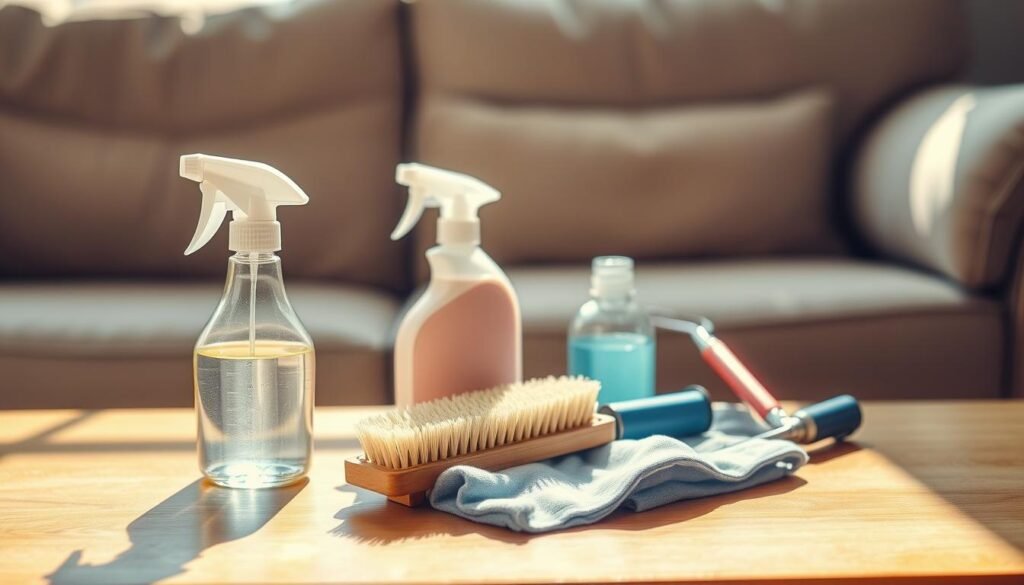
Before I start, I gather a compact kit that makes the task faster and less messy.
What I lay out:
- I grab my vacuum with an upholstery tool and a firm fabric brush for surface lift.
- A lint roller and a slightly damp microfiber cloth handle pet hair and light blotting.
- I keep rubber gloves for quick hair pickup and a crevice tool for seams.
Simple DIY mixes that work
I fill a labeled spray bottle with a balanced solution. A common mix is equal parts warm water and white vinegar, with one teaspoon of gentle dish soap when extra cleaning power is needed.
Quick rules: shake the bottle before use, spot test out of view, and keep extra white cloths or paper towels nearby for immediate blotting.
“A small, organized kit saves time and keeps weekly upkeep painless.”
How I Surface Clean a Fabric Couch in Minutes
I begin by brushing the fabric couch to lift dust and dirt. Then I attach the upholstery tool and use slow, overlapping passes across cushions, backs, and sides.
I remove cushions and vacuum their sides and undersides. I detail seams and crevices where crumbs and grit hide. For tight spots I switch to a crevice tool along the back rest and arm seams.
Fast pet hair removal
For stubborn pet hair, I alternate a lint roller with a rubber-glove swipe. That pulls clingy hair and loose fibers in seconds.
- I follow with a final vacuum pass to collect what the brush and gloves lifted.
- I flip and rotate cushions to even wear and keep the couch balanced.
- I finish by lightly grooming the nap with a soft brush so upholstery looks smooth and cared for.
| Step | Tool | Goal |
|---|---|---|
| Loosen debris | Soft brush | Lift dust and dirt |
| Surface suction | Upholstery wand | Remove grit and pet hair |
| Detailing | Crevice tool & lint roller | Clean seams and stubborn hair |
How to Clean Couch Stains Without Making Them Worse

Acting within minutes of a spill makes the difference between a quick fix and a stubborn stain. I start small, using gentle lifts and tested mixes rather than heavy scrubbing that damages fabric.
Blot-first method for spills, mud, and pet accidents
I act fast and blot first with a clean white cloth. That pulls moisture up before it spreads across the area. I never scrub — scrubbing pushes pigment deeper and creates a larger mark.
Grease vs. water marks: simple kitchen solutions
For grease, I mix 1 teaspoon dish detergent with 2 cups warm water and dab lightly. If the tag reads S, I use a dry-cleaning cloth or solvent-based cleaners instead of any water.
When I reach for solvents on S-only fabrics
For water spots I mist a mix of 1/2 cup white vinegar plus 2 cups distilled water, working from the edge toward the center and blotting. I test treatments in a hidden spot and follow label instructions.
- I keep people and pets off the wet area while it dries.
- I use a fan to speed drying without over-wetting the fabric.
- For more tips I consult a trusted stain guide.
Deep Cleaning Methods That Actually Work
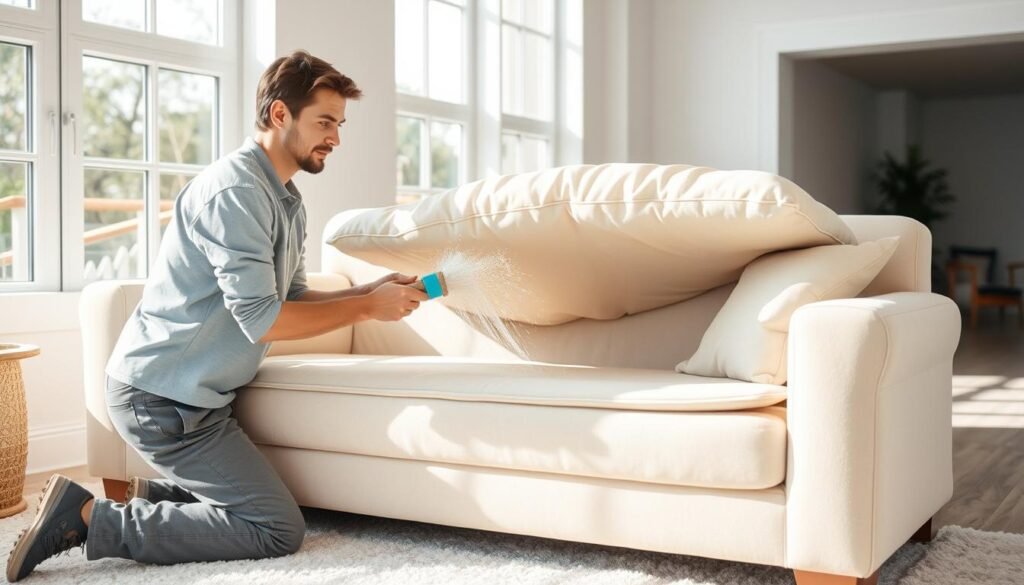
A thorough refresh combines simple no-machine steps and careful machine work for the best results.
No-machine refresh
I start by brushing and vacuuming the fabric to lift surface grit and dust. Then I sprinkle baking soda and let it sit 20–30 minutes to absorb odors.
After vacuuming the baking soda, I target lingering spots with a minimal solution and blot patiently. I avoid soaking so the fill and fabric keep their shape.
Using a carpet cleaner
For W or WS upholstery, I fill the machine with warm water and an upholstery formula. I keep passes light and avoid oversaturating any panel.
I make extra extraction passes to pull out as much liquid as possible. That lowers drying time and prevents musty smells.
Steam cleaning tips for WS fabrics
Steam works well on W and WS tags when used carefully. I move the steamer in quick, overlapping strokes and never hover, which protects fibers from heat and excess moisture.
I work from top down and clean one section at a time. Then I allow 4–6 hours of drying with good airflow so the fabric rebounds clean and odor-free.
| Method | Key step | Drying/help |
|---|---|---|
| No-machine refresh | Brush, vacuum, baking soda, spot treat | Air dry; fan speeds drying |
| Carpet cleaner | Warm water + upholstery formula; light passes | Extra extraction; 4–6 hours with airflow |
| Steam on WS/W | Quick overlapping strokes; no hovering | Top-down work; fan or AC assists |
| Spot care | Minimal solution; blot, never soak | Keep area ventilated until fully dry |
“A measured process and controlled moisture beat aggressive scrubbing every time.”
Final note: these methods protect fibers and lift grime. With modest steps and the right tools I keep my couch fresh and long-lasting.
Couch Cushions and Covers: My Step-by-Step Care

I start by separating covers from inserts so each piece gets the right attention. Checking labels guides every choice and keeps fabric safe.how-to-clean-shower-head
Machine-washable covers
If the label lists machine instructions, I wash covers in cold water on a gentle cycle. I avoid heat and never use a dryer; I always air dry covers flat or hung so they keep shape.
Foam cushion pads and missing labels
For foam inserts or when tags are gone, I hand-wash gently in warm water with a mild detergent. I press the foam to move water through it and never wring, which can damage the fill.
I rinse thoroughly, then lay foam flat and turn it often while it dries. Turning prevents trapped moisture that leads to odors or mildew.
- I vacuum cushion wells while covers are off so dust and crumbs don’t hide beneath fresh fabric.
- I avoid dryers that can shrink covers or set stains; rushing reassembly risks mildew.
- After everything is dry, I rotate cushions for even wear and to keep the seat supportive and comfortable.
“Small, careful steps with covers and inserts protect fabric and extend the life of my sofa.”
Drying, Odor Control, and Disinfection the Right Way
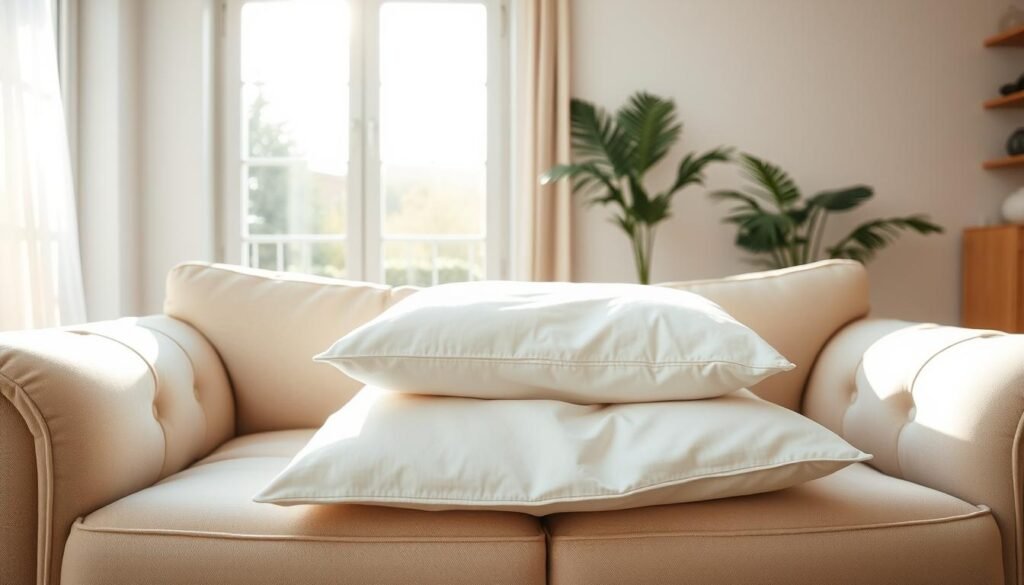
Once the last blot is done, my next priority is controlled drying so fabrics and foam dry evenly. I don’t rush this step because trapped moisture harms padding and causes musty smells.
Airflow, time, and avoiding trapped moisture
I plan adequate air dry time—typically 4–6 hours—so the sofa fully dries and seams and foam don’t retain moisture. I keep doors or windows open when possible and run a fan or AC to speed evaporation.
DIY disinfectant for upholstered furniture
When I skip steam, I use a safe mist. My recipe is 2 cups rubbing alcohol plus 1 cup water in a spray bottle. I give a light, even spray and let the area air dry rather than soaking fabrics.how-to-clean-stainless-steel
Vinegar-based deodorizing
For lingering smells I mix equal parts white vinegar and water in a bottle and mist gently. Vinegar neutralizes odors; good ventilation helps the scent fade quickly.
- Light mists, not saturation: heavy wetting slows drying and risks mildew.
- Wait until bone dry: never put cushions back early or pets and kids on the couch during drying time.
- Consistent checks: press seams and cushion wells; if any area feels cool or damp, keep airflow until it’s fully dry.
“Fast cleaning finishes fail when drying is ignored—airflow and patience make the work last.”
Pet Hair, Paw Prints, and Odors: How I Keep a Couch Pet-Friendly

I rely on easy prevention steps that stop most hair, mud, and odors before they set in. Small routines save time and protect upholstery and other furniture in my living area.how-to-clean-headlights
Prevention habits that actually work
I use machine-washable throws over high-use spots and launder them often. I groom my pet regularly and wipe paws after walks so dust and mud never grind into fabric.
I keep a lint roller, rubber gloves, and a spray bottle nearby for quick pet hair pickup and light freshening between deeper sessions.
Spot treatment for urine and drool without over-wetting
If an accident happens, I blot immediately with a clean white cloth and avoid soaking the area. For W or WS tags I use a mild water-based solution; for S I switch to solvent methods.
I vacuum weekly or bi-weekly and perform a deeper clean every couple of months in pet-heavy homes, which keeps smells from building up.
- I protect seating with throws and rotate them often.
- I refresh high-traffic pet zones with quick passes so odors don’t linger.
- I store supplies within reach so I can act fast on spills and stains.
| Issue | Quick action | Best method |
|---|---|---|
| Loose pet hair | Lint roller or vacuum | Weekly vacuum; daily spot-roller |
| Paw mud | Wipe then blot | Machine-washable throw |
| Urine or drool | Blot, minimal solution | W/WS: water-based; S: solvent |
“Small habits protect upholstery more than big interventions.”
For extra tips aimed at pet owners, I also reference a useful guide with practical suggestions: pet owners tips.
My Ongoing Care Schedule to Keep the Sofa Looking New
Consistency is my secret: small actions at regular intervals protect fabric and fill. I set a simple plan so upkeep fits into my week without fuss.how-to-clean-hair-brushes
Vacuuming cadence, deep clean timing, and cushion rotation
I follow a steady routine: a quick vacuum every week or two, a surface refresh every 2–4 weeks, and a deeper process once or twice a year.
In homes with multiple pets or heavy use, I step up the schedule and plan a deep clean roughly every two months. This keeps odors and embedded soils from building up.
- I rotate and fluff cushions regularly to keep seating even and extend the life of the upholstery and filling.
- My short checklist makes upkeep easy: vacuum, spot check, rotate, and air out.
- I always glance at the manufacturer’s instructions before changing products or techniques so my furniture stays safe.
- I batch tasks like washing throws with linens to save time and keep the sofa looking new.
- I adjust the cadence by season when doors are open more and pollen or dust rises.
“Small, regular steps keep a sofa comfortable and attractive far longer than occasional overhauls.”
A final tip: stick with the plan and tweak it for pets or heavy traffic. This way your cleaning couch routine becomes simple and effective, and your sofa stays ready for guests.how-to-clean-wood-cutting-board
Conclusion
My closing rule is: read the fabric label, pick safe methods based on W/S/WS/X codes, and give the piece real time to dry for lasting results.
I keep a steady routine—vacuum weekly or bi-weekly, surface clean every few weeks, and deep clean once or twice a year (more often in pet homes). I spot test first, blot stains gently, and avoid scrubbing which spreads marks.
For disinfecting without steam, I mist 2 cups rubbing alcohol plus 1 cup water lightly and let the area air dry for 4–6 hours with good airflow.
If I need machine help, I use a carpet cleaner or portable extractor carefully, make extra extraction passes, and avoid oversaturation so cushions and upholstery stay healthy.
For a complementary, detailed couch guide I reference a trusted resource: detailed couch guide.