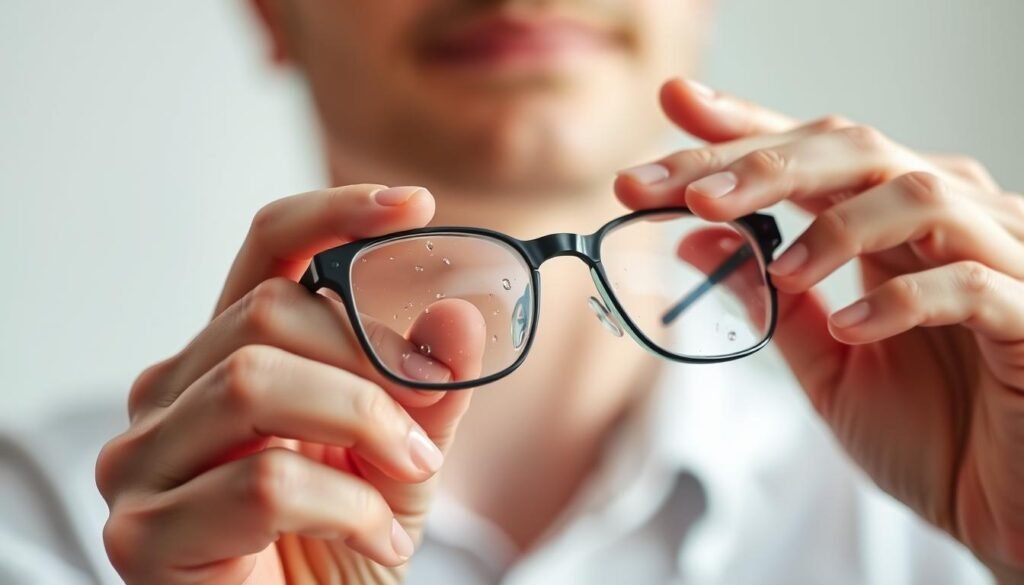
Keeping my eyeglasses clean is key to clear vision and a longer life for them. A simple cleaning routine can greatly improve my vision and glasses’ life span.
Dirty or smudged lenses can strain my eyes and impact my daily life. By following a few easy steps, I can keep my eyeglasses in top shape. We’ll look at why eyeglasses care is important and show how to clean eyeglasses effectively.
Key Takeaways
- Regular eyeglasses cleaning is crucial for clear vision.
- Proper eyeglasses care extends the lifespan of your glasses.
- A simple cleaning routine can make a significant difference.
- Dirty lenses can cause eye strain and affect daily activities.
- Easy steps can help keep your eyeglasses in excellent condition.
Understanding the Importance of Clean Eyeglasses
Clean eyeglasses are key to our daily vision. They help us see clearly and avoid eye strain.
Benefits of Clean Eyeglasses
Clean eyeglasses improve our vision and reduce eye strain. They let us see the world clearly. This is vital for driving, reading, or computer work.
Clean glasses also make them more comfortable to wear. Dirty lenses can cause glare and halos at night. This can be annoying and dangerous. So, keeping glasses clean is important for a better wearing experience.
Effects of Dirty Lenses on Vision
Dirty lenses can harm our vision. They cause eye strain and fatigue. Our eyes have to work harder to see through smudges or dirt.
This can lead to headaches and discomfort over time. It’s not good for our eyes.
When to Clean Your Eyeglasses
It’s best to clean your glasses every day. This is important after being outside or around dust and pollen. A quick rinse with water or a special cleaner can help a lot.
Regular cleaning is essential for eyeglasses maintenance. It ensures your glasses stay clear and functional.
Tools You Need for Cleaning

Effective eyeglass cleaning starts with the right equipment. To keep your eyeglasses in top shape, you need the right tools.
Recommended Cleaning Solutions
Choosing the right cleaning solution is key. Microfiber cloths and lens cleaning solutions are made to clean your lenses without streaks or residue. Don’t use household cleaners, as they can harm lens coatings.how-to-clean-a-dishwasher
- Lens cleaning sprays or wipes made for eyeglasses
- Microfiber cloths that are soft on lenses
The Right Cloth for Your Eyeglasses
A microfiber cloth is a must-have for cleaning your eyeglasses. Microfiber cloths are gentle on lenses and great at removing smudges and fingerprints. It’s smart to have several microfiber cloths ready to ensure you always have a clean one.
Additional Cleaning Accessories
Along with a microfiber cloth and cleaning solution, other accessories can help keep your eyeglasses spotless. These include:
| Accessory | Description | Benefit |
|---|---|---|
| Lens cleaning wipes | Pre-moistened wipes for quick cleanups | Perfect for cleaning on the go |
| Eyeglass cleaning brush | Soft-bristled brush for removing dust | Gentle on lenses, great at removing debris |
| Microfiber pouch | Protective case for storing microfiber cloths | Keeps cloths clean and dust-free |
With the right tools and accessories, you can keep your eyeglasses clean and in great condition.
Step-by-Step Guide to Cleaning Eyeglasses
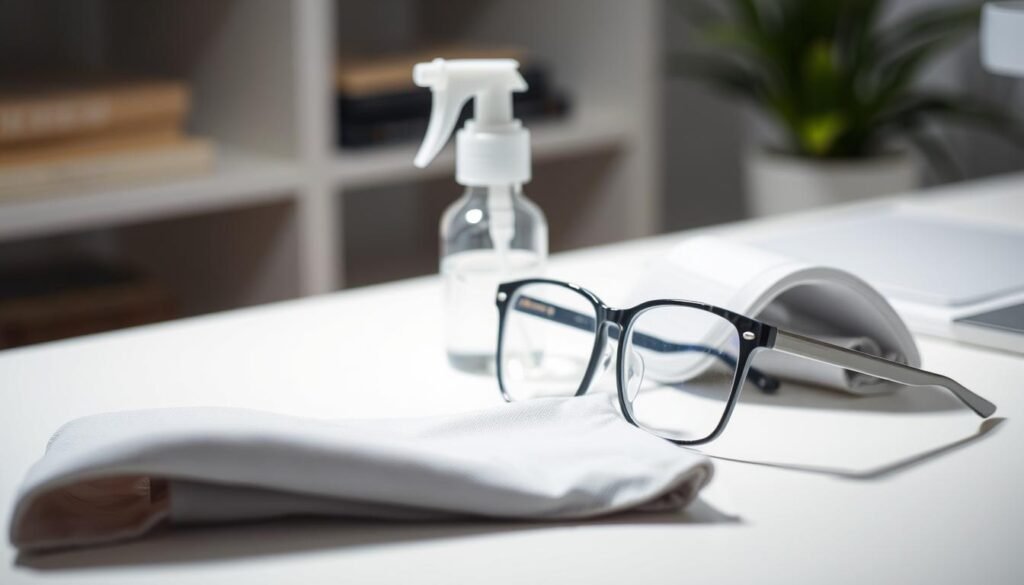
To keep your eyeglasses in top shape, follow a simple cleaning guide. Cleaning your eyeglasses is easy but requires care. This ensures they stay in good condition and provide clear vision.
Rinsing Your Lenses
The first step is to rinse your lenses under warm water. This removes debris and dust. Rinsing before cleaning helps prevent scratches.how-to-clean-strawberries
Applying the Cleaning Solution
Next, apply a small amount of cleaning solution to each lens. You can use a specialized eyeglass cleaning solution or a mix of water and mild dish soap. Rub the solution onto the lenses with your fingers, cleaning both sides and the frames.
For more info on the best cleaning solutions, check out a comprehensive guide on eyeglass cleaning.
Drying Your Eyeglasses
After applying the cleaning solution, dry your eyeglasses with a microfiber cloth. Microfiber cloths are gentle and effective at removing moisture. Gently pat the lenses dry, then check if they are clean and free of smudges.
By following these eyeglasses cleaning steps, you can keep your eyeglasses clean and in good condition. Regular cleaning improves your vision and extends your eyeglasses’ life.
Tips for Preventing Scratches
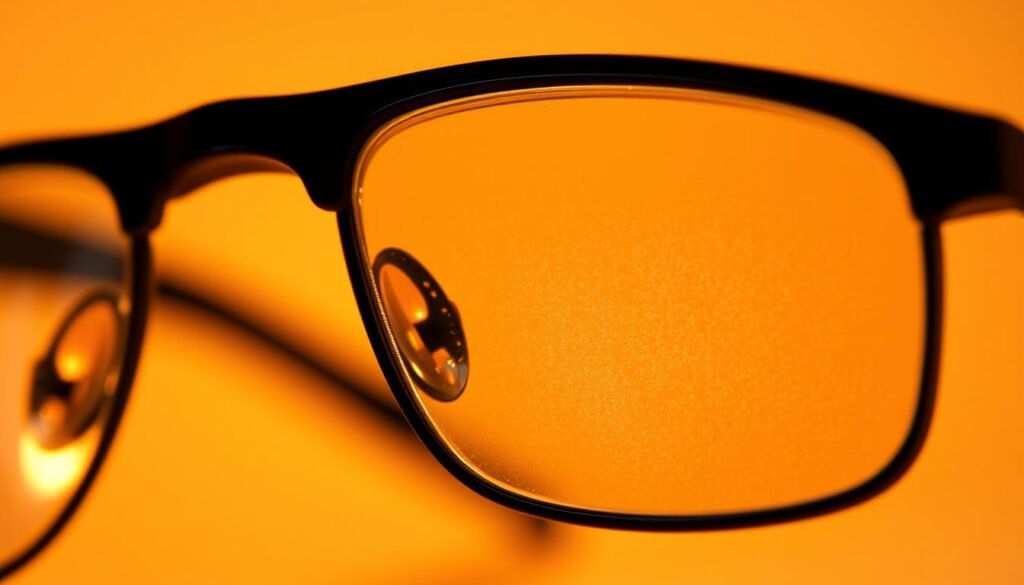
To keep your eyeglasses scratch-free, handle them right, store them safely, and pick the right lenses. Simple habits can greatly lower scratch risks and keep your glasses looking great.
Safe Handling Techniques
First, handle your glasses with care to avoid scratches. Always grasp the frames, not the lenses, to avoid pressure. When setting them down, use a soft surface or case to protect them from bumps.
Key Handling Tips:
- Always clean your hands before touching your glasses to prevent dirt and oils from getting on the lenses.
- Don’t touch the lenses with your hands, as skin oils can attract dust and cause scratches.
- Use a microfiber cloth to gently clean smudges and dust from the lenses.
Storing Eyeglasses Properly
Storing your glasses right is key when they’re not in use. A hard-shell case offers the best protection against scratches and damage.how-to-clean-suede-shoes
Storage Tips:
- Always store your glasses in a protective case when not wearing them.
- Don’t leave your glasses lens-side down on surfaces.
- Keep them in a cool, dry place to avoid damage from extreme temperatures or humidity.
Choosing Scratch-Resistant Lenses
Choosing scratch-resistant lenses makes your glasses more durable. Many lenses today have coatings that prevent scratches.
Scratch-Resistant Lens Options:
| Lens Type | Scratch Resistance | Additional Benefits |
|---|---|---|
| Polycarbonate Lenses | High | Lightweight, impact-resistant |
| Trivex Lenses | High | Thin, lightweight, excellent optical clarity |
| High-Index Lenses | Moderate | Thinner and lighter than traditional lenses |
By following these tips and picking the right lenses, you can prevent scratches and keep your glasses in great shape for longer.
How to Clean Different Types of Lenses
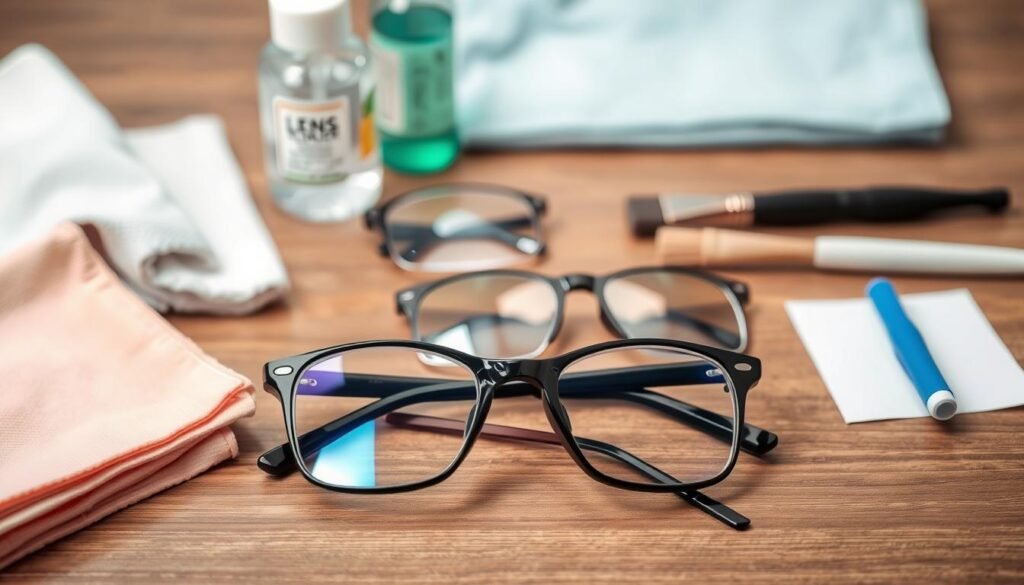
Cleaning eyeglasses isn’t a one-size-fits-all task, thanks to the variety of lens types. Each lens needs its own care to stay in top shape.
Glass vs. Plastic Lenses
Glass lenses are tough against scratches but can be heavy. They might also cause eye strain. To clean glass lenses, use a soft, lint-free cloth and a gentle cleaning solution. Stay away from paper towels or anything that could scratch.
Plastic lenses are lighter but get scratched easily. When cleaning plastic lenses, pick a solution that matches the lens material. Always check the manufacturer’s advice for the best cleaning method. For more tips, visit All About Vision.
Coated Lenses Care
Lenses with special coatings need extra attention. Use a cleaning solution made for coated lenses to keep the coating safe. Clean them with a microfiber cloth, starting from the center and moving outwards.
Vintage Eyeglasses Cleaning
Vintage eyeglasses have unique materials and coatings that need special care. Avoid harsh chemicals or abrasive materials that could harm them. Clean with a soft cloth and mild soap, and dry with a clean, dry part of the cloth.
Dealing with Smudges and Stains
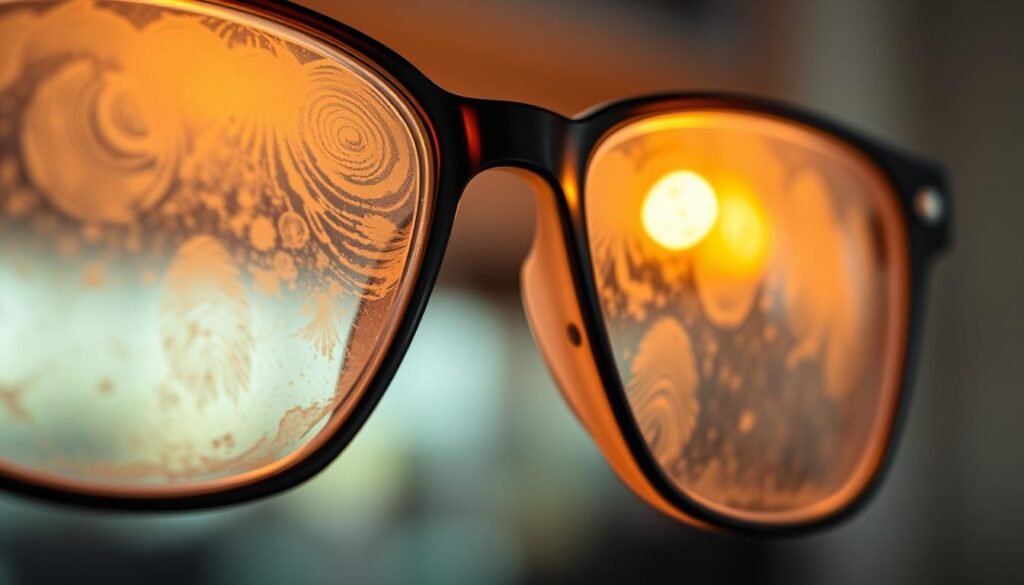
It’s important to know what kind of smudge or stain you have on your eyeglasses to clean them right. Smudges and stains come from many places, like fingerprints, dust, and daily use.
Identifying Common Stains
There are many types of stains on eyeglasses, like oily fingerprints, dust, and spills from food or drinks. Knowing where the stain came from helps a lot in cleaning. For example, oily smudges need a different cleaning method than dry dust.
Quick Fixes for Oily Smudges
Oily smudges are hard to clean because they leave a sticky residue that attracts more dirt. Using a microfiber cloth dampened with water or eyeglass cleaner is a good fix. Just wipe the lenses in a circle to get rid of the smudge.how-to-clean-washing-machine
Cleaning Techniques for Persistent Stains
For tough stains, you might need a gentle cleaning solution. Make a weak dish soap mix with warm water, and clean with a soft, lint-free cloth. Then, rinse with clean water and dry with a microfiber cloth to avoid streaks.
By knowing the type of smudge or stain and using the right cleaning method, you can keep your eyeglasses clean and in top shape.
Keeping Your Frames in Pristine Condition
To keep your eyeglasses looking great, it’s crucial to take care of the frames. A clean frame not only looks better but also lasts longer.
Cleaning the Frame Material
Each frame material needs a special cleaning method. For example, acetate frames need a soft cloth and mild soap. On the other hand, metal frames should be wiped gently with a dry cloth to avoid rust.
When cleaning plastic or acetate frames, stay away from harsh chemicals and rough materials. They can scratch or harm the frame. A microfiber cloth is perfect for cleaning frames because it’s soft and works well.
Avoiding Damage While Cleaning
Be gentle and careful when cleaning your frames to avoid damage. Don’t use paper towels or other rough materials that can scratch. Instead, use a soft, lint-free cloth. When cleaning around the lenses, avoid touching them to prevent smudges and fingerprints.
For frames with detailed designs or small crevices, use a soft-bristled toothbrush to gently remove dirt. This helps prevent grime buildup that can cause damage over time.
Regular Frame Maintenance Tips
Regular care is essential to keep your frames in great shape. Here are some tips:
- Clean your frames regularly, ideally once a week, to prevent dirt buildup.
- Store your eyeglasses in a protective case when not in use to prevent scratches and damage.
- Avoid exposing your frames to extreme temperatures, as this can cause warping or damage.
- Check your frames regularly for signs of wear and tear, such as loose screws or bent temples.
By following these tips, you can keep your eyeglass frames looking their best and extend their lifespan.
| Frame Material | Cleaning Method | Precautions |
|---|---|---|
| Acetate | Mild soap and soft cloth | Avoid harsh chemicals |
| Metal | Dry cloth | Prevent corrosion |
| Plastic | Soft cloth and mild soap | Avoid abrasive materials |
For more information on maintaining your eyeglasses, you can visitOptometrists Clinicfor professional advice.
Signs It’s Time for New Eyeglasses
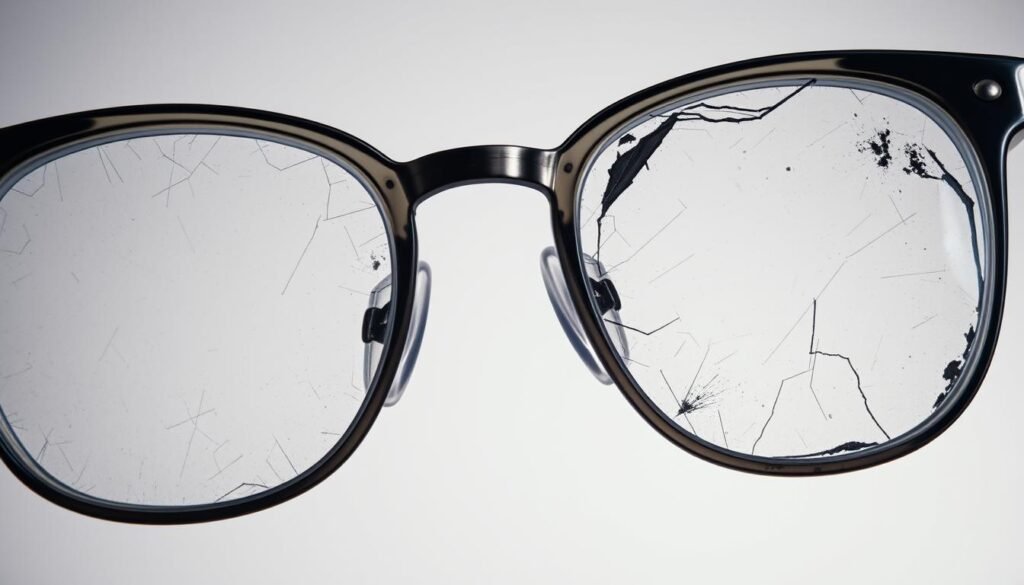
Worn-out eyeglasses can really mess with your vision. Knowing when to get new ones is key for good vision and eye health.how-to-clean-a-cast-iron-skillet
When Cleaning Isn’t Enough
If cleaning your glasses no longer makes them clear, it’s a sign of damage. Frequent cleaning is important, but if it doesn’t work, it’s time for new glasses.
Here are some signs that cleaning isn’t enough:
- Scratches that cannot be removed
- Persistent smudges
- Lens coatings wearing off
Signs of Lens Damage
Lens damage can really hurt your vision. Watch out for these signs:
- Cracks or chips in the lenses
- Delamination of lens layers
- Coating wear-off, leading to glare or reflections
Frame Wear and Tear Indicators
The state of your eyeglass frames is just as important as the lenses. Look out for these signs of wear:
| Frame Part | Signs of Wear |
|---|---|
| Temples | Loosening or bending out of shape |
| Frame Front | Cracking or significant scratches |
| Nose Pads | Wearing out or causing discomfort |
Spotting these signs early means you can get new glasses quickly. This keeps your vision clear and comfortable.
Professional Eyeglass Cleaning Services
Knowing when to get professional help for your eyeglasses is key to their longevity. Regular cleaning is important, but sometimes, a deeper clean is needed.
When to Seek Professional Help
Notice stubborn stains or smudges that won’t go away with regular cleaning? It’s time for professional help. Also, if your eyeglasses have special coatings or materials, they need professional care.
Professional cleaning is a good idea if you’re not sure how to clean your eyeglasses or if you’ve tried many solutions without success. It’s safer to avoid damaging your lenses.
What to Expect from a Service
At a professional cleaning service, expect a detailed inspection and cleaning. They’ll check your eyeglasses, find any problems, and clean your lenses with special tools.
These services use top-notch cleaning solutions that safely remove dirt and grime. They might also adjust your frames or polish your lenses.
| Service | Description | Benefit |
|---|---|---|
| Deep Cleaning | Advanced cleaning solutions and techniques | Removes stubborn stains and smudges |
| Frame Adjustments | Adjusting frames for a comfortable fit | Enhances wearing comfort and prevents damage |
| Lens Polishing | Removing minor scratches from lenses | Improves lens clarity and appearance |
Benefits of Professional Maintenance
Professional eyeglass cleaning services have many benefits. They can make your eyeglasses last longer and stay in good shape. Regular maintenance can also prevent lens damage or frame wear.
Investing in professional cleaning means clearer vision and more comfort. It’s a smart choice for anyone who wears eyeglasses every day.
Frequently Asked Questions about Eyeglass Care
Proper eyeglass care is key to clear vision and longer-lasting glasses. We’ll answer some common questions to help you maintain your eyewear.
Cleaning Frequency
Cleaning your glasses often is a must. Clean them daily, after being exposed to dust, pollen, or other environmental factors. For more tips, visit Zenni Optical’s guide.
Household Cleaners and Eyeglasses
Don’t use household cleaners on your glasses. They can damage lens coatings and harm frame materials. Use mild soap and lukewarm water or pre-moistened lens wipes made for eyeglasses.
Traveling with Eyeglasses
When traveling, keep your glasses in a protective case. Pack a small cleaning cloth and a few pre-moistened lens wipes for on-the-go cleaning.