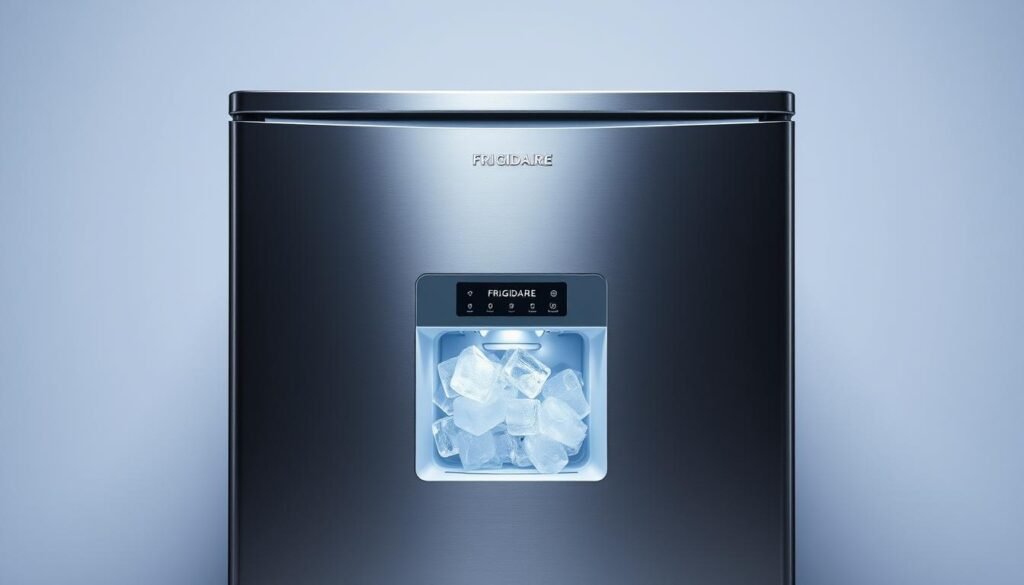
Surprising fact: a well-kept countertop unit can make a fresh batch in about seven minutes, yet scale and residue can slow that by half. I learned this the hard way when my drinks tasted flat.
I keep this guide short and practical. I run a self-clean cycle, then follow with a vinegar-and-water rinse that cuts mineral buildup fast. After any service, I always toss the first ice batch.
My goal is simple: help you get clear, better-tasting ice and stop odors. I note the essential supplies, the key parts I inspect, and small safety steps I use, like unplugging and placing towels. Regular cleaning keeps the machine working smoothly and saves parts from extra wear.
Key Takeaways
- Clear benefits: cleaner ice tastes better and looks clearer.
- Simple routine: run self-clean, rinse with vinegar solution, discard first batch.
- Timing: clean quarterly to bi‑annually, adjust for water hardness.
- Prep: have towels, distilled white vinegar, and clean water ready.
- Aftercare: inspect parts and track the schedule on your calendar.
Why I Clean My Frigidaire Ice Maker Regularly
I set a schedule for maintenance so the unit stays efficient and the water stays pure.
I do this because regular cleaning prevents bacterial growth and mineral scale that harm taste and clarity. A bit of scale on the inlet valve or thermostat changes cycle timing and cuts output.
I watch parts like the inlet valve, thermostat, and heating element during each check. Spotting wear early saves me from bigger repairs and keeps production steady.
I use only food-safe solutions, often citric-acid based, and avoid abrasives that can scratch interiors. I also rinse or replace the filter on schedule so the water feeding the unit stays fresh.
- Cleaner system, better taste: fewer odors and less discoloration.
- Energy and time saved: the unit reaches cycle times more reliably.
- Simple routine: quick wipes plus periodic deeper service keep parts working well.
For a full step-by-step guide and parts notes, see my detailed guide at cleaning and maintenance tips.
Signs it needs cleaning and the best time to do it
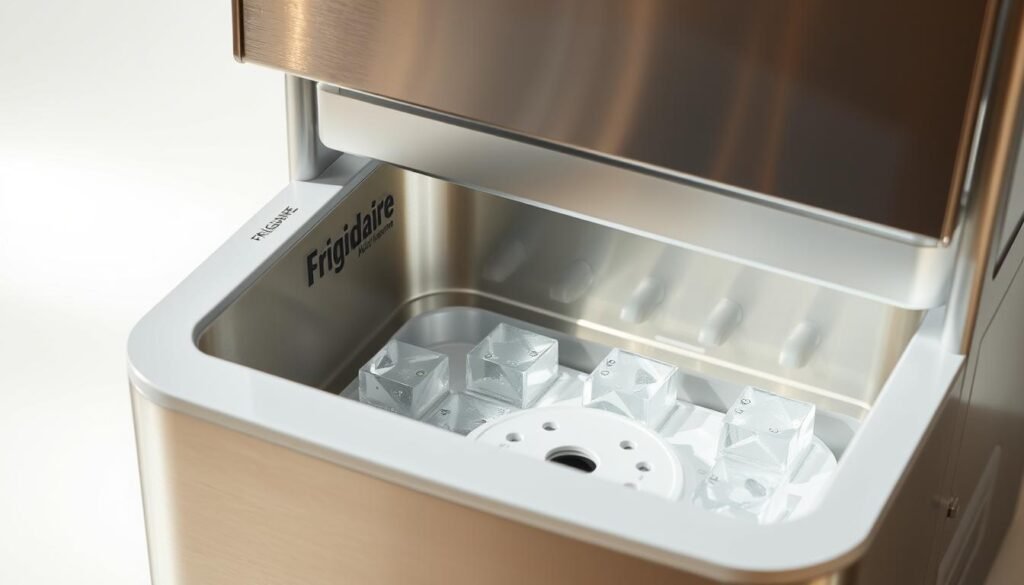
A quick sniff or a flat sip usually tells me it’s time for maintenance.how-to-clean-vinyl-records
Ice tastes or smells off: what I look for before I clean
I trust my senses first—foul odors or a stale flavor mean this unit likely needs cleaning right away.
Cloudy or discolored cubes vs. clear cubes
When cubes look cloudy or have spots, mineral deposits or residue are often the cause. Clear, bright cubes signal healthy water and good operation.
Reduced output and longer freeze times
If a batch takes longer than the typical seven minutes or output drops, the cycle may be slowed by scale or clogs in key parts.
Unusual noises and my cleaning cadence
New rattles or louder fans often point at strained components. I follow a simple cadence: quarterly during hard-water months and bi‑annually when use is light.
- I check the filter and water supply when multiple signs stack up.
- When smell, sound, and cloudy cubes appear together, I run an ice maker cleaning session and use a safe solution for scale.
Prep and supplies I gather before I start
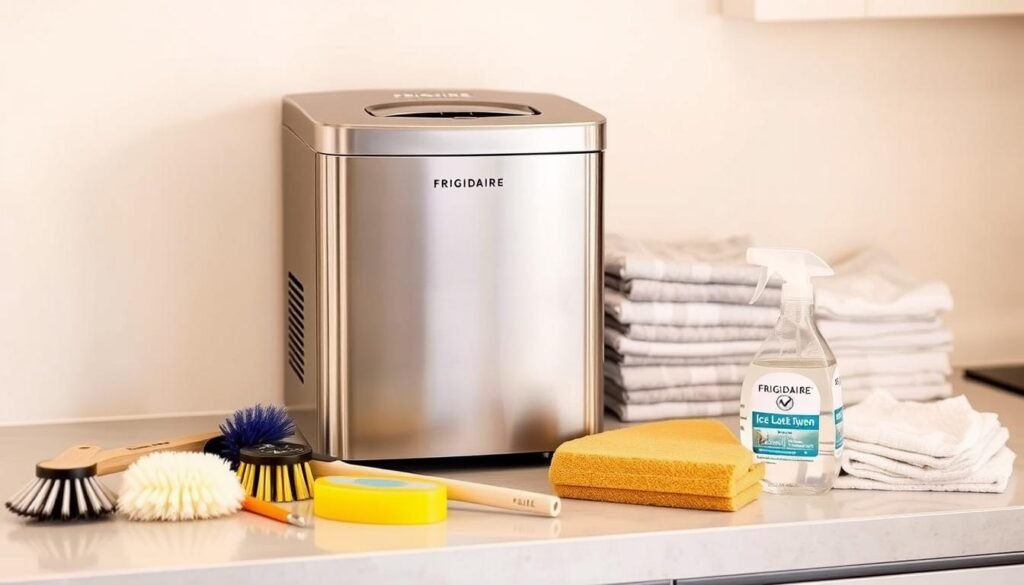
I begin with a short prep routine that keeps the job quick and tidy.
I power down and unplug the machine, then wait a few minutes so the interior cools. This lowers risk and makes handling parts safer.how-to-clean-cloth-car-seats
I move the unit near a sink or place a bowl and towels under the drain plug. That way any water flows where I expect it.
Power down, unplug, cool off: safety first
Unplugging is non-negotiable for me. I confirm the cord is out and the plug is accessible before opening the lid.
My short list of supplies
- Distilled white vinegar and warm water for rinses.
- Mild dish soap and a soft cloth sponge for surfaces.
- A soft-bristle brush to reach seams without scratching.
- A bowl, towels, and a spot for parts to dry.
Model notes: countertop, Gallery, and nugget finishes
I remove the basket, scoop, and any screens and wash them separately. Then I inspect the tray, seals, and visible parts for rust, leaks, or misalignment.
If the unit has a bottom drain plug, I keep it closed while filling and open it only when ready to empty.
| Task | What I use | Why it matters |
|---|---|---|
| Power down | Unplug, wait 3–5 minutes | Prevents shocks and protects parts |
| Drain setup | Sink edge or bowl, towels | Controls spills and eases rinsing |
| Parts removal | Basket, scoop, screens | Allows a thorough wash and inspection |
| Interior check | Soft cloth, brush | Finds rust, blockages, misaligned trays |
How to clean frigidaire ice maker
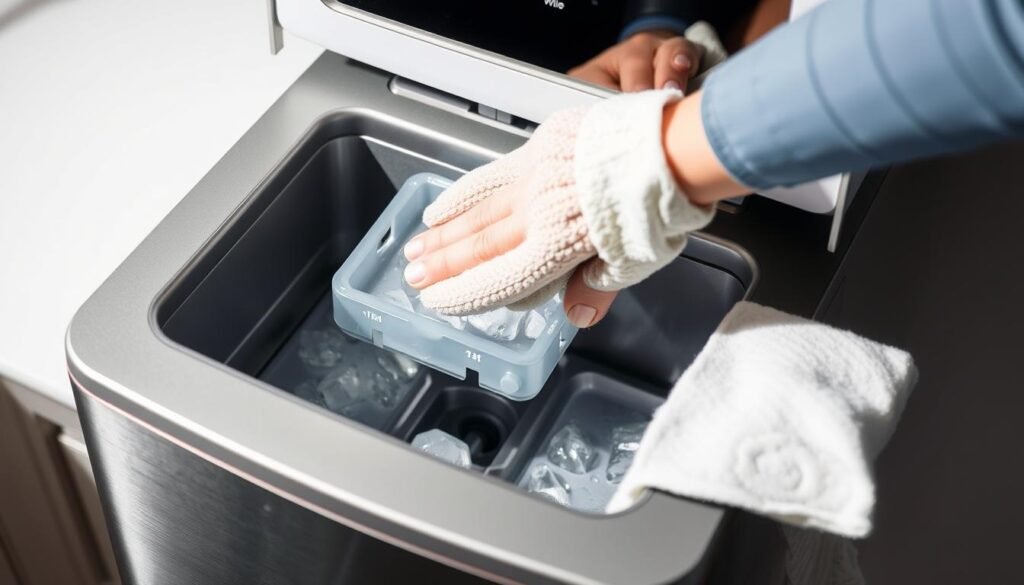
I begin each session by emptying the ice bin and readying the unit for a short service cycle. That simple start keeps the job tidy and helps the cleaning process run smoothly.
Run the self-cleaning cycle the smart way
I hold the power button for about five seconds until the lights flash. The cleaning cycle runs roughly 30 minutes and stops when the lights go steady.how-to-clean-ice-maker
When it finishes, I power off, unplug, and open the bottom drain plug over a sink or bowl to empty the reservoir. Then I twist the plug back in place.
Manual deep clean: wipe interior surfaces and removable parts
For deeper care I mix equal parts water vinegar and use a soft cloth sponge or microfiber. I wipe interior surfaces, the ice bin, and removable parts and use a soft-bristle brush for tight spots inside ice maker areas.
I wash removable pieces in warm, soapy water, rinse, and let them air dry before reassembly.
Vinegar rinse and flush for mineral scale and residue
After scrubbing, I fill and flush with clean water, run a short cycle or manual rinse, then drain again. This clears any remaining cleaning solution and scale.
Exterior wipe-down for the fan area and housing
I wipe the fan area and housing with a damp cloth. For Gallery stainless finishes I use finish-safe wipes so panels stay streak-free.
Drain, rinse with clean water, and discard the first batch of ice
I top off with clean water, confirm the line and drain plug are sealed, then restart. I always discard the first batch so taste is pristine.
Extra care for nugget and Gallery models
For nugget and Gallery units I use a maker cleaning solution approved for ice systems. That protects specialized parts and finishes during descaling.
Tip: For a full walkthrough and parts notes, see my cleaning and maintenance tips.
Keep it clean: water, filters, and regular maintenance

I treat the supply line and filter as the heart of the system. A quick inspection of the water supply line, valves, and the water filter keeps flow steady and taste bright.how-to-clean-maf-sensor
Check connections, flow, and the filter
I check water supply connections for tightness and signs of leaks. I watch flow rate and pressure; drops often point at a clogged filter or a bent line.
I replace the water filter on the timetable in my manual. That step keeps water fresh and avoids off flavors.
Reminders and descaling rhythm I follow
- I set calendar reminders for the next cleaning cycle and any descaling schedule.
- I use a compatible cleaning solution when I descale so parts are protected.
- Quick wipes of interior surfaces after heavy use cut down buildup between deep services.
Storage and short-term care
For short storage, I empty the ice bin and leave the lid cracked so interior surfaces dry. This prevents musty odors and keeps parts in good condition.
| Task | Frequency | Why it matters |
|---|---|---|
| Filter replace | Per manual | Maintains clean water |
| Descale | Quarterly or per hardness | Stops mineral buildup |
| Quick wipe | After heavy use | Reduces debris and odors |
Troubleshooting after cleaning

If production drops or cubes look odd, I step through a few focused checks. My aim is to find simple fixes first before calling support.
No ice, small cubes, or odd shapes: water inlet, temperature, and cycle checks
I first inspect the water supply line for kinks and make sure the valve is open. Low pressure or a pinched supply line often yields small or misshapen cubes.
I also verify temperature settings and run a short cleaning cycle to flush any residue that may block the inlet.
Bad taste after cleaning: extra rinse and filter replacement
If taste lingers after the cleaning process, I run several rinse cycles with fresh water and discard the next ice bin load.how-to-clean-the-brass
Next step: replace the water filter. A worn filter can hold odors even after a good rinse.
Persistent noise or pump issues: when I call a pro—and why parts support can be limited
Grinding or no production after cleaning often points at a failing pump or water level switch. Some manufacturers limit parts and manuals after warranty, so I note model details before calling service.
If I have basics tools, I may test a suspect part with a DMM. Otherwise, I consider a professional diagnosis.
When to repeat a deep clean vs. normal self-clean
- If problems return soon after service, I repeat a deep clean.
- If the unit behaves well after rinses, I stick with the normal self-clean schedule.
- I record any filter or line changes so I can trace which action fixed the issue next time.
| Issue | Likely cause | Action |
|---|---|---|
| No ice | Blocked supply line | Check valve, line, run cycle |
| Bad taste | Filter residue | Rinse, replace water filter |
| Noise | Pump or switch | Test part, call pro |
Conclusion
Conclusion
Keep a brief routine and a small kit on hand so servicing stays quick and worry-free. I run the self-clean, use a mild vinegar solution when scale appears, then flush with fresh water and toss the first batch of cubes.how-to-clean-leather-purse
Stick to a quarterly to bi‑annual schedule. I dry removable parts before reassembly and check filters and the water line for flow or leaks.
If problems persist after a deep service, note your model and consider pro help since parts may be limited. For a clean frigidaire ice full walkthrough and parts notes, see the linked guide.
Keep supplies handy, follow the routine, and your unit will make clearer, better-tasting ice with less fuss.