

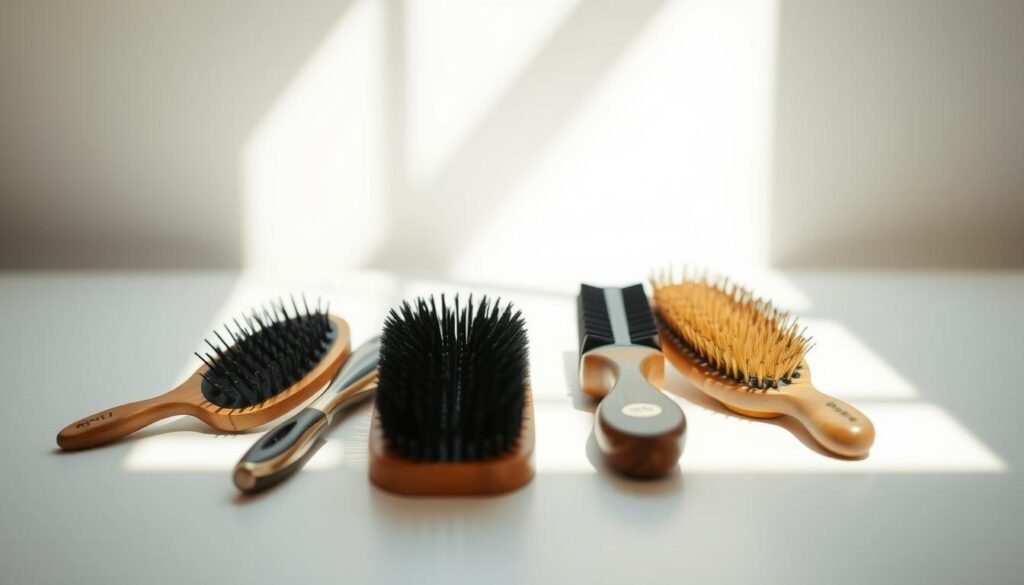
We keep our styling tools in good shape because they help our scalp and strands look their best.
Removing trapped strands, product residue, and lint prevents buildup that would otherwise get back on our hair. A simple routine lengthens the life of each tool and saves money.
Experts recommend a clear six-step method: pull out strands, mix warm soap with a clarifying product, scrub crevices, rinse, disinfect shared plastic pieces, and air dry properly.
We’ll list the right tools and gentle products, show easy steps anyone can follow, and note special care for different materials. Regular upkeep stops residue from spreading and keeps our daily grooming quick and hygienic.
Expectations: this routine takes a few minutes and becomes a habit, not a chore. Replace a tool when bristles bend, pads crack, or residue won’t rinse away.
Key Takeaways
- Routine maintenance protects scalp health and tool lifespan.
- Follow simple steps: remove strands, wash, scrub, rinse, disinfect, dry.
- Choose gentle products and the right tools for each brush type.
- Clean more often when we use many styling products or share tools.
- Replace brushes when damage or persistent residue appears.
Why we clean hair brushes: oils, product buildup, and scalp health
That dusty layer on the bristles is more than lint — it signals trapped oils and debris. We see a gray fuzz and often ignore it, but that film affects both our scalp and styling results.
What that gray “fuzz” really is
The gray fuzz is a compact mix of lint, dust, dead skin, natural oils, and product residue. It gathers at the base and along each bristle. We shed roughly 50–100 strands daily, and many of those strands hold tiny dirt particles that add to the buildup.how-to-clean-a-yoga-mat
How dirty brushes re-deposit residue and bacteria onto hair
Left unchecked, tools act like sponges. Oils and styling product buildup cling to the pad and then transfer back during the next pass. That cycle can make hair look greasy faster and may upset our hair scalp balance.
- Gray fuzz = oils + dust + lint + dead skin + residue.
- Trapped strands gather more debris at the base.
- Bacteria can colonize sticky buildup, increasing risk of irritation.
- Clogged bristle rows reduce detangling and oil distribution.
- Noticeable fuzz signals we should restore tool performance for cleaner hair.
What we’ll need: simple tools and safe cleaning solutions
A tidy kit of basics helps us remove oils and trapped lint without damaging delicate parts. Gather a basin or sink and place a towel nearby so drips stay contained. Choosing mild products and the right small tools makes every step faster and gentler.

Warm water, gentle shampoo, and optional baking soda
We mix warm water with a small squeeze of clarifying shampoo or mild dish soap to cut through oils and styling products. For stubborn grease, a sprinkle of baking soda boosts degreasing power, but avoid abrasive scrubs on delicate finishes.how-to-clean-ac-filter
Old toothbrush, rat-tail comb, scissors, towel, and alcohol/Barbicide
Keep an old toothbrush for targeted scrubbing around the base and between bristles where dirt gathers. A rat-tail comb or wire cleaner helps rake out trapped strands, and scissors can free stubborn knots.
- Set aside isopropyl alcohol or properly diluted Barbicide to sanitize shared plastic tools.
- Choose a basin large enough to hold water without splashing so we can work methodically.
- Confirm all products are gentle so our cleaning protects the hair brush materials and finishes.
How to clean hair brushes: step-by-step
We can refresh any tool in a few focused moves that cut grease and lift grime from the base. Follow the short steps below and expect the whole routine to take only a few minutes.
Remove hair
Start by pulling out trapped hair with our fingers or a rat-tail comb. A wire cleaner works well for raking through dense rows until the head looks clear.
Create a warm soapy mix
Mix warm water with a small squirt of clarifying shampoo or mild dish soap. Submerge metal and ceramic tools, but dip only the bristles on paddles, wooden, or boar options to protect cushions and glue.
Scrub and rinse
Use an old toothbrush to scrub bristles and the base. Target tight spots where product residue hides, then rinse under running water until suds and loosened debris are gone.how-to-clean-acrylic-paint-brushes
Disinfect and air dry
For plastic heads, spray alcohol or soak in properly diluted Barbicide when sharing is a concern to reduce bacteria. Set each piece on a towel and let it air dry: paddles bristle-side down, round styles laid horizontal so water can drain.
- Remove hair
- Soapy water bath
- Toothbrush scrub
- Rinse
- Disinfect plastic
- Air dry
Adjusting by brush type: plastic, metal, ceramic, wooden, and boar bristle
Some heads tolerate a full bath, while others ask for delicate, targeted rinses and gentle handling. We pick methods that remove residue without damaging finishes, glue, or wood.
When to submerge versus dip only the bristles
Metal, ceramic, and plain plastic models can be fully submerged in warm, soapy water. A short soak loosens trapped product and oil.
Paddle, wooden, and cushioned heads should have only the bristle area dipped. Avoid soaking the base so adhesives and wood don’t swell or fail.how-to-clean-an-electric-blanket
Protecting padded cushions and wooden handles from water damage
Keep water off vent holes and the seam between head and handle. Moisture that lingers invites mold and odors.
Pat dry handles quickly and lay sensitive pieces bristle-side down so any trapped water drains away.
Why boar bristles need gentler care
Boar bristles absorb oils and are fragile when wet. We use minimal contact with water and soft scrubbing along the tips.
- Fully submerge metal, ceramic, and plain plastic styles for effective residue removal.
- Dip only bristles on wooden, paddle, and cushioned heads to protect materials.
- Keep water away from vent holes and glued seams to avoid mold or loosened parts.
- Handle boar and natural bristle tools with minimal water and gentle brushing.
Combs need love too: our quick-clean method
A simple comb refresh restores its detangling power and stops old residue from moving back into our hair.
Start by removing loose hair, then soak the comb in warm water with a mild cleaner for about 10–15 minutes. This softens stuck-on residue and loosens dirt in tight teeth channels.
Soak time and gentle scrubbing between teeth
After soaking, we use an old toothbrush, toothpick, or cotton swab to scrub gently between each tooth. Spend a few minutes working out grime so rinsing removes loosened bits easily.
Vinegar caution for metal and wooden combs
We avoid strong water-vinegar mixes on metal combs because vinegar can cause rust. Limit vinegar exposure on wooden combs; prolonged contact may crack the finish.
Tip: For shared or dandruff-prone combs, spray isopropyl alcohol or use properly diluted Barbicide after washing to reduce bacteria.
- Clear hair first, then soak in warm water for 10–15 minutes.
- Gently scrub between teeth with a toothbrush to lift dirt and grime.
- Rinse well, dry fully, and store in a ventilated spot.
- Lice combs: hot soak at 130°F for about 10 minutes, then pour rubbing alcohol over the comb and air dry.
How often to clean based on hair type, bristles, and product use
Matching cleaning frequency with our routine saves time and keeps tools hygienic. We set a baseline and then adjust for our needs.how-to-clean-an-ice-maker
Hair and scalp patterns
Fine or oily: remove trapped hair after each use and deep refresh every 3–4 days. Oils move faster through fine strands, so buildup shows sooner.
Thick or curly: aim for a full wash about once a week if we brush once or twice daily.
Coily or natural: gentle attention around every 10 days works well when brushing is less frequent.
Dry or damaged: keep a weekly routine so we preserve natural oils and avoid stripping fragile fibers.

Bristle materials and styling load
- Nylon: clean after roughly 5–7 uses, unless heavy styling products speed up buildup.
- Metal/wire: weekly at minimum, especially with heavy product use.
- Boar: every 1–2 weeks because natural bristles soak up oils.
Shared tools or heavy styling: disinfect combs and hair brushes after each shared use. If we use a lot of styling products, shorten the interval to about 3–4 days.
Tip: start with a one-week or two-week deep clean baseline, then move the time up if buildup appears sooner or seasonality changes.
When it’s time to replace your brush or comb
Visible cracks, persistent odors, or bristles that flail mean an honest swap will save our strands. We depend on our styling tools, but wear shows up in clear ways. Regular cleaning and gentle care stretch a tool’s life, yet every item has a limit.how-to-clean-makeup-sponges
Bristle and pad damage, missing teeth, and stubborn residue
- We inspect bristles for bent or missing tips; failing bristles can snag, scratch, and transfer residue.
- Check pads for cracks or looseness. A damaged cushion tugs rather than glides and harms styling.
- Examine comb teeth. Replace if teeth are broken or develop sharp edges that catch strands.
- Persistent buildup after several soaks suggests materials are saturated or degraded beyond repair.
- Repeated water intrusion that causes odor or mold is a clear sign it’s time for a new hairbrush.
Good cleaning one to two times per week helps most brushes last for years. Still, when damage or stubborn buildup appears, we pick a replacement that matches our hair type and care routine. Retire old tools responsibly and choose better-built options that stand up to regular maintenance.
Keep our brushes cleaner, longer: simple habits that stick
A few quick moves each day prevent grime from settling into the bristle rows.
We remove trapped hair with our fingers or a small comb after every use so debris never compacts at the base. Quick rinses with a little soap and water keep light residue from building up between deeper sessions.
Always air dry bristle-side down on a towel. Let round styles rest horizontally right after rinsing so no water pools inside. Wipe handles and avoid wetting padded cushions or wooden seams.
Disinfect shared items now and then with alcohol or properly diluted Barbicide. Use vinegar sparingly and never on metal or wooden tools. Small habits like these keep our clean hair brushes reliable, reduce bacteria risk, and extend every tool’s life.


















One Response