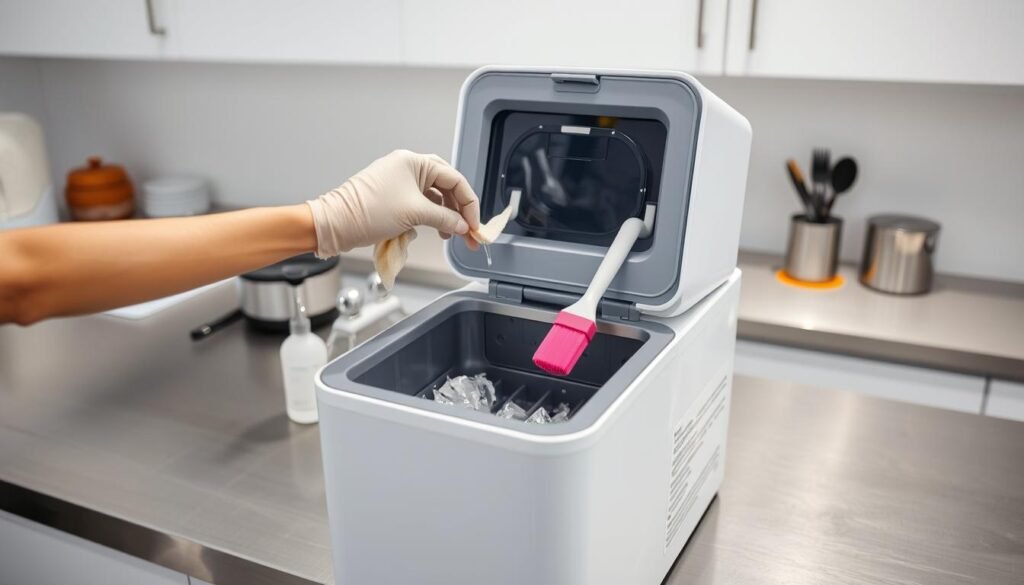
Keeping your ice maker in top shape is key for fresh, clean ice. Regular care extends your appliance’s life and improves ice taste and quality.
I’ll show you why cleaning your ice maker matters and how to do it right. Not cleaning it can lead to bacteria, mold, and other harmful stuff in your ice. For more on cleaning, check out The Spruce’s guide on cleaning a countertop ice.
Key Takeaways
- Regular cleaning keeps your ice maker working well and ice quality high.
- Use vinegar and water to clean the inside and outside of your ice maker.
- Run two ice cycles after cleaning to get rid of vinegar.
- Make ice with filtered water and avoid hard water.
- Set a cleaning schedule to keep your ice maker in great shape.
Why Regular Cleaning is Important for Your Ice Maker
To get the best out of your ice maker, regular cleaning is not just recommended, it’s necessary. Regular cleaning ensures your ice maker works well and makes clean, fresh ice. I will talk about why keeping your ice maker clean is important and how to know when it needs it.
Benefits of a Clean Ice Maker
A clean ice maker is crucial for several reasons. It makes sure the ice is clean and tastes fresh. Also, regular cleaning keeps the appliance running well and makes it last longer. Experts say a clean ice maker can last much longer than a dirty one. For more on why cleaning your ice maker is key, check out this resource.
Key benefits of a clean ice maker include:
- Production of fresh and clean ice
- Improved appliance efficiency
- Extended lifespan of the ice maker
- Reduced risk of mold and bacterial growth
| Benefit | Description |
|---|---|
| Fresh Ice Production | Ensures ice is free from contaminants and tastes fresh |
| Appliance Efficiency | Maintains the ice maker’s performance and efficiency |
| Lifespan Extension | Regular cleaning helps prolong the appliance’s lifespan |
Common Signs Your Ice Maker Needs Cleaning
It’s important to know when your ice maker needs cleaning. Look out for visible mold, unusual odors, or less ice being made. If you see these signs, it’s time to clean your ice maker.
Common indicators that your ice maker needs cleaning:
- Visible mold or slime
- Unusual or unpleasant odors
- Reduced ice production
- Ice tastes or smells bad
By recognizing these signs and cleaning regularly, you can keep your ice maker making clean, fresh ice and working efficiently.how-to-clean-retainers
Tools and Supplies Needed for Cleaning
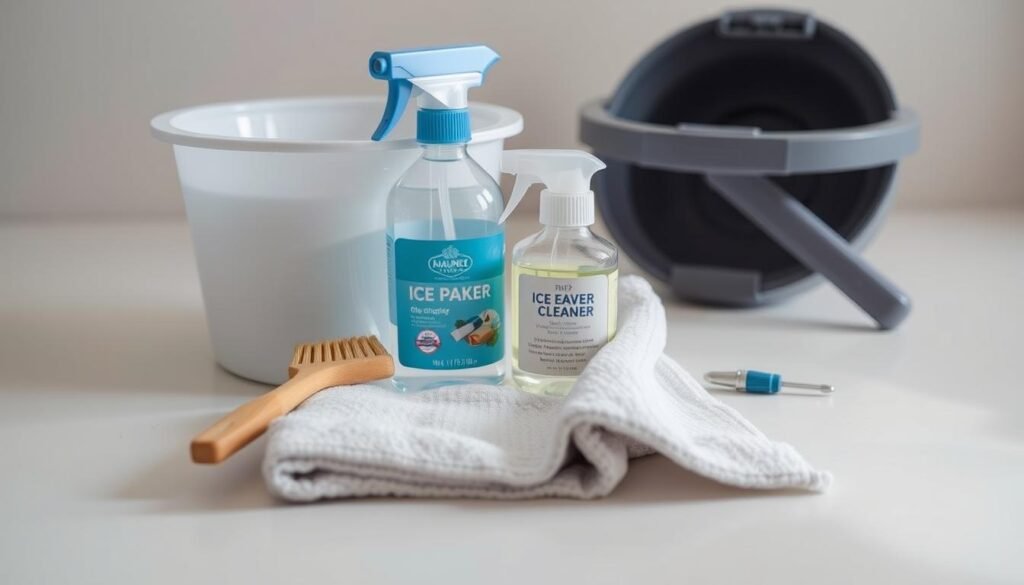
To clean your ice maker well, you need the right tools and solutions. Having everything ready makes cleaning easier and ensures your ice maker is clean.
Essential Cleaning Supplies
You’ll need water, vinegar, a soft-bristled brush, and a clean cloth to clean your ice maker. A mix of water and vinegar is cheap and good for the planet. For tough stains and smells, a special cleaning solution works better.
Make a spray with equal parts water and white vinegar. Spray it on the ice maker’s inside and wait a few minutes. This helps get rid of dirt and mineral deposits. Or, buy a cleaning solution made for ice makers at stores.how-to-clean-hair-brushes
Optional Tools for Deep Cleaning
For a deeper clean, think about using a descaling solution and a scrub brush. These are good for tough stains or heavy buildup. They’re useful if it’s been a while since you last cleaned your ice maker.
A descaling solution removes minerals that can change your ice’s taste and your ice maker’s performance. Always follow the maker’s instructions to avoid damage.
| Supply | Description | Use |
|---|---|---|
| Water and Vinegar Mixture | A mixture of equal parts water and white vinegar | Cleaning interior surfaces |
| Specialized Cleaning Solution | A solution designed for cleaning ice makers | Removing tough stains and odors |
| Soft-Bristled Brush | A gentle brush for cleaning delicate areas | Cleaning crevices and corners |
| Descaling Solution | A solution for removing mineral buildup | Deep cleaning and descaling |
With these tools and supplies, you’re ready to clean your ice maker well. This keeps it working right.
Step-by-Step Guide to Cleaning Your Ice Maker
Cleaning your ice maker is easy if you pay attention and have the right tools. Make sure you have everything you need before you start.
To clean your ice maker, first shut it down safely. Unplug it to avoid accidents or electrical shocks. Always unplug your ice maker before cleaning to stay safe.
Shutting Down the Ice Maker Safely
Unplugging your ice maker is the first step. This step prevents hazards like electrical shock or injury. Make sure to unplug it and let it cool down if it’s been running.
Draining the Ice Maker
After shutting down, drain the ice maker. Find the drain plug or valve, usually at the bottom or back. Carefully remove the plug or open the valve to let the water drain. You’ll need a bucket or container to catch the water.
Cleaning the Interior Components
Once drained, clean the inside parts. Use a soft-bristled brush or cleaning cloth on the evaporator coils, ice bin, and other parts. For tough stains, mix water and vinegar or use a cleaning solution.
For more tips on cleaning your ice maker, check out this resource.
Tips for Cleaning Different Types of Ice Makers

Every ice maker is different, whether it’s portable, built-in, or undercounter. Knowing how to clean each one is key. Each type needs a special cleaning method.
Portable Ice Makers
Portable ice makers are simple to clean because they’re small and have fewer parts. First, unplug it and empty any ice. Then, mix water and vinegar to clean the inside, focusing on the ice-making area.
Tip: Cleaning the water reservoir often helps stop bacteria and keeps your ice maker clean.
Built-in Ice Makers
Built-in ice makers need more work to clean because you have to get to their inner parts. Start by turning off the ice maker and removing ice. Check your manual to find where to clean inside. Use a cleaning solution that the maker’s maker suggests to avoid harm.how-to-clean-headlights
Be careful when cleaning the inside parts to avoid damage.
Undercounter Ice Makers
Undercounter ice makers are a bit harder to clean than portable ones but easier than built-in ones. To clean, remove the front panel to get to the inside. Use a soft cloth and a gentle cleaner to clean all parts where ice forms.
- Regularly check and replace the water filter to maintain ice quality.
- Ensure all parts are dry before reassembling to prevent water spots.
Rinsing and Inspecting Your Ice Maker After Cleaning

After cleaning your ice maker, rinsing it well is the next step. This makes sure no cleaning solution or debris stays behind. It’s key to avoid contamination or bad taste in the ice.
Importance of Thorough Rinsing
Thorough rinsing is key because it gets rid of leftover cleaning agents. Use fresh water to rinse everything well. This makes sure your ice maker is clean and safe to use.
Rinsing also removes any debris that might have come loose during cleaning. This stops clogs or malfunctions in the ice maker’s parts.
Checking for Residue
After rinsing, check your ice maker for any leftover residue or moisture. Look at all areas, like the ice bin and any removable parts, to make sure they’re clean and dry.
If you see residue, rinse again until your ice maker is spotless. Paying close attention to this detail keeps your ice tasting great and your ice maker working well.
How Often Should You Clean Your Ice Maker?
To keep your ice maker working well and clean, knowing when to clean it is key. How often you should clean it depends on a few things. These include how much you use it and the environment around it.
Recommended Cleaning Schedule
Experts say you should clean your ice maker every 6 months. But, this can change based on what the maker’s maker says and your own needs.how-to-clean-stainless-steel
- If you use your ice maker a lot, you might need to clean it every 3 months.
- For those who use it less, cleaning every 9 to 12 months could be enough.
Factors Affecting Cleaning Frequency
Several things can make you clean your ice maker more or less often:
- Usage: The more you use it, the more often it needs cleaning.
- Water Quality: If your water is hard or has lots of minerals, you’ll need to clean it more often because of scale buildup.
- Environmental Conditions: If your ice maker is in a humid or dusty place, you’ll need to clean it more often.
By thinking about these factors and sticking to a cleaning schedule, you can keep your ice maker making clean, fresh ice.
Troubleshooting Common Issues During Cleaning
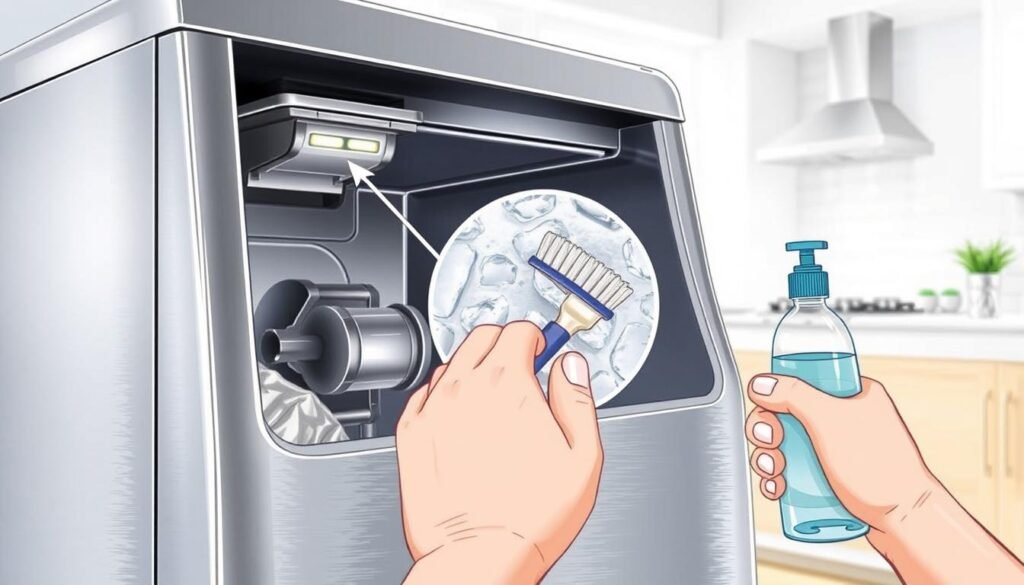
Running into problems while cleaning your ice maker is common. But, knowing how to fix them can make a big difference.
When you clean your ice maker, you might run into a few common issues. These include the ice maker not draining right or having smells after cleaning. Fixing these problems quickly can keep your ice maker working well and clean.
Ice Maker Not Draining Properly
If your ice maker won’t drain, it might be because of a clogged drain or wrong cleaning methods. To fix this, check the drain for blockages. Also, make sure you’re following the maker’s cleaning instructions.
For more detailed help with fixing your ice maker, check out the Euhomy Ice Maker Troubleshooting Guide.
Residual Odors After Cleaning
Unpleasant smells after cleaning can be a problem. To get rid of these odors, make sure to rinse your ice maker well after cleaning. You can also use water and white vinegar to neutralize any smells.
Tip: Regular cleaning can stop odors from coming back. Clean your ice maker often to keep it smelling fresh and clean.how-to-clean-shower-head
Maintaining Your Ice Maker Post-Cleaning

To keep your ice maker working well, regular care is key after cleaning. A few easy steps can make your appliance last longer.
Regular Maintenance Tips
First, always check and swap out the water filter. A dirty or blocked filter can lower ice quality and stress the ice maker. I suggest changing the filter every six months. Do it more often if you see ice quality or production drop.
Another vital task is to clean the condenser coils. Dirty coils can make your ice maker use more energy and work less efficiently. For more on cleaning coils, check your manual or sites like Lowe’s guide on cleaning an ice.
Importance of a Water Filter
A water filter is essential for your ice maker’s health. It keeps water clean, which improves ice taste and quality. A good filter also stops scale buildup and cuts down on contamination risks.
Environmental Considerations When Cleaning
Cleaning your ice maker is more than just keeping it working well. It’s also about thinking about the planet. We need to consider how our cleaning actions affect the environment.
Every little bit helps in reducing our impact on the planet. Using green cleaning products is a big step. These products clean your ice maker well but are kinder to the Earth.
Eco-Friendly Cleaning Products
Choosing eco-friendly cleaning products is key to reducing harm to the environment. Look for products that say they’re good for the planet or can break down easily. These are made from natural stuff that’s better for our world.
Key benefits of eco-friendly cleaning products include:
- Less chemical pollution
- Ingredients that can break down
- Softer on surfaces
Water Conservation During Cleaning
Conserving water is also important for green cleaning. Instead of letting water run, use a bucket to catch it. This water can be used for things like watering plants.
Tips for saving water while cleaning:
- Use a low-flow faucet or a bucket to save water
- Reuse water whenever you can
- Fix leaks fast to avoid wasting water
By following these green cleaning tips, you help the planet and keep your ice maker running smoothly.
Final Thoughts on Ice Maker Care
Cleaning your ice maker is key to making sure it keeps producing clean ice. By following the steps in this article, you can keep your ice maker working well. Knowing how to clean it right is important for its performance.
Professional Assistance
If you run into tough cleaning issues or need special maintenance, get professional help. Experts can quickly find and fix problems. This ensures your ice maker works safely and efficiently.
Regular Maintenance
To keep your ice maker running smoothly, make maintenance a regular part of your routine. Check and replace the water filter, look over the ice maker’s parts, and clean it when needed. This way, you’ll enjoy fresh ice for years and your ice maker will keep working great.