Keeping your car’s leather seats clean is key to its luxury feel. Dirt and grime can make the leather dry and stiff over time. I’ll show you how to clean your car’s leather seats effectively, keeping them in top shape.
For a more detailed guide, check out The Spruce’s comprehensive guide. It covers everything from preparation to the final conditioning step.
Key Takeaways
- Regular cleaning is essential to maintain the quality of leather car seats.
- Using the right cleaning products is crucial to avoid damaging the leather.
- Avoid using too much water to prevent stains.
- Conditioning the leather after cleaning helps to keep it supple.
- Protecting leather seats from sun damage is vital for their longevity.
Understanding Leather Car Seats
Cleaning leather car seats starts with knowing the leather type and its needs. Leather seats are loved for their luxury and long life. But, they need special care.
Types of Leather Used in Cars
Various cars use different leathers, each with its own traits. Here are the most common:
- Aniline Leather: It’s soft and natural but very sensitive to stains. It needs gentle cleaning.
- Semianiline Leather: It combines the natural look of aniline with a bit more durability from a light coating.
- Top-Grain Leather: This is top-quality leather that’s durable and resistant to wear. It’s a favorite for car interiors.
- Patent Leather: It has a shiny finish and is less common in seats. But, it still needs special cleaning products.how-to-clean-stainless-steel-pans
Benefits of Leather Car Seats
Leather car seats have many advantages, including:
- Luxurious Feel: Leather adds a premium touch to the interior, making driving more enjoyable.
- Durability: Quality leather can last for years with the right care.
- Ease of Cleaning: Leather is easier to clean and keep up than fabric.
Common Issues with Leather
Even with its benefits, leather faces problems like:
- Cracking: It can crack from wear and tear or bad care.
- Fading: Sunlight can cause it to fade and lose color.
- Staining: Spills and dirt can leave marks if not cleaned quickly.
Knowing these issues helps keep your leather car seats in great shape.
Essential Cleaning Supplies
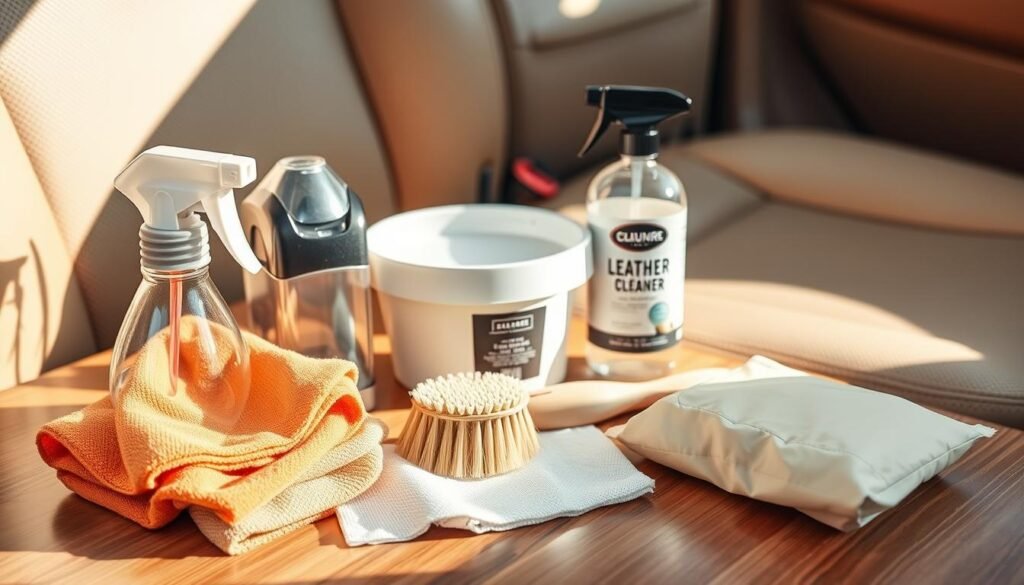
To clean your leather car seats well, you need the right tools. You’ll need cleaners made for leather, cleaning tools, and optional conditioners.
Recommended Cleaners for Leather
For cleaning leather car seats, use a cleaner made for leather. Harsh cleaners can dry out and crack the leather.
- Gentle Leather Cleaners: These cleaners clean the leather without drying it out.
- pH-Balanced Cleaners: These cleaners match the leather’s natural pH, ensuring safe cleaning.
Tools Required for Cleaning
You also need the right tools to clean your leather car seats.
- Soft, Microfiber Cloths: These cloths are gentle and remove dirt and grime.
- Soft-Bristled Brushes: These brushes gently scrub away tough stains and dirt.
- Leather Cleaning Pads: These pads are made for cleaning leather and removing dirt.
Optional Products for Conditioning
After cleaning, condition your leather seats to keep them soft.
- Leather Conditioners: These products nourish and protect the leather, keeping it soft.
- Leather Protectors: These products protect the leather from future stains and spills.
Preparing Your Car Seats for Cleaning
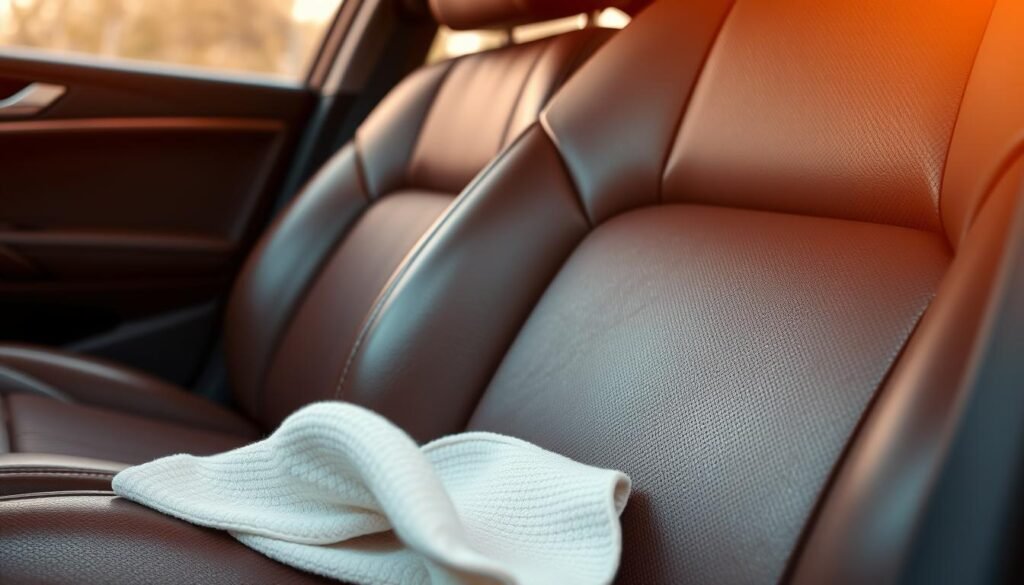
Getting your leather car seats ready for cleaning is essential. First, remove any dirt and debris from the seats. This step is vital to ensure the cleaning process works well without harming the leather.
Removing Debris and Dirt
Begin by taking out any loose items from the seats. This includes coins, receipts, and other small objects stuck in the crevices. Use a soft sweeping motion to get rid of big particles. Then, vacuum the seats thoroughly.how-to-clean-cast-iron-skillet
Vacuuming Techniques for Leather Seats
Vacuuming is a key step in preparing your leather car seats for cleaning. Use a vacuum with a gentle suction setting to avoid harming the leather. Focus on the seams and crevices where dirt often settles. A soft-bristled brush attachment can help gently remove dirt from these spots.
Testing Cleaners on Hidden Areas
Before using any cleaner on the visible parts of your leather car seats, test it on a hidden spot. This ensures the cleaner won’t damage the leather or change its color. Pick a spot that’s not easily seen, like under the seat or on the back of the seat. Apply a small amount of cleaner and wait a few minutes to see if there’s any bad reaction.
For more detailed info on cleaning car seats, check out this page for extra tips.
| Preparation Step | Description | Importance Level |
|---|---|---|
| Removing Debris | Remove loose items and larger particles | High |
| Vacuuming | Use a gentle suction setting to clean seams and crevices | High |
| Testing Cleaners | Apply cleaner to a hidden area to check for damage or discoloration | Critical |
Step-by-Step Cleaning Process
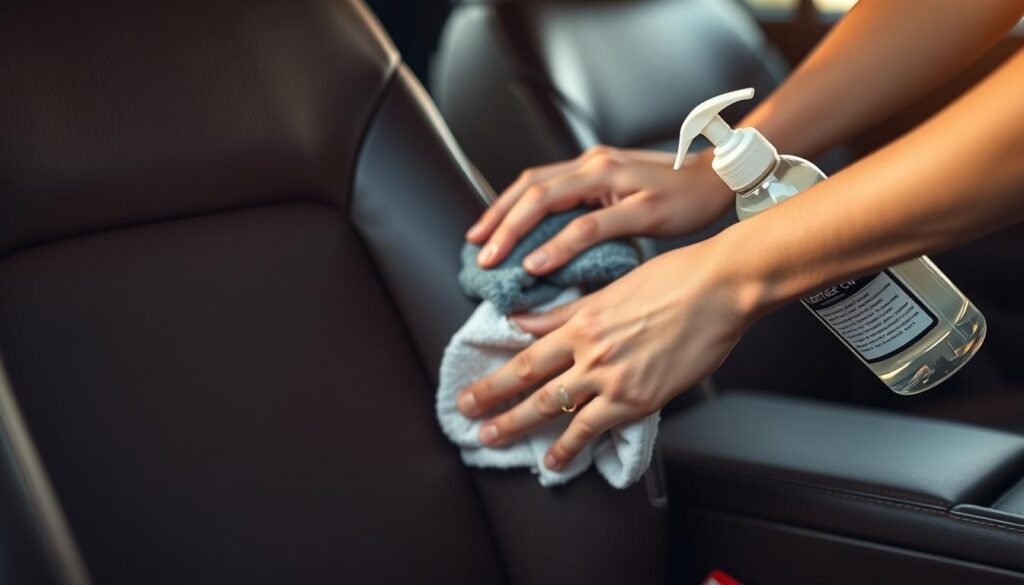
Now that you’re ready, let’s get started on cleaning your leather car seats. This process has several steps to clean your seats well without harming them.
Applying Cleaner to the Seats
To start, apply a suitable leather cleaner to a soft, clean cloth. Don’t put the cleaner directly on the leather to avoid too much moisture. Gently rub the cleaner into the leather in a circular motion, focusing on one section at a time. For more info on cleaners, check out this guide on cleaning and protecting leather car seats.how-to-clean-a-weighted-blanket
Using a Soft Cloth for Wiping
Next, use a soft, microfiber cloth to wipe away dirt and cleaner. This cloth is gentle on the leather and good at removing grime. Always wipe in one direction to avoid spreading dirt.
Rinsing and Drying Methods
After wiping, use a clean, damp cloth to remove any leftover cleaner. It’s important to get rid of all soap to prevent it from drying on the leather. Then, use a dry microfiber cloth to blot the area and remove extra moisture. Let the leather air dry completely before driving your car.
By following these steps, you can keep your leather car seats clean and in good shape. Regular cleaning is essential to keep your car’s interior looking great and lasting longer.
Deep Cleaning Leather Car Seats
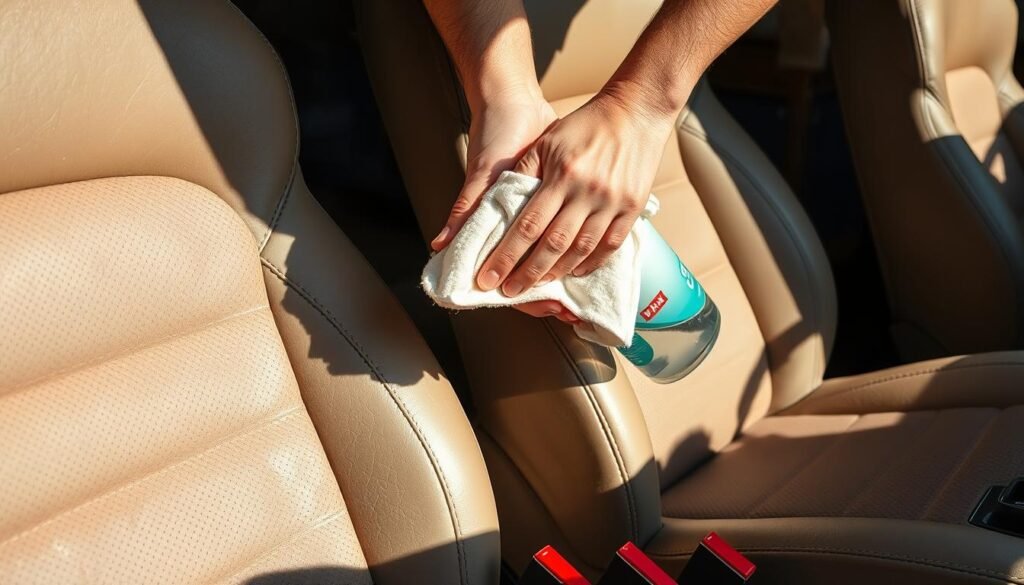
Deep cleaning your leather car seats can make your car’s interior look new again. Regular cleaning is key, but sometimes, your seats need a deeper clean. This is to get rid of dirt, stains, and bad smells that won’t go away.
When to Consider Deep Cleaning
Deep clean your leather car seats when they’re really dirty or have tough stains. If your seats show wear, discoloration, or look dull, it’s time for a deep clean.
Indicators for Deep Cleaning:
- Persistent stains or odors
- Visible wear or discoloration
- Dullness or loss of leather’s natural sheen
Tools for Deep Cleaning Leather
To clean your leather seats well, you need the right tools. You’ll need a good leather cleaner, a soft-bristled brush, microfiber cloths, and leather conditioner to keep the leather moist.how-to-clean-blackstone
Recommended Tools:
- Leather cleaner made for cars
- Soft-bristled brush for gentle cleaning
- Microfiber cloths for cleaning dirt and extra cleaner
- Leather conditioner to keep the leather soft
Step-by-Step Deep Cleaning Guide
Deep cleaning your leather seats needs a careful plan to clean well without harming the leather.
- Pre-cleaning Preparation: Vacuum the seats to get rid of loose dirt and debris.
- Apply Cleaner: Put a little leather cleaner on a microfiber cloth and rub it into the leather in circles.
- Agitate Cleaner: Use a soft-bristled brush to work the cleaner into the leather, getting it into the pores.
- Wipe Clean: Use a clean microfiber cloth to remove the cleaner and dirt. Keep doing this until the cloth is clean.
- Condition Leather: After cleaning and drying, apply leather conditioner to keep the leather moist and protected.
By following these steps, you can deep clean your leather car seats. This will make them look and feel like new again.
Treating Stains on Leather Seats

Removing stains from leather car seats starts with knowing the stain type and choosing the right cleaning method. Whether it’s a tough ink stain or a spill, the right approach is key.
Identifying Common Stains
Leather car seats can get stains from food, drinks, ink, and dirt. Identifying the stain is key because each stain needs a specific cleaning method. For example, oil-based stains like grease or makeup need a different treatment than water-based stains like coffee or juice.
DIY Solutions for Specific Stains
For many common stains, you can try DIY solutions. Here are a few:
- For ink stains, mix equal parts water and white vinegar on a soft cloth.
- For grease or oil-based stains, use a small amount of baking soda to soak up the oil, then brush it off gently.
- For food or drink stains, a mild soap solution works well. Dampen a cloth, rub the stain gently, and then wipe clean with a damp cloth.
Always test any cleaning solution on a hidden area first to avoid damaging the leather.how-to-clean-baseball-caps
When to Seek Professional Help
While DIY methods work for many stains, some need a pro. If the stain is hard to remove or large, or if you’re not sure what to do, get a professional. Professional detailers have the skills and tools to remove tough stains safely. Also, if the stain has set in, professional cleaning might be your only option.
Conditioning Leather After Cleaning
After cleaning your leather car seats, conditioning is key to keep them looking great. It keeps the leather soft and prevents it from cracking. This ensures your car seats stay comfortable and look good.
Importance of Conditioning Leather
Conditioning leather after cleaning is crucial for maintaining its quality. It adds back the natural oils lost during cleaning. This keeps the leather soft and prevents it from drying out. Regular conditioning also makes the leather more resistant to stains and spills.
For more detailed information on cleaning and protecting leather car seats, you can visit Chemical Guys for expert advice.
Recommended Conditioners for Leather
Choosing the right conditioner for your leather car seats is important. Look for conditioners made for automotive leather. These are designed to meet the unique needs of car interiors. Brands that specialize in car care often have good options.
Always read the label to make sure the conditioner is right for your leather. Some conditioners are for specific types of leather, like synthetic or genuine.
Application Techniques for Even Coverage
To apply a conditioner effectively, start by reading the manufacturer’s instructions. Apply a small amount to a clean, soft cloth. Then, rub it into the leather in a circular motion. Make sure to cover the entire surface evenly, but avoid over-saturating the leather.
After applying the conditioner, use a clean, dry cloth to buff the leather. This removes any excess product. It helps achieve an even finish and prevents the leather from feeling greasy.
By following these steps and using the right products, you can keep your leather car seats in excellent condition. This enhances both their appearance and longevity.
Preventative Care for Leather Seats
Keeping your leather car seats in top shape is key. By following a few easy steps, you can make them last longer and look great.how-to-clean-a-mattress
Regular Maintenance Tips
Start by setting up a cleaning schedule. Vacuum the seats weekly to get rid of dirt and dust. Then, use a soft, dry cloth to wipe them down and remove any surface dirt.
For deeper cleaning, check out our guide on how to clean leather car seats. It will help you use the best cleaning methods.
Protectants to Use for Longevity
Choosing the right protectants is crucial for your leather seats’ longevity. Look for leather conditioners or protectants with natural ingredients like lanolin or beeswax. These help keep the leather moisturized and protected.
Follow the manufacturer’s instructions when applying the protectant, usually after cleaning. This will help repel stains and spills, making future cleanings easier.
Avoiding Common Leather Damages
To prevent common damages, be careful with the products you use. Avoid harsh chemicals or abrasive cleaners that can dry out the leather and cause cracks.
Also, don’t let your leather seats sit in direct sunlight for too long. It can cause fading and discoloration. Using sunshades or window visors can help protect them.
Seasonal Cleaning for Leather Seats
Changing how you care for your leather car seats with the seasons is key. Each season brings its own challenges. Knowing how to care for them seasonally keeps them looking and feeling great.
Best Practices for Summer Care
Summer heat and sunlight can dry out and fade leather car seats. Use a UV protectant to shield them from the sun. Clean and condition them regularly to keep them soft and prevent cracks.
For more detailed information on how to clean leather car seats, you can visit this guide.
Winter Considerations for Leather
Winter’s cold and dry air can make leather seats dry and stiff. Use a moisturizing leather conditioner to keep them hydrated. Stay away from harsh chemicals and abrasive cleaners to avoid drying out the leather.
Adapting Care for Humid Climates
In humid areas, leather seats are more likely to get moldy. Make sure your car has good air flow. Clean your seats with a moisture-fighting cleaner. A leather protector can also help keep water out and prevent damage.
Troubleshooting Common Issues
Even with the best care, leather car seats can still face problems like cracking, fading, odors, and scratches. I’ll show you how to fix these issues. This will help your leather seats look like new again.
Cracking and Fading Leather
Cracking and fading often happen due to sunlight, dry air, or bad cleaning. To fix this, use a leather conditioner to keep the leather moist. For faded leather, a leather dye or restorer can bring back the original color.
Addressing Odors in Leather Seats
Getting rid of bad smells in leather seats can be tough. First, find out where the smell is coming from. If it’s from spills or dirt, clean it well. For smells that won’t go away, try a leather deodorizer or mix water and white vinegar on a soft cloth.
Repairing Scratches and Scuffs
Scratches and scuffs can be fixed with a leather repair kit or leather conditioner. For small scratches, apply conditioner and rub it in gently. For bigger scratches, a leather repair kit offers a better fix.
Final Tips and Recommendations
To keep your leather car seats looking great, follow a regular cleaning and maintenance routine. Knowing how to clean them well can make them last longer and stay in top shape.
Summary of Key Steps
First, prepare the seats by removing any loose dirt. Then, use a suitable cleaner and a soft cloth to wipe them down. Don’t forget to condition the leather to keep it soft. Regular vacuuming and quick action on spills are also key.
Additional Resources
For more leather care tips, check out online resources and products. The Leather Research Centre and Lexol are great places to start. They offer lots of information and products to help you care for your leather seats.
Seeking Professional Help
If you have tough stains or damaged leather, consider getting help from a professional. A detailer or upholsterer can give your seats the special care they need. They can fix and restore your leather seats to their original state.