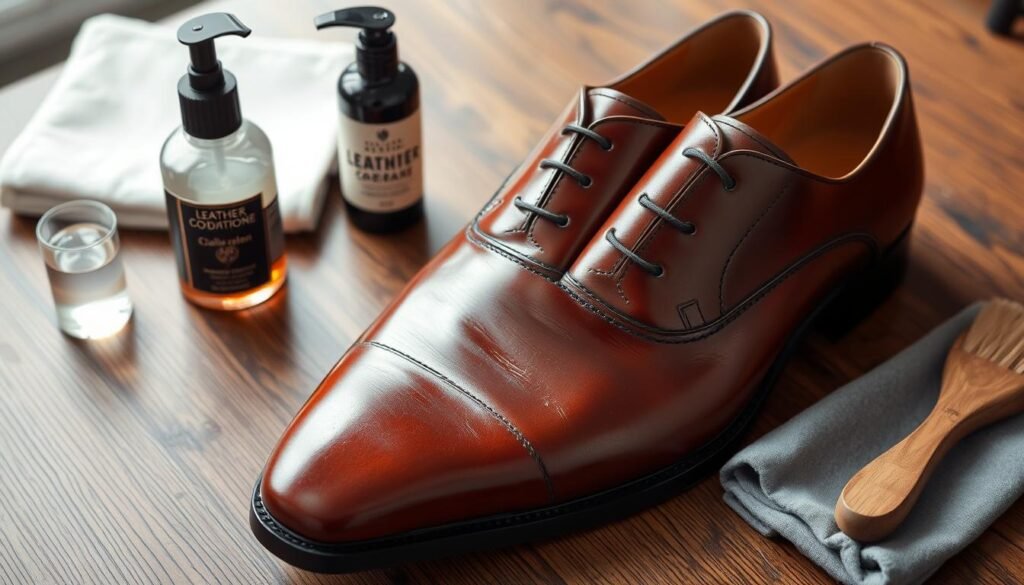
Surprising fact: I learned that a quick half‑hour routine can refresh most dress pairs and reverse months of visible wear.
I’ll walk you through a simple, reliable process I use on my own dress footwear. Full‑grain leather is often sealed, which helps block deep stains and makes upkeep forgiving.
My approach is practical: prep your workspace, use cedarwood shoe trees, a horsehair brush, a soft cloth, and the right soaps and polishes. I favor Saphir creams and waxes and a Renovateur conditioner when a deeper restore is needed.
I’ll also point out common mistakes, quick fixes for scuffs, and how to choose a finish—natural or mirror—before you begin. For a full step‑by‑step reference, see this short guide.
Key Takeaways
- Most full‑grain pairs are sealed and easier to protect from stains.
- A basic kit (shoe trees, horsehair brush, cloths, conditioner, creams) covers almost every need.
- Set aside about 30 minutes for a full refresh from prep to final buff.
- Avoid harsh detergents and excess heat; they harm the finish.
- Pick cream polish for color and wax for lasting protection and shine.
Why I care for leather shoes and what you’ll get from this guide
My simple routine takes about half an hour and protects the pair you wear most. A few quick habits keep the material looking fresh and extend the life of every pair.how-to-clean-window-ac-unit
I believe small, regular work beats rare overhauls. A fast horsehair brush after each wear clears grit. Once a month I condition, then use cream polish to restore color and suppleness.
Saddle soap has its place, but I save it for very soiled or wax‑built pairs — roughly once a year. Managing water matters: I avoid soaking and let any damp pair air dry with cedar trees inside.
- What you’ll gain: an easy, repeatable way to keep shoes presentable with little time.
- What I recommend: quick brushdowns, monthly conditioning, and light polish work.
- Adaptability: choose a light refresh or a deeper session depending on wear and the day.
Follow this step‑by‑step guide and you’ll protect your investment and save replacement time. For a fuller walkthrough, check my complete care guide.
Gear up: the leather shoe cleaning tools I actually use
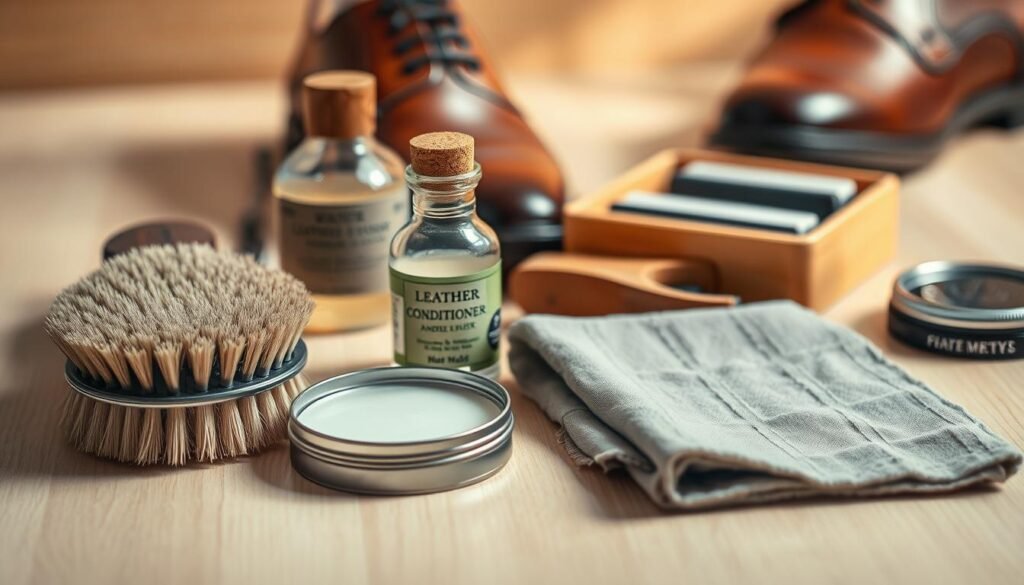
I keep a compact kit on my bench that handles nearly every scuff and dull finish. Before I begin, I set a towel or newspaper down and drop cedarwood shoe trees inside the pair. That holds shape and pulls moisture while I work.how-to-clean-white-converse
Brushes, cloths, and shoe trees
I always reach for a horsehair brush for dry dusting and a softer pass over suede trim. Microfiber cloths handle cream application and gentle buffing.
Non-negotiables: cedarwood shoe trees, horsehair brush, a cotton chamois, microfiber cloths, and a shoe horn to protect the heel counter.
Cleaners, conditioners, and polishes
Saddle soap is my deep-clean option when stripping buildup. For regular care I use a dedicated conditioner like Saphir Renovateur, then a high-pigment cream for color and a beeswax/carnauba wax for protection and shine.how-to-clean-white-board
Budget-friendly swaps
- If you lack saddle soap, a damp microfiber with a tiny drop of dish detergent works in a pinch; wipe residue away with a clean damp cloth.
- Newspaper or a towel protects your workspace and keeps polishes off surfaces.
- A basic soft brush doubles for suede edging when used lightly.
Quick rule: check the surface first, match the product to the material, and use microfiber for controlled application on sensitive areas. Small choices here save time and prevent mistakes.
How to clean leather shoes: my simple, step-by-step process
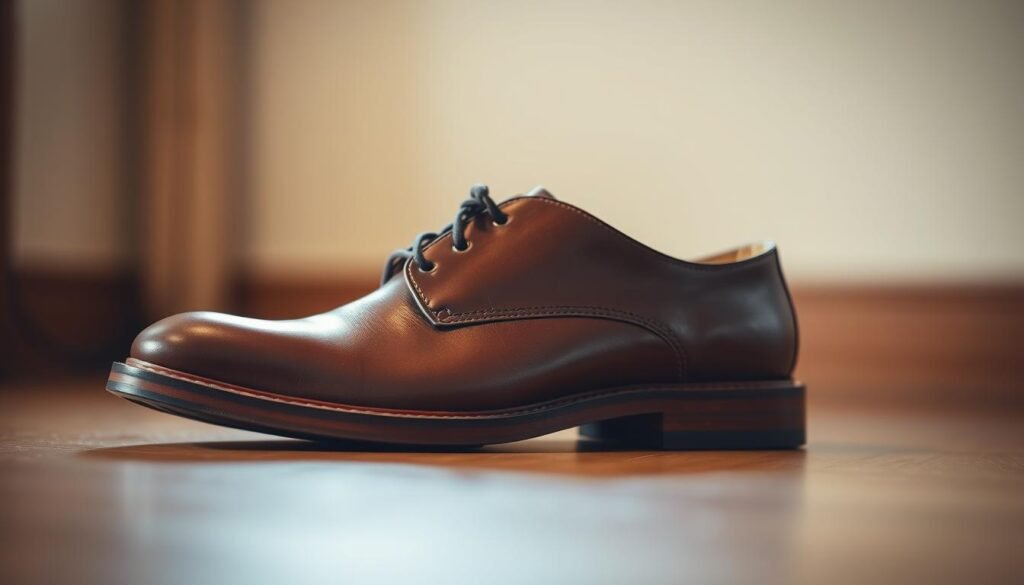
A clear order keeps the job quick and repeatable. I follow a set sequence so each part protects the next: prep, remove dust, deep cleaning if needed, condition, color restore, then wax.
Prep the pair
Step 1: Lay down newspaper or a towel, remove laces, and insert cedar trees or crumpled paper. A tidy workspace prevents product transfer and speeds the work.how-to-clean-weed-pipe
Remove dirt and dust
Step 2: Use short, quick strokes with a horsehair brush to remove dust and grit before any product touches the surface.
Deep clean
Step 3: For heavy grime, use saddle soap: dampen your applicator, work a light lather, then wipe with a microfiber cloth and let rest 8–24 minutes or hours as needed. For regular maintenance, a damp rag with a drop of mild dish soap works; follow with a clean damp cloth.
Condition and restore
Step 4: Apply pea-sized amounts of conditioner in small circles, section by section. Let sit 5–10 minutes, then brush briskly to remove excess and reactivate waxes.
Polish and finish
Step 5: Spread pigmented cream thinly, wait 5–10 minutes, then brush to even color and hide scuffs.
Step 6: Apply very thin wax layers. Build extra layers on toe and heel, letting each set harden between passes; a drop of cold water can help cure the wax for a smoother shine.
| Step | Tool / Product | Time |
|---|---|---|
| Prep | Cedar trees, towel, remove laces | 2–3 minutes |
| Brush | Horsehair brush | 2–4 minutes |
| Deep clean | Saddle soap or mild dish soap, microfiber | 8–24 minutes/hours |
| Condition | Renovateur or cream conditioner | 5–10 minutes |
| Polish & wax | Pigmented cream, beeswax/carnauba | 5–15 minutes (plus curing) |
Quick note: I reserve saddle soap for truly soiled pairs. For a full step reference, see my complete care guide.
Smart fixes: stains, scuffs, and safe drying the right way
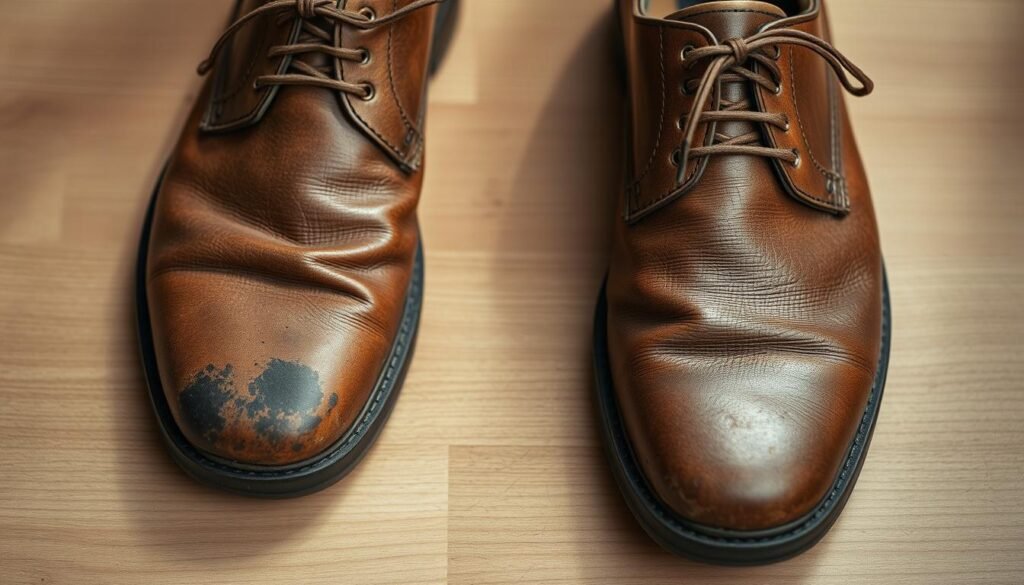
When a stain appears, quick, careful action keeps damage minimal. I treat spot issues with simple, tested steps that respect the finish and color.
Salt marks: Mix equal parts distilled white vinegar and water. Dab the mix with a soft cloth and use light circular passes until the salt lifts. Then wipe away excess with a clean damp cloth so no vinegar remains.
Oil and grease: Sprinkle talcum or baby powder over the area and leave 2–3 hours. The powder absorbs oil; brush away gently and repeat if dirt persists.kn-how-to-clean-air-filter
Ink and tough marks: Blot (don’t rub) using rubbing alcohol on a cotton swab. Work the spot only, then wipe away residue with a damp cloth and dry by air.
Scuffs and minor marks: A tiny dab of non‑gel toothpaste can lift light scuffs. Test a hidden area first, use a soft cloth, then choose a light cream or wax if needed.
- I never use heat—air dry always. If soaked, I remove laces, wipe moisture, stuff with newspaper, and let the pair dry naturally.
- Once dry, I reinsert shoe trees and re‑condition the surface to restore suppleness and protect against future stains.
| Stain | Quick fix | Wait | Follow-up |
|---|---|---|---|
| Salt | 1:1 vinegar/water, circular dab | Immediate | Wipe away, dry, condition |
| Oil / Grease | Talc or baby powder | 2–3 hours | Brush off, spot cream if needed |
| Ink | Blot with rubbing alcohol | Until lift | Damp cloth wipe, air dry, condition |
For more targeted steps on white pairs, see my short guide for white leather shoes care.
Protect the finish: shine, waterproofing, and sole care
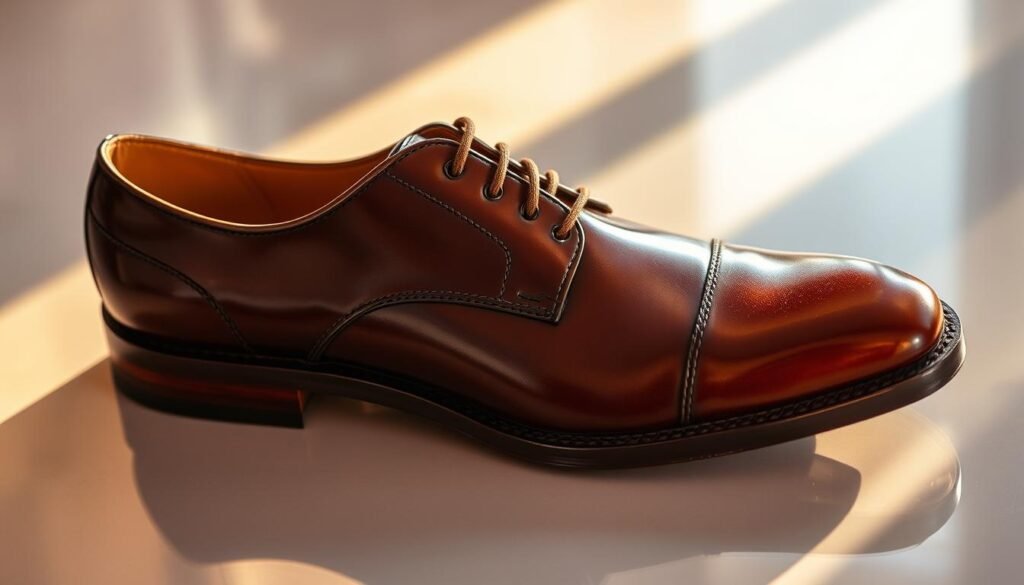
A patient polish and careful waterproofing keep the whole shoe looking new. I treat the toe and heel as priority zones for a mirror shine and use very thin wax layers so the finish stays flexible.
Building a mirror shine without cracking
Apply multiple ultra‑thin wax layers on stiffened areas, letting each set harden before the next. A drop or two of ice water helps the wax bond and smooth the surface.
I keep the wax light across the entire surface and rely on cream when I need color correction or a softer luster.
Waterproofing that won’t alter color
I use a neutral spray such as Saphir Super Invulner for protection that does not shift color or leave residue. I allow about 30 minutes drying time before wear.how-to-clean-a-cuisinart-coffee-maker
Leather sole care for longer life
Saphir Sole Guard is my go‑to: rub lightly, let the vegetable oil‑based product absorb, then rest the sole at least 30 minutes. Between wears I maintain the sole with a light brush and spot buffing.
- I test any new product in a hidden area first.
- I use a soft brush and cloth for quick touchups rather than extra product build‑up.
- I spare conditioner—focus on feel and flexibility over heavy layers.
| Area | Product | Key step |
|---|---|---|
| Toe & Heel | Beeswax/carnauba wax | Multiple ultra‑thin layers, water finish |
| Entire surface | Pigmented cream | Thin application for color and soft luster |
| Upper protection | Saphir Super Invulner | Neutral spray, dry ~30 minutes |
| Leather sole | Saphir Sole Guard | Rub in lightly, rest 30+ minutes |
For a step‑by‑step mirror shine technique and product notes, see my ultimate shoe shinning guide.
My quick shoe care routine and common mistakes to avoid
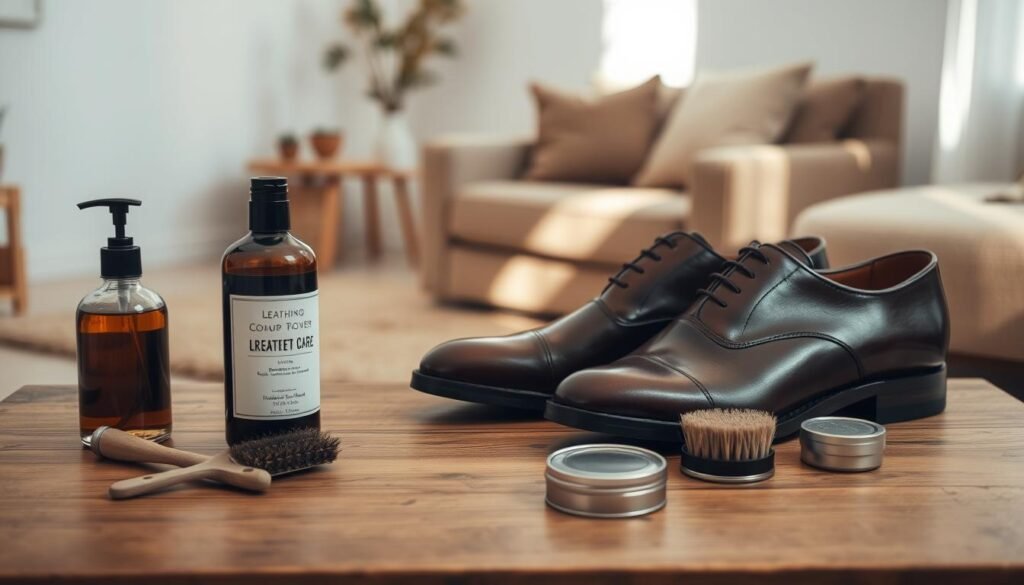
My short routine makes regular upkeep feel quick and almost automatic. A fast, reliable sequence saves time and keeps the pair presentable for daily wear.how-to-clean-humidifier
After-wear brush-downs and monthly conditioning cadence
I brush the surface after each wear to remove dirt and grit. This simple step stops buildup and extends the life of polish and wax.
Once a month I apply conditioner first, let it rest 5–10 minutes, then follow with a light cream polish. I use pea-sized amounts and work in small sections so product spreads evenly.
Quick routine:
- Brush after every wear.
- Monthly: conditioner, rest, then cream polish.
- Saddle soap only when buildup demands it — roughly once a year.
Skipping steps, overloading product, and polishing on dirty surfaces
The biggest mistakes I see are skipping the initial brush, piling on product, and polishing while the surface is dirty. These make streaks, tacky residue, and uneven color.
I pick my options—cream for color and conditioning, wax for protection—based on the part of the shoe I’m working on. I keep suede trim separate and use different tools to avoid transfer.
| Common error | What I do instead |
|---|---|
| Polish over dirt | Brush first, then spot clean if needed |
| Too much product | Use pea-sized amounts; let rest 5–10 min |
| Rushing drying | Air dry only; never add heat |
I keep a small guide card with my cadence so I stay consistent. For a fuller reference and product notes, see my complete care guide.
Conclusion
A little attention every few wears keeps a pair looking sharp and extending its life. Light, consistent care—brush after wear, condition monthly, and use thin cream and wax layers—makes big gains in comfort and finish.how-to-clean-your-ears
Match fixes to stains: vinegar for salt, talc for oil, and rubbing alcohol for ink. Always wipe away residue with a clean microfiber and let items air dry; never add heat.
Keep separate cloths for pigmented cream, polish, and suede. A shoe horn and cedar trees protect structure and draw moisture, so add them to your cart once and forget the worry.
Use this short guide as a routine: a few focused minutes now means fewer deep sessions later and a steady, controlled shine across the entire surface.