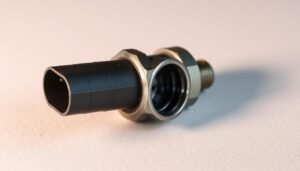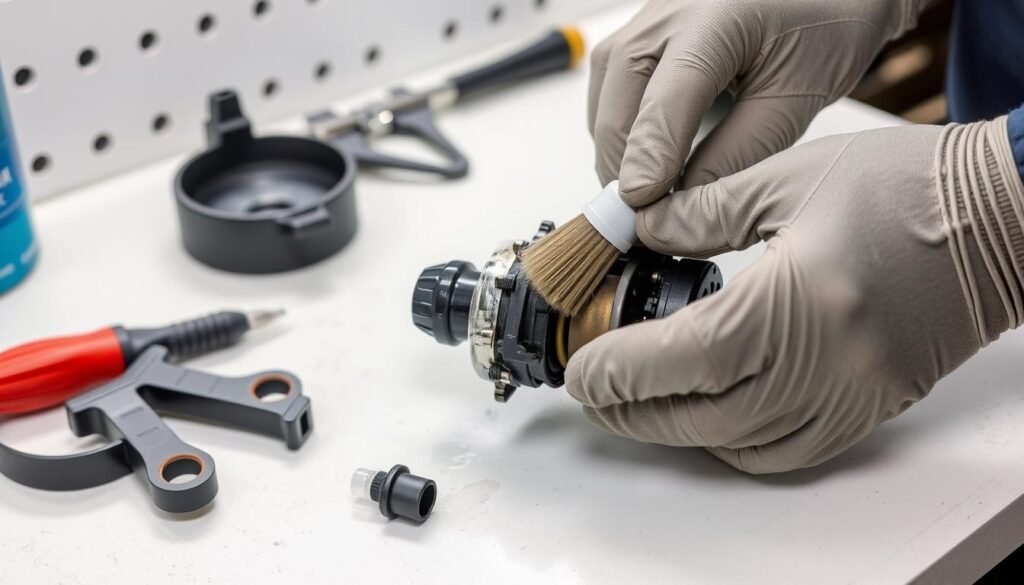
A dirty mass air flow meter can really hurt your car’s performance. It can make your car use a lot more fuel and produce more emissions. In fact, a bad meter can make your car use up to 20% more fuel than it should.
Cleaning your mass air flow meter is easy and can make your car run better. Just follow a few simple steps. This way, you can make sure your meter is working right and your car is running smoothly.
I’ll show you how to clean your mass air flow meter step by step. This will help you do it right.
Key Takeaways
- Cleaning the mass air flow meter improves fuel efficiency.
- A dirty meter can increase fuel consumption by up to 20%.
- Regular cleaning enhances overall engine performance.
- The process is straightforward and easy to follow.
- Proper maintenance reduces emissions.
What is a Mass Air Flow Meter?
The mass air flow meter is a key sensor that measures the amount of air entering your engine. This info is crucial for the engine control unit (ECU) to calculate the correct amount of fuel to be injected. This ensures optimal engine performance.
Definition and Functionality
A mass air flow meter, often abbreviated as MAF, is an electronic device that measures the mass flow rate of air entering the engine. Its primary function is to provide accurate airflow data to the ECU. The ECU then adjusts the fuel injection based on this data.
The MAF sensor is usually located between the air filter and the engine’s intake manifold. It uses a heated wire or a hot film to measure the airflow. As air passes over the heated element, it cools down. The sensor measures the power needed to keep the temperature constant.
This info is then sent to the ECU as a voltage signal. The ECU uses this signal to determine the air mass flow rate.
Importance in Engine Performance
The mass air flow meter plays a vital role in maintaining optimal engine performance. It provides accurate airflow measurements. This allows the ECU to optimize fuel injection, which is critical for achieving the right air-fuel mixture.
This not only enhances engine efficiency but also reduces emissions and improves fuel economy. A faulty or dirty MAF sensor can lead to decreased engine performance. Issues include rough idling, hesitation during acceleration, and decreased fuel efficiency.
Understanding the functionality and importance of the mass air flow meter is essential. It helps maintain your vehicle’s overall health and performance.
Signs Your MAF Sensor Needs Cleaning
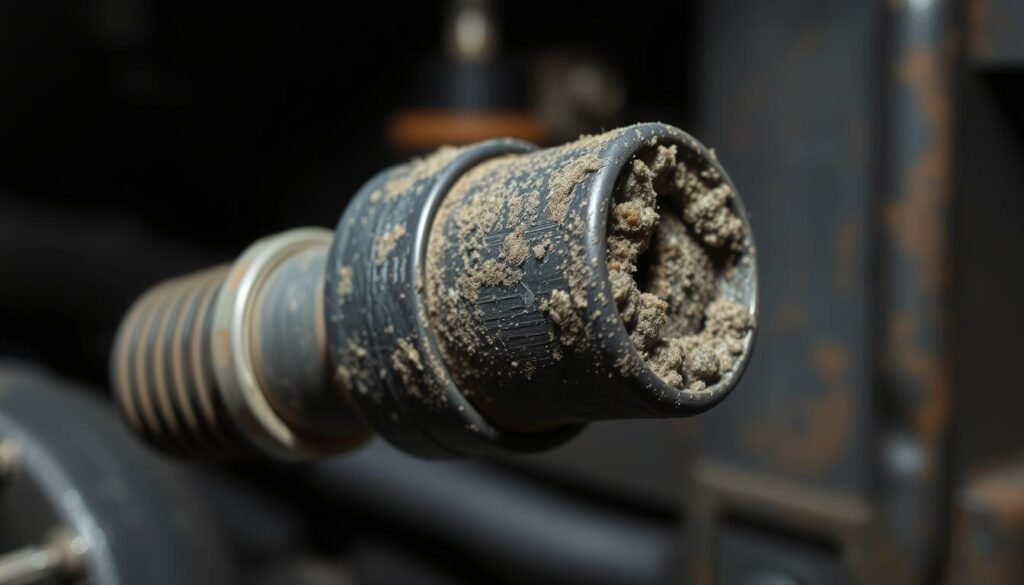
Knowing when your Mass Air Flow (MAF) sensor needs cleaning is key. A dirty MAF sensor can lead to problems like less fuel efficiency and engine stalling. Spotting these signs early can help avoid bigger issues.
Decreased Fuel Efficiency
A drop in fuel efficiency is a common sign of a dirty MAF sensor. When it’s dirty, the sensor can’t measure air correctly. This results in an unbalanced air-fuel mix, making your car use more fuel. For more on this, check out our guide on MAF sensor cleaning and repair.
Unexplained Engine Stalling
Unexpected engine stalling might mean your MAF sensor is dirty. Stalling happens when the air-fuel mix is off. Cleaning the MAF sensor helps keep the mix right. Regular maintenance, like MAF sensor cleaning, is crucial.
Check Engine Light Activation
The check engine light can light up for many reasons, including a dirty MAF sensor. Modern cars have systems that check if the MAF sensor is working right. A dirty MAF sensor is a common cause. It’s important to fix it quickly to avoid engine damage.
Being alert to these signs and acting fast can keep your car running well. Regular MAF sensor checks and cleanings are simple steps to keep your car efficient and smooth.
Tools and Materials Needed
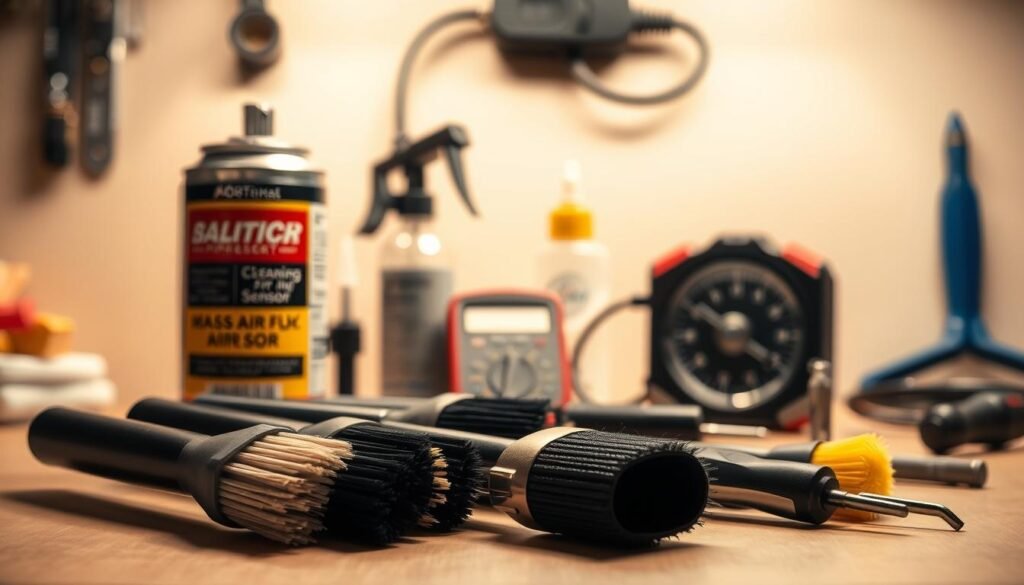
Having the right tools and materials is key for cleaning your MAF sensor safely and well. Before you start, make sure you have everything you need. This will help avoid any delays or problems.
List of Required Tools
To start cleaning, you’ll need a few basic tools. These include:
- A screwdriver (usually a Phillips head) to remove the MAF sensor from its housing.
- A cleaning solution made for electronic components or MAF sensors.
- Compressed air or a soft-bristled brush to gently remove debris.
- A soft cloth or microfiber towel to dry the sensor after cleaning.
Recommended Cleaning Solutions
Choosing the right cleaning solution is crucial for your MAF sensor. Specialized MAF sensor cleaners are recommended. They are designed to remove dirt and grime without harming the sensor.
Some popular options include:
- CRC MAF Sensor Cleaner: A widely recommended product for its effectiveness and safety.
- Gunk Electronics Cleaner: Another reliable option for cleaning sensitive electronic components.
It’s important to avoid harsh chemicals, abrasive materials, or household cleaners. These can damage the MAF sensor or leave harmful residues.
Preparing the Vehicle for Cleaning
To clean your Mass Air Flow Meter safely, start with a few key steps. These steps will keep you safe and make the cleaning process work better.
Ensure Safety First
First, put on protective gear like gloves and safety glasses. This keeps you safe from electrical shocks or chemical splashes. Also, work in a place with good air flow to avoid breathing in cleaning fumes.
Key safety precautions include:
- Turning off the engine and letting it cool down
- Putting the vehicle in park (automatic) or neutral (manual)
- Engaging the parking brake
Disconnecting the Battery
It’s important to disconnect the battery to avoid engine starts or electrical shocks. Find the battery and spot the negative (-) and positive (+) terminals. The negative terminal is usually black and has a negative sign. The positive terminal is red and has a positive sign.
To disconnect the battery safely:
- Loosen the nut on the negative terminal clamp with a wrench
- Take off the clamp from the negative terminal
- Do the same for the positive terminal if needed, but often just the negative is disconnected
By taking these steps, you can clean your Mass Air Flow Meter safely and effectively.
Step-by-Step Instructions for Cleaning

Cleaning your Mass Air Flow (MAF) sensor is easy and can boost your car’s performance. Just follow these simple steps to do it right.
Removing the MAF Sensor
To start, take out the MAF sensor from your car. It’s between the air filter and the engine. It’s held by clips or screws.
- Turn off your engine and let it cool down.
- Disconnect the electrical connector from the MAF sensor.
- Carefully release the clips or remove the screws holding the sensor in place.
- Gently pull the MAF sensor out of its housing.
Cleaning the Sensor
Now, you can clean the MAF sensor. It’s important to use the right cleaner to avoid damage.
- Use a specialized MAF sensor cleaning solution. Regular cleaners can harm the sensor.
- Spray the cleaning solution onto the sensor’s elements. Be gentle to avoid damaging the delicate components.
- Let the sensor air dry. Do not use a cloth or any material that might leave fibers or cause damage.
Reinstalling the MAF Sensor
After cleaning and drying the MAF sensor, it’s time to put it back. Handle it carefully to avoid damage.
- Align the MAF sensor with its housing and gently push it back into place.
- Secure the sensor with the clips or screws you removed earlier.
- Reconnect the electrical connector.
To summarize, here’s a comparison of the steps involved in cleaning your MAF sensor:
| Step | Description | Precautions |
|---|---|---|
| 1. Removal | Disconnect electrical connector, release clips or screws, and gently pull out the sensor. | Be careful not to damage the electrical connector or the sensor itself. |
| 2. Cleaning | Use a specialized cleaning solution, spray gently, and let air dry. | Avoid using regular cleaners or touching the sensor elements. |
| 3. Reinstallation | Align the sensor with its housing, secure with clips or screws, and reconnect the electrical connector. | Ensure the sensor is properly aligned and secured to avoid damage or poor performance. |
By following these steps, you can effectively clean your MAF sensor. This can improve your vehicle’s performance and fuel efficiency.
Tips for Effective Cleaning
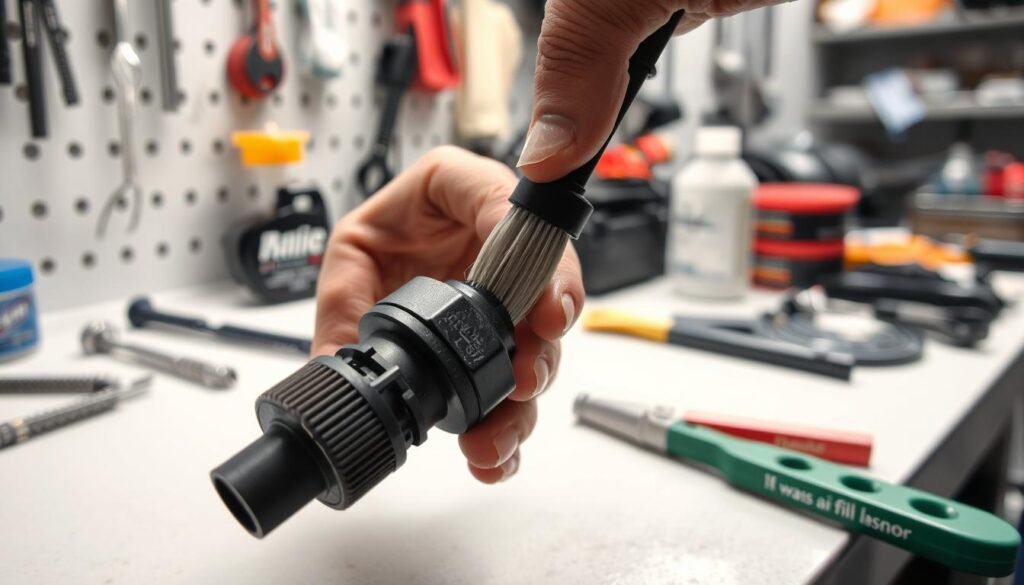
Cleaning your MAF sensor needs care and attention. Follow these tips to do it right.
Avoiding Common Mistakes
When cleaning your MAF sensor, stay away from harsh chemicals and rough materials. They can harm the sensor. Use a mild cleaning solution and a soft brush to clean it.
- Never use compressed air, as it can push debris further into the sensor.
- Avoid touching the sensor’s delicate components to prevent damage.
- Refrain from using household cleaners, which can leave residues harmful to the sensor.
For more detailed guidance on cleaning your MAF sensor, you can refer to this DIY guide.
Best Practices for Maintenance
Regular maintenance of your MAF sensor can improve your vehicle’s performance and fuel efficiency. Here are some best practices to follow:
- Inspect your MAF sensor regularly for signs of wear or contamination.
- Clean the sensor every 10,000 to 15,000 miles, or as recommended by your vehicle’s manufacturer.
- Use a high-quality cleaning solution designed for MAF sensors.
By following these tips and best practices, you can keep your MAF sensor in good shape. This will help your engine run smoother and more efficiently.
How Often Should You Clean the MAF Sensor?
Knowing when to clean your MAF sensor is crucial for your vehicle’s performance. The cleaning frequency varies based on driving conditions and your vehicle’s age.
Factors Affecting Cleaning Frequency
Several factors can influence how often you should clean your MAF sensor. These include:
- Driving Conditions: Driving in dusty or polluted areas can lead to more frequent contamination of the MAF sensor.
- Vehicle Age: Older vehicles may require more frequent cleaning due to potential wear and tear on the engine and its components.
- Fuel Quality: Using low-quality fuel can lead to deposits forming on the MAF sensor, necessitating more frequent cleaning.
Signs Indicating Regular Maintenance is Needed
Knowing the signs that your MAF sensor needs cleaning is important. Some common signs include:
- Decreased fuel efficiency
- Unexplained engine stalling
- Activation of the check engine light
Regular maintenance is key to optimal engine performance. By understanding the factors that affect the cleaning frequency of your MAF sensor and being aware of the signs that indicate it needs cleaning, you can take proactive steps to ensure your vehicle runs smoothly.
| Signs | Description | Action Required |
|---|---|---|
| Decreased Fuel Efficiency | Noticeable decrease in miles per gallon | Check and clean the MAF sensor |
| Engine Stalling | Engine stalls or hesitates during acceleration | Inspect the MAF sensor for contamination |
| Check Engine Light | Dashboard warning light indicating engine issues | Diagnose the issue; cleaning the MAF sensor may be required |
By staying informed and taking proactive measures, you can ensure your vehicle’s engine performs at its best. This enhances both its efficiency and longevity.
Troubleshooting After Cleaning
After cleaning your MAF sensor, if you still have engine problems, it’s time to troubleshoot. This step helps figure out if the issue is with the MAF sensor or something else.
Engine Performance Issues
If your engine is still rough after cleaning the MAF sensor, many things could be wrong. It’s key to look for underlying issues not directly linked to the MAF sensor. For example, issues with the fuel filter, spark plugs, or fuel injectors might look like a faulty MAF sensor problem.
First, check your vehicle’s fuel system. A clogged fuel filter or dirty fuel injectors can cause similar problems to a bad MAF sensor. Make sure these parts are clean and working right to help solve the issue.
Further Diagnostic Checks
For a deeper look, use a scan tool to find any trouble codes in your vehicle’s OBD system. These codes can give you clues about what’s wrong. You can learn more about MAF sensor problems in specific cars, like Volkswagen models, on our blog post about how to deal with your Volkswagen’s mass airflow sensor.
Also, watch how your vehicle performs under different conditions. If the problem stays the same while idling but gets better under load, it might point to a specific area to check.
By carefully checking different parts and using diagnostic tools, you can find and fix the engine problems you’re facing.
Final Thoughts on MAF Sensor Care
Keeping your Mass Air Flow sensor clean is key for your engine’s best performance. By following the steps in this guide, your MAF sensor will work right. It will give your engine’s computer accurate airflow readings.
Regular Maintenance Matters
Regular care for your MAF sensor is crucial. It helps it last longer and avoids problems. A clean MAF sensor means your engine works better and more efficiently.
Benefits of a Clean MAF Sensor
A clean MAF sensor brings many advantages. It improves fuel efficiency, cuts down emissions, and boosts engine performance. By keeping your MAF sensor clean, you enjoy these benefits and avoid expensive repairs later.
Adding regular MAF sensor cleaning to your car’s maintenance routine is smart. It ensures your engine runs smoothly and efficiently. This way, you get the most out of your MAF sensor care.