I still remember the day I found out my mattress had dust mites, dead skin cells, and allergens. It was a wake-up call. I realized that keeping my mattress clean was key for a healthy sleep.
Did you know we spend about a third of our lives on our mattresses? It’s a lot of time. It’s important to make sure our sleeping surface is clean and healthy. A dirty mattress can cause allergies, breathing problems, and affect our sleep quality.
As someone who’s been there, I’m excited to share how to deep clean your mattress and keep it fresh. In this article, I’ll guide you through the process. By the end, you’ll know how to give your mattress the care it needs.
Key Takeaways
- Understand the importance of cleaning your mattress
- Learn simple steps to deep clean your mattress
- Discover tips to keep your mattress fresh and hygienic
- Improve the quality of your sleep with a clean mattress
- Reduce allergies and respiratory issues
Why Cleaning My Mattress Is Essential
Knowing why to clean my mattress is key to better sleep. A clean mattress is vital for a healthy sleep space. It’s something I should focus on.
The Benefits of a Clean Mattress
A clean mattress brings many benefits. It improves sleep quality and cuts down on allergy issues. Regular cleaning boosts my sleep greatly. For more on mattress cleaning, check out Sleep Foundation.
Common Mattress Contaminants
Mattresses collect dust mites, dead skin, and sweat. These can make my mattress dirty and harm my health. Cleaning it often keeps these problems away.
- Dust mites
- Dead skin cells
- Sweat
The Impact on Sleep Quality
The condition of my mattress affects my sleep quality. A clean mattress means a comfy sleep surface. This is essential for a good night’s sleep. Keeping my mattress clean helps me sleep better and feel more refreshed.
When to Clean My Mattress

Figuring out when your mattress needs a deep clean is key for better sleep. A clean mattress is not just comfy; it’s also healthy. Over time, mattresses collect dust, dirt, and other stuff that can mess with your sleep and health.
Signs It’s Time for a Deep Clean
There are clear signs your mattress needs a deep clean. If you see any of these, it’s time to act:
- Visible stains or spills
- A strong, unpleasant odor
- Allergy symptoms worsening at night
- Dust mites or bed bugs
After a party or gathering, clean your mattress. This removes dirt and allergens that might have built up.
Recommended Cleaning Frequency
How often should you clean your mattress? It’s best to deep clean it twice a year. But, if you have allergies or pets on your bed, clean it every 3-4 months.
Here are some general guidelines:
- For average users, cleaning every 6 months is enough.
- Those with allergies should clean every 3-4 months.
- If you have pets, clean your mattress every 2-3 months.
By following these tips, you can keep your mattress clean. This ensures a healthier sleep space for you.
Tools and Supplies I Need
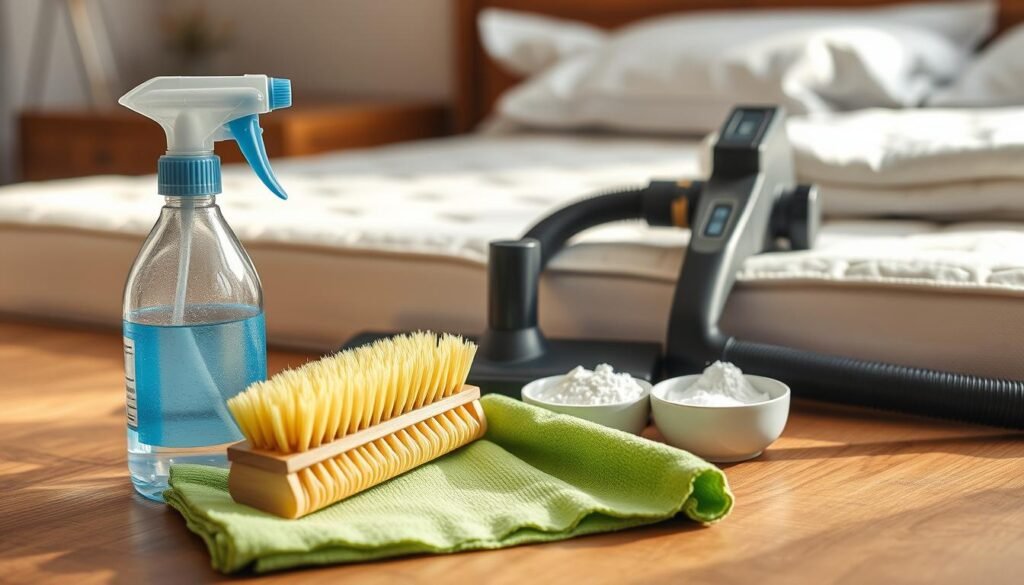
Before I start cleaning my mattress, I need to gather the right tools and supplies. Having the correct equipment makes the task more efficient and ensures a thorough clean.
Essential Cleaning Supplies
To begin, I’ll need some basic cleaning supplies. These include:
- A vacuum cleaner with an upholstery attachment
- Mild detergent or a mattress cleaner
- Warm water
- A soft-bristled brush or a clean cloth
- A clean towel or paper towels for drying
For more information on choosing the right cleaning supplies, you can visit Home Depot’s guide on how to clean a.
Optional Tools for a Deeper Clean
For a deeper clean, consider using:
- A steam cleaner to kill dust mites and bacteria
- Baking soda for deodorizing
- Essential oils for a fresh scent
- A mattress protector to prevent future stains
Here’s a summary of the tools and supplies needed in a tabular format:
| Tool/Supply | Purpose |
|---|---|
| Vacuum cleaner | Remove dust and debris |
| Mild detergent or mattress cleaner | Clean stains and dirt |
| Steam cleaner | Kill dust mites and bacteria |
| Baking soda | Deodorize the mattress |
| Essential oils | Add a fresh scent |
How to Prepare My Mattress for Cleaning
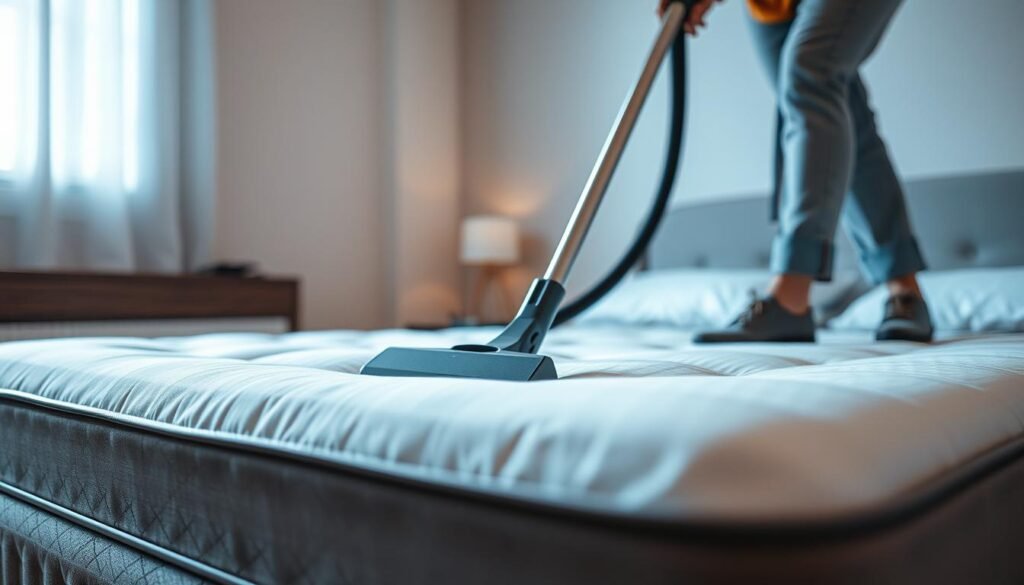
Before we start cleaning, getting my mattress ready is key. It makes sure we clean it well. We remove dirt, dust, and allergens from the surface.
Strip the Bed Completely
First, we take off everything from the bed. This means removing sheets, blankets, and comforters. It lets us clean the whole mattress easily. Plus, it’s a chance to wash the bedding and keep things clean.
Vacuuming the Mattress
Next, we vacuum the mattress well. We use a vacuum with an upholstery attachment. This helps get rid of dust, dirt, and other stuff from the mattress. Vacuuming is essential because it cuts down on allergens and keeps them from getting trapped in the mattress.
We vacuum all sides of the mattress, focusing on seams and crevices. Dirt often hides in these spots. This step is vital in preparing my mattress for cleaning, making the whole process better.
Cleaning Techniques for My Mattress
Now that my mattress is ready, I can start cleaning. I use special methods for different stains and dirt. Cleaning well keeps my mattress clean and lasts longer.
Spot Cleaning for Stains
First, I figure out what kind of stain I have. Protein-based stains like blood or sweat need a special way to clean. I mix a mild detergent with water and gently dab the stain. I make sure not to soak the mattress.
Deep Cleaning with Natural Solutions
For deep cleaning, I use natural solutions that work well and are gentle. A mix of baking soda and essential oils absorbs odors and leaves a nice smell. I spread this mix over the mattress, let it sit, and then vacuum it up.
Using a Mattress Cleaner
If I want something easy, a mattress cleaner works great. These cleaners are made just for mattresses and won’t harm them. I follow the instructions to use it right.
No matter the method, being gentle and thorough is key. Regular cleaning keeps my mattress in top shape and makes sleeping healthier.
Freshening Up My Mattress
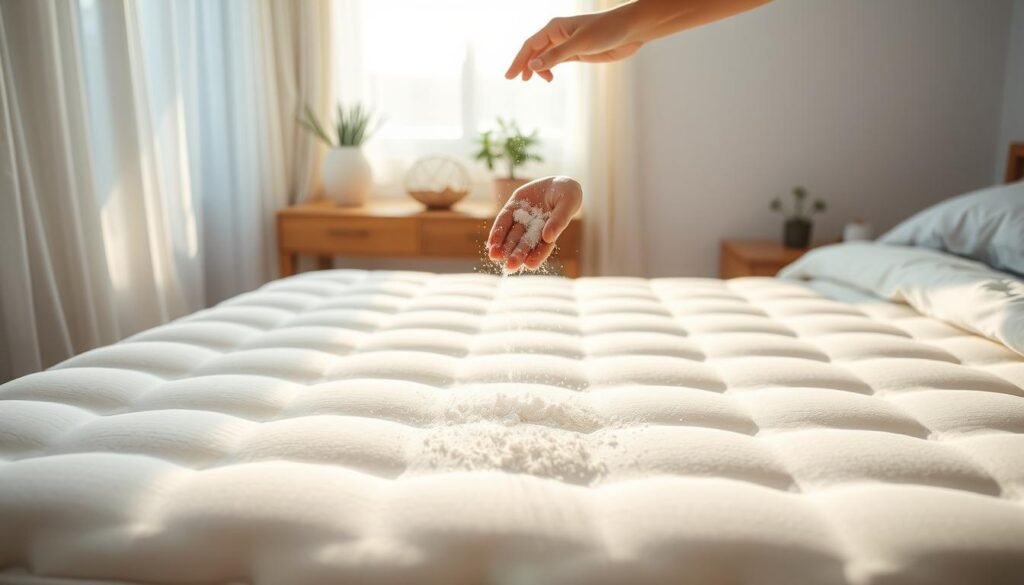
Keeping my mattress fresh is key for good hygiene and sleep. A clean mattress feels better and helps me sleep better too.
Deodorizing with Baking Soda
Baking soda is great for getting rid of bad smells. It’s a natural way to make my mattress smell better. I just sprinkle a lot of baking soda on it.
Then, I let it sit for 30 minutes to an hour. After that, I vacuum it up. This makes my mattress smell fresh again.
Essential Oils for a Fresh Scent
Essential oils also help my mattress smell good. Oils like lavender and tea tree oil keep it clean and fresh. They have special properties that help.
I mix a few drops of essential oil with water in a spray bottle. Then, I lightly spray my mattress. This makes it smell nice and improves my sleep.
| Essential Oil | Benefits |
|---|---|
| Lavender Oil | Promotes relaxation, reduces stress |
| Tea Tree Oil | Antimicrobial properties, reduces odor |
| Eucalyptus Oil | Decongestant properties, refreshing scent |
Using baking soda and essential oils together keeps my mattress clean and smelling great. It makes my sleep even better.
“A clean and fresh mattress is the foundation of a good night’s sleep.”
How to Dry My Mattress Properly
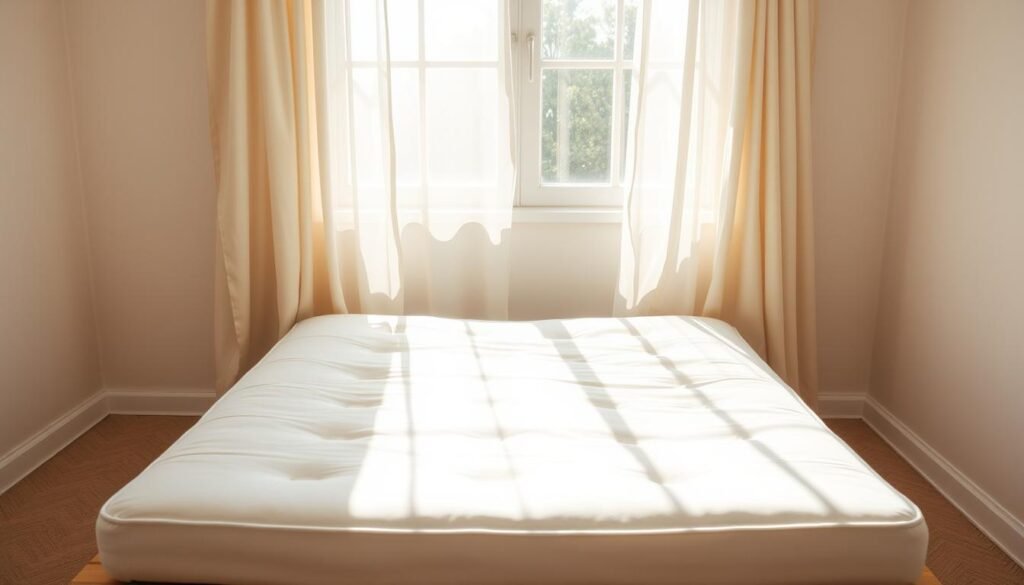
Drying my mattress right after cleaning is key to avoid damage and mold. A wet mattress can harbor bacteria and mold. This can cause health problems and bad smells.
Air Drying vs. Using a Dryer
I have two ways to dry my mattress: air drying or using a dryer. Air drying is safer for the mattress and less likely to cause damage. Dryers can shrink the mattress, damage the fabric, or even catch fire. For more tips on drying a wet mattress, check this resource.
To air dry my mattress well, I should:
- Put the mattress in a place with good air flow, away from sunlight.
- Use fans to help air move and speed up drying.
- Don’t use heat like hair dryers or heaters, as they can harm the mattress.
Ensuring My Mattress is Fully Dry
To make sure my mattress is dry, I need to be patient and check it often. Here’s how:
- Check the mattress every few hours to see if it’s dry.
- Use a dry cloth to soak up any wet spots.
- Keep doing this until the mattress feels dry to the touch.
It’s crucial to make sure my mattress is dry before I put the bedding back. A dry mattress is more comfortable and prevents mold and mildew. By following these steps, I can have a clean, dry, and comfy mattress for a good night’s sleep.
Cleaning Specific Mattress Types
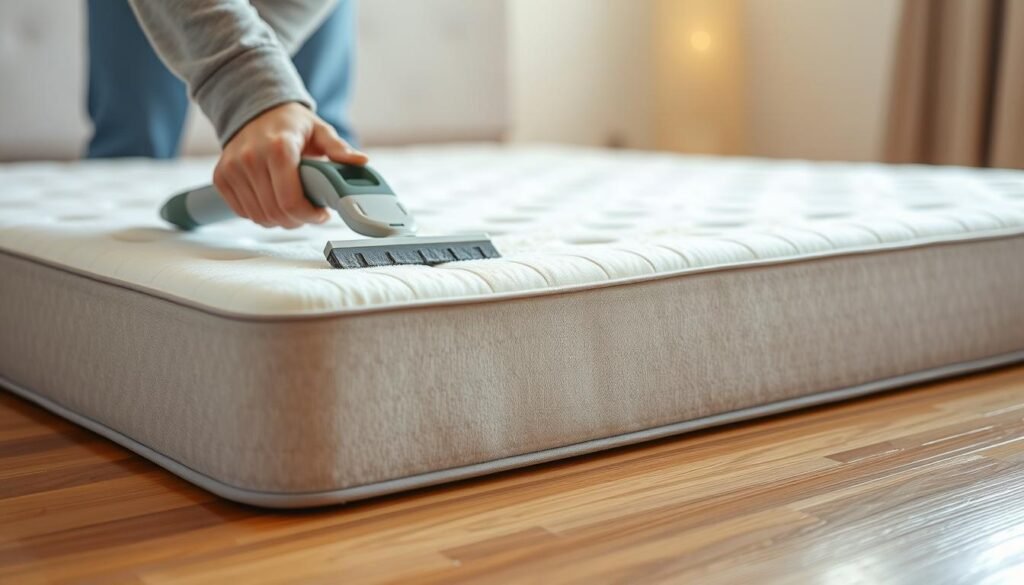
Cleaning your mattress starts with knowing its material. Each mattress type needs a special cleaning method. Here, I’ll show you how to clean memory foam and innerspring mattresses.
How to Clean Memory Foam Mattresses
Memory foam mattresses are soft but need gentle care. Begin by vacuuming the surface to get rid of dirt. For stains, mix a little mild detergent with water and use a soft cloth.
Don’t soak the mattress. Memory foam absorbs water, which can cause it to take a long time to dry or even damage it.
For hard stains, try a mix of water and white vinegar. Apply it, wait a few minutes, and then blot with a clean cloth. Remember, stay away from harsh chemicals and too much water to protect the foam.
Cleaning Innerspring Mattresses
Innerspring mattresses have coils and breathe better than memory foam. Start by removing bedding and vacuuming the mattress well. Focus on seams and crevices where dirt hides.
For stains, use a mild solution. Mix a bit of mild detergent with warm water. Apply it with a soft brush or cloth. Scrub gently, starting from the outside to avoid spreading the stain. Then, rinse with a clean, damp cloth and blot dry.
Rotating your innerspring mattress often is also smart. It helps wear and tear be even, keeping it clean and lasting longer.
Protecting My Mattress After Cleaning
Keeping my mattress clean and fresh is very important. After I clean it, I want to make sure it stays in top shape. This way, it will last longer and stay comfortable.
Using Mattress Protectors
Using a mattress protector is a great way to keep my mattress safe. These protectors stop spills, stains, and allergens from getting to the mattress. I look for ones that are breathable, waterproof, and comfy.
Benefits of Mattress Protectors:
- Prevents stains and spills from reaching the mattress
- Reduces exposure to allergens like dust mites
- Easy to clean and maintain
Let’s compare different types of mattress protectors:
| Type | Waterproof | Breathability | Comfort |
|---|---|---|---|
| Fitted Protector | Yes | High | Excellent |
| Encasement Protector | Yes | Medium | Good |
| Topper Protector | No | High | Excellent |
Tips for Maintaining Cleanliness
Keeping my mattress clean is more than just using a protector. I vacuum it regularly, rotate it, and make sure it’s dry after cleaning. I also wash my bedding often to stop dirt and allergens from building up.
Simple habits can make a big difference in maintaining a clean mattress.
By following these tips and using a protector, I keep my sleep area clean and healthy. This approach helps my mattress stay comfy and clean for a long time.
How to Spot Common Stains
Spotting stains on my mattress is the first step to a cleaner sleep space. Stains come from many sources. Knowing where they come from helps remove them better.
Identifying Different Types of Stains
Different stains need different cleaning methods. Here are some common ones:
- Blood Stains: These can be tough to get rid of, often from nosebleeds or small cuts.
- Sweat Stains: Sweat can seep into the mattress, causing discoloration.
- Food and Drink Stains: Spills can leave stubborn stains if not cleaned quickly.
- Ink Stains: Leaks from pens or markers can leave ugly marks.
For more detailed stain removal tips, check out Sleep Foundation.
Effective Removal Techniques
After identifying a stain, I use the right cleaning method. Here are some effective ways:
- Baking Soda and Water: A paste of baking soda and water can absorb and neutralize stains.
- Hydrogen Peroxide: Good for blood stains, hydrogen peroxide breaks down hemoglobin.
- Enzyme-Based Cleaners: These work well on organic stains like sweat and spills.
For hard stains, you might need to clean them more than once or use different methods together.
What to Do About Bed Bugs
Discovering bed bugs in your mattress can be alarming. But, knowing the signs and taking the right cleaning steps can help solve the problem. Bed bugs are common and can affect any home. It’s important to tackle the issue quickly.
Signs of a Bed Bug Infestation
Spotting a bed bug infestation early is crucial. Here are some common signs:
- Small, red or brown spots on your sheets or mattress, which are bed bug feces.
- Tiny, light-colored shed skins or eggs in cracks and crevices.
- Live bed bugs crawling on your mattress or bed frame, around the seams.
- Bites or welts on your skin, often in a line or cluster.
If you see any of these signs, act fast to stop the infestation from growing.
Cleaning Steps to Address Bed Bugs
To tackle a bed bug infestation, follow these cleaning steps:
- Wash and dry your bedding on high heat to kill bed bugs and their eggs.
- Vacuum your mattress thoroughly, focusing on the seams. Use a vacuum with a hose attachment. After each use, throw away the vacuum bag or empty the canister to prevent bed bugs from escaping.
- Use a mattress encasement to cover your mattress and keep bed bugs out.
- Consider using a steam cleaner to kill bed bugs on contact. Always follow the manufacturer’s instructions.
| Cleaning Method | Effectiveness Against Bed Bugs |
|---|---|
| Washing and drying bedding | High |
| Vacuuming the mattress | Medium to High |
| Using a mattress encasement | High |
| Steam cleaning | High |
By following these steps and staying vigilant, you can manage a bed bug infestation and prevent future problems.
Regular Maintenance for My Mattress
Keeping my mattress in good shape is essential for better sleep. Simple daily habits and seasonal cleaning help a lot. This way, my mattress stays comfy and healthy.
Simple Daily Habits to Include
I’ve started a few easy habits to care for my mattress. First, I rotate my mattress every few months. This helps it wear evenly. I also use a mattress protector to prevent spills and stains.
Regular vacuuming is another habit. It keeps dust and allergens off the mattress. For more cleaning tips, I check out Martha Stewart’s guide on how to clean a mattress.
Seasonal Deep Cleaning Checklist
Seasonal deep cleaning is also important. Here’s what I do:
- Strip and wash bedding: I wash my bedding in hot water to kill dust mites.
- Vacuum the mattress: I vacuum the mattress with an upholstery attachment, focusing on seams.
- Spot clean stains: I clean stains with the right solutions, avoiding soaking the mattress.
- Deodorize: I sprinkle baking soda on the mattress, then vacuum it off to remove odors.
- Inspect for wear: I check for signs of wear and rotate or flip the mattress if needed.
By sticking to these habits and deep cleaning, my mattress stays clean and comfy. This improves my sleep a lot.
Tips for a Healthier Sleep Environment
A healthier sleep environment is more than just a mattress. It’s about the whole feel of your bedroom. To get a good night’s sleep, think about all the things that make your bedroom sleep-friendly.
The Importance of Clean Bedding
Clean bedding is key to a better sleep space. Washing your sheets and pillowcases often gets rid of dirt, sweat, and allergens that can mess with your sleep. I wash my bedding every week to keep it clean and fresh. For more tips on keeping your mattress clean, check out this resource.
Creating the Perfect Sleep Atmosphere
Creating the right sleep atmosphere is more than just clean bedding. It’s about making a space that helps you relax and feel calm. This means keeping the room cool, quiet, and using calming scents like lavender. These changes can really help you sleep better.
Also, think about your bedroom’s lighting. Blackout curtains or dim red lights tell your body it’s time to sleep. By combining these, you can make a sleep space that’s restful and refreshing.
Final Thoughts on Cleaning My Mattress
Keeping my mattress clean is key for a healthy sleep space. By following the steps I shared, I’ve gotten rid of dirt, dust mites, and allergens. These things can mess up my sleep.
Cleaning my mattress is more than just getting rid of stains. It’s about making my sleep fresh and comfortable. For more tips, check out Good Housekeeping’s guide on mattress cleaning.
A Fresh Start
Now, I can enjoy better sleep with a clean mattress. It means I’ll sleep better and have fewer allergy problems. Keeping up with regular cleaning will keep my mattress comfy for years.