Did you know a dirty couch can hold lots of bacteria and dust mites? These can make allergies and breathing problems worse. Maintaining a clean microfiber couch is key for a healthier home.
Keeping your microfiber couch clean can be tough. From tough stains to figuring out the right cleaning methods, it’s a challenge. In this guide, I’ll show you how to keep your couch looking new.
Key Takeaways
- Understanding the type of microfiber fabric on your couch
- Precautions to take before cleaning
- Effective methods for removing common stains
- Tips for maintaining your microfiber couch’s appearance
- Best practices for deep cleaning
Understanding Microfiber Fabric
Microfiber is a synthetic fabric known for its versatility and easy care. It’s a top pick for couches, thanks to its many benefits.
What is Microfiber?
Microfiber comes from very fine synthetic fibers, usually polyester or a mix of polyester and polyamide. These fibers are woven to make a fabric that’s soft and durable. Its unique weave makes it light and has a suede-like feel.
Benefits of Microfiber Couches
Microfiber couches are loved for many reasons. Here are some key benefits:
- Easy to Clean: Microfiber is simple to clean. Spills and stains can be wiped away quickly, perfect for homes with kids or pets.
- Durability: Despite being soft, microfiber is very durable. It can handle a lot of use without losing its shape or feel.
- Affordability: Microfiber is cheaper than leather or genuine suede. This makes it a great choice for those on a budget.
| Feature | Microfiber | Leather | Fabric |
|---|---|---|---|
| Durability | High | High | Variable |
| Ease of Cleaning | Easy | Moderate | Variable |
| Cost | Moderate | High | Variable |
Common Uses for Microfiber
Microfiber is not just for furniture. It’s also used in clothes, cleaning cloths, and outdoor gear. Its water-resistant and quick-drying nature makes it versatile. For furniture, microfiber is great for couches, armchairs, and recliners because it’s both comfy and practical.
Knowing what microfiber is and its benefits helps you value your microfiber couch more. It also shows how to keep it in top shape.
Identifying Stains on Your Couch
Before you can clean your microfiber couch, you need to identify the stains and understand their nature. This knowledge will guide you in choosing the most effective cleaning method.
Types of Stains
Microfiber couches can fall victim to a variety of stains. These include food and beverage spills, ink, oil-based stains, and dirt. Identifying the type of stain is crucial because different stains require different cleaning approaches.
For instance, oil-based stains, such as those from grease or makeup, require a different cleaning solution than water-based stains like coffee or juice. Understanding the stain type helps in selecting the appropriate cleaning product and technique.
Importance of Quick Action
Taking quick action when you notice a stain is vital. The sooner you address the stain, the higher the chances of removing it completely. Delaying can lead to the stain setting into the fabric, making it more difficult to clean.
Quick action involves blotting the stain gently to remove excess substance and then applying an appropriate cleaning solution. It’s also important to test any cleaning solution on an inconspicuous area first to ensure it doesn’t damage the microfiber fabric.
By acting swiftly and using the right cleaning methods, you can effectively remove stains and maintain the appearance of your microfiber couch.
Essential Tools for Cleaning
To clean your microfiber couch right, you need the right tools. The right equipment makes cleaning easier and keeps the fabric safe.
Cleaning Solutions
Choosing the right cleaning solution is key. Use a mild detergent or a specialized microfiber cleaner. Stay away from harsh chemicals to avoid damage or residue.
Brushes and Cloths
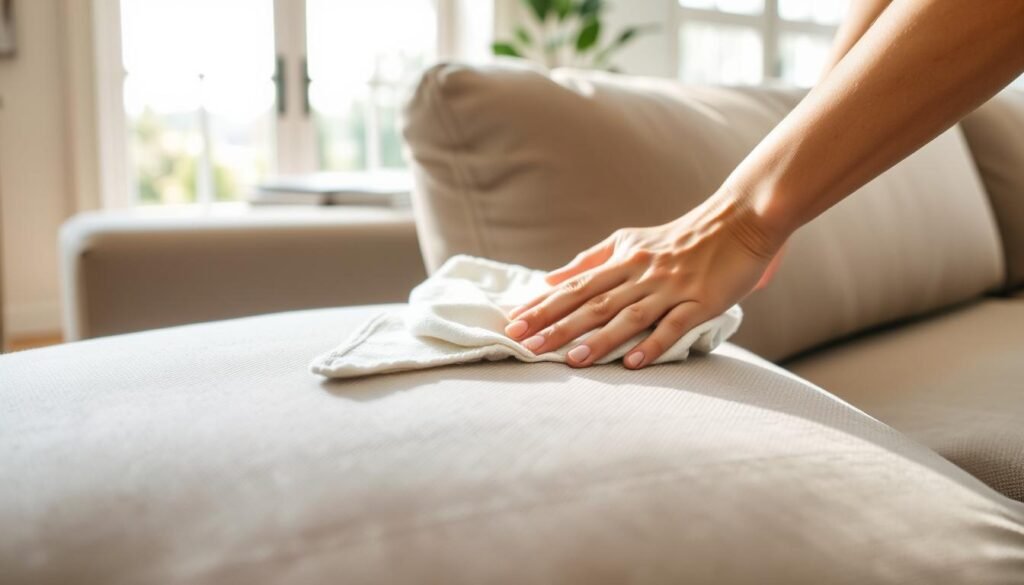
Soft-bristled brushes are great for removing dirt without hurting the couch. Microfiber cloths are also good for cleaning. They’re soft and pick up dirt well.
Vacuum Cleaners
A vacuum cleaner with a gentle setting is important. It helps get rid of loose dirt and dust. Make sure it has a soft brush to avoid scratching the microfiber.
| Tool | Purpose |
|---|---|
| Mild detergent or microfiber cleaner | Cleaning solution safe for microfiber |
| Soft-bristled brush | Gently removes dirt and debris |
| Microfiber cloths | Effective for cleaning and dusting |
| Vacuum cleaner with soft brush attachment | Removes loose dirt and dust |
Preparation Before Cleaning
Getting your microfiber couch ready for cleaning is essential. It makes the cleaning process smoother and safer for your couch’s fabric.
Remove Cushions and Covers
The first thing to do is remove any cushions and covers. This lets you clean each part well. It also stops dirt or cleaning solution from getting stuck between the cushions and the couch.
If your couch has removable covers, take them off. Check the care label for washing instructions. Some covers can be machine washed, while others need dry cleaning.
Vacuuming the Couch
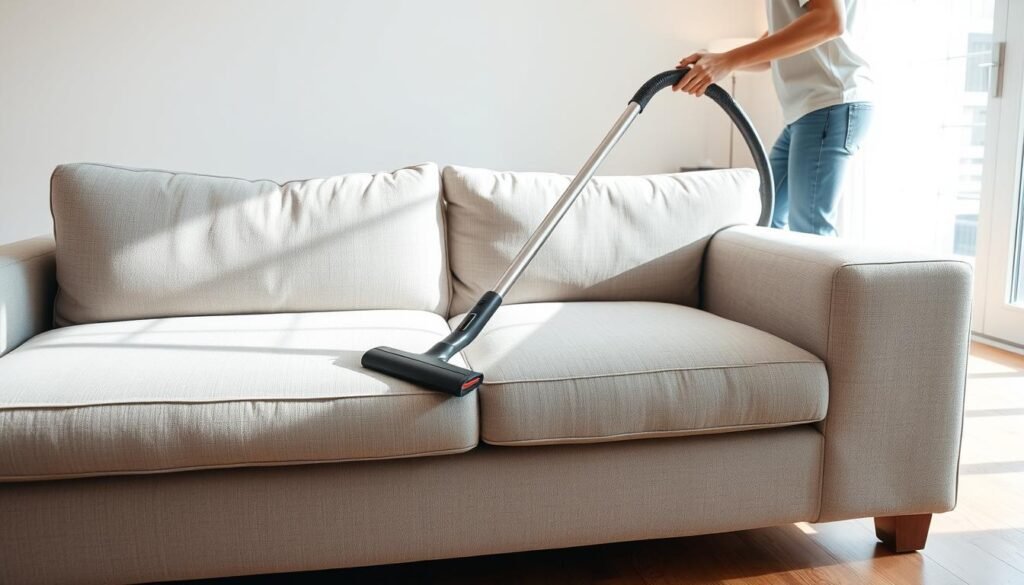
Then, vacuum the entire couch to get rid of loose dirt, dust, or debris. Use a vacuum with a gentle setting to avoid harming the microfiber fabric. Focus on the crevices and seams where dirt often gathers.
Test Cleaning Solution
Before using any cleaning solution, test it on a small, inconspicuous area. This step is key to avoid damaging the fabric or causing color changes. Wait a few minutes after applying the solution to see if there are any bad reactions.
Best Methods for Cleaning
To keep your microfiber couch looking great, it’s important to know the different cleaning methods. The type of stain and the fabric’s condition help decide the best cleaning technique.
Dry Cleaning Method
The dry cleaning method is best for microfiber couches with delicate or water-sensitive fabrics. It uses a dry cleaning solvent or powder to absorb and remove dirt and stains. Always use a gentle dry cleaning product made for microfiber to avoid damage.
For more info on dry cleaning products and techniques, check out BHG’s guide on cleaning microfiber couches.
Water-based Cleaning Method
The water-based cleaning method works well for removing tough stains and dirt from microfiber couches. It uses a mild detergent mixed with water to gently clean the fabric. Always test the cleaning solution on a hidden area first to make sure it won’t harm the microfiber.
Combination Method
At times, a mix of dry and water-based cleaning methods is the best choice. Start with dry cleaning to remove loose dirt, then use water-based cleaning for tougher stains. This mix helps keep the fabric quality high while ensuring a deep clean.
| Cleaning Method | Best For | Precautions |
|---|---|---|
| Dry Cleaning | Delicate or water-sensitive fabrics | Use gentle dry cleaning products |
| Water-based Cleaning | Stubborn stains and dirt | Test cleaning solution first |
| Combination Method | Varied stain types and fabric conditions | Be cautious with fabric sensitivity |
Dealing with Stains

Removing stains from your microfiber couch needs a smart plan to keep it looking good. Different stains need different cleaning methods. Knowing these differences is key to getting rid of stains.
Oil-based Stains
Oil-based stains, like grease or makeup, are tough. Start by blotting the stain with a clean cloth to soak up oil. Don’t rub, as it can push the stain deeper. Next, sprinkle talcum powder or cornstarch on the stain, let it sit for 15 minutes, and then vacuum it up.
If the stain stays, use a cleaning solution made for oil-based stains. For more help, check out spot cleaning techniques for microfiber couches.
Water-based Stains
Water-based stains, like coffee or wine, are easier to clean than oil-based ones. First, blot the stain with a dry cloth to remove excess liquid. Then, mix mild soap and warm water, and gently apply it to the stain with a soft-bristled brush or cloth.
Blot the area with a dry cloth to remove the soap solution, and repeat until the stain is gone. For tough stains, you might need a stronger cleaning solution or a product for water-based stains.
Ink Stains
Ink stains are hard to remove, but the right method can work. Apply rubbing alcohol to the stain and gently blot it with a clean cloth. The alcohol breaks down the ink, making it easier to remove.
Test the alcohol on a hidden area first to avoid damaging the fabric. Keep blotting until the stain fades, then use a clean, damp cloth to remove any alcohol left.
Knowing the stain type and using the right removal method helps keep your microfiber couch in top shape. Regular care and quick action when stains happen are key to keeping your furniture looking great.
- Key Takeaways:
- Identify the type of stain before attempting removal.
- Use appropriate cleaning solutions and techniques for oil-based, water-based, and ink stains.
- Always test cleaning solutions on an inconspicuous area first.
- Blot stains gently; avoid rubbing to prevent damage.
General Maintenance Tips
To keep your microfiber couch looking great, regular care is essential. A few simple steps can help your couch last longer and stay in top condition.
Regular Vacuuming
Vacuuming your microfiber couch often is crucial to remove dust and dirt. Use a gentle suction setting to avoid harming the fabric. Vacuum your couch at least once a week, or more if it’s used a lot.
Tip: Use a vacuum with a brush attachment to gently remove dirt and debris. This helps prevent damage to the microfiber material.
Using a Fabric Protector
Using a fabric protector on your microfiber couch can help repel stains and spills. This makes cleaning easier. Choose a protector made for microfiber fabrics and follow the instructions for use.
Benefits of Fabric Protector: It not only protects against stains but also reduces wear and tear on your couch.
Avoiding Harsh Chemicals
When cleaning your microfiber couch, avoid harsh chemicals that can harm the fabric. Instead, use mild cleaning solutions made for microfiber.
Caution: Always test a small, hidden area of the couch before using any cleaning solution. This ensures it won’t damage the fabric.
By following these maintenance tips, you can keep your microfiber couch in excellent condition. Regular care is a simple way to protect your investment and enjoy your couch for many years.
How to Remove Odors

Getting rid of odors from your microfiber couch can be tough. But, there are home methods that work well. Whether it’s a cooking smell, pet odor, or something else, I’ll show you how to make your couch smell fresh again.
Baking Soda Method
Baking soda is a simple and effective way to tackle odors on your microfiber couch. It’s gentle on fabrics and great at absorbing smells. Just sprinkle a lot of baking soda on the area, making sure it’s all covered.
Let it sit for 30 minutes to an hour before vacuuming it up. For really tough smells, leave it overnight and vacuum in the morning. This method is safe for your couch and works well.
Essential Oils
Essential oils can make your couch smell fresh and clean. Oils like lavender, tea tree, and lemon are good at removing odors. But, always dilute them with water or a carrier oil because they’re strong.
Put a few drops of your chosen oil in water in a spray bottle. Lightly mist your couch. Don’t soak the fabric. You can also mix essential oils with baking soda for extra freshness.
Commercial Deodorizers
If you want something easier or stronger, try commercial deodorizers. There are many products made for removing odors from fabrics. Just make sure they’re safe for microfiber to avoid harming your couch.
Always read the instructions and test a small area first. This ensures the product won’t damage your couch. For more cleaning tips, check out how to clean a couch.
| Method | Effectiveness | Safety for Microfiber |
|---|---|---|
| Baking Soda | High | Very Safe |
| Essential Oils | Moderate to High | Safe when diluted |
| Commercial Deodorizers | Varies by product | Generally Safe if chosen correctly |
Dealing with Old Stains
Removing old stains from your microfiber couch takes time and the right steps. These stains can be hard to get rid of. But, with the right methods, you can make your couch look new again.
Using Steam Cleaners
Steam cleaners are great for old stains on microfiber couches. The steam breaks down the dirt, making it simpler to clean. Always check the steam cleaner’s instructions and test it on a small area first.
Benefits of Steam Cleaning:
- Deep cleaning without harsh chemicals
- Effective against a variety of stains
- Can help remove odors
Professional Cleaning Services
For really tough stains, you might need professional help. Cleaners have the tools and know-how to handle even the toughest stains. If a stain is really hard to get rid of, consider getting professional cleaning services.
When to Seek Professional Help:
- The stain is old and deeply set
- You’ve tried various cleaning methods without success
- The stain is large or in a prominent area
Tips for Preventing Damage
Keeping your microfiber couch in top shape is more than just cleaning. It’s about taking care of it before problems arise. This way, your couch stays looking great and lasts longer.
Avoiding Direct Sunlight
Direct sunlight can fade and damage your microfiber couch. To avoid this, move your furniture away from direct sunlight. Or, use UV-blocking window treatments to soften the sun’s rays.
- Use curtains or blinds to control sunlight
- Apply a UV protectant spray on your microfiber couch
- Rearrange furniture seasonally to avoid prolonged sun exposure
Pet Considerations
If you have pets, protecting your microfiber couch is key. Pet hair and accidents can be tough to clean. But, there are ways to lessen the damage.
Regular grooming of your pets can cut down on couch hair. Also, a pet-friendly fabric protector can help prevent stains.
Careful Use of Furniture Polishes
Be careful when using furniture polishes or conditioners on your microfiber couch. Not all products are safe for microfiber. Some can harm your couch or leave a sticky residue.
Always check the label for products made for microfiber. It’s wise to test a small, inconspicuous area first. This ensures the product won’t discolor your couch.
By following these tips, you can greatly reduce damage to your microfiber couch. Your couch will stay in excellent condition for many years.
When to Seek Professional Help
If your microfiber couch is really dirty or has tough stains, it might be time for a pro. Even with regular care, some stains are hard to get rid of. DIY methods might not work well enough.
Signs It’s Time for a Pro
There are clear signs you need professional help for your microfiber couch. These include:
- Persistent stains that won’t go away after trying different cleaning methods
- Bad smells that keep coming back even with deodorizers
- Visible damage like fraying or color changes
Professional cleaners have the right tools and know-how to fix these problems.
Finding the Right Cleaning Service
When searching for a cleaning service, do your homework. Look for companies that focus on microfiber furniture and have good feedback. Ask friends or family for suggestions too.
Make sure the cleaning service knows how to clean microfiber fabric properly. Also, ask for a price quote to avoid surprises.
FAQs About Microfiber Couch Cleaning
Keeping your microfiber couch clean can raise some questions. I’ll answer some common ones to help you keep it looking great.
Cleaning Frequency
How often to clean your microfiber couch depends on how much you use it. If you have pets or allergies, clean it every 3-6 months. For regular use, a deep clean every 6-12 months is enough. Vacuuming regularly helps keep it looking good between deep cleans.
Using a Steam Cleaner
Using a steam cleaner on microfiber is okay, but check the instructions first. Some materials might not be safe for steam cleaning. Always test it on a hidden spot to avoid damage.
Managing Pet Hair
Pet hair can be tough on microfiber couches. Use a lint roller or a damp cloth to remove it. For tough hair, a rubber glove works well. Vacuuming with a brush attachment helps keep pet hair away.