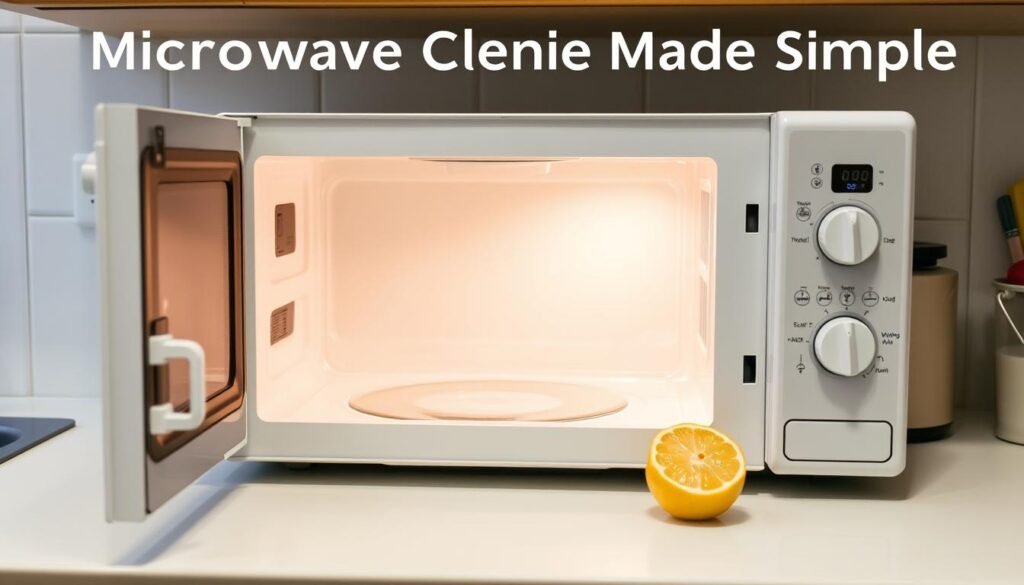
We’ll show a safe, easy plan that gets a grimy appliance fresh again without harsh products. Steam is our secret: a brief steam session loosens dried food so we wipe it away fast. We use simple household items and common cleaners for dependable results.
Before we start, gather a microwave-safe container, water, lemon, white vinegar, baking soda, a gentle sponge, soft cloths, and paper towels. A quick soap-and-water steam often works for light splatters, while lemon freshens and vinegar helps with mild degrease.
We’ll cover which parts need attention — interior walls, ceiling, door, turntable, vents, and exterior panel — and share safety tips like using only microwave-safe bowls and avoiding boil-overs. With weekly quick wipes and a monthly deep clean, grease won’t harden and the appliance runs better.
Key Takeaways
- Steam softens residue so wiping is faster and easier.
- Keep a small toolkit ready: bowl, lemon, vinegar, sponge, cloths.
- Use lemon for scent, vinegar for mild degrease, baking soda for gentle scrubbing.
- Do quick weekly wipes and one monthly deep clean for best results.
- Handle hot containers with care and use microwave-safe dishes only.
- Mr. Clean Magic Eraser and Scotch-Brite non-scratch pads help with tough spots.
What we need before we start: tools, safety, and quick checks
We begin by laying out what we’ll use and running a quick safety check so steam does the work for us.
Gather these essentials: a microwave-safe bowl, fresh water, a lemon, white vinegar, baking soda, a small amount of dish soap, a soft sponge, a microfiber cloth, and an absorbent towel.
For precleaning, mix about 1 teaspoon of dish soap with water in the bowl. Heat it for the right minutes based on wattage: roughly 1 minute at 1200 watts or up to 2 minutes at 700 watts. Then keep the door closed for 3–4 minutes so steam softens dried residue.
Use oven mitts or a towel when removing the hot bowl and wipe while spots are still softened. Avoid spraying cleaners near vents or electronic controls; apply solution to a cloth first to protect sensitive parts.
- Confirm every container is labeled microwave-safe; never use metal.
- Set out a towel for parts you remove and a trash spot for debris.
- Keep sponge and cloth damp, not dripping, to avoid excess moisture.
- Follow the simple timing checklist: heat, wait with the door closed, then wipe.
How to clean microwave: our step-by-step inside cleaning methods
We walk through simple inside steps that loosen grime and leave a fresh scent. First, pick the mild steaming option that matches the mess. Each method uses a safe mixture and a short heat cycle so we avoid heavy scrubbing.
Steam with lemon
Place a cup water and lemon slices or the juice from half a lemon in a microwave-safe bowl. Heat for about 2–3 minutes until steamy, then let it rest 5 minutes. Open, use a damp sponge, and gently wipe interior surfaces. The lemon leaves a bright scent.
Vinegar water method
Mix a few tablespoons of vinegar with a cup water in a bowl. Heat 2–3 minutes, wait 5 minutes, then wipe. This lifts light grease on side walls and the ceiling without harsh chemicals.
Baking soda boost and soapy option
For stubborn spots, heat a mix of 1 tablespoon baking soda and about 1 cup water for 3–5 minutes, rest 2–3 minutes, then wipe. If residue remains, make a thin paste and buff gently. We also keep a soapy preclean: 1 teaspoon dish soap in warm water, short heat, then wash the turntable.
“Work top to bottom and target food splatters while they are soft.”

- Remove and wash the turntable before reinstalling.
- Repeat a short steam cycle rather than heavy scrubbing.
- Dry the interior with a soft cloth so moisture doesn’t linger.
Deep-cleaning stubborn grease, brown stains, and burnt-on splatters
Tough grease and baked-on splatters need a plan that softens, lifts, and protects the interior finish. We start with a fresh steam cycle so baked residue loosens and we use gentle tools rather than hard scrubbing. This saves time and preserves the oven surface.how-to-clean-vomit-from-carpet
Softening stuck-on food, then using gentle abrasion
After steaming, we wipe the interior walls while spots are soft. For dried residue, a Mr. Clean Magic Eraser works well on corners, ceiling, and flat surfaces.how-to-clean-apple-watch-band
When extra scrubbing is needed, we use a Scotch-Brite non-scratch pad with light pressure. We never spray cleaners directly into vents or controls; instead, we apply a grease-cutting solution to a cloth first.
Targeting brown marks with baking soda paste and grease-cutters
For persistent brown stains, we make a baking soda paste, let it sit a few minutes, then wipe. If discoloration looks like rust, we evaluate safety and parts replacement.
- Rinse residue with a damp cloth and dry thoroughly.
- Repeat a short steam-and-wipe cycle rather than aggressive scrubbing.
- Finish with a visual check of the door gasket and edges for hidden grime.
Clean exterior, door, and removable parts for a sparkling finish
We give the outside the same care as the inside so the whole unit looks and works like new. Start with the door edges and seals. Dip a damp sponge in a little baking soda, lift gunk gently, then rinse with a clean cloth.
Door, window, and controls
For the window, apply a 50/50 vinegar water mix to a cloth, wipe, then dry for a streak-free finish. We wipe around buttons with a damp cloth rather than spraying to keep liquid out of controls.
Turntable and rack
Remove the turntable and rack. Wash in warm soap water by hand or place the glass plate in the dishwasher if it’s rated dishwasher-safe. Dry with a towel and reinstall, checking that the turntable spins freely.how-to-clean-vomit-from-carpet
Over-the-range filters and final checks
For filters, soak in warm suds at least 10 minutes and add 1/4 cup baking soda for sticky residue. Finish by wiping the interior floor under the turntable and the roller ring. Buff the exterior with a microfiber cloth for a fingerprint-free look.
- Lift seal grime with a sponge, rinse with a cloth.
- Use vinegar water on glass, then dry well.
- Wash removable parts, dry with a towel, reassemble.
- Soak filters for stubborn stains and heavy grease.
Kick odors to the curb: quick ways to get smells out of a microwave
We keep our kitchen smelling fresh by matching a simple fix to the strength of the odor. For light cases, airing the cavity helps a lot. A short wait with the door open removes trapped air and weak scents.
For light odors, set a small bowl of dry baking soda inside and close the door for several hours. The powder absorbs lingering smells without harsh products. Check the turntable and seal; films often hold odors.
For strong odors, remove any char or residue first. Then run a lemon-water steam for a bright, neutral scent. If an aroma persists, park an odor-absorbing gel inside between uses until the smell fades.how-to-clean-mass-air-flow-sensor
- Air the cavity or place baking soda in a closed bowl.
- Remove residue so deodorizers work well.
- Use lemon steam for a fresh result.
- Keep a small gel or safe products on hand for stubborn smells.
- Dry the interior fully; moisture breeds musty odors.
We avoid masking scents with heavy fragrance. A clear, neutral-smelling appliance is the best way to keep our home pleasant and ready for the next use.
Keep it clean: simple habits that save time at home
A few small habits cut cleanup time and keep the appliance looking fresh week after week. We treat upkeep as a short routine, not a chore. That keeps our kitchen tidy and our home feeling cared for.

Our routine
Weekly, we wipe interior surfaces and give the turntable a rinse. A fast pass prevents grease droplets and splatters from hardening.how-to-clean-a-retainer
Monthly, we run a deeper cycle and tackle filters or sticky corners so the oven stays efficient.
Smart prevention
We stop most splatters by using microwave-safe covers and choosing lower power for saucy or high-fat foods. A quick spot-wipe right after a spill saves more time than a big scrub later.
- Wipe handle and keypad after greasy use to avoid buildup.
- Give the walls and ceiling a fast pass after reheating sauces.
- Keep a kit (cloth, sponge, vinegar or lemon) nearby for quick fixes.
- Pause and wipe spills immediately so the mess never bakes in the oven.
- Swap a bowl of baking soda now and then to absorb odors and keep your clean microwave fresh.
We find that these tiny steps mean less elbow grease and more free time at home. If you need clean results fast, this routine works week after week.
Your cleaner, safer kitchen starts with a well-cared-for microwave
, We promise a simple routine that keeps reheating safe and fast.
We use lemon and a cup water steam for a bright scent and loose food splatters. Heat 2–3 minutes, let it rest 3–5 minutes with the door closed, then remove bowl carefully and wipe with a cloth or sponge.
Vinegar water is our mild degreaser for grease and stains. For stuck bits, a baking soda paste lifts grime without harsh products. A sudsy dish soap mix handles the exterior and turntable; wash, dry, and reinstall so it spins freely.
Keep filters soaking when needed, apply cleaners to a cloth rather than sprays, and always dry surfaces. A few steady steps mean fewer deep scrubs and a fresher kitchen every day.how-to-clean-a-stainless-steel-sink