Keeping your clean mouth guard is key for good oral health. I’ll show you how to keep it fresh and working well.
A mouth guard is a big deal for protecting your teeth, whether you’re playing sports or grinding them at night. But if it’s not cleaned right, it can get full of bacteria and smell bad. Here, I’ll give you the best ways to keep your mouth guard clean and make it last longer.
Key Takeaways
- Regular cleaning is essential for maintaining oral hygiene.
- Using the right cleaning techniques can prolong the lifespan of your mouth guard.
- A clean mouth guard prevents bad odors and bacterial growth.
- Simple daily habits can keep your mouth guard fresh.
- Proper storage is also crucial for maintaining cleanliness.
Why Cleaning Your Mouth Guard is Important
Keeping your mouth guard clean is key for your oral health and overall well-being. A mouth guard can collect bacteria and germs if not cleaned right. This section will explain why it’s important to keep your mouth guard clean. We’ll look at the health benefits, avoiding bad odors, and how cleaning can make it last longer.
Health Benefits of a Clean Mouth Guard
A clean mouth guard stops bacteria and germs from building up. Regular cleaning reduces the chance of these harmful microorganisms getting into your mouth. Dental experts say a clean mouth guard can prevent gum disease and bad breath.how-to-clean-a-bong
For more tips on cleaning and caring for your mouth guard, check out Aperture Dental’s blog.
Health Benefits of Regular Mouth Guard Cleaning
| Benefit | Description |
|---|---|
| Prevents Bacteria Accumulation | Regular cleaning stops bacteria from multiplying on the mouth guard. |
| Reduces Risk of Oral Health Issues | Cleaning your mouth guard regularly lowers the risk of gum disease and other oral health problems. |
| Promotes Overall Health | A clean mouth guard contributes to overall health by preventing the spread of infections. |
Avoiding Bad Odors
Cleaning your mouth guard helps avoid bad smells. Bacteria can make your mouth guard smell bad. Washing it with soap and water or vinegar can get rid of these smells.
Keeping your mouth guard clean makes it more comfortable to wear. It doesn’t leave your mouth feeling dirty or smelling bad.
Prolonging the Life of Your Mouth Guard
Regular cleaning keeps your mouth guard clean and extends its life. It removes bacteria, plaque, and debris, preventing damage. This way, your mouth guard can last longer, saving you money.
Proper storage and regular checks for damage also help extend its life. By understanding the importance of cleaning your mouth guard, you can maintain good oral hygiene and overall health. Regular cleaning, along with proper storage and maintenance, keeps your mouth guard in good shape and effective.
How Often Should You Clean Your Mouth Guard?
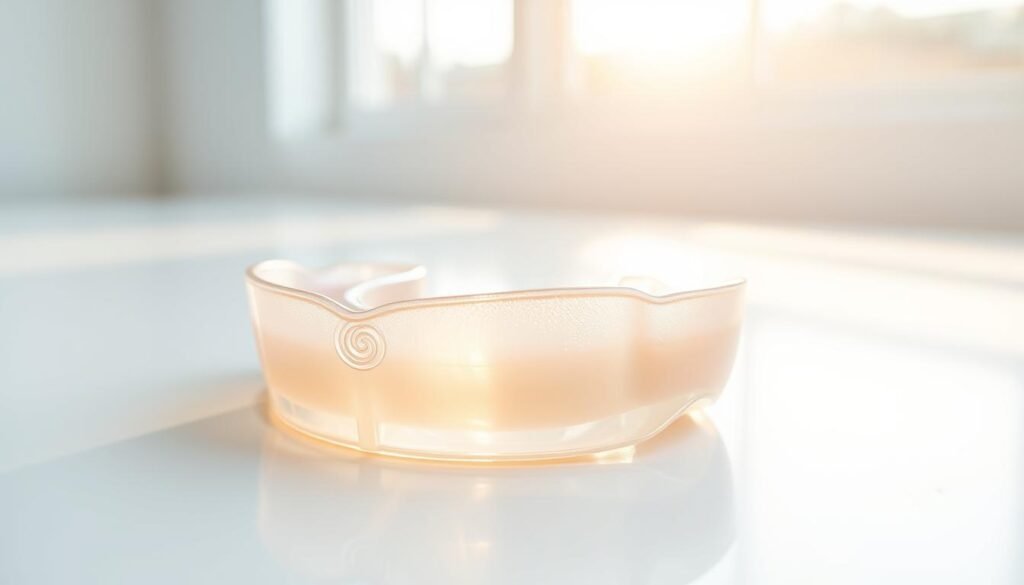
To keep your mouth guard in top shape, a regular cleaning schedule is key. A clean mouth guard is good for your teeth and lasts longer.how-to-clean-copper
Daily Cleaning Routine
Cleaning your mouth guard every day is crucial. It removes bacteria, plaque, and other dirt. Rinse it with soap and water after each use. For a deeper clean, use a soft toothbrush.
For more cleaning tips, check out this page.
- Rinse your mouth guard with soap and water after each use.
- Use a soft toothbrush to gently scrub the surface.
- Dry the mouth guard thoroughly to prevent bacterial growth.
Weekly Deep Cleaning
Weekly deep cleaning is also important. Soaking in vinegar or using baking soda paste can remove tough stains and odors.
- Soak the mouth guard in a mixture of equal parts water and white vinegar for 30 minutes.
- Use a baking soda paste to scrub away tough stains.
- Rinse thoroughly and dry the mouth guard.
Signs It’s Time for a Replacement
Even with regular cleaning, your mouth guard will eventually need a replacement. Look for signs like visible wear, persistent odors, or a change in fit. Regular checks can help you spot these signs early.
By following these tips, you can keep your mouth guard clean and in good condition. This ensures your oral health and extends the device’s life.
Best Cleaning Methods for Mouth Guards
There are several effective ways to clean your mouth guard, and I’ll explore them in this section.
Keeping your mouth guard clean is key for its life and your health. Each cleaning method has its own benefits, from simple to deep cleaning.
Soap and Water Method
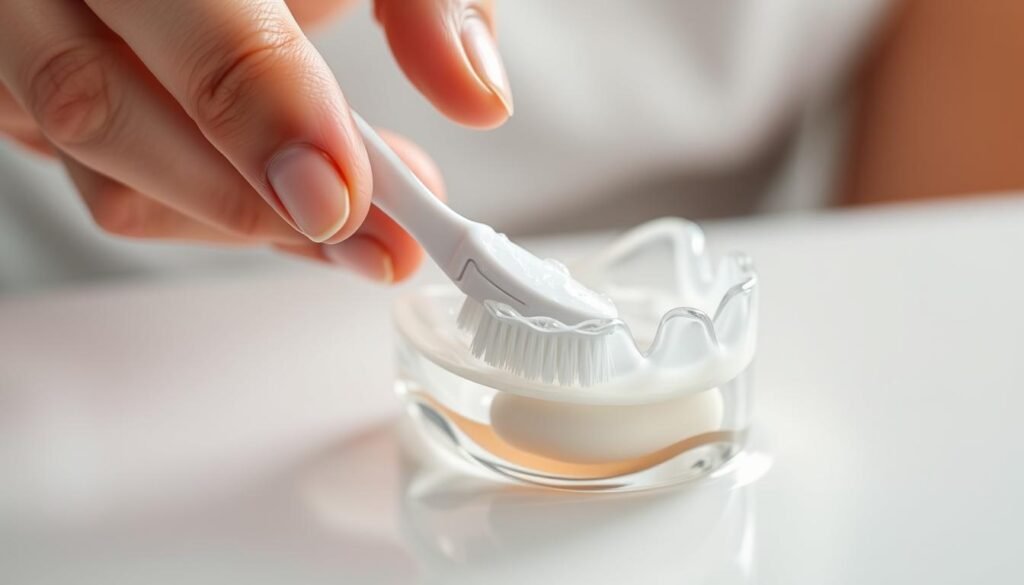
The soap and water method is simple and works well for daily cleaning. Use mild soap and warm water. Then, gently scrub the mouth guard with a soft toothbrush to remove debris and bacteria.
Benefits of Soap and Water:
- Gentle on the mouth guard material
- Easy to do daily
- Effective for removing surface debris
Vinegar Solution Method
For tough stains and odors, vinegar is a great choice. Mix equal parts water and white vinegar in a bowl. Soak your mouth guard for about 30 minutes.
Why Vinegar Works:
- Natural antibacterial properties
- Effective against tough stains
- Helps eliminate odors
Baking Soda Paste Method
Baking soda is a natural cleaner for your mouth guard. Mix baking soda with a small amount of water to make a paste. Then, gently scrub your mouth guard with it.
Advantages of Baking Soda:
- Natural and non-toxic
- Effective for removing stains and odors
- Gentle on most mouth guard materials
Here’s a comparison of the three methods:
| Cleaning Method | Effectiveness | Ease of Use |
|---|---|---|
| Soap and Water | Good for daily cleaning | Very Easy |
| Vinegar Solution | Excellent for tough stains | Easy |
| Baking Soda Paste | Good for stains and odors | Moderate |
Tools You Need for Effective Cleaning

Having the right tools is key to keeping your mouth guard clean and lasting longer. Not all cleaning tools are the same.
Soft Toothbrush vs. Regular Toothbrush
A soft toothbrush is gentler on your mouth guard than a regular toothbrush. It’s better for daily cleaning. Using a soft toothbrush prevents scratches and damage to your mouth guard.
A regular toothbrush can be too harsh. It may wear down your mouth guard over time.
| Feature | Soft Toothbrush | Regular Toothbrush |
|---|---|---|
| Gentleness | Gentle on mouth guards | Can be abrasive |
| Effectiveness | Effective for daily cleaning | May cause damage with frequent use |
Retainer Cases for Storage
Retainer cases are vital for storing your mouth guard when you’re not wearing it. They protect it from damage and keep it clean. Look for a case that’s ventilated to prevent bacteria and odors.
Cleaning Tablets and Their Benefits
Cleaning tablets make cleaning your mouth guard easy and effective. They dissolve plaque, bacteria, and odors. This leaves your mouth guard fresh and clean.
Regular use of cleaning tablets helps keep your mouth guard hygienic. It also makes it last longer.
For more detailed information on cleaning your mouth guard, visit Collins Dental Care for dentist-approved tips.
Steps for Daily Cleaning of Your Mouth Guard
To keep your mouth guard fresh and clean, follow a simple daily cleaning routine. Daily cleaning is crucial for maintaining oral hygiene and preventing the buildup of bacteria and other microorganisms.
Rinsing After Use
After each use, rinse your mouth guard thoroughly with warm water to remove any immediate debris. This initial rinse helps prevent particles from settling into the mouth guard material.
Scrubbing Techniques
Use a soft toothbrush and mild soap to gently scrub your mouth guard. Pay particular attention to areas that fit closely around your teeth and gums, as these can trap debris. Avoid using harsh chemicals or abrasive cleaners that can damage the mouth guard.
- Gently scrub all surfaces.
- Rinse the soap off thoroughly with clean water.
Drying and Storing Properly
After cleaning, dry your mouth guard with a clean towel to prevent moisture buildup. Store it in a ventilated case to allow air circulation, which helps prevent bacterial growth.how-to-clean-quartz-countertops
- Use a clean towel to dry your mouth guard.
- Store it in a well-ventilated case.
- Keep the case clean and dry.
By following these simple steps, you can keep your mouth guard clean, fresh, and in good condition. This ensures it continues to protect your teeth effectively.
Deep Cleaning Your Mouth Guard

Deep cleaning your mouth guard is key for a healthy smile. It keeps your mouth guard free from bacteria and stains. This section will show you how to deep clean your mouth guard effectively.
Soaking in Vinegar Solution
Soaking your mouth guard in vinegar is a great way to clean it. Mix equal parts water and white vinegar in a bowl. Then, soak your mouth guard for about 30 minutes.
The vinegar’s acid breaks down stains and kills bacteria. After soaking, rinse your mouth guard well with water to get rid of vinegar taste.
Tip: For extra cleanliness, add a few drops of antibacterial mouthwash to the vinegar solution.
Using Baking Soda for Stains
Baking soda is good for removing stains from your mouth guard. Mix baking soda with a bit of water to make a paste. Apply it to stains and scrub gently with a soft toothbrush.
Rinse well with water to remove any baking soda. Baking soda is gentle and keeps your mouth guard looking good.
Rinsing and Drying After Deep Clean
After deep cleaning, rinse and dry your mouth guard properly. Rinse it under running water to get rid of any cleaning solution or debris. Use a soft cloth to dry it, focusing on crevices where moisture might stay.
Proper drying stops bacterial growth and keeps your mouth guard fresh.
For more detailed cleaning tips, check out this step-by-step guide.
| Cleaning Method | Effectiveness | Ease of Use |
|---|---|---|
| Vinegar Solution | High | Easy |
| Baking Soda Paste | Medium | Moderate |
Troubleshooting Bad Smells

Bad breath or smells from your mouth guard can be embarrassing. But, there are steps to fix it. We’ll look at why mouth guards smell and how to keep them fresh.how-to-clean-a-humidifier
Identifying the Cause of Odors
To solve bad smells, find out why they happen. It could be from not cleaning well, bacteria, or the guard’s material. Make sure you clean your guard often and use the right products. For more on cleaning, check this page.
Quick Fixes for Smelly Mouth Guards
For quick fixes, try rinsing with vinegar or mouthwash. Soaking in vinegar and water mix can kill bacteria. You can also use denture cleaner or mild soap.
Long-Term Solutions for Freshness
For lasting freshness, clean regularly. Use a soft toothbrush and mild soap every day. Use mouth guard cleaners or denture tablets for a deep clean. Storing in a well-ventilated case helps too.
| Method | Description | Frequency |
|---|---|---|
| Rinsing with Vinegar | Soak in equal parts water and white vinegar | As needed |
| Mild Soap Cleaning | Use a soft toothbrush and mild soap | Daily |
| Denture Cleaning Tablets | Soak in a denture cleaning solution | Periodically |
Caring for Your Mouth Guard While Traveling
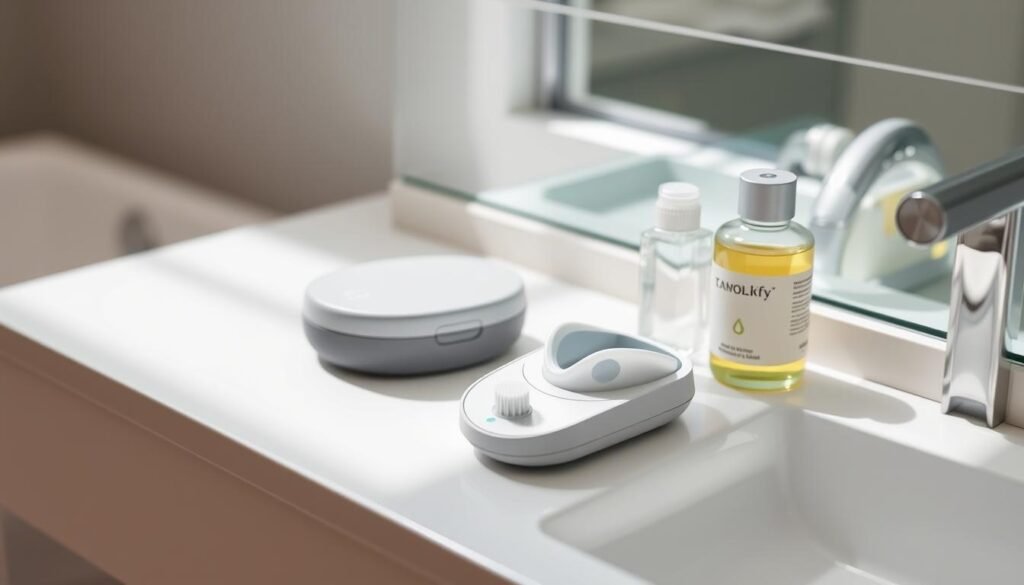
Traveling with a mouth guard needs special care. It’s important to keep it clean and functional. This is true whether you’re going to a sports event or a long trip.how-to-clean-suede-trainers
Keeping It Clean on the Go
Pack a travel-sized cleaning kit for your mouth guard. It should have a soft-bristled toothbrush, mild soap, and water. Cleaning your mouth guard regularly stops bacteria and odors from building up.
- Use a travel-friendly cleaning solution or wipes.
- Rinse your mouth guard with water after each use.
- Gently scrub your mouth guard with a soft-bristled toothbrush.
Travel-Friendly Cleaning Kits
A travel-friendly cleaning kit is a must for keeping your mouth guard clean. Look for kits with mouth guard cleaning tablets or wipes. They are made to be small and simple to use while traveling.
Storage Tips During Travel
Storing your mouth guard right is important to avoid damage. Use a protective case to keep it from bending or getting crushed. Don’t let it get too hot or wet.
Proper Storage Techniques for Mouth Guards
How you store your mouth guard affects its life span. Storing it right keeps it safe and clean.
Best Cases for Mouth Guards
Using a protective case is a simple way to store your mouth guard. A good case should let air in to stop moisture buildup. This prevents bacteria from growing.
Choose a case made for mouth guards. It will fit best.
Avoiding Exposure to Heat and Moisture
Heat and moisture can damage your mouth guard. Don’t leave it in a hot car or humid places like bathrooms.
Keep it in a cool, dry spot instead.
Regular Inspections for Damage
Check your mouth guard often for damage. Look for cracks, tears, or any shape changes. These can mess up its fit or how well it works.
| Storage Tip | Benefit |
|---|---|
| Use a ventilated case | Prevents moisture buildup |
| Avoid heat and moisture | Prevents warping or degradation |
| Regular inspections | Ensures the mouth guard remains effective |
The Dangers of Not Cleaning Your Mouth Guard
Not cleaning your mouth guard can harm your oral health. Bacteria and germs build up, causing problems. This can lead to infections and other issues.
Bacteria and Germs Accumulation
A mouth guard can become a breeding ground for bacteria if not cleaned. This can spread bacteria to your mouth, leading to infections. For more detailed tips on maintaining your mouth guard, you can visit this resource for comprehensive guidance.
Think of it this way: a dirty mouth guard can have as many bacteria as a toilet handle. Regular cleaning is key to prevent this buildup.
Increased Risk of Oral Health Issues
Not cleaning your mouth guard can lead to gum disease and tooth decay. Bacteria from the mouth guard can cause inflammation and infection in your teeth and gums.
“Neglecting to clean your mouth guard can lead to serious oral health issues, including gum disease and tooth decay.”
A study showed athletes with dirty mouth guards face more oral health problems. This stresses the need for good hygiene with your mouth guard.
| Oral Health Issue | Risk Factor | Prevention Method |
|---|---|---|
| Gum Disease | Bacteria accumulation | Regular cleaning |
| Tooth Decay | Bacteria transfer | Proper storage |
Impact on Performance for Athletes
A dirty mouth guard can affect an athlete’s performance. It can cause discomfort, pain, and distraction during games. This can lower an athlete’s ability to perform well.
To avoid these problems, make cleaning a part of your mouth guard care. This keeps your mouth guard clean and functional. It supports your oral health and athletic performance.
Alternative Cleaning Solutions
Cleaning your mouth guard doesn’t have to be boring. There are many ways to do it. You can try different methods to find what works best for you.
Commercial Cleaners
Commercial mouth guard cleaners are easy to use. They are made just for mouth guards and can be found at sports stores or online. Using a commercial cleaner is a simple way to keep your mouth guard clean.
Herbal Remedies
Herbal remedies are a natural choice. Tea tree oil, for example, fights bacteria. Mix a few drops of tea tree oil with water for a cleaning solution.
DIY Solutions
DIY cleaning is another option. A mix of water and white vinegar works well. Or, make a paste with baking soda and water to remove stains and odors.
Exploring these cleaning options helps keep your mouth guard fresh. You can pick a commercial cleaner, herbal remedy, or DIY solution. The important thing is to find what works for you and stick with it.
When to Replace Your Mouth Guard
Keeping your mouth guard in good shape is important. It’s not just about cleaning it. You also need to know when it’s time for a new one. A worn-out mouth guard might not work well and could have harmful bacteria.
Visible Signs of Deterioration
Check your mouth guard often for damage. Look for cracks, frays, or thin spots. If you see any, it’s probably time for a new one. Damage can make your mouth guard less effective.
To Repair or Replace
It might seem smart to fix a damaged mouth guard. But usually, it’s better to get a new one. Fixing it can make it weak or not protect you well enough.
Replacement Frequency
How often to replace your mouth guard depends on a few things. How often you use it and the mouth guard’s quality matter. You should replace it every 6 to 12 months or sooner if you see wear. Checking your mouth guard often keeps you safe.
## FAQ
### Q: How often should I clean my mouth guard?
I suggest cleaning your mouth guard every day. Also, do a deep clean once a week. This keeps it fresh and stops bacteria from growing.
### Q: What is the best way to clean my mouth guard?
There are a few good ways to clean it. You can use mild soap and water, or a mix of water and white vinegar. Baking soda paste works too. You can also buy special cleaners or tablets for mouth guards.
### Q: Can I use regular toothpaste to clean my mouth guard?
No, don’t use regular toothpaste. It’s too harsh and can harm your mouth guard. Instead, use a gentle soap or a mouth guard cleaner.
### Q: How do I dry and store my mouth guard properly?
After cleaning, dry your mouth guard with a soft cloth. Then, put it in a protective case. This stops bacteria and keeps it safe.
### Q: What are the signs that my mouth guard needs to be replaced?
Check for wear and tear. Look for cracks, thinning, or shape changes. If you see these, it’s time for a new one.
### Q: Can I use a dishwasher to clean my mouth guard?
No, don’t put your mouth guard in the dishwasher. The heat can damage or warp it.
### Q: How can I prevent bad odors from my mouth guard?
Keep it clean, store it right, and dry it well. Using a mouth guard cleaner or a vinegar mix can also help.
### Q: Are there any alternative cleaning solutions I can use?
Yes, you can try herbal remedies like tea tree oil. It fights bacteria. Or, you can make your own cleaner with things you have at home.