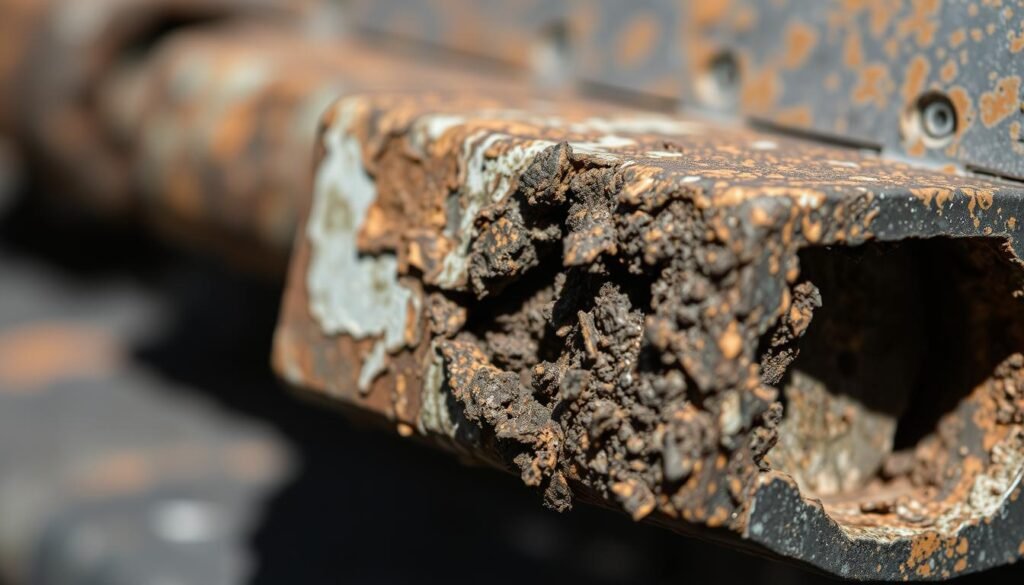
I’ve faced the problem of battery corrosion affecting battery performance and lifespan. It’s a common issue that can be solved with the right methods.
In this article, I’ll show you how to clean off corrosion and keep your batteries in good shape. Corrosion on batteries can cause big problems if not fixed quickly. By knowing the causes and using the right techniques, you can make your batteries work like new again. For a detailed guide on fixing corroded battery terminals, check out the instructions on Instructables.
Key Takeaways
- Identify the causes of battery corrosion
- Use vinegar to neutralize corrosion
- Apply safety precautions when handling corroded batteries
- Clean corroded terminals with a small file or sandpaper
- Dispose of old batteries and corroded terminals properly
Understanding Battery Corrosion
## Understanding Battery Corrosion
Battery corrosion happens when chemicals build up on the terminals. This is often due to moisture, oxygen, and other environmental factors.how-to-clean-mattress
### What Causes Battery Corrosion?
The main reason for battery corrosion is battery acid leakage. This acid has sulfuric acid and other corrosive materials. When it meets metal terminals, it causes damage and corrosion. High humidity, temperature changes, and poor maintenance also play a role.
Spotting battery corrosion signs is key. Look for corrosion on terminals, lower battery performance, and strange smells. If you see these, clean the corrosion right away to avoid more damage.
### Importance of Cleaning Battery Corrosion
Cleaning battery corrosion is crucial for battery health. If not cleaned, corrosion can shorten battery life and cause malfunctions. Knowing the causes and signs helps you clean and maintain your batteries. This keeps them working well.how-to-clean-a-couch
Safety Precautions Before Cleaning
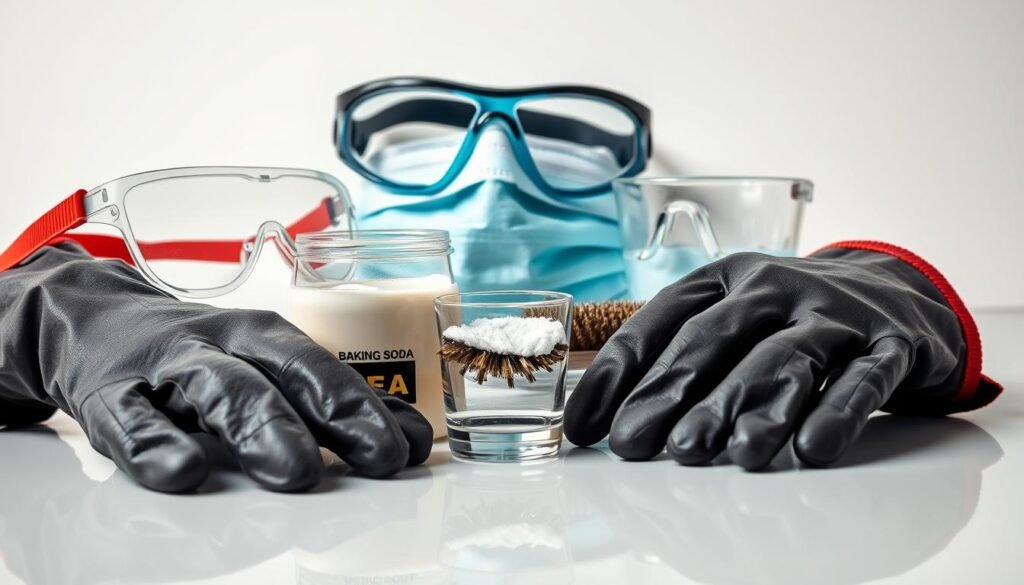
Before you start cleaning battery corrosion, your safety is key. Battery corrosion can cause serious problems if not handled right.how-to-clean-a-pizza-stone
Essential Protective Gear
Wearing the right gear is crucial to avoid hazards. You need rubber gloves to keep your skin safe from corrosive materials. Also, safety glasses protect your eyes from splashes.
Don’t forget a face mask to avoid breathing in harmful fumes or particles. These can be disturbed when you clean.
| Protective Gear | Purpose |
|---|---|
| Rubber Gloves | Prevents skin contact with corrosive materials |
| Safety Glasses | Protects eyes from chemical splashes |
| Face Mask | Prevents inhalation of harmful fumes or particles |
Working in a Well-Ventilated Area
Make sure you work in a well-ventilated area to avoid harmful fumes. Open windows or use a fan for better air flow.
If you’re in a small space, think about using a ventilation system. Or, take breaks to get some fresh air.
Tools and Materials Needed

Having the right tools and materials is key to safely and effectively removing battery corrosion. It makes the cleaning process easier and faster.how-to-clean-wood-floors
Common Household Items
You don’t have to buy special equipment to clean battery corrosion. Many common household items work well.
- Baking soda
- Water
- Gloves
- Safety goggles
- A toothbrush or small brush
Recommended Cleaning Solutions
For tough corrosion, you can use specific cleaning solutions. These include:
- Baking soda and water paste
- Vinegar or lemon juice
- Commercial battery cleaners available at hardware stores like Lowe’s
Here’s a summary of the tools and materials needed in a tabular format:
| Tool/Material | Purpose |
|---|---|
| Baking soda | Neutralizes acid and helps remove corrosion |
| Water | Mixed with baking soda to form a paste |
| Gloves and safety goggles | Protects against chemical splashes and corrosion |
| Toothbrush or small brush | Used to scrub away corrosion |
| Vinegar or lemon juice | Alternative cleaning agents for corrosion |
Step-by-Step Guide to Cleaning Battery Corrosion
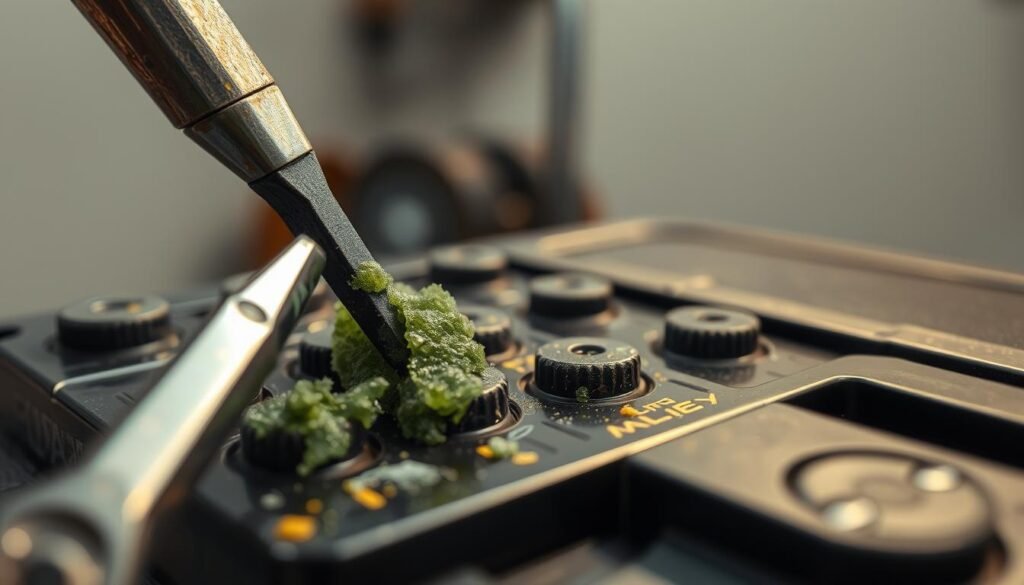
Battery corrosion can be a big problem, but it’s easy to fix with a simple guide. Cleaning your battery terminals is a few easy steps. This helps keep your battery working well.
Inspect the Battery First
Before you start cleaning, check the battery for damage or corrosion. Look for corrosion on the terminals and make sure the battery case is okay. If you see cracks or serious damage, it’s time for a new battery.
Disconnecting the Battery Safely
It’s important to disconnect the battery safely to avoid short circuits. First, turn off the engine and remove the keys. Then, loosen the nut on the negative (black) cable and remove it. Do the same for the positive (red) cable. For more details on safely disconnecting your car battery, check out this guide on cleaning battery corrosion.
Cleaning the Corroded Areas
After disconnecting the battery, clean the corroded areas. Mix baking soda and water to make a paste. Use a brush to apply the paste to the terminals, covering all corroded spots. Let it sit for a few minutes to work on the corrosion. Then, scrub the terminals with a wire brush or cloth. Rinse with clean water and dry them well.
| Cleaning Method | Materials Needed | Effectiveness |
|---|---|---|
| Baking Soda Paste | Baking soda, water, brush | High |
| Vinegar Solution | Vinegar, water, cloth | Medium |
| Commercial Cleaner | Commercial battery cleaner | High |
By following these steps, you can clean battery corrosion effectively. This ensures your vehicle’s battery works well. Regular care helps prevent corrosion and keeps your battery in great shape.
Cleaning with Baking Soda and Water
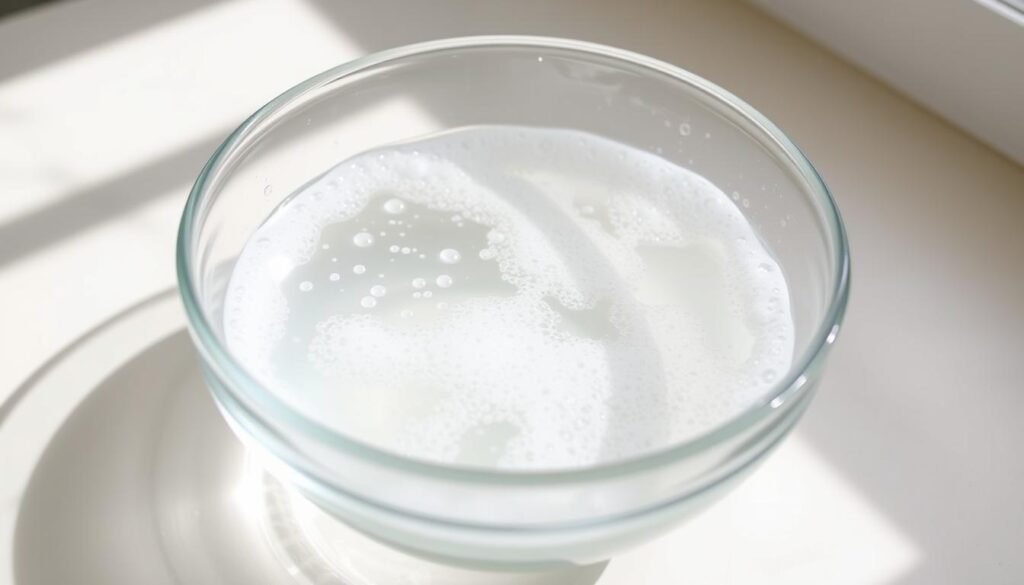
Using baking soda and water is a great way to fight battery corrosion. This method is eco-friendly and uses items you likely have at home. It’s easy to make and works well.
Preparing the Solution
Mix baking soda and water to make a paste. It should be thick but not drippy. A good start is 1 tablespoon of baking soda to 1 tablespoon of water. You can adjust this to get the right paste.
Wear gloves and goggles to protect your skin and eyes. Work in a place with good air flow to avoid breathing in dust or fumes.
Application Process
Use a brush or cotton swab to apply the paste to corroded spots. Make sure to cover the whole area. Let it sit for 15-20 minutes to work on the corrosion.
Then, use a damp cloth or brush to gently scrub off the corrosion. If it’s really bad, you might need to do this a few times to get rid of all the corrosion.
For more tips on cleaning battery corrosion, check out Interstate Batteries’ guide. It has more advice and methods.
Using Vinegar or Lemon Juice
Vinegar and lemon juice are great for cleaning battery corrosion. They are good alternatives to baking soda. These acidic solutions can remove corrosion from battery terminals effectively.
Benefits of Using Acidic Solutions
Using vinegar or lemon juice to clean battery corrosion has many benefits. They are easy to find in most homes. Their acidic nature helps dissolve and remove corrosion.
Vinegar, with its acetic acid, is great at breaking down corrosion without harming the battery terminals. Lemon juice, with its citric acid, is also effective but gentle.
“The acidity in vinegar and lemon juice makes them potent cleaning agents for battery corrosion.”
Application Techniques
To clean battery corrosion with vinegar or lemon juice, follow these steps:
- Soak a cotton swab or small cloth in either vinegar or lemon juice.
- Gently apply the soaked swab or cloth to the corroded area, ensuring it’s fully saturated.
- Let it sit for a few minutes to allow the acid to work on the corrosion.
- Use a clean, dry cloth to wipe away the corrosion and the acidic solution.
- If some corrosion remains, repeat the process as needed.
| Cleaning Agent | Acid Content | Effectiveness |
|---|---|---|
| Vinegar | Acetic Acid | High |
| Lemon Juice | Citric Acid | High |
Vinegar and lemon juice are effective at cleaning battery corrosion. They provide a simple, non-toxic way to keep your batteries in good shape. By knowing their benefits and how to use them, you can ensure your batteries work well.how-to-clear-instagram-cache
Preventing Future Battery Corrosion

By taking proactive steps, you can stop battery corrosion and keep your devices running well. Preventing corrosion is more than just battery care. It’s also about knowing what causes it.
Regular Maintenance Tips
Regular care is crucial to stop battery corrosion. Here are some tips to keep your batteries in top shape:
- Regularly check your batteries for corrosion signs.
- Clean the terminals and around them to stop corrosive buildup.
- Keep batteries in a cool, dry spot, away from metal that could cause a short.
- Use a battery maintainer or trickle charger for long-term storage.
Regular maintenance extends your batteries’ life and keeps your devices working great.
Environmental Factors to Consider
Environmental factors greatly affect battery corrosion. High humidity, extreme temperatures, and moisture can speed up corrosion.
“The rate of corrosion is significantly influenced by environmental conditions, making it crucial to store batteries in an appropriate environment.”
To fight these factors, consider the following:
- Store batteries in airtight containers to shield them from humidity and moisture.
- Stay away from extreme temperatures, both hot and cold.
- Keep batteries away from high salt areas, like near the ocean or where salt is used for de-icing.
By managing these environmental factors, you can greatly lower battery corrosion risk.
When to Seek Professional Help
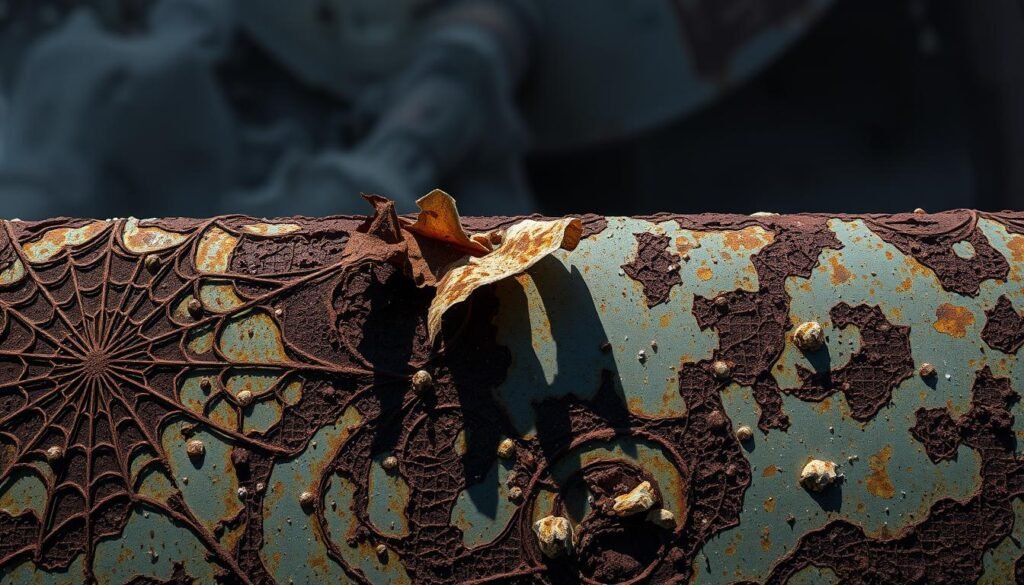
DIY methods work well for minor battery corrosion. But, for severe cases, professional help is a must. Knowing when to ask for help can prevent more damage and keep you safe.
Identifying Severe Corrosion Damage
Severe corrosion shows up in different ways. Look out for these signs to know when to call a pro:
- Extensive corrosion that has spread beyond the battery terminals
- Corrosion that has caused significant damage to the battery casing or surrounding components
- Presence of a strong, acidic smell or visible leakage
If you’re unsure or feel uneasy checking the battery, get a pro’s opinion. For more info on car battery corrosion, check out Jiffy Lube’s resource center.
When DIY Isn’t Enough
DIY cleaning might not solve all corrosion problems. If you’ve tried cleaning and the issue still exists, or if you’re not sure you can do it safely, it’s time to get help. Experts have the right tools and know-how to tackle severe corrosion and prevent future problems.
Don’t risk your safety or cause further damage to your vehicle’s electrical system. If you’re unsure, talk to a professional mechanic. They can check the situation and give the right fixes or advice.
Eco-Friendly Disposal of Batteries
Disposing of batteries in an eco-friendly way is key to reducing our environmental impact. With technology advancing and our use of batteries increasing, it’s vital to think about how we dispose of them.
Recycling Options
Recycling batteries helps reduce waste and saves natural resources. Many places have recycling centers for batteries. You can also ask local stores if they recycle batteries.
- Check local recycling guidelines for battery acceptance.
- Participate in community recycling programs.
- Look for retailers that offer battery recycling services.
Safe Disposal Practices
If recycling isn’t an option, safe disposal is crucial. It protects the environment from dangers like leakage or explosion.
- Wrap the terminals of batteries with tape to prevent contact with other metals.
- Place batteries in a plastic bag or a covered container to prevent leakage.
- Check with local waste management facilities for special collection events for hazardous waste.
By following these steps, we can greatly lessen the environmental harm from battery disposal. It’s our duty to dispose of batteries safely for our communities and the planet.
For more info on eco-friendly disposal and recycling in your area, visit local government or environmental agency websites.
| Disposal Method | Environmental Impact |
|---|---|
| Recycling | Reduces waste and conserves resources |
| Safe Disposal | Prevents leakage and explosion hazards |
Conclusion: Keeping Your Batteries in Top Shape
Keeping your batteries in good shape is key for your devices to work well. Regular checks and cleanings help stop corrosion. This keeps your devices running smoothly.
Effective Cleaning Techniques
To clean battery corrosion, use soft brushes and gentle cleaners like vinegar or lemon juice. These methods safely remove corrosion without harming your devices. For more tips, check out Homeland Industrial Supply for detailed advice.
Regular Maintenance Matters
Regular checks are vital to stop battery corrosion. Look for corrosion signs and clean terminals and compartments when needed. This keeps your batteries in top condition, reducing leakage and corrosion risks. A simple habit that greatly extends your battery life and keeps your devices working right.