A dirty pizza stone can really change your kitchen game. It affects the taste and quality of your pizzas. I’ve seen it myself – a clean stone makes all the difference.
Did you know a pizza stone can hold bacteria and food residue if not cleaned right? This can ruin the flavor and even be unhealthy. Keeping your stone clean is key to making great pizzas.
As someone who’s worked with pizza stones for years, I’m excited to share my knowledge. In this article, I’ll show you how to clean and care for your pizza stone. This way, you can make delicious homemade pizzas.
Key Takeaways
- Regular cleaning is essential to maintain your pizza stone’s performance.
- A dirty pizza stone can harbor bacteria and affect the taste of your pizzas.
- Simple maintenance can extend the lifespan of your pizza stone.
- Proper cleaning techniques can ensure your pizzas turn out perfectly cooked.
- A well-maintained pizza stone is key to delicious homemade pizzas.
Understanding Your Pizza Stone Material
It’s important to know what your pizza stone is made of. This helps keep it in good shape and working well. Most pizza stones are made from natural materials like cordierite, ceramic, or soapstone. Each one needs special care because of its unique qualities.
Types of Pizza Stones
There are many types of pizza stones out there. Cordierite stones are tough and can handle very high heat. Ceramic stones are great because they become non-stick when seasoned right. Knowing what kind of stone you have helps you clean it the best way.
Benefits of Using a Pizza Stone
Using a pizza stone can really improve your cooking. It spreads heat evenly, making your crust crispy. It also takes moisture from the dough, leading to a perfectly cooked crust. Using a pizza stone means better cooking and more flavor.
Common Brands of Pizza Stones
Many brands are known for their top-notch pizza stones. Baker’s Edge and Pizzacraft are two well-known ones. When picking a pizza stone, think about the material and the brand’s reputation. This ensures you get a stone that will last.
Why Regular Cleaning is Important
Cleaning your pizza stone is crucial. It keeps your stone working well and lasting longer.
Preventing Flavor Transfer
Cleaning your pizza stone regularly stops flavors from mixing between pizzas. If you cook different pizzas on the same stone, old flavors can ruin new ones. For example, a white pizza might taste bad after a spicy one if the stone isn’t clean.
So, clean your stone after each pizza. This keeps your pizzas tasting right and stops harmful bacteria from growing.
Maintaining Cooking Performance
Keeping your pizza stone clean also helps it cook better. A clean stone cooks pizzas evenly and crisps the crust well. But, if the stone gets dirty, pizzas cook unevenly and crusts aren’t crispy.
- A clean stone ensures even cooking.
- Prevents the buildup of harmful bacteria.
- Maintains the stone’s ability to crisp the crust.
Extending the Life of Your Pizza Stone
Regular cleaning also makes your pizza stone last longer. Cleaning off food and harmful substances protects the stone. A well-cared-for stone can make many delicious pizzas for years.
Tips for Longevity:
- Clean the stone after each use.
- Avoid using harsh chemicals or abrasive cleaners.
- Dry the stone thoroughly after cleaning.
What You Should Never Do
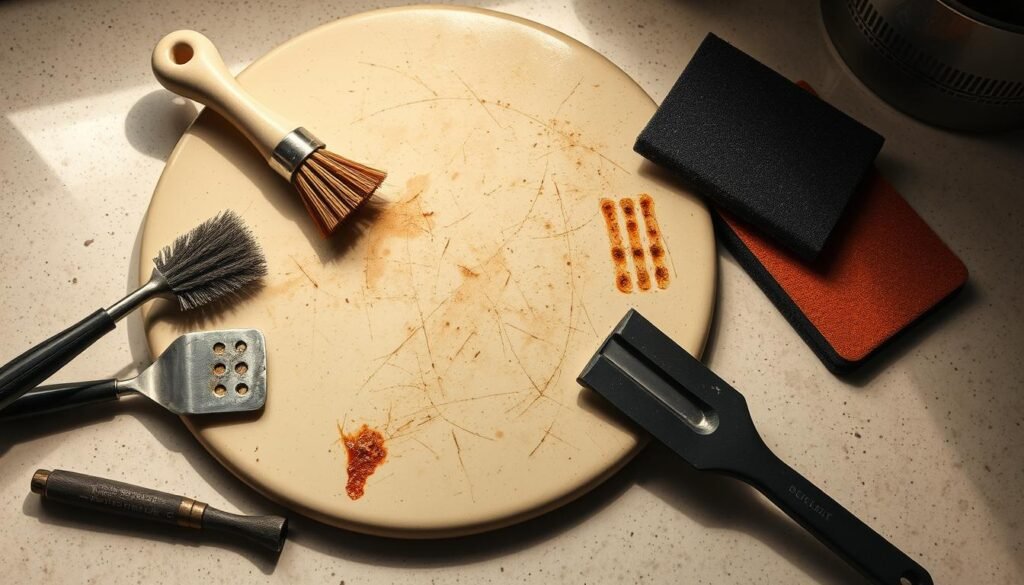
There are key mistakes to avoid when caring for your pizza stone. Taking good care helps it last longer and cook better.
Avoiding Soaking
Don’t soak your pizza stone. It can get waterlogged and crack or break if heated too high. Just scrape off big food bits and clean with a damp cloth.
Steering Clear of Soap
Soap and harsh chemicals can harm your pizza stone. They remove its natural oils, affecting how it cooks. For deep cleaning, try baking soda and water or vinegar.
Key Points to Remember:
- Never soak your pizza stone.
- Avoid using soap or harsh chemicals.
- Refrain from using scrubbing pads that can damage the stone.
Refraining from Scrubbing Pads
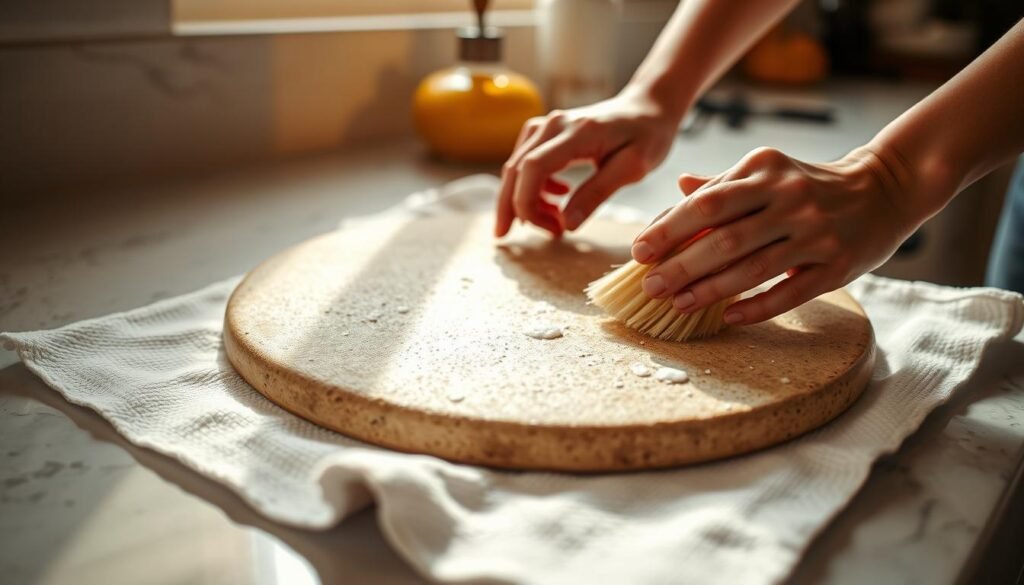
Scrubbing pads can scratch or damage your stone. Use gentle cleaning methods to keep it in good shape. For tough stains, a soft-bristled brush or non-abrasive scrubber is okay.
By avoiding these mistakes, your pizza stone will last longer and cook pizzas evenly.
Cleaning After Each Use
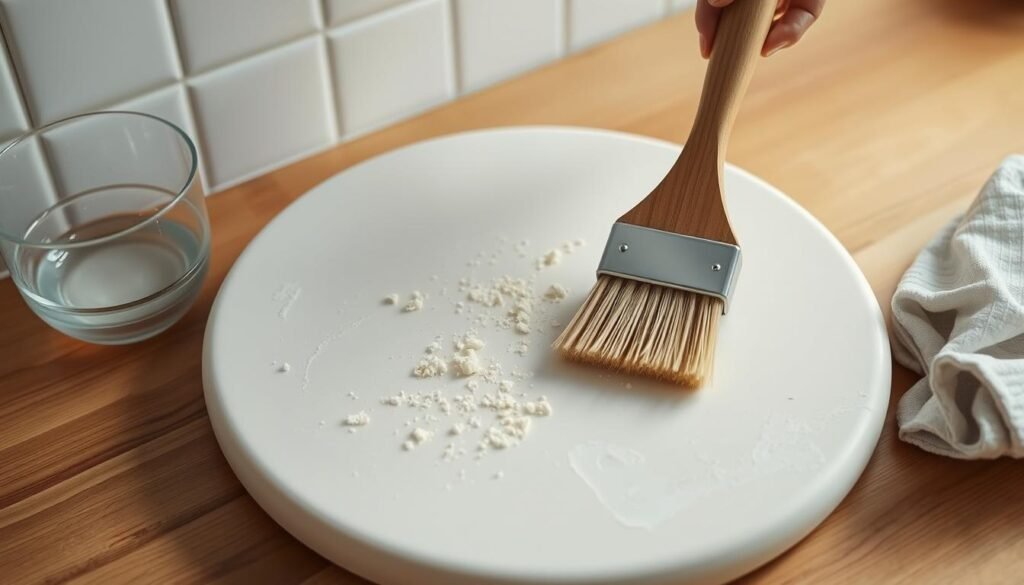
Cleaning your pizza stone after each use is key to keeping it in top shape. A well-cared-for stone helps your pizzas cook evenly and taste amazing every time.
Allowing the Stone to Cool
First, let your pizza stone cool down completely before cleaning. Cleaning a hot stone can cause it to crack or break. So, after your pizza night, let the stone cool off for a few hours before you begin the cleaning process.
Scraping Off Food Residue
Once the stone is cool, start by scraping off any food residue. Use a soft-bristled brush or a plastic scraper to gently remove stuck-on food particles. Be gentle to avoid damaging the stone. For more information on the best tools to use, you can check out Martha Stewart’s guide on cleaning pizza stones.
Wiping with a Damp Cloth
After scraping off the food residue, use a damp cloth to wipe down the stone. This will help remove any remaining debris and keep your stone clean. Make sure the cloth is not soaking wet, as excess moisture can damage the stone over time.
By following these simple steps after each use, you’ll be able to keep your pizza stone in great condition. This ensures many more delicious homemade pizzas.
Deep Cleaning Methods
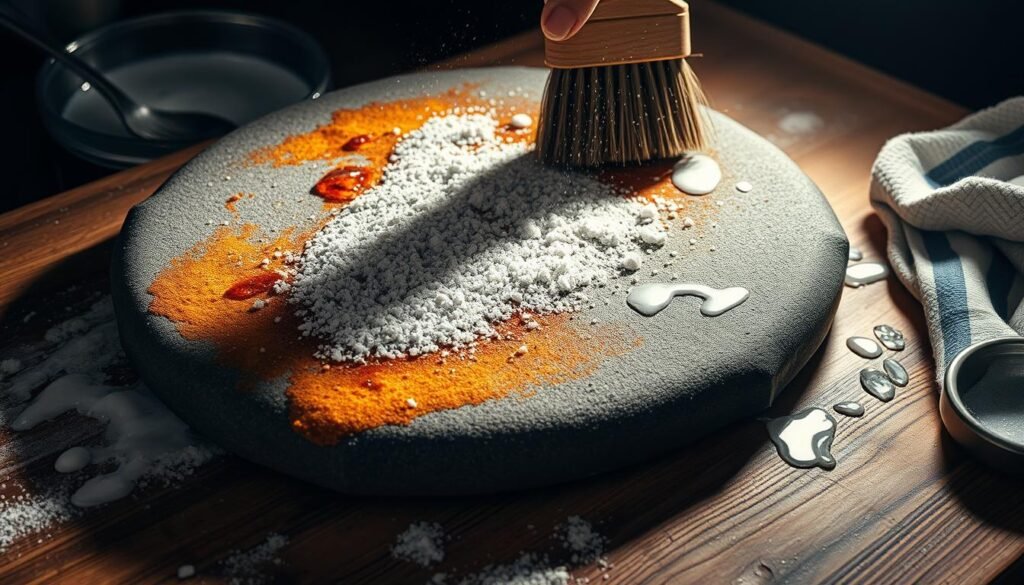
For tough grime and stains, a deeper clean is needed to get your pizza stone back to its original state. Over time, your stone can get stubborn stains and grime that regular cleaning can’t handle. It’s crucial to use deep cleaning methods to keep your stone working well and lasting longer.
Using Baking Soda Paste
Making a baking soda paste is a top deep cleaning method. Mix baking soda with water until it’s thick. Spread this paste on the stained parts of your pizza stone and let it sit for 30 minutes to an hour. The baking soda will break down the tough grime.
After sitting for the right time, use a soft brush or cloth to gently scrub the area. Rinse with warm water and dry it well. For more cleaning tips, check out Allrecipes.
Vinegar Cleaning Solution
Using a vinegar cleaning solution is also effective. Mix equal parts water and white vinegar in a spray bottle. Spray this solution on the stained areas, making sure to cover the surface well. Let it sit for 15-20 minutes to break down the grime.
After the time is up, use a soft cloth or brush to wipe away the grime. Rinse with warm water and dry it well to prevent moisture from getting into the stone.
The Oven Method
The oven method is another deep cleaning technique. Preheat your oven to its highest temperature. Place your pizza stone in the oven for about an hour. The high heat will burn off grime and food residue.
After an hour, turn off the oven and let the stone cool completely before removing it. This method not only cleans the stone but also seasons it. But, be careful as it can be intense for the stone.
Dealing with Stubborn Stains

Even with regular cleaning, pizza stones can still get tough stains. These stains can mess up your stone’s look and how well it works.
Identifying Types of Stains
The first step is to figure out what kind of stain you have. You might see grease stains, charred spots, or leftover food. Grease stains come from oil or fatty foods. Charred spots happen when you cook at very high heat.
Specific Solutions for Grease Stains
To get rid of grease stains, try a baking soda paste. Make a paste with baking soda and water, then put it on the stain. Let it sit for 30 minutes to an hour. After that, scrape off the paste and rinse with warm water.
Another trick is a vinegar cleaning solution. Mix equal parts water and white vinegar in a spray bottle. Spray it on the stain, wait a few minutes, then wipe it off with a damp cloth.
How to Handle Charred Spots
Charred spots are hard to remove, but there are ways to do it. One method is the oven method. Heat your oven to 500°F (260°C), put the stone in, and let it heat for about an hour. This can help get rid of charred bits.
Once it’s cooled, use a gentle scraper or brush to remove any leftover char. For really stubborn spots, you might need to heat it again.
Drying and Storing Your Pizza Stone
Proper drying and storage of your pizza stone are key to keeping it in top shape. After cleaning your pizza stone, follow these steps to maintain its quality.
Proper Drying Techniques
To dry your pizza stone, you can air-dry it or use a towel. Air-drying lets the stone dry slowly in a well-ventilated area. This method is good but takes time. Towel-drying is faster but make sure the stone is dry to avoid moisture buildup.
Tips for Effective Drying:
- Place the stone in a dry, well-ventilated area.
- Avoid stacking wet stones on top of each other.
- Use a clean towel to dry the stone, paying extra attention to any crevices.
Best Storage Practices
Once dry, store your pizza stone in a dry place. Wrap it in a dry cloth or store it in a dry cabinet. Some people also store their pizza stones in the oven, keeping it dry and ready for next use.
| Storage Method | Benefits | Precautions |
|---|---|---|
| Dry Cloth Wrap | Protects from dust, easy to store | Ensure the stone is completely dry before wrapping |
| Dry Cabinet Storage | Keeps the stone dry, protects from environmental moisture | Ensure good air circulation within the cabinet |
| Oven Storage | Keeps the stone dry and ready for use | Ensure the oven is completely cool and dry |
Avoiding Moisture Exposure
Moisture can damage your pizza stone, causing it to crack or break. Never store your stone in humid places like basements or near dishwashers. Always dry it well before storing, and consider using a dehumidifier in moist areas.
By following these tips, you can significantly extend the life of your pizza stone and ensure it continues to perform well.
Tips for Preventative Maintenance
To keep your pizza stone in top shape, a regular maintenance routine is key. This ensures your pizzas are perfect every time and makes your stone last longer.
Using Parchment Paper
Using parchment paper is a simple yet effective way to care for your pizza stone. It acts as a barrier between your pizza and the stone. This helps prevent stubborn stains and food residue. It’s a small step that can make a big difference.
Benefits of Parchment Paper:
- Reduces food residue on the stone
- Prevents stubborn stains
- Makes cleanup easier
Regularly Inspecting Your Stone
Regular checks are important to spot any issues early. Look for signs of wear like cracks or excessive staining. Catching these problems early helps you fix them before they get worse.
Keeping Your Cooking Area Clean
Keeping your cooking area clean is also crucial for your pizza stone’s upkeep. Make sure your kitchen counters, oven, and surrounding areas are free from debris and grime. This prevents contaminants from building up and affecting your stone’s performance.
| Maintenance Task | Frequency | Benefits |
|---|---|---|
| Using Parchment Paper | Every Use | Easier Cleanup, Less Staining |
| Inspecting the Stone | Weekly | Early Detection of Issues |
| Cleaning the Cooking Area | Daily | Prevents Contaminant Buildup |
By following these preventative maintenance tips, you can enjoy a cleaner, more efficient pizza-making process. Plus, your pizza stone will last longer.
Common Mistakes to Avoid
To keep your pizza stone in top shape, knowing common mistakes is key. Caring for a pizza stone is more than just cleaning. It’s about thoughtful maintenance and use.
Overlooking Regular Maintenance
One big mistake is overlooking regular maintenance. Not cleaning your pizza stone after each use can harm its performance. It can also affect the taste of your pizzas and damage the stone. Cleaning and maintaining it regularly is vital for its longevity and performance.
Using High Heat Too Often
Another mistake is using high heat too often. Pizza stones can handle high temperatures, but constant extreme heat can crack or discolor them. Be careful with the temperature and avoid sudden heat changes.
Not Following Manufacturer Care Instructions
Not following the manufacturer’s care instructions is a big mistake. Different stones are made from various materials, each with its own care needs. Following these guidelines helps prevent damage and keeps your stone in good shape.
By knowing these mistakes and avoiding them, you can keep your pizza stone in great condition. This ensures it continues to improve your cooking.
When to Replace Your Pizza Stone
Over time, your pizza stone will show signs of wear. But how do you know when it’s time for a new one? A well-cared-for pizza stone can last a long time. Yet, it will eventually need to be replaced.
Signs of Wear and Tear
It’s important to regularly check your pizza stone. Look for cracks, chips, or big changes in color. These signs mean your stone is no longer at its best.
Common signs include:
- Cracks or chips on the surface
- Significant discoloration or stubborn stains
- A rough texture that’s difficult to clean
Performance Issues to Watch For
Performance is another key sign of your pizza stone’s health. If your pizzas aren’t cooking evenly or the crust is soggy, it’s time to think about a new stone.
| Performance Issue | Possible Cause |
|---|---|
| Uneven cooking | Wear and tear on the stone |
| Soggy crust | Excessive moisture retention |
Comparing Replacement Options
When it’s time for a new pizza stone, you’ll need to pick one. Think about the material: cordierite, ceramic, or natural stone. Each has its own advantages and disadvantages.
“The right pizza stone can elevate your pizza game. Look for one that’s durable and suitable for your oven type.”
Here’s a comparison of popular pizza stone brands:
| Brand | Material | Price Range |
|---|---|---|
| Brand A | Cordierite | $20-$30 |
| Brand B | Ceramic | $30-$40 |
| Brand C | Natural Stone | $40-$50 |
By considering these factors and signs, you’ll know when to replace your pizza stone. You’ll also find a good replacement.
Frequently Asked Questions
Keeping your pizza stone in top shape can raise some questions. Let’s tackle some common ones about caring for your stone.
Cleaning Frequency
Cleaning your pizza stone after each use is key. It stops flavors from mixing and keeps it cooking well. How often you deep clean it depends on use. Cook often? Clean it every 1-3 months.
Dishwasher Safety
Don’t put your pizza stone in the dishwasher. The heat and detergents can harm it. Use the cleaning methods we talked about instead.
Eliminating Funky Smells
Got a funky smell on your stone? Bake it at 500°F (260°C) for 30 minutes to clean it. Or, mix baking soda and water to soak up the smell.