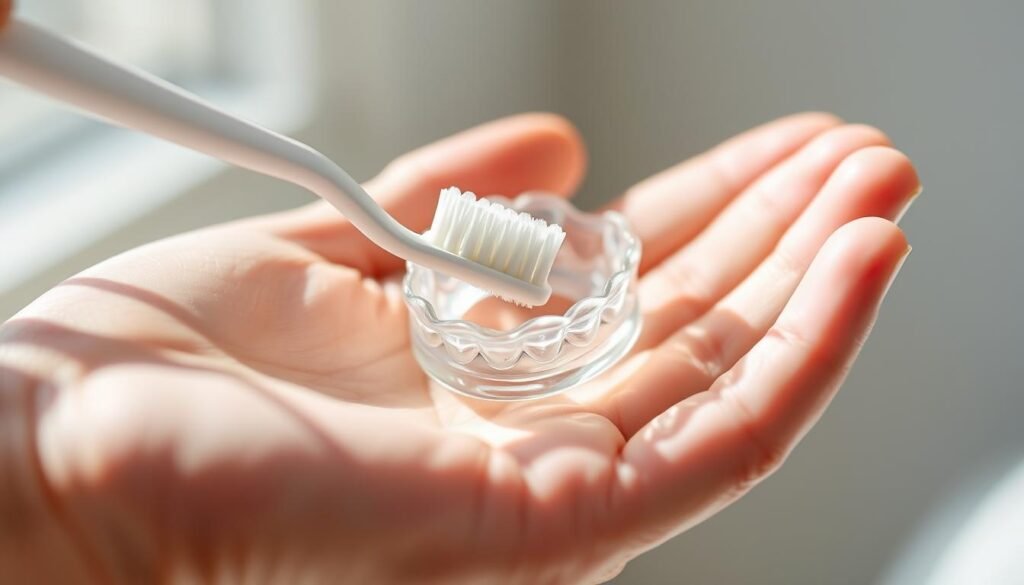
Keeping our smile fresh matters. Retainers hold our teeth where braces or clear aligners placed them. They meet saliva, plaque, and food all day, so simple care helps prevent odors, stains, and gum irritation.
We rinse in lukewarm water when we remove the appliance and brush with a dedicated brush and mild dish soap. Weekly, a short soak with cleaning tablets or a hydrogen peroxide mix brightens the appliance and slows material wear.
Avoid heat and harsh chemicals, which warp plastic and shorten lifespan. We also watch for fit changes, cracks, or persistent smells so we can call our orthodontist when needed.
This small routine saves time and protects oral health and our treatment investment. Follow these easy steps and your retainer will stay clear, comfy, and effective.
Key Takeaways
- Rinse in lukewarm water every time we remove the appliance.
- Brush gently with mild dish soap and a dedicated brush.
- Soak weekly using cleaning tablets or a hydrogen peroxide mix.
- Avoid heat and harsh chemicals that can warp materials.
- Monitor fit, cracks, or odors and contact an orthodontist if needed.
Why clean retainers matters for oral health and appliance longevity
A moist appliance becomes a breeding ground for microbes fast, so routine care protects our mouth and teeth. Bacteria collect on surfaces and can cause bad breath, tooth decay, and gum inflammation if we let them multiply.
Plaque forms on both teeth and the device and can harden into tartar. That stubborn buildup irritates the gum line and raises the chance of discoloration and odors.
Leftover sugars and acids from food can erode the material over time. This wear can lead to warping, cracking, or early failure — in short, avoidable damage retainer owners see all too often.
Small daily habits help. Quick rinses in lukewarm water and a gentle brush with mild dish soap lower bacterial load and keep the appliance clearer. Drying and proper storage slow debris growth.
If we’re unsure which products are safe, asking our orthodontist protects both our health and the device investment.
- Reduce bacteria transfer between device and teeth.
- Prevent plaque from becoming hard buildup.
- Limit material breakdown and avoid early replacement.
What we need to clean retainers safely at home
A simple at-home kit keeps our appliance safe and fresh without extra effort. Choosing gentle items helps protect the plastic and any metal components while removing film and odors.
Gentle essentials
Soft-bristled toothbrush reserved just for the appliance, mild dish soap, and lukewarm water are our daily must-haves. These remove surface buildup without scratching or warping materials.
Add-ons that help
Weekly, we can use specialized cleaners or a diluted hydrogen peroxide soak for about 15–20 minutes. A light baking soda and water paste works sparingly for stubborn stains, but we avoid long soaks around any metal on Hawley styles.
What we skip
We do not use abrasive toothpaste, hot water, bleach, or alcohol-based mouth rinses. Those products can scratch or weaken the device and leave residues that irritate soft tissues.
- Assemble a small home kit so we’re ready.
- Read product labels and confirm suitability for oral appliances.
- Favor gentle tools that protect plastic and other materials.
How to clean retainers daily without causing damage
A quick daily routine keeps the appliance clear and our mouth healthy. This short habit takes just a minute or two and prevents buildup that leads to odors and wear.
Rinse right away
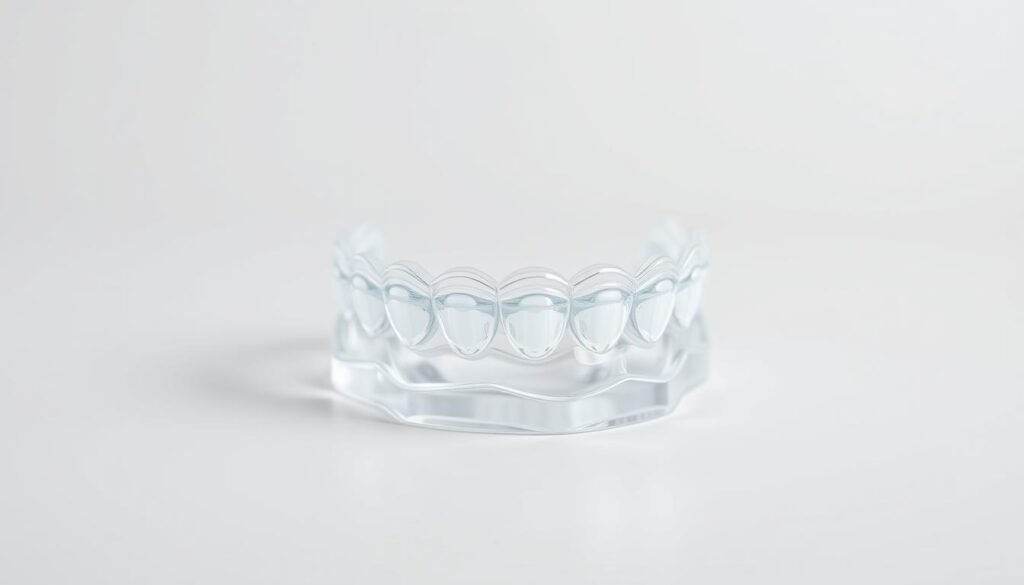
Each time we remove the retainer we rinse retainer in lukewarm water. This stops saliva and food from drying into stubborn residue.
Gentle brushing
Use a dedicated soft toothbrush and a drop of mild dish soap for a light scrub. We avoid toothpaste because abrasives can make micro-scratches that trap plaque.
Reach tight spots
Cotton swabs help reach wire bends and creases. A quick pass through nooks keeps the whole piece fresh and clear.
Protect our teeth and reinsertion
We always brush our teeth before putting the appliance back in. That cuts the amount of plaque and bacteria pressed against plastic during the day.
Dry and store
Pat the device dry and place it in a clean case. Never use hot water — heat can warp fit and clarity. Keep a compact kit at home or in a travel bag so the routine stays realistic.
“A tiny daily step keeps the retainer fresh and extends its life.”
- Quick—routine takes under two minutes.
- Consistent—set a trigger after meals for habit-building.
- Protective—avoid hot water and harsh products.
Weekly deep-clean methods that fight bacteria and buildup
One brief session each week helps remove stubborn film, odor-causing bacteria, and trapped debris. A focused step keeps our appliance fresh between dental visits.
Tablets and approved solutions
We use retainer cleaning tablets or a manufacturer-approved solution for 10–20 minutes. After soaking, we rinse well with water to wash away loosened debris and residues.
Hydrogen peroxide soak
A diluted hydrogen peroxide and water mix works for about 15–20 minutes when stains or odors return. It reduces bacteria and brightens the surface without harsh abrasives.
Baking soda options
Baking soda paste or a short soak adds deodorizing power. For hawley retainers we limit exposure so metal parts do not corrode.
Denture and ultrasonic cleaners
Denture cleaners are useful once or twice a week for about 20 minutes, followed by a careful rinse and, if desired, a brief nonalcoholic mouthwash dip. Ultrasonic cleaners refresh appliances in a few minutes when we follow the device instructions and approved solutions.
“Schedule a weekly deep clean and finish by drying completely before storage.”
- Weekly habit: set a reminder at home.
- Rinse and dry: always finish by rinsing with water and air-drying.
- Track results: note which cleaners work best for our retainer type.
Care by retainer type: Hawley, Essix (clear), and permanent retainers
Different retainer styles need tailored care that respects their material and hardware. We match methods with design so the appliance stays effective and our teeth and gum stay healthy.
Hawley styles
Hawley retainers pair acrylic plastic with metal wires. We brush them gently with a soft brush and mild soap.
Limit baking soda soaks because prolonged exposure can corrode metal parts. Short, occasional soda treatments help stains but should be rare.
Clear Essix trays
Essix clear devices may stain and collect more plaque than Hawley designs. We guard against discoloring foods and avoid heat that warps plastic.
Approved cleaners and brief soaks keep clarity without clouding the material. Consistent daily brushing matters most for these trays.
Bonded permanent retainers
Permanent retainers sit behind our teeth and need special attention around the bonded wire. We use floss threaders, interdental brushes, or a water flosser to sweep under the wire.
Regular dental cleanings help reach areas we can’t fully access and protect gum health around the bonded piece.
“Tailoring care by material and metal elements keeps each design strong and comfortable.”
- Match cleaners to the material to avoid dulling, scratching, or softening.
- Limit soda baking treatments for metal-bearing designs.
- Daily tools like floss threaders and interdental brushes keep gums healthy under bonded wires.
- Keep a checklist for each design so our routine stays consistent.
Mistakes that can damage a retainer and how we avoid them
Small mistakes add up and can shorten an appliance’s life faster than we expect. We watch common missteps that warp fit, dull clarity, or irritate the gum line.
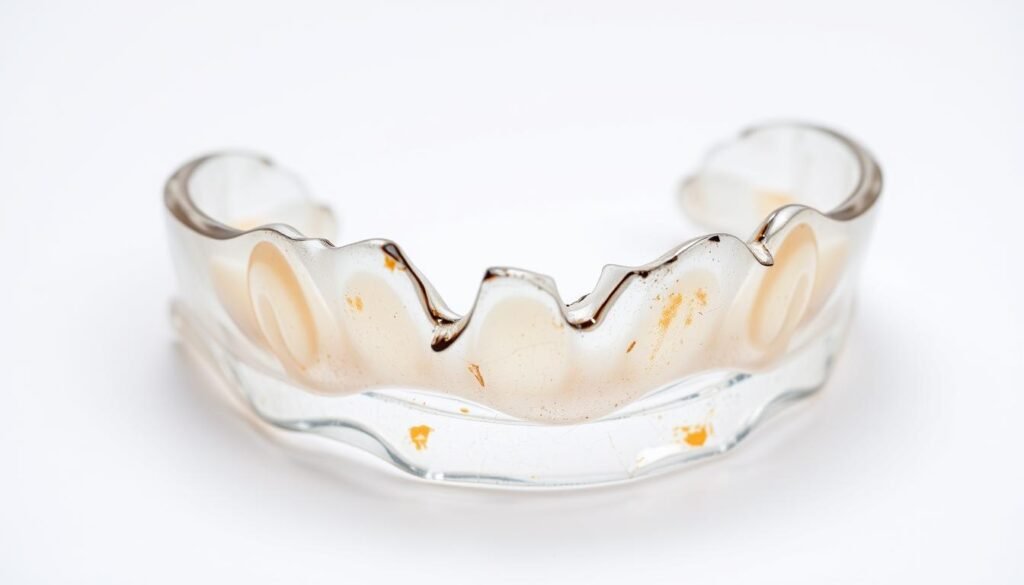
We never use hot water. High temperatures soften plastic and can change the fit without obvious signs.
We skip abrasive toothpaste because it scratches surfaces. Scratches hold debris and make it harder to keep a clean retainer over time.
We avoid alcohol-based mouthwash and bleach. Those chemicals weaken materials and can leave residues that bother soft tissue.
Other practices we stop: wrapping the appliance in napkins, leaving it loose, or picking at buildup with sharp tools. Those actions lead to loss, contamination, or bent metal.
We rinse and brush daily so dried deposits do not harden near bonded wires. For fixed pieces we focus on gaps by the metal and check gum health often.
“Simple, consistent habits protect the device and our smile.”
- Store the retainer in a clean case away from heat and sunlight.
- Don’t bend wires or use sharp implements on material.
- Review our practices monthly and adjust before small issues grow.
Smart habits: storage, travel tips, and keeping the case clean
A tidy case and smart packing keep our appliance safe during daily life and trips. We make the case nonnegotiable and use it every time so the device is not wrapped in a napkin or lost. A closed case also limits exposure to dust, pets, and spills.
Always use the retainer case and keep it bacteria-free
Cases can hold more bacteria than the appliance, so we schedule routine washing. A quick scrub with mild soap and warm water removes germs and keeps our retainers cleaned.
Avoid heat and pets: protect plastic and metal components
Never leave the device in a hot car or near direct sun. Heat warps plastic fast, and curious pets can chew an appliance in minutes.
Travel-ready routine: compact kit, reminders, and safe soaking
Pack a small brush, mild soap, an approved cleanser, and a leakproof container for brief soaks. These items save time on the road and make it easy to clean retainer after meals.
- Use the case every time to prevent accidental damage.
- Set reminders so our practices stay consistent when schedules change.
- Rinse with water after meals to stop debris from drying on the surface.
- Keep a spare case in a bag or car for safe short-term storage.
“A small travel kit and steady habits save time and extend the life of our appliance.”
In short, the best way to protect the retainer is predictable storage, regular case washing, and simple travel supplies. A few minutes of care keeps wear low and fit reliable.
When cleaning isn’t enough: troubleshooting and calling the orthodontist
Persistent smell or discoloration after a proper scrub often means bacteria have found tiny cracks or worn material. We check the device carefully for warping, cracks, or loose wires before wearing it again.
Signs that need attention
Watch for odors, visible staining, a change in fit, or rough edges that irritate our gum or cheek. If the piece bends, cracks, or a wire feels loose, we stop wearing it immediately.
Professional support and next steps
We call our orthodontist for evaluation. They can offer stronger solutions, smoothing, or repairs and tell us when a replacement or new impressions are needed.
“Wear a backup if available and don’t risk unwanted tooth movement with a damaged appliance.”
- Persistent odor: may mean bacteria hide in micro-defects or aging plastic.
- Fit issues: if tightness or looseness lasts after normal wear, book a check.
- Gum irritation: use dental wax briefly and consult the orthodontist if soreness stays.
- Permanent retainers: need special hygiene since plaque can trap along the wire.
Keep our smile stable: simple routines that keep retainers clean today
Consistency wins: short, regular care preserves fit, clarity, and oral health.
Each day we rinse and brush with mild soap and a dedicated toothbrush. A brief rinse after removal stops plaque buildup and lowers bacteria that harm our teeth and gums.
Once a week we set aside time for a 10–20 minute retainer cleaning soak with approved tablets or a diluted hydrogen peroxide mix. This keeps the device fresh and helps keep retainers cleaned between visits.
Avoid heat, abrasives, bleach, and alcohol-based products. Store the dry retainer in a clean case and watch for odor, warping, or fit changes. If anything feels off, call our orthodontist so treatment stays on track.