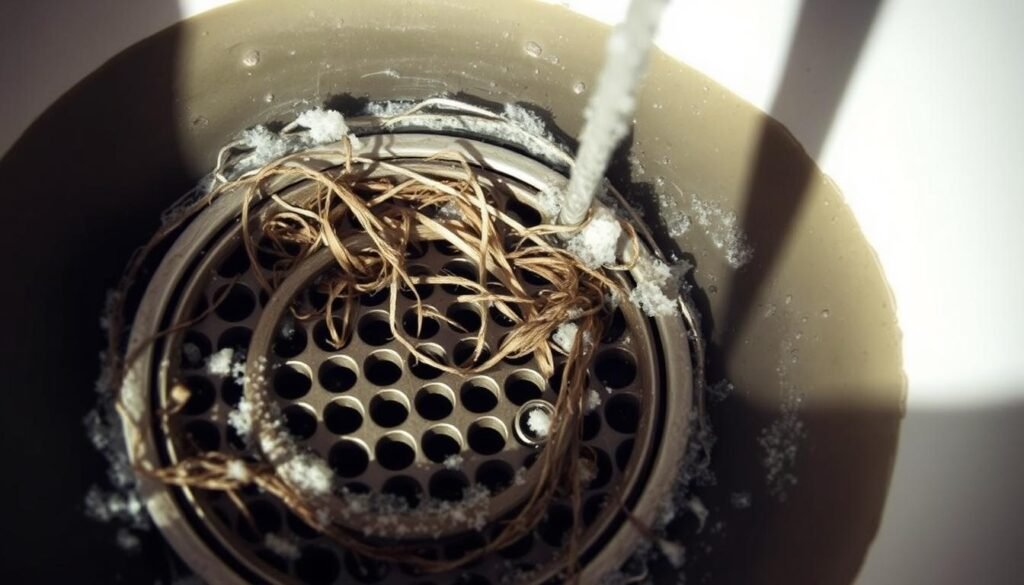
A clogged shower drain can really mess up your day. It causes water to back up and makes a perfect spot for mold and mildew. I’ve seen it in many homes, and it’s more than just a small problem. It can lead to bad smells, slow water flow, and even water damage if not fixed fast.
Maintaining a clean shower drain is key to avoiding these issues. You don’t need to be a pro plumber to fix it. With a few easy DIY steps, you can make your shower drain work like new again.
Key Takeaways
- Identify common causes of clogged shower drains
- Learn simple DIY methods to unclog your shower drain
- Discover preventive measures to keep your shower drain clean
- Understand when to seek professional help
- Implement easy fixes to avoid water damage
Understanding Your Shower Drain System
Before we start cleaning your shower drain, let’s look at its parts. Knowing how each part works is key for keeping it in good shape.
Parts of a Shower Drain
A shower drain system has several important parts. These include:
- The drain cover or grate, which lets water in but keeps big stuff out.
- The drain pipe, which takes water away from the shower to the sewer.
- The trap, a curved pipe that holds water, keeping sewer smells out.
- The vent pipe, which lets air in, helping water flow well and keeping the trap from being sucked dry.
How Clogs Happen
Clogs in shower drains usually come from hair, soap scum, and other stuff. Here’s how it goes down:
- Hair and soap make a sticky mess that sticks to the pipe walls.
- As time goes on, this mess can make the pipe narrower, slowing water flow.
- Eventually, it can block the pipe, causing a clog.
Knowing how clogs form helps you learn how to clean shower drain right. Regular cleaning and being careful about what goes down the drain can help avoid clogs.
Common Causes of Shower Drain Clogs
Knowing why shower drains clog is key to fixing them yourself. By figuring out what causes these clogs, you can stop them before they start. This keeps your shower drain working well.
Hair Buildup
Hair is a big reason for clogged shower drains. As you shower, hair falls and mixes with other stuff, blocking the drain. To fight hair buildup, use a hair catcher or screen over your drain.
Make sure to clean the hair catcher often. This helps a lot. For more tips on keeping your shower drain clear, check out Harris Plumbing.
Soap Scum and Residue
Soap scum and residue also clog drains. Soap and hard water minerals create a sticky mess that blocks pipes. This makes water flow harder.
Choose soaps that don’t leave much residue. Also, clean your shower drain with baking soda and vinegar to get rid of scum and buildup.
Other Debris
Dirt, skin cells, and personal care products also clog drains. They mix with hair and scum to block the drain.
To wrap up, managing shower drain clogs is doable with the right steps. Here’s a quick guide on what causes clogs and how to fix them:
| Cause | Prevention Method | Cleaning Solution |
|---|---|---|
| Hair Buildup | Use a hair catcher | Regularly clean the hair catcher |
| Soap Scum and Residue | Use soap designed to minimize residue | Baking soda and vinegar mixture |
| Other Debris | Regularly clean the shower drain | Hot water and baking soda |
By knowing these causes and using the right fixes, you can keep your shower drain clear. For more on how to clean shower drain well, keep reading the next parts.
Safety Precautions Before Starting
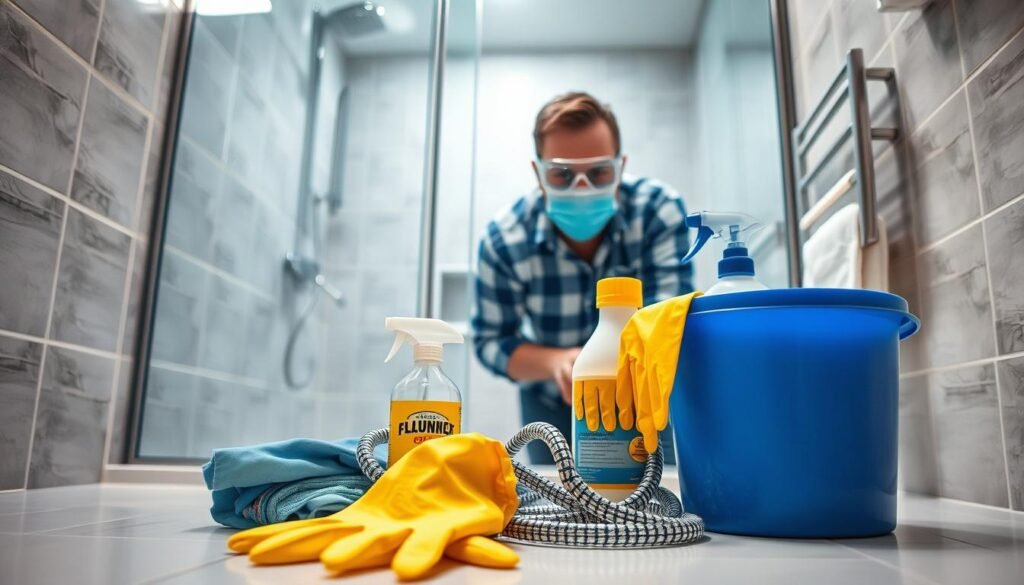
Always put safety first when you’re cleaning your shower drain. The right steps can avoid accidents and make the cleaning easier.
Wear Protective Gear
Wearing protective gear is key when cleaning your shower drain. It helps keep you safe from dangers. Here’s what you need:
- Gloves: to protect your hands from harsh chemicals and bacteria.
- Goggles: to shield your eyes from splashing water and chemicals.
- Mask: to avoid inhaling fumes from chemical drain cleaners.
A pro says, “Protective gear is not just a precaution, it’s a necessity when dealing with unknown substances in your drain.” This shows how important it is to be ready.
Ventilation Tips
Good ventilation is key when using chemical drain cleaners. Here’s how to keep the air fresh:
- Open windows and doors to let fresh air in.
- Use an exhaust fan to remove fumes.
- Avoid using chemical cleaners in enclosed spaces.
A well-ventilated area makes cleaning safer. Safety rules say, “Good ventilation can be the difference between a safe cleaning experience and a hazardous one.”
| Safety Measure | Benefit |
|---|---|
| Wear Protective Gear | Protects against chemical splashes and bacteria |
| Ensure Good Ventilation | Reduces inhalation of harmful fumes |
By taking these safety steps, you can clean your shower drain safely and effectively.
Tools You’ll Need for the Job
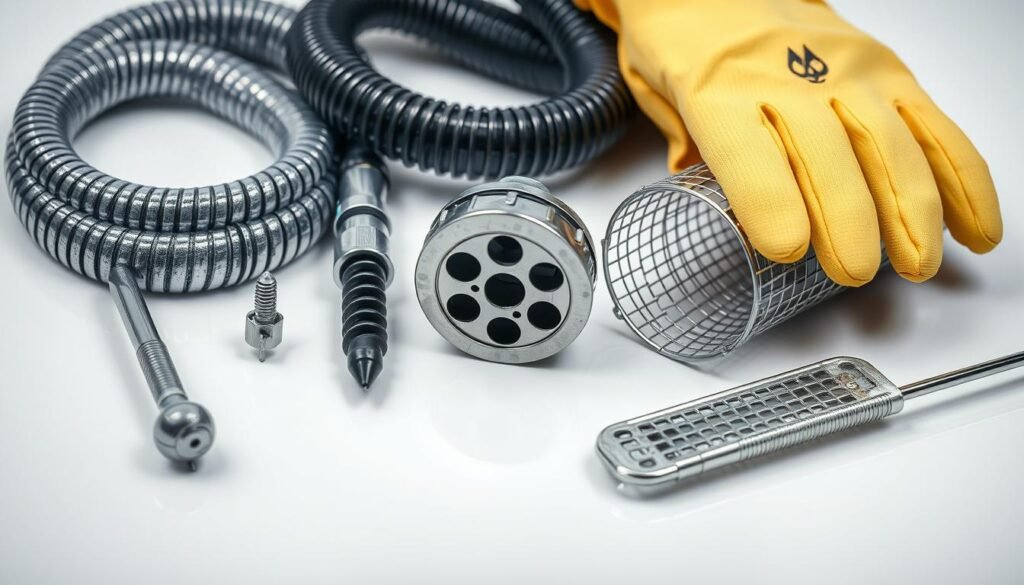
To clean your shower drain, you’ll need some basic tools. These tools will make the job easier and faster.
Basic Cleaning Supplies
You’ll need rubber gloves to protect your hands, a flashlight for light, and a small brush for scrubbing. Also, white vinegar and baking soda are good for a natural cleaner. For more tips, check out our guide on how to clean your shower head.
Recommended Drain Snake
A drain snake, or auger, is a flexible rod for removing clogs. It’s a valuable tool for tough blockages. Choose one that’s durable and has a comfortable handle.
Plunger Use
A plunger is key for clearing clogs. Make sure it’s over the drain, then push down slowly until you feel resistance. Repeat this process several times to loosen the clog. For really tough clogs, use a plunger and drain snake together.
With these tools, you’re ready to clean your shower drain.
Easy DIY Methods to Clean Your Shower Drain
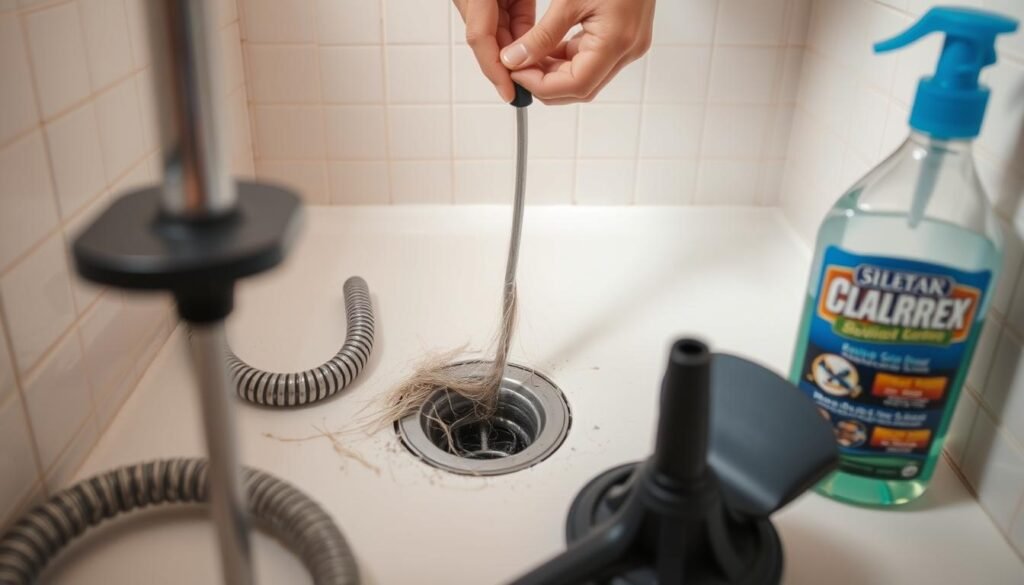
To keep your shower drain flowing freely, try these simple DIY cleaning methods. Keeping your shower drain clean is important for a hygienic and pleasant showering experience.
Hot Water Solution
One of the simplest ways to clean your shower drain is with hot water. Pouring boiling water down the drain can dissolve grease or soap scum. For the best results, repeat this a few times to clear the drain.
Baking Soda and Vinegar
A popular and eco-friendly method uses baking soda and vinegar. Start by pouring 1/2 cup of baking soda down the drain, then 1/2 cup of vinegar. Let it sit for a few hours or overnight before rinsing with hot water. This mix breaks down tough buildup in your shower drain.
For more stubborn clogs, you can also try additional methods that involve more rigorous techniques.
Manual Removal Techniques
For clogs that are more stubborn, manual removal techniques might be necessary. Using a drain snake or plumber’s auger can help retrieve hair and other debris. To do this effectively:
- Insert the drain snake into the drain and rotate it as you push it further into the pipe.
- Once you feel resistance, pull out the snake, bringing the clog with it.
- Repeat the process until the drain is clear.
By following these DIY methods, you can keep your shower drain clean and functional. Regular maintenance is key to preventing future clogs and ensuring a smooth showering experience.
When to Use a Professional Service
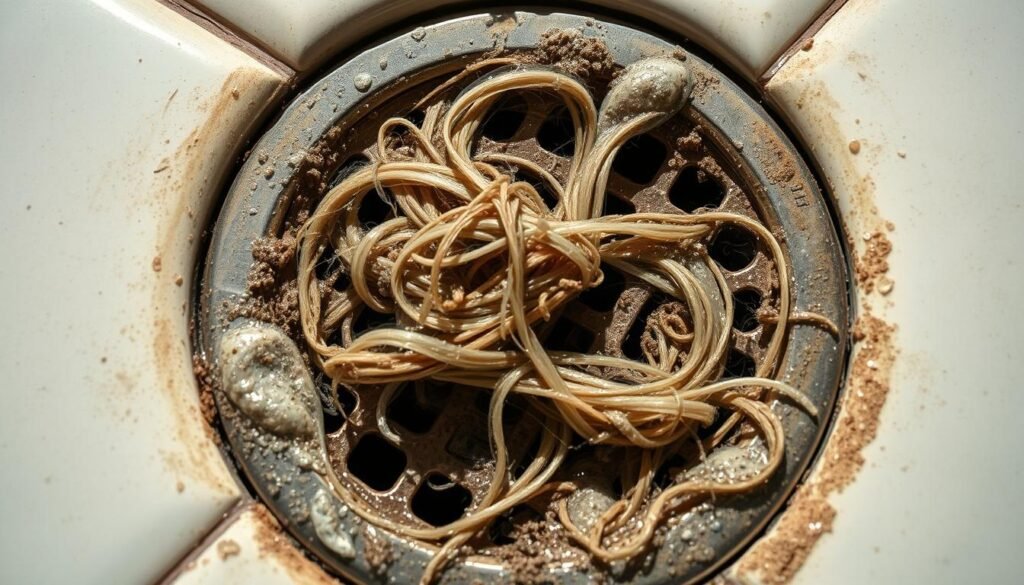
Knowing when to call a professional is key when dealing with tough clogs. DIY fixes work for small problems, but some clogs need a pro plumber’s skills.
Signs of Severe Clogs
Look out for these signs: clogs keep coming back, water drains slowly, or you hear odd noises. Severe clogs can cause big problems like water damage or pipe bursts if not fixed fast.
Cost Considerations
The cost to hire a plumber varies by location, clog type, and when you need them. Even though it costs more, professional help can save you money by avoiding bigger plumbing issues.
Clearing a shower drain clog can cost between $100 and $300. Always get quotes from different plumbers to find the best deal.
Regular Maintenance Tips for Shower Drains
To keep your shower drain working well, regular care is essential. Ignoring your shower drain can cause clogs, bad smells, and even damage. By adding a few easy habits to your routine, you can avoid these problems and keep your shower clean and safe.
Routine Cleaning Schedule
It’s important to have a cleaning schedule for your shower drain. Clean it at least once a month. Use a mix of baking soda and vinegar for a natural cleaner. Pour 1 cup of baking soda, then 1 cup of vinegar down the drain. Let it sit for a few hours or overnight, then rinse with hot water.
For a deeper clean, try a drain snake or plumber’s auger. These tools can remove tough blockages. For more tips, check out Infinity Drain’s Drain Care Guide.
Hair Catcher Utilization
Using a hair catcher is a great way to stop clogs. These devices fit over your drain and catch hair, reducing clog risk. I strongly suggest using a hair catcher to keep your drain clear.
| Maintenance Task | Frequency | Benefits |
|---|---|---|
| Cleaning with Baking Soda and Vinegar | Monthly | Natural cleaning, prevents clogs |
| Using a Hair Catcher | Daily/After Each Use | Reduces hair and debris entering the drain |
| Drain Inspection | Quarterly | Early detection of potential issues |
By following these easy maintenance tips, you can keep your shower drain in top shape. Regular cleaning and using a hair catcher can greatly reduce clog risk. A well-maintained shower drain is key for a clean and enjoyable showering experience.
Eco-Friendly Cleaning Alternatives
Cleaning your shower drain doesn’t have to harm the environment. There are many eco-friendly methods you can try. Using green cleaning solutions is good for the planet and keeps your home safe and healthy.
Natural Ingredients
Using natural ingredients is a great way to clean your shower drain. Baking soda and vinegar are a classic combo. They dissolve blockages and freshen your drain. Pour 1/2 cup of baking soda down the drain, then 1 cup of vinegar. Let it sit for a few hours or overnight before rinsing with hot water.
Lemon juice is another natural ingredient you can use. Its acidity breaks down grease and debris. Pour lemon juice down the drain and let it sit before rinsing.
Safe Chemical Cleaners
There are also safe chemical cleaners that are eco-friendly. Look for products that are biodegradable and non-toxic. These cleaners clear clogs without harming the environment or your health.
Always follow the instructions on the label when using any cleaning product. Take precautions to avoid skin and eye irritation.
By choosing these eco-friendly cleaning options, you can keep your shower drain clean. You’ll also be living a more sustainable lifestyle.
Troubleshooting Difficult Clogs
If your shower drain is clogged and won’t budge, it’s time to try some advanced methods. Dealing with tough clogs can be frustrating. But, with the right techniques, you can fix the problem and get your shower working again.
Using a Plumber’s Snake
A plumber’s snake, or auger, is a flexible rod for the drain. It helps break up or remove clogs. Here’s how to use it:
- Insert the snake into the drain and feed it into the pipe until you feel resistance.
- Rotate the handle to break up the clog or to hook onto the blockage.
- Slowly pull out the snake, bringing the clog with it.
This method is great for clogs deep in the drain line. It’s hard to reach with simpler tools.
Chemical Drain Cleaners
Chemical drain cleaners can tackle tough clogs. But, they should be used carefully. These products have strong chemicals that can dissolve blockages. Yet, they can harm pipes if used wrong or too often.
When using chemical drain cleaners:
- Choose a product that’s right for your pipes (e.g., PVC, metal).
- Follow the instructions carefully, wearing protective gloves and eyewear.
- Be aware of the potential risks, including damage to pipes and skin irritation.
There are also eco-friendly options. They can be safer for your pipes and the environment.
Learning these advanced techniques can help you handle even the toughest clogs. This way, you can keep your shower drain working well.
Tips for Preventing Future Clogs
To keep your shower drain flowing, it’s key to take some simple steps. These steps help you avoid the trouble and cost of clogs. Using the right tools and teaching your household about best practices are crucial.
Drain Covers and Screens
Drain covers or screens are a simple way to catch hair and debris. This can greatly lower clog risks. When picking a cover, choose one that fits well and is easy to clean.
For more tips on keeping your shower drain clear, check out Mr. Rooter’s guide on handling and preventing clogged showers.
Educating Household Members
It’s not just about tools; it’s also about teaching your family. Educate your family members on what can and cannot go down the drain. Hair, soap scum, and big debris should be kept out.
Working together, you can keep your shower drain running smoothly. Also, set up a cleaning schedule to regularly check and clean your drain. This proactive step can catch problems early.
Conclusion: Enjoying a Clean and Functional Shower Drain
Keeping your shower drain clean is important for a nice shower experience. Knowing why clogs happen and how to fix them helps. This way, your shower drain will always work well.
Key Takeaways
We’ve looked at many ways to clean your shower drain. This includes DIY solutions and professional help. Regular care stops clogs before they start. Using a drain screen and watching what you flush helps a lot.
Final Maintenance Tips
To keep your shower drain clean, make a cleaning plan. Learning how to clean it right saves time and trouble. With these easy steps, your shower drain will stay clean and work great for a long time.