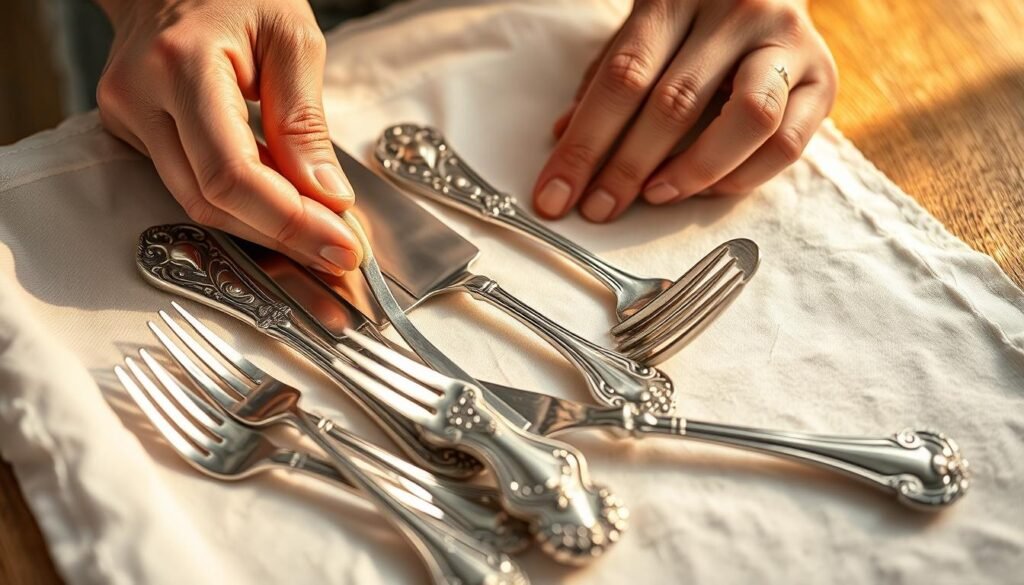
Tarnished silverware can be a letdown, like when you’re getting ready for a dinner party. Did you know that exposure to air and moisture can cause silverware to tarnish in just a few days? This reaction dulls the shine and ruins the dining experience.
Bringing back the shine to your silverware is easier than you think. With the right methods and a little effort, you can make it sparkle again. In this article, I’ll show you how to make your silverware look new and ready for your next event.
Key Takeaways
- Simple methods to remove tarnish from silverware
- Effective home remedies for silverware polishing
- Tips to maintain the shine on your silverware
- Common mistakes to avoid when cleaning silverware
- Step-by-step guide to deep clean your silverware
Understanding Silverware: Types and Composition
The type and composition of silverware are key to the best cleaning method. Silverware can be made from different materials. Each has its own cleaning needs.
Different Types of Silverware Materials
Silverware is often made from sterling silver, silver-plated, and stainless steel. Sterling silver is loved for its durability and luxury. Silver-plated items are more affordable with a silver coating. Stainless steel is great for its corrosion resistance and easy care.
| Material | Composition | Cleaning Considerations |
|---|---|---|
| Sterling Silver | 92.5% silver, 7.5% other metals | Requires gentle cleaning to avoid tarnish |
| Silver-Plated | Base metal with a silver coating | Needs careful handling to prevent wear-off |
| Stainless Steel | Iron, chromium, and other alloys | Resistant to corrosion, easy to clean |
How Composition Affects Cleaning Methods
The material of silverware affects how it should be cleaned. Sterling silver and silver-plated items need gentle care to avoid tarnish. Stainless steel, on the other hand, can handle tougher cleaning.
Knowing the material helps pick the right cleaning products and methods. This keeps your silverware in top shape.
Why Cleaning Silverware is Important
Cleaning silverware is more than just keeping it shiny. It’s also key for our health and wellbeing. If silverware isn’t cleaned right, it can hold bacteria and harmful germs.
Health Considerations
Dirty silverware can be a home for bacteria like Salmonella and E. coli. These can lead to food poisoning, causing nausea, vomiting, and diarrhea. It’s vital to clean silverware often to stop these germs from spreading.
As “Cleaning your silverware regularly is a simple yet effective way to protect your health.” This is very important for families with young kids, the elderly, or those with weak immune systems. They are more at risk of getting sick.
Maintaining Aesthetic Appeal
Cleaning silverware also keeps it looking good. Tarnished silverware can make any table setting look dull. Regular polishing makes it shine, making meals more enjoyable.
“The way we eat is as important as the food we eat, and clean silverware is a crucial part of that experience.”
By keeping silverware clean and shiny, we ensure a healthier and more enjoyable dining experience. It also makes meals more sophisticated.
Signs That Your Silverware Needs Cleaning
Wondering if it’s time to clean your silverware? Look for these signs. Silverware is key to our dining, and keeping it shiny is important. Over time, it can tarnish or get dirty, affecting its look and use.
Visual Indicators of Tarnish
One clear sign is tarnish. It looks like a dull, dark layer on the silverware. Tarnish is not just ugly; it can also mean chemical reactions that harm the metal.
Other signs include:
- Stubborn stains or spots that stay after washing
- A dull or matte finish instead of the usual shine
- Visible signs of corrosion or pitting on the surface
Experts say, “Regular cleaning stops tarnish, but when it happens, act fast to avoid more damage.”
“The best way to keep silverware in top shape is regular cleaning and proper storage. This keeps it looking great and lasts longer.”
Functional Issues to Watch For
Functional problems can also mean it’s time to clean. If your silverware sticks together or is hard to handle, grime or tarnish might be the cause. Cleaning it often can stop these problems and keep it easy to use.
| Functional Issue | Possible Cause | Solution |
|---|---|---|
| Sticking together | Grime or tarnish buildup | Clean with mild detergent and dry thoroughly |
| Difficulty in handling | Tarnish or corrosion | Use a silver polish or cleaning solution |
| Slipping or dropping utensils | Slippery surface due to residue | Wash and dry thoroughly after each use |
Knowing these signs and acting fast keeps your silverware in great shape. Regular care not only makes it look better but also keeps it working well and safe to use.
Basic Cleaning Techniques for Silverware

To keep your silverware shining, learning basic cleaning techniques is key. These methods keep your silverware looking great and lasting longer.
Hand Washing with Mild Detergents
Hand washing with mild detergents is a simple and effective way to clean silverware. It’s gentle on the silver and prevents scratches from machine washing. Here’s how to do it:
- Fill a sink with warm water and add a small amount of mild detergent.
- Soak the silverware for a few minutes to loosen any food particles.
- Gently scrub each piece with a soft cloth or sponge, paying special attention to intricate designs or crevices.
- Rinse thoroughly with warm water to remove any soap residue.
- Dry immediately with a soft, lint-free cloth to prevent water spots.
Using Baking Soda for Gentle Abrasion
For tougher tarnish or stubborn stains, baking soda is a gentle abrasive. It removes tarnish without damaging the silverware. Here’s a simple method:
- Make a paste by mixing baking soda with a small amount of water.
- Apply the paste to the tarnished areas using a soft cloth.
- Gently rub the paste into the silverware, ensuring you cover all tarnished parts.
- Rinse with warm water and dry thoroughly.
By using these basic cleaning techniques regularly, you can keep your silverware in top condition. Cleaning it often not only keeps it shiny but also makes it last longer.
Advanced Cleaning Methods for Stubborn Tarnish
Stubborn tarnish needs more than basic cleaning. That’s when advanced techniques come into play. When your silverware looks dull, it’s time to use strong methods to make it shine again.
Creating a Homemade Silver Polish
Making a homemade silver polish is a great way to fight stubborn tarnish. A common recipe mixes baking soda and water to make a paste. Apply this paste to the tarnished spots and rub it gently with a soft cloth.
Another method uses lemon juice and olive oil. The lemon juice’s acidity breaks down tarnish, while olive oil is a soft abrasive. Just dip a cloth in the mix, rub it on the silverware, and buff it dry with another cloth.
“A simple mix of baking soda and water can work wonders on tarnished silverware. It’s a gentle yet effective way to restore shine without damaging the metal.”
Using Commercial Silver Cleaners
For a simpler solution, commercial silver cleaners are available. These products are made to handle tough tarnish and make your silverware look new.
| Product | Effectiveness | Ease of Use |
|---|---|---|
| Silver Shine | High | Easy |
| Tarnish Gone | Medium | Moderate |
| Silver Sparkle | High | Easy |
When using commercial cleaners, always follow the label’s instructions. Test a small area first to make sure it won’t harm your silverware.
By adding these advanced cleaning methods to your silverware care routine, you can keep your silverware looking great. Even when faced with stubborn tarnish, your silverware will shine.
Tools Needed for Effective Cleaning
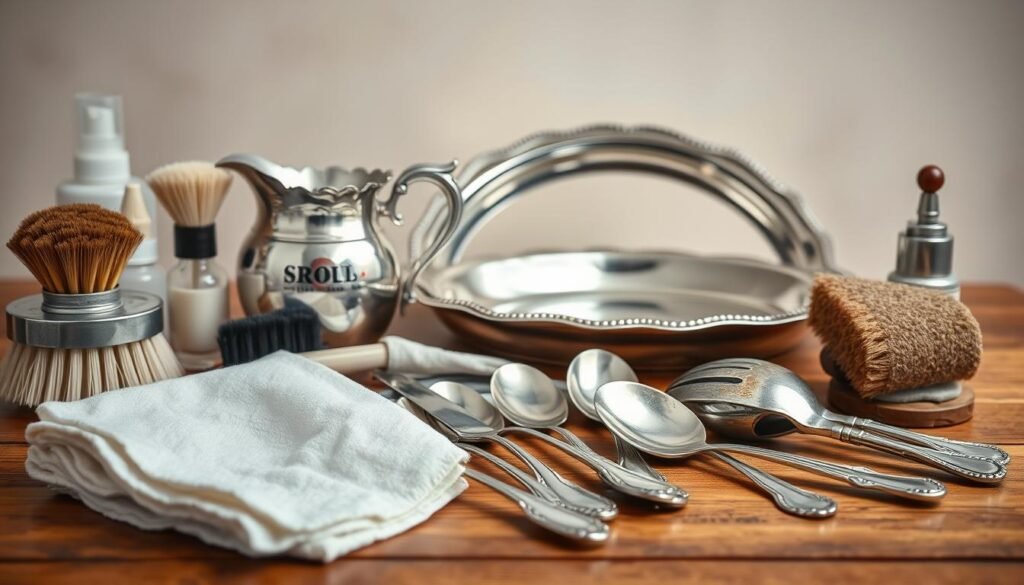
Having the right tools is key for cleaning silverware well. It’s not just about soap and water. You need the right cleaning agents and materials to keep your silverware shiny.
Essential Items for Your Cleaning Kit
First, gather a few must-haves for your cleaning kit. These include:
- Soft Cloths: Microfiber cloths are great for cleaning silverware. They’re soft and remove tarnish without scratching.
- Mild Detergents: A gentle dish soap works well for cleaning silverware. Stay away from harsh detergents that can harm the metal.
- Baking Soda: Baking soda is good for making a paste to gently remove tarnish from silverware.
- Specialized Silver Cleaning Solutions: For tough tarnish, use a specialized silver cleaning solution. These products help bring back your silverware’s shine.
Also, a soft-bristled brush is useful for cleaning detailed designs on your silverware. For really tarnished items, a silver polishing cloth is a great addition to your kit.
Recommended Brands for Silver Cleaning Tools
Choosing the right cleaning tools matters. Look for reputable brands for the best results. Some top brands for silver cleaning tools are:
- Weiman: They’re known for their effective silver jewelry and silverware cleaning solutions.
- Goddard’s: They offer a variety of silver polish and cleaning products that are both gentle and effective.
- Connoisseurs: They provide top-quality silver cleaning solutions and polishing cloths.
With these essential tools and trusted brands, you’ll be able to keep your silverware looking great.
How to Store Silverware Properly
Storing silverware right is key to stop tarnish and keep it looking good. Your silverware needs a safe spot when not in use. This helps keep its quality.
Best Practices for Preventing Tarnish
To stop tarnish, keep your silverware in a cool, dry spot. Moisture causes tarnish, so stay away from humid places. Use anti-tarnish cloths or bags to soak up moisture and stop tarnish.
Also, don’t let silverware touch other metals. This can cause chemical reactions that lead to tarnish.
For top-quality silverware, consider felt-lined boxes or silverware chests. They protect your silverware from scratches and tarnish while keeping it organized.
Ideal Storage Solutions
The right storage makes a big difference for silverware. For more tips, check out this practical guide on storing silverware.
| Storage Solution | Benefits |
|---|---|
| Felt-lined Boxes | Prevents scratches, cushions silverware |
| Silverware Chests | Organizes silverware, prevents tarnish |
| Anti-tarnish Cloths | Absorbs moisture, prevents tarnish |
By following these storage tips, you can make your silverware last longer and look better. Good storage does more than just prevent tarnish. It also keeps your silverware in top condition and looking great.
Cleaning Silverware with Natural Ingredients
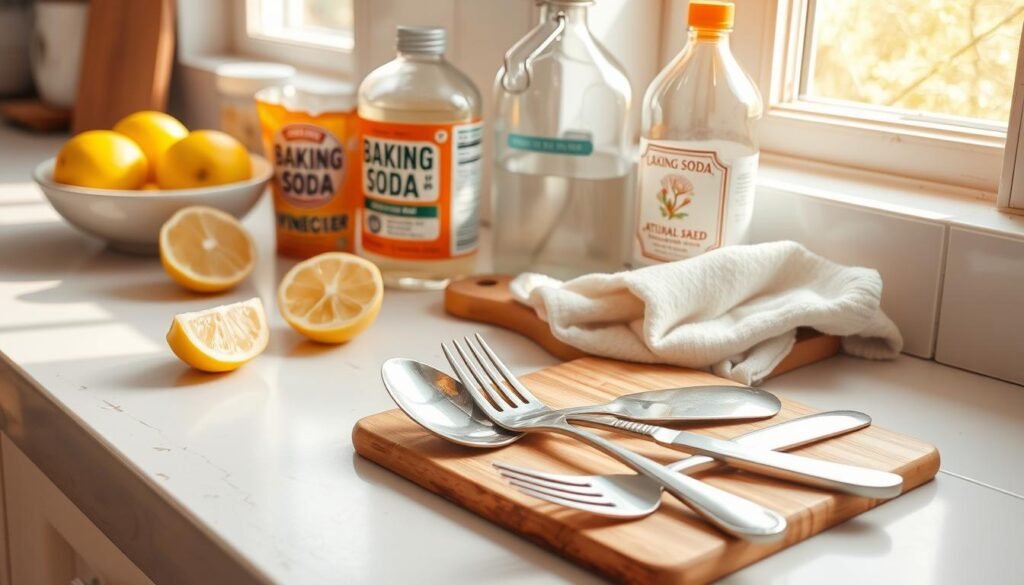
Cleaning silverware with natural ingredients is simple and good for the planet. It keeps your silverware looking great and doesn’t harm the environment.
Using natural ingredients is very effective. You can use lemon juice and olive oil, or vinegar and baking soda. Both are easy to do and need ingredients you can find easily.
Using Lemon Juice and Olive Oil
Lemon juice cleans because it’s acidic. Olive oil polishes. Mix equal parts lemon juice and olive oil in a bowl. Dip a soft cloth in it and rub the silverware gently. The tarnish will fade, making your silverware shine.
Benefits of Lemon Juice and Olive Oil Method:
- Environmentally friendly
- Safe for most types of silverware
- Leaves a pleasant scent
Vinegar and Baking Soda Method
Vinegar and baking soda clean silverware well. Vinegar’s acid and baking soda’s abrasive remove tarnish. To do this, line a pan with foil, add hot water, baking soda, and vinegar. Soak the silverware for a few minutes. The tarnish will go away, leaving it clean.
| Method | Ingredients | Effectiveness |
|---|---|---|
| Lemon Juice and Olive Oil | Lemon Juice, Olive Oil | High |
| Vinegar and Baking Soda | Vinegar, Baking Soda | High |
Both methods are effective and simple. Adding them to your cleaning routine keeps your silverware in top shape. You avoid harsh chemicals this way.
Tips for Regular Maintenance of Silverware
Keeping your silverware shiny is simple with a few habits. Regular care makes it look great and last longer. By adding a few easy steps to your daily routine, your silverware will stay beautiful for years.
Establishing a Cleaning Schedule
It’s key to have a cleaning schedule that fits your life. You might clean it after each meal or once a week for a deep clean. For more tips, check out this article on silver care.
Quick Cleaning Hacks After Use
Wash your silverware with warm water and mild soap after meals. Dry it well to avoid water spots. A soft cloth can also polish it, removing tarnish.
By following these tips and cleaning regularly, your silverware will stay in top shape. A bit of care makes a big difference in keeping your silverware beautiful and functional.
Troubleshooting Common Silverware Cleaning Issues
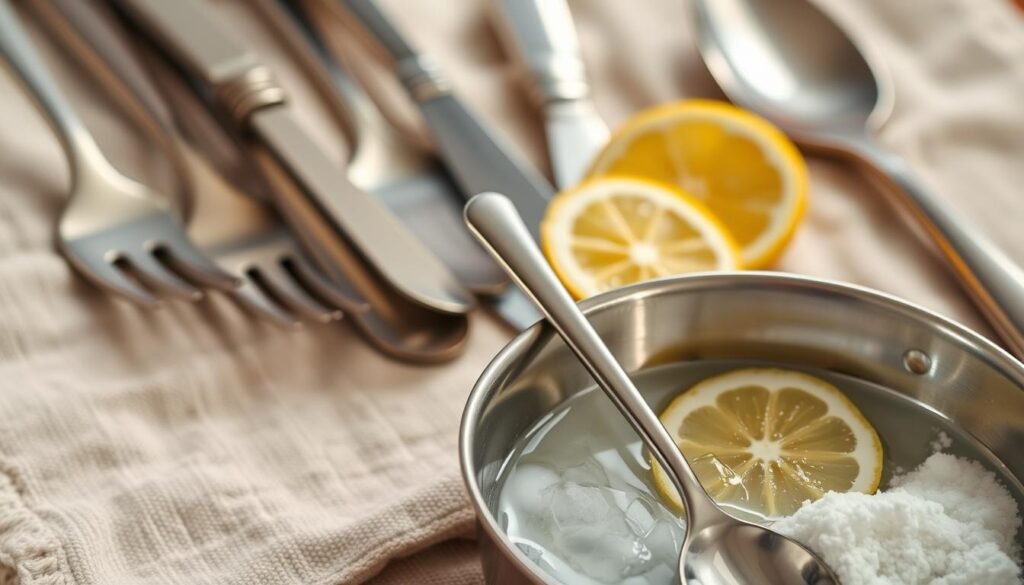
Cleaning silverware can be tricky. Knowing how to fix common problems is crucial to keep your silverware looking good. Whether it’s dealing with tough tarnish or avoiding scratches, the right methods can help a lot.
Avoiding Scratches and Damage
One big challenge is avoiding scratches. Always use a soft, lint-free cloth to clean your silverware. Stay away from harsh chemicals and abrasive materials that can harm the surface. For delicate items, a gentle cleaning solution made for silver is a good choice.
When washing, keep silverware away from other metals to prevent scratches or tarnish. If using a dishwasher, make sure your silverware doesn’t touch other utensils or the walls.
Recognizing When to Seek Professional Help
Not all silverware cleaning problems can be fixed at home. If you have valuable or antique silverware, it’s wise to get professional help. Experts can give advice on how to clean and care for your silverware safely.
For more tips on cleaning and polishing silverware, check out Cosmo Appliances’ guide. It has detailed advice and techniques.
Eco-Friendly Solutions for Silverware Cleaning
As we focus more on the environment, finding green ways to clean silverware is key. Traditional cleaners often have harsh chemicals that harm both our health and the planet. By choosing green cleaning, we can protect the environment and keep our silverware shining.
Benefits of Green Cleaners
Green cleaners use natural ingredients that are safe for our planet. They don’t pollute our water or soil. Plus, they’re gentler on silverware, which means less chance of scratches or damage. A guide on how to polish silver the green way shows that eco-friendly cleaning works well.
DIY Eco-Friendly Silver Cleaning Recipes
Making your own silver cleaning solutions is easy. Here are a few recipes to try:
- Baking Soda and Water Paste: Mix baking soda with water to make a paste. Rub it on your silverware with a soft cloth. Then, rinse and dry it well.
- Lemon Juice and Olive Oil: Mix lemon juice and olive oil in equal parts. Use a soft cloth to rub it on your silverware. Finish with a dry cloth to shine.
- Vinegar Soak: Soak your silverware in a mix of water and white vinegar. Rinse and dry it to avoid water spots.
These DIY recipes are good for the planet, save money, and are simple to make. By using them, you can make your silverware sparkle while living more sustainably.
Final Thoughts on Keeping Silverware Sparkling
Keeping silverware sparkling is easy with the right steps. By following the cleaning methods from this article, your silverware will always shine. It’s a simple task that makes a big difference.
Key Takeaways for Sparkling Silverware
We’ve covered many ways to make your silverware shine. From washing it by hand with mild soap to using baking soda for a gentle scrub. For tough tarnish, homemade or commercial silver polishes work well.
Maintaining Your Silverware’s Sparkle
To keep your silverware looking great, clean it regularly and store it right. This prevents tarnish. By following these tips and cleaning often, your silverware will stay shiny for years. It makes keeping your silverware clean a simple part of your routine.