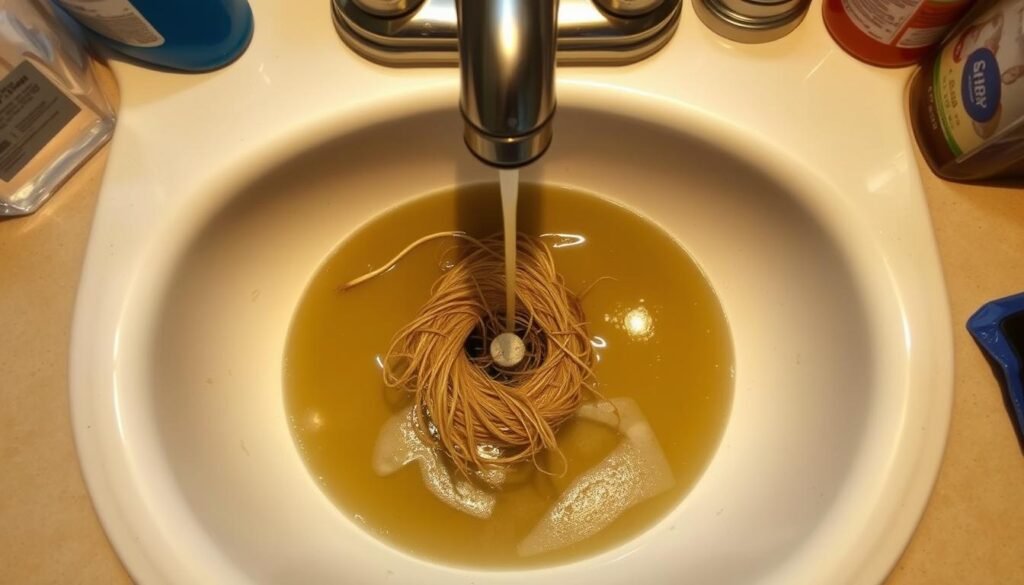
I’ve had my share of clogged sink drains. I’m here to share some simple tips to fix this common problem.
Cleaning a clogged sink drain is easy if you know the right steps. It’s all about using the right methods to clear the blockage.
With a few easy-to-follow steps, you can fix your sink. In this article, I’ll show you how, based on my own experience and knowledge.
Key Takeaways
- Use simple tools to clean a clogged sink drain
- Follow a step-by-step guide for effective results
- Prevent future clogs with regular maintenance
- Identify common causes of sink drain clogs
- Learn DIY methods to clear blockages
Understanding Which Sink Drains Clog Frequently
Knowing why sink drains clog is key to keeping them clear. By looking at common causes and signs, you’ll learn how to keep your sink flowing well.how-to-clean-headlights
Common Causes of Drain Clogs
Drain clogs come from many things. Grease, food bits, and debris build up over time. In kitchens, grease and food are big culprits. In bathrooms, hair and soap scum are the main problems.
Here’s a table showing common clog causes:
| Cause | Description | Typical Sink |
|---|---|---|
| Grease and Oil | Builds up and solidifies in pipes | Kitchen Sink |
| Food Particles | Accumulates and clogs drain | Kitchen Sink |
| Hair | Entangles and blocks water flow | Bathroom Sink |
| Soap Scum | Coats pipes and traps debris | Bathroom Sink |
Symptoms of a Clogged Sink Drain
Spotting clog symptoms early is important. Look for slow water, bad smells, and water backing up. These signs mean you need to act fast.
Using a drain strainer and being careful about what you put down the drain helps. Regularly running hot water and using natural cleaners like baking soda and vinegar also helps.
By knowing why drains clog and what to look for, you can stop clogs before they start. This keeps your plumbing system healthy.
Essential Tools for Cleaning Your Sink Drain
Having the right tools is key for cleaning your sink drain. You’ll need basic plumbing tools and safety gear. This ensures you’re ready for any cleaning challenge.
Recommended Cleaning Tools
You’ll need a plunger, a plumbing snake, and drain cleaners for the job. A plunger helps dislodge clogs near the surface. A plumbing snake reaches deeper to tackle tough blockages. For severe clogs, chemical cleaners or natural solutions like baking soda and vinegar work well.
For more on using these tools, check out this guide on cleaning sink drains.
| Tool | Purpose | Best For |
|---|---|---|
| Plunger | Creates suction to dislodge clogs | Surface-level clogs |
| Plumbing Snake | Removes blockages deep in pipes | Stubborn, deep-seated clogs |
| Chemical Drain Cleaner | Dissolves grease and debris | Severe clogs, preventive maintenance |
Safety Gear You Should Consider
Cleaning your sink drain can be risky. You might face harmful chemicals, sharp objects, and dirty water. To stay safe, wear rubber gloves and safety goggles. Old clothes or an apron can also protect your clothes from stains.how-to-clean-hair-brushes
DIY Methods for Preventing Sink Clogs

To keep your sink drain flowing, it’s important to use DIY methods. Simple habits can greatly reduce clog risks. This makes your sink drain work better.
Regular Maintenance Tips
Regular care is crucial for avoiding clogs. Running hot water through the drain often helps. It clears grease and debris from the pipes.
Using baking soda and vinegar is also effective. Pour 1/2 cup of baking soda, then 1/2 cup of vinegar. Let it sit for a few hours or overnight. Then, rinse with hot water.
How to Use a Drain Strainer
A drain strainer catches hair and debris before they clog the drain. Place it over the drain and ensure a tight fit.
Cleaning the strainer regularly is key. Remove debris and wash it with warm soapy water. This simple step can greatly lower clog risks.
By following these tips and using a drain strainer, you can avoid clogs. Your sink drain will stay clear and work well.
Step-by-Step Guide to Clean a Clogged Sink Drain

Dealing with a clogged sink drain can be frustrating. But, by breaking down the process, you can clear it efficiently. First, prepare the necessary tools and understand the steps to clear the clog.
Gathering Your Supplies
Before you start, make sure you have the right supplies. You’ll need a plunger, a drain snake (or auger), baking soda, vinegar, and hot water. Having these tools ready will make the process smoother. For more detailed information on unclogging a sink drain, you can visit Liquid-Plumr’s guide.
How to Remove the Drain Stopper
The first step is to remove the drain stopper. This usually involves unscrewing or lifting the stopper, depending on its type. Be ready for any water that might spill out when you remove it. Once removed, you’ll have better access to the clogged area.how-to-clean-retainers
Applying Cleaning Solutions
One effective method for clearing clogs is using a combination of baking soda and vinegar. Pour 1/2 cup of baking soda down the drain, followed by 1/2 cup of vinegar. Let the mixture sit for a few hours or overnight before rinsing with hot water. This natural solution can help break down the clog.
Natural Ingredients for Sink Drain Cleaning
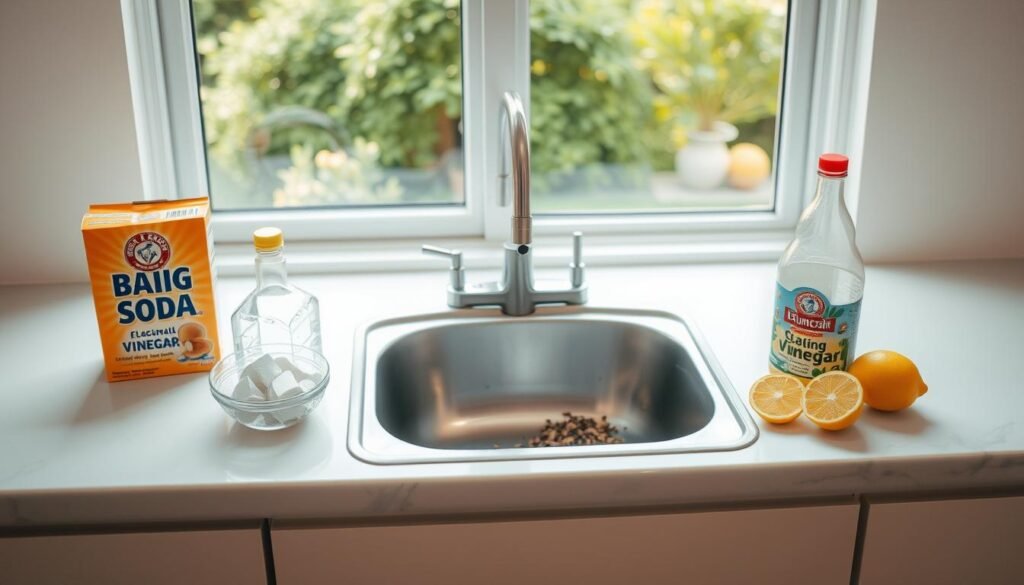
Natural ingredients are a safe and eco-friendly way to clean your sink drain. I’ll show you how to do it. Using natural methods is effective and good for the planet.
Baking Soda and Vinegar Method
The baking soda and vinegar method is a favorite for cleaning sink drains. Start by pouring 1/2 cup of baking soda down the drain. Then, add 1 cup of vinegar.
Let it sit for a few hours or overnight. After that, rinse with hot water.
This method works well. The baking soda is a gentle scrubber. The vinegar breaks down grease and grime. Together, they clear clogs and make your drain smell fresh.
Salt, Boiling Water, and Lemon Juice
Another natural method uses salt, boiling water, and lemon juice. Pour 1/2 cup of salt down the drain. Then, add 1 cup of boiling water. Finish by squeezing the juice of one lemon down the drain.
The salt scrubs away tough grime. The boiling water dissolves grease. The lemon juice adds a fresh scent and breaks down debris.
| Method | Ingredients | Benefits |
|---|---|---|
| Baking Soda and Vinegar | Baking soda, vinegar | Effective at breaking down grease, gentle on pipes |
| Salt, Boiling Water, and Lemon Juice | Salt, boiling water, lemon juice | Scours tough grime, fresh scent, dissolves grease |
Chemical Drain Cleaners: Pros and Cons
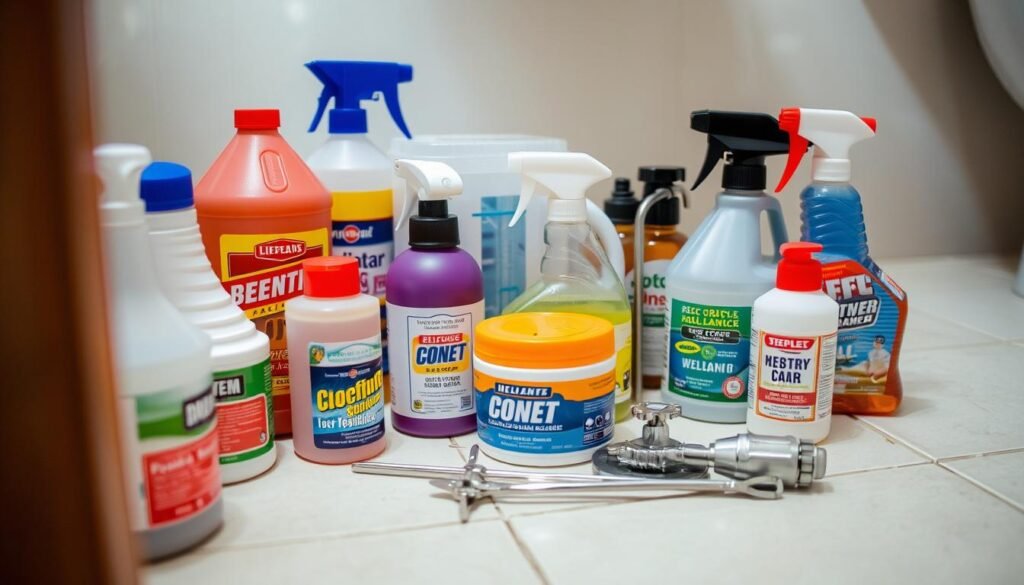
Chemical drain cleaners can clear clogged sink drains, but knowing their pros and cons is key. They are easy to find and can work well, but they also have risks. It’s important to weigh these carefully.
When to Use Chemical Cleaners
Chemical drain cleaners are good for severe clogs that other methods can’t handle. But, use them with care and follow the instructions. Also, check if your pipes can handle these cleaners, as they might damage some materials.
- Use chemical drain cleaners for tough clogs that other methods can’t clear.
- Follow the manufacturer’s instructions carefully to avoid accidents.
- Consider the type of pipes you have before using chemical cleaners.
Safety Precautions
When using chemical drain cleaners, safety is paramount. Wear gloves and goggles and make sure the area is well-ventilated. Be aware of the risks like skin irritation and breathing problems. Take steps to reduce your exposure.
For more on the pros and cons of chemical drain cleaners, check out https://www.callhoover.com/blog/pros-and-cons-of-chemical-drain-cleaners/.
How to Clear a Clog with a Plunger
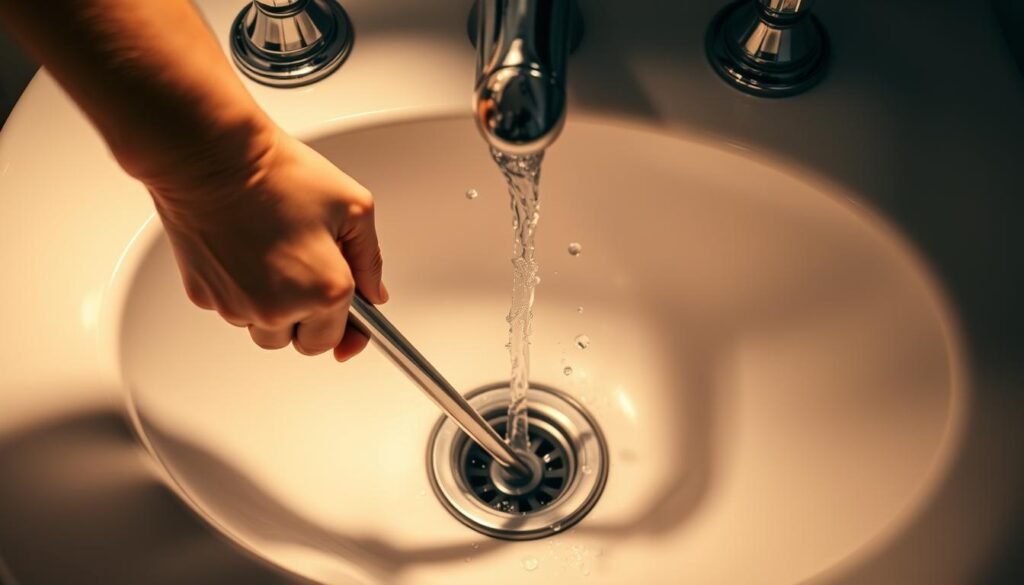
Using a plunger is a simple way to unclog sink drains. It’s easier than you might think. The trick is in the technique.
Proper Plunging Technique
First, fill the sink with enough water to cover the drain. This helps the plunger create suction. Then, place the plunger over the drain, making sure it’s centered and the rubber edge fits snugly.
Push down slowly and steadily until you feel resistance, then pull up sharply. This action helps loosen the clog. Keep repeating this until the water drains freely.how-to-clean-microwave
When Plunging Doesn’t Work
If plunging doesn’t work, you might need to try other methods. Check out other sections of this article for ideas. Or, look at ways to unclog a drain without a plumber for more suggestions.
If the clog still won’t budge, it’s time to call a professional plumber. “Sometimes, despite our best efforts, clogs can be too stubborn, and that’s when professional help is invaluable,” says a plumbing expert.
Leveraging a Plumbing Snake for Serious Clogs
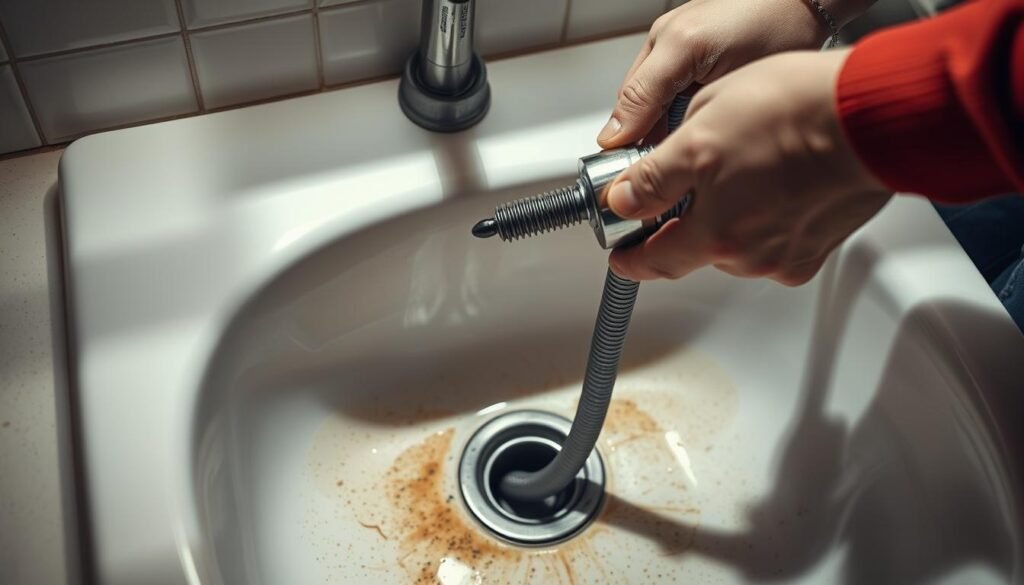
If your sink drain is clogged and plunging hasn’t worked, it’s time to bring in the big guns – a plumbing snake. A plumbing snake can be a lifesaver for stubborn clogs that resist other methods.
How to Use a Plumbing Snake
Using a plumbing snake requires some care and technique. First, feed the cable into the drain until you feel resistance, indicating you’ve reached the clog. Then, rotate the handle to break up or retrieve the clogging material.
| Step | Description |
|---|---|
| 1 | Feed the cable into the drain until resistance is met. |
| 2 | Rotate the handle to break up or retrieve the clog. |
| 3 | Withdraw the cable, bringing the clog with it. |
Tips for Effectively Using a Snake
To get the most out of your plumbing snake, follow these tips: work slowly and carefully to avoid damaging your pipes. Also, keep the cable clean to prevent the spread of grime and bacteria.
- Use the correct size of snake for your pipes.
- Avoid using too much force, which can damage pipes.
- Clean the snake after use to maintain its effectiveness.
When to Call a Professional Plumber
Knowing when to call a professional plumber is crucial. DIY fixes work for small clogs, but some problems need a pro’s touch.
Signs That Professional Help is Needed
Here are signs it’s time to call a plumber:
- Recurring clogs despite using DIY methods
- Water backing up into other drains or fixtures
- A significant decrease in water pressure
- Unusual noises coming from the drain or pipes
- Visible signs of leaks or water damage around the sink area
If you see any of these signs, act fast to avoid more damage.
How to Choose the Right Plumber
Finding the right plumber can be tough. But here are some tips:
- Licensure and Insurance: Make sure the plumber is licensed and insured. This protects you and your property.
- Experience: Choose plumbers with experience in sink clogs and other plumbing issues.
- Reviews and Ratings: Check online reviews and ratings. They show the plumber’s reputation and work quality.
- Quotes and Estimates: Get several quotes. Make sure they provide detailed estimates of the work.
Maintaining a Clear Sink Drain Long-term
To keep your sink drain flowing freely, it’s key to have a regular cleaning schedule. This way, you’ll keep your sink drain clear and stop clogs before they start.how-to-clean-an-oven
Regular Cleaning Schedule
Creating a simple routine can greatly help. Clean your sink drain every 1-2 months, based on how much you use it. Use natural ingredients like baking soda and vinegar for a good cleaning solution.
For more tips on cleaning your kitchen sink and drain, check out Consumer Reports.
Avoiding Future Clogs
To stop clogs, think about what you put down your sink drain. Don’t pour grease, food scraps, or other debris down there. Dispose of them properly and use a drain strainer to catch hair or particles.
By following these easy steps, you’ll avoid clogs and keep your sink drain clear for a long time.