Did you know that stainless steel cookware is a staple in many kitchens? It’s durable and resistant to corrosion. But, keeping it shiny and clean can be tough. I’ve struggled with stubborn stains on my stainless steel pans myself.
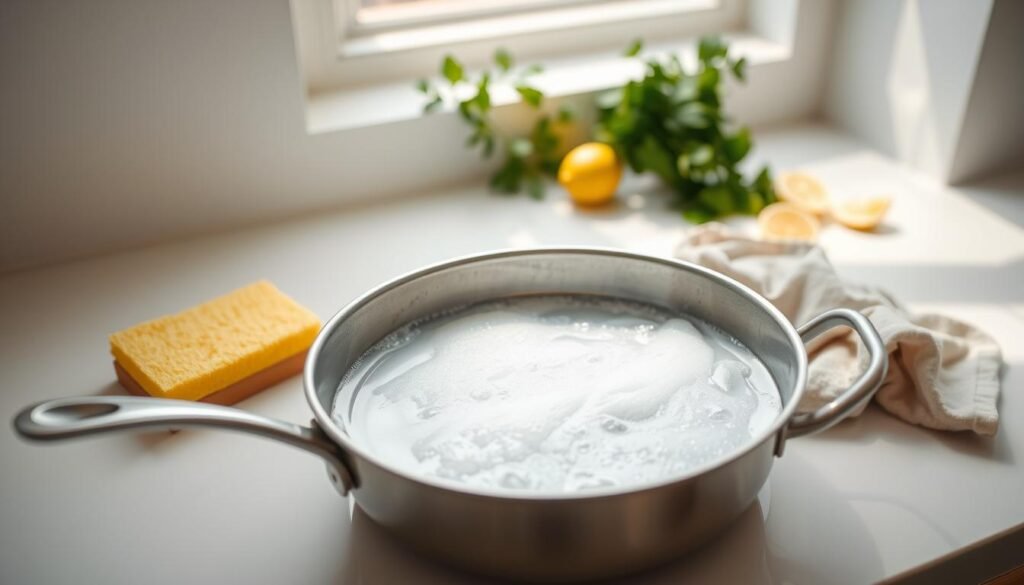
For daily cleaning, a non-abrasive sponge and dish soap work well. For tougher stains, try boiling soapy water or using baking soda and vinegar. These simple steps will help keep your pans looking great.
Key Takeaways
- Use a non-abrasive sponge and dish soap for everyday cleanup.
- Boil soapy water to remove stuck-on food.
- Baking soda and vinegar can be used to tackle tougher messes.
- Dry your cookware immediately after washing to prevent water spots.
- Preheat your pan before adding oil to prevent food from sticking.
Introduction to Cleaning Stainless Steel Pans
Stainless steel pans are a key part of many kitchens. It’s important to know how to clean them well. This helps them last longer and look better.
Why Stainless Steel?
Stainless steel pans are loved for their durability and resistance to corrosion. They don’t react with food, making them safe for many dishes. Plus, they can handle high heat.
Benefits of Proper Care
Looking after your stainless steel pans has many perks. These include:
- They last longer
- They stay shiny
- They avoid tough stains
- They cook better
By using the right cleaning methods, you can enjoy these benefits. For more tips on cleaning stainless steel pans, check out this guide.
Common Stains and Buildup
https://www.youtube.com/watch?v=DugQs1O6Cx4
Stainless steel pans can get stained and build up residue from cooking. This can happen whether you’re making sauces or searing meat. The stains and buildup can be unsightly.
Types of Food Residue
Different foods leave different kinds of residue on stainless steel pans. For example, carbohydrate-rich foods like pasta and rice can leave sticky stains. On the other hand, protein-rich foods such as eggs and meat can cause discoloration if not cleaned right away.
Here’s a breakdown of common food residues and the challenges they pose:
| Food Type | Residue Type | Cleaning Challenge |
|---|---|---|
| Carbohydrates (Pasta, Rice) | Sticky Stains | Difficult to remove without abrasive cleaners |
| Proteins (Eggs, Meat) | Discoloration | Can cause stubborn stains if not cleaned immediately |
| Fats and Oils | Greasy Residue | Requires degreasing agents for effective removal |
Identifying Stubborn Stains
Not all stains are the same. Some are easy to clean, while others are tough. Stubborn stains are usually those that have dried out or are from burnt food. To spot stubborn stains, look for discolored or rough areas.
Common signs of stubborn stains include:
- Discoloration that doesn’t come off with a simple wipe
- A rough or bumpy texture on the surface of the pan
- Visible residue that remains after washing
Essential Cleaning Tools
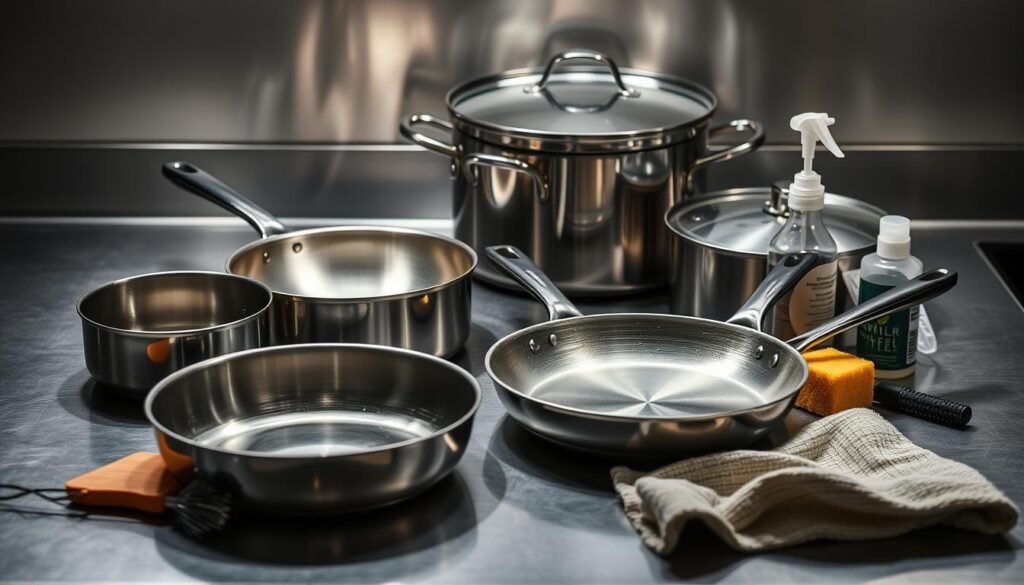
Choosing the right cleaning tools is crucial for stainless steel pans. The right supplies make cleaning easier and keep your pans looking great.
Recommended Cleaning Supplies
You’ll need some key items to clean your stainless steel pans well. These include:
- A soft sponge or cloth for daily cleaning without scratching the surface.
- Mild dish soap that is effective for general cleaning.
- For tougher stains, a non-abrasive scrubber or a stainless steel cleaner can be used.
Tools to Avoid
It’s also key to know what tools to avoid to protect your pans. Some tools and substances can harm your pans, so avoid them:
- Abrasive scrubbers or steel wool, as they can scratch the surface.
- Harsh chemicals or bleach, which can damage the finish or harm the material.
For more detailed info on caring for your stainless steel cookware, check out All-Clad’s guide on cleaning and caring for stainless. This resource offers detailed tips on keeping your stainless steel pans in top shape.
Step-by-Step Cleaning Guide
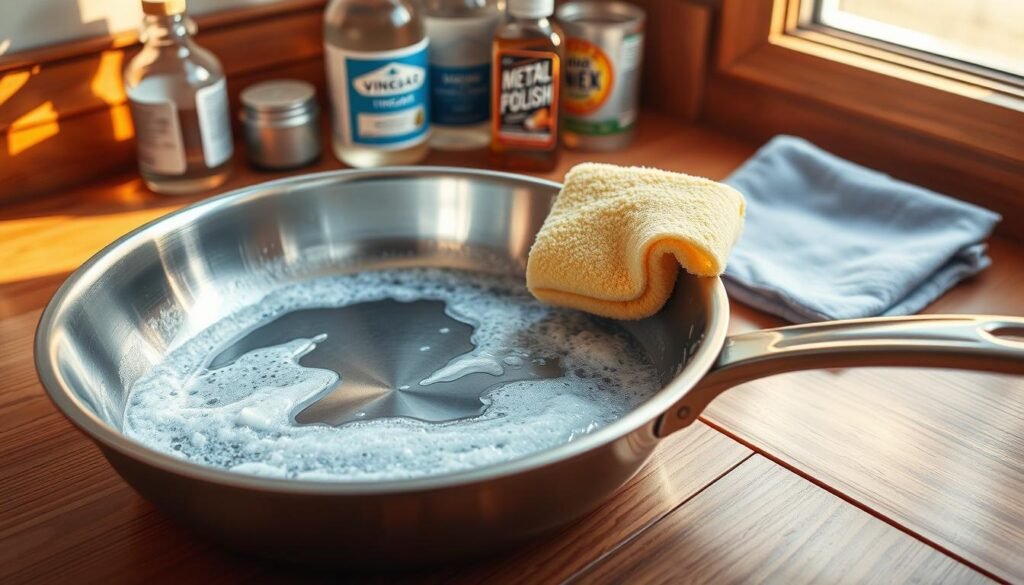
Stainless steel pans are essential in the kitchen. Knowing how to clean them right is key to their lasting use. Whether it’s everyday dirt or stubborn stains, the right cleaning steps can make a big difference.
Basic Cleaning Method
For daily cleaning, start by rinsing your stainless steel pan with warm water. This removes any loose food bits. Next, use a mild dish soap and a soft sponge or cloth to clean the pan. Stay away from abrasive materials that can scratch the surface.
Here’s a simple step-by-step process:
- Rinse the pan with warm water.
- Apply a small amount of mild dish soap.
- Gently scrub the pan with a soft sponge or cloth.
- Rinse thoroughly with warm water.
- Dry the pan with a towel to prevent water spots.
For more information on the best cleaning practices, you can visit The New York Times Wirecutter guide. It offers detailed tips on keeping your stainless steel cookware in top shape.
For Tough Stains
Tough stains need a bit more effort to remove. A good method is to make a paste with baking soda and water. Apply this paste to the stained area and let it sit for 30 minutes before scrubbing gently and rinsing.
| Stain Type | Cleaning Method |
|---|---|
| Food residue | Baking soda paste |
| Discoloration | Barkeepers Friend |
| Grease buildup | Hot soapy water and scrubbing |
Cleaning experts say, “The key to removing tough stains is patience and the right cleaning agent.”
“For stubborn stains, let the cleaning solution sit for a while before scrubbing. This allows the solution to penetrate and loosen the stain, making it easier to remove.”
By following these steps and using the right cleaning techniques, you can keep your stainless steel pans in excellent condition. Regular maintenance not only makes them look better but also makes them last longer.
Natural Cleaning Alternatives

You can make your stainless steel pans shine with items from your kitchen. These eco-friendly cleaning methods are not only good for the planet but also for your cookware.
Baking Soda and Vinegar
Baking soda and vinegar are a powerful cleaning team. They tackle tough stains and grime. Start by covering the stained area with baking soda, then add vinegar to make a paste.
Let it sit for 30 minutes. After that, scrub with a soft sponge and rinse well.
For really tough stains, leave the paste on overnight. This method is great for removing burnt food without harming the pan.
Lemon Juice and Olive Oil
Lemon juice and olive oil are another natural choice. Lemon juice cuts through grime, and olive oil makes the pan shine. Mix equal parts lemon juice and olive oil on a cloth and rub it on the pan.
Then, buff the pan with a dry cloth to get rid of any leftover bits and make it sparkle.
Here’s a quick comparison of these natural cleaning methods:
| Cleaning Method | Effectiveness | Environmental Impact |
|---|---|---|
| Baking Soda and Vinegar | High | Low |
| Lemon Juice and Olive Oil | Medium | Low |
For more tips on cleaning stainless steel pans, check out Dalstrong’s guide on how to clean stainless steel.
Preventative Maintenance
To keep your stainless steel pans in top shape, it’s key to have a regular maintenance plan. This way, you’ll keep them looking good and working well for a long time.
Tips for Daily Care
It’s important to clean your pans every day to stop grime and food from sticking.
Wash them with mild soap and warm water after each use. Don’t use harsh cleaners or rough scrubbers, as they can scratch. Instead, use a soft sponge or cloth.
If there’s tough food left, let the pan soak first. This makes cleaning easier. Also, cleaning often stops bacteria and germs from growing.You can learn about how-to-clean-strawberries.
Proper Cooking Techniques
How you cook with your pans affects their upkeep.
Choose the right oil and heat to prevent food from sticking. Use moderate heat and a bit of oil to grease the pan before cooking.
Don’t cook at very high temperatures, as it can warp or discolor the metal. Also, be careful with the tools you use. Metal can scratch the pans, so use silicone or wood instead.
| Daily Care Tips | Benefits |
|---|---|
| Wash with mild soap and warm water | Prevents grime buildup |
| Avoid abrasive cleaners and scouring pads | Prevents scratching the surface |
| Use a soft sponge or cloth | Gentle on the pan’s surface |
By sticking to these tips, you’ll keep your stainless steel pans in excellent condition. Regular care not only keeps them looking good but also makes them last longer.
Dealing with Discoloration

Stainless steel pans are known for their toughness. But, they can still get discolored if not cared for right. Discoloration happens from high heat, some foods, and wrong cleaning ways.
Causes of Discoloration
Knowing why discoloration happens helps prevent it. High heat, reacting with certain foods, and harsh cleaners are common reasons.
- High heat can cause stainless steel to discolor, if the pan gets too hot.
- Certain foods, like acidic or sulfur-rich ones, can react with the metal and discolor it.
- Using the wrong cleaning tools or chemicals can damage the pan’s surface, making it more prone to discoloration.
How to Restore Shine
To make a discolored stainless steel pan shine again, you need the right cleaning methods and materials. Experts suggest using a baking soda and water mix to clean it.
First, clean the pan with a gentle cleanser and a soft sponge. For deeper stains, try a stainless steel cleaner or a homemade paste of baking soda and water.
| Method | Materials Needed | Effectiveness |
|---|---|---|
| Gentle Cleansing | Mild dish soap, soft sponge | Good for maintenance and light discoloration |
| Baking Soda Paste | Baking soda, water | Effective for tougher stains and discoloration |
| Stainless Steel Cleaner | Commercial stainless steel cleaner | Highly effective for severe discoloration |
Cleaning experts say, “The key to keeping stainless steel pans shiny is regular cleaning and avoiding harsh chemicals.” Regular care not only keeps your pans looking great but also makes them last longer.
“Regular maintenance is key to keeping stainless steel pans in good condition.”
By knowing why discoloration happens and using the right methods to fix it, you can keep your stainless steel pans looking new. Remember, the secret to keeping them looking good is consistent care and attention.You can learn about how-to-clean-a-cast-iron-skillet.
Cleaning Different Types of Stainless Steel
Stainless steel is everywhere in kitchens, from pots and pans to refrigerators. But cleaning it isn’t the same for all. Knowing how to care for each type is crucial to keep them looking good and lasting long.
Cookware vs. Kitchen Appliances
Cookware, like pots and pans, needs a special cleaning method. It faces high heat and food residue. So, a gentle yet effective cleaning is needed to remove food without harming the surface.
Kitchen appliances, like refrigerators and dishwashers, don’t face the same heat and food buildup. A simple wipe with a damp cloth and mild detergent usually does the trick. But for stubborn stains or fingerprints, a specialized cleaner might be needed.
Special Considerations
Cleaning stainless steel also depends on its finish. Some have a brushed look, while others are polished. The finish affects how you clean it. For example, a soft cloth is best for polished surfaces, while a brushed finish might need a slightly rougher tool to avoid scratches.
Key Considerations:
- Always check the manufacturer’s instructions for specific cleaning recommendations.
- Avoid using abrasive cleaners or scrubbers that can scratch the stainless steel surface.
- For cookware, deglazing with water or a mixture of water and white vinegar can help loosen stuck-on food.
- Regular cleaning and drying can prevent water spots and maintain the appearance of stainless steel.
By adjusting your cleaning method based on the stainless steel type and finish, you can keep your kitchen shining. And your stainless steel products will stay in top condition for years.
Final Thoughts on Cleaning Stainless Steel Pans
Keeping your stainless steel pans clean is easy once you know how. Follow the steps in this guide to keep your cookware in top shape. This way, it will continue to cook well.
Key Takeaways
We’ve talked about the best cleaning tools and methods. We also covered natural ways to remove tough stains. Regular care and the right cooking methods help avoid discoloration and buildup.
Maintaining Your Cookware
By following these tips daily, you’ll make your stainless steel pans last longer. You’ll also cook more efficiently. A clean kitchen starts with well-maintained cookware. So, learn how to clean your stainless steel pans well.