Did you know a proper routine can cut clicks, hisses, and pops by more than half and extend the life of your gear?
I care deeply about clear playback because music is meant to be the focus, not noise. I start every session with a quick dry carbon fiber brush to lift loose dust and reduce static. That small habit stops grit from being pushed deeper when I perform a wetter method later.
I avoid harsh chemicals and use distilled water when rinsing. I never spin a record while it’s wet. These simple steps protect the needle and tonearm and keep each record sounding better for longer.
In this guide I share safe tools, clear routines, and realistic expectations. You’ll learn when a surface wipe will do and when a deeper process pays off. My aim is simple: better sound, safer gear, and an easier listening experience without expensive gear.
Key Takeaways
- Quick dry brushing before play reduces static and loose debris.
- Use distilled water and avoid harsh solvents for rinsing.
- Don’t play a record while it’s wet; wait until fully dry.
- Store records vertically and away from heat and sunlight.
- Routine care lowers wear on needles and improves sound quality.
Why I Clean My Vinyl Records for Better Sound Today
I noticed a big jump in clarity after I made routine maintenance a habit. Loose particles and grit hide in the grooves and cause most playback noise, not permanent damage. A quick pre-play sweep removes surface debris and lowers static so the needle can track smoothly.
Clicks, pops, and hiss: how dust in the grooves hurts sound quality
Dust and dirt make the stylus jump and create clicks that mask tiny details in the music. That chatter reduces the overall sound quality and steals dynamic contrast.
Protecting the stylus, tonearm, and my turntable from wear
When a record is dirty, the player works harder. That accelerates stylus wear and stresses the tonearm. I clean regularly to protect gear and keep my collection playable for years.
- Immediate payoff: clearer highs and firmer bass on the first spin.
- Lower wear: less friction means a longer stylus life.
- Simple routine: a light pass with a carbon fiber brush before deeper work.
For step-by-step tips I trust, see Martha Stewart’s step-by-step guide.
How to clean vinyl records by hand
A simple manual approach brings out detail and cuts surface noise fast. I begin at the turntable with a dry carbon fiber brush to lift dust and reduce static.how-to-clean-blackstone
What I use
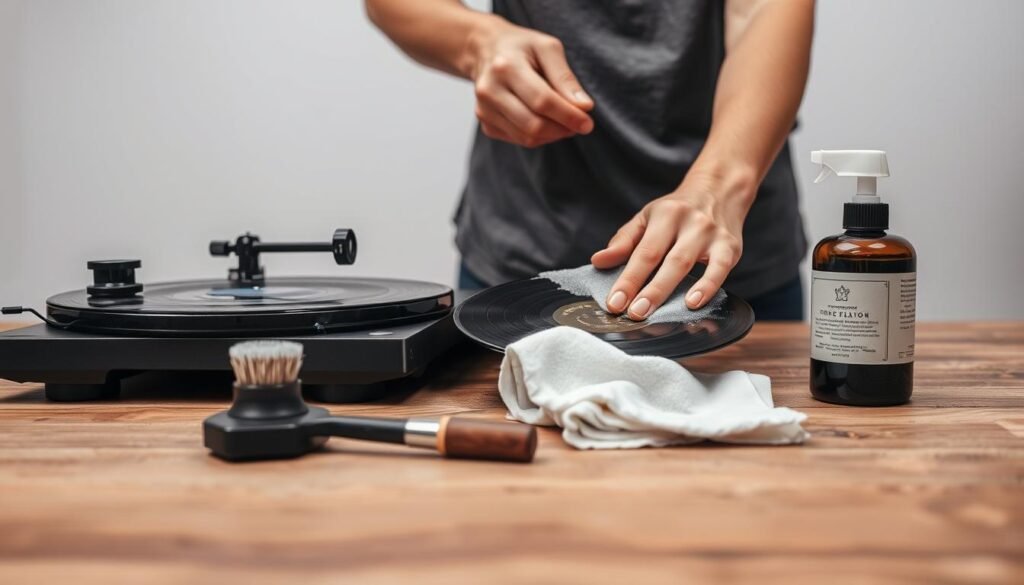
I keep a record-safe cleaning solution, a soft microfiber cloth, distilled water, and a carbon fiber brush. These let me treat most sleeves without machines.
Step-by-step routine
- Dry brush on the platter, following the grooves.
- Apply solution to the tool, never directly on the label.
- Work with gentle contact and a light circular motion along the groove direction.
- Rinse only with distilled water if needed; avoid tap water.
- Wipe with a clean microfiber, use a clockwise motion, then air-dry both sides fully.
| Tool | Purpose | Quick Tip |
|---|---|---|
| Carbon fiber brush | Lift dust, reduce static | Dry first, light strokes |
| Cleaning solution | Remove grime in grooves | Apply to brush or cloth, keep label dry |
| Microfiber cloth | Final wipe and dry | Soft, clockwise finish, air-dry both sides |
Record cleaning machines and vacuums: faster, deeper ways to clean

When I need throughput or a deeper extraction, I use purpose-built gear that combines steady motion, proper solution dosing, and controlled drying. Machines take much of the repeat work off my hands and lift embedded dust and dirt more reliably than a quick wipe.how-to-clean-baseball-caps
Spin-Clean setup and workflow
I set the brushes and rollers for the record size, fill the tank to the line with distilled or tap water, and add a capful of cleaning solution directly onto the brushes. I slide the record in so rollers protect the label, then rotate three turns clockwise and three counterclockwise with a steady motion.
Time, batching, and drying
Plan about 3-5 minutes per record. One solution bath typically handles 20–50 records, depending on how dirty they are. I let excess drip back, wipe in a smooth clockwise motion, and air-dry on a rack for several hours up to a day before sleeving.
Ultrasonic cleaners and vinyl vacuums
Ultrasonic units use low-frequency sound waves for a chemical-free deep clean that reaches groove walls. For extraction, a vacuum pass lifts loosened debris; manual units like the Record Doctor V are effective and budget-friendly.
| Tool | Primary benefit | Typical time |
|---|---|---|
| Spin-Clean | Fast, repeatable cleaning | 3–5 min per record |
| Ultrasonic cleaner | Deep, chemical-free cleaning | 5–15 min per cycle |
| Vinyl vacuum | Strong groove extraction | 1–3 min per pass |
- Mixing methods works best: Spin-Clean for throughput, ultrasonic for stubborn grime, and a vacuum pass for final extraction.
- I store the bath up to a week if I rinse the brushes between uses to keep the solution effective.
What not to do when cleaning vinyl
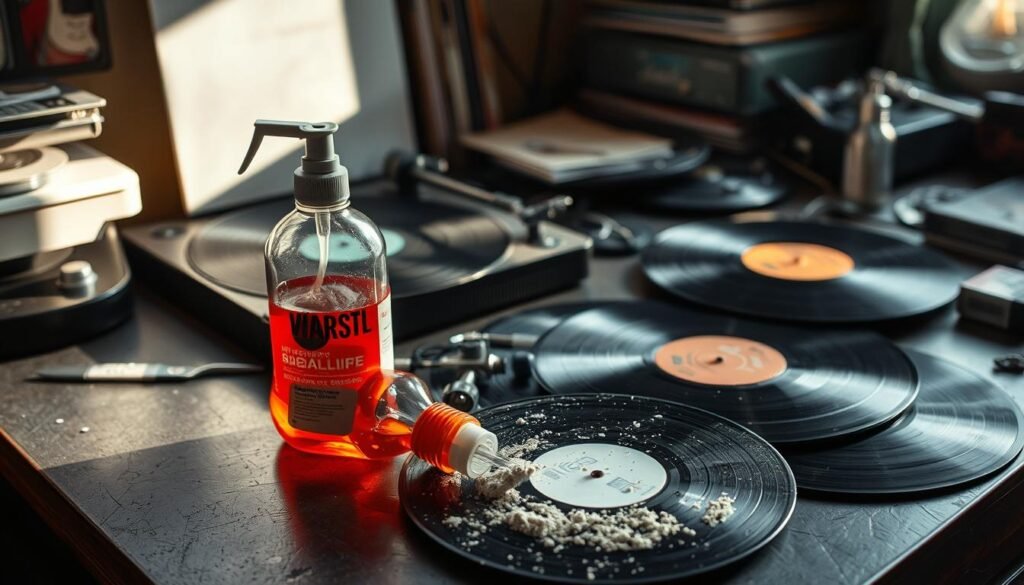
Some common shortcuts promise quick results but leave lasting damage. I avoid harsh chemicals like bleach and glass cleaners because they can strip a protective coating and harm the surface.
I treat alcohol with respect. If I ever use alcohol at all, it’s highly diluted with distilled water and applied sparingly. I never let it touch the label.
I choose distilled water over tap water to prevent mineral deposits from drying in the grooves. Minerals from tap water can dull sound and make future cleaning harder.how-to-clean-a-mattress
Never play a wet record
Playing a wet record increases friction and can grind dust and dirt deeper. That speeds wear on the stylus and stresses the turntable.
“Moisture during playback risks long-term damage; wait until the surface is fully dry.”
- I keep the label dry and handle edges only.
- I dry with a clean microfiber cloth, then finish with a brush for groove reach.
- I watch for haze or residue and re-treat with distilled water if needed.
| Risk | Why it harms | Safe alternative |
|---|---|---|
| Strong alcohol | Strips coating and dulls surface | Dilute, use sparingly with distilled water |
| Tap water | Mineral residue in grooves | Use distilled water only |
| Playing wet | Increases stylus wear and groove damage | Always air-dry fully before playback |
How I keep my records clean longer
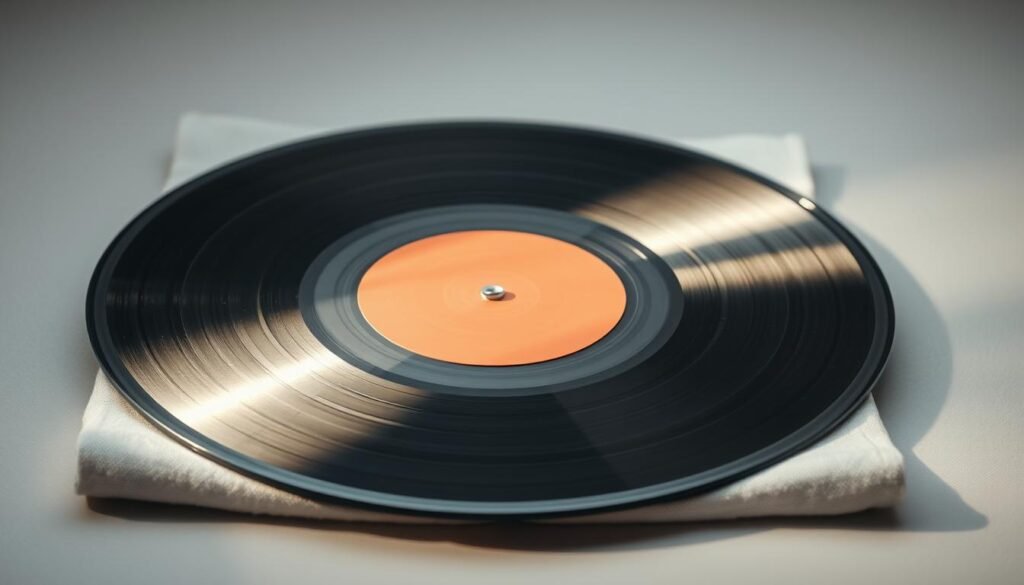
Protecting grooves starts long before a cleaning session — it begins with how I store and handle each disc. Small habits reduce repeat work and keep sound quality high for years.
Handling by the edges and reducing static with a carbon fiber brush
I always hold a record by the edges so skin oils don’t transfer into grooves. That simple step limits dust attraction and keeps a record playable longer.
Before every spin I give the surface a quick pass with a carbon fiber brush. It cuts static and sweeps away loose particles so clean vinyl stays that way.how-to-clean-makeup-brushes
Better sleeves: anti-static inner sleeves for safer storage
I swapped thin inners for anti-static sleeves like MoFi Master Sleeves. High-quality sleeves stop scuffs and stop the jacket from re-contaminating the disc.
Smart storage: upright, cool, clean, and out of direct sunlight
- I file the collection upright and avoid leaning stacks that can warp over years.
- Store in a cool, dry spot out of sunlight and heat to protect jackets and vinyl records.
- I keep the turntable area tidy and close the dust cover when the player is idle.
“Small routines beat big fixes; steady care preserves sound and saves time.”
Conclusion
A short, steady routine gives me the biggest lift in sound quality. A quick dry carbon fiber brush before play removes static and loose debris, saving time and wear.
When I wet treat a disc, I apply a record-safe solution to the tool, avoid the label, keep contact light, and follow the groove motion for gentle but thorough coverage.
I use distilled water instead of tap water and wait until the surface is fully dry before sleeving or playback. For batching, Spin-Clean’s three turns each way and 3–5 minutes per record work well.
Ultrasonic units and vacuums offer the best way for stubborn buildup. I skip harsh chemicals and stay cautious with alcohol so the protective coating and my player stay safe. Simple, repeatable care keeps my collection ready and improves the listening experience.