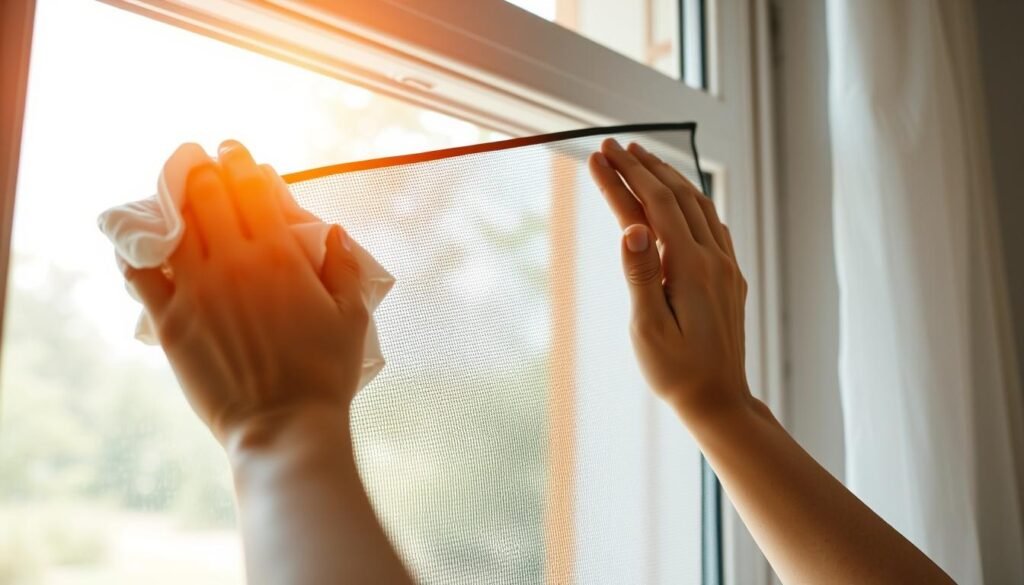
Dirty window screens can block your view and change the feel of a room. Cleaning them often makes a big difference. A study shows clean windows and screens can make a house look better and even increase its value.
To keep your window screens clear and clean, it’s key to know how to clean them well. Start by learning effective methods for cleaning window screens. This not only makes your view better but also lets in fresher air.
Key Takeaways
- Clean window screens at least once or twice a year.
- Dust window screens regularly to prevent buildup.
- Use a soft-bristled brush and a cleaning solution for effective cleaning.
- Remove screens, dust off loose dirt, wash, rinse, and dry before reinstalling.
- Consider replacing screens with major damage.
Understanding the Importance of Clean Window Screens
Clean window screens are key for a healthy home. They let in more natural light and improve your view. Plus, they keep your home free from allergens and dust.
Benefits of Clean Window Screens
Keeping your window screens clean has many perks. It improves visibility by removing dirt and debris. This lets you see outside clearly.
Clean screens also maximize natural light, making your home brighter. And, they reduce allergens by getting rid of dust and pollen.
By cleaning your window screens, you make your home look and feel better. This simple step can really change how you enjoy your space.how-to-clean-a-baseball-cap
Common Debris That Accumulates
Window screens collect dust, pollen, dirt, and mold. These can block your view and harm the air inside. Cleaning them often is crucial for a healthy home.
Knowing what builds up on your screens shows why cleaning is important. It keeps your home a comfortable and safe place to be.
Tools and Materials Needed for Cleaning

To clean your window screens well, you need the right tools and materials. Having the right stuff makes cleaning easier and more thorough.how-to-clean-a-carburetor
Essential Cleaning Supplies
You’ll need mild detergent, warm water, and a soft-bristled brush to clean window screens.
The mild detergent is gentle yet effective in removing dirt and grime. Warm water helps to loosen tough debris. A soft-bristled brush gently scrubs away dirt and dust without harming the screen.
Here’s a summary of the essential cleaning supplies in a tabular format:
| Supply | Purpose |
|---|---|
| Mild Detergent | Gently cleans the screen |
| Warm Water | Loosens dirt and debris |
| Soft-Bristled Brush | Gently scrubs the screen |
Optional Tools for Better Results
While basic supplies work for simple cleaning, optional tools can improve results.
A vacuum cleaner with a gentle setting can remove loose dust and debris before wet cleaning. A microfiber cloth can dry the screens after cleaning, reducing streaks and spots.
Using these optional tools can greatly improve cleaning results. For example, a vacuum prevents dust from getting back on the wet screen. A microfiber cloth leaves the screen dry and streak-free.
Preparing Your Window Screens for Cleaning
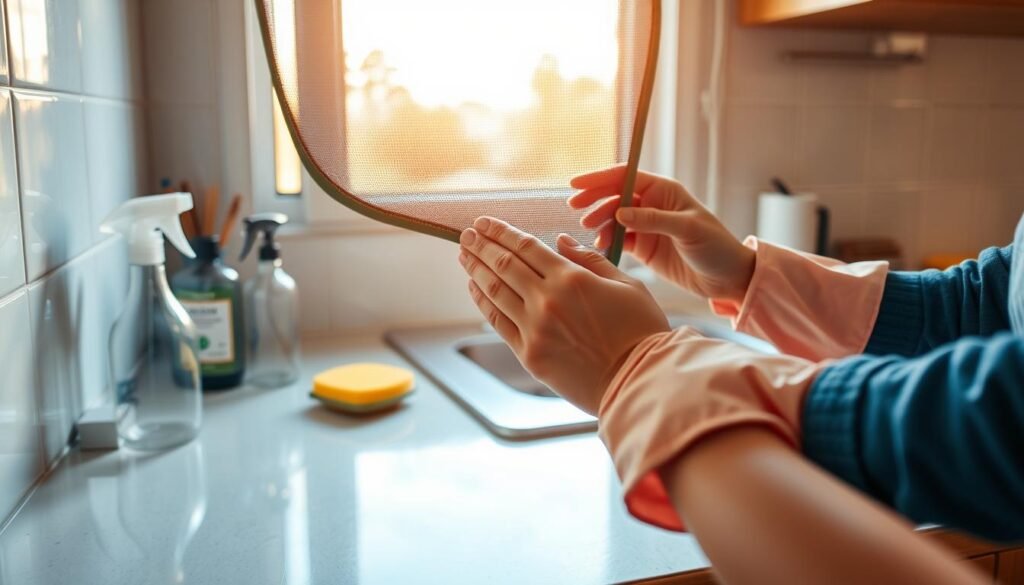
Before you start cleaning your window screens, make sure they’re ready. Remove the screens from the windows and check for damage or debris. This will help the cleaning go smoothly.how-to-clear-cache-on-facebook
Removing Screens from Windows
To take out the screens, gently pull them from their frames. For most windows, lift the screen a bit and tilt it to release it. Be careful not to force the screen, as it could get damaged. If you’re not sure, check your window’s manual or ask a pro.
For more tips, visit this resource on cleaning window screens.
Inspecting Screens for Damage
After taking out the screens, look for any tears, holes, or wear. It’s important to spot any damage before cleaning to prevent it from getting worse. Check the mesh for wear and the frame for any bends or breaks.
If you see damage, fix or replace the screen first. This keeps the screen working well and stops dirt from getting stuck in damaged spots, making cleaning easier later.
“A clean window screen is not just about aesthetics; it’s about maintaining the quality of the air coming into your home.”
Getting your window screens ready and checking them for damage are crucial steps in cleaning them.
Basic Cleaning Techniques for Window Screens
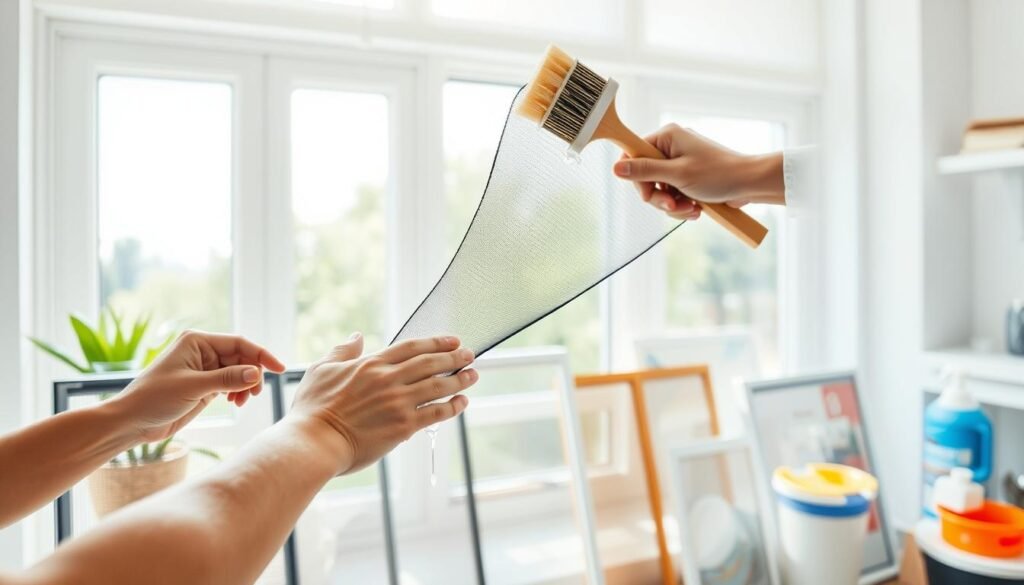
Keeping window screens clear is more than just a quick wipe. It needs a gentle yet effective cleaning method. When done right, cleaning your window screens can make your view clearer and let more natural light in.kn-how-to-clean-air-filter
Using Water and Soap Solution
The most common way to clean window screens is with a mild soap solution. Mix a small amount of mild dish soap with warm water in a bucket. Use about one tablespoon of soap per gallon of water.
Dip a soft-bristled brush or a microfiber cloth into the solution, wring it out well, and gently scrub the screen. Be careful not to use too much water or press too hard, as it can harm the screen.
Tips for Effective Cleaning:
- Use a soft-bristled brush to avoid damaging the screens.
- Avoid using harsh chemicals or abrasive cleaners.
- Clean the screens in a shaded area to prevent soap from drying onto the screens.
Drying Techniques Post-Cleaning
After cleaning your window screens, drying them properly is key to avoid water spots and mineral deposits. Gently shake off any extra water from the screen, then use a clean, dry microfiber cloth to pat it dry. For a more thorough dry, use a soft, dry towel to blot the screen gently.
Make sure both sides of the screen are dry before putting it back. This prevents moisture buildup.
| Drying Method | Effectiveness | Time Required |
|---|---|---|
| Shaking off excess water | High | Low |
| Using a microfiber cloth | Very High | Moderate |
| Blotting with a soft towel | High | Moderate |
As cleaning experts often say, “The key to maintaining clean window screens is regular maintenance and gentle cleaning techniques.” By following these basic cleaning techniques, you can keep your window screens in excellent condition. This ensures a clearer view and better airflow in your home.
“Regular cleaning of window screens not only improves visibility but also prolongs the lifespan of the screens by removing debris that could cause damage.”how-to-clean-a-backpack
Dealing with Stubborn Stains
Stubborn stains on window screens can be frustrating. But, there are effective solutions. When regular cleaning fails, it’s time for heavy-duty cleaners.
Vinegar Solution for Heavy Dirt
A vinegar solution is great for heavy dirt and grime. Mix equal parts water and white vinegar in a spray bottle. Spray it on the stained area and let it sit for 10-15 minutes.
The acid in the vinegar breaks down dirt. This makes it easier to scrub away.
Benefits of Using Vinegar Solution:
- Effective against tough grime and dirt
- Environmentally friendly
- Non-toxic and safe for most screen materials
Baking Soda Paste for Tough Spots
For tough spots, a baking soda paste works well. Mix baking soda with a bit of water to make a paste. Apply it to the stained area and let it sit for 30 minutes to an hour.
The abrasive nature of baking soda removes stubborn stains without damaging the screen.
Tips for Using Baking Soda Paste:
- Use a soft-bristled brush to gently scrub the area
- Rinse thoroughly with clean water to remove any residue
- Avoid using too much water, as it can damage the screen frame
| Cleaning Method | Effectiveness | Environmental Impact |
|---|---|---|
| Vinegar Solution | High | Low |
| Baking Soda Paste | High | Low |
Using a vinegar solution or baking soda paste can remove stubborn stains. This keeps your window screens clean and functional.how-to-clean-a-cuisinart-coffee-maker
Cleaning Options for Different Types of Screens
Cleaning window screens starts with knowing what kind you have. Each material needs a special cleaning method to stay in top shape.
Aluminum Window Screens
Aluminum screens are tough and don’t rust easily. But, they still need gentle cleaning. Use a soft-bristled brush or a cloth with mild soap. Don’t use harsh cleaners that can scratch.
After cleaning, rinse well with water to get rid of soap.
Tip: For hard stains, mix equal parts water and white vinegar. Use a soft cloth to apply, wait a few minutes, then rinse.how-to-clean-a-dogs-ears
Fiberglass and Vinyl Screens
Fiberglass and vinyl screens are softer and can get damaged easily. So, clean them gently. Use a soft-bristled brush or a lint-free cloth with mild soap. Stay away from strong chemicals or rough cleaners.
For tough stains, try a baking soda paste. Mix baking soda with water, apply to the stain, wait 15-30 minutes, then rinse with cold water.
| Screen Material | Recommended Cleaning Method | Special Considerations |
|---|---|---|
| Aluminum | Mild soap solution with a soft-bristled brush or cloth | Avoid abrasive materials; vinegar solution for tough stains |
| Fiberglass | Mild soap solution with a soft-bristled brush or lint-free cloth | Avoid harsh chemicals; baking soda paste for stubborn stains |
| Vinyl | Mild soap solution with a soft-bristled brush or lint-free cloth | Avoid harsh chemicals; baking soda paste for stubborn stains |
By following these tips, you can keep your window screens clean and in great shape, no matter the material.
Seasonal Window Screen Cleaning
Seasonal cleaning of window screens is key for a clear view and good airflow. As seasons change, different debris and dirt build up, affecting screen efficiency.
To keep your screens in great shape, knowing the best times to clean them is crucial. Also, understanding how weather impacts their care is important.
Best Times to Clean Your Screens
The spring and fall are the best times to clean your window screens. In spring, cleaning removes winter pollen and debris. In fall, it gets rid of dirt and leaves from summer and early fall.
- Spring Cleaning: Removes pollen, dust, and debris accumulated during winter.
- Fall Cleaning: Clears out dirt, leaves, and other debris that may have gathered during the summer and early fall.
How Weather Affects Screen Maintenance
Weather greatly affects window screen maintenance. Heavy rain can make dirt stick to screens. Intense sunlight can damage screen materials.how-to-clean-a-down-comforter
Here are some weather-related tips for screen maintenance:
- After heavy rain, inspect and clean your screens to remove dirt and debris.
- During periods of intense sunlight, check for signs of wear and tear on the screen material.
- In areas with high winds, ensure that your screens are securely fastened to prevent damage.
For more detailed information on how to clean window screens effectively, you can visit Andersen Windows for expert tips.
Preventative Maintenance for Window Screens
Keeping your window screens in top shape is key. By acting early, you can avoid frequent cleaning and repairs. This way, your screens will last longer.
Regular Inspections
Checking your screens often is essential. It helps spot damage or dirt early. This stops small problems from getting worse. Here’s what to look for:
- Check for tears or holes in the screen material
- Inspect the screen frame for any signs of damage or wear
- Look for debris or dirt accumulation on the screen
- Ensure the screen is properly secured in the window frame
Using Screen Protectors
Screen protectors add extra protection against weather and debris. They shield your screens from:
- UV damage from direct sunlight
- Damage from heavy rain or hail
- Debris such as leaves or branches
For more tips on cleaning window screens, check out Today’s Homeowner.
Regular checks and screen protectors can make your window screens last longer. They’ll also stay in great condition.
Alternative Methods for Cleaning Window Screens
There are other ways to clean your window screens, aside from the usual methods. Using a pressure washer or vacuum cleaner attachments can be good options. They can help keep your screens clean and clear.
Pressure Washer Safety Tips
Pressure washers are great for cleaning big or dirty window screens. But, you need to be careful not to damage them.
- Keep the nozzle at least 12 inches away from the screen to prevent damage.
- Use a wide fan tip to distribute the pressure evenly.
- Avoid using high-pressure settings, as they can tear or deform the screen.
Table: Pressure Washer Settings for Cleaning Window Screens
| Screen Type | Recommended Pressure Setting | Nozzle Distance |
|---|---|---|
| Aluminum | Low (1,000-1,500 PSI) | 12 inches |
| Fiberglass | Low (1,000-1,500 PSI) | 12 inches |
| Vinyl | Low (1,000-1,500 PSI) | 12 inches |
Using a Vacuum Cleaner Attachments
For a gentler way, try using a vacuum cleaner with a brush attachment. It’s great for dust and debris without harming the screen.how-to-clean-ninja-coffee-maker
Make sure the brush is soft. Gently sweep it over the screen to clean it. This is also good for regular upkeep.
Exploring these alternatives can help you find the best way to clean your window screens. This way, they stay clean and work well all year.
Final Touches After Cleaning
After cleaning your window screens, it’s time to put them back in place. This ensures they stay clear. Reinstalling them is easy but needs care to avoid damage.
Reinstalling Your Screens
Start by checking the screen frames for dirt. Use a soft brush or cloth to clean them. Then, put the screen back in the frame, making sure it fits right.
Ensure the screen is tight and even. This prevents sagging or damage.
Tips for Maintaining Clean Screens
Regular dusting is key to keeping screens clean. Use a soft-bristled brush or dry cloth to remove dust. Avoid harsh chemicals or abrasive cleaners to protect the screens.
By following these tips, your windows will stay clear for longer. Learning to clean window screens is just the start. Maintaining them is crucial for their long life.