Surprising fact: nearly 1 in 4 adults report that a well-kept weighted blanket improved their sleep within a week.
I want a simple, safe way that keeps the hug-like pressure while freshening my favorite item. I follow expert advice from Luis Zuñiga, Madeline Miller, and Alicia Sokolowski who stress gentle, filler-aware care.
I focus on clear goals: keep stitching intact, prevent clumping, and pick the right method for shell and inner fill. This is different from a regular blanket because extra weight stresses home machines and needs specific settings.
I’ll outline reading the label, pretreating stains, washing options, and drying the right way. I also say when it makes sense to hand things off to professionals, so you save time and protect your piece.
Key Takeaways
- Preserve structure: protect stitches and fill when caring for a heavy blanket.
- Be gentle: choose settings that match the fabric and filler.
- Plan time: washing and drying usually take longer than for a standard blanket.
- Ask for help: use pros when the weight or fabric exceeds home equipment limits.
- Maintain regularly: frequent light care prevents odors, stains, and clumping.
What I consider before washing a weighted blanket
First things first: I list what I must protect: seams, filler, and the soft pressure that helps me sleep.
I want clear goals so every step has purpose. Success, for me, means a clean piece that still drapes evenly and keeps that calming feel.how-to-clean-suede-shoes
I check the label next. If the guidance is vague, I choose gentlest options and plan for a front-loader or pro service if my washer may struggle.
- Fabric and filler response: I think about agitation and moisture and pick methods that avoid clumping or seam stress.
- Capacity planning: I match the blanket weight with my machine or arrange for a laundromat or professional handling.
- Pre-treat first: I map stain steps before the main wash so spots don’t set deeper.
I favor mild products and low-intensity settings. Scheduling time for a slow, full dry is just as important as the wash itself.
When I need a quick refresher, I follow trusted care instructions and keep my routine simple and repeatable.
| Priority | What I check | My action |
|---|---|---|
| Structure | Seams, stitching | Gentle cycle, avoid overload |
| Filler | Beads, pellets, fibers | Low agitation, extra rinse |
| Drying | Clump risk, odors | Air dry flat or low heat |
Check the care label and know your filler and fabric
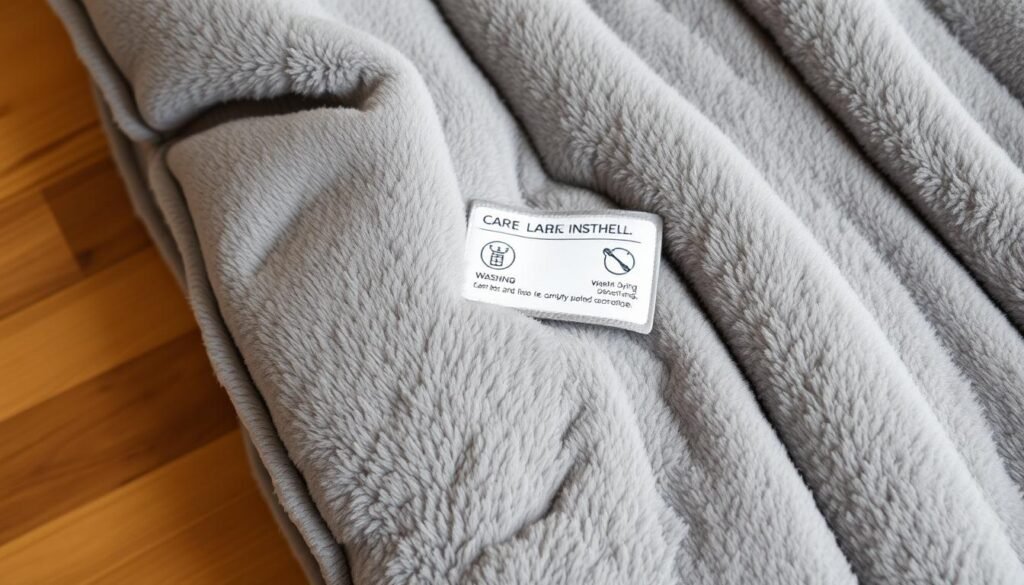
I start by reading the sewn tag so I know which methods will preserve the fill and fabric.
Care label basics: the label tells me whether I should machine wash, spot clean, hand wash, or use dry cleaning. I follow those care instructions exactly. If the tag says machine wash, I pick a cool, delicate cycle and low spin.how-to-clean-strawberries
Filler-specific notes
I identify the fill before any water touches the piece. Plastic pellets and beads work well in cold water and air dry. Steel shot beads can handle gentle machine wash or a careful hand rinse, followed by air drying.
Micro-glass beads, smooth pebbles, organic fills like corn or rice, and sand need special care. I treat micro-glass and pebbles as hand-wash only. Organic fills and sand are spot-clean only.
Fabric guidance
Cotton usually tolerates a cool machine wash but can shrink in hot water. Fleece fares best on a delicate cycle. Bamboo and silk last longer with gentle hand washing or professional dry care.
“When in doubt, choose the gentlest method and protect seams.”
| Component | Action | Drying |
|---|---|---|
| Plastic pellets / beads | Cold water, gentle | Air dry flat |
| Micro-glass / pebbles | Hand wash only | Air dry flat |
| Organic / sand | Spot clean only | Do not wet |
My stain-prep and supplies checklist
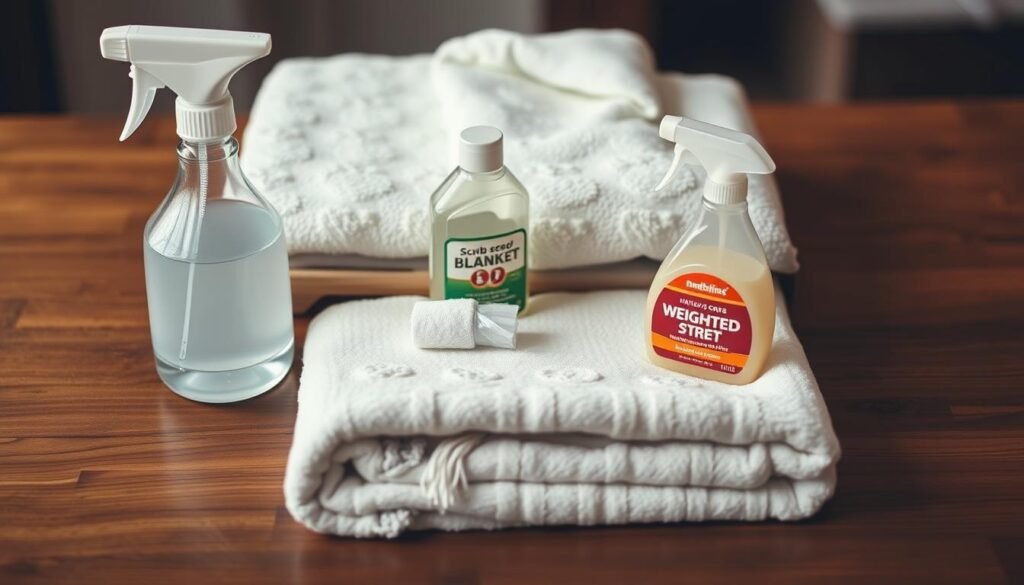
I keep a small kit by my laundry area for quick stain fixes before a full wash.
Targeting common marks: vinegar, peroxide, degreaser
First, I identify the stain type. For natural pigments like food, makeup, or juice, I use white vinegar. For blood or yellowing, I apply hydrogen peroxide. For greasy messes, a commercial degreaser works best.how-to-clean-a-dishwasher
Gentle detergent and softener strategy
I pick a mild detergent and keep amounts low. Over-sudsing makes rinsing harder and leaves residue in a weighted blanket. If I use fabric softener, I add only about one-third the usual dose so the fabric stays soft and not stiff.
Quick practical steps I follow:
- I spot the stain type first and choose vinegar, hydrogen peroxide, or degreaser accordingly.
- I work the solution in with a soft brush and a little water, lifting marks without fraying threads.
- I always test colorfastness on a hidden patch before treating visible areas.
- I keep a small bottle of gentle soap for fast touch-ups between full washes.
“A short pretreat and gentle rinse preserve structure and keep fills from clumping.”
| Item | Use | Tip |
|---|---|---|
| White vinegar | Natural pigments | Apply, wait 5 minutes, blot |
| Hydrogen peroxide | Blood / yellowing | Test first; short contact time |
| Degreaser | Oily stains | Work gently with toothbrush |
| Mild soap / detergent | Spot and wash | Use small amounts; extra rinse |
I plan a few minutes for pretreatment to sit before washing. I gently blot instead of rubbing, then rinse thoroughly so no agents stay trapped and attract dirt later.
For a full pretreatment checklist and extra guidance, I follow this pretreatment checklist.
How to clean weighted blanket in a washing machine
I check the washer capacity and the sewn tag before I move forward with a full wash.
Capacity check: I confirm the machine can handle the size and weight. A large-capacity front-loader is my go-to because it tumbles bulky items gently and reduces drum stress. If the label or my washer disagrees, I choose a laundromat or pro service.
Settings I use
I set cold water and a gentle cycle with low spin. I add a small, measured amount of detergent and only about one-third the usual fabric softener dose so the fabric stays soft without coating the beads.
I always add an extra rinse to flush residue. If I still see suds, I run another rinse so the fabric won’t feel stiff or attract dirt later.how-to-clean-white-shoes
Protecting seams and beads
Key steps I follow:
- I load the blanket evenly and avoid crowding with other bulky textiles so the machine can move the weight safely.
- I use a sturdy garment bag when possible to reduce abrasion and protect seams from drum contact.
- I skip bleach and heavy softeners; both can weaken fabric and harm inner beads.
- I watch the first minutes of the cycle to ensure the machine isn’t straining and the item is tumbling, not stuck.
- I remove the piece promptly and move it straight to air drying to prevent mildew and clumping.
“Follow the care instructions on the tag and choose the gentlest viable machine settings.”
Hand-washing a weighted blanket when machine washing isn’t right
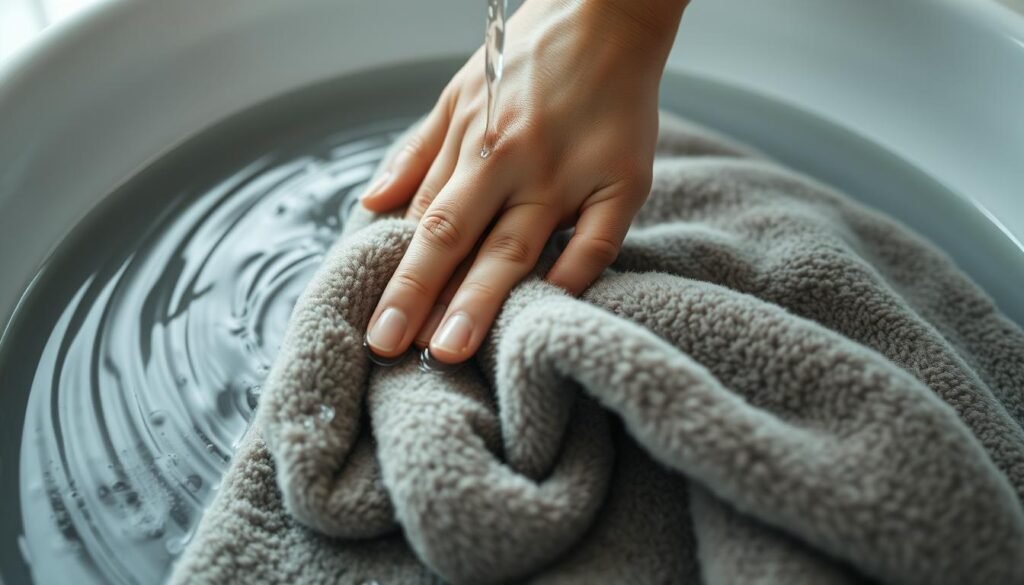
For delicate fabrics and bead-filled pieces, I choose a hands-on tub routine. This method protects seams and keeps fills even when a washer would be risky.
My bathtub method: soak time, gentle agitation, thorough rinse
Step one: I clean the tub, then fill it with cool to tepid water and add 1–2 ounces of mild detergent. I swirl the water until the soap disperses evenly.
I fully submerge the blanket, pressing out air pockets so the water reaches all sections. I let it soak 30–60 minutes so the solution can lift grime without stressing the fabric.
I use slow, minimal agitation with my hands to protect stitching and keep beads from shifting. When draining, I refill with cold water and gently squeeze sections to push out suds.
- I repeat rinses until the water runs clear; leftover detergent can leave fabric tacky.
- I follow label instructions for hand-only care, especially for silk, bamboo, or micro-glass bead fills.
- Support heavy, wet sections with both hands when lifting so seams do not strain.
“This hands-on approach trades speed for longevity; plan your drying area before you start.”
I use this method whenever machine washing limits make a washer unsafe. Expect longer drying time but better long-term results.
Drying and aftercare: air dry, gentle heat, and keeping fill even
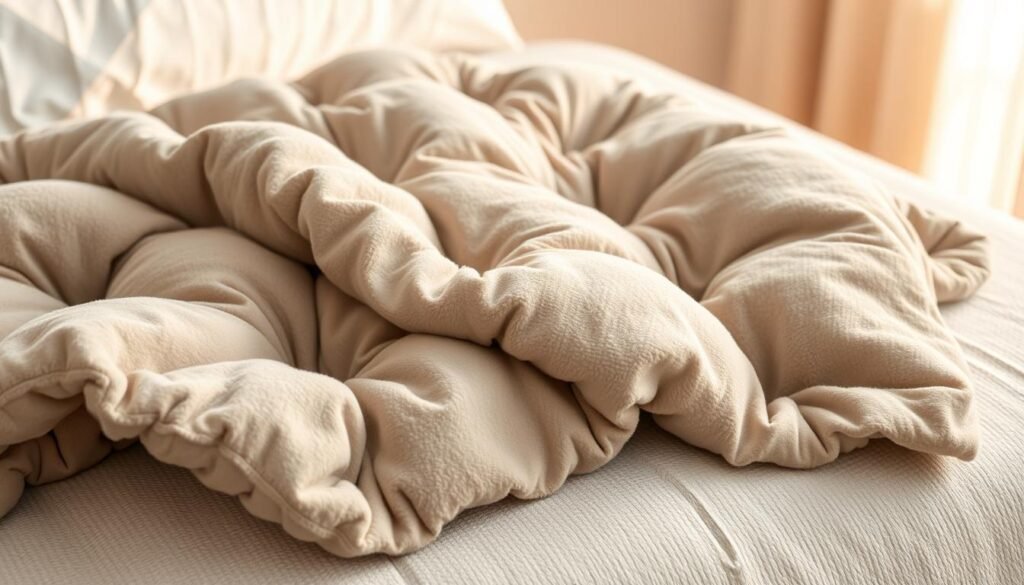
After washing, my priority is even drying so the weight stays balanced and seams stay safe. I give the piece time and space on a flat surface in a well-ventilated room. This helps beads settle where they belong and prevents damp pockets.how-to-clean-tv-screen
Why I air dry flat and avoid direct sunlight
I lay the blanket flat on a clean drying rack or sheet so gravity does not pull on seams. Direct sun can fade colors and stress fibers, so I keep it shaded while it airs.
I flip and gently shake sections every hour. This keeps the fill even and helps the inner beads move back into place.
Low heat only if the label allows
If the tag permits, I use the dryer on low heat for covers or heavy shells. I add clean tennis balls for removable covers to help loft and speed drying without roughing up interior fill.
I check progress often and stop the dryer if any damp, cool spots remain. When in doubt, more air dry time is safer than high heat.
How often I wash and post-storage refresh
I wash more often when the piece touches skin nightly or pets nap on it—every two weeks or monthly as needed. With a duvet cover, I can wash the cover more frequently and wash the blanket every couple of months.
After storage, I give the piece a light refresh: air it out and confirm it is fully dry before returning it to a breathable bag or shelf. This helps keep weight even and extends the life of the fabric.
| Method | When I use it | Quick tip |
|---|---|---|
| Air dry flat | Most shells and bead fills | Shade, flip hourly |
| Low-heat dryer | Label allows; covers only | Add tennis balls; watch closely |
| Storage refresh | After long shelf time | Air fully; store dry |
When I let professionals handle it
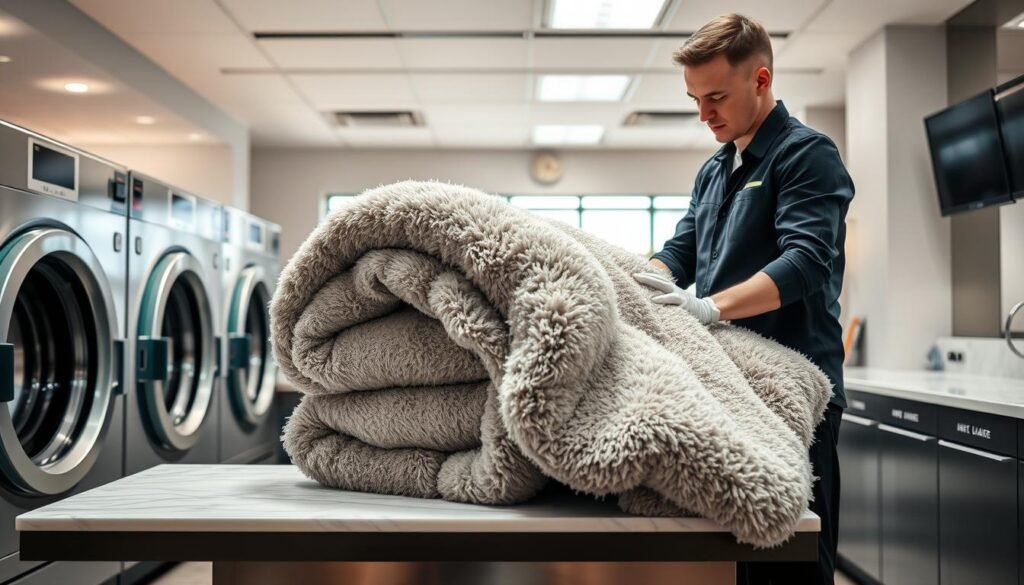
Some pieces need more than my home setup. I hire a pro when the item is over 15 pounds, made of silk or wool, or the sewn label reads dry clean only. Professionals use large front-load machines and special cleansers that lower risk of clumping.how-to-clean-oven
Dry clean only, silk, wool, or extra-heavy items
I pick dry cleaning for fragile shells and non-washable fills. This method protects fibers and stitching when water would cause harm. I always bring the tag and explain any stains.
Wash & Fold vs. dry cleaning: choosing the safest method
- I outsource when the label forbids water, the piece is too heavy for my washing machine, or the fabric is delicate.
- I choose Wash & Fold for cotton and polyester that fit pro machines and for faster turnaround.
- I ask about drying: low heat or air-only is best; I avoid high dryer heat that can shift fills.
- I document the service method so I can repeat the best care next season.
| Service | Best for | Drying approach |
|---|---|---|
| Wash & Fold | Machine-safe cotton, polyester | Low heat or air |
| Dry cleaning | Silk, wool, dry-only fills | Air or low-heat finishing |
| Specialty laundromat | Extra-heavy items & over 15 lb | Large drum, gentle tumble |
“When in doubt, I pay for pro gear; the fee is small compared with replacing a valued item.”
Conclusion
Conclusion
I finish with a simple routine that protects seams, fills, and fabric while extending comfort. Follow the care label and match the instructions with your filler type. That single step guides safe cleaning and preserves the item.
Pre-treat stains with the right soap, use a small amount of detergent, and choose cool or warm water only when the tag allows. Use a gentle cycle or hand-wash if the machine risks damage.
Favor air dry and careful drying practices over high heat. This protects beads, pellets — whether plastic or glass — and keeps weight even. Wash the duvet cover or cover more often and schedule seasonal refreshes.
My promise: follow these steps and you’ll keep the blanket fresh, balanced, and ready to improve your sleep for years.